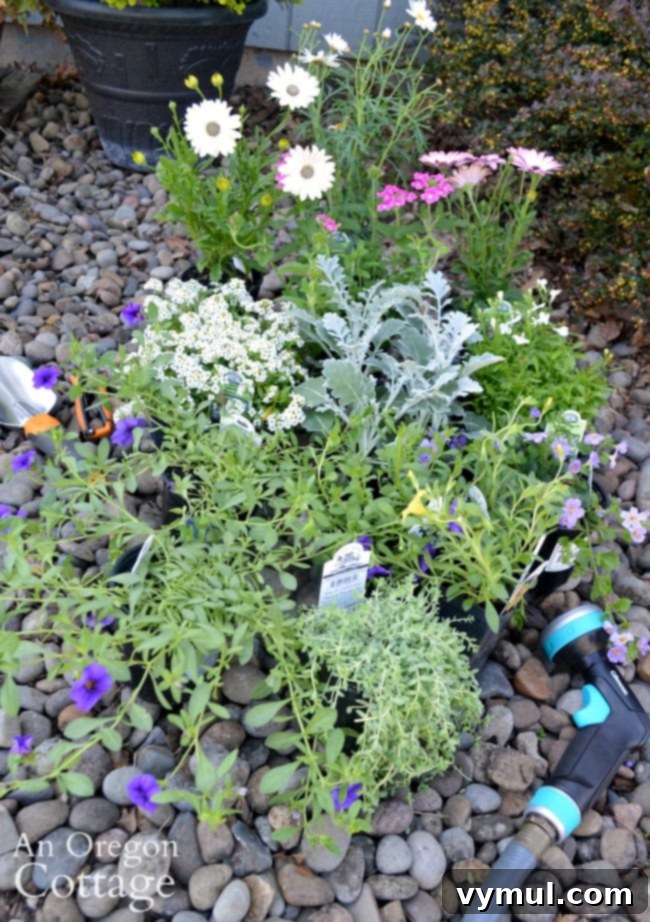
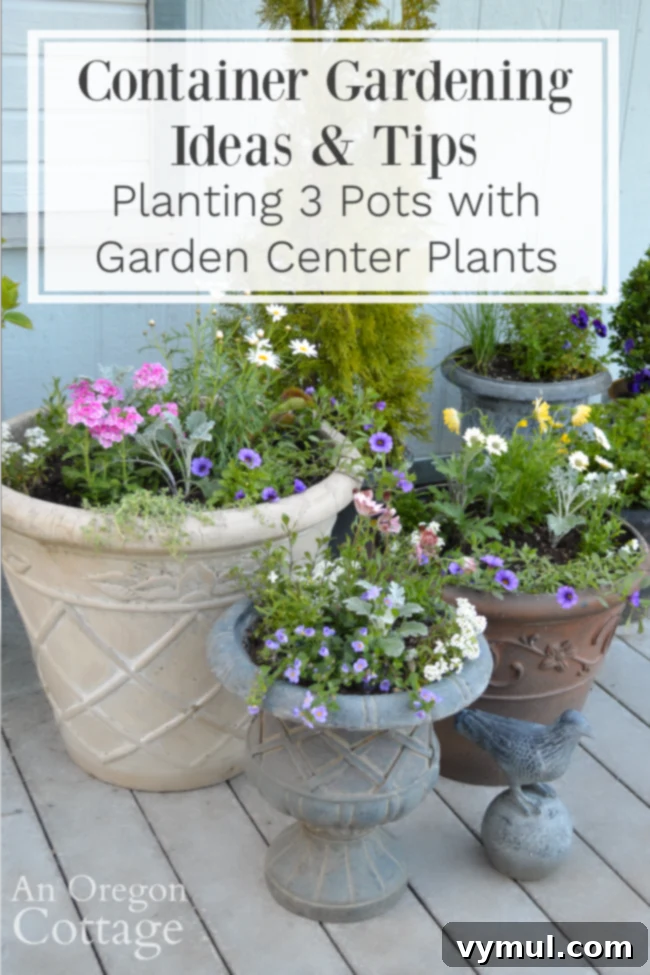
Transform Your Patio: Easy Container Gardening Ideas for Stunning Full Sun Flower Pots
Three easy container gardening ideas you can effortlessly recreate for vibrant flowering pots in sunny spots. We’ll guide you through using readily available garden center plants, alongside expert planting and maintenance tips to ensure your flowers flourish beautifully all season long. Plus, don’t miss our handy printable checklist to streamline your shopping trip!
This article is proudly sponsored by Gilmour, a brand whose exceptional watering tools I personally use and highly recommend.
One of my most cherished spring rituals is the annual pilgrimage to the local garden center. It’s an adventure, really—a delightful journey through aisles brimming with color and fragrance, all in pursuit of the perfect plants to adorn our front porch and deck. This process, from carefully selecting my favorite flowers and discovering new varieties to artfully combining them in pots and then watching them grow into lush, overflowing displays, brings me immense joy.
And yes, even the daily watering, which can sometimes feel like a chore by the peak of August, is something I secretly look forward to. Stepping out in my flip-flops with a warm cup of coffee, spending fifteen tranquil minutes nurturing my plants – that’s when I know summer has truly arrived, or at least that spring has finally decided to shed its chill.
Those few moments each morning transform into a special time for reflection. I use it to plan my day, engage in quiet prayer, listen to an audiobook, or simply soak in the sounds of nature, fully present in the moment. It’s a peaceful interlude I genuinely miss during the colder winter months, after the initial relief of not having to water everything eventually fades, of course!

Even if your space is limited to just a couple of pots, I wholeheartedly encourage you to embrace container gardening. You might find, as I have, that it quickly becomes one of your favorite spring and summer pastimes, a source of daily beauty and calm.
With that in mind, I’m excited to share three specific container gardening ideas, complete with detailed guidance on purchasing, planting, and maintaining the main flower pots I’m cultivating this year. You’ll find exact plant “recipes” that you can easily replicate, along with my tried-and-true tips for organically preparing, planting, and maintaining containers that thrive and stay vibrant all season long.
Similar to my previous container gardening ideas for sunny locations and another for shady spots, I consistently focus on using common plants and flowers readily available at most garden centers. There are several compelling reasons for this approach:
- They are incredibly easy to locate, making it simple for anyone to recreate these designs in their own planters.
- These popular varieties are typically affordably priced, and often found on sale, offering great value.
- They are proven performers, known for their abundant blooms and resilience, which is precisely why they are so widely favored by gardeners.
My hope is that this guide inspires you to plant a few containers, keep your flip-flops handy by the door, and truly savor your morning routine as you care for your plants during the beautiful, warm months!
Essential Container Gardening Ideas & Tips for Lush Blooms

Some links in this article are affiliate links. If you click on them and make a purchase, I will receive a small commission at no extra cost to you.
Step-by-Step Preparation for Your Flower Pots
Before you dive into the vibrant world of flowers, the very first step in successful container gardening is to identify the containers you’ll be filling. Do you have existing pots from previous seasons, like me, or are you starting fresh? If reusing, note their sizes and locations. If purchasing new ones, consider factors like material (plastic for moisture retention, terracotta for breathability), size (larger pots offer more growing room and moisture stability), and aesthetic appeal. Garden centers are convenient, but stores like Target or online marketplaces like Amazon can offer competitive prices and a wider selection, so it’s worth checking them out.
Okay, with your containers in mind, it’s time for the exciting part: selecting your flowers! My top tip for creating stunning, coordinated flower arrangements is simple yet effective:
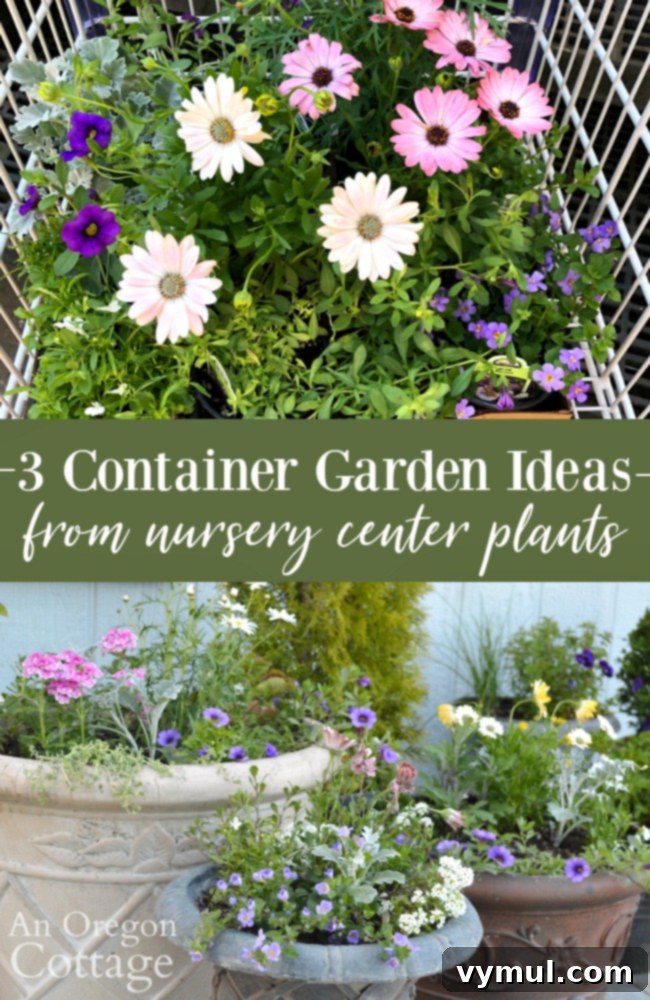
- At the garden center, grab an empty cart or a large garden box. As you browse, place any flowers and plants that catch your eye into this box. Seeing them side-by-side allows you to instantly visualize how the colors, textures, and heights will interact. If certain plants clash, simply remove them and experiment with other options until you’ve assembled a collection that is harmonious and pleasing to your eye. This method is incredibly helpful whether you’re planting a single pot or multiple containers that will be displayed together.
Another crucial aspect of designing striking flower pots is the “thriller, filler, and spiller” concept. This guideline simplifies plant selection, ensuring your containers look full, balanced, and dynamic throughout the growing season.
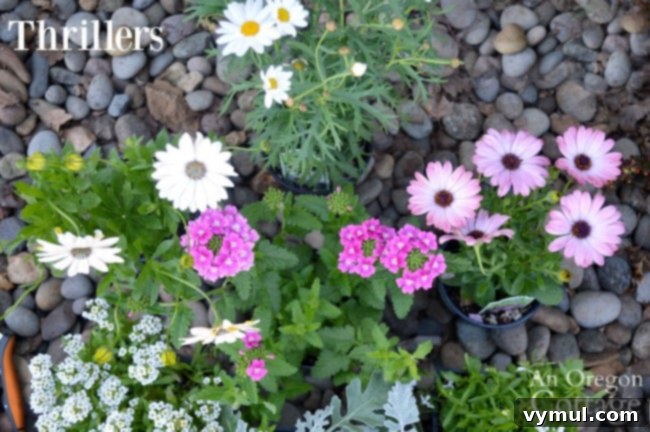
- Thrillers: These are your statement plants. They are typically tall, upright, and provide a dramatic focal point in the center or back of your container. Excellent examples include regular geraniums, fuchsias, patio dahlias, and daisies.
- Fillers: These plants are designed to “fill in” the middle ground of your pot, creating lushness and volume around the thriller. They are usually mounding or bushy. Think alyssum, upright petunias, impatiens, and dusty miller.
- Spillers: As the name suggests, spillers trail gracefully over the edges of the container, softening its lines and adding an elegant, cascading effect. Popular choices include calibrachoa, ivy geranium, bacopa, and trailing lobelia.
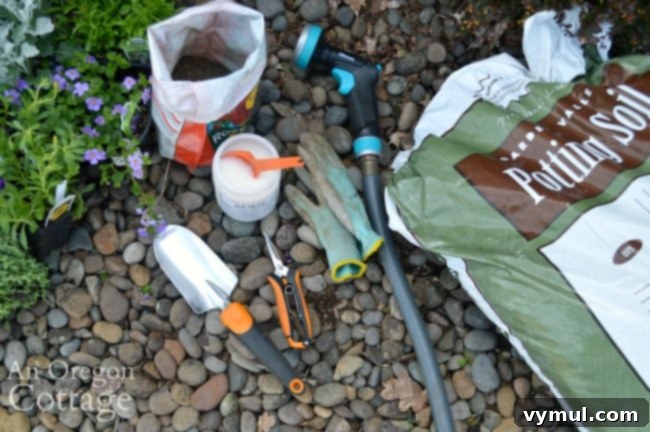
Beyond the flowers themselves, you’ll need to gather or purchase a few essential supplies:
- High-Quality Potting Soil: This is paramount for container success. Always opt for an organic potting mix, or at the very least, one that is free from chemical fertilizers. Unlike garden soil, potting mixes are specifically formulated for containers, offering superior drainage and aeration. Chemical fertilizers in potting soil can leach out with frequent watering, potentially harming local waterways. Moreover, long-term chemical use can negatively impact soil pH, disrupt beneficial microbial ecosystems, increase pest susceptibility, and even contribute to greenhouse gas emissions. (source)
- Organic, Slow-Release Fertilizer: This type of fertilizer is ideal for containers as it provides a steady supply of nutrients over several months, promoting sustained growth and abundant blooms without the risk of over-fertilization or nutrient runoff associated with chemical alternatives. It feeds your plants gently and effectively while being kind to the environment.
- Gardening Gloves: Protect your hands! My personal favorites feature nitrile palms for excellent grip and dexterity.
- Garden Trowel and Small Snips or Pruners: A trowel is essential for planting, while snips are perfect for deadheading spent blooms and removing any brown or unsightly leaves, encouraging continuous flowering and a tidy appearance.
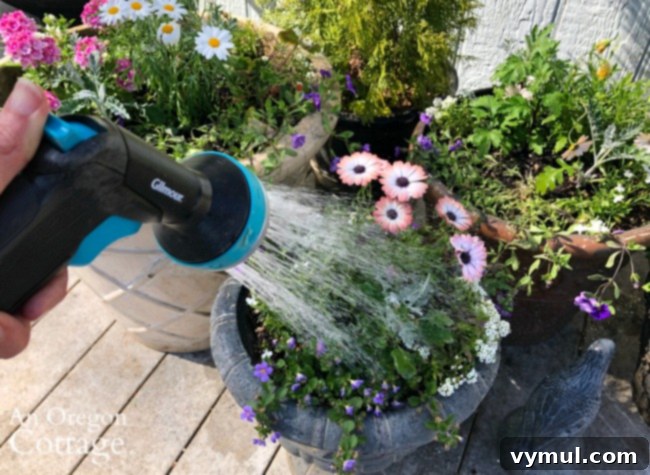
- Hose and Gentle Watering Nozzle: Gentle watering is crucial, especially for newly planted or delicate flowers. The Gilmour EZ Click Watering Nozzle (no longer available – this nozzle is similar and highly recommended) is a fantastic tool. Its swivel connect prevents hose kinks, and the easy-to-use trigger offers effortless on/off control. What I particularly love is the thumb switch, allowing you to seamlessly transition from a light, soft spray – perfect for tender plants – to a stronger stream for watering larger pots or evergreens. I also rely on Gilmour’s Flexogen hoses, which are incredibly durable and withstand being left outdoors year-round.
- Soil Moist Water Absorbing Granules: Consider these my “secret weapon” for container gardening success! Incorporating these super-absorbent polymer crystals into your potting mix makes an enormous difference, especially during hot weather. They act like tiny sponges, holding excess water and releasing it as the soil dries, significantly extending the time between waterings. This often means you can water every other day instead of daily, and crucially, you won’t need to water twice a day, even for thirsty hanging baskets in the peak of summer. Before I started using these, my plants would often become stunted and brown by August, even with diligent daily watering.
Expert Planting Techniques for Beautiful Container Gardens
Now, let’s delve into the specific plants you’ll need to create these three stunning container gardening designs, featuring soft pastel shades of pinks, purples, and whites, accented with a touch of sunny yellow. Remember, the key is balance and visual appeal, achieved through our “thriller, filler, and spiller” method.
The “thrillers” to look for, which will provide height and a central focal point, are:
- 1 Marguerite Daisy
- 2 Osteopermum (specifically one ‘Pink Magic’ and one ‘Spring Day’)
- 1 Upright Verbena ‘Pink Shades’
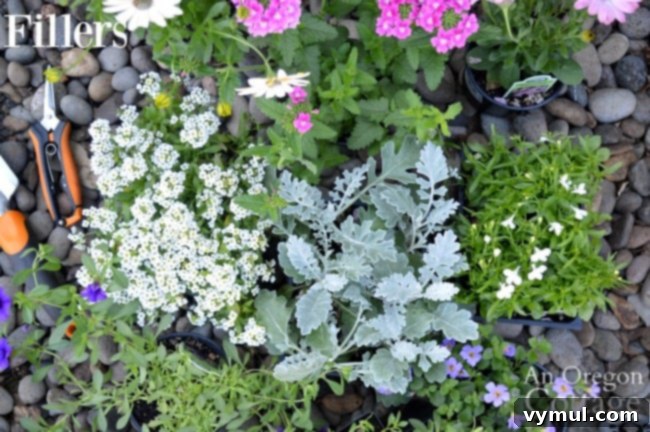
For the “fillers,” which will create a lush, full appearance in your pots, purchase one six-pack of each of these:
- White Alyssum
- Silverdust Dusty Miller
- White Mounding Lobelia
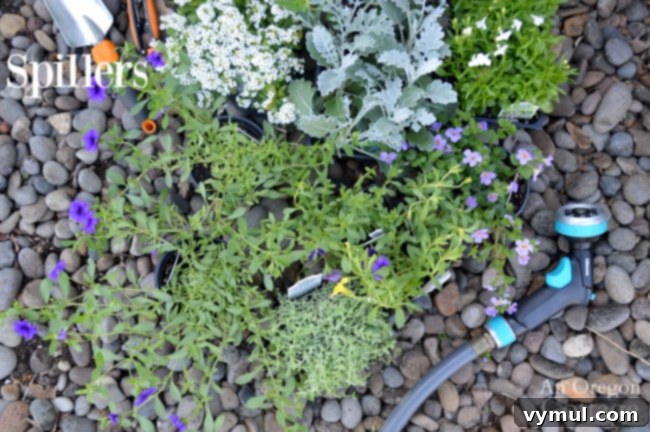
And these are the “spillers” you’ll want, adding elegant cascades over the edges of your containers:
- 1 Blue Bacopa
- 1 White Calibrachoa
- 2 Midnight Blue Calibrachoa
- 2 Golden Yellow Calibrachoa
- 1 Sedum dasyphyllum ‘major’
Your Handy Printable Checklist!
To make your shopping trip a breeze and ensure you don’t forget anything, here’s a convenient checklist with all the essential supplies and plant names required to recreate these three beautiful containers:
Simply click on the image above to open it in a new window, then download and print!
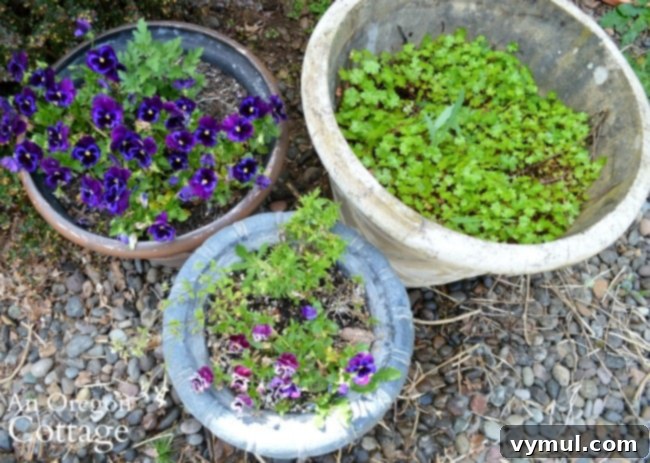
Here are the three containers I’m working with, captured in their “before” state. As you can see, some still contain lingering weeds, others overwintered pansies, and a few have remnants from last summer’s plantings. All of these will be removed, except for a small mum in the medium-sized pot (upper left). I decided to keep this for a beautiful late-summer bloom, though it will require a couple of pinches to keep it compact and blooming at the right time.
Every year, I deliberate over the pansies in late spring. While some look quite spent (like those in the smaller pot), others, such as the robust purple pansies in the upper left, appear to be thriving. However, experience has taught me that if these pots are in full sun, as soon as the weather truly warms up, pansies tend to brown and become leggy. In the past, leaving them in proved to be a disservice to the new plants, so now I always pull them out. I do, however, snip off their last beautiful blooms and bring them inside – they look absolutely charming in a teacup vase!
To truly illustrate the transformation from these “before” pots to their stunning “after” state, and to show you exactly how to plant your containers using all the listed supplies and flowers, I’ve created a quick video. It’s amazing to see the magic unfold!
Here are the specific container gardening ideas and plant arrangements for each of the three pots:

Small Container Garden Design
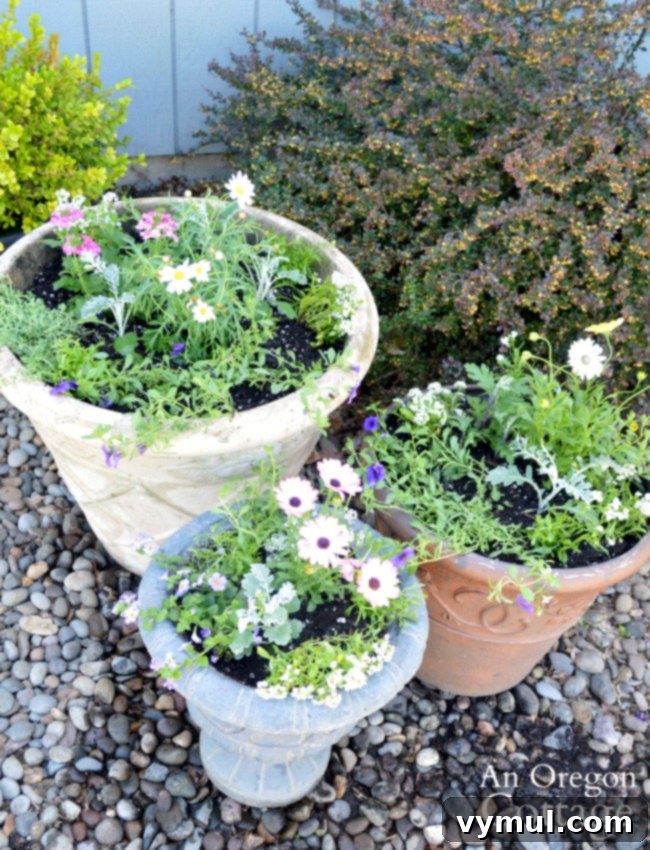
This design creates a charming, compact display perfect for a focal point on a small table or step. The thriller adds height, while the fillers and spillers create a soft, rounded appearance.
- Center Thriller: ‘Serenity Pink Magic’ Osteospermum (This provides the upright structure and a pop of color.)
- Opposite Edges Spillers: Blue Bacopa and White Calibrachoa (These will trail elegantly, softening the pot’s edges.)
- Adjacent Filler: 1 Dusty Miller (Positioned next to the osteospermum, this helps fill space and offers a textural contrast.)
- Edge Fillers: 2 white alyssum and 2 white lobelia (Distributed around the remaining edges, these create a full, mounding effect.)
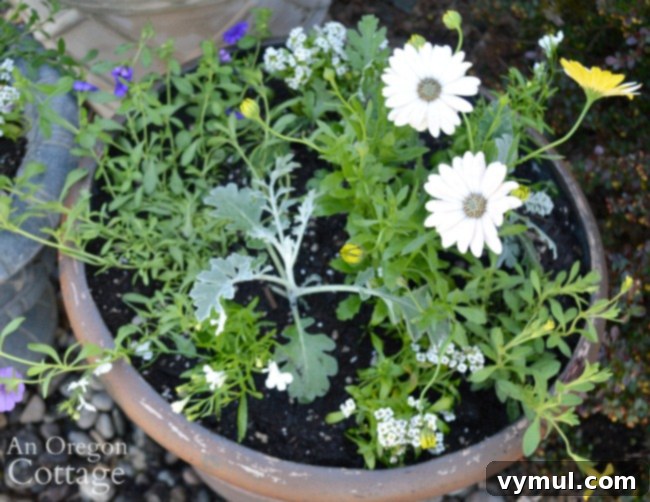
Medium Container Garden Design
This medium-sized pot offers more versatility, allowing for a richer mix of colors and forms. The existing mum adds an interesting layer, but the design stands strong without it.
- Center Thriller: ‘Serenity Spring Day’ Osteospermum (Placed near the existing mum, or centrally if no mum. This forms the primary upright element.)
- Side Fillers: 2 Dusty Millers (Positioned on either side of the osteospermum, these add silvery texture and bulk.)
- Opposite Edge Spillers: ‘Midnight Blue’ Calibrachoa and ‘Golden Yellow’ Calibrachoa (These vibrant spillers will cascade beautifully, bringing contrasting color and movement.)
- Edge Fillers: 2 white alyssum and 2 white lobelia (These are placed around the remaining edges to create a full, lush base.)
Large Container Garden Design
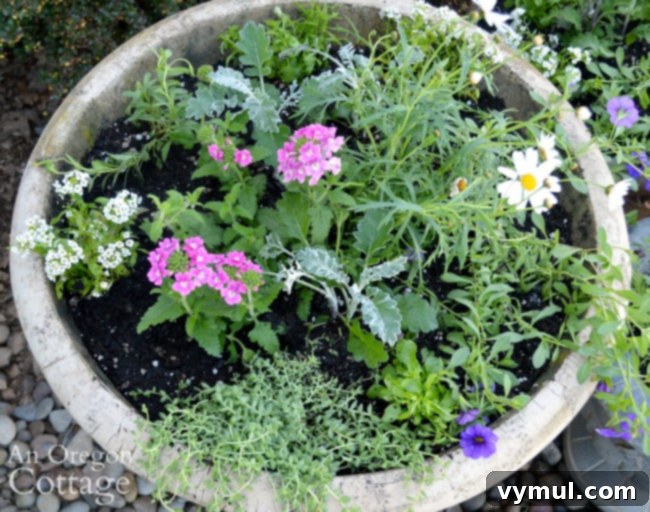
The large container allows for a grander statement, accommodating more plants and creating a truly spectacular display. It’s an ideal choice for a prominent spot on your patio or near an entrance.
- Center Thrillers: Marguerite Daisy and Upright Pink Verbena (These two provide a dynamic vertical element and a burst of color at the heart of the design.)
- Spaced Fillers: 3 Dusty Miller (Arranged around the central thrillers, these contribute a soft, silvery texture and fill out the middle section.)
- Opposite Edge Spillers & Fillers: Sedum dasyphyllum ‘major,’ ‘Midnight Blue’ Calibrachoa and ‘Golden Yellow’ Calibrachoa (These are strategically placed around the edges. The sedum offers unique texture, while the calibrachoas provide a rich trailing effect with contrasting hues.)
- Edge Fillers: 2 alyssum and 2 lobelia (These complete the design, ensuring the edges are fully softened and overflowing with delicate blooms.)
Note: Looking at it now, I see I could have added another filler plant next to the sedum for immediate fullness. However, remember that plants grow! These will eventually fill in beautifully, so it doesn’t need to look perfectly dense on day one.
Maintaining Your Beautiful Container Gardens for All-Season Blooms
Once your beautiful container gardens are planted, consistent care is key to keeping them thriving and looking their best throughout the season. The most fundamental aspect of maintenance is **watering**.
- Watering Frequency: In warm, dry weather, expect to water your pots daily. Factors like pot material (terracotta dries faster than plastic), wind exposure, and plant size will influence this. Using water-absorbing crystals, as recommended, significantly helps extend the time between waterings, often allowing you to water every other day even when it’s quite warm, preventing the need for twice-daily watering in peak heat.
- Deep Watering is Essential: When you water, ensure the pot is thoroughly saturated until water drains from the bottom. For larger containers, this might mean holding the stream of water on the soil for up to a minute. A watering nozzle with a convenient on/off trigger, like the Gilmour models, makes this task much easier and more efficient.
- Watering Tip: Always leave at least an inch of space between the soil level and the rim of your container. This crucial gap allows you to water fully without the water immediately overflowing the sides, ensuring deep saturation.
- Shade in Extreme Heat: Even sun-loving flowers can suffer in scorching temperatures. If you live in an area with intense summer heat, consider providing some afternoon shade for your pots during the hottest part of the day to prevent stress and wilting.
Beyond watering, a few other simple practices will keep your containers flourishing:
- Fertilizing: Even with slow-release organic fertilizer, heavy feeding plants in containers will eventually deplete available nutrients. About halfway through the growing season (mid-summer), consider a boost. You can either top-dress with more slow-release organic fertilizer or use a liquid organic feed every 2-4 weeks. Always follow product instructions for application rates.
- Deadheading and Pruning: Regularly remove spent blooms (deadheading) to encourage the plant to produce more flowers rather than setting seed. Lightly prune any leggy or overgrown stems to maintain a tidy shape and promote bushier growth. This is particularly important for plants like petunias and verbena.
- Pest and Disease Watch: Keep an eye out for common container pests like aphids or spider mites. Often, a strong spray of water from your Gilmour nozzle can dislodge pests. For more persistent issues, an organic insecticidal soap is usually effective and safe for your plants and the environment. Ensure good air circulation around your plants to prevent fungal diseases.
With these container gardening ideas and diligent care, all that’s left is to relax and witness your pots transform into breathtaking displays of color and life. Savor that precious “me time” in the morning, coffee in hand, hose ready, and flip-flops on. Enjoy the beauty and tranquility, my friends!

Disclosure: I received product and/or compensation for this post on container gardening ideas. As always, the opinions, thoughts, and projects shared are entirely my own, and I will NEVER promote anything I don’t genuinely love and believe you will find helpful – that’s my promise!
This post also utilizes affiliate links that earn a commission based on sales, but this does not affect your purchase price. Click here to read my full disclaimer and advertising disclosure for more information.