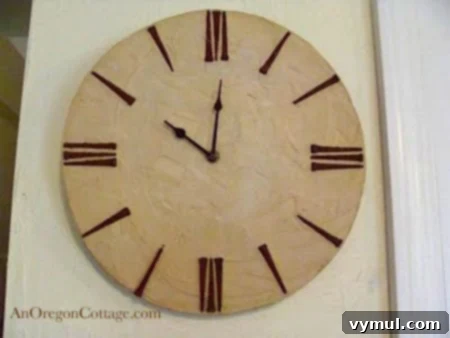
Craft Your Own Rustic Wall Clock: An Easy & Unique DIY Home Decor Project
Are you searching for a captivating yet straightforward DIY project that adds a touch of charm to your living space? Look no further! This comprehensive guide will walk you through creating a beautiful and unique rustic wall clock using everyday materials like tile grout and distinctive square-head nails. This handcrafted piece is not only incredibly easy to make, even for beginners, but it also makes for a truly thoughtful and crowd-pleasing gift for friends and family. Imagine the satisfaction of gifting a unique piece of home decor you’ve crafted with your own hands! For more inspiring ideas, be sure to explore our handmade gifts page.
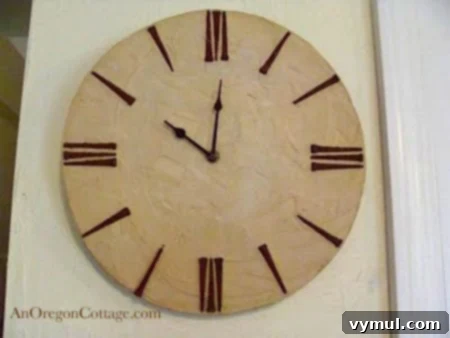
There’s a special joy in transforming simple materials into something beautiful and functional. Today, we’re diving into an incredibly easy DIY project: a charming rustic wall clock. I first made these clocks several years ago as Christmas gifts for my family, and to my surprise, they were met with an enthusiasm I hadn’t anticipated! Everyone adored them, proving that handmade gifts carry a unique warmth and personal touch that mass-produced items often lack. This project is not only satisfying but also incredibly budget-friendly, making it an ideal choice for crafting multiple gifts without breaking the bank. Let’s gather our materials and begin creating a piece that will surely become a conversation starter in any home.
Why Choose a DIY Rustic Wall Clock?
In a world saturated with mass-produced items, a handmade clock stands out. The rustic aesthetic, with its emphasis on natural textures and distressed finishes, brings an unparalleled coziness and character to any room. This specific design, utilizing tile grout and square-head nails, offers a unique blend of industrial and farmhouse styles, making it versatile enough to complement various decor themes, from modern minimalist to shabby chic. Beyond its aesthetic appeal, crafting your own clock offers several benefits:
- Personalized Touch: You control every aspect of the design, from the grout color to the nail arrangement, ensuring a truly unique piece.
- Cost-Effective: Compared to designer wall clocks, this DIY project is incredibly inexpensive, allowing you to create high-quality decor on a modest budget.
- Rewarding Experience: There’s immense satisfaction in seeing a project through from start to finish, especially when it results in something as practical and beautiful as a working clock.
- Sustainable Crafting: Repurposing materials like leftover grout promotes a more sustainable approach to home decor.
- Perfect Gift: A handmade rustic clock is a thoughtful, custom gift that shows genuine care and effort, making it ideal for birthdays, holidays, housewarmings, or weddings.
You’ll be amazed at how simple and affordable this project is. Here’s a detailed list of what you’ll need, along with some helpful tips for sourcing your materials:
Materials You’ll Need for Your Rustic Wall Clock
Gathering your materials is the first exciting step. Most items can be found at your local hardware or craft store. Remember, buying in bulk for some items like grout can significantly reduce the per-clock cost if you plan to make several!
- One 11-7/8″ Particle Board Round: These rounds are surprisingly easy to find. I located mine in the wood section of Home Depot. While their original purpose might be a mystery, their smooth, uniform shape and sturdy composition make them absolutely perfect for this project. They typically cost around $2 each, making them a very economical base for your clock. Consider checking lumberyards or even craft stores if you can’t find them at a major hardware retailer.
- One Bag of Tile Grout: This is the magic ingredient that gives your clock its unique texture and rustic foundation. The color choice is entirely yours! I opted for a neutral tan shade to ensure versatility and broad appeal, but feel free to experiment with charcoal grays for an industrial look, whites for a minimalist farmhouse feel, or even a subtle green or blue for a coastal vibe. A standard bag of grout costs approximately $8, and it will be far more than you need for a single clock. This is precisely why this project is so excellent for making multiple gifts at once. If you happen to have leftover grout from a previous tiling project, you’re already ahead of the game – repurpose it and give it new life!
- 2″ Square-Head Nails: These nails are crucial for achieving the authentic rustic aesthetic. Their distinctive square heads mimic vintage craftsmanship and serve as the hour markers for your clock. When I first made these clocks, finding square-head nails locally was a challenge, and I sourced them online. Today, specialty hardware stores or online antique hardware suppliers are your best bet. I found this online store that sells them for around $8.59 per pound. With approximately 120 nails per pound, you’ll have more than enough for several clocks, bringing the cost down to about $1.40 per clock. The number you’ll need depends on your design, but roughly 12-20 nails will suffice for a standard clock face.
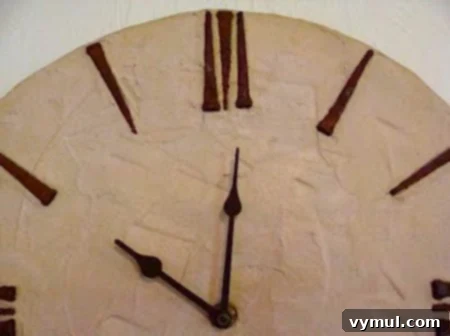
- Paint that Mimics Rust (or other desired finish): The square-head nails typically come as galvanized steel or another silver-toned metal. To achieve that coveted vintage, aged look, I applied a rust-mimicking paint to the nail heads. The beauty of this technique is that you only need to paint the tops, saving you the hassle of turning each nail over. This type of paint creates a remarkably realistic rust finish and is surprisingly easy to apply. I originally paid around $10 for my product, but prices can vary, with some finding it for up to $15. If a specific rust-effect paint isn’t readily available, don’t despair! There are many excellent spray paints on the market that can achieve a similar rustic or antique look. Consider a hammered black for a forged iron appearance, or an oil-rubbed bronze for a rich, warm patina. These alternatives can work just as effectively and offer different aesthetic possibilities.
- A Clock Mechanism: This is the heart of your clock, converting your beautiful creation into a functional timepiece. Clock mechanisms, often sold as “clock kits,” are widely available at craft stores, hobby shops, and online retailers. Prices typically range from $5 to $6, but with a bit of searching, you can often find deals for around $4. Be sure to choose a mechanism with hands that fit the size of your particle board round and complement your desired rustic style. Some kits come with different hand styles, so pick one that suits your vision.
When you factor in the cost of a clock kit at around $4, the total material cost for each rustic wall clock comes out to a remarkably affordable $10! This makes it an incredibly value-driven DIY project.
Tools You’ll Need
Crafting this rustic wall clock requires only a few basic tools, which you likely already have in your home or can easily acquire:
- Drill: Essential for creating the central hole for the clock mechanism.
- Putty Knife or Trowel: Ideal for mixing and applying the tile grout evenly.
- Small Paintbrush: For applying paint to the nails and clock hands.
- Measuring Tape or Ruler: Helpful for marking nail placement, though often eyeballing works for a rustic look.
- Pencil (Optional): For marking the center and hour positions.
Step-by-Step Instructions: Crafting Your Rustic Wall Clock
Now that you have all your materials and tools, let’s get started! Follow these simple steps to bring your rustic wall clock to life:
- Prepare the Particle Board Round:
- Begin by drilling a hole precisely in the center of your 11-7/8″ particle board round. The size of this hole is critical, so double-check the specifications on your clock kit package for the required diameter of the spindle. A snugly fitting hole will ensure your clock mechanism is secure.
- Once drilled, clear away any dust or debris from the hole and the surface of the board.
- Embellish Your Metal Components:
- Take your 2″ square-head nails and the brass (or other metal) clock hands.
- Carefully apply your rust-mimicking paint (or desired hammered black/oil-rubbed bronze finish) to the tops of the nail heads and to the clock hands. You don’t need to paint the entire nail, just the exposed head that will serve as the hour marker. For the clock hands, ensure full coverage for a cohesive look.
- Allow these painted components to dry completely. This step is crucial; rushing it can lead to smudges or an uneven finish in later stages.
- Apply the Grout and Insert Nails:
- In a mixing bowl, prepare your tile grout according to the package directions. It’s important to achieve a consistent, spreadable paste. Too thin, and it will be runny; too thick, and it will be difficult to apply smoothly.
- Using a putty knife or trowel, apply the mixed grout evenly across the top surface and around the sides of the particle board round. Ensure you leave the central drilled hole completely clear of grout, as this is where your clock mechanism will eventually be inserted. Aim for a relatively smooth, but still textured, finish that embodies the rustic charm.
- While the grout is still wet and pliable, gently push your painted square-head nails into place. For a classic clock face, I recommend placing three nails opposite each other at the 12, 3, 6, and 9 o’clock positions to clearly mark the primary hours. Then, use single nails for the remaining hour spots (1, 2, 4, 5, 7, 8, 10, 11). Refer to the accompanying pictures for visual guidance on spacing. Of course, feel free to unleash your creativity and create your own unique design or pattern! The beauty of DIY is personalization.
- Allow for Thorough Drying and Assembly:
- Once all the nails are in place, set your clock aside to dry completely. Grout requires significant drying time, often 24 hours or more, to cure properly and achieve maximum hardness. Do not rush this step, as premature handling can lead to cracking or nails shifting.
- After the grout is thoroughly dry and hardened, attach the clock mechanism and hands. Follow the specific instructions provided on your clock kit package carefully. This usually involves inserting the mechanism spindle through the central hole, securing it with a washer and nut, and then attaching the hour, minute, and (if applicable) second hands.
- Gift-Giving (or Displaying!):
- Once fully assembled and tested, your rustic wall clock is ready! If it’s a gift, carefully wrap it to protect the beautiful new surface. If it’s for your own home, find the perfect spot to display your handmade masterpiece and enjoy the compliments!
Print Recipe | Pin Recipe
How to Make a Rustic Wall Clock
A rustic wall clock is easy to make, using tile grout and square-head nails. It also makes a unique and crowd-pleasing gift!
Quick Overview
Work Time: 30 mins
Drying Time: 1 day
Total Time: 1 day 30 mins
Makes: 1 clock
Author: Jami Boys
Estimated Cost: $10
Tools
- Drill
- Putty Knife
- Paintbrush
Materials
- 1 11-7/8″ Particle Board Round (Found at Home Depot in the wood section)
- 1 bag Tile Grout (Choose your preferred color, tan for neutrality)
- 20 2″ Square-Head Nails (Sourced online for their authentic look)
- Paint that Mimics Rust (Or hammered black/oil-rubbed bronze)
- 1 Clock Mechanism (Available at craft stores)
Instructions
- Drill a hole the size you need (check on the clock kit package) in the middle of the particle board round.
- Apply rust or other paint to the metal nails and the brass (usually) clock hands. Make sure they are completely dry before moving to step three.
- Mix the grout according to package directions and apply to the particle board top and sides, leaving the hole in the middle clear. While the grout is wet, push the nails gently in place– I placed three opposite of each other in the 12, 3, 6, and 9 spots and single ones in the remaining spots (see pictures). Or create a design of your own.
- Let dry thoroughly before attaching the clock mechanism and hands according to the instructions on the package.
Important Notes on Durability and Sealing
It’s important to share my experience regarding the durability of these clocks. Initially, I did not seal them in any way. The clocks gifted to recipients who hung them in a permanent spot and didn’t move them have held up beautifully over the years. However, those that experienced moves, or households with playful children (or pets!), sometimes suffered damage. The grout, especially on the sides, occasionally chipped or fell off in pieces, indicating they don’t travel well without additional protection.
This experience leads to a crucial consideration: sealing your grout. While I haven’t personally experimented with sealants for this project yet, I strongly recommend exploring options to enhance durability. A good grout sealer, often used for floor or wall tiles, could offer a protective barrier against chipping and wear. Alternatively, a clear matte or satin sealant suitable for craft projects (like a spray polyurethane or a brush-on clear coat) might also work wonders in strengthening the grout surface and edges. If you have experience with specific sealants for grout or craft projects that could improve the longevity of these clocks, please share your knowledge! I’d love to learn what works best to make these charming clocks even more robust.
Did you make this? Mention @anoregoncottage or tag #anoregoncottage!
Customization Ideas for Your Rustic Wall Clock
While the basic design is stunning, there’s ample room for personal expression. Here are a few ideas to make your clock even more unique:
- Grout Color and Texture: Beyond tan, consider dark gray or black grout for a dramatic, industrial look. You could even experiment with different grout types that offer slightly different textures or finishes.
- Nail Alternatives: If square-head nails are hard to find or not quite your style, think about other rustic markers. Small antique buttons, distressed metal tacks, or even small, dark pebbles could provide interesting hour indications.
- Distressing Techniques: After the grout dries, you can lightly sand certain areas to create a more distressed, aged appearance. You could also apply a thin wash of dark stain over the grout to enhance its antique feel before sealing.
- Stenciling: For a subtle detail, consider stenciling a small design or a word like “Time” or “Home” onto the grout surface before sealing.
- Clock Hand Style: Many clock kits come with different styles of hands. Choose ornate, distressed, or even modern minimalist hands to shift the overall aesthetic of your clock.
Conclusion: A Timeless Addition to Your Home
Creating this rustic wall clock is more than just a craft project; it’s an opportunity to infuse your home with character, express your creativity, and make meaningful, handmade gifts. The process is straightforward, the materials are affordable, and the result is a beautifully unique timepiece that will garner compliments for years to come. Whether you’re a seasoned DIY enthusiast or just starting your crafting journey, this project offers a rewarding experience and a tangible piece of art for your wall.
Don’t hesitate to experiment with colors, textures, and finishes to truly make this clock your own. And remember the important note on sealing – a little extra protection can go a long way in preserving your masterpiece for the long haul. We encourage you to try this project and experience the joy of creating something wonderful with your own hands!
—Jami
Related Content & Inspiration
Looking for more DIY inspiration? Check out these wonderful resources:
- Favorite Things Friday
- Hodgepodge Friday