Transform Your Garden: The Ultimate Guide to Easy Organic Weed Control with Newspaper & Mulch
This revolutionary technique for easy organic weed control is arguably one of the most impactful gardening tips you’ll ever encounter. It completely transformed my gardening experience, enabling me to cultivate numerous healthy shrub and flower borders without the constant battle of weeding and fertilizing throughout the entire growing season. If you haven’t yet discovered this method, prepare to fall in love with gardening all over again!
Some links in this article are affiliate links, meaning if you click on them and make a purchase, I may receive a small commission at no extra cost to you.
Do you often find yourself locked in a frustrating battle with persistent weeds in your garden? Have you ever felt so overwhelmed by garden maintenance that you considered giving up on gardening altogether? You’re not alone. The desire for a beautiful, thriving garden is often met with the daunting reality of endless weeding, especially when striving for organic methods.
In full honesty, there have been many times I’ve felt that exact same way, primarily because I am committed to organic gardening practices. So many resources I encountered emphasized strenuous hand-pulling as the sole effective solution for weed removal, or suggested simply smothering them with a thin layer of mulch, only to see them poke through triumphantly a few weeks later. This traditional advice often feels like a never-ending cycle of effort for minimal lasting reward.
However, I am here to tell you, unequivocally, that there are highly effective and sustainable ways to manage weeds without resorting to harsh chemicals or back-breaking labor. Through years of dedicated gardening and experimentation, I’ve uncovered strategies to significantly minimize weeds across various garden areas, including:
- The Vegetable Garden
- The Corn Patch
- Permanent Paths & Gravel Patios
But the most profoundly life-changing discovery (at least in my gardening journey) involves the five remarkably simple steps I employ to keep weeds under control in our garden shrub and flower beds. This isn’t just a temporary fix for spring; it’s a robust solution that provides a weed-free environment for the entire year!
That’s right! By implementing the steps I’m about to share, you can effectively eliminate your weed worries until the next spring. What’s even better is that with each subsequent year, the number of weeds you encounter will progressively diminish. This isn’t wishful thinking; it’s a proven method for creating a truly low-maintenance, thriving garden.
Imagine spending just a couple of hours on initial preparation, and then being largely done with most of the seasonal maintenance for your flower beds. All that will be left for you to do is enjoy watering your plants and reveling in their beautiful blooms. This technique offers a genuine path to a more enjoyable and less demanding gardening life.
Unveiling the Secret to Year-Round Organic Weed Control
You might be wondering, “What’s this revolutionary secret to effortless weed control?” Well, it’s not a secret I keep to myself! In fact, it’s a method I’ve enthusiastically shared countless times, written about extensively, and probably even shouted from the rooftops with joy! The core of this highly effective technique involves two simple yet powerful components:
Newspaper (or cardboard) and Mulch
Yes, that’s it! And every time I explain this, I genuinely feel a surge of satisfaction – I did mention it’s life-changing, didn’t I? This combination creates an impenetrable barrier against weeds while simultaneously enriching your soil, leading to healthier plants and a significantly reduced workload.
Because this technique is such an incredible time and sanity saver (and frankly, the main reason I can sustain and truly enjoy the numerous shrub and flower borders throughout our yard), I felt it was essential to share the exact steps I follow. I’ll include compelling before-and-after pictures so you can clearly see just how easy and incredibly effective this method truly is. It’s not just about controlling weeds; it’s about reclaiming your garden and your precious time.
Will This Method Truly Reduce Weeding in Beds and Borders? Absolute Proof!
I can confidently say that once I’ve applied this method to all our garden beds, my workload for the remainder of the year dramatically decreases. The results speak for themselves, offering tangible proof of its efficacy.
Here’s compelling evidence from our previous cottage garden, showcasing the remarkable difference this technique makes:
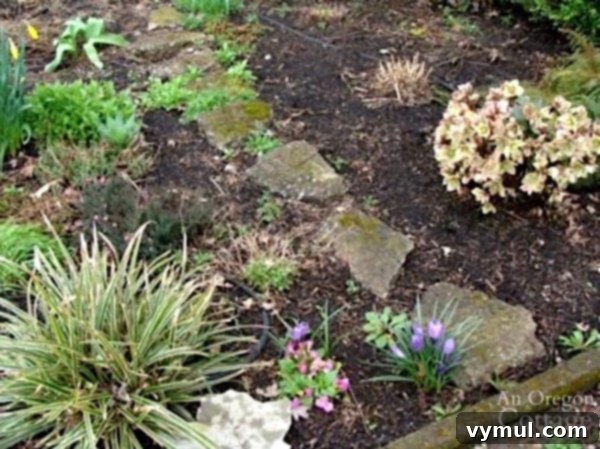
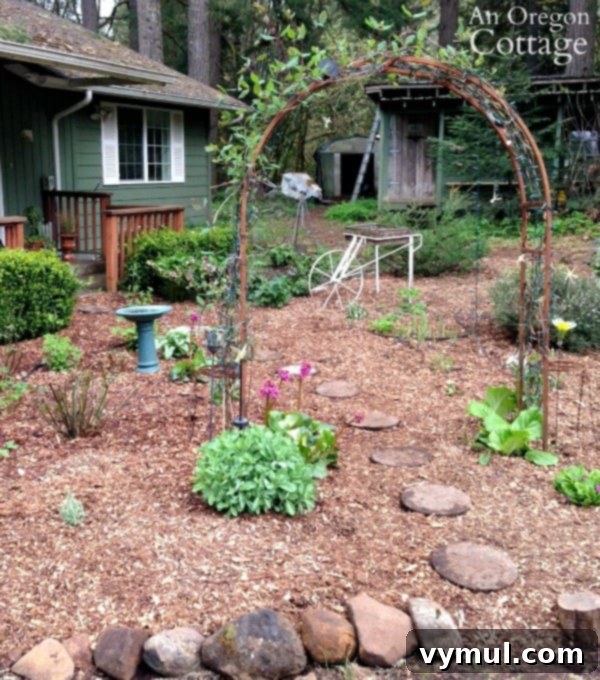
This image captures one side of our front flower bed, which had been meticulously covered with layers of newspaper and a generous application of mulch the previous summer. For our mulch, we consistently use purchased garden compost, a choice I’ll elaborate on shortly.
As you can observe, there are only a scattered few weeds here and there. These sparse intruders are remarkably easy to pull, thanks to the thick layer of compost mulch that keeps the soil loose and friable. You might notice a slightly higher concentration of weeds around the stepping stones. This is due to the challenge of precisely layering the newspaper between the stones without lifting them, a step we admittedly skipped for convenience. If you are willing to lift the stones and completely layer paper underneath, you will achieve an even more pristine, weed-free result than what is pictured.
Now, for a stark comparison, let’s examine the opposite end of the very same bed, an area we unfortunately didn’t manage to treat:
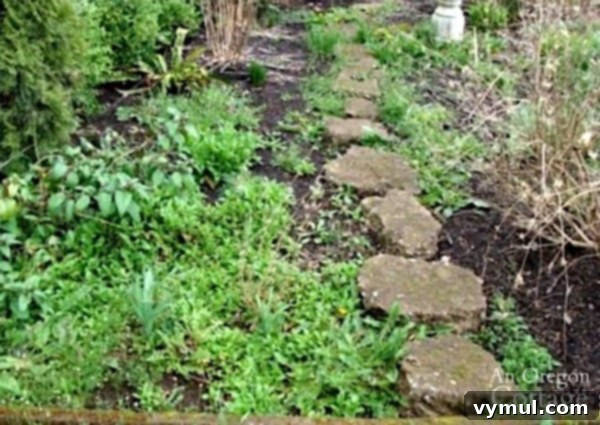
This section of the shrub and perennial bed never received its crucial layer of paper and mulch. We simply ran out of our compost mulch supply before reaching this part of the bed – in fact, you can clearly see on the right precisely where our application of paper and mulch abruptly ended near the stepping stones.
While there are indeed some desirable plants struggling amidst the growth on the left, the majority of the “groundcover” you see consists of countless tiny baby weeds, along with those aggressive early spring “poppers” (commonly known as bittercress) that I absolutely despise. Hindsight, as they say, is always 20/20, and this image perfectly illustrates the consequences of not completing the job. Don’t let this happen in your own flower beds! Embrace these five easy steps to organic weed control and enjoy a much simpler, more beautiful gardening life.
Newspaper & Mulch Organic Weed Control Video
To further illustrate this highly effective technique, please watch the video we’ve created. It provides a visual guide to the process, and afterwards, you can continue reading for more in-depth details on each step:
5 Easy Steps to Achieve a Weed-Free Garden Organically
Implementing this organic weed control method is surprisingly straightforward. By following these five simple steps, you’ll be well on your way to enjoying beautifully maintained, low-maintenance garden beds all season long.
Step 1: Gather Your Essential Gardening Materials
Before you begin, ensure you have all the necessary tools and materials readily available. Having everything organized will make the process much smoother and more efficient.
- Garden tools: A sturdy trowel and a small hand rake are indispensable for light weeding and soil manipulation. A small, sharp shovel is also incredibly useful (it’s become my go-to shovel since I first discovered it!). For spreading mulch and general bed tidying, a metal rake is ideal. Don’t forget a good set of pruners to trim back any overgrown shrubs or perennials. To maximize comfort and prevent knee strain during your work, I highly recommend using a kneeling pad. And to keep all your tools within easy reach, a garden tote is invaluable, saving you countless trips back and forth to the shed.
- Mulch: You will need a sufficient quantity of mulch to cover your entire designated area with a layer at least 2 inches thick. The type of mulch you choose can impact both aesthetics and soil benefits.
- Garden compost: This is our preferred choice due to its rich brown color and incredible benefits. Pros: Beyond its attractive appearance, compost acts as a slow-release fertilizer as it breaks down, continually feeding your soil. In fact, it’s the only fertilizer I’ve ever needed to use on my beds, significantly simplifying my gardening routine. Con: Being more soil-like, garden compost can, over time, create a hospitable environment for new weed seeds to germinate if the area remains consistently moist or is susceptible to wind-blown seeds. When sourcing, always use commercially produced garden compost for this method, as homemade compost may still contain viable weed seeds that haven’t been neutralized by high heat.
- Bark Chips or Tree Trimmings: These are excellent alternatives, especially for areas where aesthetics and long-lasting coverage are key. Pros: They are generally lighter in weight, making them easier to spread, and tree trimmings can often be sourced for free from local arborists. Weeds struggle significantly more to sprout through wood chips compared to compost. Cons: Unlike compost, wood chips do not intrinsically feed the soil as they decompose; in fact, their decomposition can temporarily deplete nitrogen from the soil. This can be mitigated if you supplement with another nitrogen source when applying.
- Straw or grass clippings: While effective for weed suppression, these options are primarily suited for vegetable gardens due to their less formal appearance. They generally don’t offer the aesthetic appeal desired for ornamental flower and shrub beds.
- Local mulches like pine needles, cocoa shells, and more: Depending on your region, you might have access to a variety of unique mulching materials. Always research their specific properties, particularly how they decompose, to understand if you need to adjust soil pH or add supplemental fertilizers.
- Newspaper or cardboard (your secret weapon!) – and LOTS of it. We diligently collect newspapers throughout the year, storing them for our annual spring application. Cardboard is also highly effective, especially for more permanent areas like under established trees or between large shrubs where you don’t anticipate frequent planting. Because cardboard is thicker and breaks down slower, you might get away with an application every other year, or even less frequently. However, its larger, stiffer pieces can be more challenging to maneuver and fit precisely around existing plants. Paper grocery bags, when cut open and flattened, also work well, but newspaper is typically the easiest and most abundant material to acquire. Ensure you avoid glossy, heavily inked advertising inserts and opt for standard newsprint. Modern newsprint inks are now predominantly soy-based, making them perfectly safe and eco-friendly for organic landscape use.
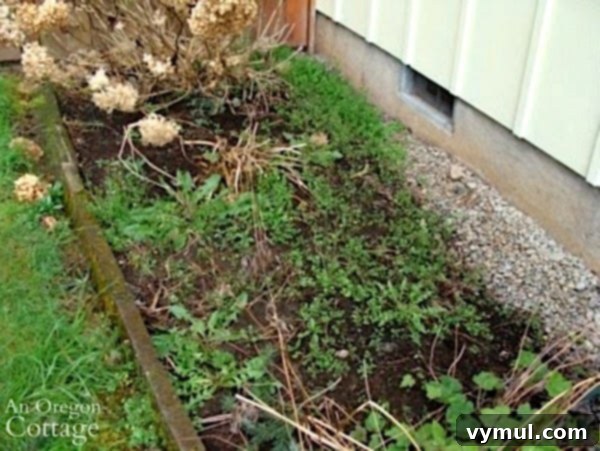
Step 2: Trim Shrubs and Perennials, Then Lightly Clear Weeds
Timing is key for this step. I prefer to complete this task in late winter or early spring rather than the fall. Allowing dead growth to remain through winter provides essential protection for plants against frost damage and offers valuable habitat and seed heads for birds during the colder months. Plus, finding time in the fall amidst the vegetable harvest chaos is always a challenge – though I much prefer my bird-friendly excuse!
PRO TIP: When clearing weeds, focus on getting the roots of stubborn perennial weeds like dandelions. For annual weeds, simply pull out any large ones that might prevent the paper from lying flat. The subsequent layers of paper will effectively smother and eliminate any smaller weeds left behind. This means you do NOT have to meticulously pull every single weed; just cover those guys up! This saves immense amounts of time and effort – a truly satisfying revelation for any gardener!
Step 3: Define and Trim the Edges of Your Garden Beds
A clean, well-defined bed edge not only enhances the aesthetic appeal of your garden but also serves as a crucial barrier against invading lawn grasses. The bed shown here features cement edgers, offering a crisp, permanent boundary. However, many of our other garden beds simply abut the lawn (you can explore a comprehensive tour of our entire yard and gardens here to see various edging solutions).
For grass edges, I utilize a simple manual grass edger to cut a neat trench. I then remove the strips of sod and add them to our compost pile. For beds bordered by permanent edging like concrete, a weed-whip is excellent for keeping the grass trimmed neatly against the edge, preventing it from creeping into the bed.
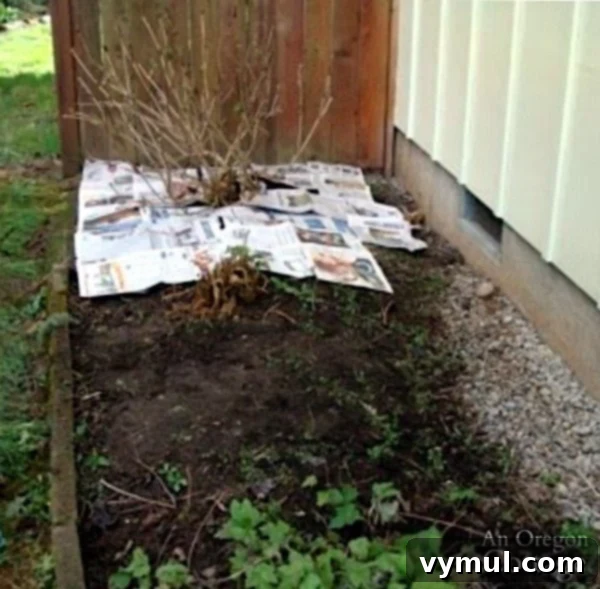
Step 4: Begin Layering Your Secret Weapon: Newspaper or Cardboard
This is where the magic truly begins. Proper application of the paper layer is crucial for effective weed suppression. Keep these important points in mind as you lay down your weed barrier:
- Thickness is key for weed-blocking power—I recommend using 4 to 6 layers of newspaper to create a sufficiently dense barrier. For cardboard, a single layer is usually enough due to its inherent thickness.
- Avoid shiny, colored advertisements and glossy paper—these materials often have coatings that inhibit decomposition and may not be safe for organic gardening. Stick to standard newsprint (a bit of color in the regular news pages is fine, just not the glossy ad inserts). As mentioned, modern newsprint ink is typically soy-based and safe.
- Overlap the edges of the papers generously by at least an inch or two. The goal is to create a continuous, unbroken barrier with no gaps or openings where ambitious weeds might find a way to emerge.
- Combat windy conditions by keeping a hose nearby. Lightly spray the papers with water as you lay them down. The moisture will help them stay flat and in place until you can secure them with the mulch layer.
- If your ground is dry, water thoroughly first—especially if you’re tackling this later in the season (not that I’ve ever waited until July, a-hem). Then, spray the paper layers as well. This pre-watering, combined with the mulch, will help retain crucial moisture during drier periods.
- Place the paper underneath any existing soaker hoses if you utilize them. This ensures the barrier is continuous and doesn’t interfere with your irrigation system.
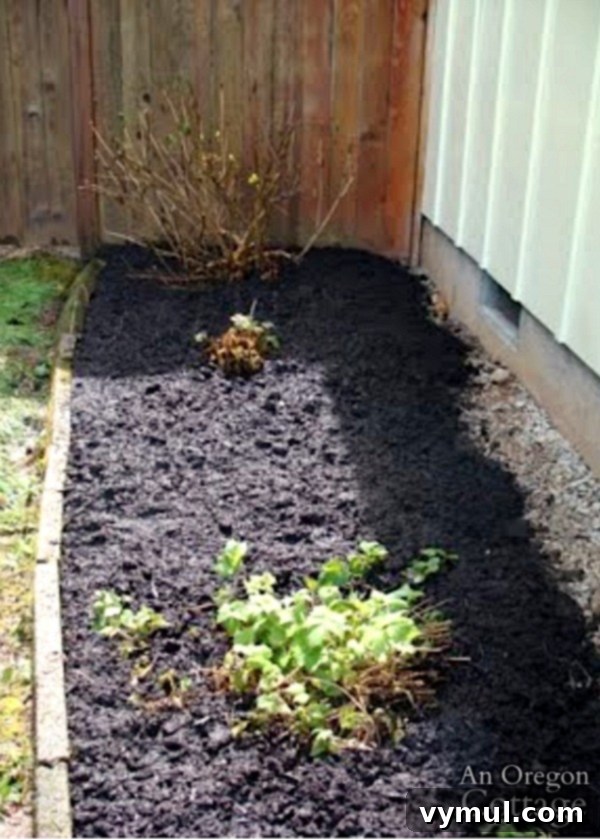
Step 5: Conclude by Covering All Paper with Your Chosen Mulch
This final step is where the transformation truly takes shape, completing your organic weed control system. The depth of your mulch layer directly correlates with its effectiveness in suppressing weeds, so aim for at least a 2-inch minimum thickness.
As you spread the mulch over the layered paper, you’ll witness the immediate transition from a potentially weedy mess to a beautifully clean and tidy garden bed. This sudden visual improvement brings an incredible feeling of accomplishment – especially because you avoided the arduous task of pulling every single weed by hand! Even better, this pristine appearance will last for months, providing a season of enjoyment rather than endless chores. This mulch layer not only smothers weeds but also helps retain soil moisture, regulate soil temperature, and, depending on your choice of mulch, enrich the soil as it breaks down.
Newspaper and Mulch Weed Control Q&A: Your Common Questions Answered
To help you maximize the benefits of this organic weed control method, here are answers to some frequently asked questions:
What if I want to plant something new later in the season?
Planting new additions into your mulched, paper-layered beds is surprisingly simple! Just push aside the top layer of mulch where you intend to plant. Use a trowel to cut through the newspaper (or score the cardboard) and gently bend it back, much like opening a book cover. Dig your hole, place the new plant, and backfill with soil, tamping it down as you normally would. Then, carefully replace the bent-back paper, tearing it as needed to fit snugly around your new plant, and cover it completely with the surrounding mulch. It’s a seamless process.
As mentioned, this process is slightly less straightforward with cardboard due to its rigidity. For this reason, it’s best to reserve cardboard for areas where you anticipate minimal future planting, such as under established trees or large, unchanging shrub groupings.
Can this method be used effectively around trees?
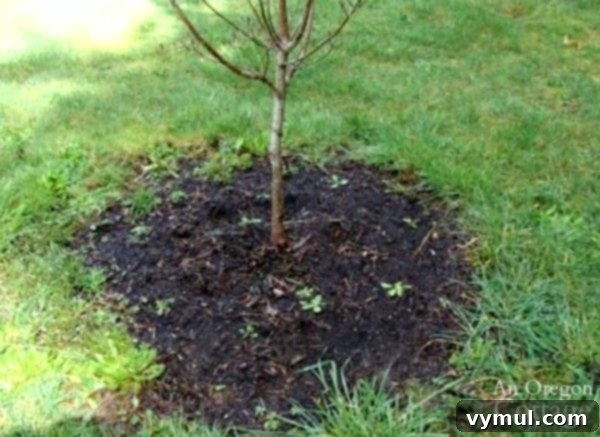
Absolutely! This organic weed control technique is perfectly suited for use around trees, offering a superior alternative to costly “tree rings” or plastic edging that often gets damaged by mowers. Here’s how to adapt this method for optimal tree health and weed suppression:
- Lay a substantial number of paper layers (10-15 layers are ideal for robust weed control) directly over the mown grass in a loose circle around the tree. Tidy up the outer edges by tucking in any sharp corners as needed to create a neat appearance.
- Cover the entire paper layer with 2-3 inches of mulch. Crucially, ensure you do not mound the mulch up against the tree trunk. Keep the mulch a few inches away from the trunk to prevent moisture buildup, which can lead to rot, pest infestations, and interfere with the tree’s natural root flare.
The tree pictured above was treated using this method last year, and as you can see, it remained beautifully grass-free all season long. It will benefit from another layer of paper and mulch this spring to maintain its pristine condition for the coming year. Of course, you can always create a crisp, cut edge around the mulch if you prefer that aesthetic – you can probably guess which approach we lean towards!
What do beds look like when mulched with wood chips?
Above is a fantastic example from my mom’s garden in early spring. We covered this area with cardboard and free tree-trimming wood chips. This particular spot is notoriously moist, which previously made it a constant battle against weeds using regular compost. You can find more details on its initial clean-up here, including just how overrun with weeds it was!
The results were outstanding. Even two years after the initial application, only a handful of weeds required minimal effort to pull, demonstrating the long-term effectiveness of this method, especially in challenging, moist conditions.
Do you have any more examples I can see for inspiration?
Absolutely! Here are a few more glimpses into various areas around our previous home’s yard, hoping to spark your inspiration and show the versatility of this method:
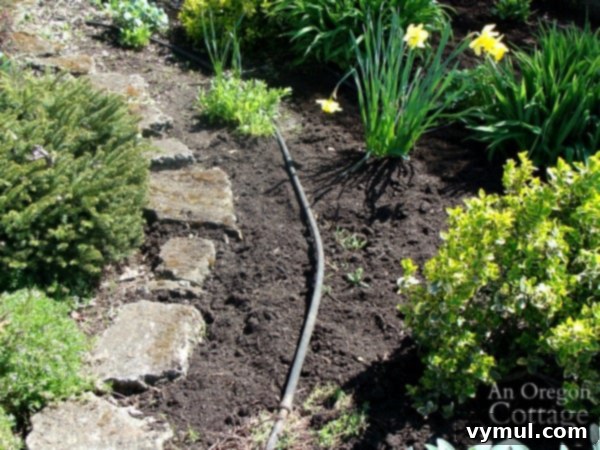
This photo shows a bed in progress, with the paper and mulch being laid around a soaker hose. You can clearly see the untouched, weedy area in the top left that still awaits its transformation, as well as the left side of the stepping stones needing attention.
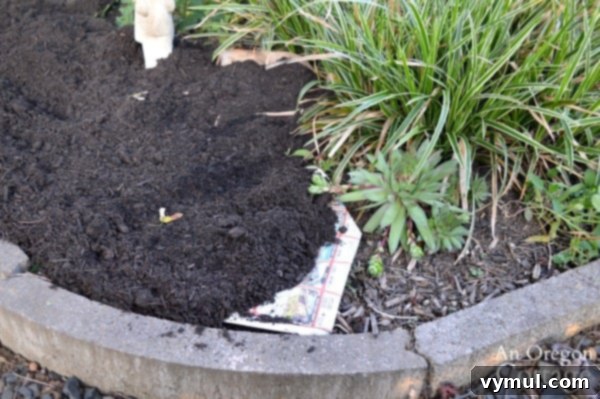
I find immense satisfaction in how the fresh layer of paper and mulch instantly rejuvenates the bed, making it look vibrant and clean again. Notice the striking difference compared to the duller color of last year’s mulch, highlighting the fresh, new look this method provides.
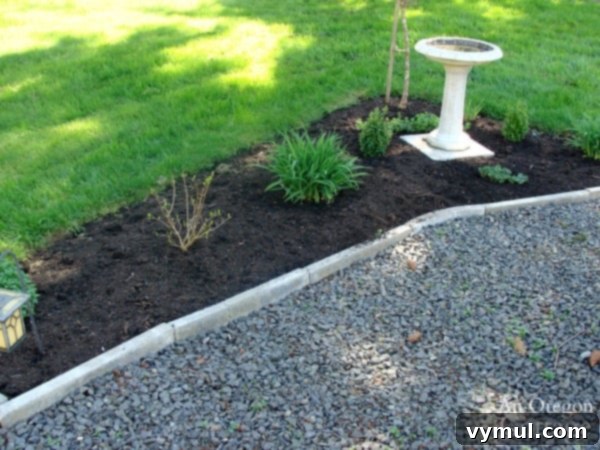
Achieving this clean and tidy appearance is a powerful motivator for me to get out and complete the garden bed clean-up each season. That, and the profound satisfaction of knowing that once the work is done, I won’t have to face intensive weeding again for an entire year!

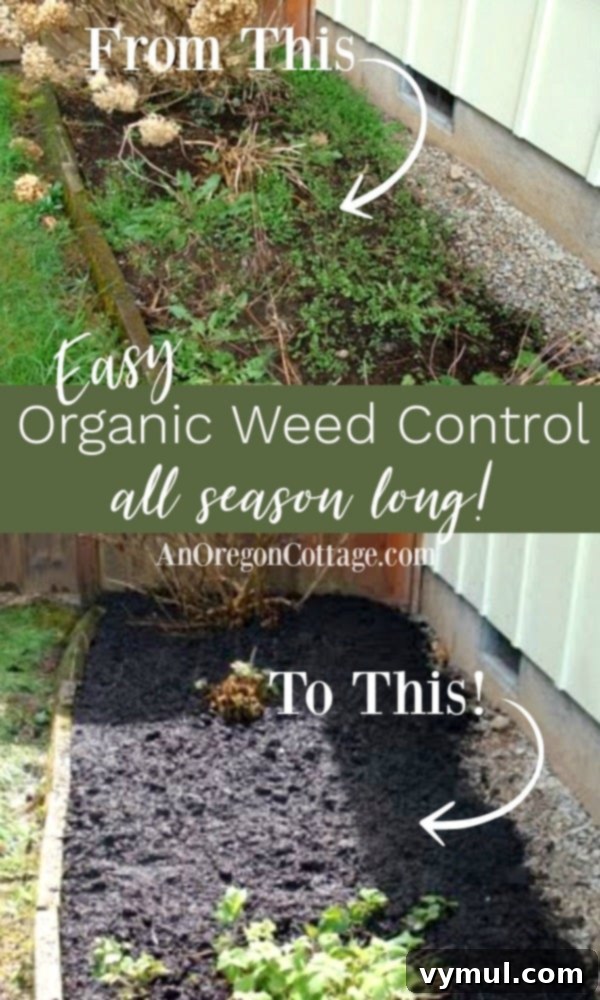
I promise that by embracing these simple yet incredibly effective tips for organic weed control, your entire gardening life will be transformed, just as mine was. You’ll spend less time battling weeds and more time enjoying the beauty and tranquility of your thriving garden. Please do let me know if you decide to try this method and how wonderfully it works for you too!
This article has been thoroughly updated; it was originally published in March 2011.
Disclosure: Affiliate links featured in this article may earn a commission based on sales, but rest assured, this does not alter your purchase price. Click here to review my full disclaimer and advertising disclosure policy.