Bridge the Seasons: Your Guide to Gorgeous August Blooming Perennials & Shrubs for Zone 8 Pacific Northwest
Welcome to the heart of summer! While many gardens start to show signs of winding down, ours in the Zone 8 Pacific Northwest remains vibrant and full of life. This guide focuses on 12 beautiful perennials and shrubs, primarily in soothing pastel and cheerful yellow colors, that reliably burst into bloom in August. These selections happily bridge the gap between the exuberant flush of early summer and the rich hues of fall, ensuring your flower garden maintains continuous interest and color.
Gardener’s Note: You might be thinking, a gardening article about August blooming plants in early June? Absolutely! There’s still ample time to seek out and plant many of these fantastic selections. By doing so, you can ensure your garden boasts continuous, season-long color this year, avoiding the common late-summer lull.
A few years ago, I noticed a distinct gap in my flower borders. After the glorious explosion of June blooms, which typically extended into early July, my garden often looked predominantly green. The vibrant spectacle faded, leaving a quiet interlude before the autumn display. This realization sparked a mission: to find reliable perennials and shrubs that would thrive in our Zone 8 climate and bring consistent color through the often-challenging month of August.
My quest led me to explore numerous local gardens, delve into online resources, and scour gardening magazines for inspiration. I was determined to curate a list of plants that would ensure my beds and borders remained captivating, offering something beautiful in bloom throughout the entire growing season, especially during those “dog days of summer” when many plants begin to tire.
Cultivating a Harmonious Color Scheme
My garden’s aesthetic is built around a specific color palette: soft pastels of pink, purple, and white, accented with cheerful pops of yellow. You’ll never find fiery oranges or bold reds in my beds. This deliberate restraint in color choice shapes my plant selections, as I find it creates a more serene and cohesive garden atmosphere.
Consequently, my search for August bloomers specifically excluded classic late-summer stars like Gaillardia (Blanket Flower) or other similarly hot-toned perennials. While these are undoubtedly beautiful, they simply don’t align with my desired garden mood. If your preference is for a kaleidoscope of every available color, your list of August bloomers could be far more extensive!
However, I’ve discovered a surprising abundance of August-blooming plants that fit perfectly within my chosen palette. If you share my appreciation for a more curated and gentle burst of color, I believe you’ll truly value the dependable performers I’ve found. These plants consistently deliver beauty when many others are merely resting. Allow me to share the twelve shrubs and perennials I’ve successfully incorporated into my garden, along with the reasons why I’ve come to love them so much.
Essential Shrubs & Perennials for Brilliant August Blooms
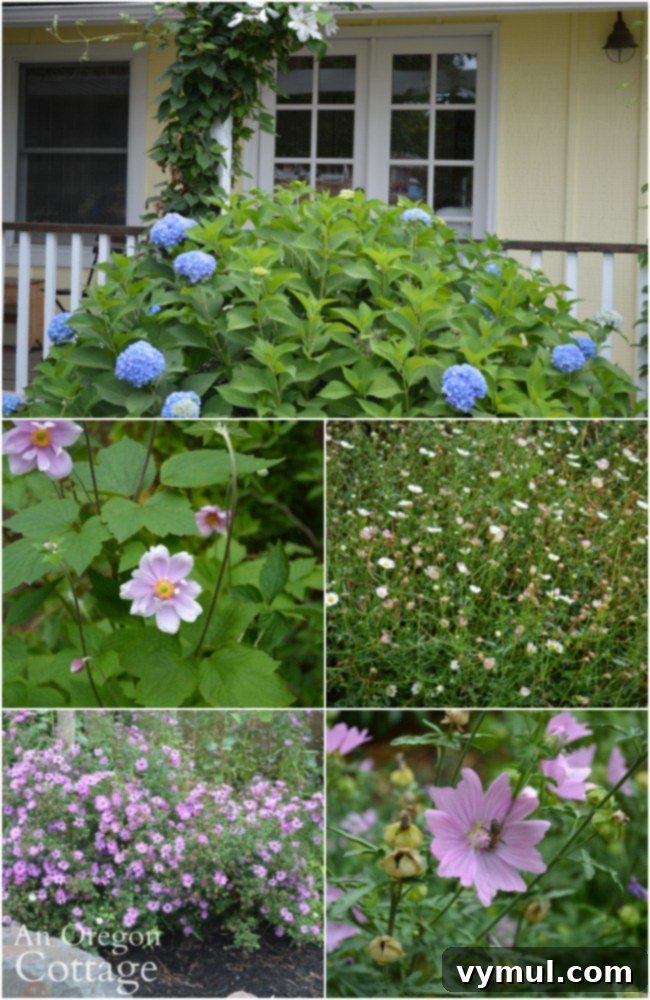
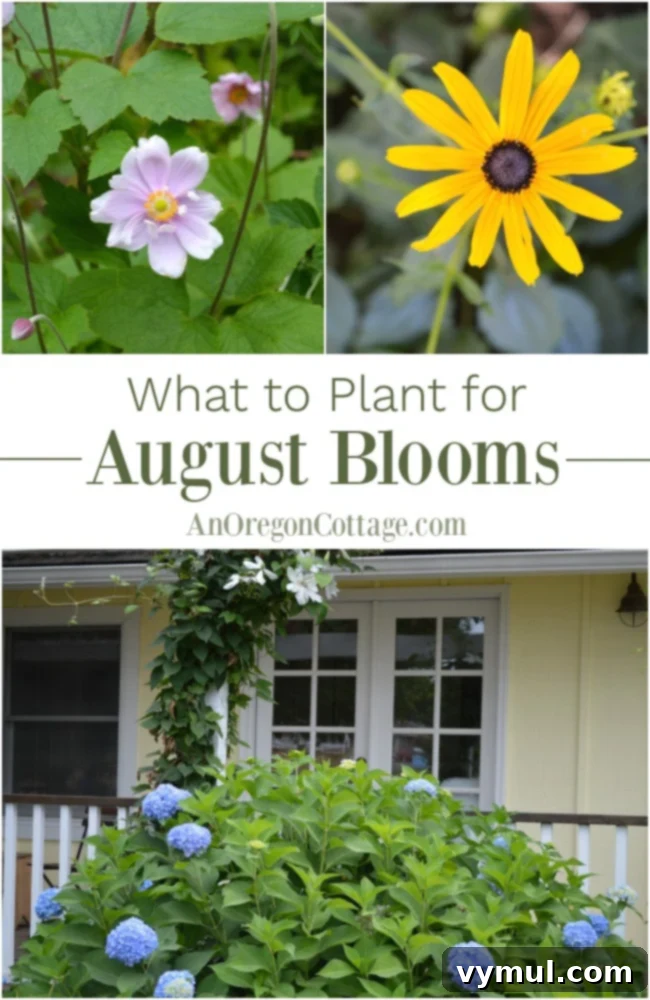
Let’s take a closer look at some of the delightful plants featured in the collage above, all happily blooming in August (clockwise from top):
1. Hydrangea, Endless Summer. These magnificent hydrangeas are a true garden staple. I’ve strategically planted four of them along the front of our porch, and I absolutely adore their consistent performance. They begin their spectacular show in June and continue tirelessly through the first frost, making them far more than just August bloomers. Their ability to provide season-long interest, with their large, beautiful flower heads, makes them an indispensable addition to any garden seeking continuous color.
2. Fleabane (Erigeron annuus). This charming perennial, with its delicate, daisy-like flowers, is a wonderful filler. While it’s a reseeding perennial that occasionally struggles through an exceptionally harsh winter, its ability to spontaneously appear and fill in bare spots is a huge asset. I particularly love how its sweet, unassuming blooms seem to effortlessly complement any plant it grows alongside. When it does successfully reseed, it does so gently, never becoming an aggressive nuisance, which is a big plus for a naturalized look.
3. Malva (from the Mallow family). This particular variety, which I affectionately call “sister’s malva” because it came from her yard, is incredibly adaptable. In her garden, it can reseed quite vigorously, whereas in mine, it’s more restrained. What truly makes it a gem is its unfussy nature; it’s not particular about soil conditions or water availability. It blooms enthusiastically when and where other plants might falter, making it a reliable source of mid-to-late summer color that I truly cherish.
4. Purple Aster. A resilient and versatile perennial, the purple aster is a personal favorite for reliable late-season color. To ensure a robust August bloom, I make it a point to cut it back a bit around the Fourth of July. This strategic pruning encourages bushier growth and a more impressive floral display precisely when the garden needs it most. What’s truly remarkable about this plant is its adaptability: I have successful specimens thriving in dry shade, full sun, and partial sun. It looks fantastic in every location, proving its hardiness. My garden would simply not be complete without a perennial aster!
5. Japanese Anemone (Anemone x hybrida). I cultivate both a light pink and a white version of this elegant plant, and the pink variety reliably starts blooming in mid-July, continuing its graceful display well into September. Despite often being described as shade-loving plants, my Japanese Anemones flourish equally well in full sun within my garden. The pink variety was a cherished gift from a friend, who received it from her grandmother, highlighting its robust and enduring nature for such a delicate-looking flower. Important Note: Through observations in my mother’s garden, I’ve learned that when grown in its preferred shady conditions, Japanese Anemone can become quite invasive due to its spreading underground root system. Exercise caution and consider its placement carefully in such environments.
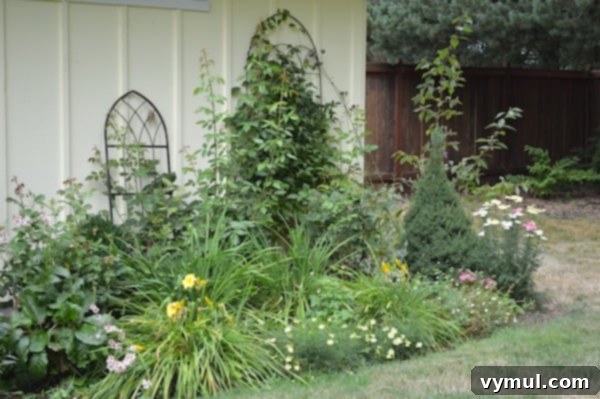
The garden bed pictured above is a dynamic rose-and-perennial border that was bursting with color in June, thanks to the flourishing clematis and roses. While the roses are currently busy forming new buds in anticipation of another spectacular show in a few weeks, they graciously serve as a verdant backdrop for these delightful August-blooming flowers (from left to right, in the foreground):
6. Verbascum (Mullein). I truly adore the dramatic, tall flower spikes of Verbascum that grace the garden in June. My only wish is that the later spikes would maintain their upright posture more consistently; they often require staking to prevent them from flopping over. However, the effort is well worth it, as consistent deadheading will encourage it to rebloom beautifully through September, extending its elegant vertical accent in the border.
7. Stella d’Oro Daylily (Hemerocallis ‘Stella d’Oro’). This classic dwarf daylily is renowned for its tireless blooming throughout the entire growing season. Its cheerful, golden-yellow flowers appear almost continuously. To keep its grass-like foliage looking its best and prevent browning leaves, regular watering is essential, especially during dry spells. Beyond its prolific blooms, its fine-textured leaves add a lovely structural element to any border, complementing bolder foliage plants beautifully.
8. Coreopsis ‘Moonbeam’. Coreopsis varieties are generally celebrated for their long and reliable blooming periods, and ‘Moonbeam’ is no exception. I particularly appreciate this low-growing cultivar for its delicate, soft yellow flowers and its airy, fern-like leaves. It adds a gentle, almost ethereal quality to the front of the border, providing a continuous carpet of sunny color without overwhelming its neighbors.
Fleabane also makes an appearance here, self-seeding and adding its casual charm. I often take small starts from it and replant them in various spots throughout the garden – truly #freeplants that effortlessly enhance the landscape!
9. Sweet William (Dianthus barbatus) (the pink just peeking above the fleabane). While Sweet William doesn’t always prove to be reliably perennial for me through our Zone 8 winters, its vibrant summer blooms make it a worthwhile annual or biennial purchase. It’s usually easy to find at local nurseries each spring, allowing me to enjoy its cheerful clusters of pink flowers specifically for their summer display. Its charming, often bi-colored flowers add a touch of old-fashioned cottage garden appeal.
10. Pastel Yarrow (Achillea millefolium). This plant is an absolute must-have for vibrant late-summer blooms! I cultivate both this lovely pastel variety and the classic bright yellow one. Yarrow is incredibly drought-tolerant once established and provides a fantastic textural contrast with its flat-topped flower clusters and feathery foliage. An added bonus: yarrow makes excellent cut flowers that last a long time in a vase, bringing garden beauty indoors.
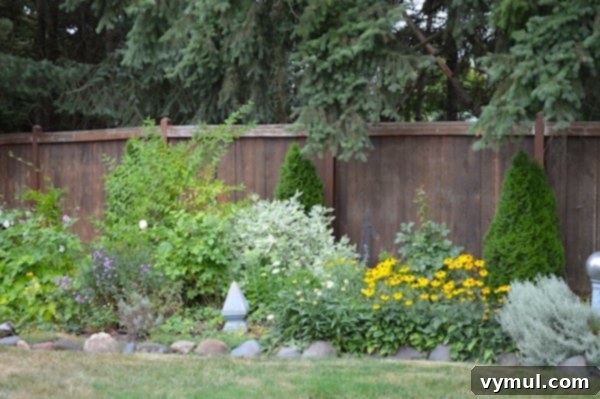
In this particular fence border, a foundation of spring-flowering shrubs, roses, and evergreen plants provides year-round structure and texture. To enhance the late-summer display, I’ve incorporated more of the purple aster, mentioned previously, alongside my absolute favorite yellow August bloomer, which you can clearly see on the right:
11. Black-eyed Susan (Rudbeckia hirta). I make it a point to plant Black-eyed Susans somewhere in nearly all my garden beds. Their striking, cheerful yellow blooms with dark centers provide an incredible pop of color precisely at the height of summer, truly illuminating the garden. What makes them even more appealing is their ease of growth and the simple process of propagating new plants from rootings – a wonderful bonus for expanding your sunny displays without additional cost. They are incredibly resilient and truly embody the spirit of a sunny summer day.
Curious about the white flower positioned to the left of the Black-eyed Susan? That is a variety of Shasta Daisy that I had aggressively sheared back in June. This clever trick encouraged it to produce a second flush of blooms, so technically, it does contribute to the August display. However, it didn’t quite make my “official” list, and frankly, I’m not its biggest fan, chuckle. While it offers a second bloom, the flowers don’t last particularly long, and the plant seems to be more about green foliage than abundant blossoms for much of the season. Plus, to be completely honest, the flowers have a rather unpleasant scent, which makes them unsuitable for cutting and bringing indoors. It’s a reminder that not every plant, despite its potential, earns a permanent place in the favored roster!
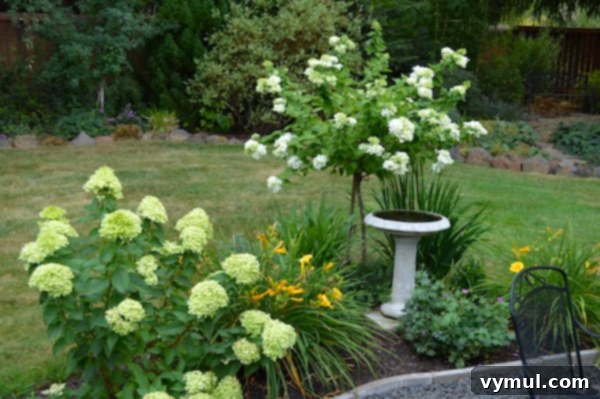
The compact garden bed above, gracefully hugging our gravel patio, is arguably my most cherished spot. And yes, you guessed it – there are more hydrangeas! I’m almost hesitant to confess the sheer number I have, as my adoration for them knows no bounds. The two splendid varieties showcased above are:
- Little Lime Hydrangea (Hydrangea paniculata ‘Little Lime’) (bottom left). I enthusiastically wrote all about this plant last year, declaring it my newest favorite hydrangea. Its compact size, combined with its elegant lime-green blooms that mature to a soft pink, makes it incredibly versatile. It’s perfect for smaller spaces or for adding a touch of sophisticated color to the front of a border, providing continuous interest from mid-summer well into autumn.
- PeeGee Hydrangea (Hydrangea paniculata ‘Grandiflora’) standard. I absolutely love PeeGee Hydrangeas, whether grown as a stately tree form like this one or as a robust bush. The image captures the very beginning of its bloom cycle. As the season progresses, the flowers will grow larger and more cone-shaped, gradually fading to a stunning, deep pink by October. This transformation adds an extended period of interest and a lovely seasonal shift to the garden.
This particular bed is not only aglow with the beauty of hydrangeas and more of the ever-reliable Stella d’Oro daylilies, but it also features another fantastic perennial that provides season-long blooms (situated charmingly in front of the bird bath):
12. Hardy Geranium, ‘Rozanne’ or ‘Monster’ variety. This robust hardy geranium, often referred to as a “monster” due to its vigorous growth, is a powerhouse of continuous blooms. I do need to keep its expansive tendencies in check with occasional pruning, but the reward is worth the effort. After I give it a good cutback, it simply responds by producing even more vibrant flowers. Most hardy geraniums are known for their exceptionally long blooming periods, making them an excellent choice for extending color into the late summer and early autumn garden. Their mounding habit and cheerful blooms make them fantastic groundcovers or front-of-the-border plants.
And there you have it – my curated list of 12 dependable perennials and shrubs that consistently grace my Zone 8 Pacific Northwest garden with their beautiful blooms throughout the month of August!
Bonus Late Summer Bloomer… with a Twist!
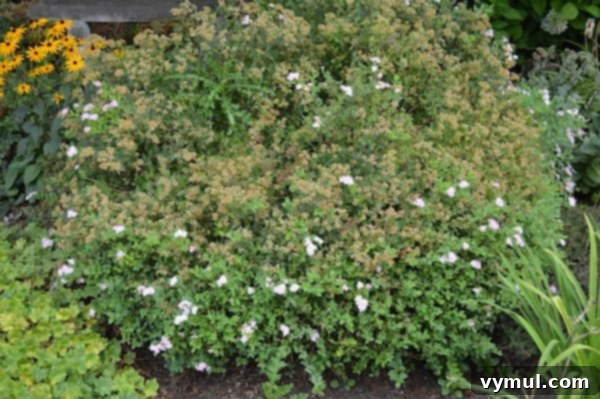
I’m including a photograph of this wonderful shrub, Spirea (which, by the way, is one of my all-time favorite low-maintenance shrubs), for two very distinct reasons:
- It typically functions as a July bloomer in my yard. You can clearly see evidence of this in the photograph, with numerous spent, brown blooms that I haven’t yet deadheaded. This is its natural bloom time, offering a lovely display earlier in the summer season.
- BUT here’s the clever part: if you shear off all those faded blooms, you can successfully coax a second, vibrant August bloom from the plant! You can observe this phenomenon in the image, with fresh new flowers emerging vigorously around the bottom of the shrub, and a few scattered here and there where I clipped. This particular instance was actually a happy accident; I was simply shaping this Spirea shrub and didn’t consciously consider the potential for reblooming. A personal note to self, and a valuable lesson for all gardeners: partially trimmed plants can indeed look quite comical when they unevenly rebloom! For best results, a thorough shearing is recommended to achieve a uniform second flush.
Oh, and a Word on Weeds…
Did you happen to spot the formidable thistle valiantly growing right through the middle of that Spirea bush? It’s a stark reminder that even in meticulously planned gardens, nature finds a way.
You often hear the gardening adage to “plant thickly to keep weeds away.” Um, I could probably show you countless areas in my yard where that wisdom simply doesn’t hold true. I’ve already pulled approximately 20 of these stubborn thistles from around and within this very plant this season alone! It makes one wonder if some gardening advice is more of a hopeful “old wives’ tale” than a consistently reliable strategy. Weeding remains an ongoing, often humble, part of the gardening journey, regardless of how densely you plant!
I’d genuinely love to know what perennials and shrubs you rely on for spectacular late-summer blooms in your garden! Share your wisdom in the comments below!

This article has been thoroughly updated and expanded to provide even more valuable insights and plant recommendations. It was originally published in August of 2013.