
Transform Your Craft Space: The Ultimate Guide to Fabric Stash Organization and DIY Storage Solutions
Some links in this article are affiliate links and if you click on them I will receive a small commission at no cost to you.
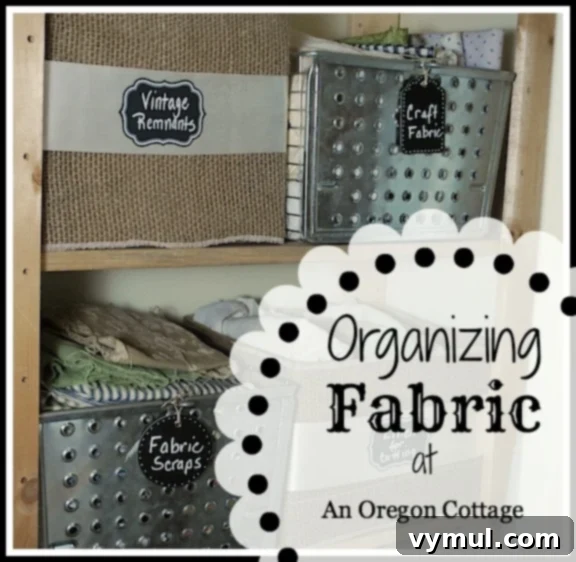
After what felt like an endless two months of stop-and-start organizing sessions, I’m absolutely thrilled to report a monumental achievement: my fabric closet makeover is complete! Not only is it organized beyond recognition, but my once overwhelming fabric stash has been significantly reduced. Phew, what an incredible feeling of accomplishment and calm it brings to my creative space!
The journey to this organized haven began with a stark realization of just how out of control things had become. For anyone who has ever wrestled with a burgeoning collection of craft supplies, you’ll understand the daunting nature of the “before” state. Let’s take a look back (or perhaps avert your eyes if you’re sensitive to organizational chaos – it was truly a sight!):
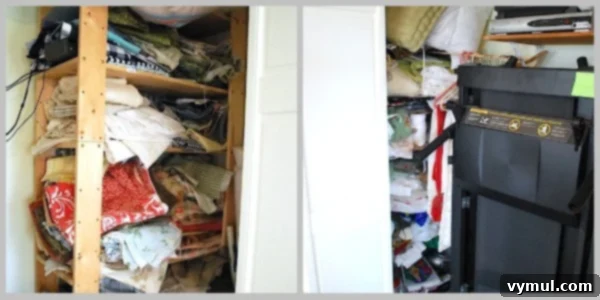
*shudder*
I know I’ve shared glimpses of the chaos on the left before, but the photo on the right is a fresh, unfiltered look at the full extent of the issue. I simply couldn’t bring myself to reveal the entire messy truth all at once. I was battling not one, but two completely out-of-control fabric shelves. What’s even harder to believe is that these shelves had, at one point, started out meticulously organized into piles of like fabrics: prints, florals, whites, vintage pieces, and so on. The gradual accumulation, combined with a lack of a sustainable system, slowly but surely led to this state of disarray.
If there’s one profound lesson to extract from these “before” photographs, it’s a twofold principle for effective fabric organization: first, limit piles, and second, eliminate – a lot. These seemingly simple directives became the guiding force behind my entire fabric stash transformation project. It’s about more than just tidiness; it’s about reclaiming space, both physical and mental, and fostering an environment where creativity can truly flourish without the hindrance of clutter.
And so, armed with these two fundamental principles, I embarked on the mission to tame my unruly fabric collection. The process was eye-opening, challenging, and ultimately, incredibly rewarding. It wasn’t just about finding a home for every scrap; it was about re-evaluating what I truly needed, what inspired me, and what truly deserved a place in my precious craft space.
Fabric Organization Made Easy: A Step-by-Step Makeover

Ta-da! Can you believe this transformation? This is the very same section of the main shelf that was pictured on the right in the “before” snapshot. Now, it stands as a testament to the power of thoughtful fabric organization – all neat, tidy, and most importantly, functional. The addition of clear, coordinated labels makes finding exactly what I need a breeze, eliminating endless rummaging and frustrating searches that used to plague my crafting sessions.
My labeling system isn’t just about aesthetics; it’s a practical cornerstone of maintaining order. I grouped fabrics by type, color, or intended project, allowing for quick visual identification. For instance, smaller scraps might be grouped by dominant color, while larger cuts of quilting cotton might be labeled by theme or material composition. This strategic approach ensures that every piece of fabric, no matter how small, has a designated and easily accessible home.
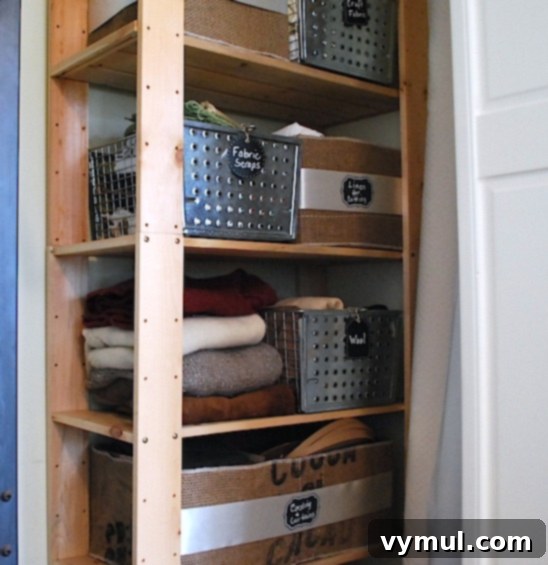
And here we have the beautifully organized lower part of the shelf. I chose not to display these images side-by-side so you could fully appreciate the “whole” shelf, complete with a significantly reduced number of fabric piles – just three in total! These remaining piles consist of larger, bulkier fabric pieces that don’t easily fit into boxes or on smaller shelves. My hope is that these larger, more substantial pieces will be easier to manage and less prone to becoming unruly over time. However, I’ve built in flexibility: if they prove difficult to maintain, I can always add more DIY storage boxes later, adapting the system as needed to ensure lasting order.
The design inspiration for this fabric storage solution came directly from the vibrant world of crafting blogs. I wanted the shelves to be not only highly functional but also visually appealing. Since this closet also houses our treadmill, I figured, why not create something beautiful to look at while working out? It’s amazing how a tidy and pretty space can boost motivation, even during exercise!
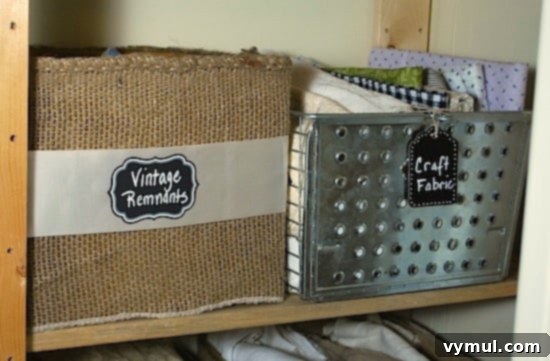
I’ve cherished my vintage gym locker baskets for years; they previously resided in our son’s room. While I love their character, I didn’t have enough to fill all the shelves. This prompted a wonderfully cost-effective and creative solution: transforming ordinary cardboard boxes. I simply covered them with rustic burlap to give them a cohesive, charming look that blends seamlessly with the existing gym baskets. This DIY approach allowed me to create ample storage tailored to my needs without breaking the bank, perfectly complementing the aesthetic I was aiming for.
Here’s how to easily convert a cardboard box into a cute storage container:
Creating these charming, functional storage boxes from simple cardboard is an incredibly satisfying and budget-friendly project, especially when you can utilize fabric scraps from your own stash! Here’s a detailed guide to help you craft your own beautiful fabric storage solutions:
-
Prepare Your Box: Remove Flaps for Easy Access. Begin by taking a sturdy cardboard box of your desired size. Using a sharp box-cutter or utility knife (exercising extreme caution, of course), carefully cut the top closing flaps off. This step is crucial for creating an open, easily accessible storage container, perfect for quick retrieval of fabrics or craft items. Ensure your cuts are clean and straight for a professional finish. If you don’t have a box-cutter, heavy-duty scissors can work for thinner cardboard, but a box-cutter is preferred for precision and ease.
-
Select and Cut Your Fabric: Personalize Your Style. Next, select the fabric you wish to cover your box with. This is where personalization truly shines! I opted for burlap cut from old coffee bean sacks for its rustic charm and durability, but feel free to use any fabric you love – scrap fabric, an old curtain, a linen tablecloth, or even a cherished piece of quilting cotton. Cut a piece of fabric to the exact outside dimensions of your box, ensuring it wraps from the top edge, down the sides, and all the way around. You might choose to cover all four sides and the top edge, or simply the front and visible sides if the back will be against a wall (as I did for some of my boxes). To prevent fraying, serge or zig-zag the raw edges of your fabric. Two important notes here: First, if you plan to sew a neat hem (or use iron-on tape for a no-sew alternative), cut extra length top-to-bottom to allow for turning under and pressing a crisp edge. Second, remember that the fabric choice is entirely yours – let your creativity guide you!
-
Apply Spray Adhesive: Ensure Proper Ventilation. Take your box outside or to a very well-ventilated area. This is a crucial safety step to avoid inhaling fumes. Thoroughly spray all sides of the box with a strong spray adhesive. Make sure to apply an even coating for the best bond. Don’t worry if it’s a bit cold outside; the adhesive will remain tacky enough for you to bring the box back inside to adhere the fabric. There’s no rush, as the tackiness of most spray adhesives allows for some working time.
-
Smooth the Fabric onto the Box: Achieve a Flawless Finish. Carefully bring your sprayed box back inside. Gently place your cut fabric onto the box, starting from one side and slowly working your way around. As you go, smooth the fabric onto the box, pressing firmly and adjusting as necessary to ensure the edges line up perfectly and there are no wrinkles or air bubbles. The beauty of spray adhesive is that the bond is often repositionable for a few minutes, allowing you to make small adjustments until you achieve a smooth, professional-looking finish. Take your time during this step to ensure a neat appearance.
-
Add Decorative Ribbon: A Touch of Elegance. To add a charming detail and a bit of visual interest, add a ribbon across the middle of the box. I preferred a non-permanent attachment method for flexibility, so I simply used long straight pins to secure the ribbon, pushing them through the fabric and into the cardboard itself. This allows for easy changes if I decide to refresh the look in the future. You could also use hot glue for a more permanent bond, or even twine or contrasting fabric strips for a different aesthetic.
-
Attach Coordinating Labels: The Key to Organization. This step is absolutely essential for creating truly functional and pretty shelves. Thoughtful labeling ensures that you (and anyone else using the space) can quickly identify the contents of each box, preventing future disorganization. Whether you choose to glue, tape, pin, or tie them to the ribbon or directly onto the box, ensure your labels are clearly visible. You can create your own custom labels using a design site like PicMonkey and print them out, or opt for store-bought labels. I personally used Martha Stewart Home Office chalkboard labels that I had on hand (they’re currently not available to be linked to, but similar styles are widely available). For writing on chalkboard labels, always use a Chalk Marker (like this one at Amazon); it provides a crisp, legible script that won’t rub off with casual contact. Should you need to reorganize or change categories in the future, the chalk marker ink comes off easily with a damp rag, making them wonderfully reusable.
The absolute best part about this DIY storage solution? When you’re a crafter with a significant stash of fabric, it’s incredibly easy to use what you already have on hand to create these beautiful and practical boxes – talk about resourcefulness! This means total cuteness for virtually FREE. Okay, I confess, I *did* at one point pay for the burlap (though the coffee bags were a steal at around $2 each!), and I’ve had the ribbon for so long it feels like it was practically free – right? The satisfaction of upcycling and creating something so useful from simple materials is truly unmatched.
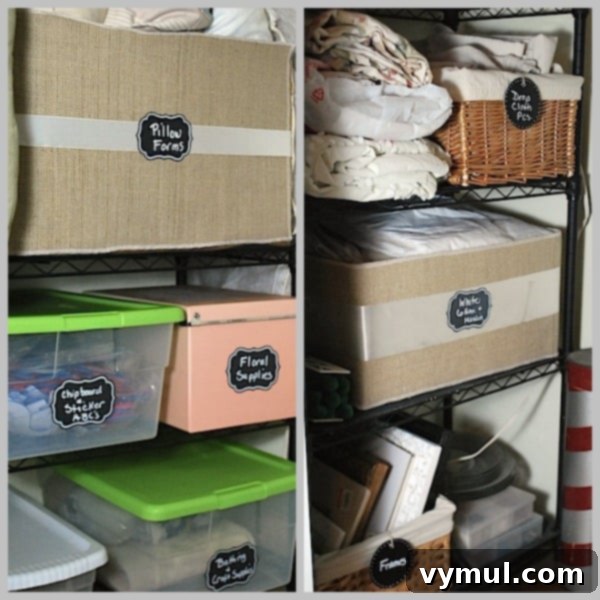
My fabric organization efforts extended to the wire shelves on the opposite side of the closet. Here, I incorporated even more of my newly crafted burlap-covered boxes, strategically placed alongside a couple of charming woven baskets. A major benefit of significantly reducing my fabric stash was the liberation of valuable space. This allowed me to designate specific boxes for various craft items that previously lacked a proper home. Now, everything from embroidery floss and sewing notions to beading supplies and small tools has an assigned spot, making my creative process much more efficient and enjoyable. Yay for extra craft storage!
Maintaining a consistent aesthetic was important to me, so I ensured that all the labels matched across both sets of shelves. This cohesion not only looks visually pleasing but also reinforces the sense of an organized, harmonious craft space. It makes finding items intuitive and keeps the overall appearance serene and orderly.
(And let me just pause here to say – photographing inside a closet is notoriously tricky. It’s difficult to capture the full scope and true improvement. at. all. The lighting is usually poor, and the angles are always challenging, but I hope these images convey the significant change!)
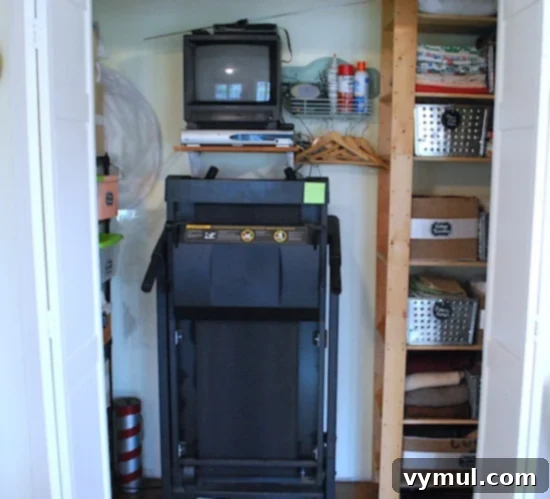
Even though this might not be the most aesthetically perfect photograph (which is probably why I saved it for last – if you’ve read this far, I know you’re dedicated to home organization!), I truly wanted to share the impactful “after” shot that greets us every time we open the closet doors. It’s a complete transformation from the chaotic scene it once was. The addition of a small, discreet shelf made a huge difference, finally providing a designated spot for items that used to carelessly clutter the floor. This simple solution also allowed me to neatly house the TV box that was previously perched precariously on the wood shelf in the “before” picture, along with its associated tangle of messy-looking cords. It’s the little details that often make the biggest impact on overall tidiness and functionality.
Now, I find genuine joy in having something beautiful and orderly to see when I’m on the treadmill, engaging in my easy workout routine. Beyond the visual appeal, I’m absolutely ecstatic about the practical benefits: being able to locate any fabric I’m looking for with incredible ease, and having ample, designated room for all my loose craft items. This newfound order has not only decluttered my physical space but also cleared my mental clutter, allowing for more focus and enjoyment in my creative pursuits.
Most importantly, by containing almost everything neatly within a box or basket, I feel confident that this time, my organization system is truly maintainable. The structure itself encourages tidiness and prevents the gradual accumulation of chaos. It’s a sustainable solution that I believe will stand the test of time, keeping my craft space inspiring and functional for years to come. Maintaining an organized fabric stash means more time for creating and less time searching, which is a win-win for any crafter!
How do you organize your fabrics and craft supplies? Do you have any clever DIY storage solutions or tips for maintaining order? Share your insights in the comments below!
Disclosure: affiliate links in this article will earn commission based on sales, but it doesn’t change your price. Click here to read my full disclaimer and advertising disclosure.