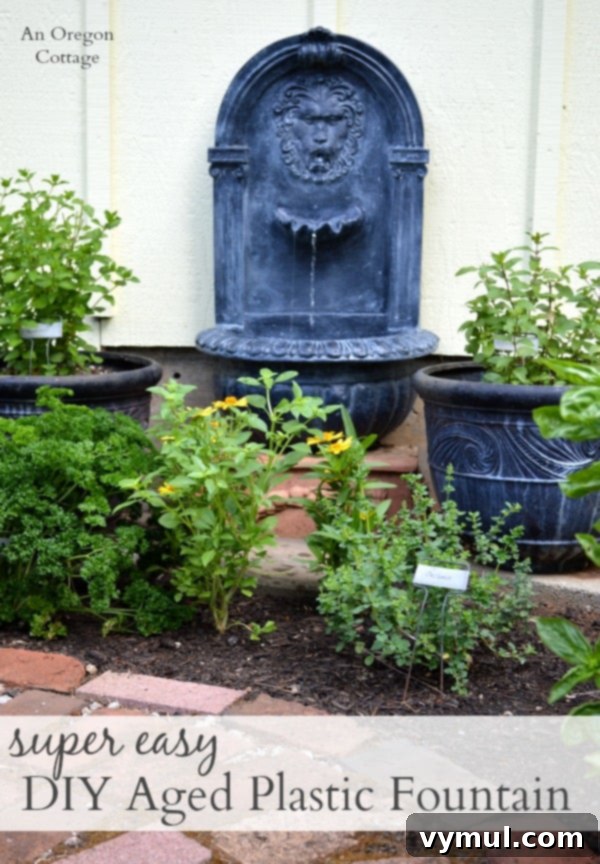
Transform Your Garden: Easy DIY Aged Plastic Fountain Makeover for a Faux Stone Look
Welcome to an incredibly simple yet highly impactful DIY project that will teach you how to achieve a beautiful, aged faux stone look on plastic garden items, including fountains, pots, and urns, in just a few straightforward steps. Say goodbye to cheap plastic appearances and hello to timeless elegance!
Please note: Some links in this article are affiliate links. If you click on them and make a purchase, I may receive a small commission at no extra cost to you. This helps support my DIY endeavors and keeps this content free for you.
For quite some time now, ever since we completed our herb garden transformation, I’ve envisioned a charming fountain gracing the wall space against our house. This particular spot presented a challenge: plants never seemed to thrive there, leaving an empty void that needed an aesthetic solution. Our recent harsh winter sadly claimed many of our beloved herbs, prompting a timely revamp of the garden and the perfect opportunity to finally find that dream fountain.
Naturally, my inclination was to embark on a DIY project, and initially, I explored creating one of those popular pot fountains, where a pump is cleverly concealed beneath a stack of rocks in a large container, much like the inspiring ideas I’d seen on Pinterest. However, a rather peculiar pipe emerging from the base of the wall where the fountain would sit presented a significant hurdle. This odd pipe, whose purpose remains a mystery, prevented the placement of any large containers directly on the ground, limiting my options significantly. It was precisely because we couldn’t plant anything there that a fountain or decorative pot seemed like the ideal choice in the first place.
My quest for a suitable water feature continued. Most DIY fountain ideas involved a pump submerged in a half-barrel or similar large vessel, a look that leaned a bit too “country” for the refined aesthetic I was hoping to achieve in this specific garden area. My vision was something more classic, perhaps a wall-mounted fountain that could elegantly rest on the ground, complementing the existing decor without overwhelming the space. What I encountered next, however, was a jarring reality check: the price tags. A classic-styled fountain, often made from plastic or resin designed to mimic the appearance of iron or stone, routinely commanded prices of $200-$300. This sticker shock quickly put my fountain dreams on hold. I know, I know—first-world problems, cue the tiny violins.
Then, a stroke of luck! One afternoon, while browsing Amazon with a handful of accumulated birthday gift cards, I stumbled upon a fountain priced at half of what I had seen elsewhere. It was an instant decision—sold! The size and style appeared to be a perfect fit for the intended space, and the price was finally within reach.
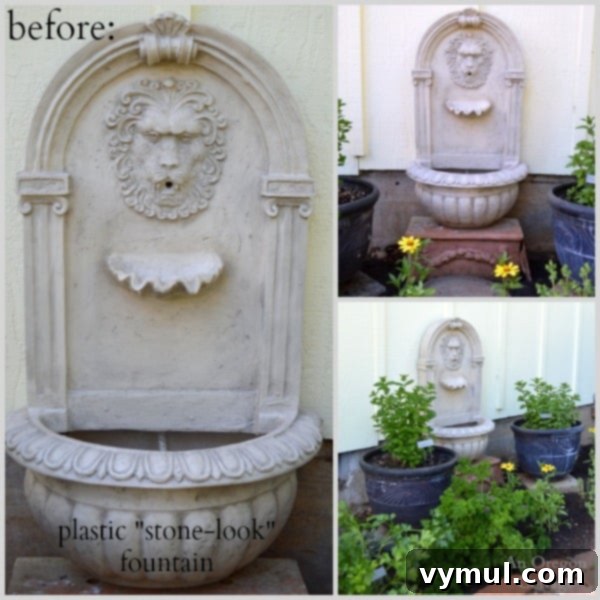
However, once it arrived, a new challenge emerged. While this affordable fountain had a good size and fit the wall space perfectly, its material was unmistakably plastic. The light, almost stark, color clashed with my existing darker garden pots and blended too seamlessly into our light yellow house exterior, failing to create the desired visual impact. I had been particularly drawn to fountains with a richer, darker appearance, reminiscent of aged iron or weathered stone, which exuded a sense of permanence and history. So, what’s a dedicated DIY enthusiast to do when faced with such a stylistic discrepancy?
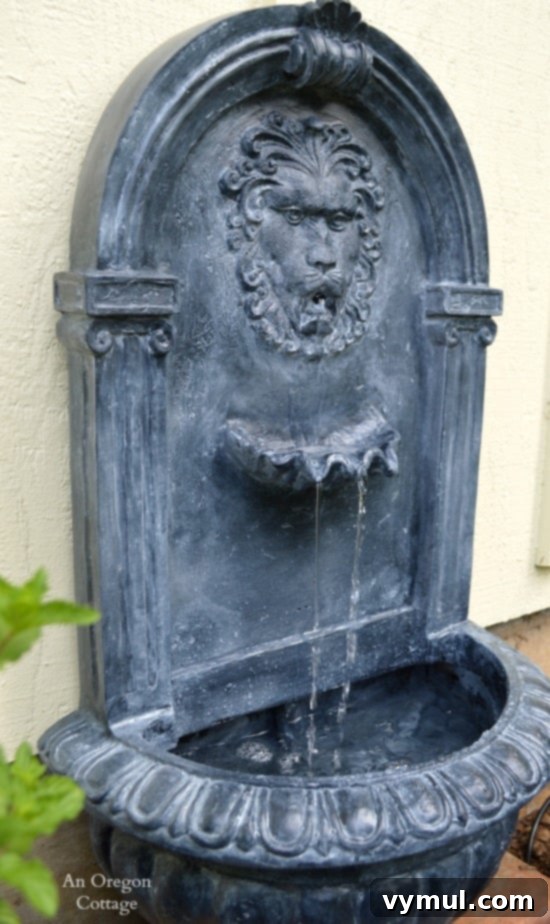
The answer, of course, was to age it with paint! And the results? Absolutely stunning. I must confess, I was genuinely surprised and delighted by how dramatically better it looked. More importantly, I’m here to assure you that this transformation was incredibly EASY. There are no intricate layers, complicated finishes, or advanced artistic skills required for this DIY aged plastic fountain project. It’s essentially a straightforward, two-step process: a foundational spray paint application followed by a simple wash and wipe technique.
This versatile aging technique isn’t limited to fountains; it will work wonders on virtually any plastic item you wish to imbue with a weathered, antique appearance, especially those with interesting nooks, crannies, and textured details. Think garden pots, birdbaths, planters, and even decorative urns. The key is to leverage the existing texture and form of the plastic item to create depth and visual interest.
So, without further ado, let’s dive into the simple steps that took this mundane plastic object from a “blah” garden accessory to a captivating focal point that will have everyone asking, “Where did you find that magnificent fountain?”
How to Age Faux Stone Plastic: A Simple DIY Guide

Step One: Paint It
1. Prime Your Plastic Surface. Before applying any color, it’s crucial to prepare your plastic (or “resin,” which is often just a fancy term for a type of plastic) surface with a high-quality indoor-outdoor primer specifically formulated for plastic adhesion. I personally achieved excellent results using this Rustoleum Ultra Cover flat gray primer. The gray provides an excellent neutral base for the subsequent black paint. Ensure you apply a thorough, even coat, paying special attention to cover all surfaces, including the inside of the fountain’s bowl area if you’re working on a water feature. Allow the primer to dry completely according to the manufacturer’s instructions, as proper drying time is essential for optimal adhesion and durability.
2. Apply Your Base Coat. Once the primer is fully dry, spray your entire object with an indoor-outdoor flat black paint. A flat finish is key here, as it absorbs light rather than reflecting it, creating a more realistic, non-plastic appearance crucial for an aged effect. I opted for Rustoleum Painter’s Touch for this project, primarily because I already had it on hand. The Ultra Cover in flat black would also be an excellent choice. Apply two light, even coats rather than one heavy coat to prevent drips and ensure comprehensive coverage. Allow the paint to dry thoroughly between coats and before moving on to the next step, as indicated by the product’s directions. This black base will serve as the “shadow” layer, giving depth to the final aged look.

Step Two: Wash & Wipe It to Perfection
1. Prepare Your Whitewash Mixture. This step introduces the magic that transforms the plain black into an aged, faux stone masterpiece. In a small bowl, mix white acrylic paint (like this one) with water in a 1:1 ratio. You won’t need a large quantity; for my fountain, about 1/4 cup of the mixture was more than sufficient, with some left over. The goal is a thin, watery consistency that will easily flow into crevices. I found a 1-inch foam brush to be the ideal tool for both mixing and applying the wash.
2. Apply the Wash Liberally. Using your foam brush, apply the watery whitewash over the flat black surface. Don’t worry if it looks very thin and runs; that’s precisely the desired effect. Ensure that the entire section you are working on is covered, allowing the wash to seep into all the textured areas, divots, and faux carvings of your plastic item.
3. Work in Small Sections. To prevent the whitewash from drying too quickly, it’s crucial to work in manageable sections. This allows you enough time to apply the wash and then properly wipe it off before it sets, ensuring a smooth, aged finish without harsh lines or splotches. The size of your sections will depend on the size and complexity of your item and the ambient temperature, which affects drying time.
4. Wipe the Excess Whitewash. Immediately after applying the wash to a section, take a clean cotton rag and begin gently wiping off the excess. This is where the true aging effect comes to life. You’ll notice that the majority of the whitewash will be removed, leaving behind a subtle, thin film that settles into the deeper textures, faux carvings, and rougher spots of the plastic. This process creates highlights and shadows, mimicking the natural patina of aged stone. This is a highly intuitive step; you’ll quickly get a feel for how much to wipe off to achieve your desired look. I preferred to wipe most of the whitewash out of the prominent lines and smooth surfaces, using my fingernail wrapped in the rag to get into tighter areas. However, you might prefer a slightly heavier whitewash for a more pronounced “mossy” or “limestone” effect—it’s entirely up to your personal aesthetic. Remember to thoroughly wash and wipe the entire object. If you’re working on a fountain, don’t forget the inside of the water bowl. For pots, ensure you paint and wipe at least 2 inches down the inside top edge, as this area won’t be covered by soil and would otherwise reveal the original plastic color.
As you examine the lower sections of your piece, you’ll clearly observe how the fountain’s inherent divots, intricate faux carvings, and subtly rough spots perfectly capture and retain the whitewash, contributing significantly to the authentic aged appearance.

While this particular photograph may not perfectly capture the transformation, it undeniably showcases the profound difference the whitewashing made on the painted black surface—truly incredible, wouldn’t you agree? The contrast and depth it creates are simply stunning.
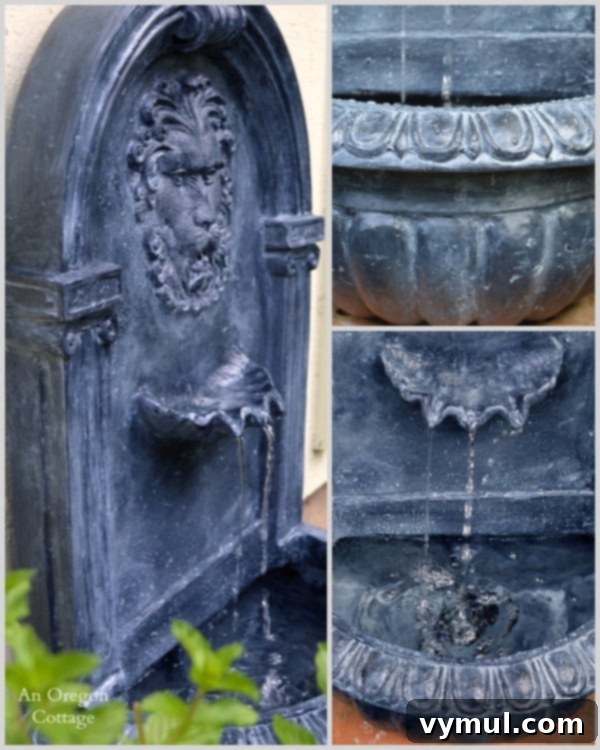
The final crucial step is to apply a clear protective topcoat. I recommend using a clear spray sealant specifically designed for outdoor use. This protective layer will seal in your beautiful aged finish, providing durability against the elements and ensuring longevity, especially for items exposed to water like a fountain. While I did notice a slight darkening of the finish after application, it wasn’t significant enough to detract from the overall aged effect. I made sure to apply a particularly generous and even coat to the fountain’s bowl, which holds the water, to maximize protection. Only time will tell the full extent of its durability, but the beauty of this DIY project is that it would be relatively simple to reapply the protective coat or even refresh the entire aged look if needed in the future.
And that’s it! See how truly easy and impactful this project is? The transformation from plain plastic to an elegant, aged garden feature is astonishingly simple.
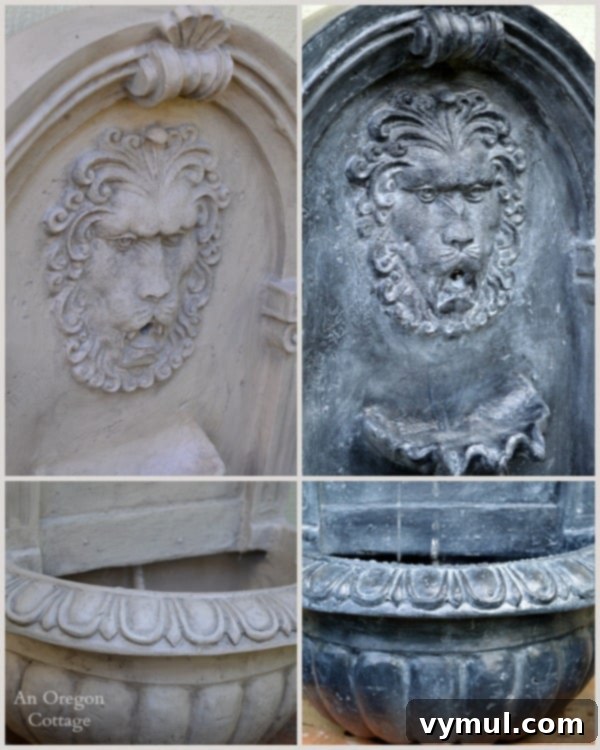
Here’s a compelling close-up before-and-after comparison for you. I must be honest and admit that the “before” photos, while they show the original color, actually make the fountain look slightly better than it did in real life. In person, whether viewed from a distance or up close, its plastic composition was always undeniably evident. The simple yet effective paint job completely revitalized the piece, creating a much richer, more sophisticated product. It dramatically enhanced its existing ‘carvings’ and decorative details, giving them a depth and character that was previously lacking.
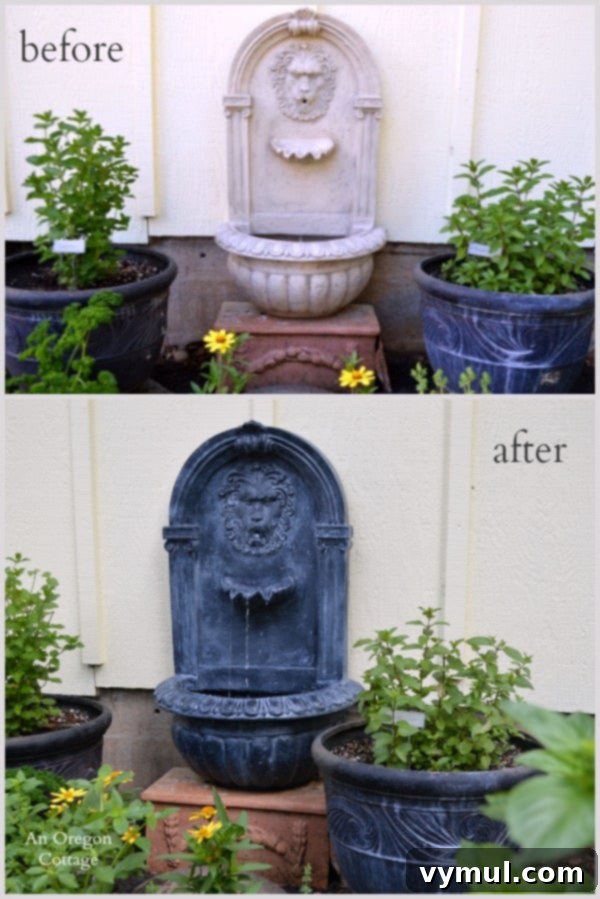
And here’s a broader “before and after” view of the fountain nestled within our herb garden. The improvement is truly remarkable, don’t you agree? While the “before” image appears a little blurry, I assure you it wasn’t an intentional attempt to unfairly favor the “after” shot! The transformed fountain now looks as though it has been a cherished fixture in the garden for ages, seamlessly blending with the natural elements and adding a layer of historical charm.
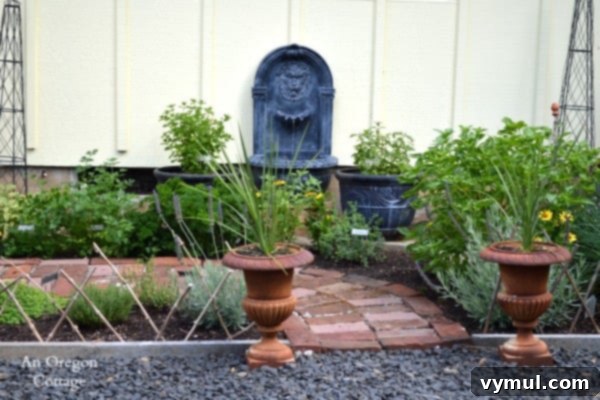
This is now our serene view from our gazebo—isn’t it absolutely wonderful? Not only are the new herbs I planted to replace our lost ones thriving beautifully (such as our basil on the right, finally free from pesky bugs!), but this aged plastic fountain has truly become a magnificent focal point. Its darker, aged appearance harmonizes perfectly with our existing black pots and obelisks, creating a cohesive and elegant garden aesthetic. Beyond its visual appeal, the gentle, soothing sound of the water cascading in the fountain is surprisingly audible from most areas around our gravel patio, adding a tranquil auditory layer to our outdoor living space.
Oh, and did I mention how much I absolutely LOVE it?
Do you have any faux stone plastic items, perhaps an old planter or a plain birdbath, that you’d like to refresh and age with this technique? Have you, like me, always dreamed of having a beautiful, affordable garden fountain?
Disclosure: Affiliate links within this article are designed to earn a commission based on sales, but rest assured, this does not alter your purchase price. Click here to review my complete disclaimer and advertising disclosure policy.