Embrace the Mediterranean Charm: Inspiring Greek Garden Ideas for Your Home
Stepping into a Greek neighborhood is like entering a living postcard, where ancient history meets vibrant modern life. Just as the captivating gardens of Kosovo offered unique insights, the enchanting green spaces found across Greece provide a treasure trove of inspiration for any garden enthusiast. From bustling Athens to serene island escapes, Greek gardens, whether sprawling or postage-stamp sized, exemplify resourcefulness, beauty, and a deep connection to nature.
During a memorable stay in a charming Greek neighborhood, I discovered a plethora of ingenious gardening ideas just by strolling the local streets. Many of the initial inspirations came directly from the courtyard of the four-apartment building where our friends resided. This space, meticulously cared for by the landlady’s family for generations, served as a microcosm of Greek garden design principles, showcasing how tradition and practicality intertwine to create a truly inviting atmosphere.
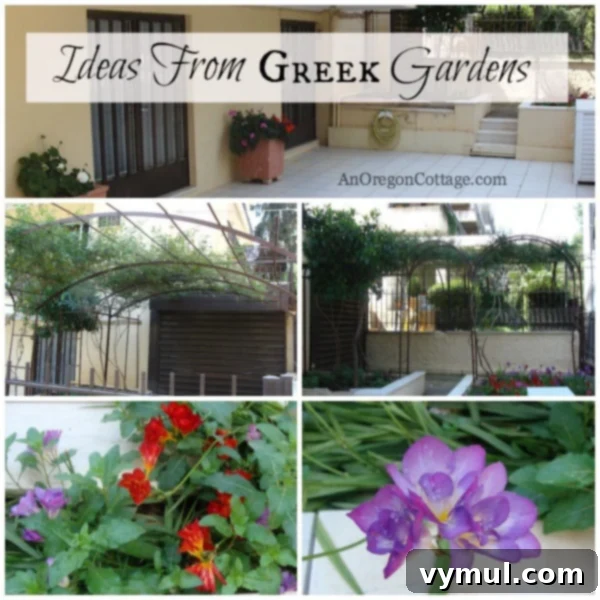
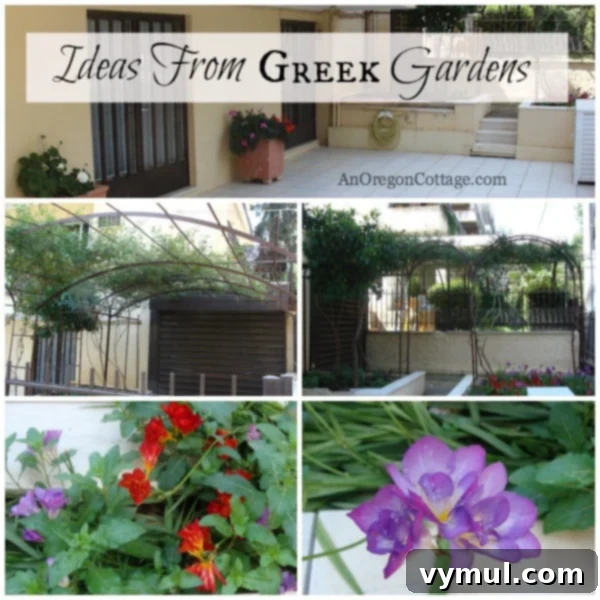
One of the most striking features within this courtyard, and indeed, throughout Greece, was the omnipresence of marble. A spacious marble tile patio formed the heart of the courtyard, and the delightful freesias, captured in some of the photos, thrived in a grand marble planter. Marble isn’t just a material here; it’s an intrinsic part of the landscape. Patios, apartment floors, balconies, fountains, benches, and even some streets and curbs are fashioned from this lustrous stone. It’s a fascinating contrast: while marble is abundant and widely used for exterior and interior surfaces, many Greeks express a desire for warm wood floors inside their homes, highlighting the age-old preference for what is scarce over what is plentiful. This cultural dynamic underscores the ingenious ways locals utilize their natural resources.
Transforming Utilitarian Spaces with Arches and Pergolas
The ingenuity of Greek garden design truly shines in how practical elements are transformed into beautiful focal points. In the aforementioned courtyard, the owners masterfully disguised a utilitarian driveway. They achieved this by enclosing it with triple iron arches from the patio side, then extending an arched pergola over the driveway itself. This structure seamlessly connected to the arches on one side and a fence on the other, creating a captivating green tunnel. Though not in bloom during my visit, a flowering vine gracefully draped over the pergola, promising an explosion of color and fragrance in season. Imagine how this simple yet elegant structure elevates a plain metal garage door and driveway into an enchanting, welcoming entryway.
The air within this courtyard was often filled with a delightful perfume, thanks to the heavenly scent of freesias and the sweet fragrance of blooming orange trees. This emphasis on sensory experience is a hallmark of Mediterranean gardens, where sight, smell, and even taste (from edible plants) are all considered in the design.
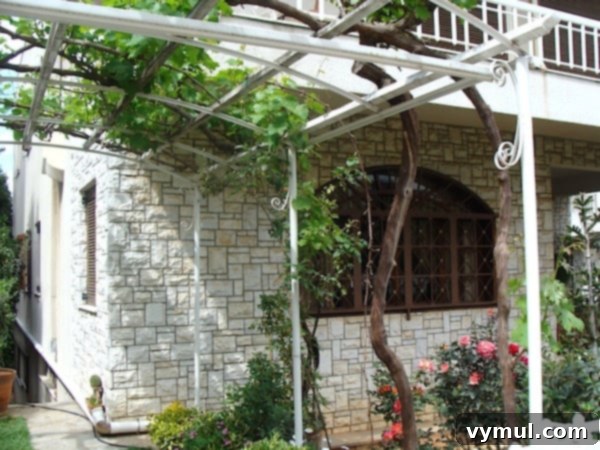
Beyond this private courtyard, similar designs adorned many other properties. Numerous driveways were shaded by various metal pergolas, a practical solution for the intense Mediterranean sun. One particularly memorable example featured a white metal pergola generously covered in grapevines, providing both cooling shade and a future harvest. This house captivated me with its harmonious blend of features: a charming stone facade, an arched window with delicate small panes, and the romantic combination of climbing roses embracing the walls beneath the grape-covered arbor. It was a picturesque scene that embodied timeless Greek elegance.
Mastering Vertical Gardening in Compact Urban Settings
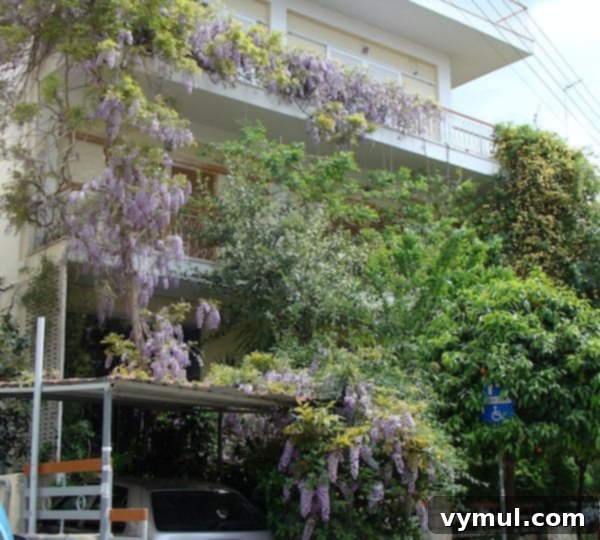
Urban living in Athens often means limited ground space. Most houses and apartments typically feature yards barely deep enough for a car – just enough for a driveway and a small front yard square, invariably enclosed by some form of fence. Yet, Greek gardeners are masters of maximizing every available inch. I was astounded by the sheer size and vigor of one particular wisteria, meticulously trained along a third-level balcony. Its extensive reach, which I estimated to be 50 feet long or more, demonstrated an impressive understanding of the plant’s growth habits and a long-term commitment to its cultivation.
This sophisticated training stands in stark contrast to instances of uncontrolled planting, such as the wisteria I once observed engulfing every column of a porch in Portland, eventually swallowing the roof and upstairs until it was finally cut down. The Greek approach highlights the importance of choosing the right plant for the right place and providing proper support and guidance. Vertical gardening, whether through climbing vines, espaliered fruit trees, or wall-mounted planters, is a pragmatic and aesthetically pleasing solution for bringing lush greenery to compact urban environments.
Low-Maintenance Beauty: Pots, Shutters, and Strategic Planting
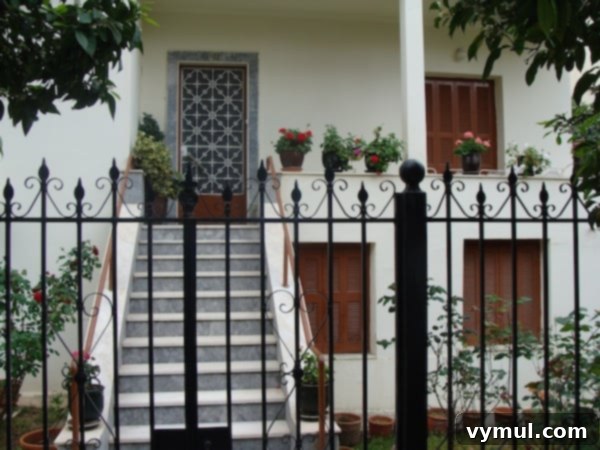
Many beloved Greek garden scenes are surprisingly low-maintenance, proving that beauty doesn’t always require constant fuss. Consider a charming house featuring permanent plantings of simple grass, a few robust roses, and a couple of large front bushes. The real burst of color comes from an array of vibrant pots lining the rail and gracing the foot of the stairs. This approach offers flexibility, allowing homeowners to easily refresh their garden’s look with seasonal blooms or relocate plants as needed. The addition of quaint, colorful shutters further enhances the overall aesthetic, seamlessly integrating the architecture with the garden’s charm.
This style of gardening often incorporates drought-tolerant plants like lavender, rosemary, bougainvillea, and geraniums, which thrive in the Mediterranean climate with minimal watering. Coupled with smart hardscaping choices – think gravel paths, tiled patios, or stone retaining walls – these gardens prioritize ease of care without sacrificing visual appeal. They demonstrate how architectural elements and thoughtful container planting can create a harmonious, welcoming entrance with relatively little effort.
Structured Elegance: The Allure of Formal Hedges
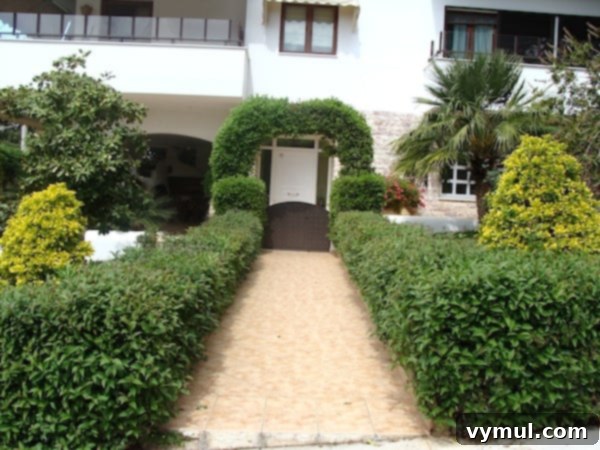
While many Greek gardens lean towards a more natural, relaxed aesthetic, there are beautiful exceptions. One particular yard caught my eye precisely because it deviated from the neighborhood norm, presenting a meticulously trimmed and higher-maintenance design. Its hedge-arch front walk was a testament to structured elegance, offering a crisp, defined pathway to the entrance. Even within this more formal setting, the characteristic Greek touch of adding colorful potted plants by the door was present, softening the lines and adding a welcoming burst of vibrancy. This blend of formality with the casual charm of container gardens highlights the adaptability of Greek garden design, showcasing how even tailored landscapes can feel inviting and distinctly Mediterranean.
The Ubiquitous Sidewalk Orange Trees

A curious and distinctly Greek urban feature encountered during my walks was the presence of orange trees planted directly in the middle of sidewalks. Unlike the planting strips commonly seen in many cities, these trees were smack dab in the center of pedestrian paths, creating an amusing obstacle course for walkers. While they certainly add a picturesque charm to the streets, offering bursts of green foliage and bright orange fruit, they undeniably make walking a more circuitous endeavor. Our friends enlightened us to an interesting detail: the abundant fruits of these sidewalk trees are purely decorative. They are bitter and riddled with seeds, rendering them unsuitable for consumption. This choice of tree speaks to a preference for hardiness and visual appeal in urban planning, even if it prioritizes nature’s aesthetics over pedestrian flow. It’s a vivid example of how Greek urban landscapes embrace green elements, even in unexpected places.
Discovering Unique Flora: A Serendipitous Find
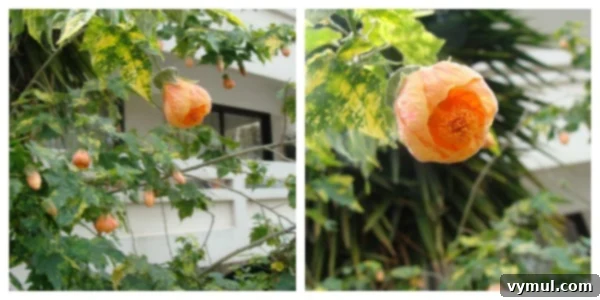
One delightful afternoon, Brian and I stumbled upon an incredible blooming tree leaning gracefully over a garden fence. Its unique beauty was truly captivating. The tree featured distinctively mottled leaves, providing an intriguing textural backdrop to its exquisite light orange flowers, subtly highlighted with splashes of yellow. Despite my inability to identify its exact species, its aesthetic impact was undeniable. Even Brian, who doesn’t typically focus on botanical details, was struck by the sheer beauty of this flowering specimen. Such serendipitous discoveries are part of the joy of exploring new landscapes, reminding us that nature often holds the most breathtaking surprises, inspiring a deeper appreciation for the diverse flora that thrives in the Mediterranean climate.
Rooftop Retreats: An Urban Oasis in Thessaloniki
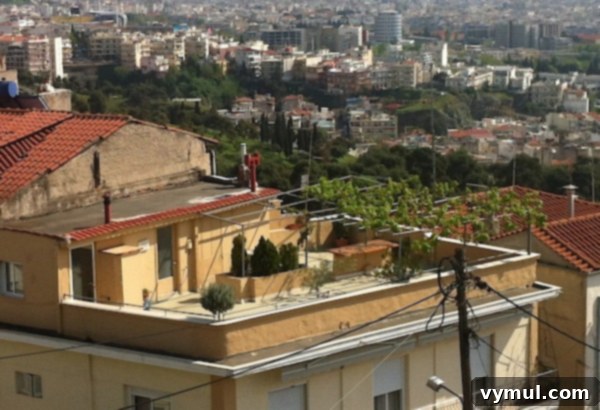
In the vibrant heart of Thessaloniki, where vertical living and dense urban planning are prevalent, balconies and container plantings truly come into their own. During a climb to a fortress overlooking the city, I captured an image of a remarkable rooftop garden that seemed to materialize as an oasis amidst the urban sprawl. What made it so striking was its simplicity: a straightforward iron-pipe trellis, generously draped with grapevines, accompanied by a few strategically placed planters housing resilient evergreens. This humble arrangement demonstrated how readily available materials and thoughtful plant choices can transform an otherwise barren rooftop into a lush, inviting retreat.
Rooftop gardens in Greece exemplify resourcefulness, creating vital green spaces in areas where traditional ground-level gardens are scarce. They offer benefits like improved air quality, urban cooling, and even opportunities for growing fresh produce. The use of grapevines not only provides shade and a harvest but also contributes to the quintessential Mediterranean aesthetic. This observation reinforces a key principle: with a bit of creativity, even the most challenging spaces can be cultivated into beautiful, functional gardens.
Key Takeaways for Your Own Mediterranean-Inspired Garden
Reflecting on these diverse Greek gardens, a profound lesson emerges: much like Kosovo families, the Greeks possess an extraordinary knack for utilizing available resources to transform even the most minuscule plot into something lovely and functional. This ingenuity is a cornerstone of Mediterranean garden design, characterized by:
- Resourcefulness and Sustainability: Making the most of local materials like marble, iron, and stone, and choosing plants that thrive in the local climate.
- Emphasis on Outdoor Living: Creating shaded, inviting spaces like pergolas and arbors that extend living areas outdoors.
- Integration of Hardscaping with Softscaping: Seamlessly blending architectural elements and paved areas with lush plantings.
- Vertical Gardening: Maximizing limited ground space by training vines on walls, balconies, and trellises.
- Drought-Tolerant and Fragrant Plants: Selecting resilient plants that offer sensory pleasure through their scents and textures.
- Strategic Use of Containers: Utilizing pots and planters for flexible color, seasonal interest, and easy rearrangement.
Simple elements such as metal rods, sturdy iron fences, abundant marble, and carefully selected, resilient plants go a long way in crafting a truly livable and beautiful garden. The clever use of pots, pergolas, and arbors not only provides vibrant color but also establishes a clear framework for plants to flourish. These elements combine practicality with aesthetic appeal, resulting in gardens that are both stunning and sustainable.
What enchanting garden idea from these Greek inspirations could you envision incorporating into your own outdoor space? Whether it’s the elegance of a marble planter, the shade of a grapevine-covered pergola, or the vibrant hues of potted plants, the essence of Greek garden design offers endless possibilities for creating your personal Mediterranean oasis.