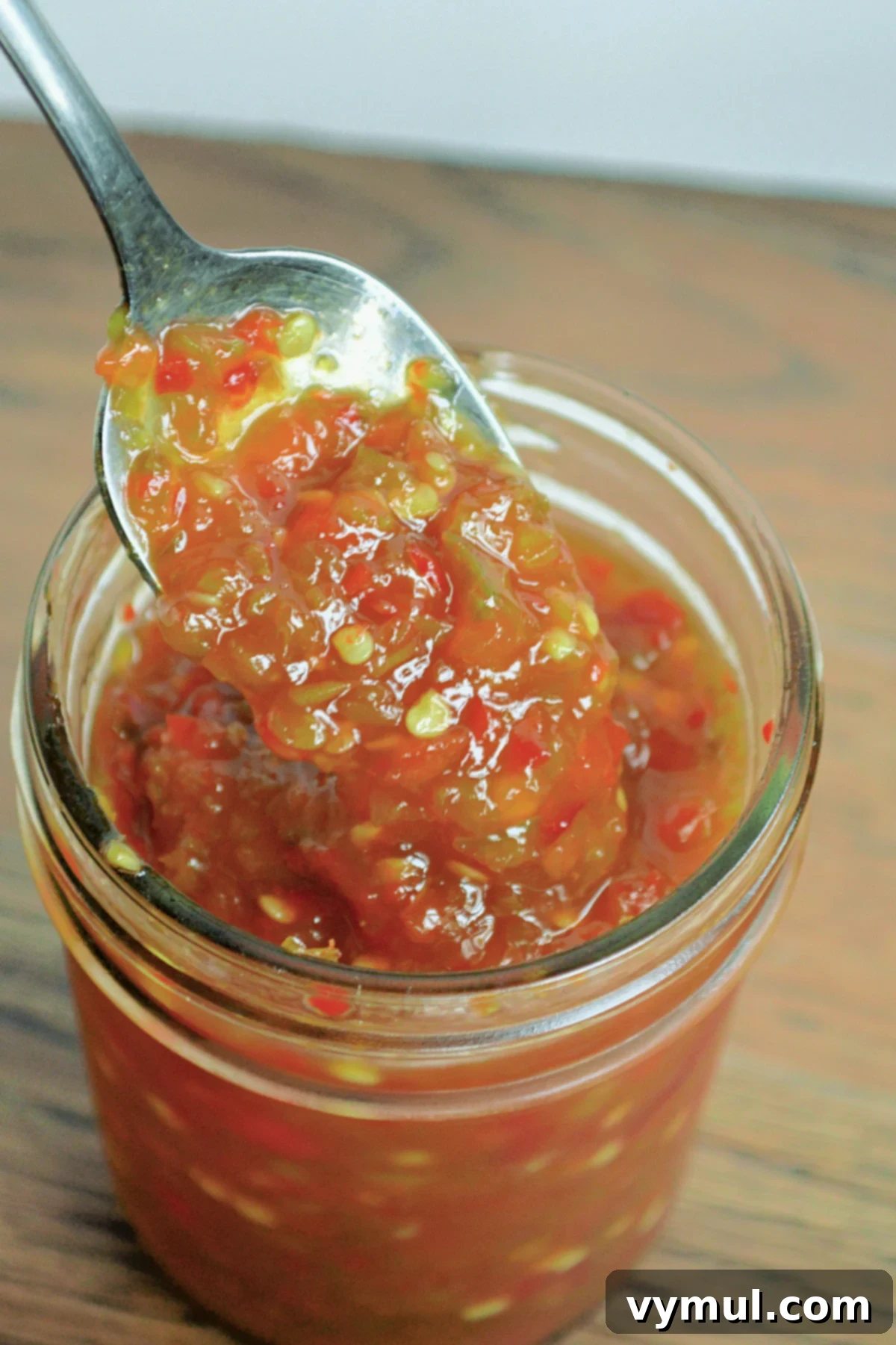
Homemade Honey-Sweetened Jalapeño Pepper Jelly: A Low-Sugar Canning Recipe for Spicy & Sweet Delights
Discover how to create a uniquely delicious and healthier jalapeño pepper jelly with honey, featuring significantly less sweetener than conventional recipes. This delightful spread offers a wonderful jam-like consistency and a more pronounced pepper-to-jelly ratio, all while being free from refined sugars. It’s not just a condiment; it’s a versatile culinary staple that’s surprisingly easy to make and a joy to share.
“I needed to tell you how much everybody I know begs for a jar of this for birthday & Christmas presents. I never have to think about what to bring for potlucks or family get togethers, because everybody wants me to bring a jar of this for a condiment or appetizer. Thank you so much!” -Laurie
Some links in this article are affiliate links, meaning if you click on them, I may receive a small commission at no extra cost to you. This helps support the creation of valuable content like this recipe.
When I first ventured into the wonderful world of home canning, creating jars of vibrant jalapeño pepper jelly was one of my initial projects. It sat proudly alongside homemade berry jams and my foundational salsa recipe, which later evolved into my favorite salsa for canning. The process was not only straightforward but yielded a product that perfectly balanced the tantalizing combination of spicy and sweet flavors.
This unique blend of flavors makes jalapeño jelly incredibly versatile, much like a good Asian chili sauce. We’ve enjoyed it in countless ways: as a savory glaze for various meats, a zesty condiment for burgers and sausages, and a simple yet elegant appetizer when spooned over cream cheese and served with crackers. It’s an absolute game-changer, especially when spread generously on salmon patties, adding an unexpected kick that elevates the dish. Over time, this homemade treat became one of the most eagerly anticipated gifts I could offer, with friends and family constantly requesting their own jars.
The Quest for a Healthier Jalapeño Pepper Jelly
As my family transitioned towards a lifestyle with fewer heavily sugared foods, I began to scrutinize traditional recipes more closely. The standard jalapeño pepper jelly recipe, often calling for a staggering 5-6 cups of sugar for only 1-1/2 cups of jalapeños, no longer aligned with our dietary goals. This high sugar content was a concern, prompting me to search for a more wholesome alternative.
My initial attempts to find a less sugary replacement were met with disappointment; the results simply didn’t live up to the beloved original. One year, I even skipped making it altogether. However, the absence of this flavorful condiment was deeply felt (it’s a particular favorite alongside sausages and Addictive Tomato Chutney). Motivated by our collective craving, I decided to revisit the idea, utilizing the abundance of garden jalapeños remaining after preparing our annual batch of easy pickled jalapeño peppers.
Crafting the Adapted Recipe: A Honey-Sweetened Solution
My renewed search led me to a promising Ball Preserving recipe – a hybrid pepper jelly recipe that combined both sugar and honey. While it primarily featured sweet peppers, the concept sparked an idea: I could adapt this recipe to create a truly low-sugar jalapeño jelly, sweetened exclusively with natural honey.
Recognizing the importance of food safety in canning, I meticulously maintained the tested ratios from the Ball recipe. However, I made strategic adjustments to the ingredients: I dramatically increased the proportion of jalapeños, adding a few milder Poblano and/or Anaheim peppers to round out the flavor profile. For those who prefer a less intense heat, the amount of milder peppers can easily be increased, and jalapeños decreased. Crucially, I replaced all refined sugar with honey, opting for Ball’s commercial flex batch no/low sugar pectin. This specific pectin is vital for ensuring the jelly sets properly when using only honey, which behaves differently from cane sugar in gelling.
Jalapeño Jelly or Jalapeño Jam? Embracing a Jam-Like Consistency
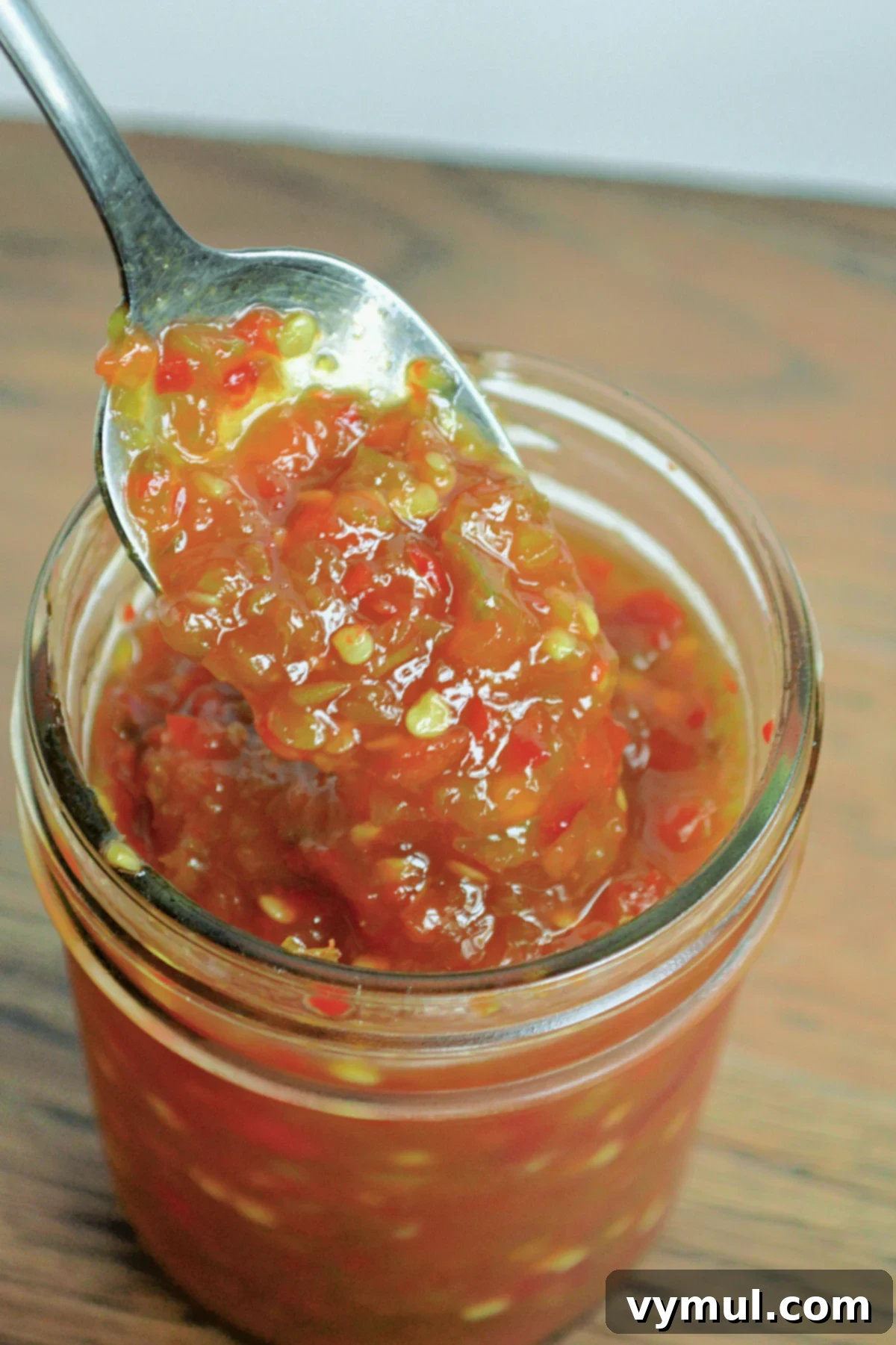
The result of this adaptation is a pepper spread that leans more towards a jam in its consistency and generous pepper content, rather than a stiff, clear jelly with just a few scattered pepper bits. This “jam-like” characteristic has proven to be an advantage for us. In fact, I’ve found that a looser consistency makes it even easier to use as a flavorful glaze for meats, allowing it to spread and adhere beautifully.
If you, like me, have been on a quest for a healthier, more pepper-forward jalapeño jelly, I am thrilled to tell you that your search ends here.
And for those who have yet to experience the joy of making homemade jalapeño jelly, I wholeheartedly encourage you to give this recipe a try. Its unique blend of flavors and natural sweetness might just make it your family’s newest obsession and your most requested homemade gift!
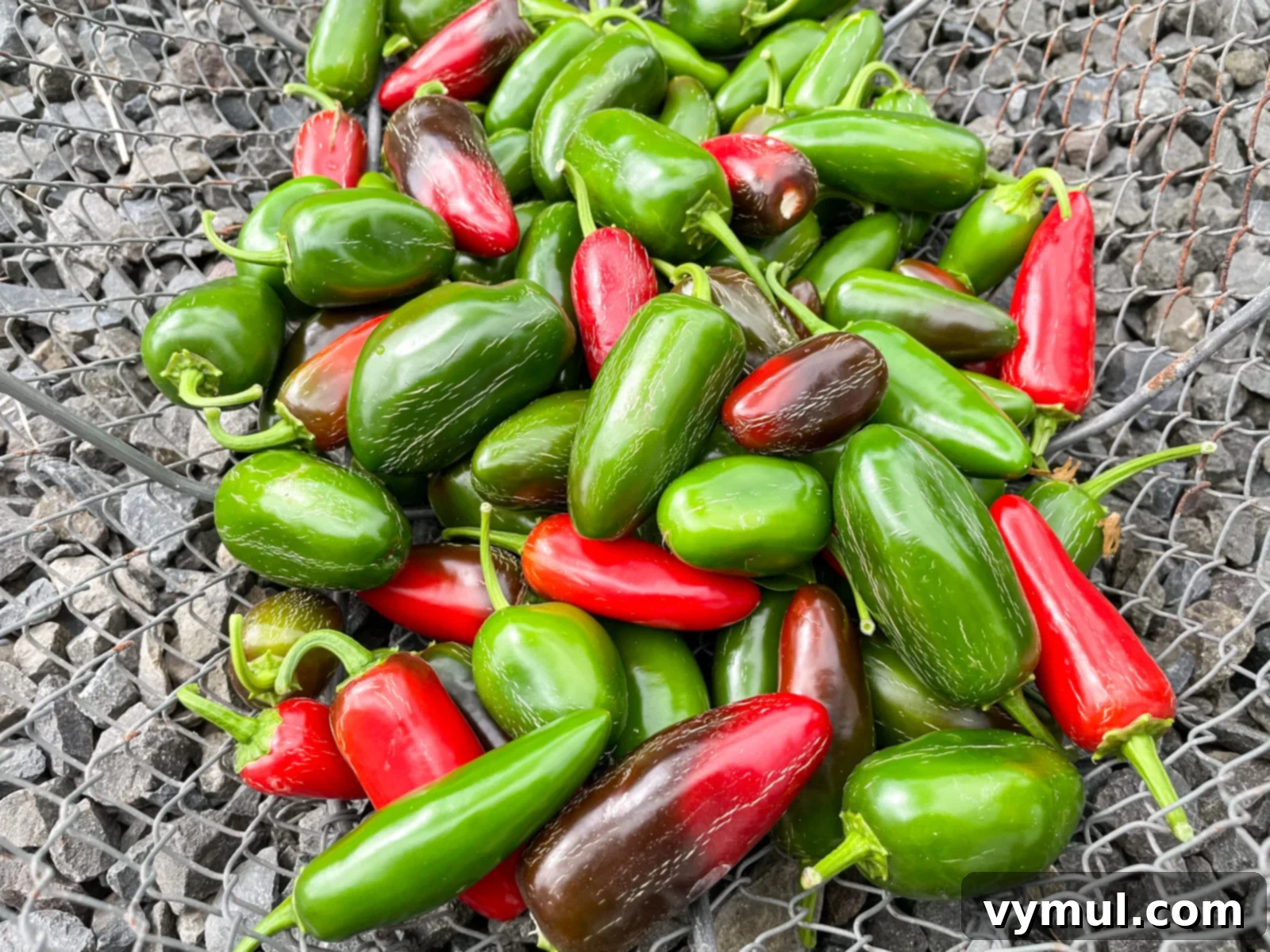
Key Ingredients for Our Honey-Sweetened Jalapeño Pepper Jelly
Crafting this delicious jalapeño pepper jelly requires a few simple yet crucial ingredients. Here’s a closer look at what you’ll need and some helpful considerations for each:
- Jalapeño Peppers: These are the star of the show! You have flexibility here – use all green jalapeños for a classic look, a mix of red and green for visual appeal (as seen in the photos, which result in a lovely red/orange jelly), or all red jalapeños for a slightly sweeter and often milder flavor profile. The heat level of jalapeños can vary, so taste them if possible.
- Mild Hot Peppers: To balance the heat and add depth of flavor, we incorporate milder peppers. Excellent choices include Anaheim, Poblano, Hatch, and Banana peppers. These peppers contribute to the overall pepper-to-jelly ratio without overwhelming the palate with excessive spice. You can adjust the ratio of mild to hot peppers to suit your preferred spice level.
- Vinegar: Vinegar is essential for both flavor and safety in canning. I personally prefer apple cider vinegar for its slightly fruity and mellow notes, which complement the peppers beautifully. However, white vinegar will also work effectively and is a perfectly acceptable substitute if that’s what you have on hand.
- Ball’s Real Fruit Flex Batch No or Low Sugar Pectin: This specific type of pectin is non-negotiable for this recipe. Traditional pectins rely on high sugar content to gel properly. Since our recipe uses significantly less sweetener and only honey, a pectin designed for low or no sugar recipes is crucial for achieving the desired set. Other brands like Pomona’s Universal Pectin are also suitable for low-sugar recipes.
- Honey: Honey is our sole sweetener, lending a rich, complex sweetness that pairs wonderfully with the peppers. It’s important to note that you cannot substitute honey with artificial sweeteners, as they will not react with the pectin to form a gel. If you desire a stiffer jelly or want to experiment, you can use a combination of half honey and half cane sugar, but this will increase the overall sugar content.
Making Jalapeño Pepper Jelly with Honey: A Step-by-Step Guide
Crafting this honey-sweetened jalapeño pepper jelly is a rewarding experience. While detailed quantities and precise instructions are provided in the full recipe box below, these expanded tips will guide you through each step for successful canning.
Step 1. Prepare Your Canning Setup: Begin by gathering all your boiling water canning equipment. This includes a large water bath canner, a canning rack, jar lifter, canning funnel, and headspace tool. Wash eight 1/2-pint (8-ounce) canning jars and their lids thoroughly in hot, soapy water. Keep the jars warm to prevent thermal shock when filling them with hot jelly. You can do this by leaving them in hot water in the canner or a warm oven. For a comprehensive guide, check out all my favorite canning supplies here, including the flat-bottomed canner that made my canning life so much easier!
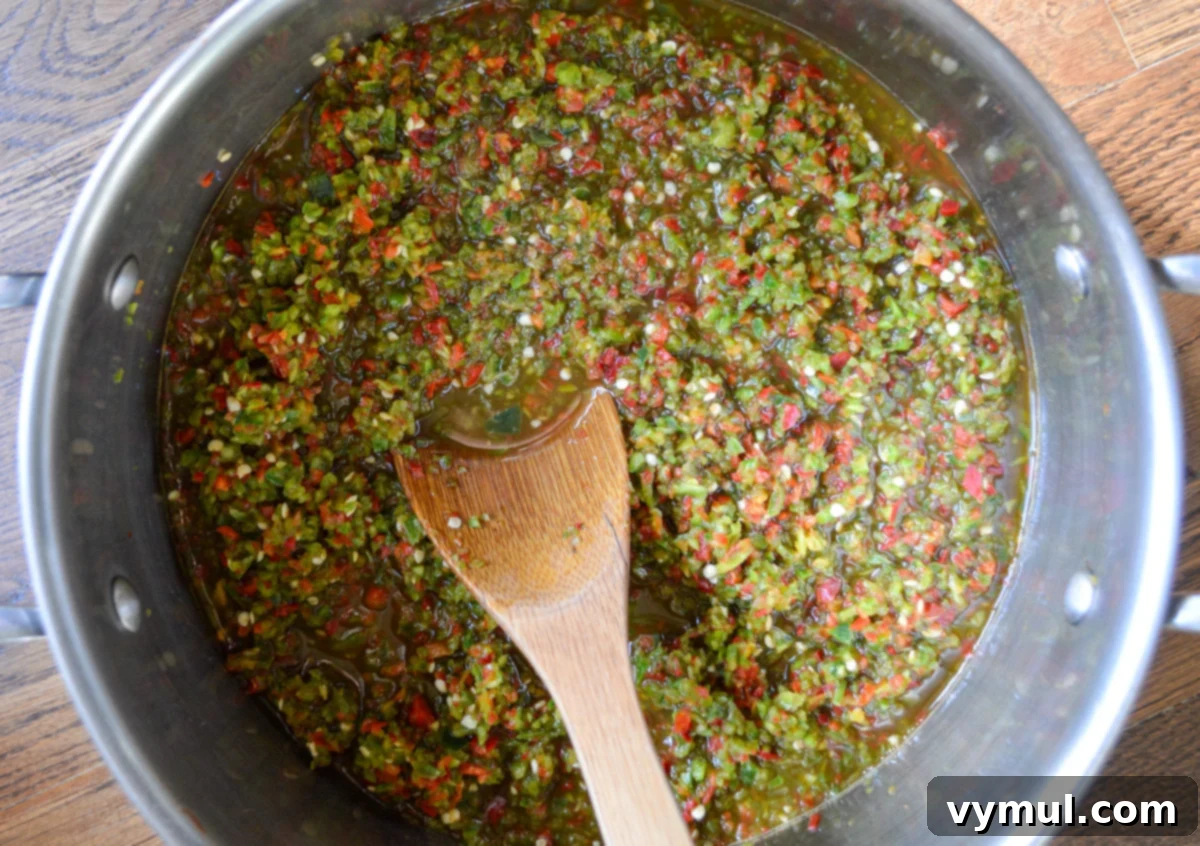
Step 2. Chop the Peppers Safely and Precisely: Finely chop all your peppers. For efficiency and a consistently fine chop, I highly recommend using a food processor; it achieves a finer consistency much faster than hand chopping. This step requires caution: always protect your hands with gloves when handling hot peppers. The capsaicin in pepper juice can cause a persistent burning sensation on your skin for hours and can be easily transferred to your eyes, leading to intense discomfort (speaking from personal experience!).
TIP: To control the spice level of your jelly, adjust how much of the seeds and pith you remove. For the mild peppers (Anaheim, Poblano, etc.), remove all seeds and membranes completely. For jalapeños, if you enjoy a spicy kick, leave most of the seeds and membranes intact. The more you remove from the jalapeños, the milder your finished jelly will be.
Step 3. Combine Initial Ingredients: In a large stockpot (a 6-quart or larger pot is ideal to prevent boil-overs), combine your finely chopped peppers, vinegar, and the low/no sugar pectin. Stir these ingredients thoroughly to ensure the pectin is well distributed and begins to dissolve.
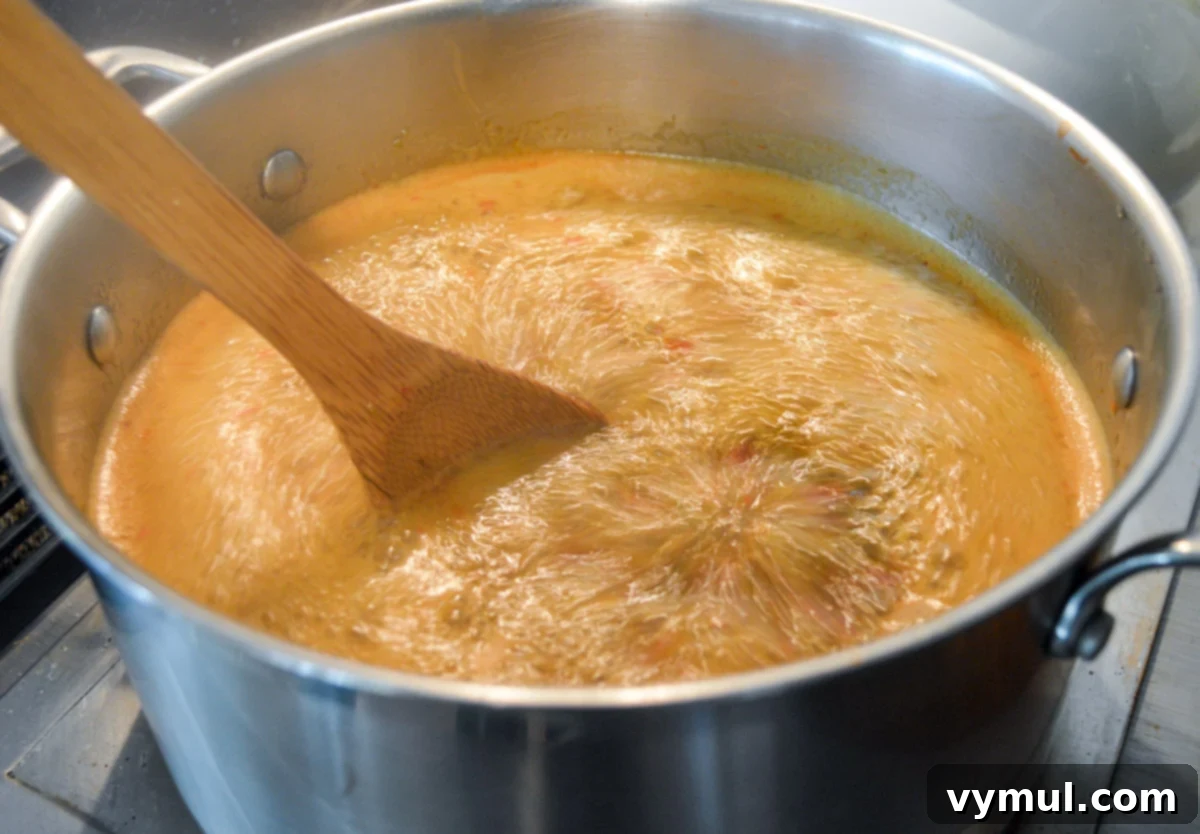
Step 4. Achieve a Rolling Boil: Place the stockpot over high heat. Bring the mixture to a vigorous, “rolling” boil that cannot be stirred down. This intense boil is crucial for activating the pectin before the honey is added, ensuring a proper set later on.
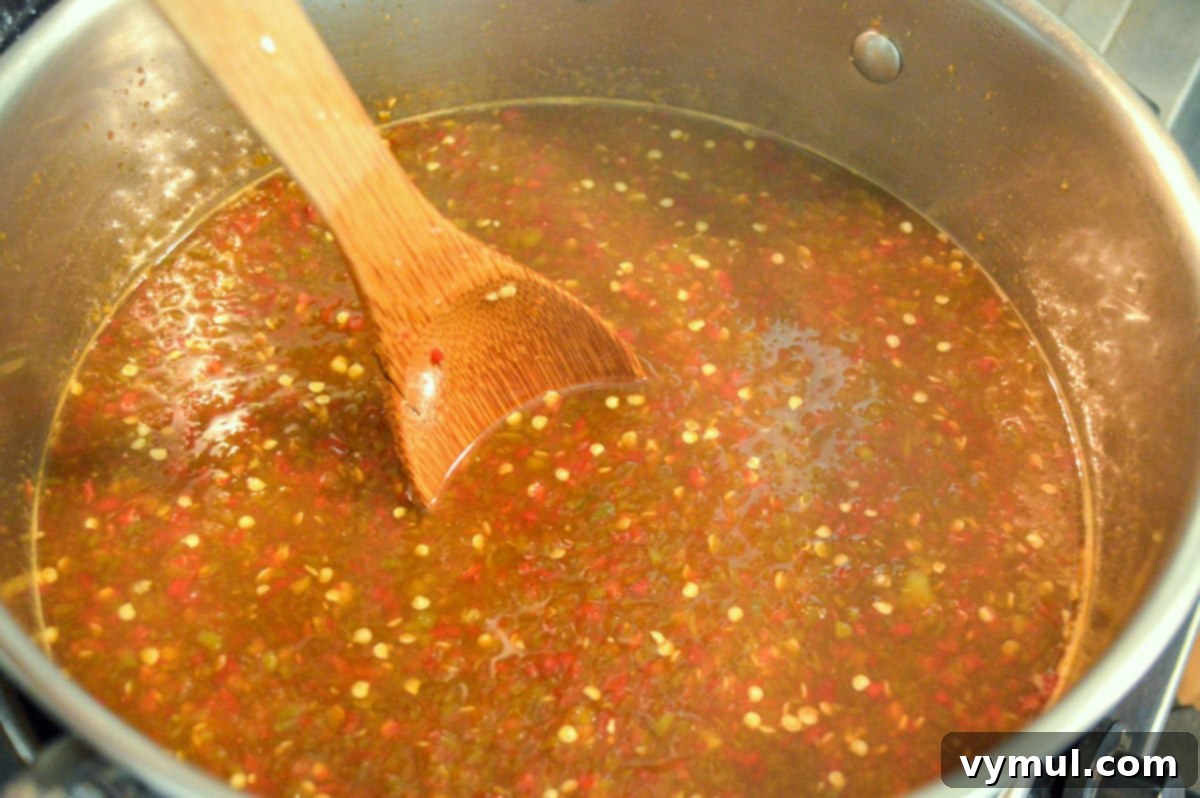
Step 5. Incorporate Honey and Boil: Once the rolling boil is reached, quickly add the honey to the pot. Stirring constantly, bring the mixture back to a full rolling boil and continue to boil hard for exactly 3 minutes. Constant stirring is vital during this phase, as the honey can cause the mixture to foam up and potentially boil over the pan if left unattended. By the end of this 3-minute boil, you should feel a slight thickening in the mixture as you stir, though it won’t yet have the full jam-like consistency. The final set will occur as it cools.
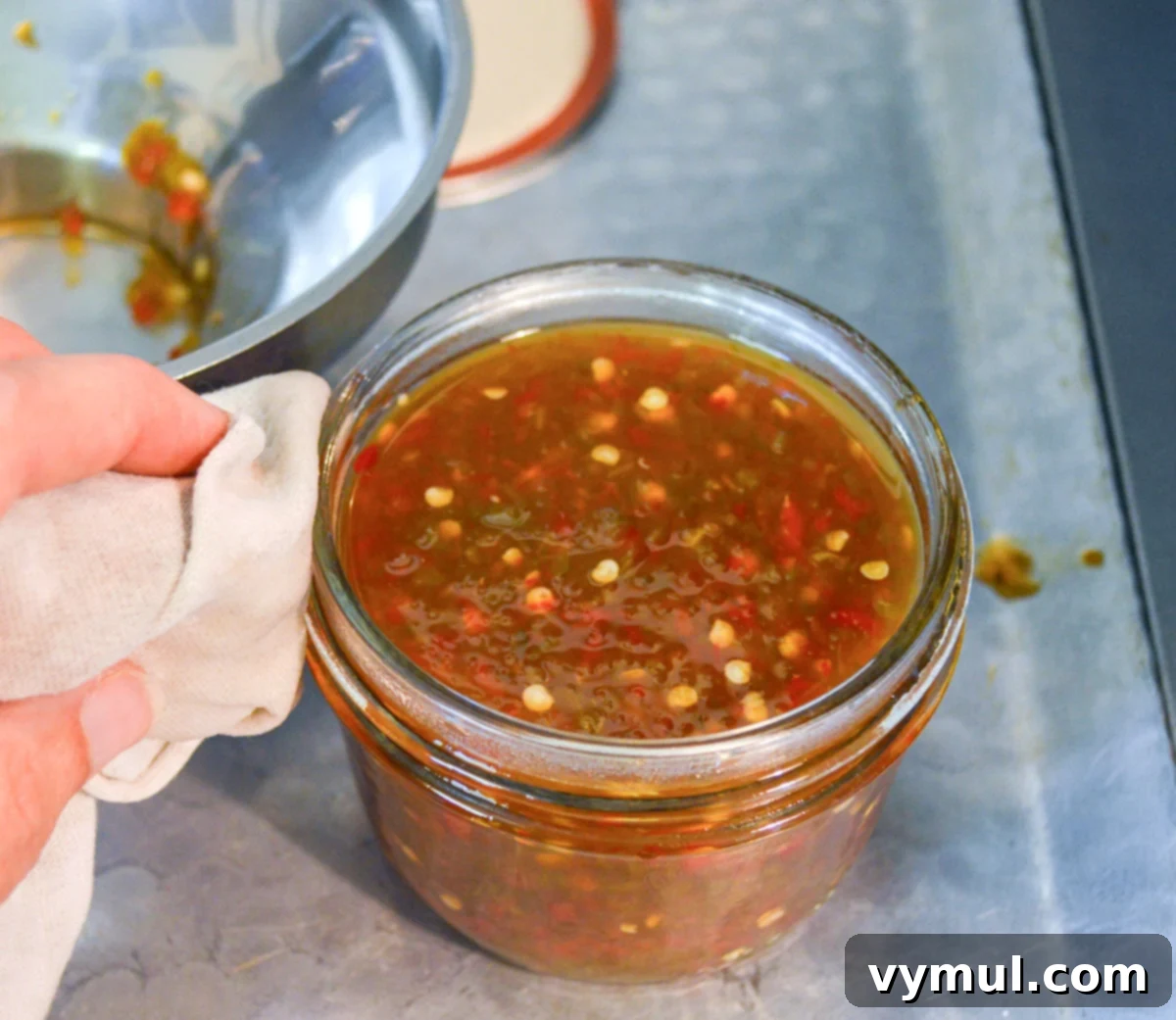
Step 6. Fill Jars: Carefully ladle the hot pepper jelly into your prepared warm half-pint jars. Use a canning funnel to keep the jar rims clean. Leave a consistent 1/4-inch headspace (the space between the top of the jelly and the rim of the jar). After filling, use a clean, damp cloth to meticulously wipe the rim of each jar. This ensures a clean surface for the lid to seal properly.
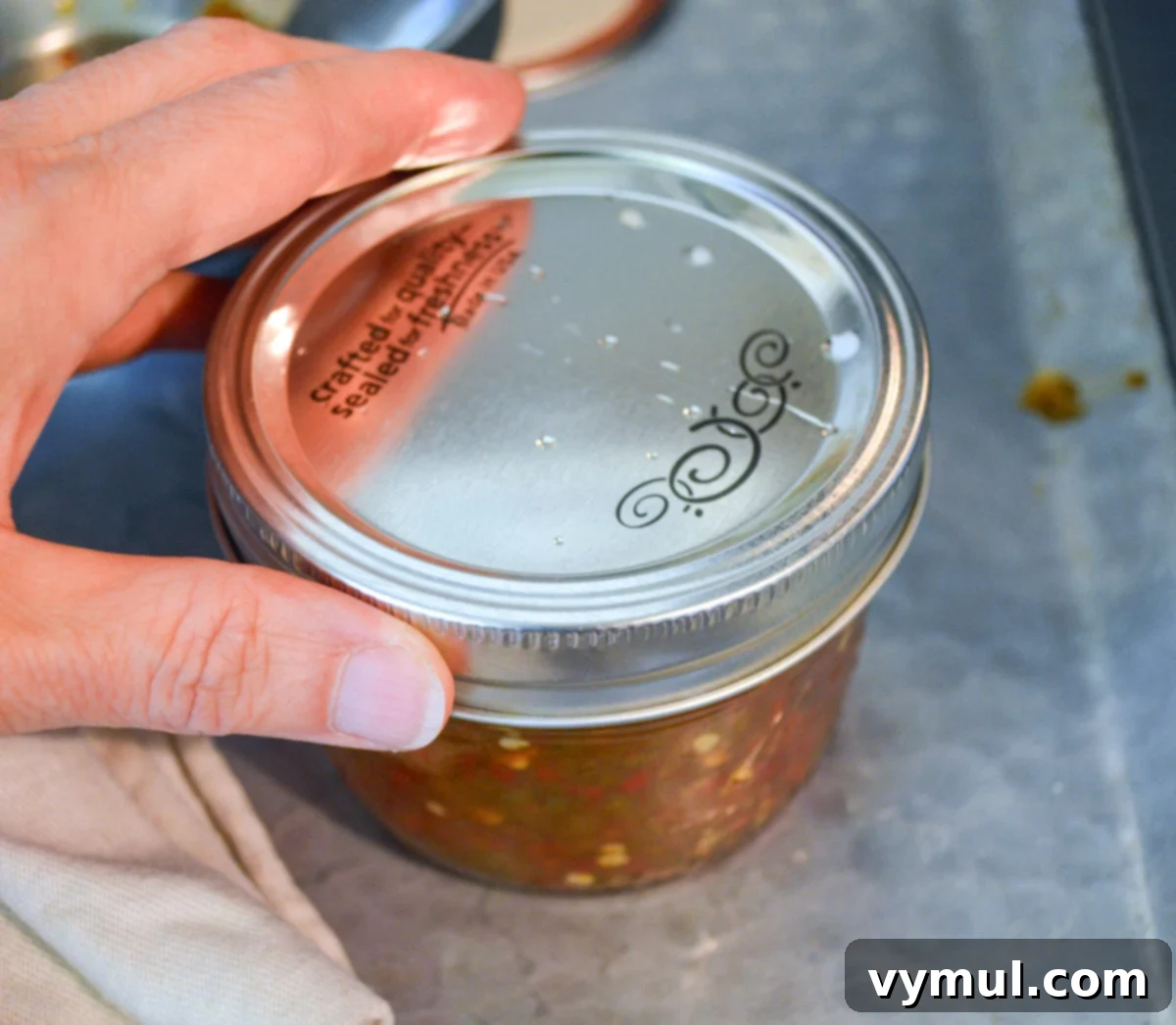
Step 7. Secure Lids and Bands: Place a clean lid onto the jar, centering it carefully. Then, attach a screw band, tightening it just until it’s “fingertip tight.” This means tightening it enough so it’s secure, but not so tight that air can’t escape during processing. Overtightening can prevent a proper seal.
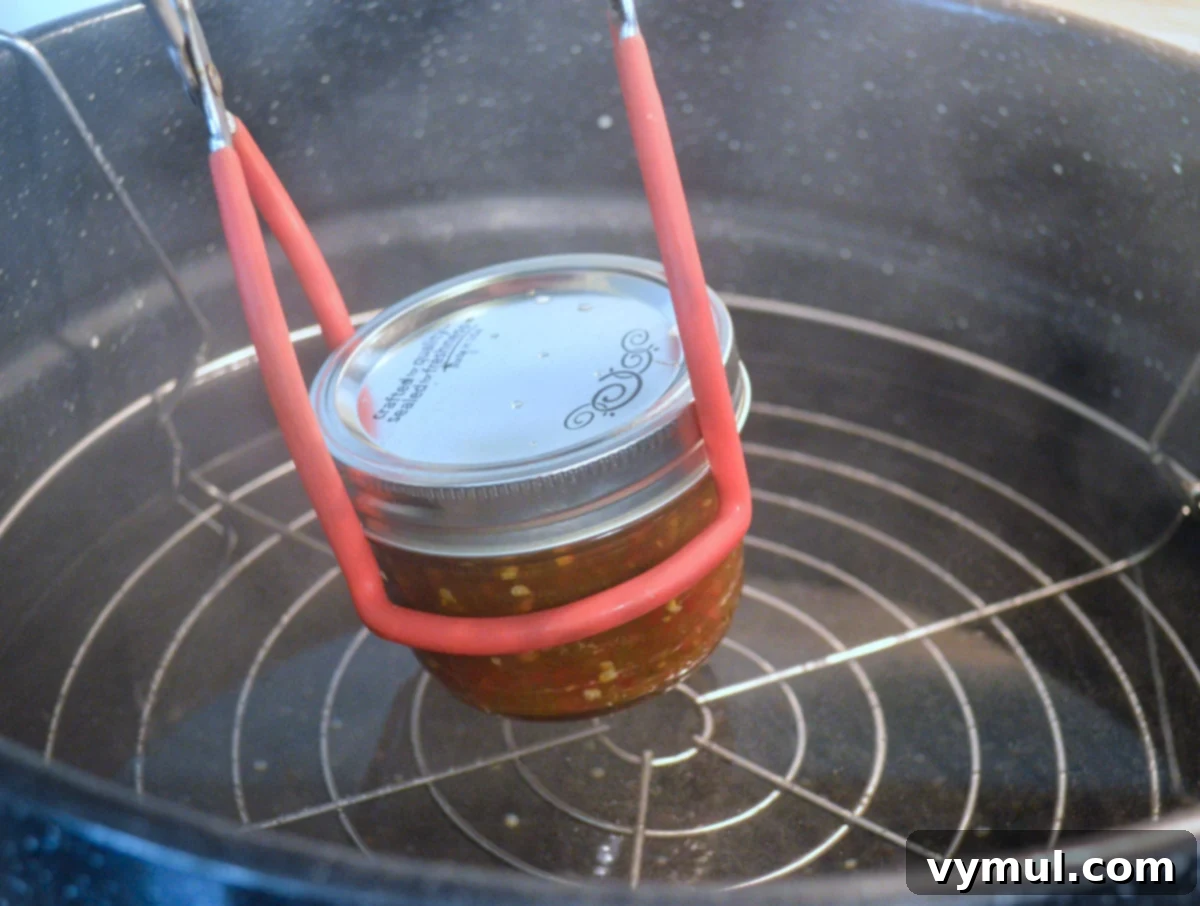
Step 8. Load the Canner: Fill one jar at a time and, using your jar lifter, carefully transfer it to the raised rack inside your water-bath canner. Continue this process until all jars are filled and placed on the rack. (This is the glass-topped canner I use now, a significant upgrade from my old, wobbly enamel one!).
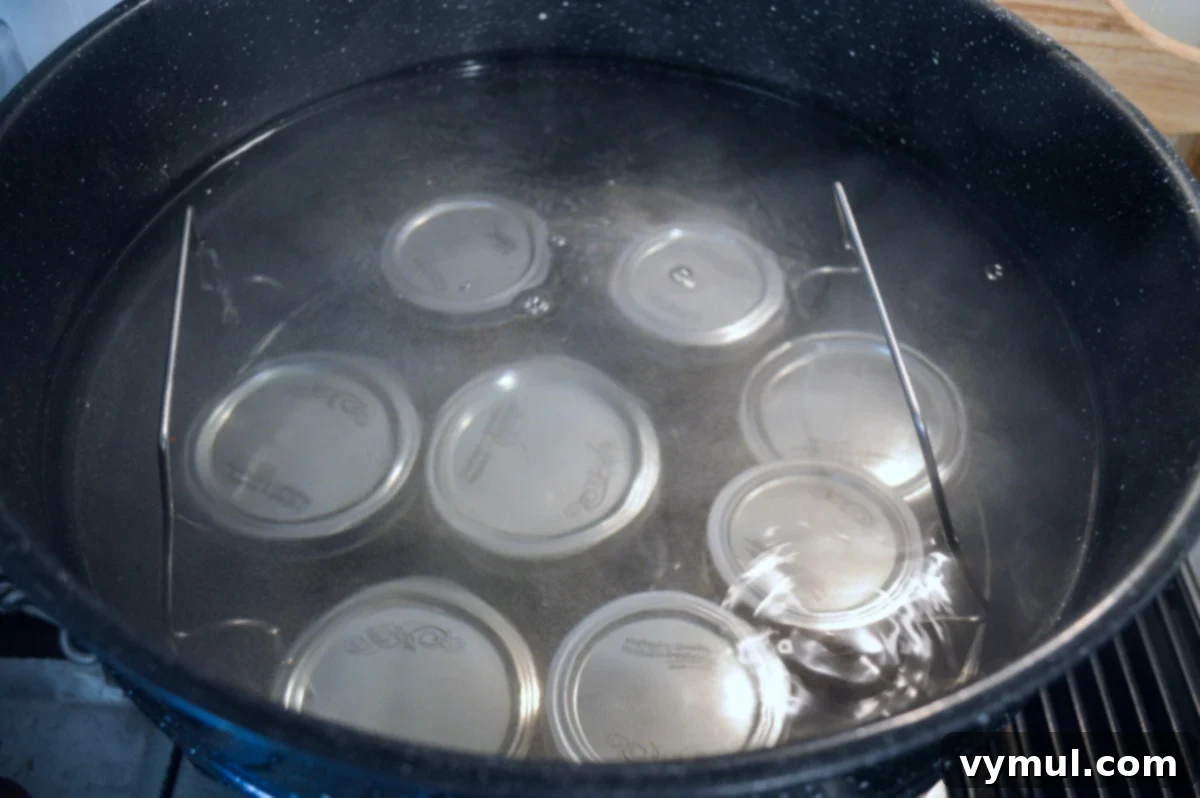
Step 9. Process the Jars: Lower the canning rack, ensuring all jars are fully submerged in water (at least 1 inch of water covering the jar tops). Place the lid on the canner and bring the water to a rolling boil. Once boiling vigorously, start your timer and process the jars for 10 minutes. After 10 minutes, turn off the burner and carefully remove the canner lid. Allow the jars to sit undisturbed in the hot water for an additional 5 minutes. This helps stabilize the seals.
Boiling Water Canning Step-by-Step Video
For more in-depth information and visual guidance on the boiling water canning method, you can refer to the full canning tutorial here.
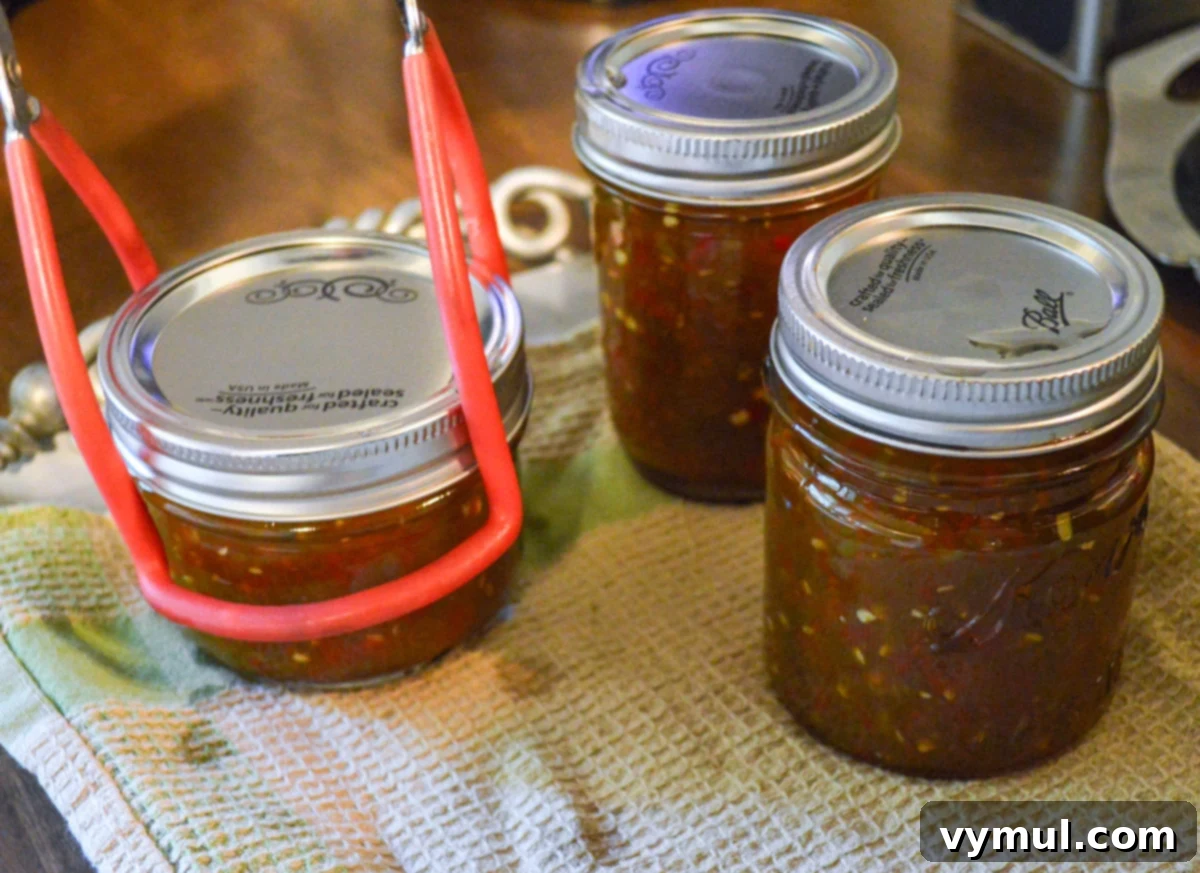
Step 10. Cool and Store: Using your jar lifter, carefully remove the hot jars from the canner and place them on a towel-lined surface. Allow them to cool, undisturbed, for a full 24 hours. You’ll often hear a satisfying “ping” as the lids seal. After 24 hours, remove the screw bands, check each lid for a proper seal (it should be concave and not flex when pressed). Label your jars with the contents and date before storing them in a cool, dark place.
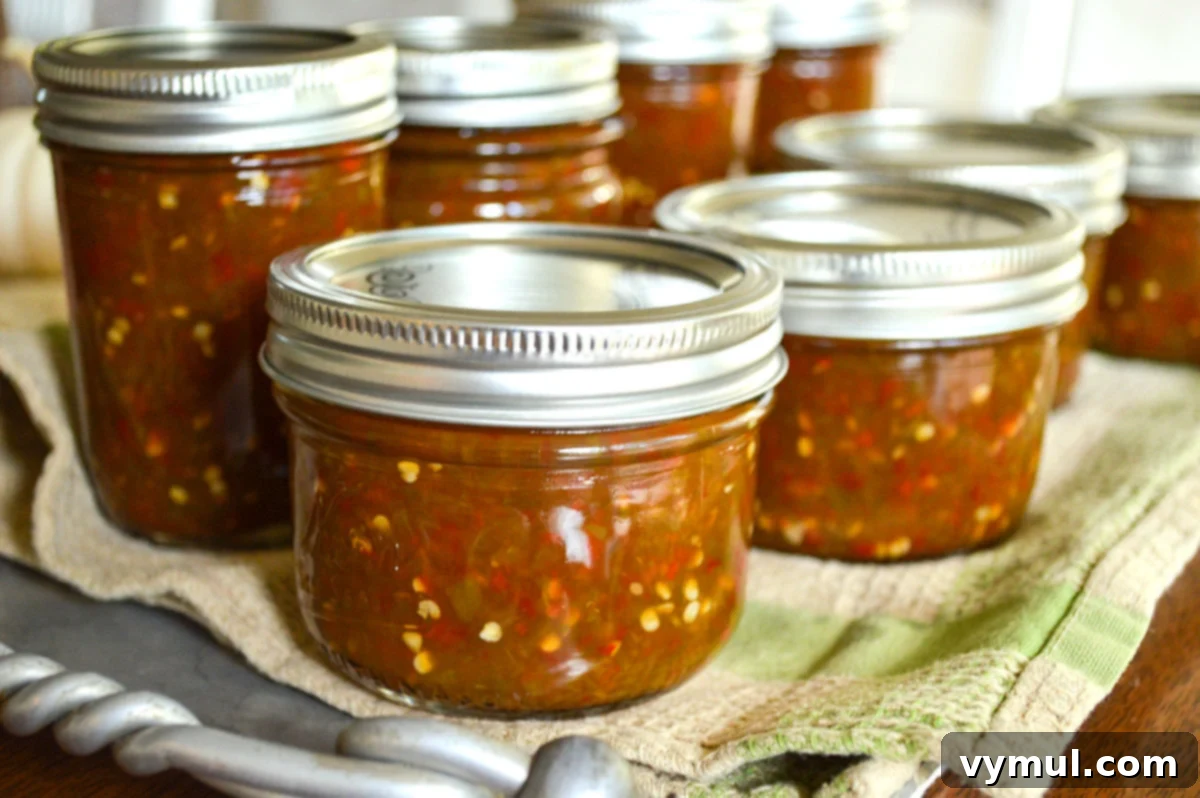
There’s a profound sense of accomplishment in seeing those freshly canned jars cooling, waiting to be labeled and added to the pantry. Each jar represents a homemade treasure, ready to bring flavor and joy for months to come.
Creative Ways to Enjoy Your Honey-Sweetened Jalapeño Pepper Jelly
This versatile condiment is more than just a spread; it’s a culinary secret weapon! Its delightful balance of sweet and spicy makes it a fantastic addition to a wide array of dishes. Here are just a few of our favorite ways to savor this homemade treat:
- Condiment for Grilled Meats: Spread generously on grilled burgers, hot dogs, and sausages for an elevated flavor profile. The sweet heat cuts through the richness of the meat beautifully.
- Flavorful Glaze: Use it as a glaze for various meats. It’s exceptional on roasted chicken, pork tenderloin, or baked ham, creating a caramelized, tangy, and spicy crust. Simply brush it on during the last 15-20 minutes of cooking.
- Seafood Enhancement: Spooned on top of homemade salmon patties or even store-bought salmon burgers, it adds a bright, zesty counterpoint. It also works well with grilled shrimp or white fish.
- Effortless Appetizer: For the easiest and most crowd-pleasing appetizer, simply spoon a generous amount over a block of softened cream cheese. Serve with an assortment of crackers – it’s a guaranteed hit at any gathering!
- Sandwich and Wrap Booster: Add a dollop to your favorite sandwiches, wraps, or even grilled cheese for an unexpected burst of flavor.
- Cheese Board Companion: Elevate your cheese board by including a small dish of jalapeño jelly. It pairs wonderfully with creamy cheeses like brie, goat cheese, or sharp cheddar.
- Marinade Base: Whisk it into marinades for chicken or pork to infuse your meats with sweet and spicy notes before grilling or baking.
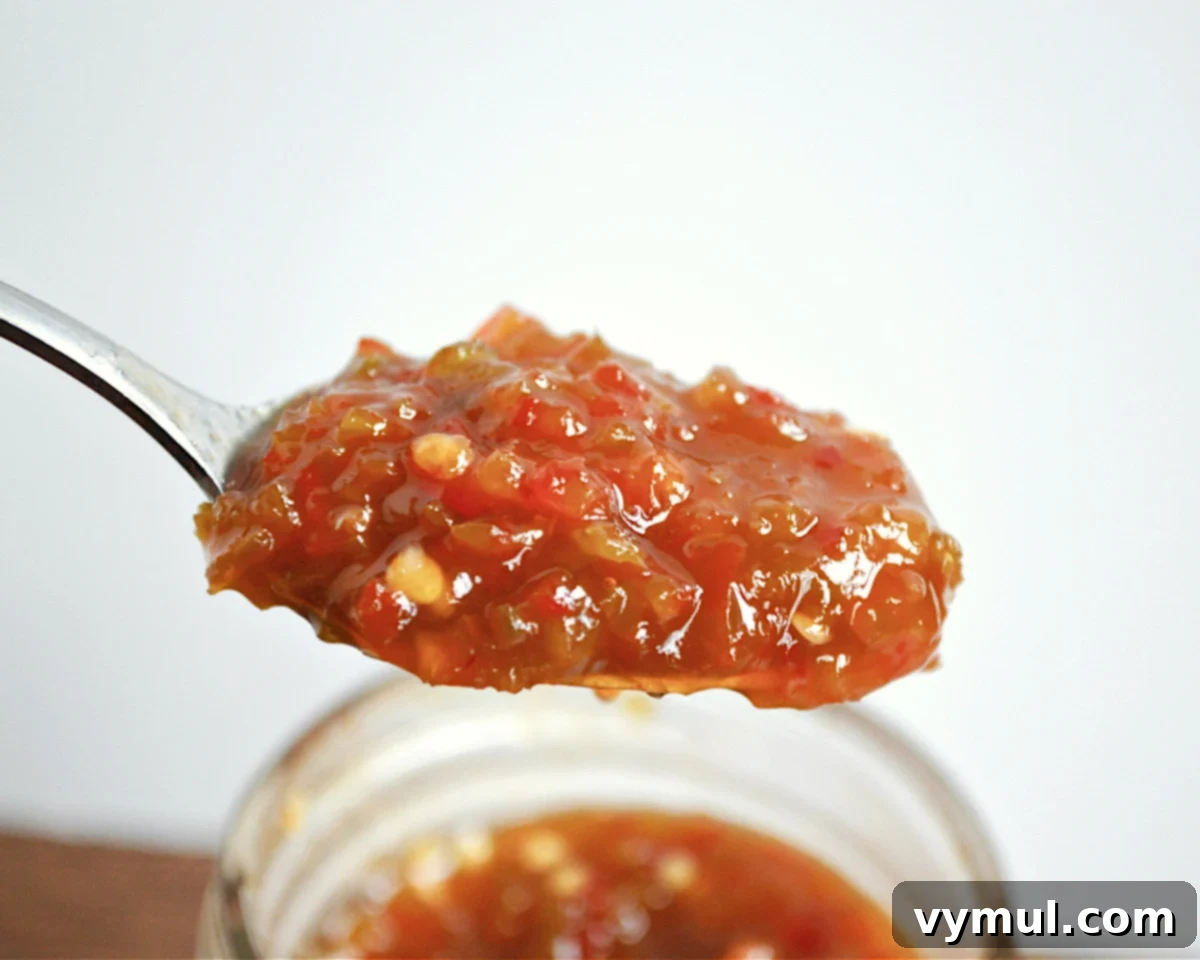
As you can see, this isn’t your typical, overly-sweet, clear jelly with just a few peppers floating around. This is a robust, full-on pepper jam, bursting with natural flavors. Both Brian and I prefer it this way, and I sincerely hope you will too!
What Readers Are Saying
“Oh my gosh! This is absolutely the best!” -Carol
“This is by far my husband’s favorite preserving recipe ever. He eats this stuff on EVERYTHING. It’s super good with farm-fresh scrambled eggs and Vermont cheddar cheese. Delicious.” -Kimberly
“This turned out REEEAAALLLY awesome. I omitted most of the seeds, used 1/2 green, 1/2 red jalapeños (for visual interest) and let it “cure” in the ‘fridge for a few months.” -Kristin
I genuinely hope you fall in love with this recipe for lower sugar jalapeño jelly. If you give it a try, please be sure to leave a recipe rating and comment to let me know how you liked it!
Jalapeño Pepper Jelly Recipe for Canning or Freezing (Honey Sweetened)
A lower sugar jalapeño jelly with more peppers, a jam-like consistency, and sweetened only with honey. Use as a condiment, meat glaze, and appetizer with cream cheese on crackers.
50 mins
20 mins
1 hr 10 mins
7 -8 half-pint jars
Jami Boys
Equipment
-
Food Processor
-
6-quart or larger stock pot
-
Water bath canner
-
Canning jars and lids or freezer containers
Ingredients
- 3½ cups finely chopped jalapeño peppers about 2 pounds *see note on peppers
- 1½ cups finely chopped Anaheim and/or poblano peppers about 1 to 1¼ pounds
- 1¼ cups cider vinegar
- 3 tablespoons Ball Low or No Sugar Flex Batch Pectin **see note
- 2½ cups honey
Instructions
-
Wash 7 to 8 half-pint (8-ounce) jars and keep warm until needed. Wash lids and rings in soapy water and set aside. Prepare boiling water canner.
-
Combine peppers and vinegar in a large stockpot, then gradually stir in the pectin.
-
Stirring constantly, bring mixture to a full rolling boil over high heat that can’t be stirred down.
-
Add honey, bring back to a full boil and boil hard for 3 minutes, stirring constantly. Remove from heat and skim foam if needed.
-
Ladle hot jelly into prepared, hot jars, one at a time leaving 1/4-inch headspace. Wipe rim, center lid on jar and attach ring, screwing just until fingertip-tight. Add to rack in canner.
-
Lower canning rack and process jars in canner for 10 minutes (timing after water comes to a boil with the jars submerged). Remove lid, turn off burner, and let jars sit in canner for 5 minutes.
-
Remove jars to a towel-lined surface to cool, undisturbed, for 24 hours. Remove rings, check seals and label with date before storing.
Notes
*Tips for Peppers:
- Adjust the peppers as you desire: use less jalapeños and more mild peppers for a less spicy jelly or vice versa – just keep the total pepper amount to 5 cups. You can use any pepper you’d like – hotter peppers like habaneros or even sweet peppers in place of the mild peppers.
- Also, you can leave the seeds out if you want a milder jalapeño jelly.
- Remember to use gloves when preparing hot peppers!
- A food processor makes quick work of chopping all the peppers.
**This is equal to 1 box of low-sugar pectin if you don’t have the Flex Batch.
–Also, remember this is a loose jam, not like a stiff pepper jelly. The honey causes it to not set up as well. We’re fine with it that way, but if you want a stiffer end product, you can use half sugar and half honey.
–High Altitude Adjustment: If processing is 20 minutes or less, increase the processing time by 1 minute per 1,000 feet above sea level. If processing is greater than 20 minutes, increase the processing time by 2 minutes per 1,000 feet. See more here.
-If you have any jars that don’t seal (which is rare!), store them in the fridge and use first.
Nutrition
Calories: 28 kcal |
Carbohydrates: 7.2 g |
Protein: 0.2 g |
Fat: 0.1 g |
Saturated Fat: 0 g |
Cholesterol: 0 mg |
Sodium: 136 mg |
Fiber: 0.3 g |
Sugar: 6.7 g
Tips & Frequently Asked Questions (FAQs)
It’s important to remember that the jelly will still be liquid when hot; it thickens significantly as it cools. Here are some key tips for ensuring a good set:
- Boiling Time: Some readers have found success by boiling hard for 5 minutes instead of the recommended 3 minutes, resulting in a noticeably thicker consistency.
- Measurements: Always use precise measurements as listed in the recipe. Do not double the recipe, as larger batches can affect the gelling process and may not set properly.
- Pectin Type: This recipe absolutely requires a pectin specifically formulated for low or no sugar recipes (like Ball’s Flex Batch or Pomona’s Universal). Regular pectin will not work due to the reduced sweetener and the unique properties of honey.
- Re-processing: If your jelly doesn’t set after cooling for 24 hours, you can re-process it. Return the unset jelly to a pot, bring it back to a rolling boil, and boil hard for an additional 1-2 minutes, stirring constantly. Then, re-jar and re-process in a water bath canner as before.
No, it will not. Due to the significantly lower amount of sweetener (honey instead of traditional sugar) and how honey interacts differently with pectin, you must use a pectin specifically designed and marketed for low or no sugar recipes. Brands like Ball’s Flex Batch or Pomona’s Universal Pectin are suitable options. Using regular pectin will result in a runny syrup rather than a set jelly.
Yes, in many contexts, these terms are used interchangeably. This recipe is indeed a form of hot pepper jelly, focusing specifically on jalapeños. You can certainly use all jalapeños for a pure flavor, or you can mix and match various types of hot peppers (as we do with the addition of mild peppers) to customize the heat and flavor profile to your liking.
When properly canned using the water bath method, homemade pepper jelly has an excellent shelf life. It can typically be stored for 18 months to 2 years in a cool, dark pantry. If you choose to freeze it instead of canning, it will last about a year in an airtight freezer-safe container. Once a jar has been opened, it should be refrigerated and will maintain its quality for approximately 3-4 months.
Absolutely! The beauty of making your own jelly is customization. To make it milder, remove all the seeds and membranes from your jalapeños. For a spicier jelly, leave more (or all) of the seeds and membranes. You can also adjust the ratio of jalapeños to milder peppers. For instance, increasing the Anaheim or Poblano peppers and decreasing the jalapeños will result in a less fiery product, while swapping some mild peppers for hotter varieties like serranos can significantly increase the heat.
More Easy Canning & Preserving Recipes You’ll Love
- Easy Addictive Tomato Chutney Recipe
- Easy Canned Chipotle BBQ Sauce Recipe
- Sweet and Spicy Canned Onion Marmalade/Jam
- Easy Cowboy Candy Recipe (Candied Jalapeños) – Lower Sugar, Water Bath Canned
This recipe has been thoughtfully updated and refined – it was originally published in 2014.
Disclosure: Affiliate links within this article may generate a commission based on sales, at no additional cost to you. Click here to read my full disclaimer and advertising disclosure for more information.