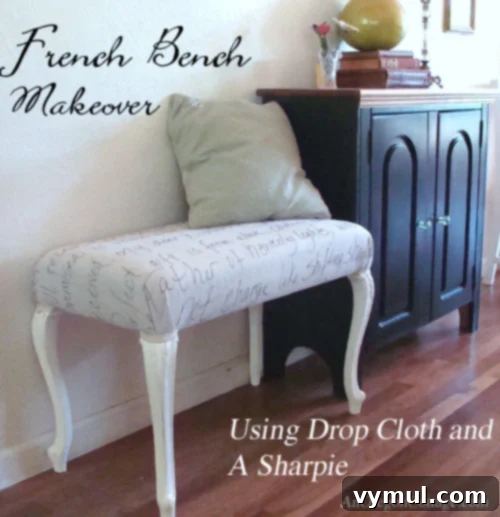
Budget-Friendly French Bench Makeover: DIY Upholstery with Drop Cloth and a Personal Touch
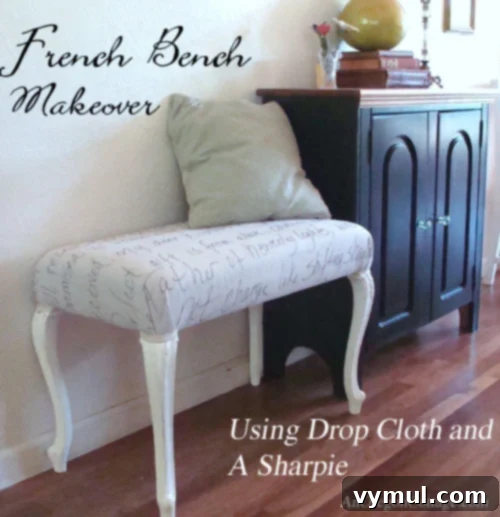
There’s an undeniable joy that comes with checking off a long-standing project from your to-do list, especially when the outcome surpasses your expectations. Today, I’m thrilled to share one such achievement: a delightful French-style bench makeover that was not only surprisingly easy but also incredibly fun and meaningful. This project serves as a perfect example of how creativity, a bit of elbow grease, and budget-friendly materials can breathe new life into an old piece of furniture, turning a forgotten item into a cherished centerpiece.
Remember the elegant French-style bench I stumbled upon at a local thrift store? Its potential was immediately apparent, even if its current state left a bit to be desired. Acquiring a piece like this, particularly with its distinctive style, can be quite challenging in my area. So, despite its slightly higher price tag of $40.00 – a bit more than I typically spend on thrift store finds – I knew it was a gem worth investing in.

For weeks, this bench occupied a corner of my workroom, a blank canvas awaiting inspiration. My mind cycled through countless ideas. Should I opt for a vibrant, bold fabric to make a statement? Perhaps a sophisticated transfer method on a plain textile could achieve that coveted antique French look. I even considered the unconventional route of crafting fabric from upholstery webbing, imagining a chic, textured surface – until I discovered the exorbitant price of webbing. That idea was quickly discarded!
Eventually, I grew tired of the endless deliberation. A specific fabric from a Ballard’s catalog, adorned with beautiful French script, caught my eye. It was exactly what I envisioned. Since I only needed a yard, I was prepared to pay the $24.99 asking price. However, a moment of reflection made me pause. I had already invested $40 in the bench itself. Adding another $25 for fabric seemed to push the budget a bit too far for a thrift store project.
The Creative Spark: Personalizing with a Painter’s Drop Cloth
Then, it hit me. I had a perfectly good piece of painter’s drop cloth leftover from a previous project. This sturdy, neutral canvas was just waiting for a purpose. Why not leverage its blank surface? Instead of buying fabric with script I couldn’t understand, why not create something truly personal and meaningful? This “aha!” moment completely shifted my approach, transforming a potential expense into an opportunity for unique, heartfelt personalization.

Armed with a trusty Sharpie, I began to write a favorite verse onto the drop cloth. My intention was to completely fill the fabric, creating a dense, printed effect. I knew that some words might be obscured once the bench was upholstered, but the overall impression would still be that of a beautifully inscribed textile. I wasn’t striving for calligraphic perfection; instead, I embraced a flowing, natural script, prioritizing personal expression over artistic precision. The result, I believe, speaks for itself – it’s personal, deeply meaningful, and uniquely mine.
Transforming Your Thrift-Store Bench: A Step-by-Step DIY Guide
Embarking on a furniture makeover project like this can be incredibly rewarding. It allows you to transform a dated or worn piece into something that perfectly suits your style and space, often for a fraction of the cost of buying new. Here’s a detailed breakdown of the steps I followed to give this French bench its new lease on life, complete with my custom Sharpie marker fabric.

Preparation and Painting: Laying the Foundation
- 1. Remove Unwanted Fabric and Edging: Begin by thoroughly inspecting your bench. Any torn, stained, or odorous fabric layers must be removed. On this bench, a tattered black fabric covering the bottom had to go. However, the original fabric underneath was surprisingly clean and intact, and crucially, wouldn’t show through the thick canvas drop cloth, so I opted to leave it as an additional layer of padding. Use a staple remover or a flathead screwdriver to carefully pry up and remove staples, and pliers to pull out the fabric. Similarly, remove any existing edging material like piping or gimp. Since the piping on my bench was both glued and stapled, pliers proved to be the most effective tool for a clean removal.
- 2. Paint the Legs and Frame: A fresh coat of paint can dramatically alter the look of a piece. I applied two coats of semi-gloss enamel paint that I already had on hand to cover the rough, dated wood finish of the legs. While I skipped a primer for this particular project, if your piece has a very dark finish, is made of tricky wood (like pine), or you’re going for a significantly lighter color, a good quality primer is always recommended for better adhesion and a more durable finish. After the paint dried completely, I lightly distressed the legs with a fine-grit sanding block. My preference is for subtle distressing – just enough to reveal hints of the original wood underneath, giving it a gently aged, ‘supposed-to-be-that-way’ chipped look rather than a heavily worn appearance. This technique adds character without making the piece look damaged.
Crafting Your Custom Fabric: The Personal Touch
- 3. Create Your Personalized Drop Cloth Fabric: Before attaching your fabric, take the time to prepare it. If using a drop cloth like I did, consider pre-washing and drying it to pre-shrink the material and make it softer to work with. Then, lay it flat on a protected surface. This is where the magic happens! With your Sharpie (or fabric marker), carefully write your chosen text, draw a design, or create a pattern. I chose a meaningful verse, writing it repeatedly to fill the entire surface. Don’t worry about absolute perfection; a handmade look adds to the charm. Allowing your natural handwriting to shine through creates an authentic, unique piece. Let the ink dry completely before moving on to avoid smudging.
Upholstery Steps: Securing Your New Fabric
- 4. Initial Fabric Placement and Stapling: (Not pictured in original, but crucial) Carefully center your custom fabric piece over the bench cushion, ensuring there’s an even amount of overhang on all sides. Flip the bench over. Using a heavy-duty staple gun, secure the fabric in the center of all four sides. Start with a couple of staples on one long side, pull the fabric taut to the opposite side, and secure it with a couple more staples. Repeat this process with the short sides. This initial stapling anchors the fabric and ensures it’s evenly distributed. The key here is to pull the fabric as tightly as possible without distorting the pattern or creating wrinkles. Achieving a professional, smooth finish hinges on this crucial step.
- 5. Creating Neat Corners with Pleats: Flip the bench back onto its legs. Now, tackle the corners. On each corner, create a neat pleat, centering it over the middle of the leg. This technique helps to remove excess fabric and creates a clean, tailored look. Aim for the pleat to be as tight and even as possible. Once you’re satisfied with its placement and appearance, secure it firmly with one or two staples. Repeat this for all four corners.
- 6. Trimming Excess Fabric Near Legs: Flip the bench over again. Carefully trim the excess fabric close to the inside edge of each leg. It’s vital to leave enough fabric to allow for secure stapling, but not so much that it creates bulk. Precision here will make the final finishing much easier.
- 7. Final Fabric Trim at Leg Top: Flip the bench back onto its legs for better access. Trim the fabric as close to the top of the leg as possible, ensuring it’s below the initial staples you’ve already placed. This step refines the edge and prepares it for the decorative gimp or cording that will hide the staples. Yes, this project involves quite a bit of flipping and turning, but each flip serves a purpose in achieving a polished result!
- 8. Staple Around the Front of Each Leg: With the bench on its side, or positioned to give you the best angle, staple all the way around the front of each leg, firmly securing the fabric into the wood. This ensures the fabric is tightly held and creates a clean line around the leg’s profile. Repeat this process for all remaining legs.
- 9. Complete All Edge Stapling: Now, for the final round of stapling! With the bench on its back (I promise, this should be the last major flip!), finish stapling all the remaining exposed edges of the fabric. Pay particular attention to the areas around each leg, ensuring every part of the fabric is securely fastened. This comprehensive stapling provides durability and prevents the fabric from shifting over time.
- 10. Conceal Staples with Decorative Trim: The final touch brings everything together. Use a hot glue gun to attach gimp, cording, or covered piping around the top of each leg where the fabric meets the frame. This decorative trim serves to conceal all the staples, giving your upholstered bench a clean, professional, and finished appearance. Choose a trim that complements your fabric and paint color for a cohesive look.


The Reveal: A Meaningful Masterpiece
And just like that, the transformation is complete! It always amazes me how often I procrastinate on these kinds of projects, only to find them so straightforward and rewarding once I finally dive in. The satisfaction of seeing this once-neglected bench now gracing our entryway, infused with personal meaning, is immense. Knowing that I used materials I already had on hand, and that I breathed new life into an old piece, makes me feel incredibly good about that initial $40 investment.
This project is a testament to the power of DIY – not just for saving money, but for creating truly unique items that tell a story. It’s a reminder that beauty doesn’t always come with a high price tag; sometimes, it’s crafted with ingenuity and a personal touch. And if I ever decide to change its look in the future, I now know how quick and easy it is to give it another refresh.
I hope this journey inspires you to look at your own thrift store finds or forgotten pieces of furniture with new eyes. A little imagination and some simple steps can lead to a stunning, personalized addition to your home. Happy creating!
This project has been proudly linked to some wonderful DIY communities:
- Furniture Feature Friday
- Saturday Nite Special
- Weekend Wrap-Up
- Thrifty Treasures