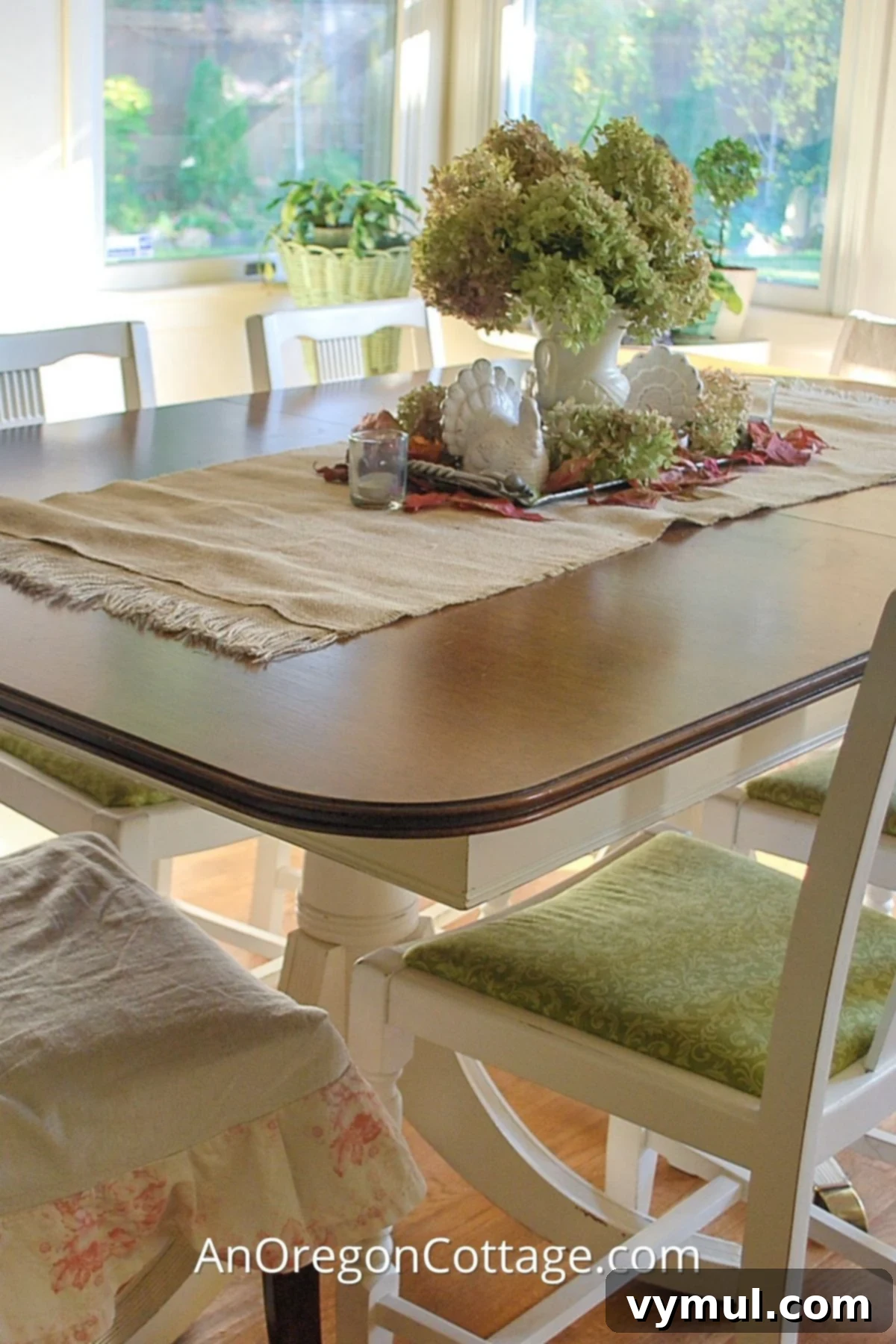
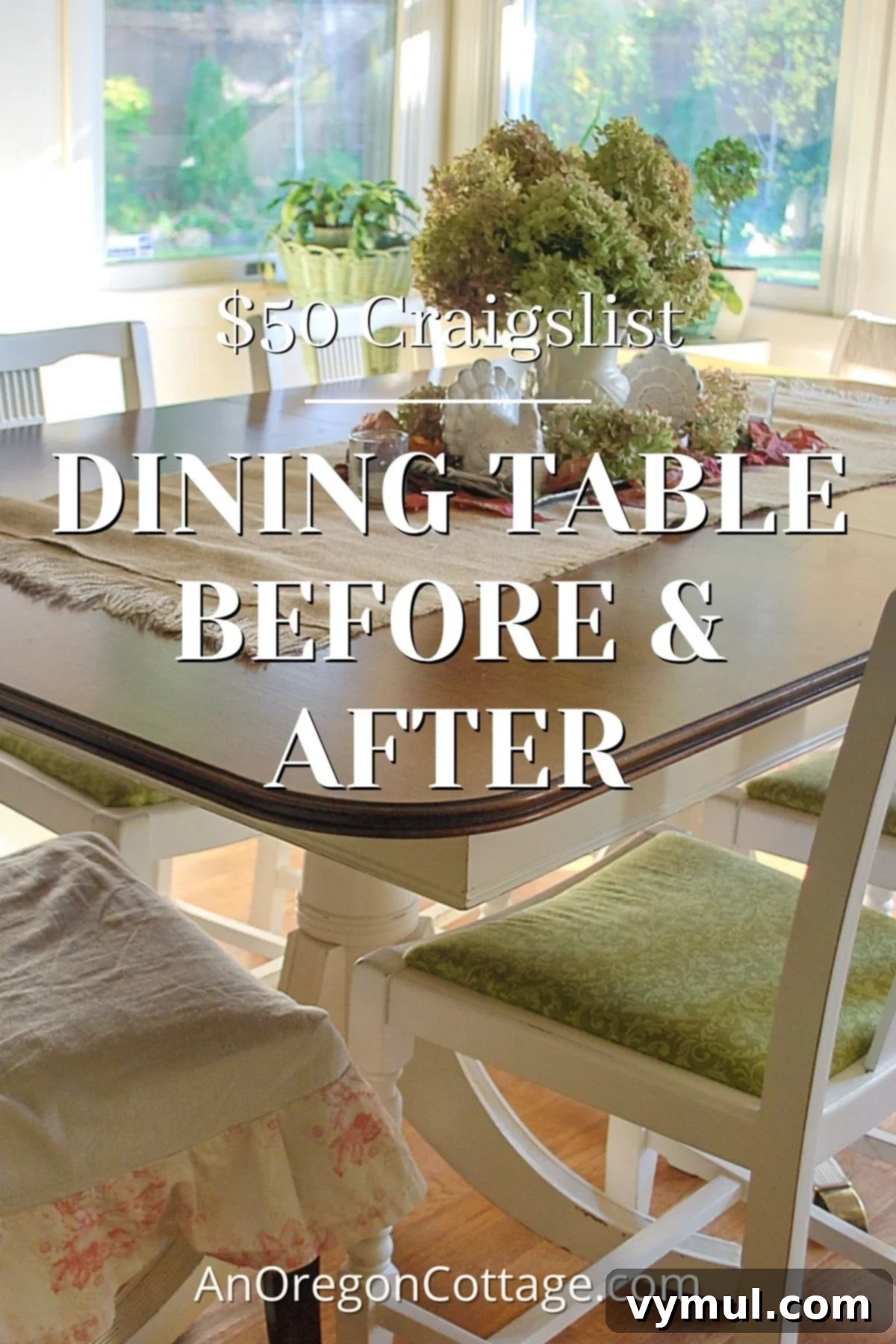
Transform Your Dining Room: A $50 Craigslist Table Makeover & DIY Refinishing Guide
Welcome to an exciting DIY journey where an old, overlooked Craigslist find is transformed into a stunning dining room centerpiece! This step-by-step tutorial will show you exactly how to give a tired dining table a complete makeover, proving that painting and refinishing isn’t nearly as daunting as it seems. Get ready to be inspired to create your own beautiful, budget-friendly furniture transformations.
Please note: Some links in this article are affiliate links. If you click on them and make a purchase, I may receive a small commission at no extra cost to you. This helps support my DIY projects and content creation.
Our family was in dire need of a proper dining table. For years, we had been borrowing one, and it was time for a permanent solution that truly fit our home’s style. I knew that purchasing a brand new, high-quality table would be far beyond our budget. That’s why I turned to Craigslist, a fantastic resource for finding pre-loved furniture with great bones and incredible potential for a fraction of the retail price.
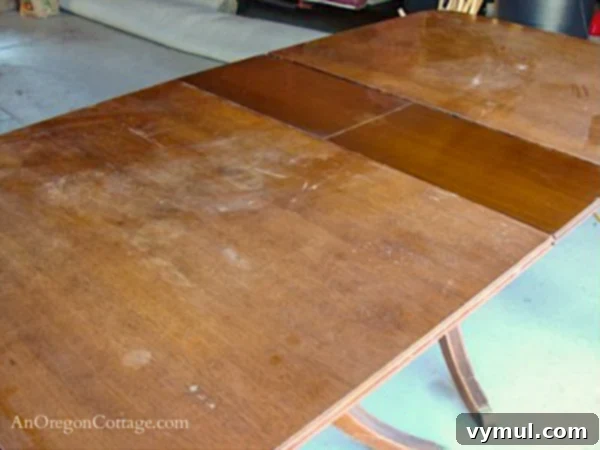
My search led me to this beautiful, classic double pedestal table. It boasted a sturdy construction, timeless design, and even a convenient hidden leaf, all for an astonishing $50. It was a diamond in the rough, clearly having seen many years of family meals and daily use, but its inherent quality shone through the wear and tear. I immediately envisioned its potential, seeing past the scuffs and outdated finish to the elegant piece it could become with a little love and effort.
Despite my enthusiasm, there was a minor hurdle: I had never attempted a full furniture refinishing project before. I was familiar with finishing new wood and had plenty of experience painting various items. I’d even lightly sanded and refreshed surfaces without completely stripping the original finish, like the time I transformed an old dresser into a bathroom vanity top. However, completely removing an old finish and starting from scratch was new territory. This DIY project presented a wonderful challenge and a valuable learning opportunity.
While painting the entire table would have been the easier route, I was set on achieving the classic look and low-maintenance benefits of a natural wood top. The idea of no longer needing tablecloths for every meal was incredibly appealing! Given the intricate turned and fluted details of the table’s base, painting that section made perfect sense. This meant the primary refinishing effort would focus solely on the tabletop. Thankfully, as I soon discovered (spoiler alert!), stripping and refinishing the top proved to be surprisingly straightforward and rewarding.
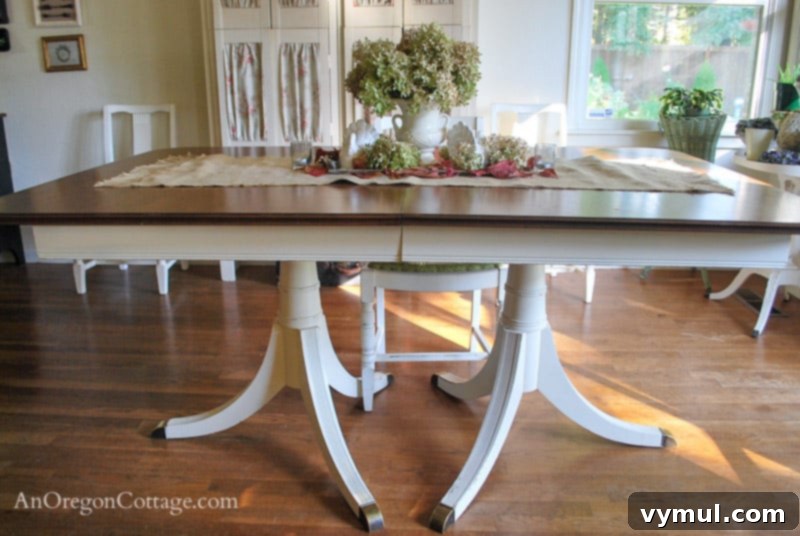
And now, the moment you’ve been waiting for… here’s the stunning transformation after its makeover:
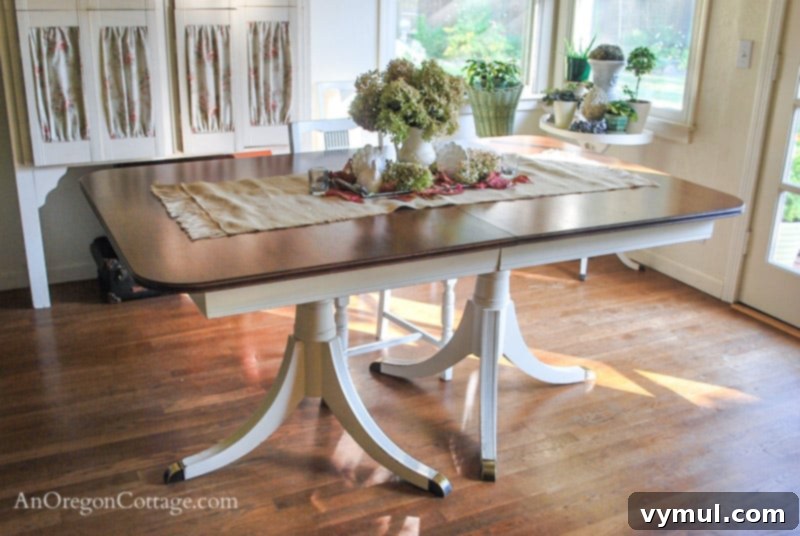
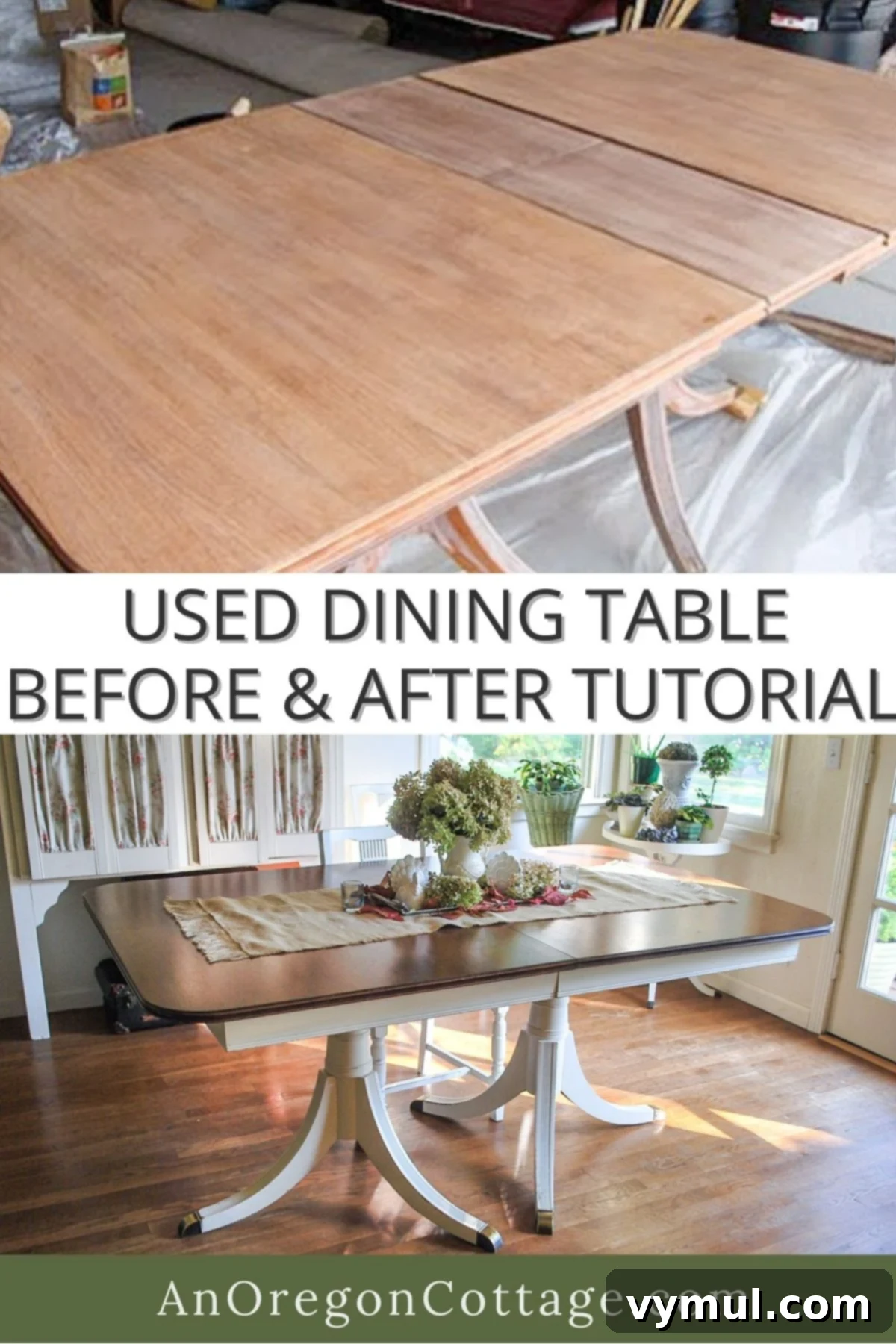
I absolutely adore the final result! The deep, rich tone of the wood top, beautifully contrasted with the creamy white base, creates an elegant and inviting aesthetic. The fresh paint on the pedestals truly highlights their intricate details, bringing out a charm that was previously hidden. It feels incredibly satisfying to have brought this piece back to life with a look that perfectly complements our home.
However, every DIY project has its quirks, and this one was no exception. I’ve had to embrace a bit of imperfection; there are tiny white flecks in the finish and even a stray fiber or two. I was meticulous about wiping and cleaning before each coat of polyurethane, but working in the garage meant contending with airborne dust particles. The reality is, these minor flaws are likely only noticeable to my critical eye. Most importantly, I’ve learned to appreciate that no one else probably sees them! (Update: After a couple of years, I rarely even notice these ‘flaws’ myself, only remembering them when reviewing this post!)
Now that you’ve seen the gorgeous finished product, let’s dive into the detailed, step-by-step process. If you stumble upon a wonderful vintage table or piece of furniture, you’ll have all the knowledge and confidence to undertake your own stunning transformation.
DIY Dining Table Makeover: A Comprehensive Tutorial
Embarking on a furniture makeover can feel intimidating, but with the right guidance, it’s an incredibly rewarding experience. This section breaks down each step of refinishing and painting a dining table, providing practical tips and insights to help you achieve professional-looking results. Let’s gather our tools and materials and get started!
Step 1: Remove Existing Finish & Initial Sanding
This crucial first step prepares your table for its new look by stripping away old, damaged finishes and creating a smooth, clean surface for new applications.
- Remove existing finish: Focus solely on the areas you intend to refinish, which in my case was the tabletop. Apply a chemical finish remover, such as Citristrip, following the manufacturer’s instructions carefully. Paint it on, allow it to sit for the recommended time, then use a putty knife to scrape off the softened finish. This process is surprisingly effective but can be messy and requires good ventilation. I performed this step in our garage, ensuring plenty of fresh air. Remember to wear appropriate safety gear, including gloves and eye protection.
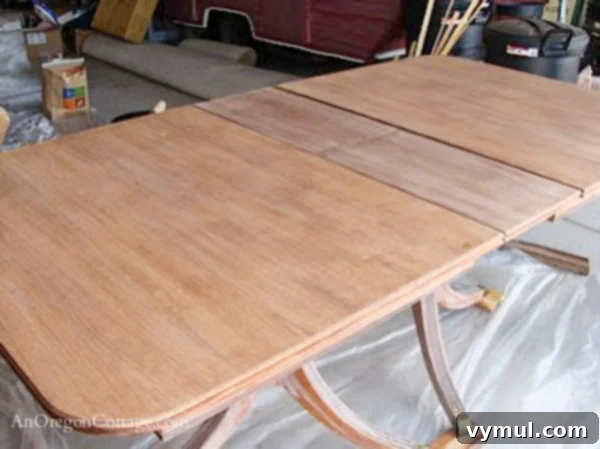
- Wash and sand the top: After stripping, thoroughly clean the tabletop with mineral spirits and steel wool to remove any residue from the stripper. Once dry, begin sanding the top with an 80-120 grit sandpaper. An electric palm sander will make this task much quicker and more efficient. The goal here is to achieve an even, smooth surface, removing any remaining finish and preparing the wood for staining. The image above shows the tabletop at this stage.
- Prepare the base and table skirt for paint: If you plan to paint the legs and skirt, as I did, simply sand them as thoroughly as possible with the same 80-120 grit sandpaper. Areas with intricate carvings, like my double pedestals, will have crevices and bumps that are hard to reach. Do your best to get into these areas. If you wanted to refinish these parts to a natural wood look, you would need to use the chemical stripper on them as well, employing a wire brush to effectively get into all the detailed areas.
Step 2: Prime the Table Base
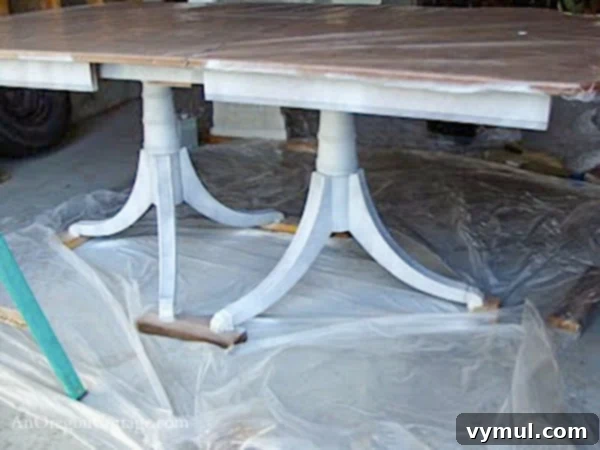
Priming is an essential step when painting furniture, as it ensures better adhesion of the topcoat, a more even color, and prevents stains from bleeding through. Based on advice from other DIY enthusiasts, I chose to paint the base before finishing the top, which proved to be an excellent sequence.
- Protect the tabletop: Carefully cover the newly stripped tabletop with plastic sheeting, securing it firmly underneath the table with masking tape. This will shield it completely from any paint overspray or drips. Also, use masking tape to protect any metal base feet or other areas you do not wish to paint.
- Apply primer: Paint the table skirt and base with a flat finish primer. I opted for spray primer because it delivers an exceptionally smooth, factory-like finish and significantly reduces application time, especially on detailed surfaces. One can was sufficient to cover my table base. While spray priming is incredibly efficient, you can certainly achieve great results with a brush-on primer if you prefer, though it may take more time and careful brushing to avoid streaks.
Step 3: Paint the Table Base
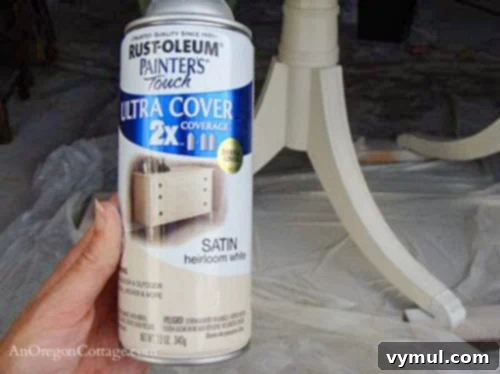
Now for the exciting part – adding color! Choosing the right paint can make all the difference in achieving your desired aesthetic. I selected Rust-oleum’s Heirloom White, a color I had researched and admired for its perfect creamy white hue.
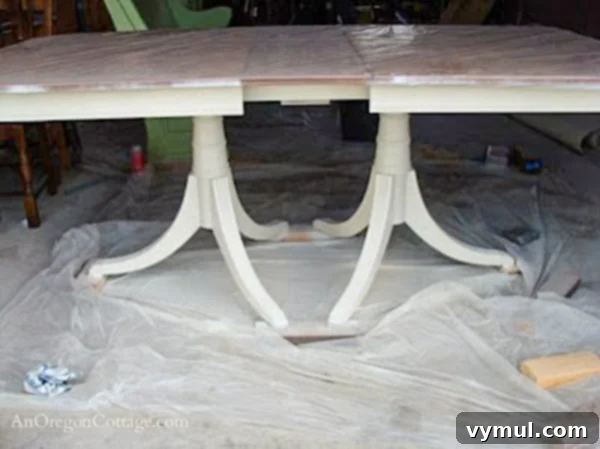
- Apply paint coats: Using spray paint, apply two to three light, even coats to the table base. The key is to move quickly and consistently to prevent drips and ensure a smooth finish. For increased comfort and control during spraying, I highly recommend using a spray paint can gun – it’s a game-changer! One full can typically covers one coat, and I applied two coats for optimal coverage and durability. If you prefer, you can also brush on two coats of your chosen paint, ensuring even application and proper drying time between coats.
Spraying vs. Brushing Tip: While spray paint cans range from $4-$6 each, making them slightly less frugal than brush-on paint, the time savings are undeniable. Spraying takes a fraction of the time compared to brushing, and the smoother, more consistent finish is often worth the modest extra cost, especially on detailed pieces like a table base.
Distressing Technique Tip: After the paint on the base had completely dried and cured, I used an 80-grit sandpaper block to lightly distress the legs and pedestals. This subtle distressing not only adds character but also serves a practical purpose: should the paint inevitably chip from everyday use (like feet accidentally hitting the base), it will blend in seamlessly, appearing as if it was intentionally designed that way. It’s a clever trick to embrace the natural wear and tear of a beloved piece of furniture!
Step 4: Second Sanding of the Tabletop
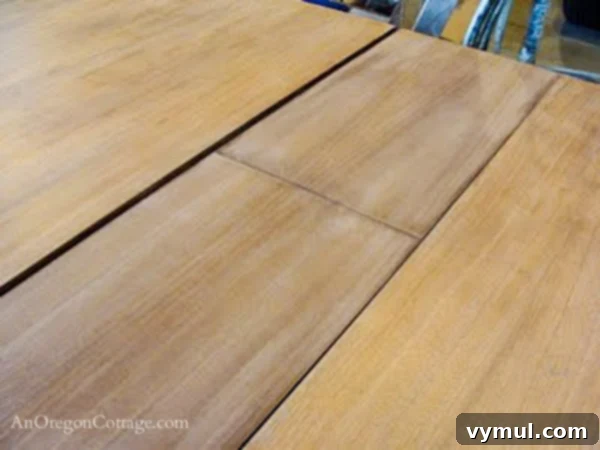
After the paint on the base has had a few days to cure, it’s time to refine the tabletop further. This second sanding is crucial for achieving an ultra-smooth surface that will beautifully absorb stain and protectants.
- Fine sanding: Carefully remove the plastic covering from the tabletop. Give the entire surface another light but thorough sanding with a finer 180-grit sandpaper. This step removes any remaining imperfections, smooths out the wood grain, and creates an ideal surface for the wood conditioner and stain to penetrate evenly.
- Thorough cleaning: After sanding, the most critical step is to meticulously wipe down the tabletop. Use a tack cloth, which is specifically designed to pick up even the finest dust particles more effectively than a regular rag. A perfectly clean surface is vital to prevent dust and debris from getting trapped under your stain and finish.
Note on the table leaf: You might notice that the leaf on my table appeared slightly darker initially compared to the main tabletop, even after removing the varnish. This is often due to varying exposure and use over time. While stripping didn’t completely equalize the color, I decided against extensive additional sanding to try and match it perfectly. I embraced this slight variation, knowing that I could use a tablecloth when the leaf was in use. (Update: With subsequent staining, the difference became much less noticeable, and I now frequently use the leaf without a tablecloth!)
Step 5: Apply a Wood Conditioner
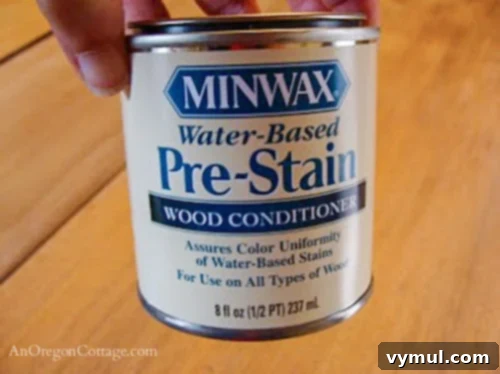
Wood conditioner, often called pre-stain, is a step that many beginners overlook, but it’s incredibly important for achieving professional, streak-free staining results.
- Brush on conditioner: Apply a water-based pre-stain conditioner evenly over all the areas of the tabletop that will be stained, following the product’s instructions. This conditioner helps to condition the wood fibers, allowing the stain to be absorbed more uniformly and preventing blotchiness, especially on softer woods.
- Drying time: Let the pre-stain dry for at least 30 minutes before applying your stain. However, be careful not to let it dry for more than 2 hours, as its effectiveness diminishes after that window.
Is this step truly necessary?
While often recommended for softwoods like pine or fir due to their tendency to absorb stain unevenly, I used it on my hard mahogany table as a precautionary measure. I wanted to ensure the best possible finish on such a large surface, and it certainly didn’t hurt. If you’re working with any wood where even stain absorption is a concern, or if you’re undertaking a significant project, I highly recommend not skipping this step.
Step 6: Stain the Tabletop
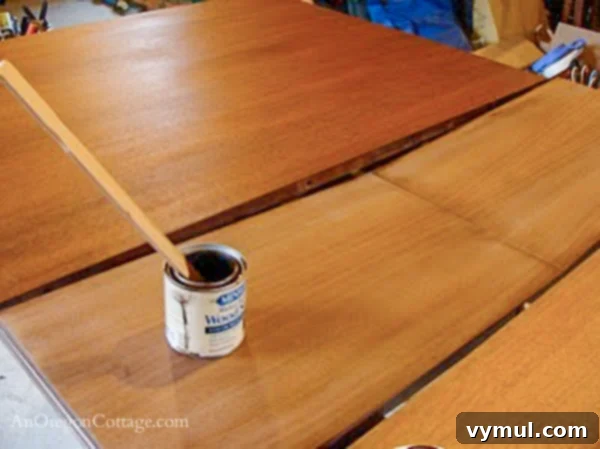
This is where the wood’s natural beauty truly comes to life! Choosing the right stain color can drastically change the table’s character. I opted for Minwax water-based stain in ‘American Walnut’ for its rich, warm tone.
- Apply your chosen stain: Apply the stain to the tabletop and edges according to the product’s directions. You can use gloves and a clean rag, or for more controlled and even application, a disposable foam brush, which is what I found most effective. Work in sections, applying the stain with the grain of the wood, and wipe off any excess before it dries to prevent a patchy finish.
- Layer for desired depth: The beauty of staining lies in its buildable nature. Apply as many coats as needed to achieve your desired depth of color. I applied two coats to the table leaf (over a couple of days) and three coats to the main tabletop. This gradual layering was particularly helpful in minimizing the slight color difference between the darker leaf and the primary table surface, blending them beautifully. Ensure each coat dries completely before applying the next.
Step 7: Protect with Polyurethane
The final and arguably most important step is to protect your beautifully refinished tabletop with a durable clear coat. Polyurethane will guard against scratches, spills, and daily wear, ensuring your hard work lasts for years.
- Apply multiple coats: After the stain has completely dried (usually 24-48 hours, check product instructions), apply three to five coats of water-based polyurethane. It’s crucial NOT to sand before the first coat of poly; simply wipe the surface with a tack cloth to remove any dust. I applied five coats to ensure maximum durability for a frequently used dining table.
- Drying and optional sanding: Allow each coat of polyurethane to dry thoroughly according to the manufacturer’s instructions (water-based polys often dry quickly, within a few hours). While it’s often recommended to lightly sand between coats with a very fine sandpaper (280-320 grit) for optimal adhesion and smoothness, I found it unnecessary for my project as the surface felt smooth between coats, possibly due to using water-based products. This is a judgment call based on how your surface feels.
- Full curing time: Once the final coat is applied, it’s essential to let the tabletop fully cure before regular use. This typically takes 5 days to a week, sometimes longer, depending on humidity and product specifications. This curing period allows the polyurethane to harden completely, providing its maximum protective qualities.
Polyurethane Application Tips: Three Crucial Lessons Learned:
Applying polyurethane correctly can make or break your finish. Here are three invaluable tips I learned through experience:
- Always use a wide foam applicator instead of a bristle brush: My first coat, applied with a natural bristle brush, left noticeable brush strokes in the middle of the table. I spent the next four coats trying to minimize them. Foam applicators provide a much smoother, streak-free finish.
- Use long, continuous strokes with the grain: When applying, go from one side of the table to the other in one fluid motion. Avoid stopping in the middle, as this will create a visible line where you paused and restarted.
- Work from the middle of the table towards yourself: This technique helps prevent accidental drips or brush marks on areas you’ve already finished, and it keeps you from leaning over wet polyurethane. (Yes, I now own a shirt with polyurethane on the bottom to prove this point!).
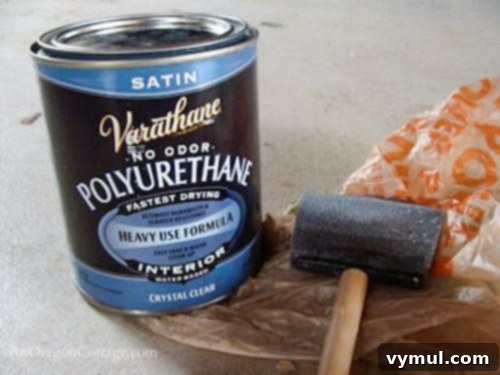
PRO TIP for Foam Applicators: Did you notice that plastic bag in the polyurethane picture? That’s not an accident! I applied five coats of polyurethane over the course of about a week (life happens, and sometimes you can’t rush these things!). The secret to making this work without constantly buying new applicators? I stored my foam applicator in a tightly sealed plastic bag between coats. Seriously, it never dried out, not even at the corners, for the entire week!
And there you have it – all the detailed steps I followed to transform this humble $50 Craigslist find into a stunning dining room beauty. This project was not only incredibly satisfying but also a testament to the power of DIY and the potential hidden in pre-owned furniture.
While I didn’t keep exact records of every penny spent, all the materials for this dining table makeover amounted to approximately $25-$50. So, for a grand total of around $75-$100 (including the initial table purchase), we now have a gorgeous, durable dining table that perfectly suits our needs and, most importantly, doesn’t require a tablecloth all the time! What an incredible deal!
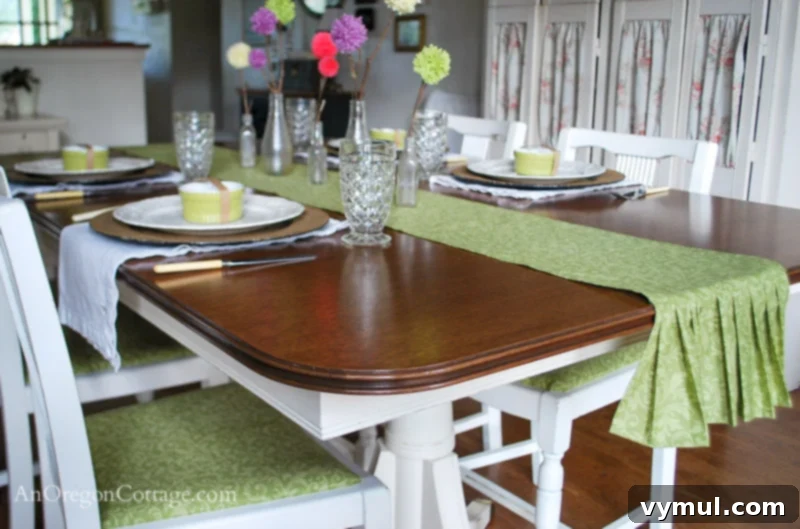
So, what do you think? Did I score a fantastic deal, or do you believe I went through too much trouble? For me, the satisfaction of creating something beautiful and functional with my own hands, at such a low cost, makes every bit of effort worthwhile!
Oh, and notice the chairs accompanying the table? Those were also incredible finds at just $5 each! If you’re inspired to take on more DIY furniture projects, you can find out how I painted them here and how I easily recovered their seats here. These smaller projects are great ways to build confidence and learn new skills.
If you use this detailed tutorial to refinish a table or any other piece of furniture – whether it’s side tables, shelves, or dressers – please let me know! I would absolutely love to see your amazing transformations and hear about your DIY experiences!

Print
Pin
SaveSaved!
Dining Table Makeover DIY Tutorial
Tools
-
electric palm sander
Materials
- sandpaper & sanding block from 80 grit up to 320
- tack cloths
- plastic cover large enough to cover table top
- masking tape
- 1 can spray primer
- 2-3 cans spray paint or brush-on paint
- foam applicators, 2-3 inch sizes
- 1 quart water based wood pre-stain conditioner
- 1 quart water based wood stain, in color choice
- 1 quart water based polyurethane
Instructions
Step 1: Remove Finish & Sand
-
Remove existing finish from the tabletop using a chemical stripper and putty knife. Work in a well-ventilated area (e.g., garage) as this is a messy job. I used Citristrip for the top.
-
Wash the top with mineral spirits and steel wool, then sand with 80-120 grit sandpaper using an electric palm sander for an even surface.
-
For the base and skirt, sand them thoroughly with 80-120 grit sandpaper. For intricate areas, do your best to sand crevices. If refinishing, use stripper and a wire brush for detailed parts.
Step 2: Prime the Base
-
Cover the tabletop with plastic, taped underneath, to protect it from paint. Also, cover any metal base feet with masking tape.
-
Spray paint the table skirt and base with a flat finish primer (one can covered this base). Spraying offers a smoother finish and is quicker, though brush-on primer is also an option.
Step 3: Paint the Base
-
Apply two to three light coats of spray paint to the base, moving quickly to avoid drips. A spray paint can gun can aid control.
-
I used two coats (one can per coat). Brush-on paint is an alternative. Lightly sand the base with 80-grit sandpaper after drying for a distressed look, if desired.
Step 4: Sand the Top Again
-
After the base cures for a few days, remove plastic from the top and lightly sand it again with 180 grit sandpaper.
-
Wipe the tabletop down thoroughly with a tack cloth to collect all dust particles.
Step 5: Use A Wood Conditioner
-
Brush a water-based pre-stain conditioner over all areas to be stained, following instructions. This promotes even stain absorption.
-
Let the pre-stain dry for 30 minutes to 2 hours before staining; do not exceed 2 hours.
Step 6: Stain The Top
-
Apply your chosen water-based stain (‘American Walnut’ for me) to the top and edges. Use a foam brush or rag, working with the grain.
-
Apply multiple coats as needed for desired color depth; I used two on the leaf and three on the table, allowing full drying between coats, to blend colors.
Step 7: Protect With Polyurethane
-
After the stain dries completely, apply three to five coats of water-based polyurethane. Do not sand before the first coat, just wipe with a tack cloth. I used five coats for durability, storing my foam brush in a plastic bag between coats.
-
Let each poly coat dry thoroughly. You may lightly sand with 280-320 grit paper between coats if desired, but I found it smooth enough without.
-
Allow the top to fully cure for 5 days to a week before using, as per product directions.
Notes
- Always opt for a wide foam applicator over a traditional bristle brush to avoid unsightly brush strokes.
- Apply polyurethane using long, continuous strokes with the grain, moving from one side of the table to the other without stopping midway to prevent visible lines.
- Start applying from the middle of the table and work your way towards yourself to avoid accidental contact with wet areas.

This comprehensive tutorial has been updated and enhanced to provide even more value and detail. It was originally published in October of 2010.
Disclosure: Affiliate links within this article are used to recommend products and may earn a commission based on sales, but this does not affect your purchase price. Click here to read our full disclaimer and advertising disclosure policy.