
Embrace Spring: Essential Garden Tips, Carbon Steel Cooking, and Inspiring Reads
Good things to do, buy, read, and watch! This month’s list includes early spring garden updates, a revolutionary new skillet I’m completely enamored with, an innovative solution for protecting berry beds from deer, eight insightful book reviews, and much more. Dive into these curated selections designed to inspire and simplify your life!

Some links in this article are affiliate links, and if you click on them, I will receive a small commission at no cost to you.
Happy April, everyone! Here in the Pacific Northwest, April is a wonderfully unpredictable month, bringing with it a delightful mix of all types of weather. More often than not, it’s considerably colder than our spring-optimistic minds would like to believe. After all, it’s officially spring, right? Why are we still contending with overnight lows in the 30s and average daytime highs barely touching the low 50s?
The stark reality hits hardest when you see all the vibrant fashion advertisements showcasing flowy spring floral dresses and light tops, while we’re still layering up in cozy sweaters and navigating puddles in our trusty rain boots! It’s a frustrating contrast, to say the least.
But then, there are those occasional, glorious full-blue-sky days, teasing us with temperatures creeping into the 60s, and sometimes — pure joy! — even the low 70s. These fleeting moments are what truly get us through, offering a tangible promise that real spring, with its consistent warmth and sunshine, is genuinely on its way. My collection of lighter, flowy dresses patiently waits in the wings, ready for their moment to shine. In the meantime, while we wait for nature to catch up, how about we dive into a list of some truly good things? If nothing else on this list captures your attention, I implore you to check out the carbon steel skillet – I really, *really* want to sing its praises to everyone!
Discovering Good Things This Month
Early Spring Garden Progress
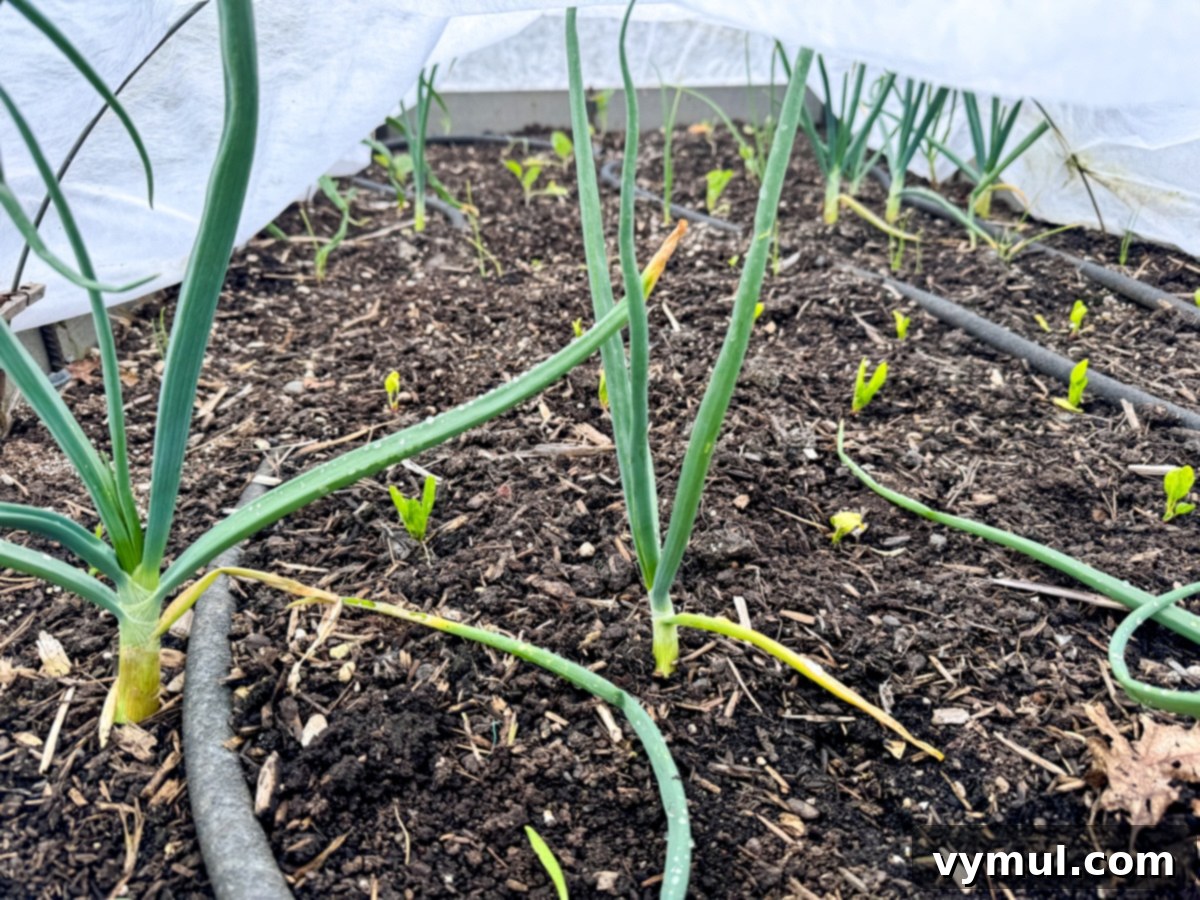
Above, you can see one of the thriving beds in our vegetable garden. It’s currently home to fall-sown Walla-Walla onions and delicate spinach transplants that I diligently started indoors in February, much like this. This year, I’m experimenting with a technique advocated by Charles Dowding, a renowned no-dig gardener. He recommends transplanting new starts much smaller than I traditionally would – ideally, right after their first true leaves have emerged. The spinach seedlings pictured were transplanted about two weeks ago, and while growth has been slow due to the chilly weather, they are just beginning to put out another set of leaves.
Despite the persistent cold, spinach, fortunately, tolerates cooler temperatures, and this bed has been carefully covered with a frost row cover for added protection and warmth. We’re eagerly watching their progress! My motivation for getting them out sooner stems from the fact that spinach tends to “bolt” or go to seed very quickly here as soon as the weather warms up significantly. By getting an early start, I’m hoping to extend our harvest season for this delicious, homegrown leafy green.
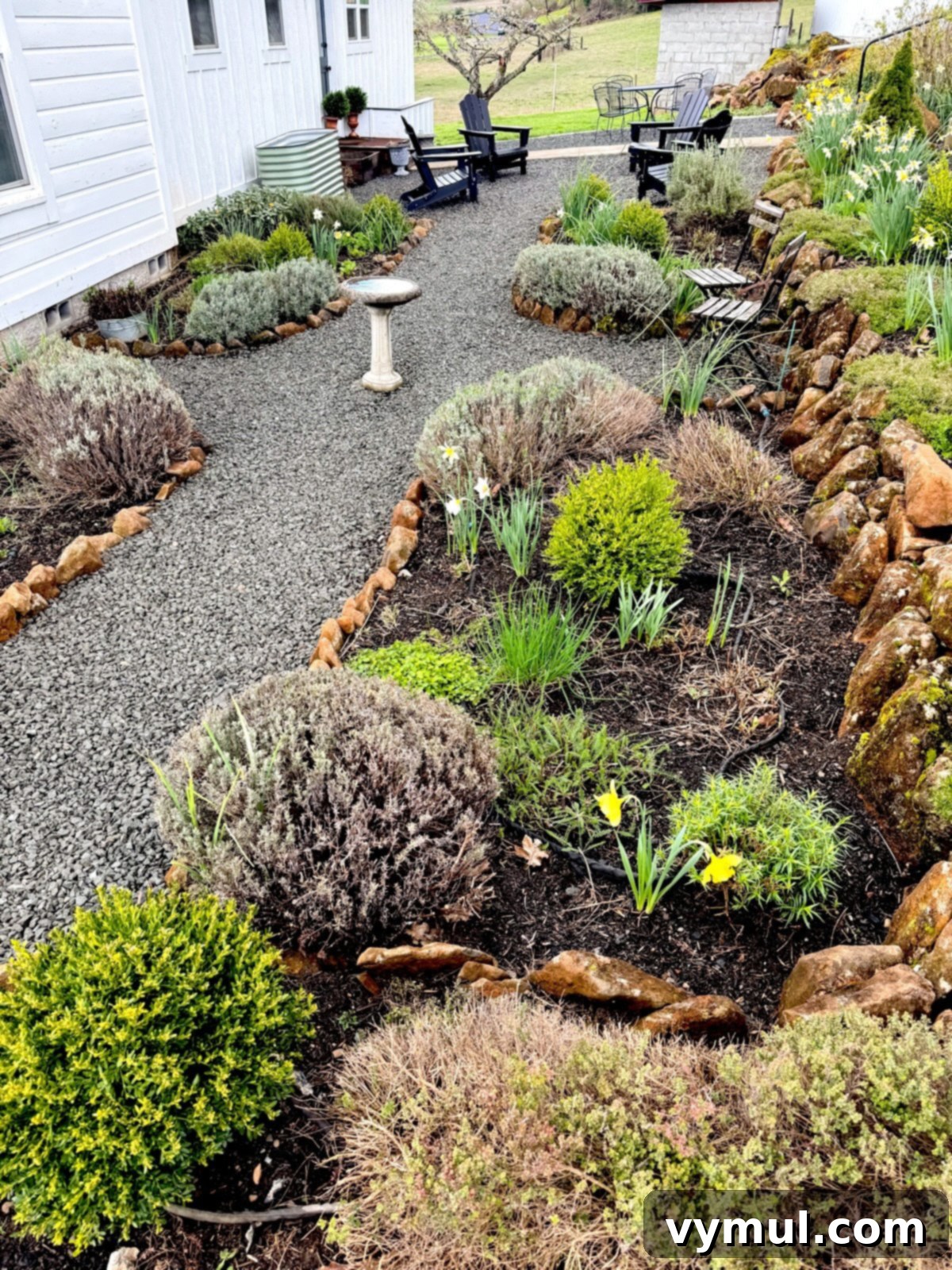
Our beloved deer-resistant herb and flower garden is now proudly entering its 5th year! Just a few weeks ago, cutting it back required the serious power of a hedge trimmer – the Lavender Provence, in particular, is no joke and grows incredibly vigorously. It’s quite a striking difference from where we initially started, isn’t it?
Last fall, I had grand ambitions to plant even more spring bulbs, but navigating between the dense, mature plants proved to be a significant challenge. We’ve unfortunately lost quite a few alliums and irises to persistent gophers over the years, but thankfully, they seem to leave the daffodils completely alone. This might be a clear sign that my strategy going forward should simply involve planting an abundance more of those cheerful yellow blooms!
Side Note: After an entire year of sitting patiently, do you honestly think I’ll finally get around to filling and planting that lovely green Birdie’s Bed next to the house this year? Haha, it remains one of my ongoing garden jokes!
My New Favorite Kitchen Essential: A Carbon Steel Skillet I’m Loving
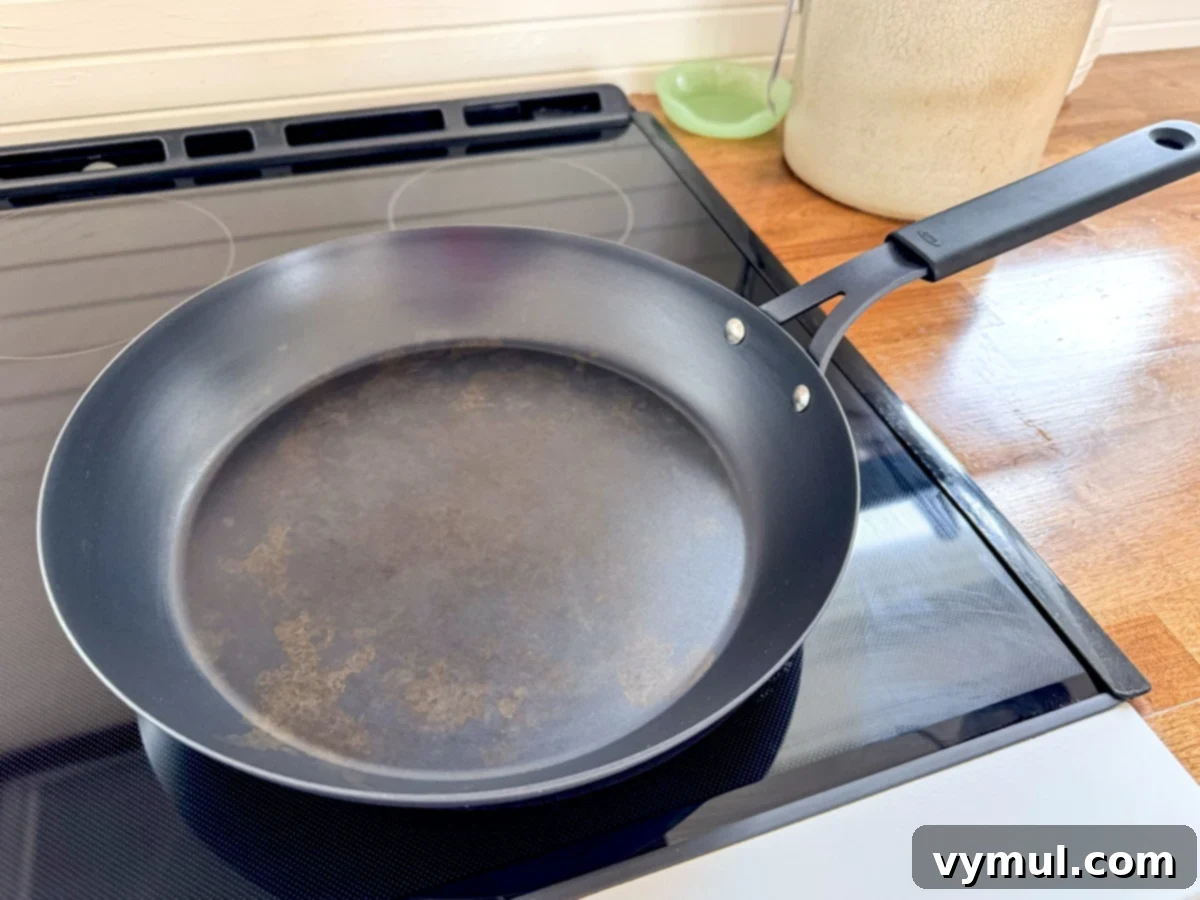
Just this morning, I was using this amazing pre-seasoned carbon steel skillet to fry eggs – and let me tell you, I sautéed chopped onions in butter first and then fried the eggs directly in them for the first time, and it was absolutely *chef’s kiss*! As I enjoyed my breakfast, I couldn’t help but think that I absolutely MUST tell you all about this incredible pan!
After a long and often frustrating journey trying numerous non-stick skillets – including the newer ceramic types which, in my experience, consistently fail to maintain their non-stick properties for any significant length of time – I am here to declare that this carbon steel pan is the ultimate answer. It offers all the incredible benefits of cast iron cookware, such as superior heat retention and even cooking, but without the burdensome heavy weight. It’s truly the best of both worlds!
The main reason I hesitated to try carbon steel before now was the daunting prospect of the initial seasoning process. I had read countless articles suggesting it was a difficult and time-consuming endeavor to achieve that coveted non-stick surface. However, my perspective completely shifted after reading this insightful article from Wirecutter. They proclaimed that the best carbon steel pan was this OXO version, specifically highlighting that it *comes pre-seasoned and immediately non-stick*. What’s more, it doesn’t come with the hefty $100+ price tag I had seen on many other high-end carbon steel pans.
I was sold. When it arrived, I immediately put it to use and seasoned it further, much like what I do with my trusty cast iron pans, and I was sold all over again. You might notice in the photo above that the seasoning doesn’t look perfectly even – it’s a bit discolored in places. My husband, bless his heart, scrubbed it a little too enthusiastically the first time he used it because he didn’t realize it wasn’t a regular non-stick pan. I worried immensely that this would affect its performance. I simply seasoned it again (I typically use either bacon grease or avocado oil, though a smaller amount than with cast iron) and hoped for the best, even though the color didn’t even out. Thankfully, it still works like an absolute charm! This experience taught me just how tough and forgiving these pans are – I LOVE it. (And incidentally, according to this article, a pan *should* be discolored after use, as that’s the seasoning building up!)
The most valuable tips I gathered from my extensive research into using and caring for carbon steel cookware are:
- Avoid High Heat Without Contents: Never preheat your carbon steel pan on high heat when it’s empty, and in fact, try to avoid using very high heat whenever possible. This pan heats up incredibly efficiently and retains heat so well that stir-fries and searing achieve excellent results at just medium-high temperatures, so I’ve found true high heat unnecessary. Excessive empty heating can warp the pan or degrade the seasoning.
- Proper Preheating with Fat: Always heat the pan on medium for about a minute or so *before* adding your cooking fat. Once the pan is gently warmed, add your butter or oil, let it heat for another 5-10 seconds until shimmering, and then add your food. This method ensures a consistently non-stick surface and prevents food from adhering.
- Use Sufficient Fat: This isn’t the kind of cooking where you can use a completely dry pan. Carbon steel relies on a thin layer of fat to maintain its non-stick properties. While you can gradually use less fat as the pan develops a deeper, more robust seasoning through repeated use, always start with a reasonable amount.
- Post-Cooking Care and Re-seasoning: Immediately after cooking, wash the pan out with warm water. It’s generally okay to use a tiny bit of mild soap occasionally if needed for stubborn food, but often a stiff brush and warm water are sufficient. Crucially, dry it thoroughly immediately and then place it back on the stovetop over low heat while you prepare your seasoning grease or oil. Turn off the heat, add a small amount of oil (truly smaller than a dime-sized drop) to the still-warm pan, and rub it in extremely well with a rag or paper towel. The goal is to rub it until there are absolutely no streaks of oil visible – you’re just leaving a microscopic film. Allow the pan to cool completely on the warm stovetop before storing. The residual warmth helps the oil penetrate the steel’s pores, effectively building up your seasoning.
This carbon steel pan is built to last my lifetime and likely beyond. Between my well-loved 10-inch cast iron skillet and this fantastic 12-inch steel pan (and yes, both work perfectly on induction stoves!), I genuinely don’t foresee myself needing to purchase another skillet – ever! Well, unless my smaller cast iron becomes too heavy for me down the line, in which case it will be carbon steel all the way. (TIP: If you don’t already have one for steaming or melting cheese, keep an eye out for a glass lid large enough to cover it at thrift stores – a great way to save money!)
- OXO 12″ Pre-Seasoned Carbon Steel Skillet at Amazon.
- 10″ Carbon Steel Pan at Crate & Barrel.
- 12″ Carbon Steel Pan at the OXO website.
Effective Berry Bed Deer Protection
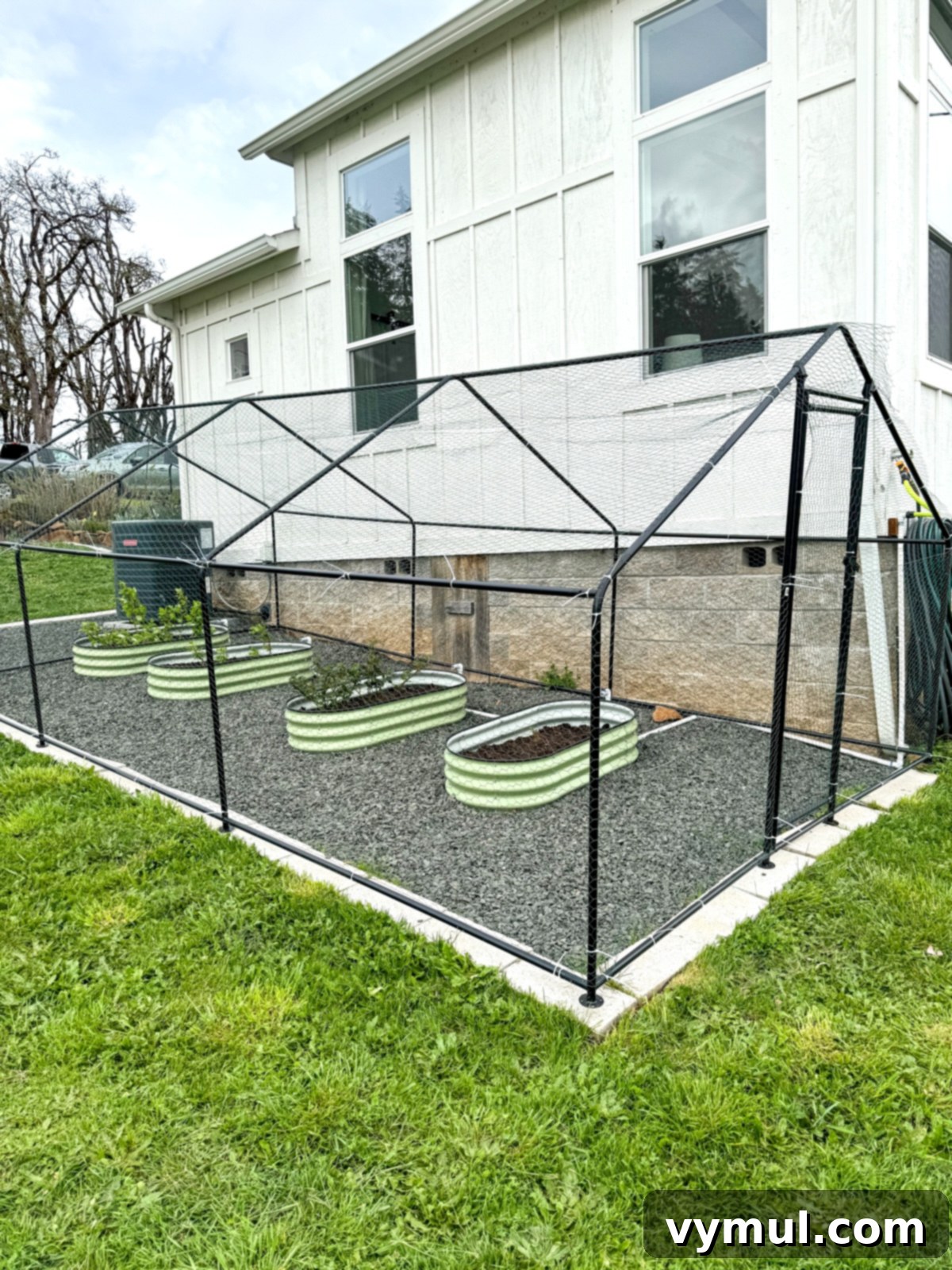
Last year, we embarked on a new garden project, creating a dedicated area at the back of our farmhouse with raised beds specifically for berry plants. The berries growing within our main fenced vegetable garden simply don’t receive enough direct sunlight, resulting in significantly lower yields. Since I absolutely adore berries – and they are quite expensive to purchase – I concluded that it would be entirely worth it to utilize this sunny, grassy area for a new berry patch.
And, naturally, the deer thought so too. They absolutely *loved* the small, struggling berry plants all last summer, diligently munching on all the new growth and tender tips before I even realized what was happening! Their relentless foraging was incredibly frustrating, so we initiated a series of attempts to deter them:
- We erected a makeshift “fence” using t-posts, string, and shiny deterrents – the deer simply walked right through it, seemingly unfazed.
- I liberally sprayed the plants with smelly deer spray, which promised protection but only worked for less than a week before they returned.
- We invested in a motion-activated sprinkler, a solution that many friends and family members have found effective. To my utter dismay, I watched the deer happily munch away on the berries as the sprinkler went off repeatedly, showering them with water, which they simply ignored.
- Finally, in a desperate attempt to prevent them from eating the plants down to their roots, I covered the beds with netting – yet the resourceful deer still managed to eat everything that protruded even an inch from the netting.
Ugh. Honestly, at this point, please do NOT talk to me about how “cute” deer are. My patience has worn thin with their destructive habits!
As I tirelessly searched for a fencing solution that might actually work, I stumbled upon these robust metal-and-wire covered cages, surprisingly marketed as chicken runs or coops. They are remarkably lightweight and available in various sizes, including one that matched our raised bed measurements almost exactly. An added bonus was that we have existing water pipes and electrical lines running from the house in that area, and we were quite concerned about digging for fence posts. This cage design completely eliminated the need for any digging whatsoever, making installation significantly easier and safer.
I specifically chose a black version (our exact model is currently sold out, but a slightly smaller one is still available) to help it blend more seamlessly into the landscape, though you can also find silver metal versions. Assembling it wasn’t particularly difficult but did take up an entire afternoon. I’m quite pleased with how it looks, with the only minor critique being that the included zip ties are white, which tend to stick out even after being trimmed (though we still need to finish trimming all of them!).
Was it expensive? Probably a bit more than I ideally wanted to pay for this type of structure, but at this stage, it’s entirely about thwarting those persistent deer – I’ve been so incredibly discouraged by them that securing this solution feels like a significant victory. An additional, unexpected bonus is that I won’t have to share these precious berries with the birds, unlike those in our main veggie garden. Look out for more detailed content on this new berry area soon, including how we constructed the beds, the watering system we implemented, and all the valuable lessons I’ve learned along the way!
March Books Read & Reviewed
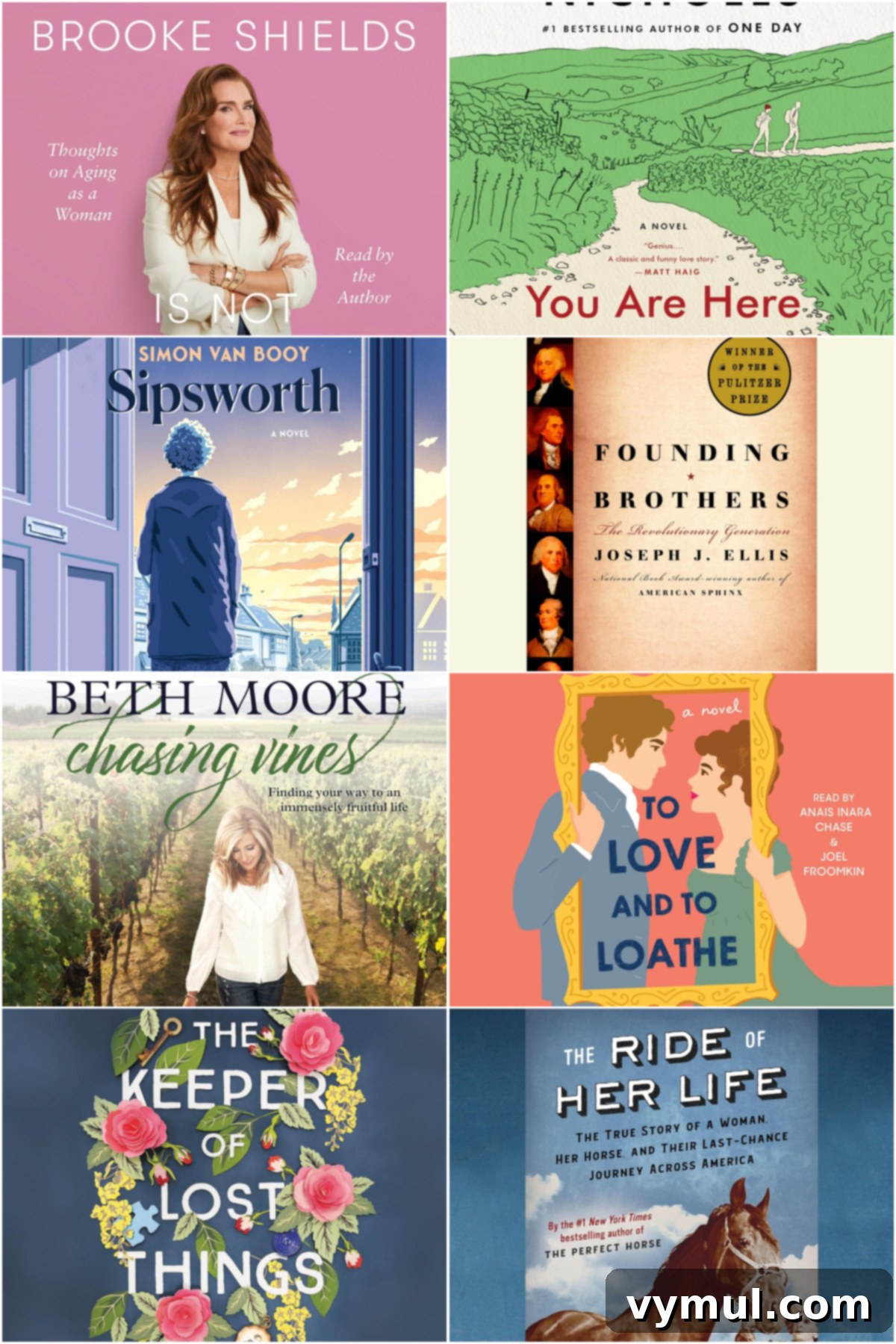
Brooke Shields Is Not Allowed to Grow Old, by Brooke Shields. While some sections of this memoir were genuinely interesting, and Brooke Shields’ intent to empower women of a certain age to advocate for their own health is commendable, the book ultimately got bogged down for me. There was too much focus on her personal issues and a tendency to harp on specific themes repeatedly without significant new insight. I found myself skimming through the latter part of the book.
You Are Here, by David Nichols. I saw this book on many “must-read” lists and picked it up during an Audible 2-for-1 sale. I must say, it is very, very British, especially the concept of a walking “holiday” in the rain and over rugged terrain. For us Americans, that’s typically called hiking or backpacking, and it’s usually reserved for pretty hardy individuals, not just anyone on a week’s vacation, haha. Despite this cultural difference, I did enjoy the storyline – two of the people on the walk genuinely start to hit it off in a very realistic way, and you can’t help but root for them to get together. I was completely invested right up until the end, which was, of course, disappointing. After months apart, we don’t get to experience their completion of the walk or what their relationship is like without all the initial angst – not even a little glimpse. Sigh.
Sipsworth, by Simon Van Booy. I found this to be a wonderfully sweet and charming story, especially after getting through the somewhat melancholy first half. That initial section details the sad, day-to-day life of 82-year-old Helen, who has lost both her husband and son and sees no real reason to continue living. Her perspective begins to shift when she discovers, of all things, a friendly mouse (this is where I had to suspend disbelief a bit – a friendly mouse?). This unexpected companion gives her something to think about and care for. As she tries to nurture the mouse, we learn she wasn’t always alone and unknown, and through this endeavor, she begins to meet compassionate neighbors who gradually bring joy back into her life, reminding her of the connections she can still make.
Founding Brothers, by Joseph J. Ellis. This insightful book about the revolutionary generation won a Pulitzer Prize and has been on my Audible “To Be Read” list for ages. Brian and I listened to it together, and while it was incredibly interesting in many places (for example, we learned that Thomas Jefferson was a habitual liar who often undermined others by spreading different stories!), we both agreed that the editor truly failed this author. The book was considerably longer than it needed to be, with numerous passages that repeated themselves, either verbatim (leading us to wonder if we had accidentally replayed a chapter!) or in theme. This redundancy made it much more of a slog than it should have been, given the truly interesting and enlightening history of how our country was founded.
Chasing Vines, by Beth Moore. I’ve enjoyed several of Beth Moore’s books in the past, but this particular one didn’t quite hit the mark for me. Or rather, it resonated strongly in the first few chapters – I especially connected with the metaphor of the hard pruning needed for grape vines to flourish and how that could apply to our own lives. However, it then continued to elaborate extensively on vines, soil, manure, water, and so on… I understood the analogy early on. I think this powerful idea could have been condensed into a much shorter, more impactful book.
To Love and To Loathe, by Martha Waters. This is the second book in “The Regency Vows” series and follows a spirited widow and a Marquess who have known each other since childhood, constantly sparring and fighting along the way. Of course, we, the readers, quickly realize this antagonism is just a thinly veiled cover for their true, deeper feelings, haha. While the book was written in an entertaining style with witty banter and clever dialogue, too many of the storylines felt a bit uncomfortable or “icky” to me – particularly the central premise – and also the way the characters spoke to each other. Be aware that this book leans towards a more “open door” spicy level.
The Keeper of Lost Things, by Ruth Hogan. A kind reader suggested this book, and it turned out to be a truly sweet and refreshing read, despite encompassing quite a few sad and tragic events. The highlight for me was the compelling growth and development of the characters, and the unique way people were connected through their lost possessions. The satisfyingly happy ending also added to its charm, making it a memorable read.
The Ride of Her Life, by Elizabeth Letts. This was another excellent reader suggestion, and I thoroughly enjoyed this historical retelling of the incredible cross-country journey undertaken in 1954 by Annie Wilkins, her loyal dog, and two horses. Over the course of a year, they traveled from Maine to California. It’s not just Annie’s personal story, but also offers a fascinating peek into the rural American life of the 1950s and how rapidly society was changing and would continue to change (the rise of cars, expansive highways, and television). The stark juxtaposition of Annie’s traditional, farm-based way of living in Maine against how others were living across the country was truly amazing, illustrating just how swiftly American society was transforming – a pace of change that, arguably, has only accelerated in the decades since.
What We’re Watching
The Secret Life of Walter Mitty (2013 Ben Stiller version), on Amazon. We watched this movie with our daughter and her new husband at their suggestion, and it was surprisingly good! I had expected more slapstick comedy, given Ben Stiller’s typical roles, but it was actually quite emotionally mature and thoughtful. The visuals are stunning, and the themes of adventure, courage, and finding your own path resonate deeply, making it a truly uplifting experience.
Severance Season 2, on AppleTV. We purchased a month of AppleTV specifically to catch the highly anticipated second season of this show – it’s probably one of Brian’s absolute favorite series ever. It was excellent, building on the first season’s intriguing premise. The visuals and world-building are exceptional, creating a uniquely eerie and stylized environment, and the story itself is quirky, mysterious, and full of captivating twists that keep you guessing. It’s a truly thought-provoking exploration of identity and corporate control.
That’s it for another exciting edition of the Good Things List!
If you’re eager to discover more of what I’m currently enjoying, you can explore all the past Good Things Lists here. I’d truly love to hear your thoughts – let me know if you’ve tried any of these recommendations or what you would suggest! Leave a comment below with your insights and recommendations!
Disclosure: Affiliate links in this article will earn commission based on sales, but it doesn’t change your price. Click here to read my full disclaimer and advertising disclosure.