Cottage Farmhouse Laundry Mudroom Makeover: DIY Renovation for a Bright & Functional Space
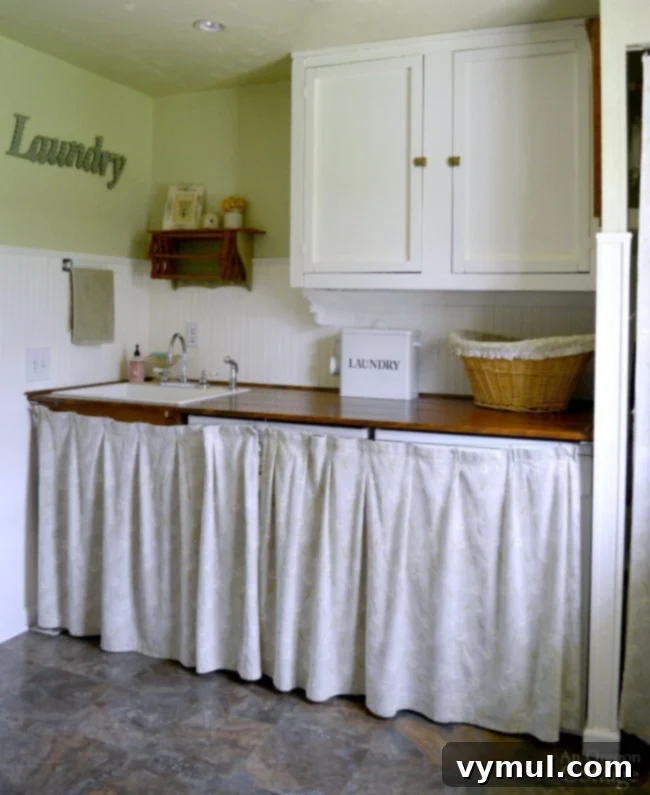
Welcome to our transformed laundry mudroom, a true testament to how simple DIY projects can breathe new life and character into any space. What was once a humble ranch home’s garage conversion has now become a bright, clean, and highly functional cottage farmhouse-style haven. This journey showcases how the power of fresh paint, strategic flooring, and a few clever design choices can completely redefine an area, proving that age and charm can be added with thoughtful, hands-on effort.
Hello friends! It feels incredibly satisfying to finally share the complete reveal of our updated cottage farmhouse laundry room and mudroom. This project, like many for dedicated DIY enthusiasts, lived in a state of “almost finished” for far too long – years, in fact! I’m sure many of you can relate to having those lingering projects that just seem to evade completion. As I’ve mentioned before, this particular space had, for a time, become the domain of our beloved dog, and we admittedly turned a bit of a blind eye to its evolving imperfections. Life has a way of sweeping you up, doesn’t it?
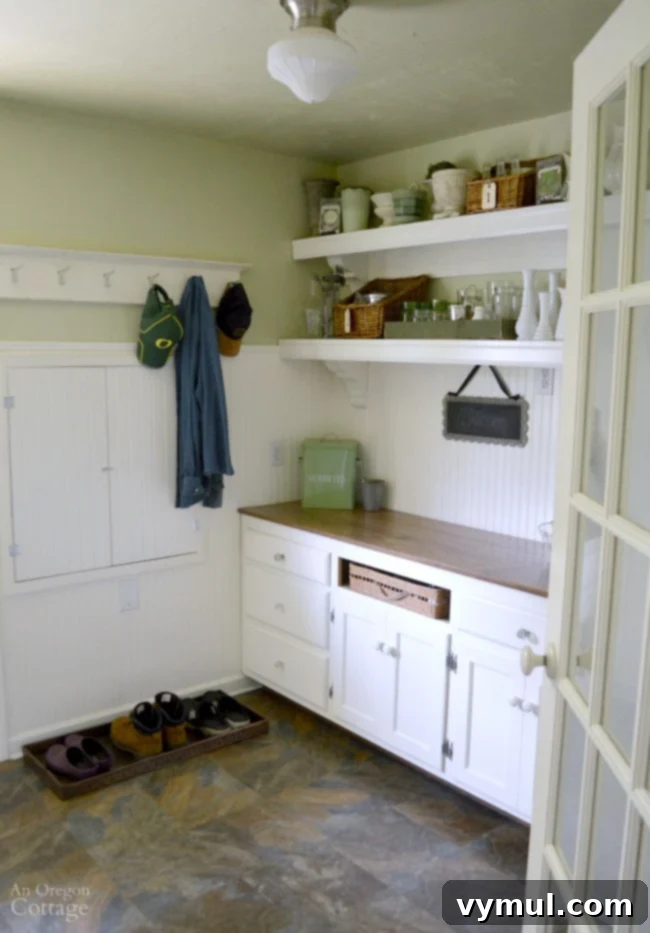
Our home’s journey began with a major remodeling effort, which notably included transforming the garage into functional living space. During this initial phase, we infused cottage-farmhouse charm into what would become our laundry mudroom. This included installing classic beadboard wainscoting, building warm wood counters, adding a beautiful vintage wall cabinet, and laying a hand-painted green-and-cream diamond pattern on the floor. These elements laid a strong foundation for the aesthetic we desired.
Over the years, we continued to add practical elements. We built sturdy shelves on the mudroom side, perfectly designed to hold garden supplies. I even attached a shop light there, creating an ideal spot for starting seeds during the winter months. We also enhanced the vintage wall cabinet, adding wood trim pieces and brackets to give it a more integrated, built-in appearance. However, despite these additions, the final touch of paint on the cabinet somehow never materialized.
The Lingering “Before”: Why a Mudroom Makeover Was Essential
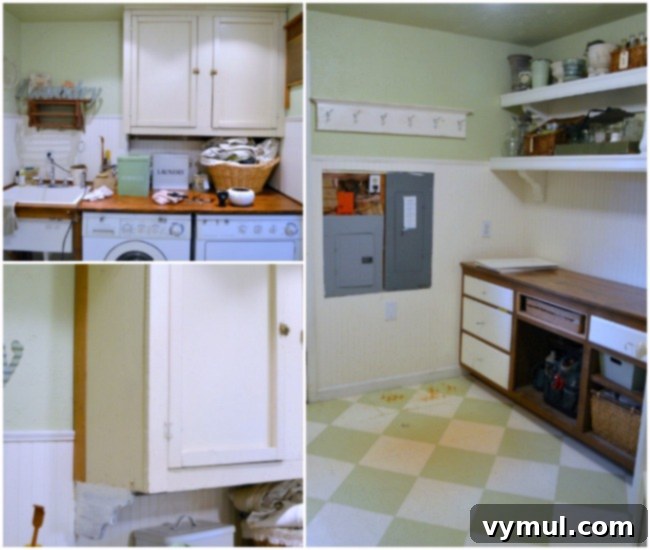
Note: While this “before” photo might look particularly chaotic – taken right as we began painting after removing curtains and piling counters – the room hadn’t always been quite this bad. However, it certainly highlighted the urgent need for a refresh!
Despite our best intentions, the room remained stubbornly three-quarters finished. The vintage wall cabinet, along with a repurposed bathroom cabinet, stood unpainted, a stark reminder of incomplete projects. An exposed electrical panel also marred the wall, though, in our defense, it was mostly obscured by coats. More embarrassingly, much of the molding and trim still sported unpainted nail filler, leaving unsightly brown spots scattered throughout the room. It was far from our best moment, and certainly not the tidy, organized space we envisioned.
Beyond the unfinished details, the walls themselves were in desperate need of attention. Ten years had passed since their initial painting, and the combination of large dogs and white walls had resulted in an accumulation of dirt, scuffs, and scratches. It was a clear case of living and learning: while white offers brightness, it demands frequent upkeep in high-traffic areas. This experience really drove home the importance of choosing durable and forgiving finishes, especially in a functional space like a mudroom.
Perhaps the most poignant lesson learned was that light-colored painted floors and mudrooms are not ideal companions. I absolutely adored my original hand-painted floor, a labor of love that took days to complete. However, the relentless onslaught of dog scratches and various stains eventually rendered it perpetually dirty and abused. It reached a point where we had no choice but to seek a more resilient flooring solution. It was a sad decision, but a necessary one for the long-term functionality and appearance of the space.
The Transformation Begins: Painting for Instant Brightness
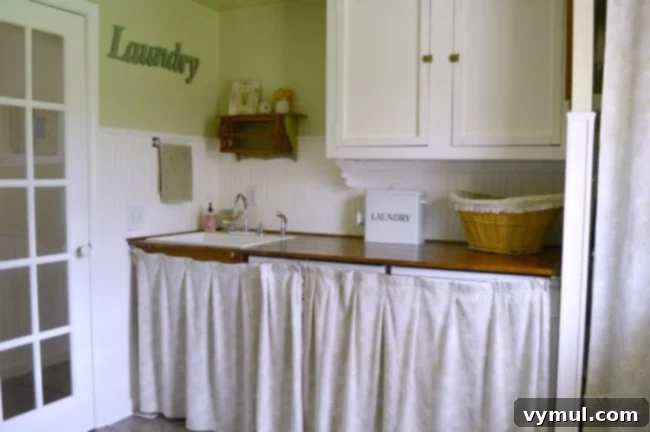
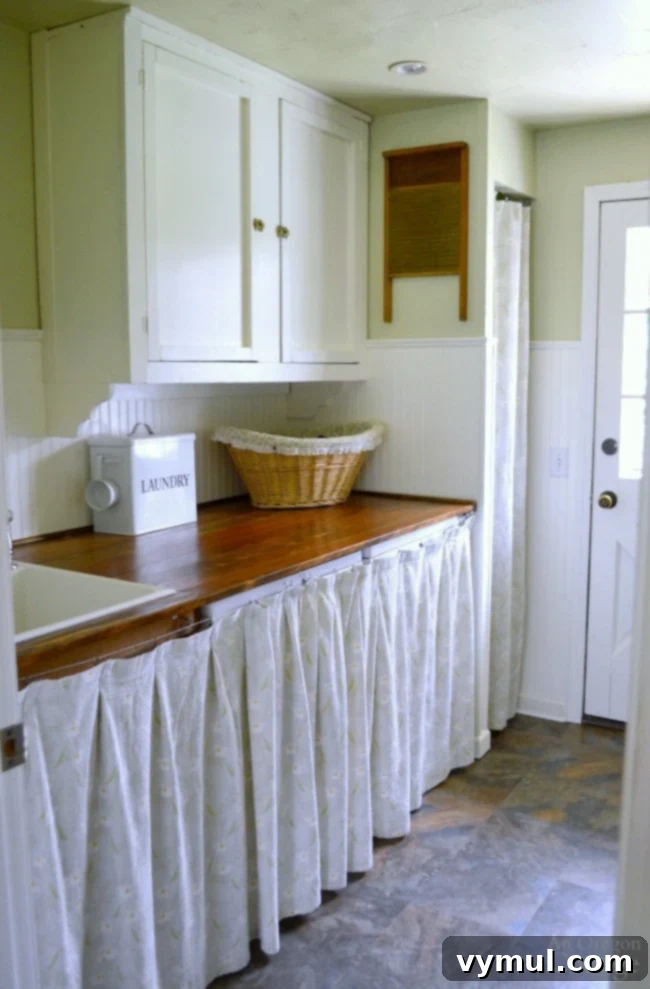
The first and most impactful step in our laundry mudroom makeover was undoubtedly painting. With the invaluable help of my sister-in-law, we tackled the entire room one Saturday and, remarkably, had it all done by five o’clock! The effect was immediate and dramatic. The space instantly felt lighter, brighter, and finally, truly clean. A fresh coat of paint has an incredible power to refresh and reset a room’s atmosphere, making it feel brand new.
The Flooring Dilemma: From Hand-Painted Charm to Practical Durability
Floor Before: A Story of Wear and Tear
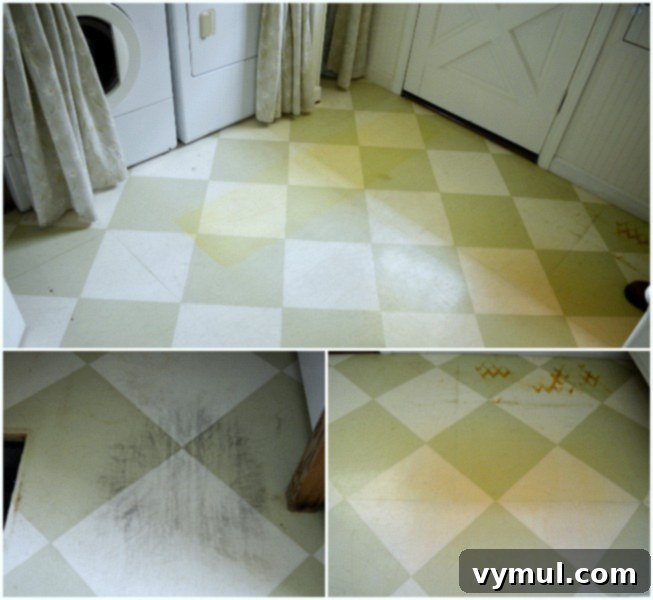
While many visitors found my hand-painted diamond floor charming, the reality up close told a different story. Since we’re now looking to sell our home, it became imperative to address these issues. The door rug and dog bed had both left indelible stains within the polyurethane sealant – a persistent problem I’ve yet to find a definitive solution for on painted floors. A metal boot tray had unfortunately leaked, leaving rust marks that we discovered too late. Our galvanized dog-food container also contributed its own unique, stubborn ring to the surface.
No amount of scrubbing or cleaning could erase these marks. When you combine these specific stains with the countless scratches inflicted by our dogs, it becomes clear why a new, more robust flooring solution was absolutely essential.
Floor After: Embracing Practicality with Peel-and-Stick Tiles
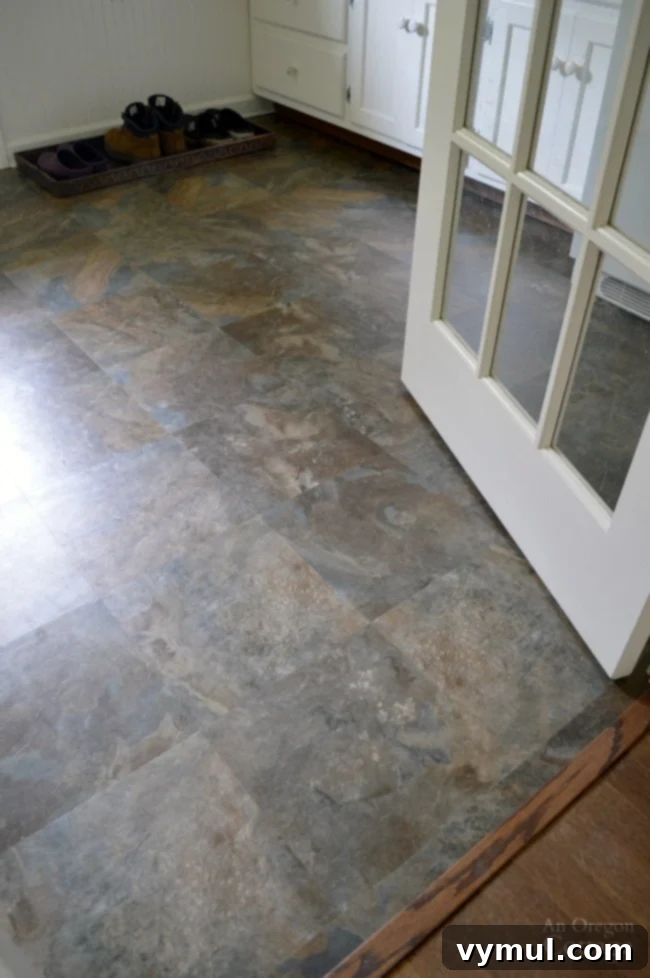
Our criteria for new flooring were clear: it needed to be quick, easy to install, and cost-effective. We opted for simple peel-and-stick tiles with a slate-look finish. This choice was highly practical because, as you might guess, it perfectly mimics the color of mud, making it incredibly forgiving in a high-traffic mudroom environment! While I’ll be honest and say it’s not my absolute favorite aesthetic, and I do miss the artistic charm of my hand-painted floor, I certainly don’t miss the dirty, perpetually scratched surface. What I do appreciate immensely is how clean, finished, and consistently tidy this new flooring looks.
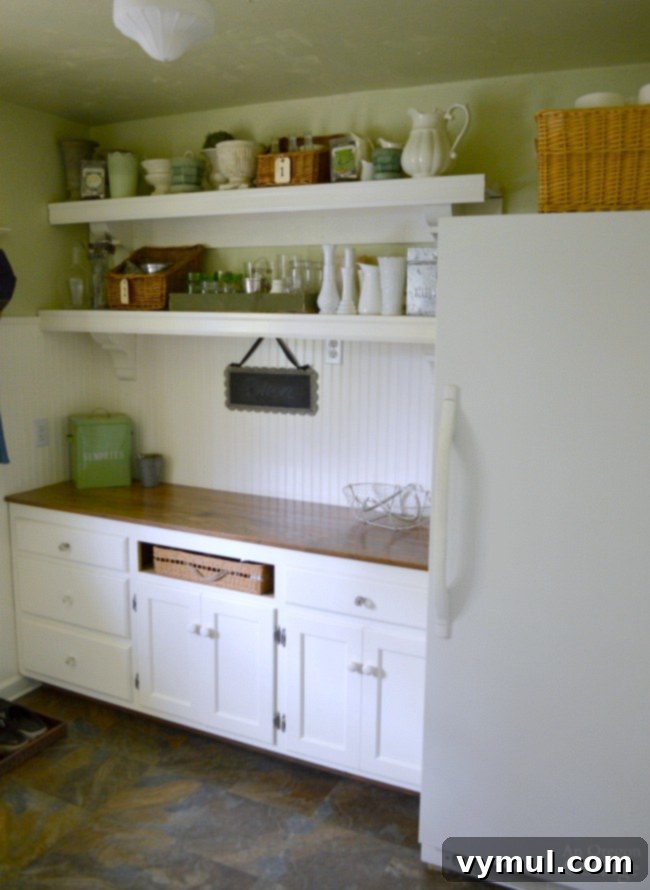
Another huge benefit of this darker flooring is how effectively it disguises dog hair. It genuinely looks cleaner all the time compared to the lighter floor we had previously. This experience taught me a valuable lesson, one I now share with anyone seeking advice for mudroom design: always prioritize function over fashion! Any future mudrooms we create will definitely feature dark, durable flooring, regardless of the material type.
Refined Cabinetry and Clever Covers: Details That Matter
The completely painted cabinet, now featuring proper doors and actual knobs on the drawers instead of makeshift screws and hooks, might just be my favorite enhancement. It contributes significantly to the room’s organized and polished appearance. And Brian’s brilliant DIY adaptation for this cabinet is something I can’t wait to delve into further!
You can learn all about Brian’s ingenious cabinet adaptation and how we crafted the beadboard electrical panel cover here. This innovative solution, visible in some of the photos, effectively camouflages the unsightly electrical board. We’ve now implemented similar beadboard “cupboards” to conceal electrical panels in two of our homes, and I absolutely love the seamless integration and improved aesthetics they provide.
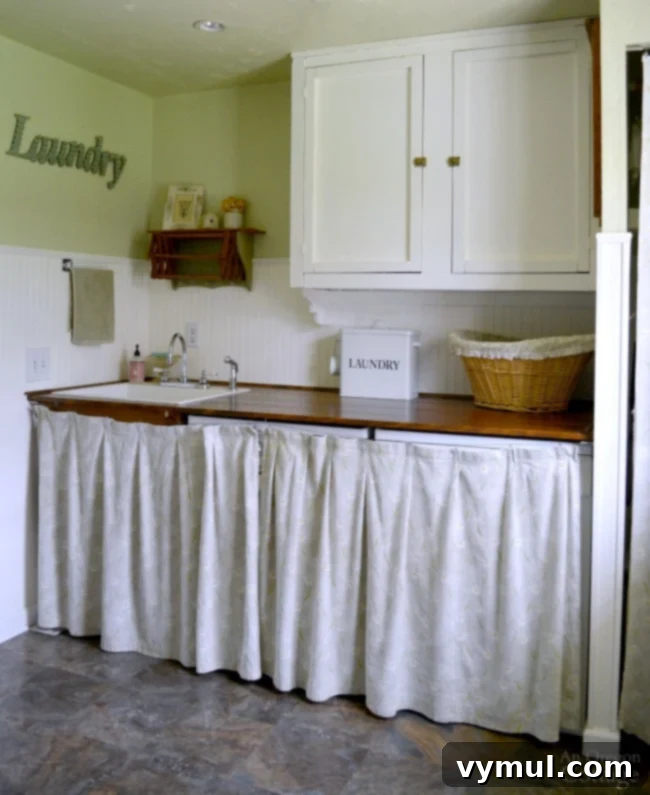
We are all thoroughly enjoying our refreshed cottage farmhouse laundry mudroom. Even our dog, Samson, seems to appreciate the bright, finished space. I certainly find doing laundry a much more pleasant task here now!
Oh, and notice the narrow wall to the right of the laundry area? That little closet behind it was something I had to actively advocate for with our builder, and I am incredibly glad I did. It has become one of my absolute favorite features of the laundry room. Do you ever hang clothes to dry and then forget about them, leaving them to clutter your space? Mine are now neatly hidden away in this discreet closet, alongside a broom and a few other cleaning supplies, which brings me immense satisfaction. When you’re undertaking a DIY project or building, envision how you’ll truly use each area and push to incorporate those specific needs; it’s these small, personalized details that you will appreciate time and again.
Transforming Your Space: Adding Cottage Farmhouse Character with DIY
For those inspired to infuse their own homes with cottage farmhouse charm, even if starting with a more contemporary structure like our 1982 ranch, it is absolutely achievable. Here’s a curated list of elements and ideas we’ve successfully implemented that can help you add that coveted character:
- Replace Doors with Character: Consider swapping out standard doors for French doors, which allow more light to flow through and add architectural interest, or opt for a vintage or reproduction door for a touch of timeless charm.
- Upgrade Door Knobs: Details matter! Replacing modern door knobs with reproduction ceramic knobs, or other vintage-inspired hardware, instantly elevates the tactile and visual experience, lending a historical feel.
- Install Paneling and Trim: Beadboard and substantial trim work are hallmarks of cottage and farmhouse styles. Alternatively, shiplap or any other type of wood paneling can add texture, depth, and classic appeal to your walls.
- Repurpose Old Cabinets: Give new life to forgotten pieces! Repurposing old cabinets into functional wall and base cabinets not only offers a sustainable solution but also introduces unique character that new, off-the-shelf units often lack.
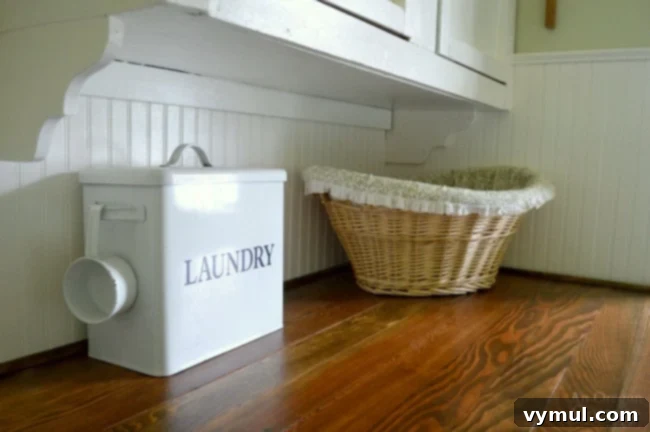
- Utilize Wood for Countertops: Wood countertops bring warmth, a natural element, and a quintessential farmhouse aesthetic to any space. Reclaimed wood adds even more history and texture.
- Add Substantial Hanging Shelves: Open shelving, especially when robustly built, provides opportunities for both storage and display. It can lighten the visual weight of a room while offering accessible organization.
- Craft a Vintage-Inspired Coat Rack: Transform a piece of vintage molding, a salvaged board, or even old barn wood into a charming and practical coat rack. This adds personality and serves a crucial function in a mudroom.
Hopefully, our journey and these tips provide ample inspiration for your next home project!