The Beekeeper’s Journey: Sustainable Wild Bee Extraction and Hive Revival
Welcome back, fellow nature enthusiasts and curious minds! Today, we’re diving deep into the fascinating world of honeybees with an exciting update from our resident expert, my brother-in-law, affectionately known as ‘Zack, the Bee Man.’ He keeps several thriving honeybee colonies right here on our property, and he’s here to share his incredible recent adventure: the daring and successful extraction of wild bees from an old, dilapidated barn!
You might recall our previous discussions about these buzzing residents. We first introduced you to the arrival of our honeybees and then gained a deeper understanding through Zack’s comprehensive Beekeeper’s Perspective, which offered invaluable insights into the art and science of raising bees last year. Well, get ready for another chapter filled with both challenges and triumphs on the beekeeping front, as Zack returns to provide us with his latest captivating update.
A Passion Ignited: The Emotional Connection to Honeybees
Last year, I embarked on the journey of keeping honeybees, initially as a mere hobby. Little did I know, it would quickly transform into a profound passion. I found myself becoming deeply emotionally attached to my “girls,” as I affectionately call them. There was an undeniable magic in watching them – hours would slip by as I gazed in wonderment at their industrious dance. They would buzz tirelessly from flower to flower, diligently collecting vital nectar and pollen, and in doing so, they performed the invaluable service of pollinating our entire garden. This symbiotic relationship, where their hard work directly contributed to the flourishing of our plants, solidified my commitment to their well-being.
It’s true, I refer to them primarily as “my girls,” even though every healthy hive hosts a few hundred male drones. These male honeybees, easily distinguishable by their larger size and lack of a stinger, lead a rather laid-back existence. Their primary role is to mate with the queen, and they rarely venture outside the hive. Crucially, they do not contribute to the daily, arduous chores of the colony, such as cleaning, tending to the developing brood, or foraging for food stores essential for winter survival. This division of labor has a stark consequence: as late autumn arrives and food resources begin to dwindle, the industrious worker bees (the “girls”) collectively make the pragmatic decision to expel all the drones from the hive. This ensures that precious food stores are conserved solely for the productive members of the colony, increasing the hive’s chances of surviving the harsh winter months.
Overcoming Setbacks: The Heartbreak of Hive Loss
As I shared last year, I am still very much a novice beekeeper, constantly learning and refining my approach to managing my beloved colonies appropriately. The first year brought a significant challenge. Last fall, in an attempt to embrace a more natural, hands-off approach, I tried to forego medicating my two hives for varroa mites – a common and devastating parasite for honeybee colonies. Unfortunately, this decision proved to be a costly lesson. Despite my hopes, both of our hives tragically did not make it through the winter. The sight of empty boxes and the silence where once there was a vibrant hum left me utterly heartbroken. It was a stark reminder of the delicate balance required in beekeeping and the importance of proactive hive health management.
Despite the devastating loss, my passion for beekeeping remained undimmed. This spring, I was resolute in my decision to continue keeping honeybees. However, I now faced the daunting task of repopulating my empty hive boxes. There are essentially only three primary avenues for acquiring new bees:
- Option #1: Purchase new bee packages. This involves buying two more packages of bees from a local beekeeper, typically costing around $80 per package.
- Option #2: Attract wild swarms. This strategy involves trying to lure wild honeybee swarms to settle in my empty hives.
- Option #3: Locate and extract wild bees myself. This is perhaps the most adventurous and challenging option, requiring specialized equipment and knowledge.
Given that I had promised my wife this endeavor would remain a manageable hobby and not become an extravagant financial drain, Option #1 was immediately off the table. I then dedicated myself to Option #2. For two months, I meticulously prepared my empty hives, attempting to “bait” them with lemongrass essential oil, a known attractant for honeybee swarms. Despite my diligent efforts and hopeful anticipation, this strategy regrettably did not pan out. No swarms materialized. As the summer days steadily lengthened, I began to feel a growing sense of worry. Time was ticking, and I feared I wouldn’t find any new “girls” in time to establish strong, viable hives that could successfully endure the approaching winter.
A Golden Opportunity: The Wild Bee Extraction
Just as my concerns were reaching their peak, a truly serendipitous opportunity arose approximately two months ago. I was contacted by a property owner from a nearby town. He owned an old gymnasium that was slated for demolition, and within its aging walls, a colony of honeybees had made their home. Eager to ensure the survival of these invaluable pollinators, he reached out to me, seeking assistance with the bee extraction. For me, it was an absolutely perfect scenario – not only did I gain a source of free bees, but I also had the unique advantage of not having to worry about the significant holes and structural changes I would inevitably leave in the walls of a building destined for demolition. This situation perfectly aligned with Option #3, allowing me to proactively find and safely retrieve wild bees.
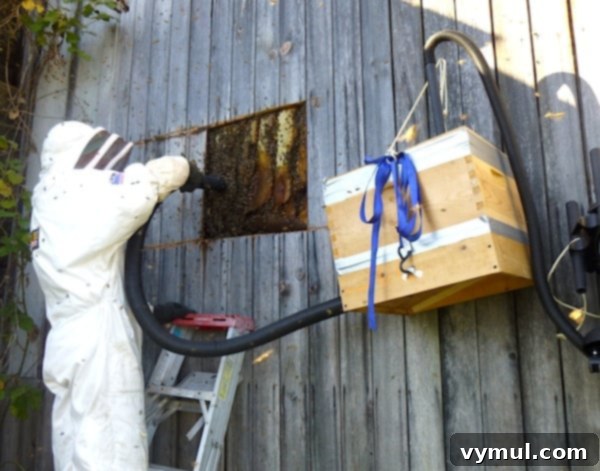
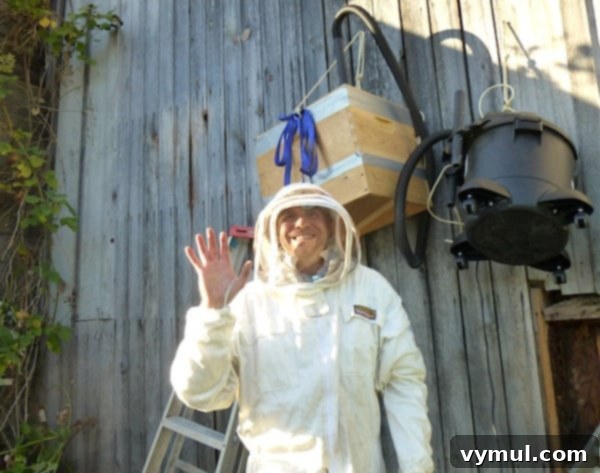
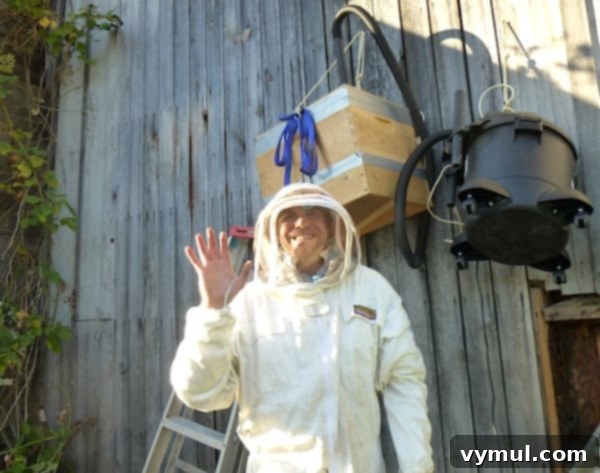
With this exciting prospect, I immediately sprang into action. First, I quickly purchased a second bee suit, knowing that I would need assistance from friends during the intricate extraction process. Crucially, I then set about building a specialized tool: a homemade bee vac. This ingenious device would be essential for gently and safely vacuuming the bees from their dwelling within the walls, ensuring minimal harm to the colony. For anyone interested in the mechanics of such a device, here’s the video I used to guide my bee vac construction – a valuable resource for aspiring bee removers.
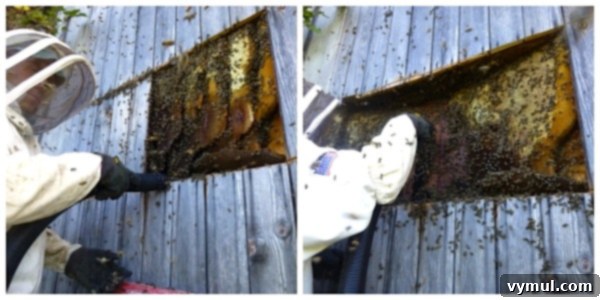
The Thrill of Extraction: A Detailed Account
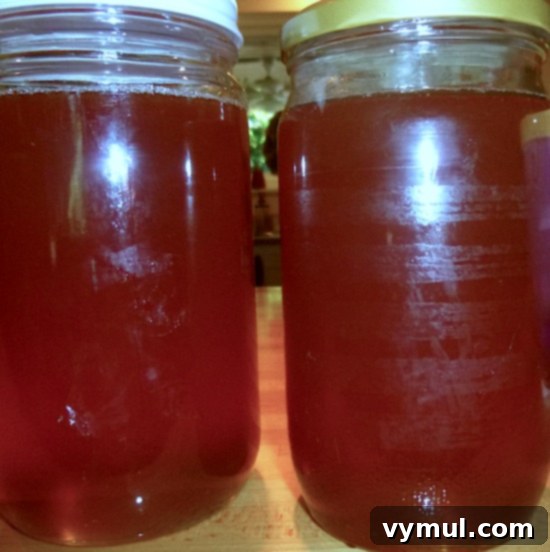
Over the course of this remarkable endeavor, I was ultimately able to extract six distinct hives from the old gymnasium. The colonies varied significantly in size and prosperity. Some of the hives were impressively large, boasting an abundance of extra honey stores, a testament to their established presence. Others were quite small, or had perhaps been recently evacuated by a swarm, leaving behind remnants. No part of these valuable wild hives went to waste. All the extra wax, meticulously salvaged from the combs, was carefully melted down in a large pot. This pure beeswax will later be transformed into beautiful, handcrafted beeswax candles – an excellent sustainable craft. Imagine, a great Christmas present, perfectly paired with a jar of your very own honey. (Shhh, don’t tell my sister-in-law about her secret gift!)
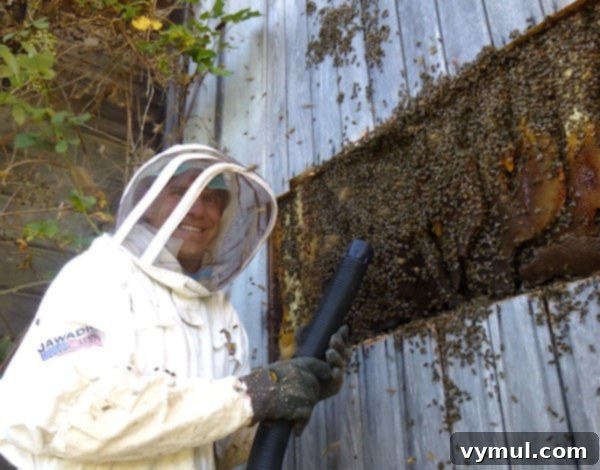
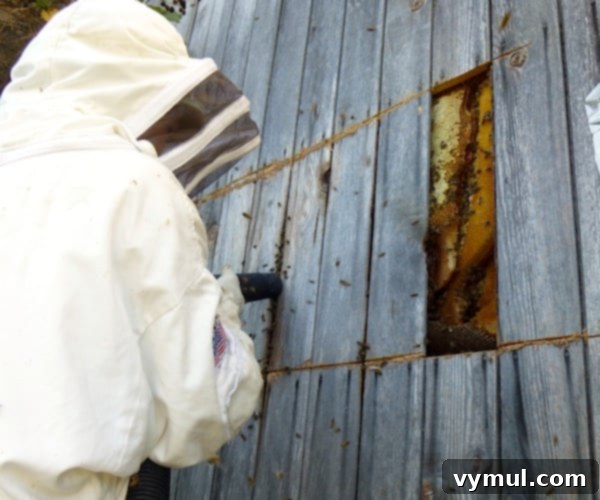
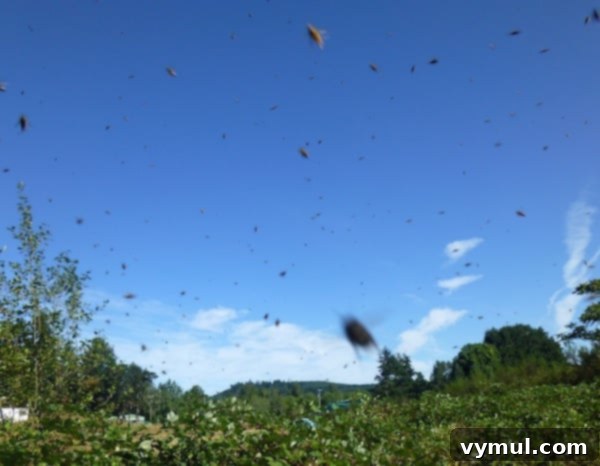
The actual process of extracting bees from within a wall cavity is an incredibly exciting and intense experience. It demands precision, calm, and a deep respect for the colony. The initial cut into the wall with a skill saw instantly puts all the guard bees on high alert. The immediate aftermath is a flurry of activity; they pelt your protective bee suit with a surprising force, almost like a shotgun blast gone off right in front of your face. This initial defensive reaction quickly subsides as they realize the threat is not directly to their queen or the heart of the hive, but rather a disruption to their dwelling.
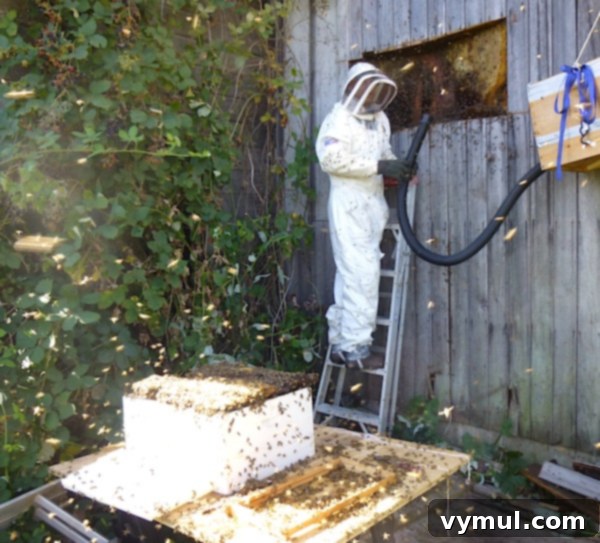
My method for relocating these wild colonies involved a precise sequence of actions. First, I gently vacuumed the loose bees into a specially prepared, empty bee box. This bee vac allows for controlled suction, minimizing stress and injury to the individual bees. Once a significant number of bees were safely collected, I meticulously cut out their natural honeycomb, carefully preserving as much of the brood (larvae and pupae) and honey as possible. This comb, their natural home, was then delicately tied into empty frames designed for a standard beehive box. These frames, now laden with their original comb and brood, were then carefully placed into another empty bee box, forming the foundation of their new, managed home.
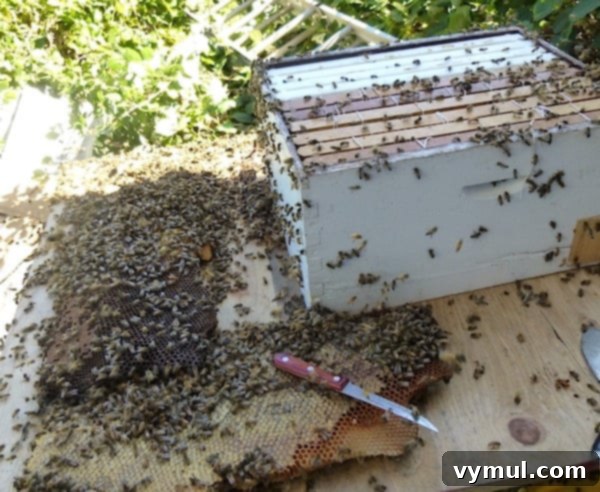
The final, crucial step in the extraction process involved reuniting the separated parts of the colony. After all the honeycomb had been extracted and the majority of the adult bees safely vacuumed into the collection box, I placed the new box containing their re-framed comb directly on top of the box where all the vacuumed bees were housed. A temporary mesh barrier had separated these two sections. Once the comb was in place, I carefully removed this mesh, creating an unobstructed pathway. This allowed the vacuumed bees to freely ascend and repopulate their own comb, recognizing their queen and consolidating into their new, carefully prepared hive structure. This careful reintroduction minimizes stress and maximizes the chances of the colony accepting its new home.
Learning Curve and Hope for the Future
There was undoubtedly a steep learning curve throughout this entire, complex process. Beekeeping, especially wild bee extraction, is an art form refined through experience. Over a two-month period, encompassing four separate trips to the old gymnasium, I successfully extracted six hives. However, not all efforts yielded immediate success; the first two extractions, unfortunately, did not make it. This taught me valuable lessons about handling, queen preservation, and colony stress. Learning from these initial challenges, I strategically combined two of the weaker, smaller hives together, bolstering their numbers and resources. As a result of these efforts and careful management, we now proudly have three strong, vibrant hives that we fervently hope will make it through the coming winter.
Having learned from last year’s heartbreaking losses, I took proactive measures this year. I diligently medicated all three of our new hives for varroa mites, a critical step in ensuring their health and longevity. Additionally, I’m confident that they have successfully accumulated plenty of honey to sustain them through the cold winter months. With diligent preparation and a healthy dose of optimism, my fingers are firmly crossed. Hopefully, I’ll have the pleasure of writing another guest post early next spring, sharing an exciting update about these three resilient new beehives that successfully navigated the winter!
A huge thank you to Zack for sharing his inspiring beekeeping journey and expertise!
As for Brian and me – we absolutely adore having these buzzing communities on our property. Watching them meticulously pollinate our flowers and diligently work towards producing our fresh garden bounty is a constant source of joy and fascination. They are an integral part of our sustainable cottage life.
We just make sure to retreat indoors for a little while when Zack brings another hive home. It’s understandable, as those industrious little creatures can get a bit disoriented and quite upset about the whole moving process!