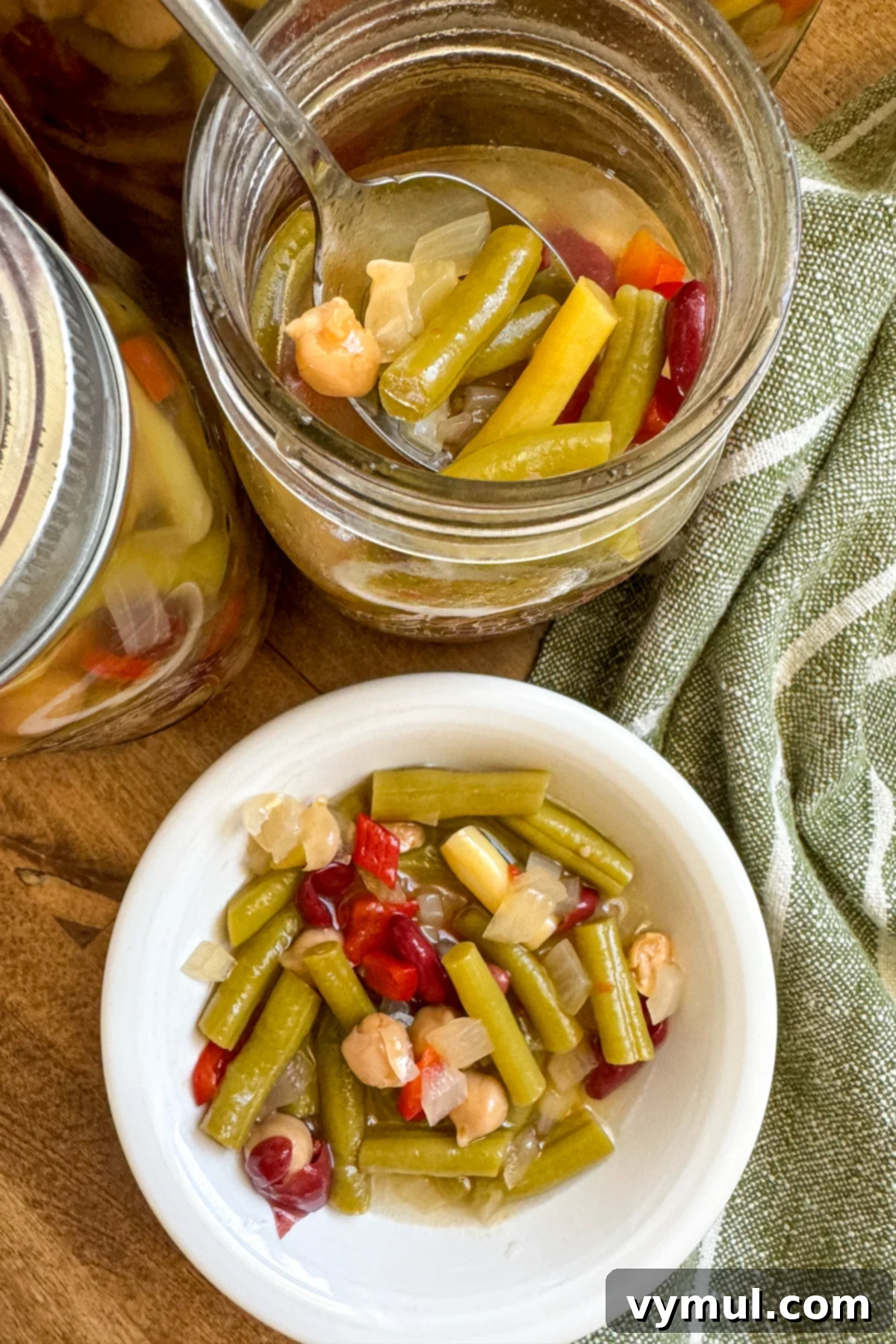
Honey-Sweetened Low-Sugar Canned Three Bean Salad: A Healthy & Delicious Recipe
Are you searching for a delicious, healthier three bean salad recipe that’s lower in sugar and perfect for meal prep? Look no further! This unique, honey-sweetened, and canning-friendly recipe will satisfy your cravings without compromising your health goals. It’s incredibly easy to share and features a perfectly balanced sweet-tart marinated flavor that will quickly become your favorite side dish for summer BBQs, picnics, potlucks, and effortless family dinners. Prepare to impress everyone with this vibrant, wholesome salad!
If you’re interested in exploring more delicious and unique canning recipes, be sure to try this amazing fan-favorite tomato chutney, this honey-sweetened jalapeño jelly, or these easy pickled green beans (which you can use to create this quick, low-carb appetizer!).

Some links in this article are affiliate links, and if you click on them, I will receive a small commission at no extra cost to you.
Crafting the Perfect Low-Sugar Canned Three Bean Salad
I’ve dedicated a couple of years to perfecting this recipe for canned three bean salad. My primary goal was to create a version that maintains all the classic appeal – that delightful marinated, sweet-tart flavor – but with significantly less added sugar. Traditional three bean salad recipes, including many trusted canning guides, often call for a surprisingly large amount of sugar. For instance, the tested recipe I initially referenced used 1.5 cups of sugar for a double batch, and the renowned Ball Blue Book recipe suggested a hefty 2 cups.
The good news is that when it comes to water bath canning, sugar primarily contributes to flavor and, in some cases like jams, helps extend shelf life. However, for pickled foods, the vinegar is the true preservative. This means you have the flexibility to adjust the sugar content without compromising the safety or long-term storage of your canned goods. This crucial distinction allowed me to experiment freely, reducing the sweetness while still ensuring a safe and delicious product.
Recipe Adaptations and Enhancements for Optimal Flavor and Safety
My journey began with adapting the base from this USDA-tested recipe and the Ball Blue Book. A key observation was that the USDA recipe lacked sufficient liquid to properly cover the contents of five pint jars. To remedy this, I gravitated towards the liquid quantities specified in the Ball Blue Book, increasing the overall vinegar and water brine. This adjustment also had the added benefit of upping the acid-to-low-acid ingredient ratio, keeping the recipe well within established food safety guidelines for canning. It ensures proper pickling and safe storage.
Another significant modification was to incorporate more of my homegrown green beans, which offer superior freshness and crunch. When doubling the original recipe, instead of simply doubling the canned beans, I maintained the original quantities for the canned beans (kidney and garbanzo) and *doubled* the fresh-cut green beans. I then added the 2 cups of green beans that would have been replaced by canned beans in a typical double recipe, resulting in a total of 8 cups of low-acid green beans and canned beans combined. This thoughtful ratio provides what I consider the perfect balance of fresh and canned beans, enhancing both texture and flavor and offering a heartier salad.
Furthermore, I streamlined the process by skipping the lengthy marinating step often found in other recipes. After extensive testing, I found no discernible difference in flavor when omitting this step, which saves considerable time and effort – always a welcome bonus for busy home canners. My simplified method involves combining all ingredients, bringing them to a boil, and then simmering for just a few minutes at a lower heat. This efficient approach means you can have this wonderful three bean salad prepped and ready for canning in about an hour!
Having jars of this wholesome salad readily available on the shelf is incredibly convenient. It’s perfect to enjoy on its own or to quickly elevate a green salad with a vibrant and tangy topping. It even proved invaluable during a winter power outage, providing fresh-tasting vegetables without needing to open the refrigerator. In fact, when I shared a jar with my sister during her own power outage, she declared it the best three bean salad she’d ever tasted! I truly believe that using less sugar allows the natural flavors of the vegetables and the tangy brine to truly shine. I encourage you to try it and experience the difference for yourself!
Essential Ingredients for Your Three Bean Salad
To prepare this delightfully healthy canned three bean salad, gather the following high-quality ingredients. Each component plays a vital role in achieving the perfect balance of flavor and texture, ensuring a vibrant and satisfying side dish for any occasion. Ensure all fresh produce is thoroughly washed and prepped before you begin.
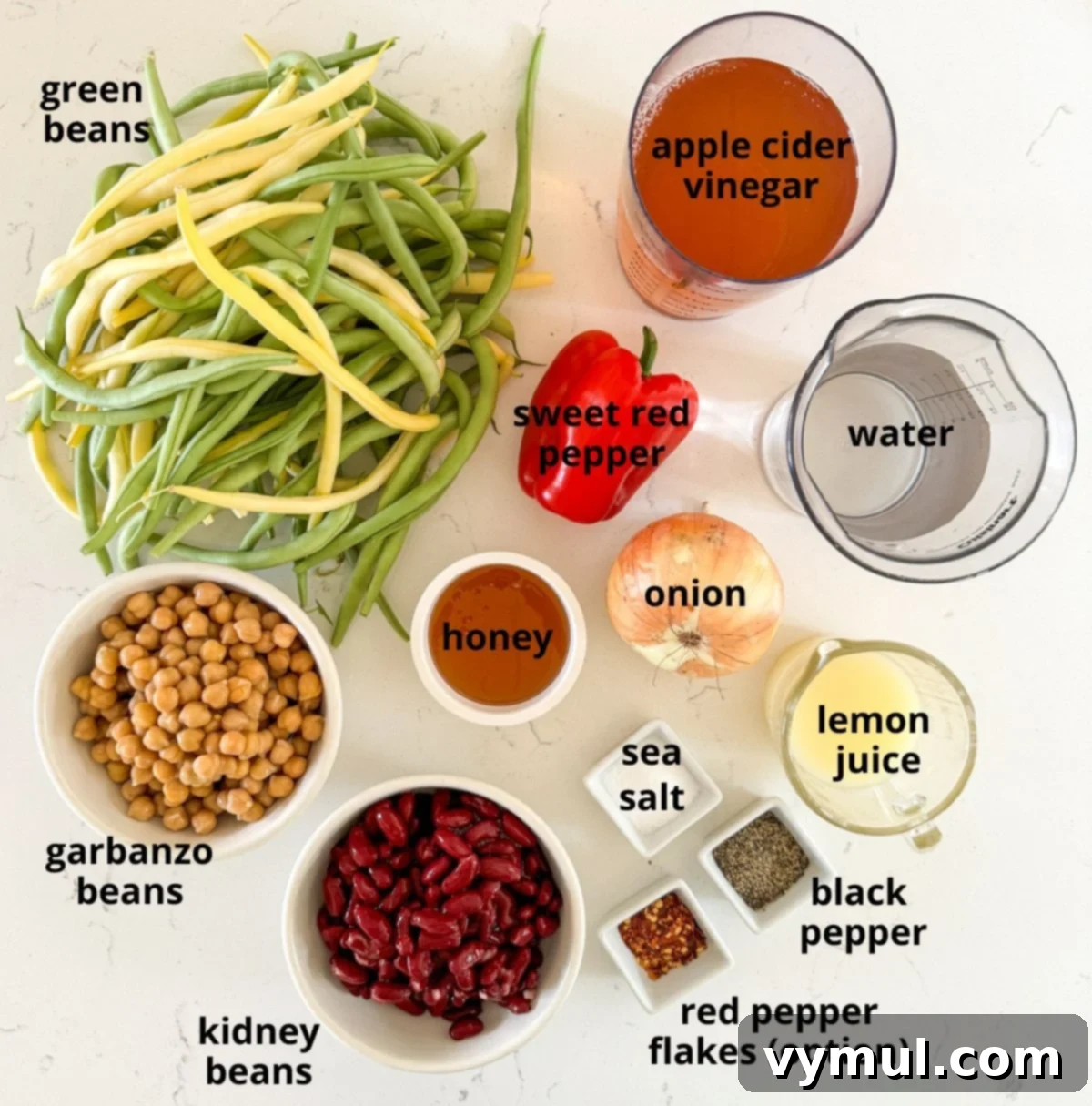
Ingredient Notes & Smart Substitutions for Canning Success
Understanding each ingredient and its role is key to successful and safe home canning. Here are some detailed notes and approved substitutions to help you customize your three bean salad while maintaining safety, flavor, and texture:
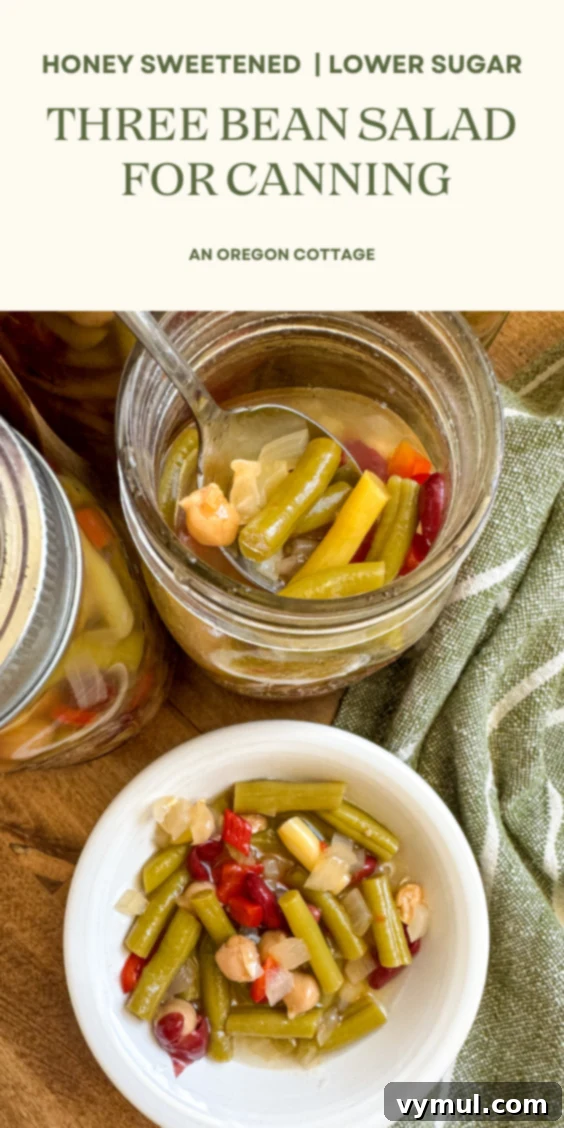
- Green Beans: You can opt for all green beans or a colorful combination of yellow and green beans, as illustrated in the photos. You’ll need approximately 1.5 to 2 pounds of fresh beans to yield 5 cups once they are trimmed and cut into bite-sized pieces. Freshness is key for optimal crispness and flavor in your canned salad.
- Canned Beans: This recipe typically features a classic blend of kidney beans and garbanzo beans (chickpeas). It’s important to rinse and drain canned beans thoroughly before adding them to the recipe to remove excess sodium and starchy liquid. If you prefer a simpler approach, you can use just one type of canned bean; simply double the amount to achieve the total 3 cups required. For those who enjoy variety, feel free to substitute with your favorite bean, such as cannellini or black beans, ensuring they are also rinsed and drained. I’ve successfully used white beans in the past for a delightful change of pace.
- Vinegar: My personal preference is apple cider vinegar due to its milder, less sharp bite, which complements the honey beautifully. However, any vinegar with a tested acidity of 5% can be used. Always check the labels carefully, as some vinegars are only 4% acidity and are not safe for canning. The 5% acidity is crucial for safe preservation in water bath canning.
- Bottled Lemon Juice: It is imperative to use *bottled* lemon juice in canning recipes, not fresh. Fresh lemon juice can vary greatly in its acid level, making it unreliable for safe preservation. The original tested recipe was based on this precise amount of bottled lemon juice, and since lemon is more acidic than vinegar, it cannot be replaced with additional vinegar. The lemon juice not only contributes to the safety of the recipe but also adds a lovely bright, zesty flavor to the salad. For a different flavor profile, you can experiment with bottled lime juice, which can be swapped 1:1 with bottled lemon juice in canning.
- Honey: This natural sweetener is fully approved for canning (refer to the FAQs below for more details regarding sugar adjustments in canning). However, other natural sweeteners like maple syrup are generally not approved for canning due to different pH levels and compositions. If you cannot use honey, you can substitute it with 1/2 cup of cane sugar. Since honey is naturally sweeter than granulated sugar, we use a smaller quantity of it to achieve the desired sweetness level.
- Peppers and Onions: These fresh ingredients contribute significantly to the salad’s flavor and vibrant color. It’s important to note that you cannot increase the total amounts of these low-acid fresh ingredients beyond what is specified, as this could impact the safety of the canning process by altering the overall pH. However, you do have the flexibility to use only one type of vegetable (e.g., just onions or just peppers), allocating the total 2 cups to that single ingredient instead of dividing it. Feel free to use any kind of pepper you like; mild hot peppers such as poblano can add a fantastic subtle kick!
- Dry Seasonings: When it comes to dried seasonings, you have more freedom. You can always add dried herbs and spices according to your preference for canned foods, as they do not affect the acid level or safety of the recipe. I sometimes incorporate dried basil or oregano to introduce different flavor dimensions, enhancing the aromatic profile of the salad.
- Celery: In our household, we don’t particularly care for celery in three bean salad, so I chose to omit the 1/2 cup included in the original tested recipe. If you enjoy the crunch and fresh, earthy flavor of celery, you are welcome to include it in your batch.
- Oil: The original USDA recipe does list oil as an ingredient. While it is technically cleared for use in this tested recipe, I personally choose to use less, or often none at all. Oil and water bath canning don’t mix particularly well, sometimes leading to an unappetizing appearance or issues with lid seals. If you decide to include it, I recommend using only 2-3 tablespoons, not the 1/2 cup that would be used if doubling the original recipe. This is entirely your discretion; I simply wasn’t comfortable with the larger amount, even in an approved recipe. My nutrition information does not include oil.
How to Make this Honey-Sweetened Three Bean Salad: Step-by-Step Canning Guide
Follow these detailed steps to prepare and safely can this delicious three bean salad. Adhering to these instructions precisely is crucial for safe home canning. The full, printable recipe card with exact ingredient measurements can be found further down the page.
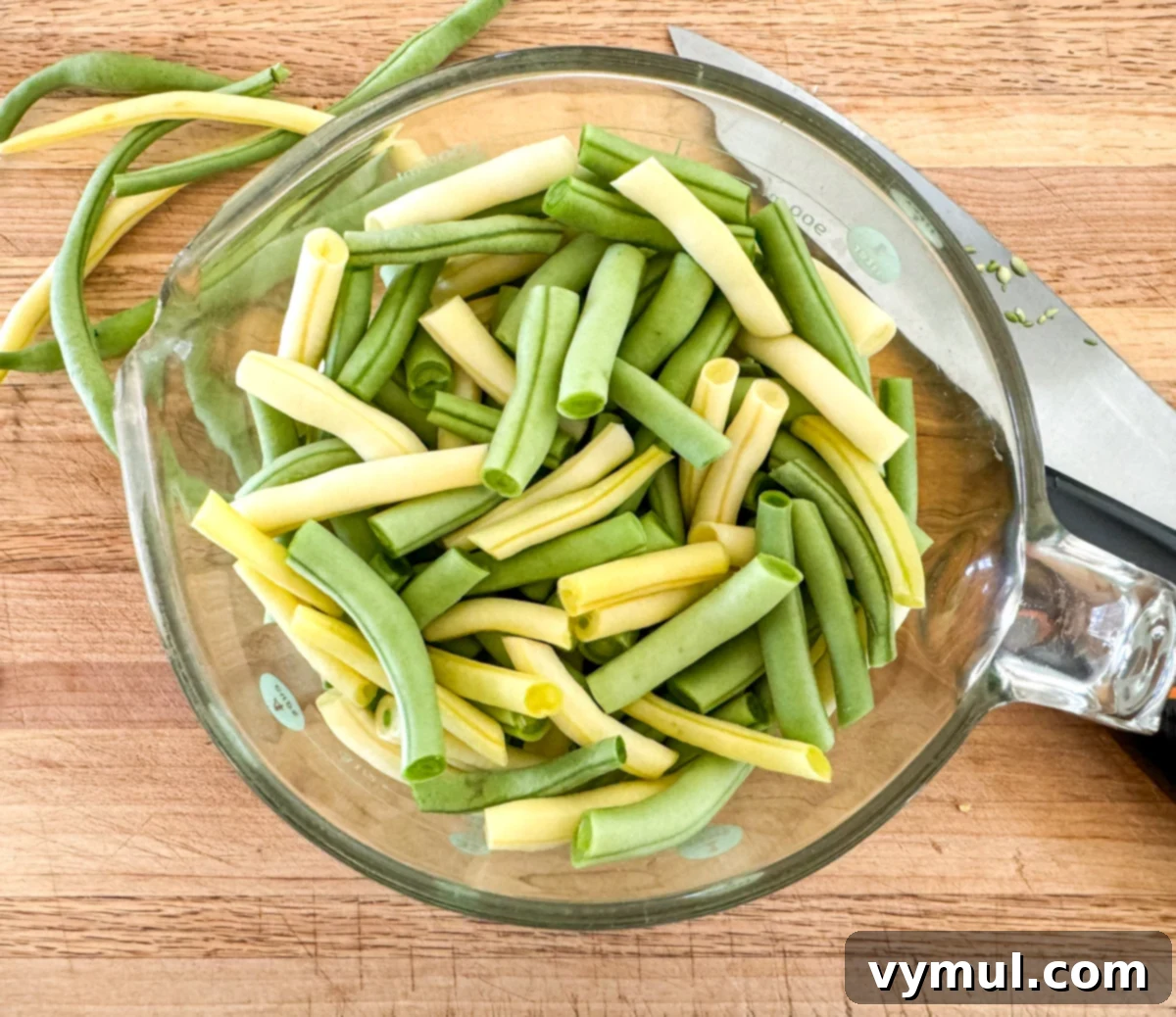
Step 1: Prepare Ingredients & Canner. Begin by washing and cutting your fresh green beans into uniform, bite-sized pieces (approximately 1-inch lengths). Smaller pieces are easier to pack into jars and more enjoyable to eat. Thoroughly prep all other produce (onions, peppers, optional celery), ensuring they are chopped or sliced as directed. Fill your water bath canner about 3/4 full with water and place it on your stove over medium-high heat to bring it to a gentle simmer (around 180°F or 82°C).
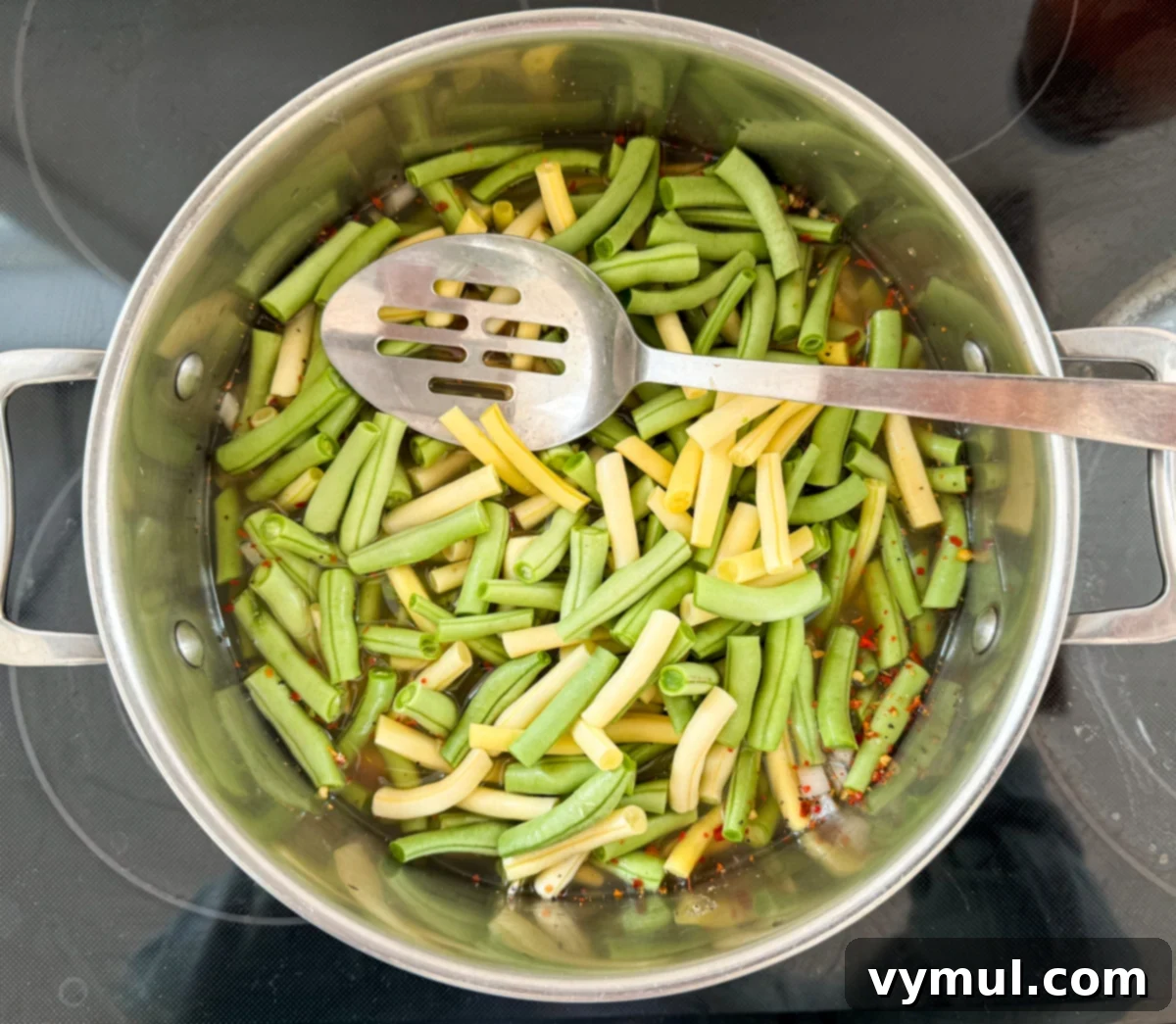
Step 2: Boil & Simmer Salad Mixture. In a large 6-8 quart stockpot, combine all the prepped vegetables (green beans, kidney beans, garbanzo beans, onion, red pepper, and optional celery) and the remaining brine ingredients (apple cider vinegar, water, bottled lemon juice, honey, canning salt, black pepper, and optional red pepper flakes and dried herbs). Bring the mixture to a rolling boil over high heat, stirring occasionally to ensure even heating. Once boiling, reduce the heat to a simmer and let it cook for 5 minutes, allowing all the flavors to meld together and the beans to slightly soften.
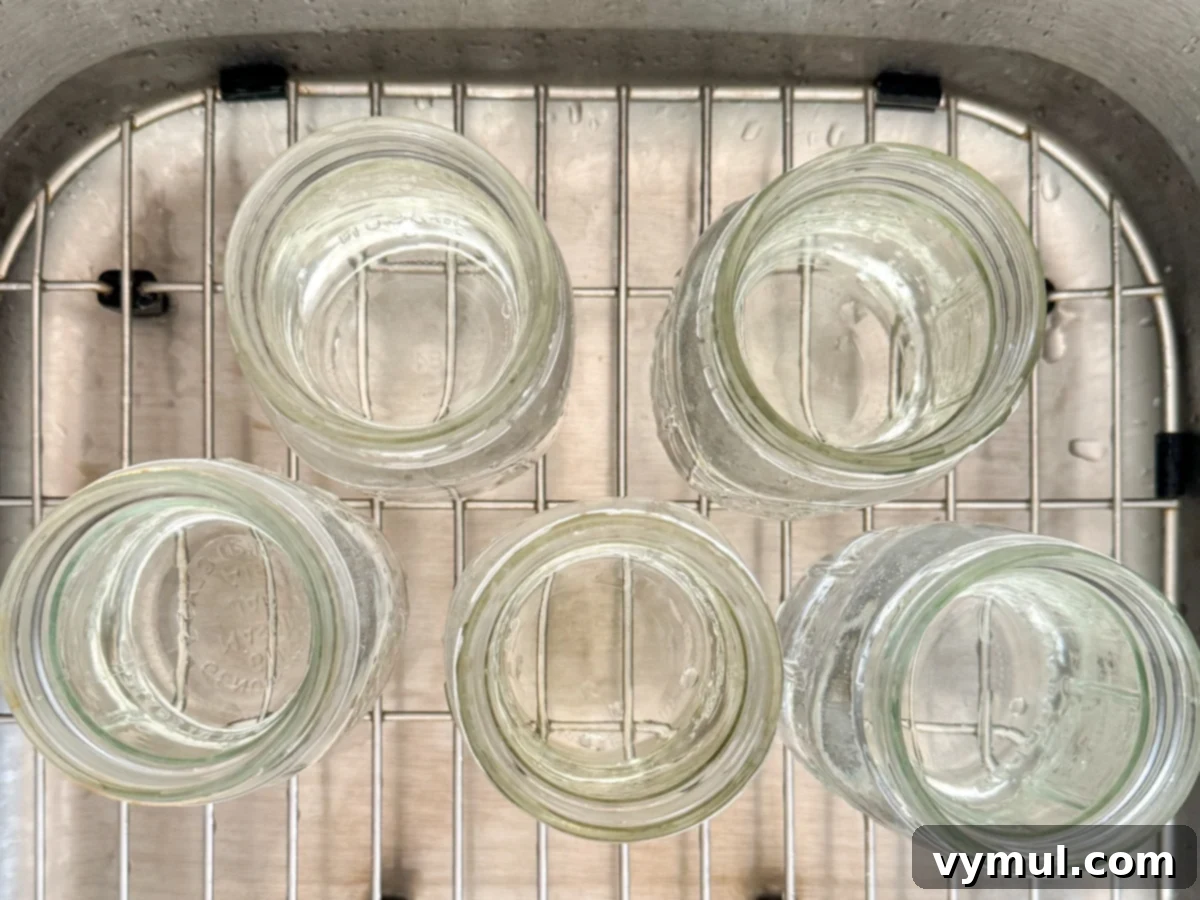
Step 3: Prepare Jars & Lids. While your salad mixture is simmering, prepare your canning jars. Wash five pint jars thoroughly with hot, soapy water. Rinse them well to remove any soap residue, then fill them with hot water and let them sit in the canner water or a separate pot of hot water to keep them warm until you’re ready to fill them. Also, wash the canning lids and rings; set them aside, ready for use. Warm jars are essential to prevent breakage from thermal shock.
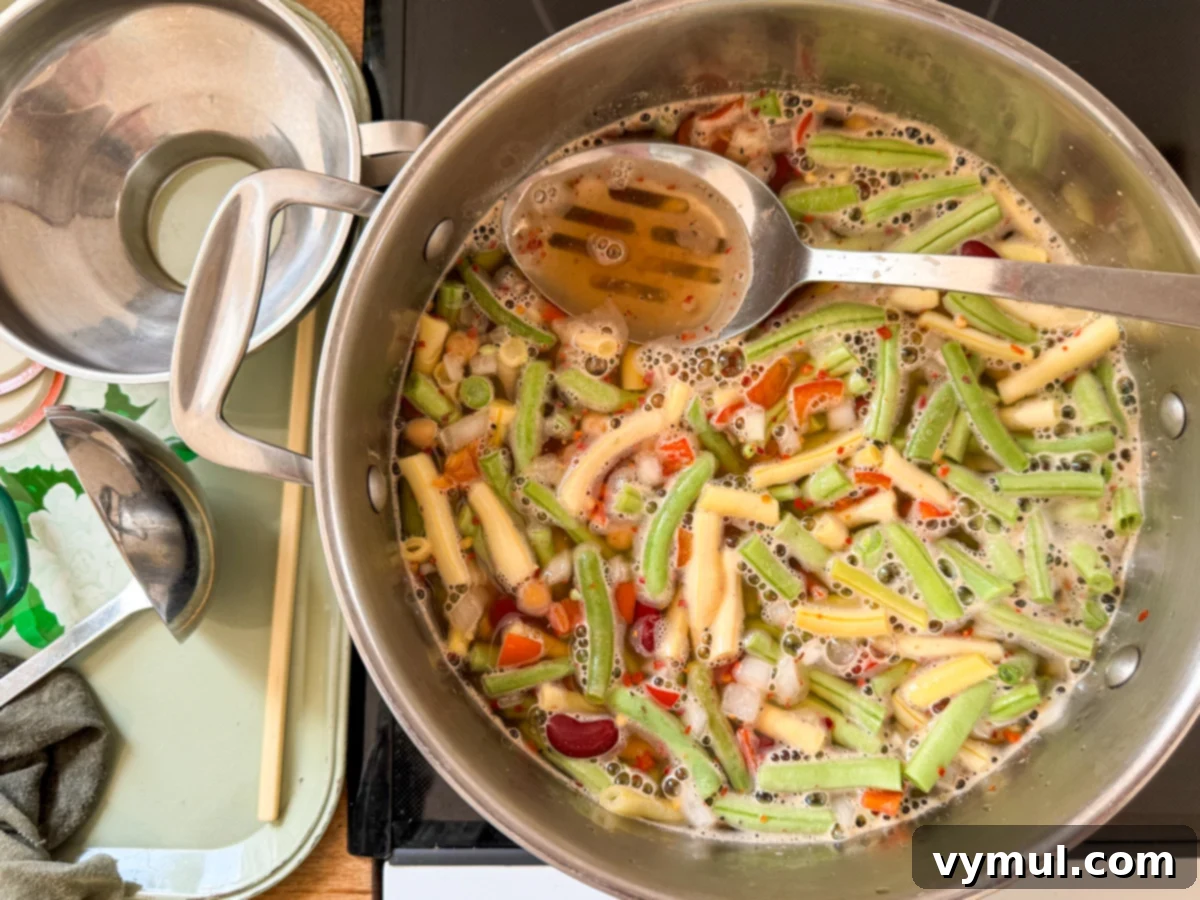
Step 4: Fill Jars with Drained Salad. Once the salad has finished simmering, carefully use a slotted spoon to transfer the vegetable solids from the stockpot into a warm pint jar. Pack the solids gently but firmly, leaving approximately an inch of headspace at the top of the jar. The slotted spoon helps ensure an even distribution of the solid ingredients and prevents overfilling with liquid too soon.
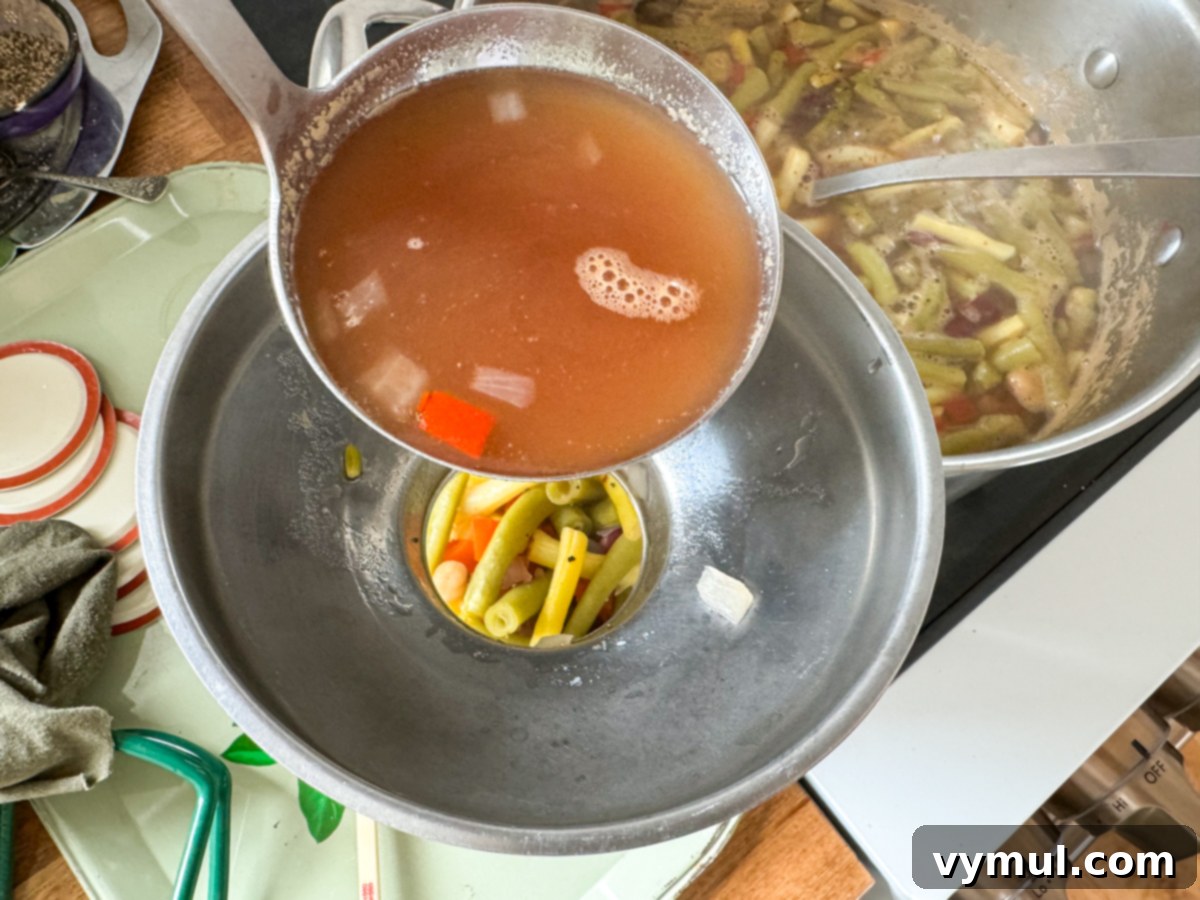
Step 5: Fill Jars with Brine Liquid. Now, using a stainless ladle and a canning funnel, pour the hot brine liquid from the stockpot over the solid ingredients in each jar. Ensure you leave a consistent 1/2 inch of headspace from the rim of the jar. Filling the jars this way, first with solids and then with liquid, helps to evenly distribute the salad and the flavorful brine across all five pints, preventing some jars from being too dry or too soupy.
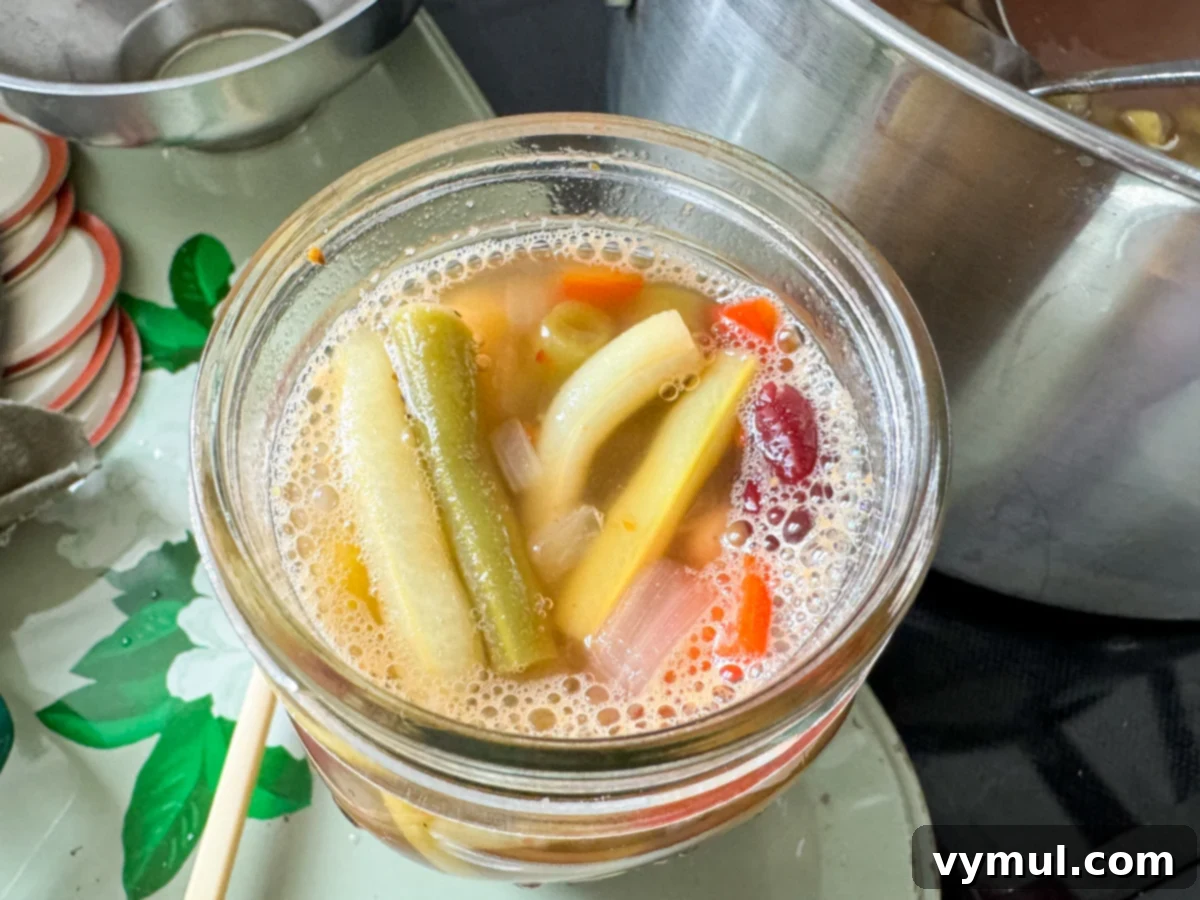
Step 6: Remove Air Bubbles & Seal. Carefully remove any trapped air bubbles from the jars using a chopstick or a small, non-metallic spatula (a canning bubble remover tool works best). Gently run it along the inside edge of the jar, pressing against the vegetables to release air pockets. If the liquid level drops significantly after removing bubbles, add a bit more hot brine to maintain the crucial 1/2 inch headspace. Wipe the rims of the jars thoroughly with a clean, damp cloth to ensure a good seal. Place a lid on each jar and screw on the ring “fingertip tight” – just enough to hold the lid securely without over-tightening.
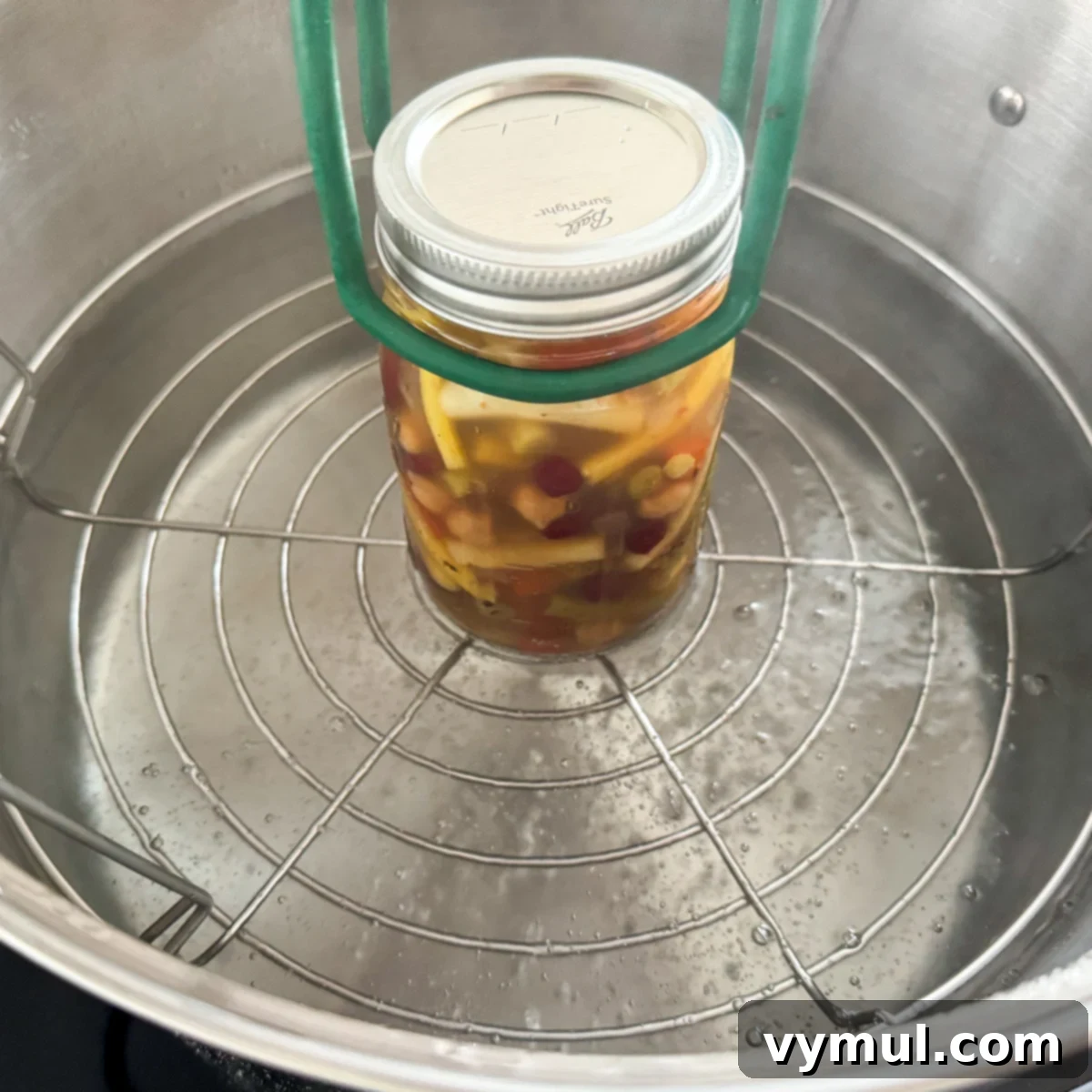
Step 7: Load the Canner. Carefully add the filled jars, one at a time, to the canning rack in your simmering water bath canner. It’s often easiest to keep the rack elevated above the water while placing all the jars on it, then lower the entire rack with the jars into the hot water at once. Ensure the water level covers the tops of the jars by at least 1-2 inches. If not, add more hot water. Turn up the heat to high.
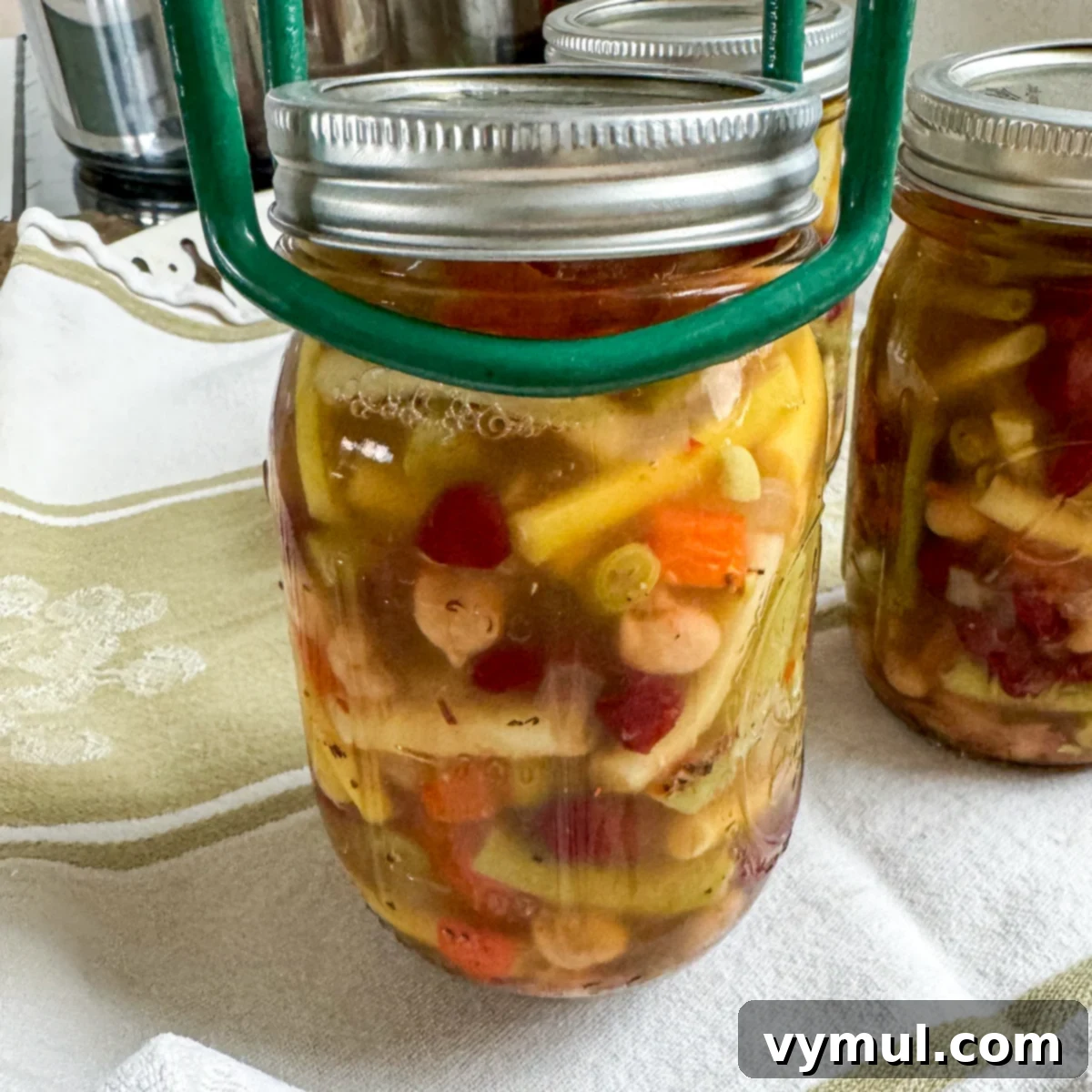
Step 8: Process & Cool. Once the water in the canner reaches a full, rolling boil, begin timing for 15 minutes. Adjust the heat as necessary to maintain a steady, vigorous boil throughout the processing time. When 15 minutes are up, turn off the heat, carefully remove the canner lid, and let the jars rest in the hot water for an additional 5 minutes. This crucial step helps prevent siphoning (loss of liquid from the jars due to a sudden temperature change). Finally, use a jar lifter to remove the hot jars to a towel-lined surface (a sturdy tray is excellent for easy movement without disturbance). Allow them to cool undisturbed for 12-24 hours. After cooling, check all lids for a proper seal (they should be concave and not flex when pressed). Label your successfully sealed jars and store them in a cool, dark place.
Top Tips for Successful Water Bath Canning of Three Bean Salad
Canning can seem daunting at first, but with a few simple tips, you’ll be a confident canner in no time. These suggestions will help ensure your canning process is smooth, safe, and efficient, leading to perfectly preserved jars of your delicious three bean salad.
- Keeping Jars Hot: Maintaining hot jars before filling is essential to prevent thermal shock and cracking when hot food is added. You can use the method described in Step 3, or run your jars through a dishwasher on a hot cycle just before canning. Another option is to keep them in the simmering canning water, but I personally find turning and draining these very hot jars before filling a bit cumbersome and prefer a dedicated hot water bath for jars.
- Containing the Mess: Canning can get a little messy, especially when working with hot liquids and sticky ingredients. I highly recommend using a small tray positioned next to your stove where you can stage all your canning supplies – a funnel, ladle, spatula, and clean cloths. Place each wet jar on this tray as you fill it. Any spills or drips will be caught on the tray, making cleanup quick and effortless once you’re done. This keeps your workspace tidy and efficient.
- Working One Jar at a Time (Efficiently): While it’s important to keep jars warm, trying to fill all jars at once before placing lids can allow some to cool too much. To maintain optimal temperature, fill, de-bubble, wipe the rim, and attach the lid to one jar before moving on to the next. Once you develop a rhythm for filling, checking for bubbles, wiping rims, attaching lids, and carefully adding each jar to the canner rack, the entire process surprisingly moves quite quickly and becomes second nature.
- Proper Headspace is Critical: Always ensure you leave the specified headspace (1/2 inch for this recipe). Too little headspace can cause food to boil out during processing, leading to seal failure or food particles preventing a proper seal. Too much headspace can result in an unsealed lid or food discoloration due to too much air in the jar. Use a canning headspace tool for accuracy.
- Check Your Seals: After cooling for 12-24 hours, test each jar’s seal by pressing the center of the lid. If it doesn’t flex, the jar is sealed. You should also hear a “ping” sound as the jars cool and seal. If it does flex, or if you don’t hear a ping, the jar is not sealed. Refrigerate unsealed jars and consume their contents within a few weeks.
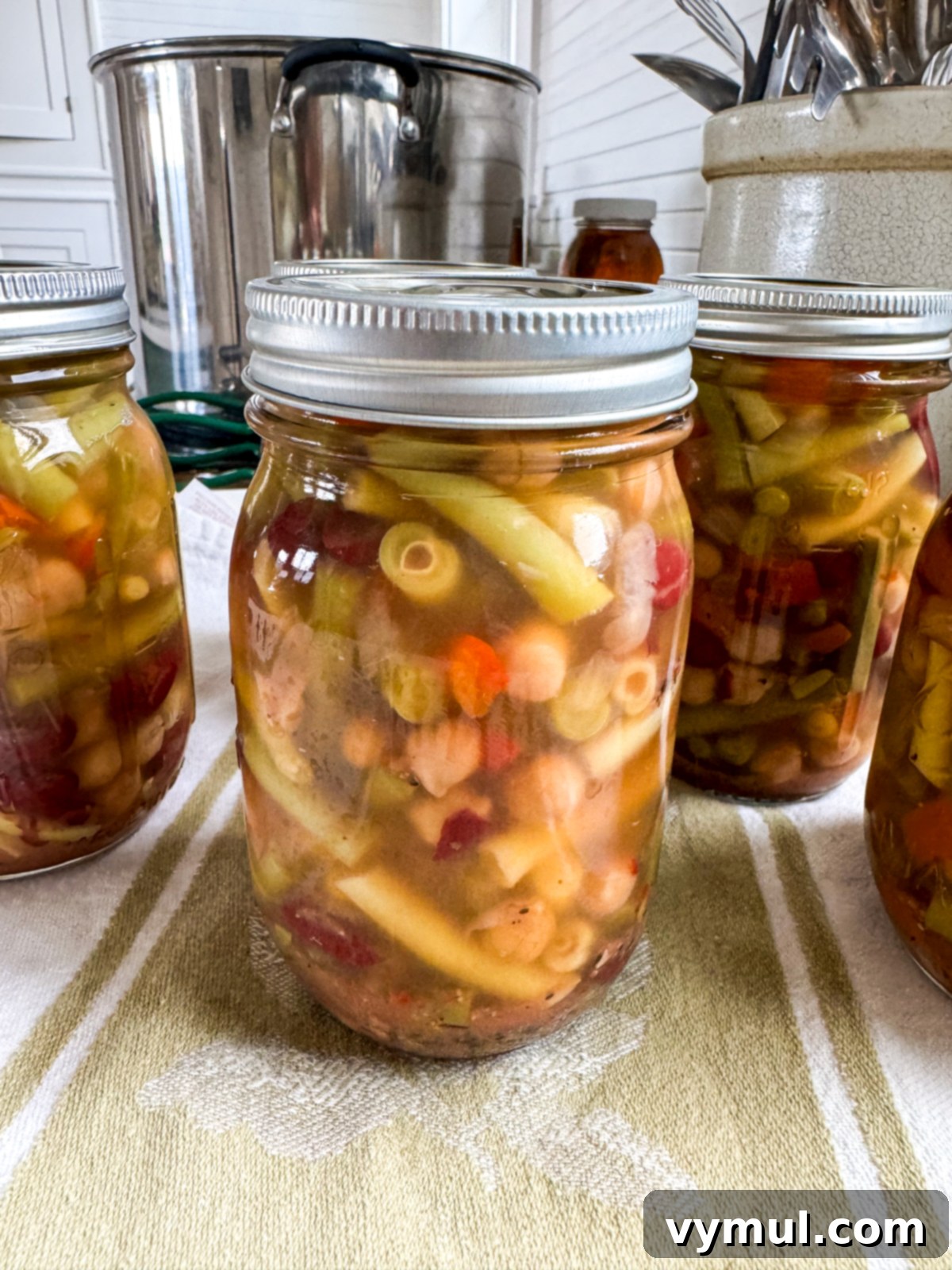
Storage Guidelines for Canned Three Bean Salad
Properly water-bath canned foods, like this delicious three bean salad, have an excellent shelf life. According to lid manufacturers and canning experts, safely processed jars are typically good for up to 18 months. For optimal quality, flavor, and texture, it’s best to consume them within one year, but they often remain perfectly fine beyond that if stored correctly. Store your sealed jars in a cool, dark, and dry place, away from direct sunlight or extreme temperature fluctuations. Before opening any jar pulled from your pantry shelf, always perform a quick check: ensure the lid is still sealed (it should be concave and tight, not bulging or loose – though lid seal loss in storage is very rare). Also, inspect the food inside to confirm it looks and smells good, with no signs of mold, unusual discoloration, or off-odors. Any signs of spoilage mean the contents should be discarded immediately.
Creative Serving Suggestions for Your Canned Three Bean Salad
This versatile honey-sweetened three bean salad isn’t just a simple side dish. Its robust flavors and satisfying texture make it a fantastic addition to a variety of meals, whether you’re looking for a quick lunch or a flavorful component for a larger spread. Here are some ideas to inspire you:
- Classic Side Dish: Serve it chilled alongside grilled chicken, steak, pork, or fish at your next BBQ, picnic, or family gathering. Its bright flavors complement rich meats wonderfully.
- Hearty Salad Topper: Spoon it generously over a bed of mixed greens for a quick, hearty, and flavorful lunch. Add some crumbled feta or goat cheese, a sprinkle of toasted nuts, and a light vinaigrette for an extra gourmet touch.
- Grain Bowl Enhancer: Combine it with cooked quinoa, brown rice, farro, or couscous for a nutritious and complete vegetarian meal. It adds protein, fiber, and a burst of marinated flavor.
- Wrap or Pita Filler: Mix it with a little plain Greek yogurt or hummus for added creaminess, then stuff it into whole wheat pitas or wraps for an easy, portable, and healthy grab-and-go option.
- Emergency Meal Solution: As mentioned, it’s excellent to have on hand for power outages, camping trips, or anytime you need a quick, no-cook vegetable side dish that doesn’t require refrigeration.
- Base for Other Dishes: Consider using it as a flavorful base for a more elaborate cold pasta salad. You could also roughly chop it and add it to a vegetarian chili or a robust soup for added texture and tang.
- Taco or Burrito Topping: A spoonful can add a tangy, crunchy element to your tacos, burritos, or nachos.
More Easy & Delicious Canning Recipes to Try
Once you’ve mastered this three bean salad, you might be inspired to try more home canning projects. Home canning is a rewarding way to preserve fresh flavors and seasonal produce, stocking your pantry with wholesome, homemade goodness. Here are some other user-friendly canning recipes that are perfect for beginners and seasoned canners alike:
- Quick Pickled Jalapeños – Refrigerated or Water Bath Canned: Add a spicy, tangy kick to your meals, sandwiches, or tacos with these versatile pickled jalapeños. Perfect for those who love a bit of heat!
- Best Thick Canned Salsa Recipe with Step-by-Step Tutorial: Learn to make a robust and flavorful salsa from scratch that’s safe for preserving. It’s ideal for dipping, cooking, or gifting.
- Canning Diced Tomatoes – Easy Fire Roasted Water Bath Method: Preserve the taste of summer’s bounty with this simple and safe method for diced tomatoes, with an optional step for fire-roasting to add depth of flavor.
I genuinely hope you enjoy making and savoring this incredible honey-sweetened three bean salad recipe! It’s a wonderful way to enjoy a healthier take on a classic. If you give it a try, please be sure to leave a rating and review below. Your feedback helps me know how much you loved it and inspires others in our community to get cooking and canning!
Print Recipe
Pin Recipe
Save
Saved!
Easy Three Bean Salad Recipe – Water Bath Canned, Low Sugar, Honey Sweetened
Equipment
-
Water Bath Canner
-
6-8 Quart Stockpot
-
5 Pint Jars and Lids
-
Ladle, Slotted Spoon, Canning Funnel
Ingredients
- 5 cups cut green beans about 1.5-2 pounds, trimmed and cut into 1-inch pieces
- 1.5 cups kidney beans, 1 can (about 15 ounces), rinsed and drained
- 1.5 cups garbanzo beans, 1 can (about 15 ounces), rinsed and drained
- 1 cup chopped or sliced onion, about 2 medium onions, finely chopped or thinly sliced
- 1 cup diced sweet red pepper, about 1 large pepper, finely diced
- 1/2 cup thinly sliced celery, optional, for added crunch
- 2.5 cups apple cider vinegar or other 5% acidity vinegar
- 1.5 cups water
- 1/2 cup bottled lemon juice (do not substitute fresh or more vinegar, essential for safety)
- 1/3 cup honey (or 1/2 cup cane sugar for substitution)
- 2 teaspoons canning or sea salt (pure salt, no anti-caking additives)
- 2 teaspoons black pepper, freshly ground, to taste
- 1 teaspoon dried red pepper flakes, optional, for a subtle heat, to taste
- 1-2 teaspoons optional dried herbs, such as basil or oregano, to taste
- 2-3 tablespoons optional olive oil (I don’t usually use this so it’s not included in the nutrition, use sparingly if desired)
Instructions
-
Wash and cut green beans into bite-sized pieces (smaller pieces are easier for filling jars and eating). Prep all other produce (onions, peppers, optional celery) as directed in the ingredients list. Fill your water bath canner 3/4 full with water and place it on the stove to bring to a simmer.
-
Add all the prepped vegetables, along with the vinegar, water, lemon juice, honey, salt, pepper, and optional red pepper flakes and herbs, to a large 6-8 quart stockpot. Bring the mixture to a rolling boil over high heat. Once boiling, reduce the heat to a simmer and let it cook for 5 minutes, stirring occasionally to ensure even heating and flavor distribution.
-
While the salad is simmering, wash 5 pint jars thoroughly with hot, soapy water. Rinse them well, then fill them with hot water and let them sit to keep them warm until ready to fill. Wash canning lids and rings; set them aside. Keeping jars warm prevents thermal shock.
-
Using a stainless steel canning funnel and a slotted spoon, fill each warm pint jar with the drained salad mixture, leaving about an inch of headspace. Then, use a stainless ladle to add the hot liquid brine from the pot, ensuring a 1/2 inch headspace from the rim of the jar. This method helps to achieve an even distribution of solids and liquids across all 5 pints.
-
Carefully remove any air bubbles from the jars using a chopstick or small spatula. Add more hot liquid if needed to maintain the 1/2 inch headspace. Wipe the rims of the jars clean with a damp cloth to ensure a perfect seal. Place a lid on each jar and secure with a ring, tightening to “fingertip tight.”
-
Carefully place each filled jar into the canner rack. A useful tip: keep the rack elevated above the simmering water, fill it with all the jars, and then lower the entire rack (with jars) into the water at once. Ensure the jars are covered by at least 1-2 inches of water before turning up the heat to high.
-
Once the canner reaches a full, rolling boil, start timing for 15 minutes. Adjust the heat to maintain a nice, even boil throughout. When the processing time is complete, turn off the heat, carefully remove the canner lid, and let the jars sit in the hot canner water for 5 minutes (this helps prevent siphoning, which is liquid loss from the jars, due to sudden temperature change).
-
Using a jar lifter, carefully remove the hot jars from the canner and place them on a towel-lined surface (a sturdy tray is ideal for moving them without disturbance if needed). Allow the jars to cool undisturbed for 12-24 hours. After cooling, check all lids for a proper seal (they should be concave and not flex when pressed). Label your sealed jars and store them in a cool, dark pantry.
Notes
Properly canned foods are good for up to 18 months (this is according to the lid manufacturers). For best quality, consume within one year. Before opening a jar, ensure the lid is still sealed (concave and tight – though seal loss in storage is rare) and the food still looks and smells good. Store in a cool, dark, dry place.
High Altitude Adjustment: If processing at an altitude higher than 1000 feet above sea level, you’ll need to adjust the processing time according to this chart. Always follow tested altitude adjustments for safety to ensure proper preservation.
If any jars didn’t seal (which is rare if instructions are followed diligently!), store them in the refrigerator and use them first within a few weeks, typically up to 3-4 weeks.
Note: This recipe is based on the National Center for Home Preserving’s tested 3-bean salad and the Ball Blue Book’s 3-bean salad. See the main article for specific adaptations and rationale behind the ingredient and process modifications.
Nutrition
Your Questions Answered About Canning Three Bean Salad
Yes, absolutely! Honey is a perfectly approved sweetener for canning and is actually more acidic than granulated sugar, which is a bonus for preservation. Since honey is inherently sweeter than sugar, general recommendations suggest using about 3/4 cup to 1 cup of honey for every cup of sugar in recipes. However, if you, like me, prefer a less sweet final product, you can safely reduce that amount even further. The safety in canning, especially for pickled foods, primarily comes from the acid (vinegar and lemon juice in this recipe) and the proper heat processing in the boiling water bath, not the sugar content. While sugar does help increase the shelf life and preserve texture in certain items like jams and jellies, it is not a critical safety component for acidic pickled vegetables. The National Center for Home Food Preservation supports that sugar is mainly for flavor in many canning recipes (source). For this three bean salad, reducing the sugar content has not noticeably affected its shelf life, making it a delicious and safe low-sugar alternative.
Traditionally, a classic three bean salad is a delightful medley of green beans, yellow wax beans, and kidney beans, often combined with finely chopped onions and bell peppers. These ingredients are then marinated in a vibrant, sweet-tart vinaigrette, which gives the salad its signature tangy flavor. While my recipe maintains the core essence and flavor profile, it actually incorporates more types of beans (fresh green beans, kidney beans, and garbanzo beans) alongside peppers and onions, making it a “four bean salad” in spirit! This adaptation enhances the texture and nutritional variety, offering a fresh take on a beloved classic while still honoring its traditional roots.
Beans are indeed primarily composed of carbohydrates. However, it’s important to distinguish between simple and complex carbohydrates. The carbohydrates found in beans are largely complex, meaning they are rich in dietary fiber and digest slowly, providing sustained energy and contributing to satiety. While beans offer a good amount of plant-based protein, making them an excellent choice for high-protein and vegetarian diets, their main macronutrient is carbohydrates. Despite this, their high fiber content and nutrient density (packed with vitamins, minerals, and antioxidants) make them a healthy and beneficial food choice. They are far from empty calories and can be a valuable part of a balanced diet, even for those monitoring carbohydrate intake, due to their overall nutritional profile and health benefits.
Disclosure: Affiliate links in this article will earn commission based on sales, but it doesn’t change your price. Click here to read our full disclaimer and advertising disclosure.