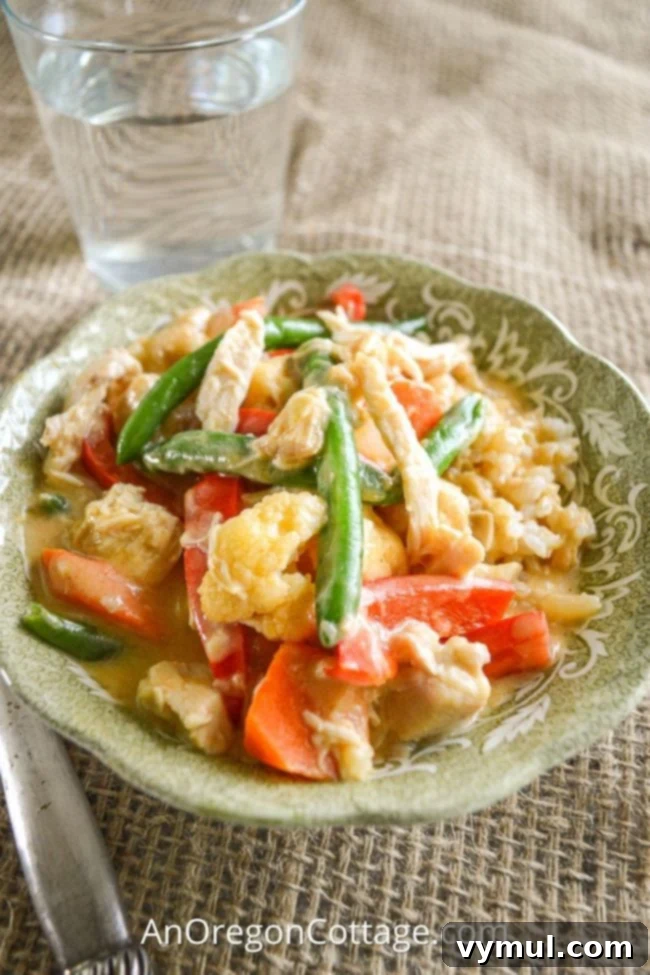
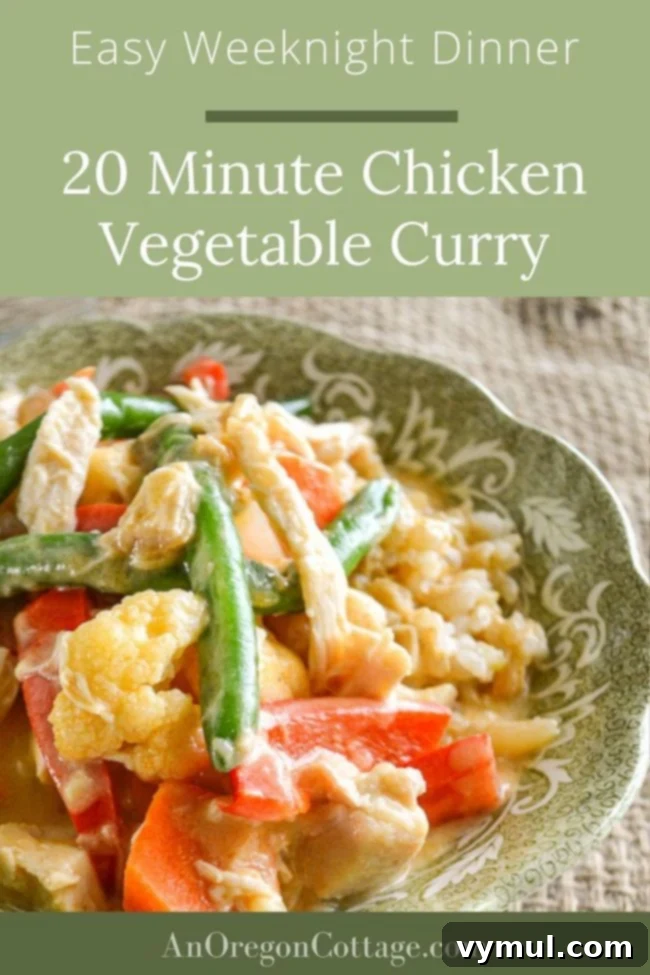
Quick & Easy Thai Chicken Vegetable Curry: A Healthy 20-Minute Weeknight Meal
Transform your weeknight dinner routine with this incredibly easy, healthy, and flavorful Thai-style chicken vegetable curry. Perfect for using up leftover chicken or turkey, this delicious meal can be on your table in approximately 20 minutes, offering a much quicker and often tastier alternative to takeout! It’s a truly versatile recipe that encourages you to “use what you have,” making it a sustainable and stress-free option for busy evenings.

Thai curries, characterized by their rich coconut milk base and aromatic, often spicy, curry pastes, are a culinary delight and one of my absolute favorite go-to recipes for a quick, real-food meal. There’s something incredibly satisfying about a dish that bursts with flavor while being remarkably simple to prepare, especially when you prioritize fresh, wholesome ingredients.
While some traditional curries might focus solely on meat and onions, I always strive to incorporate as many vibrant vegetables as possible. This approach not only boosts the nutritional profile, making the meal even healthier, but also enhances convenience. A single bowl packed with protein, healthy fats, and a medley of colorful veggies means less cleanup and a perfectly balanced meal ready to be enjoyed. When served generously over fluffy rice or delicate rice noodles, this Thai-inspired chicken or turkey vegetable curry becomes a truly magnificent one-dish dinner. It’s a far cry from the bland, processed skillet meals you might encounter, offering sophisticated flavors with minimal effort.
Understanding Thai vs. Indian Curry: Key Differences
What truly sets Thai curry apart from its Indian counterpart?
Though both cuisines boast incredibly diverse and flavorful curries, there are distinct characteristics that define each style. Knowing these differences can help you appreciate the unique culinary traditions and choose the right ingredients for your desired flavor profile.
- Curry Spices and Flavor Base: The most significant distinction lies in the curry base. Thai cooking predominantly uses fresh, aromatic curry pastes made from a blend of herbs and spices like chilies, lemongrass, galangal, kaffir lime zest, and shrimp paste. These pastes are pounded together to create a wet, potent mixture. In contrast, Indian curries typically rely on dry spice blends, known as masalas, which often include cumin, coriander, turmeric, cardamom, and garam masala, often toasted and ground.
- Liquid Base and Richness: Thai curries are almost universally recognized for their creamy base, thanks to the generous use of coconut milk. This gives them a characteristic richness and a slightly sweet, tropical undertone. Indian curries, while also rich, rarely use coconut milk in the same way. Instead, they often build their sauce with ghee (clarified butter), yogurt, cream, or tomato-based gravies, leading to a different kind of depth and texture.
- Sauce Consistency: Generally, Thai curries tend to be more fluid and saucy, ideal for spooning over rice or noodles to soak up every drop of their fragrant broth. Indian curries can vary greatly in consistency, from thick, almost dry preparations to rich, gravy-like dishes, but often have a less liquid consistency than their Thai counterparts. Both, however, are celebrated for being spicy (though adaptable to individual preferences) and highly flexible, readily incorporating various meats, vegetables, or plant-based proteins.
- Signature Ingredients: A key ingredient in many authentic Thai curries is fish sauce, which provides an essential umami depth that is distinctly Thai. This ingredient is never found in traditional Indian curries, which draw their savory notes from other sources.
When it comes to serving, Thai curry is traditionally enjoyed with sticky rice or delicate rice noodles, allowing the vibrant sauce to be fully savored. Indian curry, on the other hand, is commonly served with basmati rice, biryani, or an assortment of flatbreads like naan or roti, which are perfect for scooping up the thicker sauces.
Beyond these differences, what I truly adore about all curries, including this flavorful Thai-style recipe, is their incredible flexibility. They are truly “use-what-you-have” meals, making them ideal for emptying your fridge of seasonal produce or utilizing those lingering leftovers. This adaptability ensures that no two curries are ever exactly alike, inviting creativity in the kitchen.
Achieving a 20-Minute Meal: The Secret to Speed
Is this really a 20-minute meal? The answer is a resounding yes!
In fact, with a bit of savvy meal prep, it might even be quicker. The fundamental secret to achieving this impressive speed lies in utilizing pre-cooked protein. Leftover cooked chicken or turkey is the hero here, whether it’s from a succulent slow-cooked rotisserie chicken you made earlier in the week or a portion of delicious holiday turkey. Having the poultry ready to go dramatically slashes your cooking time.
With your protein already cooked, the process becomes a streamlined dance of quick chopping and sautéing. You’ll simply chop your chosen vegetables, give them a brief sauté to start softening, then introduce the cooked chicken and the remaining sauce ingredients. A gentle simmer for a few minutes allows all the flavors to meld beautifully and the vegetables to reach that perfect crisp-tender stage. Meanwhile, your rice or noodles can be cooking simultaneously, ensuring everything is ready at the same time.
The result? A high-quality, real-food dinner, bursting with authentic Thai flavors, accomplished in approximately 20 minutes. It’s a magic trick for busy weeknights!
However, don’t despair if you don’t have cooked chicken or turkey on hand. You can easily adapt the recipe by cutting up raw chicken breast or thigh and cooking it first. This will add a few extra minutes to your total preparation time, but the end result will still be a wonderfully quick and satisfying meal.
Thai Style Chicken Vegetable Curry (or Turkey) – A Master Recipe for Customization
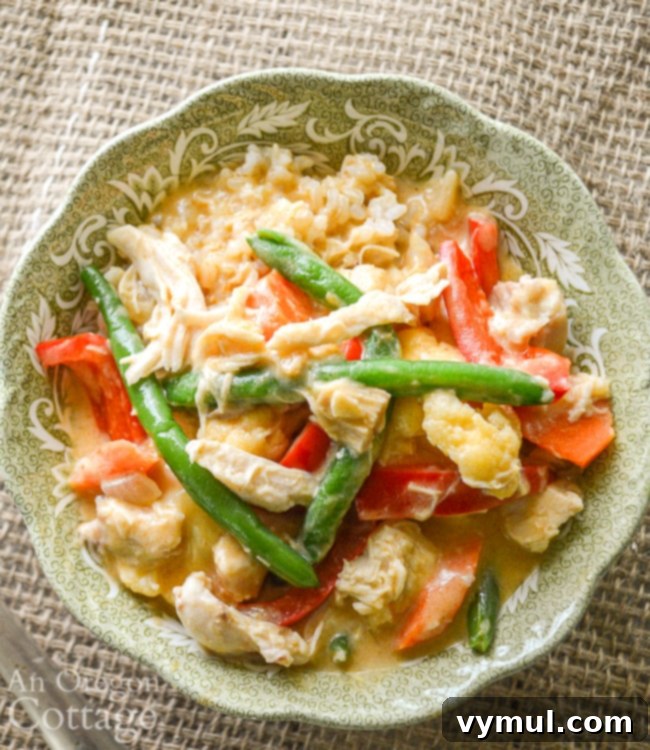
This recipe for Thai-style chicken or turkey vegetable curry is more than just a set of instructions; it’s a template for culinary creativity. It champions flexibility and resourcefulness, allowing you to tailor it to your pantry, your preferences, and the season’s freshest offerings. The beauty of this dish lies in its simplicity and the ability to achieve complex flavors with minimal fuss.
Essential Ingredients for Your Thai Curry
Crafting a delectable Thai curry begins with a foundation of key ingredients. While the specific vegetables and protein can be highly adaptable, certain elements are crucial for achieving that authentic Thai taste. Here’s what you’ll need for this delicious and versatile recipe:
- Coconut Milk: The creamy heart of any Thai curry, providing richness and a luscious texture. Opt for full-fat coconut milk for the best flavor and consistency.
- Peanut or Coconut Oil: Ideal for sautéing, these oils complement the Asian flavors of the dish. Avocado oil is also a great neutral alternative.
- Cooked Chicken or Turkey: The cornerstone protein. Leftover shredded chicken or diced turkey works perfectly. If starting with raw poultry, ensure it’s cooked thoroughly before combining with other ingredients.
- Onion: Adds a foundational aromatic sweetness and depth to the curry base.
- Garlic: An indispensable aromatic, minced garlic infuses the curry with its pungent, savory notes.
- Fish Sauce: This optional, yet highly recommended, ingredient provides a distinctive umami depth that is characteristic of authentic Thai cuisine. A little goes a long way in elevating the overall flavor profile.
- Thai Curry Paste (Yellow, Red, or Green): The primary flavor and heat source. Choosing the right type and amount is key to customizing the curry to your taste.
- Choice of Vegetables: This is where you can truly get creative! Think sliced carrots, crisp green beans, vibrant sweet peppers (red, yellow, or orange), tender chopped broccoli, cauliflower florets, zucchini slices, and/or sweet peas. Frozen vegetables can also be a fantastic time-saver.
- Rice or Rice Noodles for Serving: The perfect accompaniment to soak up all the delicious curry sauce.
Personally, I always gravitate towards including carrots for their natural sweetness and my beloved cauliflower for its texture. However, this curry truly shines as a canvas for seasonal produce. Imagine late summer zucchini, fresh green beans, or sweet spring peas and broccoli transforming the dish with their unique contributions. Don’t hesitate to experiment with what’s fresh and available in your kitchen.
Navigating the World of Thai Curry Pastes
The selection and quantity of Thai curry paste are perhaps the most crucial elements in this recipe, as they dictate both the flavor and the heat level of your finished dish. It’s the one aspect that might seem tricky, but with a little guidance and mindful tasting, you’ll become a master of curry paste customization.
The majority of this dish’s vibrant flavor and invigorating heat emanates directly from the Thai curry paste. Your goal is to add enough to impart a rich, aromatic essence without overwhelming your palate or causing an impromptu sweat-inducing culinary adventure (trust me, I’ve learned this lesson the hard way!).
Through personal culinary explorations and a fair share of trial and error, I’ve gathered insights into the characteristics of the three most commonly available Thai curry pastes:
- Yellow Curry Paste: This is generally considered the mildest of the trio. Its flavor profile often leans slightly sweeter and mellower, sometimes carrying a subtle resemblance to Indian curries due to the inclusion of turmeric, which gives it its signature golden hue. It’s a fantastic starting point for those new to Thai flavors or families with varying spice tolerances.
- Red Curry Paste: Stepping up the spice ladder, red curry paste offers a more pronounced chili kick than yellow. It derives its color and heat from dried red chilies, often balanced with galangal, lemongrass, and kaffir lime. It delivers a robust, well-rounded flavor that’s a favorite for many.
- Green Curry Paste: Brace yourself! Green curry paste is typically the spiciest of the main three. Its vibrant green color comes from fresh green chilies, which pack a significant punch. It also features a strong herbaceous aroma from fresh basil and kaffir lime. If you’re a heat-seeker, this is your go-to, but exercise caution!
Beyond these popular three, you might also encounter Panang and Massaman curry pastes. While not as universally common in everyday supermarkets, they offer unique and delightful flavor experiences. Panang curry, in particular, is a personal favorite of mine – it’s often richer, sweeter, and nuttier than red curry, with a milder heat and a thicker sauce. Massaman curry, influenced by Persian and Indian flavors, is typically milder and sweeter, with warm, earthy spices like cardamom, cinnamon, and cloves, and often includes peanuts.
A little anecdote from my sister, who lived in Thailand for several years: she observed that Thais often find amusement in the comparatively low spice tolerance of Westerners. She eventually developed a higher tolerance for heat, but noted that their idea of “mild” would often translate to a scorching, eye-watering experience for the average American palate.
For my family, who appreciates a semi-spicy kick, I typically find a sweet spot using:
- 1 to 2 teaspoons of green curry paste when using two cans of coconut milk for a noticeable, yet manageable heat.
- 2 to 4 teaspoons of red curry paste for a pleasant warmth and depth of flavor.
- Approximately 1 tablespoon of yellow curry paste for a very mild and aromatic curry.
The absolute main point here is: start slow, and taste, taste, taste! Always begin with a smaller amount of curry paste than you think you might need. It’s infinitely easier to add more heat and flavor as you go than it is to try and dilute an overly spicy dish. Remember the golden rule of cooking: you can always put more in, but you can’t take it out!
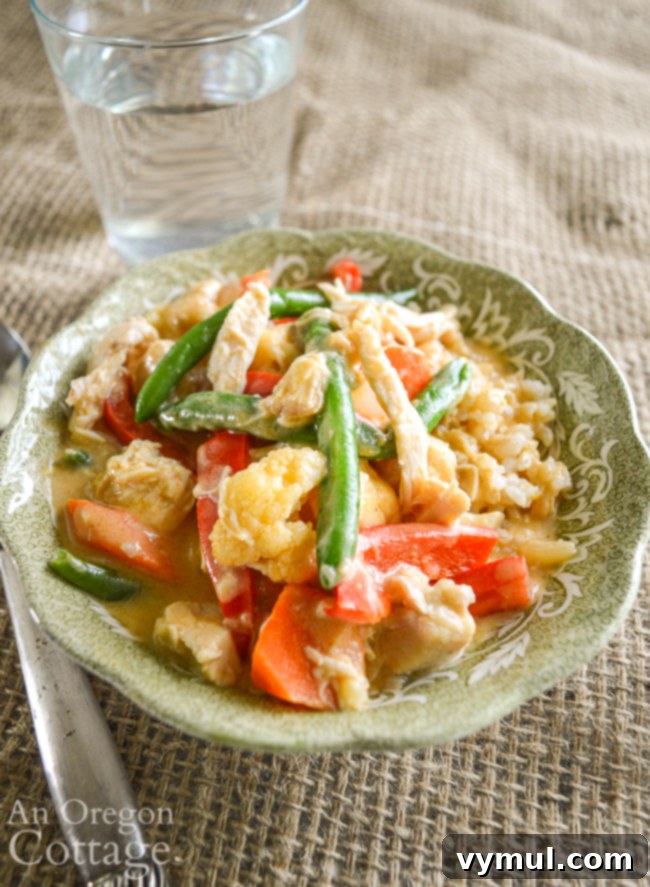
Simple Steps for a Delicious Thai Curry
Preparing this Thai chicken vegetable curry is a straightforward process, designed for efficiency without compromising on flavor. By cooking in layers, you ensure each ingredient is perfectly prepared and contributes its best to the final dish.
Heat your chosen oil in a large pan or deep skillet over medium-high heat, and let the culinary magic begin:
- Start with Aromatics (and Raw Meat if applicable): Begin by sautéing the chopped onions and minced garlic. If you’re using uncooked chicken or turkey, this is the time to cook it first. Sauté it until it’s no longer pink, then remove it from the pan and set it aside. This step ensures proper cooking and prevents overcooking later. Once the meat is removed (or if using precooked meat), continue with the onions and garlic until fragrant, about a minute or two.
- Add Harder Vegetables: After the aromatics have had a moment to soften, introduce any harder vegetables that require a bit more cooking time. This includes items like sliced carrots, sturdy cauliflower florets, or chopped broccoli stems. Sauté for another couple of minutes to kickstart their softening process.
- Combine Remaining Ingredients & Simmer: Now, it’s time to bring everything together! Add the rest of your chosen vegetables, the cooked chicken or turkey (if you cooked it separately, now is when you add it back), the creamy coconut milk, and the aromatic fish sauce. Stir everything thoroughly to combine. This is also the stage to carefully incorporate your selected Thai curry paste, starting with a small amount and adjusting to taste as discussed previously.
- Bring to a Gentle Boil & Simmer: Once everything is combined, bring the mixture to a low boil. Reduce the heat and let it simmer for approximately 5 minutes. This brief simmering period allows the flavors to meld beautifully and ensures that your vegetables cook to a delightful crisp-tender consistency. Be mindful not to overcook them, as nobody enjoys mushy vegetables!
Pro Tip for Timing: For a perfectly coordinated meal, start cooking your rice or heating water for your rice noodles before you even begin sautéing the vegetables. This way, your chosen accompaniment will be perfectly ready at the same moment your vibrant, fragrant curry finishes cooking, making for a seamless and satisfying dinner experience.
Is This Thai Chicken Vegetable Curry Truly Healthy? Debunking Coconut Milk Myths
When considering the health aspects of this Thai chicken vegetable curry, a common question arises regarding coconut milk due to its saturated fat content. It’s true that coconut milk has been a subject of debate in some dietary circles, with many sources advising caution because of its high fat percentage.
However, it’s essential to look beyond simple labels. Coconut milk is a traditional, real food that has been a staple in many cultures for centuries. It’s not just a source of calories; it contains a wealth of beneficial vitamins and minerals, including manganese, copper, iron, and selenium. Furthermore, research suggests that the type of saturated fat found in coconut milk, particularly medium-chain triglycerides (MCTs), behaves differently in the body than other saturated fats. MCTs are more readily converted into energy and may even contribute to boosting the immune system and increasing levels of “good” cholesterol (HDL). (source)
Crucially, in this recipe, we’re pairing coconut milk with an abundance of fresh, vibrant vegetables and lean protein (chicken or turkey). Both vegetables and lean protein are unequivocally healthy, providing essential fiber, vitamins, minerals, and amino acids. The combination creates a nutrient-dense meal that is far more than the sum of its parts. In fact, a generous portion of this Thai chicken vegetable curry, without the added rice or noodles, clocks in at under 400 calories, delivering a fantastic array of vitamins, minerals, fiber, and very little added sugars.
In other words – yes, this Thai chicken vegetable curry is not only delicious but genuinely healthy. You can feel absolutely wonderful about preparing and serving this wholesome, flavorful meal to your family, knowing you’re providing them with a nutritious and satisfying dinner.
Print Recipe
Pin Recipe
SaveSaved!
Thai Style Chicken or Turkey Vegetable Curry
Ingredients
- 2 13.5-ounce cans coconut milk
- 1 tablespoon oil, avocado, peanut, or coconut oil
- 3 cups chopped cooked chicken or turkey*
- 1 onion, chopped
- 3 cloves garlic, minced
- 1 tablespoon fish sauce, optional but strongly suggested
- 1 teaspoon to 1 tablespoon yellow, red, or green Thai curry paste according to taste**
- 5 cups mixed vegetables: sliced carrots, zucchini, chopped broccoli, and/or cauliflower, sliced sweet peppers, cut green beans, peas, etc.
- rice or rice noodles for serving
Instructions
-
Heat the oil in a large, deep skillet over medium heat. (Cook the chicken now if not using precooked*) Add the onion, garlic, and any hard vegetable that needs sautéing (carrots, cauliflower, etc.). Sauté for about 3 minutes, stirring occasionally.
-
Add the cooked poultry, and remaining vegetables along with the coconut milk and fish sauce, stirring well.
-
Add the curry paste to taste, being careful to monitor the spiciness. Start with only 1 teaspoon of green, 1½ teaspoon of red or just less than a tablespoon of yellow. You can always add more.
-
Bring to a low boil and cook for another 5 minutes to let the flavors meld and cook the vegetables to just crisp-tender.
-
Serve over rice or rice noodles.
Notes
**I use 1 to 2 teaspoons of green curry paste (a hot curry) to two cans of coconut milk, 2 to 4 teaspoons of red curry paste, and about a tablespoon of yellow (the most mild curry).
Nutrition Note: The numbers were calculated without rice or noodles.
Nutrition

This Thai Chicken Vegetable Curry is more than just a recipe; it’s a testament to how quick, healthy, and incredibly flavorful meals can be achieved even on the busiest of weeknights. Its adaptability allows for endless variations, ensuring that you can always whip up a fresh and exciting dinner with whatever ingredients you have on hand. Whether you’re a seasoned chef or a kitchen novice, this curry offers a simple path to a truly satisfying and wholesome meal that your entire family will love. Enjoy the vibrant flavors and the ease of a delicious homemade dinner!
More Quick & Delicious Meals Using Cooked Chicken
If you’ve embraced the genius of using pre-cooked chicken or turkey to speed up your meal prep, you’re in luck! There are countless other delicious and efficient recipes that leverage this time-saving ingredient. Here are a few more ideas for satisfying weeknight dinners that come together in a flash:
Click For Recipe
Click For Recipe
Click For Recipe
Click For Recipe
This recipe has been updated – it was originally published in March of 2010, and continues to be a cherished favorite for quick, healthy, and satisfying weeknight meals.