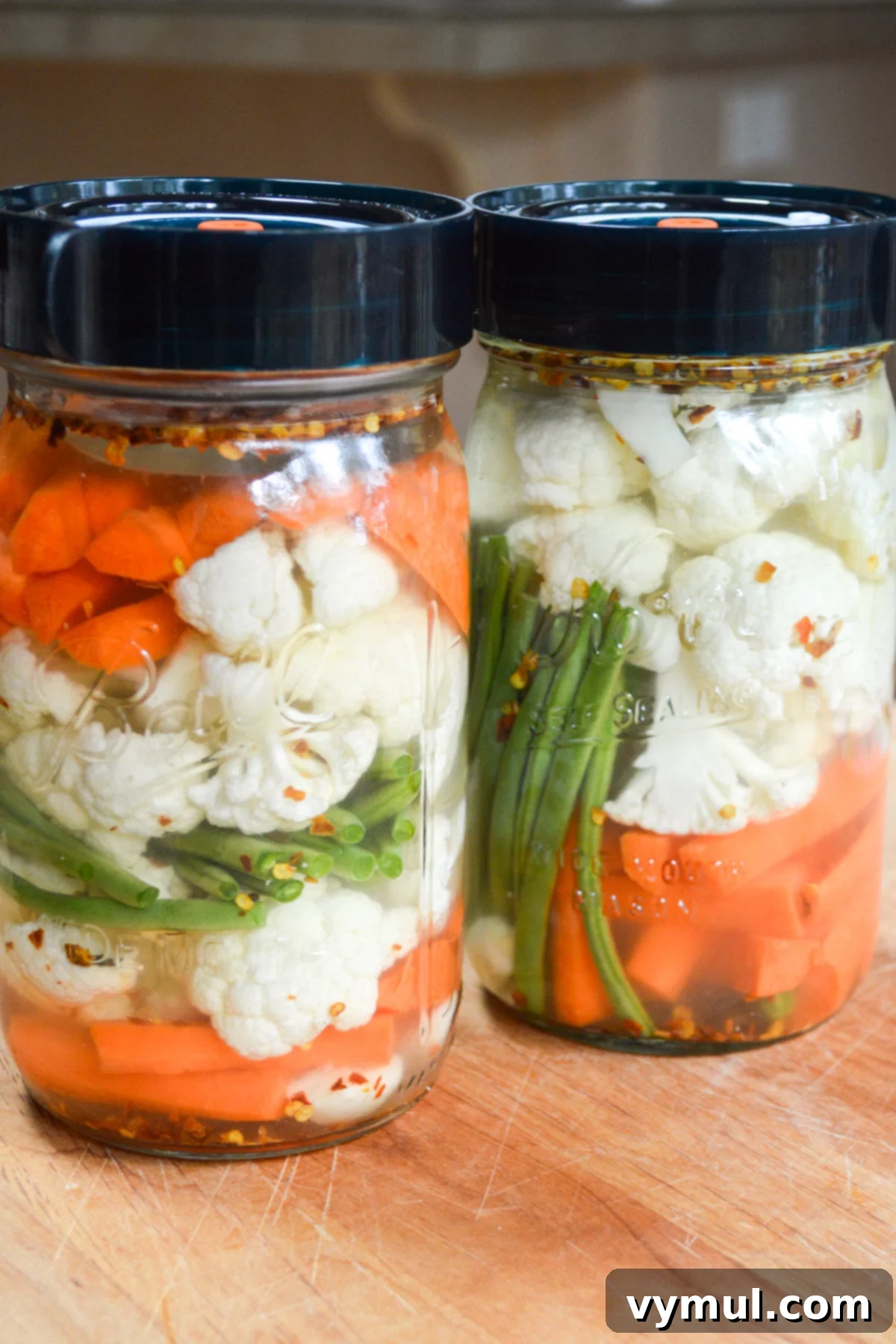
Easy Homemade Fermented Vegetables: A Step-by-Step Guide for Gut Health & Delicious Pickles
Discover how incredibly easy it is to create your own batches of delicious, nutritious, and gut-loving fermented vegetables right at home. This comprehensive, step-by-step guide will walk you through the simple process of pickling vegetables with just salt and water. With minimal preparation time, a few days of patience, and one clever tool, you can transform common vegetables like carrots, green beans, and cauliflower into amazing probiotic-rich snacks and salad additions.
If you’re eager to explore more gut-friendly recipes and expand your home fermentation skills, be sure to try my Best Mild Homemade Sauerkraut Recipe, these Super Easy Fermented Pickled Jalapeños, or use this versatile sourdough starter recipe to elevate the health benefits of your homemade breads!
✩ What readers are saying…
“I just opened my first fermented vegetables after a 5 day fermentation, and they are so delicious.” -John

Some links in this article are affiliate links and if you click on them I will receive a small commission at no cost to you.
For many years, the word “fermented” conjured up images of intensely bubbly, strong-flavored, and perhaps even slimy foods in my mind. It was a perception that created an unwarranted unease, despite happily consuming products like wine and vinegar, which are, of course, results of fermentation.
Because of these initial misconceptions, my interest in exploring a wider array of fermented foods, beyond homemade sourdough, remained minimal. However, as I began to learn more about the profound importance of gut health and the necessity of incorporating more probiotics into our diets, I repeatedly encountered the recommendation for fermented foods. This newfound knowledge sparked my curiosity:
- How challenging was it to make fermented foods at home?
- What would these foods actually taste like?
To satisfy my curiosity, I decided to conduct a taste test. I purchased some refrigerated sauerkraut and kimchi, eager to experience their flavors and imagine how they could fit into our daily meals. To my delight, I loved them both! However, the high price tags quickly became a deterrent. That’s when I resolved to learn the art of fermenting produce at home, confident that I could achieve similar delicious results for a fraction of the cost.
And what a revelation I had along the way!
Fermenting is simply natural pickling!
It might sound obvious now, but before actually trying it and tasting the incredible results, I genuinely didn’t grasp this concept. I hadn’t realized that when you allow vegetables to sit in salt water for a period, they undergo a natural pickling process, much like those preserved in vinegar. And I absolutely adore pickles! From green beans to cucumbers and even asparagus – they are perennial staples on my “must-make” list every single season.
What is the Difference Between Fermented and Pickled Vegetables?
While vegetables pickled with vinegar can be a delightful addition to your diet, they don’t offer the same profound gut health benefits as their fermented counterparts. The key difference lies in the beneficial lactobacillus bacteria that are exclusively produced through the fermentation process.
During fermentation, lactobacillus bacteria, naturally present on vegetables (and fruits!), metabolize sugars into lactic acid. This process is often referred to as lacto-fermentation. Lactic acid acts as a powerful natural preservative, effectively inhibiting the growth of harmful bacteria while simultaneously preserving the food’s flavor, texture, and vital nutrients. It’s these good bacteria that not only support a healthy gut microbiome but are also associated with a range of other health advantages, including assisting with chronic diseases, reducing inflammation, boosting immunity, and potentially even impacting certain cancers. (source)
I also made another exciting discovery: this ancient method of lacto-fermentation is incredibly easy! It can be seamlessly integrated with traditional canning techniques to preserve your garden harvests through the winter, simply stored in your refrigerator.
If you’re ready to improve your digestion and overall well-being with deliciously crisp pickled foods through fermentation, then this recipe for fermented vegetables is the absolute easiest and fastest way to embark on your journey! You have the flexibility to use a mix of different vegetables or focus on just one kind, and you can easily customize the spices to perfectly suit your taste preferences.
I can’t wait for you to experience firsthand how wonderful fresh, homemade fermented vegetables truly are. And get ready to discover the simple lid design that makes the entire fermenting process practically effortless!
How to Ferment Vegetables Video
Ingredients for Your Fermented Vegetables
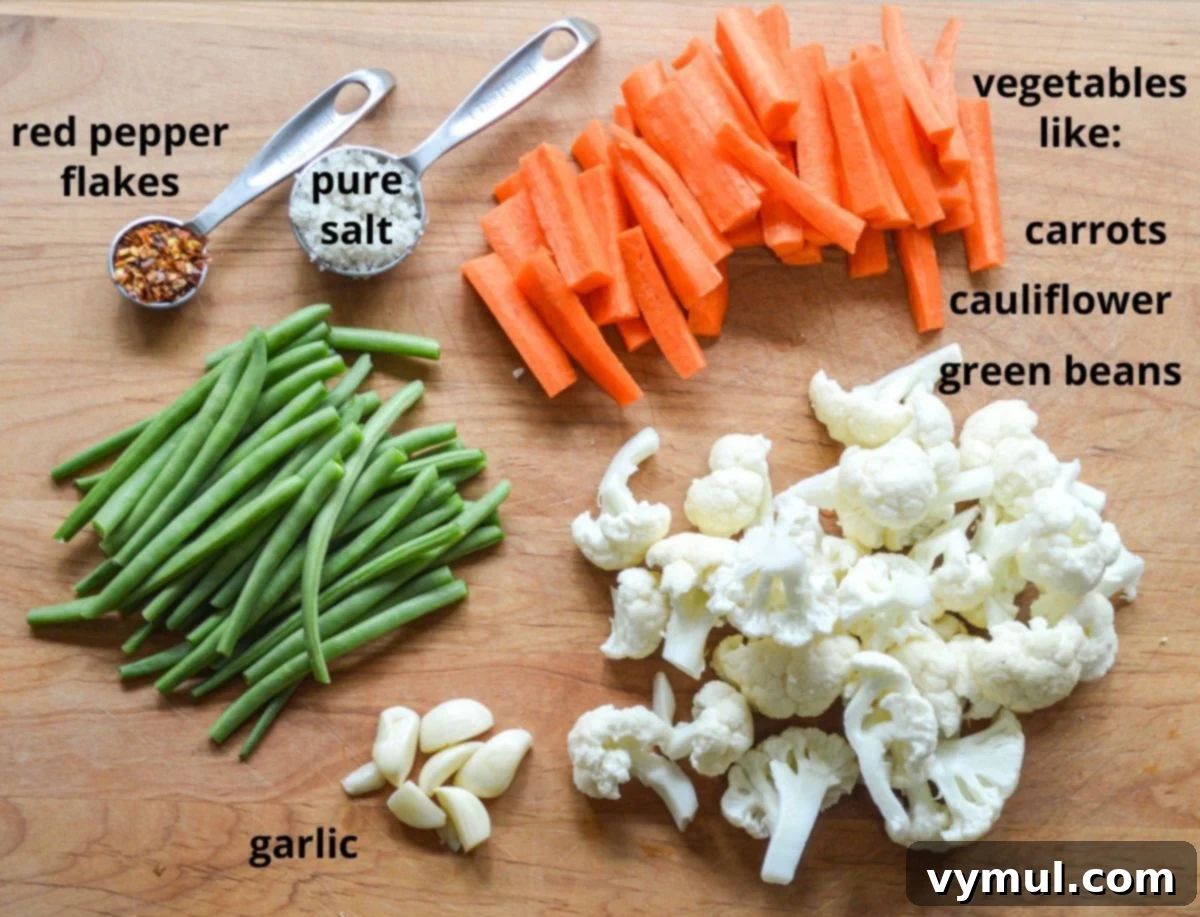
At its most basic, making fermented pickled vegetables requires only two core ingredients: fresh vegetables and salt. However, I often enhance the flavor profile with aromatic garlic and a touch of heat from red pepper flakes.
- Fresh Vegetables: Feel free to use a single type of vegetable or create a vibrant mix. The best choices are those that hold up well to pickling, such as the cauliflower, carrots, and green beans shown here. Asparagus, cucumbers, and beets are also excellent candidates. For an extra kick, consider adding a whole hot pepper, or specifically ferment sliced jalapeños. If you’re working with cabbage, for optimal results, I recommend sticking to a dedicated sauerkraut recipe.
- Pure Sea Salt: Or even specialty sea salts work wonderfully. Fine-ground varieties tend to dissolve more easily, which can be convenient for brine preparation. Avoid table salt that contains iodine, as it can sometimes interfere with the delicate fermentation process.
- Garlic Cloves (optional): Garlic adds a fantastic depth of flavor. A bonus: the fermented garlic itself is incredibly delicious and can be used in salads or blended into salad dressings for an extra probiotic boost.
- Red Pepper Flakes (optional): I’ve observed that the fermentation process can mellow the spice of red pepper. Consequently, you might find yourself needing to add a bit more than you would for vinegar-based pickling recipes to achieve your desired level of heat.
- Crushed Black Pepper (optional): This is a great alternative if you prefer a very light spice without the heat of red pepper flakes.
- Pickling Spice (optional): Creating your own homemade pickling spice blend allows for incredible customization. You can include red pepper flakes and black peppercorns, add dill seed for cucumbers, or incorporate more cinnamon or allspice for beets. This is truly the best way to impart unique and complex flavors to your fermented vegetables!
Essential Supplies for Fermenting Vegetables
Having the right tools can make your fermentation journey smooth and successful. Here are the supplies you’ll need:
- Quart Jar: A standard quart-sized mason jar is perfect for most small batches. If you plan to ferment larger quantities, a half-gallon jar would be a more suitable choice.
- Glass Weight: This essential tool is placed on top of your vegetables to ensure they remain fully submerged under the brine. Keeping vegetables below the liquid level is crucial for preventing spoilage and mold formation.
- Fermenting Lid: This is where our “easy secret” comes in. More on this revolutionary lid below!
- Storage Lid: Once fermentation is complete and your veggies are moved to the fridge, you’ll need a good storage lid. While standard metal two-piece canning jar lids can work, plastic or leak-proof one-piece lids are often preferred. They are much easier to use for everyday access and significantly reduce the chance of rusting during prolonged cold storage.
The Easy Fermenting “Secret” That Changes Everything
Want to know what truly makes these fermented pickles the “easiest ever”? It all comes down to this simple, yet ingenious, piece of equipment:
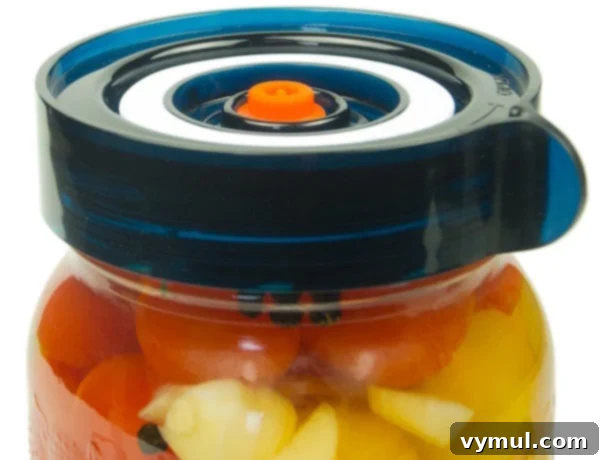
Click here to buy Easy Fermenter Lids on their website, or explore similar lids on Amazon.
Before discovering these specialized lids, the most intimidating aspects of fermentation (once I overcame my initial misconceptions about taste and texture) were the daily “burping” of jars and the constant worry about mold. The thought of having to regularly release pressure from multiple jars, or worse, finding brine overflowing onto my counters, was enough to deter me.
And let’s not forget the “mold debate” – whether to scrape it off or discard the entire batch. It was enough to make anyone hesitant to start!
But then, I found the Easy Fermenter Lids (also available as similar lids on Amazon).
These lids have truly lived up to their promise, making fermentation as “set-it-and-forget-it” as possible.
Using them, I’ve successfully made half-gallon jars of sauerkraut and kimchi, along with quart jars of corn relish and these delightful pickled vegetables, all without a single instance of mold. The only time I experienced an overflow was when I overfilled a jar, a minor lesson learned about respecting headspace. I genuinely love these jar lids. They effectively eliminated all my apprehension about home fermentation, making it an enjoyable and stress-free process.
How to Ferment Vegetables: A Step-by-Step Guide

Step 1: Prepare and Fill Your Jar
- Begin with a clean quart mason jar. Place your peeled and slightly crushed garlic cloves at the bottom if using.
- Start layering your prepared vegetables. You can cut them into any size or shape you prefer (e.g., sticks, florets, slices).
- As you add the vegetables, press them down firmly. The goal is to fit as many as possible into the jar, reaching just below the shoulder, leaving approximately 1 to 1-1/2 inches of headspace. This compact packing helps minimize air pockets.
- Finally, sprinkle in your desired spices, such as red pepper flakes, mustard seeds, fresh herbs, ginger, or dried herbs. These additions will infuse your vegetables with unique flavors as they ferment.
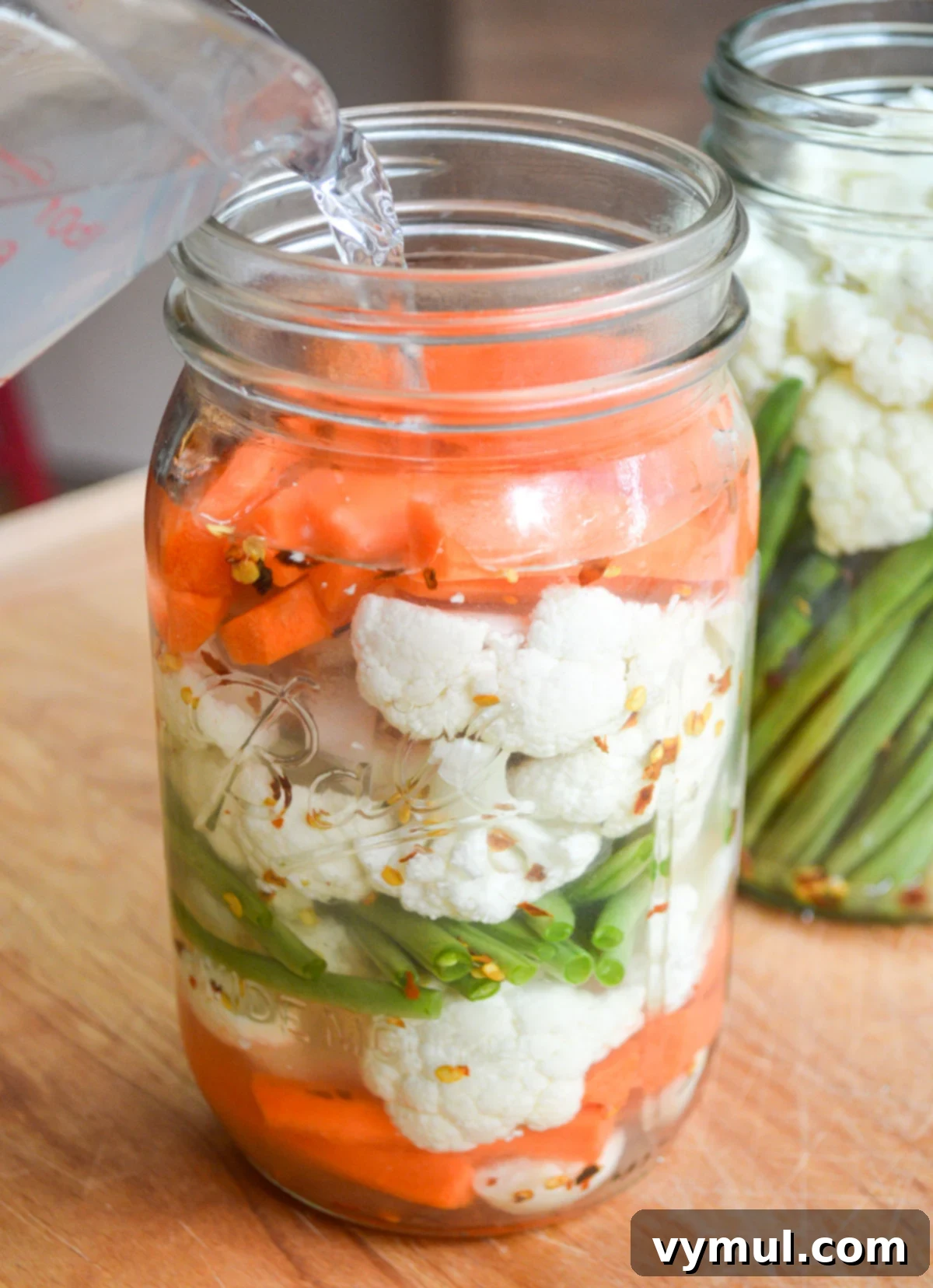
Step 2: Prepare the Brine and Fill the Jar
- In a 4-cup measuring glass or pitcher, dissolve your pure sea salt into water. It’s recommended to use filtered water or good quality well water, as chlorine in tap water can inhibit beneficial bacteria. The general ratio for brine is 1 to 3 tablespoons of salt per 4 cups of water. I find 2 tablespoons to be ideal, but you can experiment with slightly less, ensuring you never use less than 1 tablespoon of salt for proper fermentation and safety.
- Carefully pour the prepared brine over the vegetables in the jar. Fill it until the vegetables are just covered, ensuring you still leave a crucial 1 to 2 inches of headspace at the top of the jar.
IMPORTANT TIP: This generous headspace is absolutely vital for the fermentation process. As the beneficial bacteria work, they produce gases, and if there isn’t enough room, the liquid will inevitably overflow. Learn from my experience – always leave enough room!
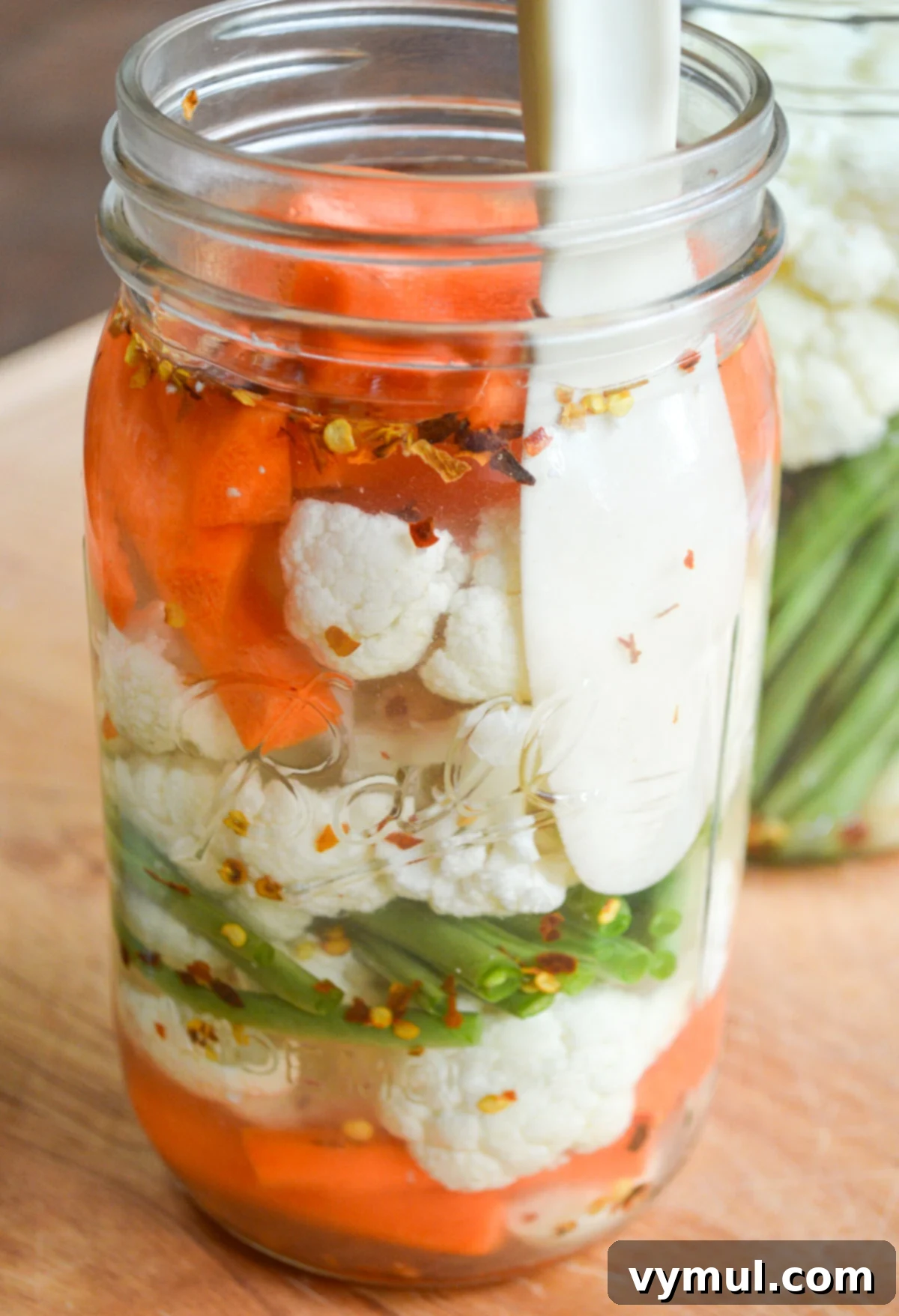
Step 3: Remove Trapped Air Bubbles
Using a thin, plastic spatula (which, incidentally, remains one of my favorite kitchen tools!), gently push it down the sides of the jar all around. This action helps to release any trapped air bubbles from between the vegetables and the sides of the jar, promoting an even and safe fermentation environment.
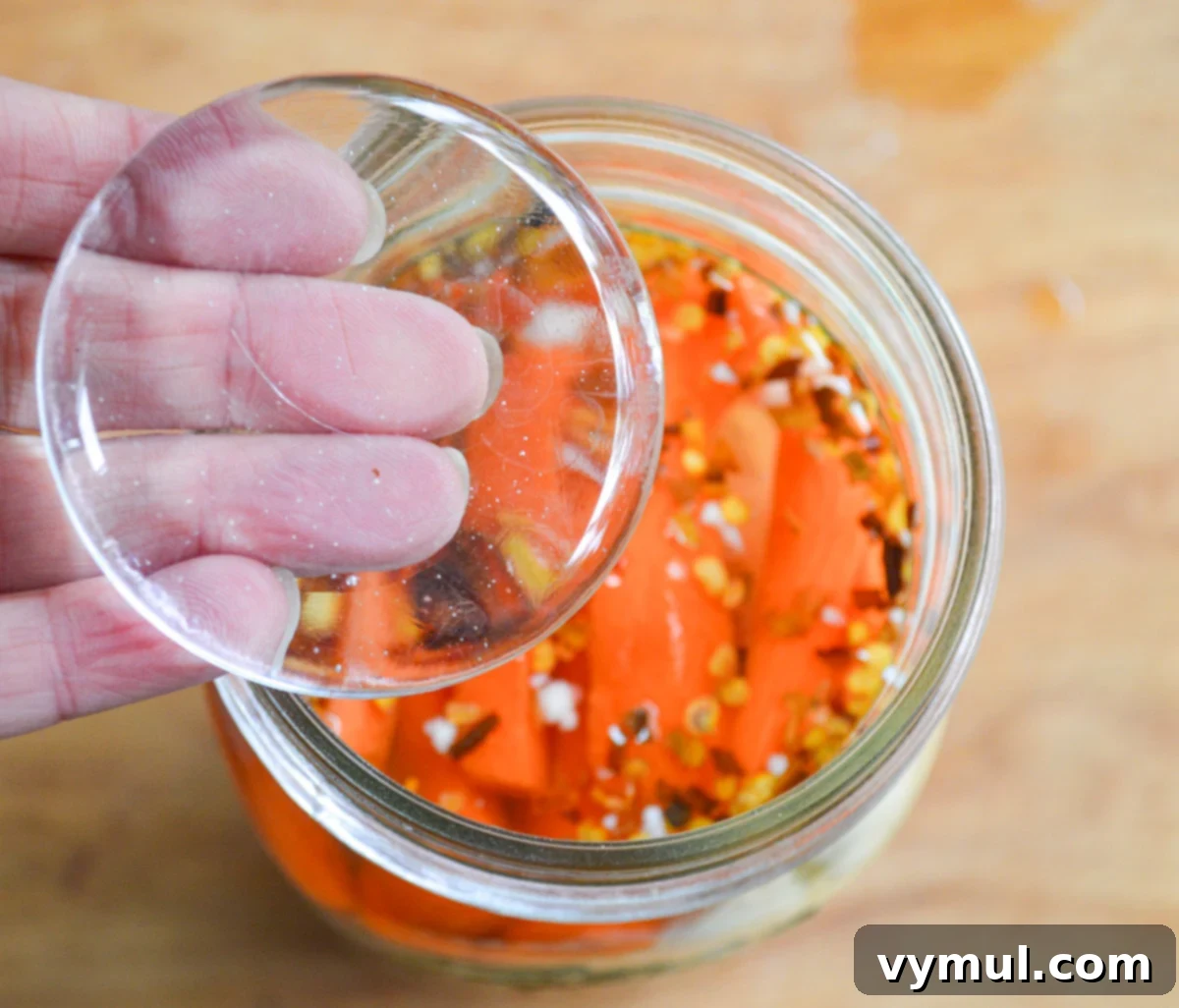
Step 4: Add a Glass Weight
While the specialized Easy Fermenter Lids, particularly for shorter fermenting recipes like this one, reduce the absolute necessity of a weight, I still highly recommend using one. A glass weight ensures that all the vegetables remain fully submerged beneath the brine. This is a critical step because any vegetable matter exposed to air above the brine can be susceptible to mold growth, potentially spoiling your entire batch. If I were to buy new weights today, I’d opt for glass weights with easy-grip knobs, as they are much simpler to remove, especially when slippery from brine.
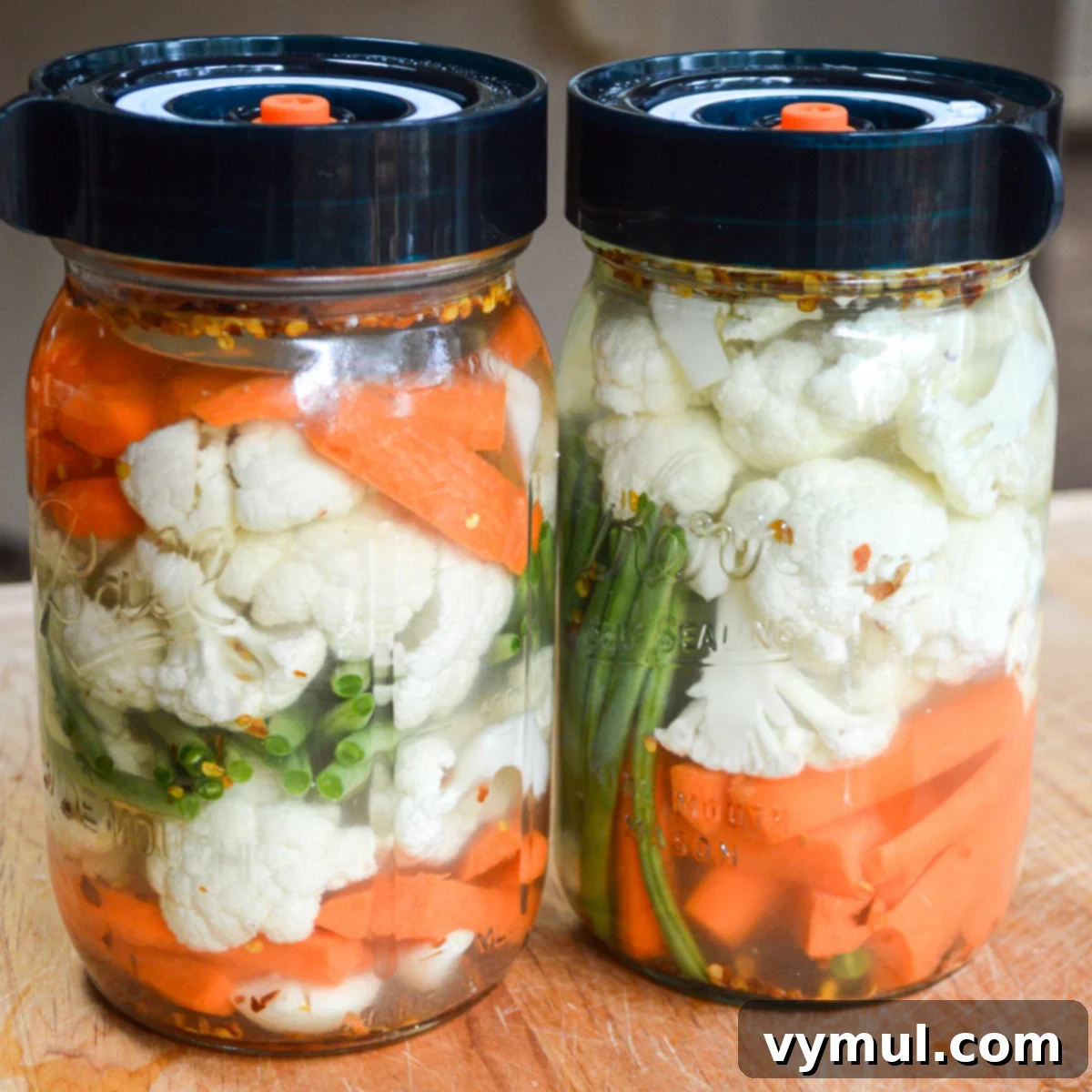
Step 5: Secure the Lids
- Attach the easy fermenting lids securely to your jars, then place them on your kitchen counter. If you’re using a different style of fermenting lid, attach it according to its specific instructions.
- Alternatively, you can use regular two-piece canning lids or plastic storage jar lids. However, be aware that these methods require you to “burp” the jars daily. This means loosening the lid to release built-up gases, and you’ll need to monitor them much more closely to prevent overflows.
HELPFUL TIP: If you opt for regular lids, it’s a good practice to place your jars on a tray, baking sheet, or a similar container. This will catch any potential brine overflow, saving you from a messy cleanup.
Step 6: Ferment at Room Temperature and Then Refrigerate
- Label your jar with the date: Many easy fermenting lids even have a convenient way to mark the date directly on top. Place your jars on the counter and allow the vegetables to ferment (or pickle) at a stable room temperature.
- Ferment for 4-5 days: After sitting on the counter for approximately 4 to 5 days (this duration can vary; see the guidance below), you’ll notice the brine becoming cloudy. This cloudiness is a positive sign, indicating that the fermentation is active. At this point, it’s time to move them to the fridge.
- Replace the fermenting lid: Remove the specialized fermenting lid and replace it with a regular storage lid for airtight sealing.
- Store in the refrigerator: Your delicious fermented vegetables are now ready to eat! They will continue to ferment, but at a significantly slower rate, in the cold environment of your refrigerator. They typically remain good for many weeks, and often even months, offering a long-lasting supply of probiotic goodness.
When Are the Fermented Vegetables Done?
Determining the exact “finish date” for fermented vegetables at room temperature can feel a bit imprecise. Many recipes simply advise to ferment “until the vegetables are finished,” relying on a taste test. However, for someone new to fermented foods, without a clear idea of what they should taste like, this advice can be less than helpful.
After numerous batches, I can confidently tell you that 5 days is a perfect starting point for fermentation in a typical heated home during winter. You can begin there and adjust as needed. For instance, a warmer summer kitchen might only require 3-4 days for fermentation, while a colder environment could benefit from an extra day or two.
Note: It’s important to remember that fermentation doesn’t stop entirely once stored in the refrigerator; it simply slows down considerably.
TASTE TEST TIP: The best way to know if your fermented vegetables are “done” to your liking is to simply taste them! They should have a firm, crisp texture and a pleasantly tangy, pickle-like flavor.
Additional Note: Food will continue to ferment in storage, albeit at a much slower pace. A thoughtful commenter once suggested adding a couple of grape leaves to the ferment. The tannins in grape leaves are known for their ability to help vegetables stay crisp during long storage. While my vegetables have consistently remained crisp for months without this addition, it’s a useful tip if you’re concerned about texture over extended periods.
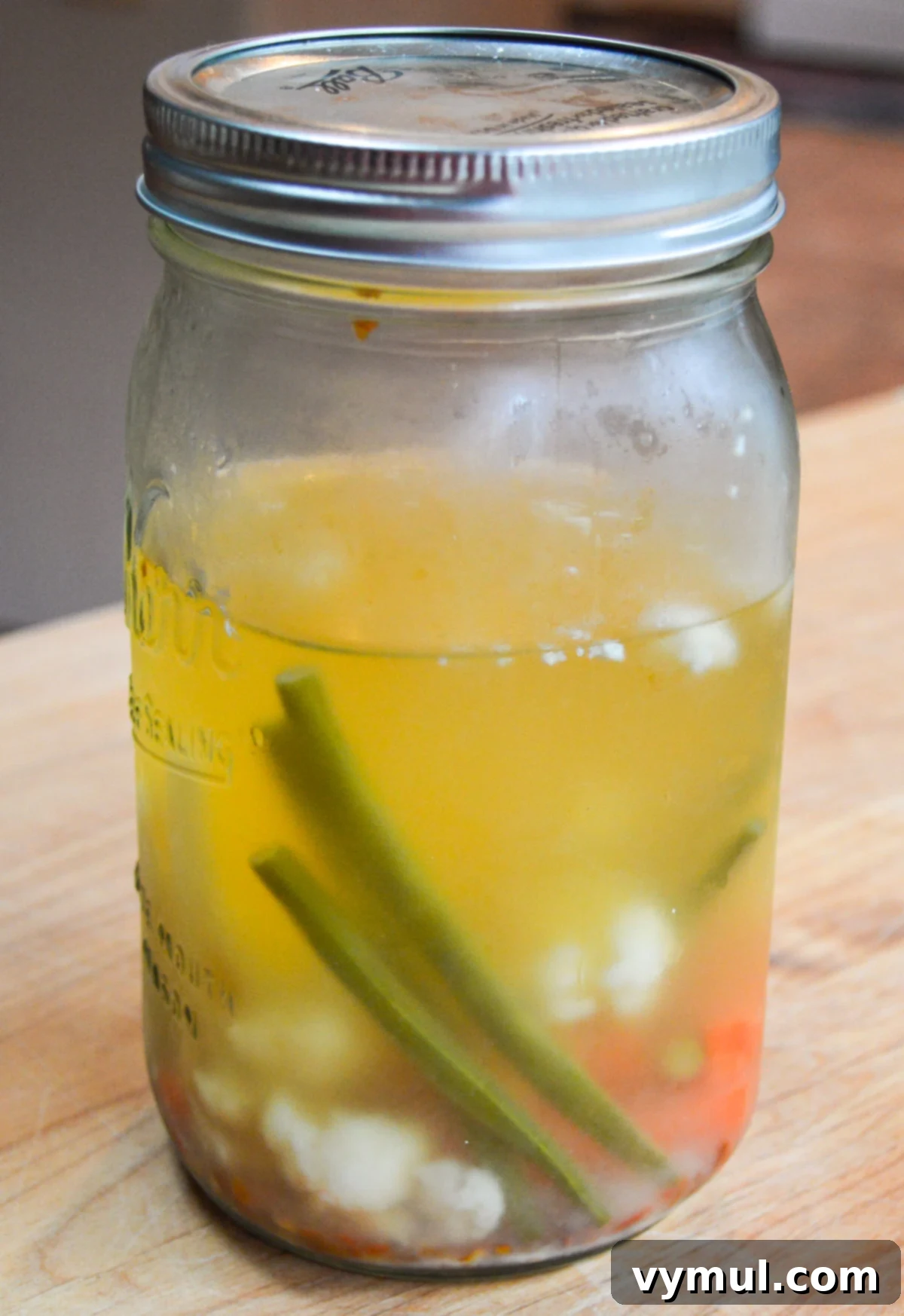
What do fermented vegetables look like in the fridge?
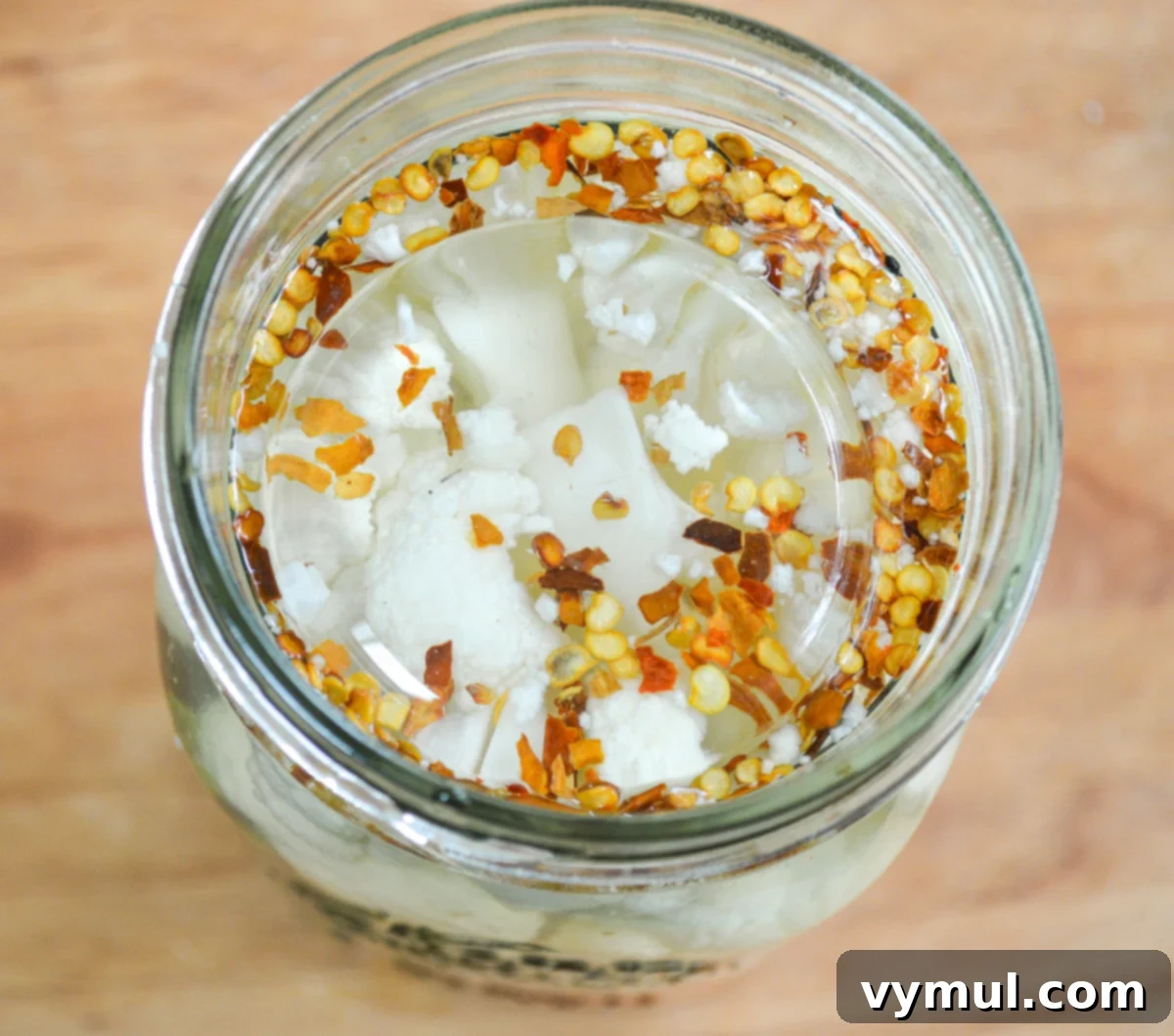
The photograph above illustrates what a jar of fermented vegetables looks like after it has been stored in the refrigerator for some time. It’s completely normal for the brine to become cloudy as the fermentation progresses on your counter, and it will often become even cloudier during refrigeration. This cloudiness is a sign of active bacterial cultures at work and is not an indication of spoilage.
Storage Tips for Your Fermented Delights
Once you’ve replaced the fermenting lid with a regular storage lid and transferred your jar to the refrigerator, the vegetables will continue to subtly develop their flavors. These fermented treasures can last for months in the fridge – though in our house, they rarely make it past a week!
How Long Can You Store Fermented Vegetables?
The storage duration largely depends on your personal preference and the specific types of vegetables you’ve fermented. Some vegetables, particularly softer ones like green beans and peppers, tend to soften over prolonged storage. While still safe to eat, their texture might become less appealing after a while. Heartier vegetables such as cauliflower and carrots, however, maintain their crispness much longer. Cabbage, in the form of sauerkraut, is famously robust and can last for many months in the refrigerator.
It’s generally not a safety concern when refrigerated; rather, it’s more about the texture. So, I encourage you to experiment! Discover which vegetables you enjoy most and how long you prefer to keep them for optimal texture and flavor.
My entire family absolutely adores these fermented pickles, just as much as the vinegar-based pickles I’ve canned for years. We often go through a whole jar in a week, simply enjoying them as a healthy and flavorful snack.
Reader Raves
“My first real attempt at fermenting veggies so I was a little nervous! Love the outcome (so did my husband!)…This recipe is a keeper and oh the Easy Fermenter lid really rocks!” -Cathy
“Super easy recipe to make! Thank you!!” -Sarah
I sincerely hope you enjoy these easy fermented vegetables as much as my family and I do. If you make them, please remember to leave a recipe rating so I know how much you loved the recipe!
Print Recipe
Pin Recipe
4.75 from 40 votes
Easiest Pickled Fermented Vegetables Ever
10 mins
10 mins
1 quart jar
Jami Boys
Equipment
-
1 quart jar with lid for fridge storage
-
1 quart measuring cup
-
1 glass weight, optional
-
1 Fermenting Lid, optional
Ingredients
- 3 to 4 cups cut vegetables or enough to fill a quart jar (cauliflower, carrots, green beans, etc.) – a variety or all one kind
- 3 garlic cloves, peeled and slightly crushed
- 1/2 to 1 teaspoon of red pepper flakes optional OR coarse ground black pepper
- 1-2 teaspoons pickling spice, customized to your vegetables like this recipe
- Other optional seasonings: dill, oregano, thyme, etc.
- 1½ – 2 tablespoons sea salt*
- 1 quart water, filtered if on a public water system, or if well water isn’t good
Instructions
-
Place garlic in the bottom of a clean, wide-mouth quart jar. Layer the cut vegetables, pressing down to fit as many as you can up to the shoulder of the jar (1-2 inches headspace).
-
Add any seasonings to the contents in the jar.
-
Dissolve the salt in the water in a 1-quart measuring cup and pour over the vegetables in the jar until the top vegetables are barely covered.** Use a thin plastic spatula around the sides of the jar to release any air bubbles.
-
Use a weight to keep the vegetables under the brine and attach a tight regular lid or airlock lid like the easy fermenter.
-
Ferment at room temperature (60-75 degrees is ideal) for about 5 days, tasting to see if they are your desired flavor and texture at day 4. If using regular lids, burp daily to release excess pressure.
-
Once they are finished, remove the fermenting lid, if you used one, and add a regular lid. Move the jar to the refrigerator for storage – the flavor will continue to develop.
Notes
**You will not use all the water-salt brine, but this amount produces the standard salt-water ratio we need and covers the needs of different vegetables (some will leave more air pockets -cauliflower leaves vs. carrots, etc.). You can save the extra for other ferments if you’d like.
Storage: We have kept these in the refrigerator for almost two months. Towards the end, the water is a lot more cloudy, but most of the vegetables are still crisp though not quite as good as at the beginning (green beans don’t hold up as well, so we eat those first).
Nutrition
Fermenting FAQs
When integrating fermented foods into a healthy diet, it’s helpful to remember that you don’t need large quantities to reap the benefits. A mere spoonful or a couple of pieces of vegetables once or twice a day is often sufficient to support digestive health. We find them incredibly versatile: they make a fantastic addition to salads, these pickled vegetables are excellent on vegetable platters, or they can simply be served on their own as a tangy side dish with your meals. Their distinct flavor can truly elevate many dishes!
For successful fermentation, you should always aim to use the purest salt available. Options like sea salt, pink Himalayan salt, and grey salt are perfect choices. It’s crucial to steer clear of conventional table salt that contains added iodine, as this additive can interfere with and even inhibit the delicate microbial processes essential for proper fermentation. Non-iodized canning and pickling salt is also a good option.
From a personal perspective, I believe the health benefits of fermented foods, primarily their probiotic content, generally outweigh concerns about the salt content. We typically consume these foods in moderation, much like a condiment, rather than as a main course. Furthermore, there are many other types of fermented foods, such as yogurt and kefir, that don’t rely on salt, allowing for a balanced intake of fermented products. It’s important to find the right balance of salt in fermented foods – too much can indeed kill off the beneficial bacteria, while too little can allow harmful bacteria to grow. Interestingly, a study published by the National Library of Medicine investigated the consumption of salt-fermented foods and hypertension. Their conclusion was significant: “high consumption of salt-fermented vegetables was not shown to be associated with increased risk of hypertension.” (source)
Note: For those genuinely concerned about salt intake, there are methods to create vegetable ferments without adding salt directly, by utilizing whey or brine from a previous ferment. While the taste and texture may not always be as robust in my opinion, it’s an option worth exploring if minimizing salt is a primary goal.
More Easy Fermented Recipes to Explore
- 5 Minute Fool-Proof Fermented Corn Relish
- Best, Mild Homemade Sauerkraut
- Fermented Pickled Jalapeno Slices
This recipe has been updated and refreshed – it was originally published in March of 2017 with new insights and expanded details.
Disclosure: affiliate links in this article will earn commission based on sales, but it doesn’t change your price. Click here to read my full disclaimer and advertising disclosure.