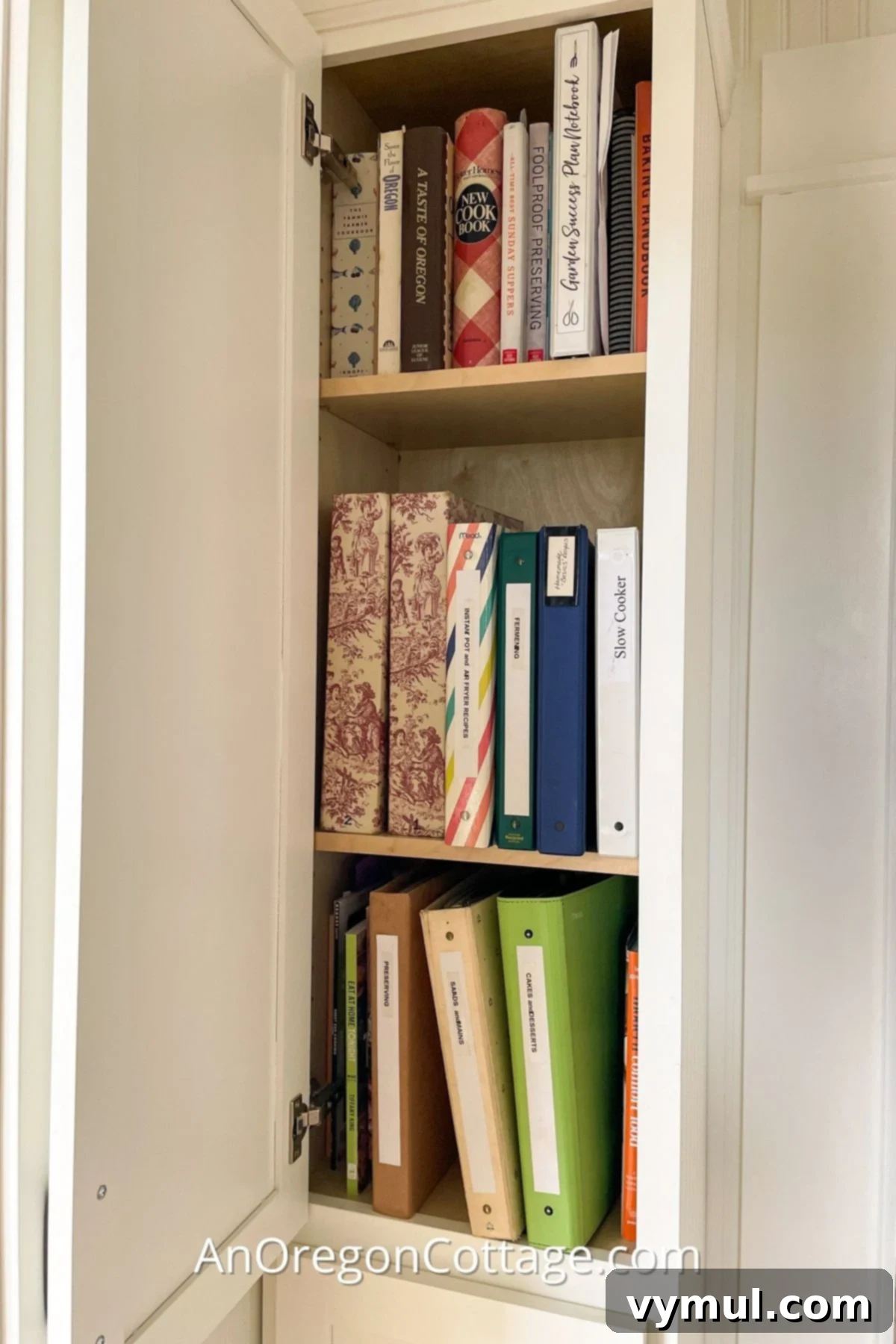
Master Your Recipes: Simple Strategies for Organizing Paper and Digital Collections
Are your recipes scattered across countless drawers, binders, and digital files, making mealtime a constant treasure hunt? It’s time to bring order to the culinary chaos! This comprehensive guide reveals incredibly simple, yet highly effective ways to organize both your paper and digital recipes using basic office supplies and smart digital practices. Say goodbye to endless searching and hello to effortless cooking and baking.
This strategy for recipe organization is just one of many useful organizing approaches you’ll discover on our site. Other popular strategies include:
- How to Efficiently Organize and Track Freezer Contents
- Practical Tips for Organizing Your Garden Paperwork (+ FREE Garden Notebook!)
- Elevate Your Organization with Thrift Store Trays
- 13 Ingenious Ways To Organize With Vintage Finds
- Winter Gardening: Organizing Seeds & Simple Seed Storage Solutions
I’ll be the first to confess that I’m not inherently a “super organized” individual. While I don’t maintain meticulous systems for every single aspect of my life, I genuinely appreciate the feeling of being organized and have successfully implemented a few strategies that truly make a difference. These methods not only simplify daily tasks but also reduce stress and allow for more enjoyment in life.
One area where I’ve found immense success is in organizing recipes. I used to grapple with an ever-growing collection of printed recipes, often having to sift through stacks of paper whenever I needed a specific dish. This frustration led me to develop a straightforward system that has proven incredibly effective, all with minimal financial investment. It’s transformed my cooking experience, making it much more enjoyable and efficient.
Now, I don’t claim my recipe organization method is the absolute best or the most revolutionary system ever conceived. However, I’m sharing it because I firmly believe there’s no single “perfect” organization method that suits everyone. What works wonders for one person might not be ideal for another.
Each individual has unique requirements regarding time, energy, and personal preferences, meaning a one-size-fits-all approach simply isn’t practical. But observing how others manage their belongings can be incredibly beneficial. It can:
- Inspire us to adapt specific elements that resonate with our needs, allowing us to create a personalized, hybrid system that truly works for us…
- OR, provide a solution that aligns so perfectly with our way of thinking that we can simply adopt it wholesale, saving us valuable time and effort in devising our own method!
I must say, when I first implemented this particular method for organizing recipes, it felt like a profound revelation. A light bulb went off, and suddenly, finding the recipe I desired became effortlessly simple, eliminating the need to painstakingly sort through countless stacks of papers. It immediately brought a sense of calm and efficiency to my kitchen, a feeling I now wouldn’t trade for anything.
Regardless of which specific method you ultimately choose to adopt, my hope is that this guide will empower and inspire you to finally bring order to your recipe collection. Getting those recipes organized is a small step that yields significant rewards in terms of kitchen efficiency and enjoyment.
Digital Recipe Organization Ideas
For those who primarily work with digital recipes or wish to reduce their paper clutter, a robust digital organizing system is essential. While I personally still find value in having some paper notes while cooking and baking, recognizing the need for tactile interaction, if you’re predominantly a digital recipe user, one of these innovative ideas could significantly enhance your culinary workflow:
- Leverage a Spreadsheet System: Create a comprehensive spreadsheet, such as one in Google Sheets, with dedicated tabs for various recipe categories (e.g., Appetizers, Main Courses, Desserts, Breakfast). Within each tab, you can list recipe names, links, key ingredients, and even notes or ratings. Here’s an excellent example of how to effectively set up a digital recipe sheet in Google Drive, offering a centralized and searchable database for all your favorites.
- Utilize Website “Save” Features: Many recipe websites offer a convenient “heart” button or similar “save” feature. By simply clicking this icon (often found in the lower right-hand corner of posts, like on my site), you can bookmark your favorite recipes directly within your browser or on the website’s platform, usually linked to your email login. This creates a personalized collection of web-based recipes, easily accessible whenever you revisit the site.
- Create an Email Folder System: A surprisingly effective method is to email recipe links to yourself. Create a main email folder labeled ‘Food,’ and within it, establish nested subfolders for specific categories such as ‘Chicken Dishes,’ ‘Desserts,’ ‘Soups,’ or ‘Baking.’ This allows for quick archiving and retrieval, turning your email inbox into a structured digital recipe box that’s always at your fingertips.
- **Consider Dedicated Recipe Apps:** Explore popular recipe management apps (like Paprika, Evernote, or others) that allow you to import recipes from websites, manually add your own, organize them into categories, create shopping lists, and even plan meals. Many offer cloud sync, ensuring your recipes are accessible across all your devices.
Paper Recipe Organization: The Two-Binder System
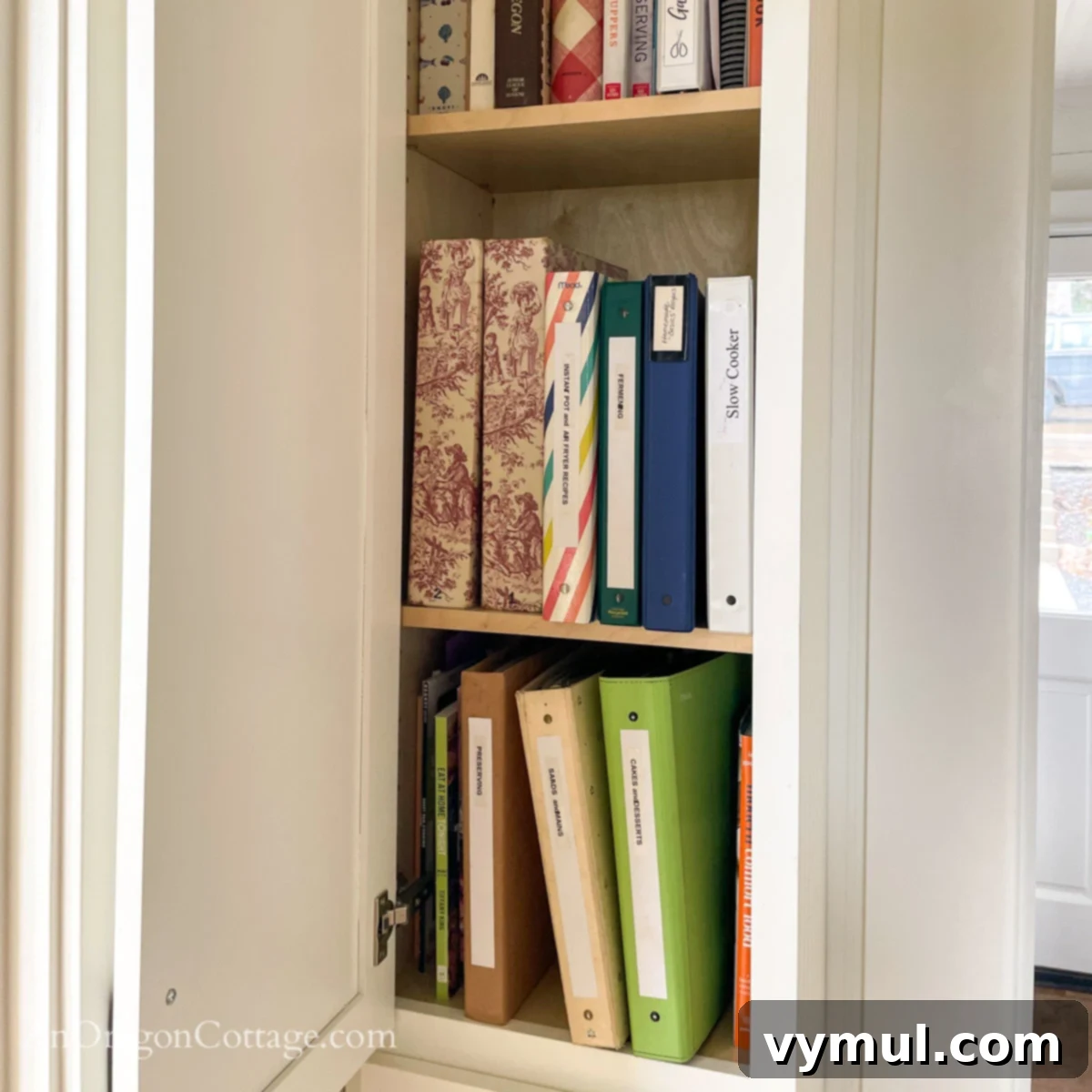
My preferred paper recipe organization method revolves around a highly practical and adaptable two-binder system, which you can clearly observe illustrated in the image above. This system is designed to accommodate the various sizes and formats that paper recipes often come in, ensuring everything has its rightful place:
- Binder Type 1: The Small Format Organizer: The two binders positioned on the middle left of the image are slightly taller and specifically designed to hold smaller recipe cards, handwritten notes, and recipes meticulously cut out from magazines or newspapers. Their compact size makes them perfect for these smaller, often delicate, pieces of culinary inspiration.
- Binder Type 2: The Standard Letter-Size Collection: These are your more traditional 9 x 12-inch binders. Each is clearly labeled with broad categories and is perfect for housing letter-sized printed recipes, larger magazine clippings, or full-page printouts from the internet. This segregation by size streamlines the process of both filing and retrieving recipes.
Binder Type 1: Taming Smaller Sized Recipes (Recipe Cards & Clippings)
The first type of organizer in this system is specifically dedicated to those smaller, often cherished, clippings and recipe cards that typically get lost in larger binders or boxes. This method proves to be far more efficient and protective than traditional recipe boxes.
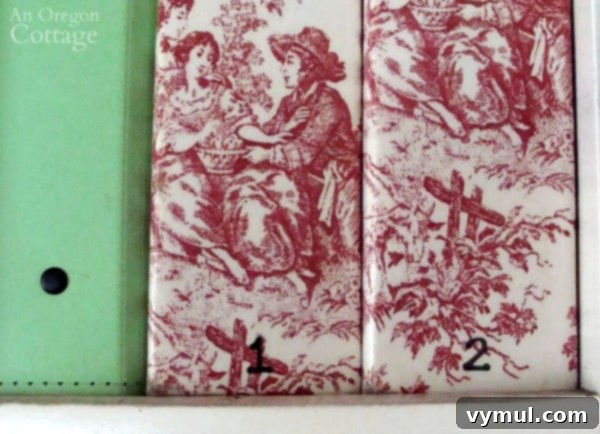
- Repurposing Photo Albums as Recipe Organizers: Interestingly, these “binders” are not conventional binders at all, but rather three-pocket page photo albums. Their individual sleeves are perfectly sized to snugly fit recipe cards and small clippings. The two I acquired came with an attractive fabric cover, which I then reinforced and protected with clear Contact paper to ensure their longevity and resistance to kitchen spills.
- Simple Labeling for Easy Identification: Since both of my photo albums were identical (because I appreciated their aesthetic and wanted a coordinated look), I simply numbered them “1” and “2.” Over time, I naturally became accustomed to the categories housed within each (for instance, all salads, soups, and main dishes in ‘1’; appetizers, cookies, desserts, and similar items in ‘2’). Of course, you can make it even easier on yourself by purchasing distinct albums if you prefer, or by labeling them with actual category names from the start.
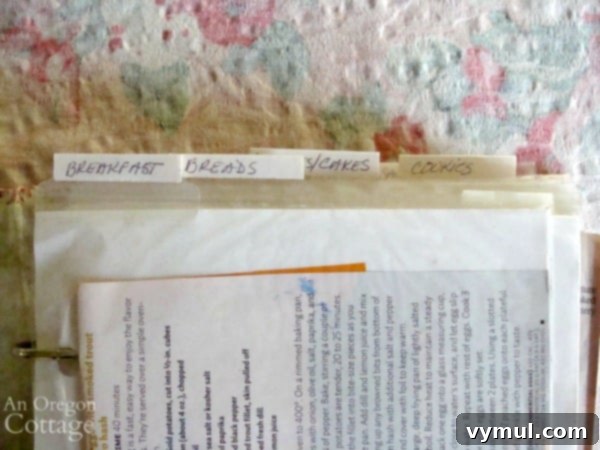
- Creating Personalized Divider Pages: To segment your recipes into logical categories, simply attach stick-on tabs, readily available at any office supply store. Position these tabs along the top edge of the pages. This placement is crucial as it prevents them from interfering with the insertion or removal of recipes from the side pockets, ensuring smooth access and organization.
- Tailored Categories for Your Needs: The beauty of this DIY approach is the flexibility it offers. You can create as many divisions as your recipe collection demands and use labels that genuinely make the most sense to your personal cooking style and preferences. This customization is a significant advantage over rigid, pre-made systems that often force you into predefined categories.
To give you a practical starting point, here are the category divisions I personally utilized in my small recipe books:
Small recipes book 1 (Savory & Main Meals):
- Salads (light meals, sides)
- Soups/Stews (hearty, comforting dishes)
- Poultry (chicken, turkey, duck)
- Seafood (fish, shellfish)
- Meat (beef, pork, lamb, venison)
- Casseroles/Vegetarian (one-pot wonders, meatless mains)
- Sides (vegetables, grains, potatoes)
Small recipes book 2 (Breakfast, Baking & Sweet Treats):
- Breakfast (pancakes, eggs, granola)
- Bread (yeast breads, quick breads, rolls)
- Desserts/Cakes (pies, tarts, layer cakes)
- Cookies (drop cookies, bar cookies, cut-outs)
- Candies (fudge, truffles, caramels)
- Appetizers/Sauces/Etc. (dips, spreads, dressings, condiments)
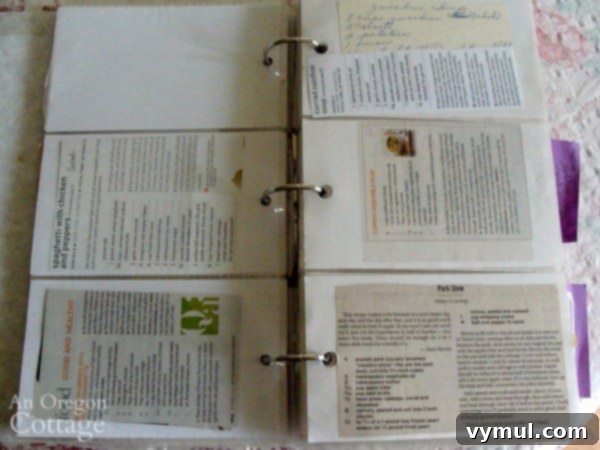
- Populating Your Binders: Once your binders are meticulously set up with their protective sleeves and labeled dividers, the next step is to populate them. Begin by gathering all the smaller recipes you’ve collected – this is also an opportune moment for a thorough decluttering. Many of us, myself included, tend to hold onto recipes we’ll likely never use; don’t be afraid to discard them!
- Fitting Recipes into Sleeves: Standard 3×5 and 4×6 recipe cards will effortlessly slide into the photo sleeves. For recipes cut from magazines or newspapers that might be slightly larger, a simple fold can often make them fit perfectly. The clear sleeves not only organize but also protect these precious pieces from spills and wear in the kitchen.
TOP TIP: While some larger clippings might require a slight pull out of the sleeve to read the entire recipe, I always endeavor to cut and strategically tape them in a way that allows for complete readability without needing to be removed. This saves time and minimizes handling.
This method of using photo albums for small recipes might seem incredibly straightforward, but for me, it was a revelation. It is SIGNIFICANTLY easier and more efficient than the cluttered little recipe boxes and flimsy files I struggled with in the past. The visual access and protection offered by the sleeves are game-changers for maintaining order and extending the life of beloved recipes.
Binder Type 2: Mastering Full-Size Printed Recipes
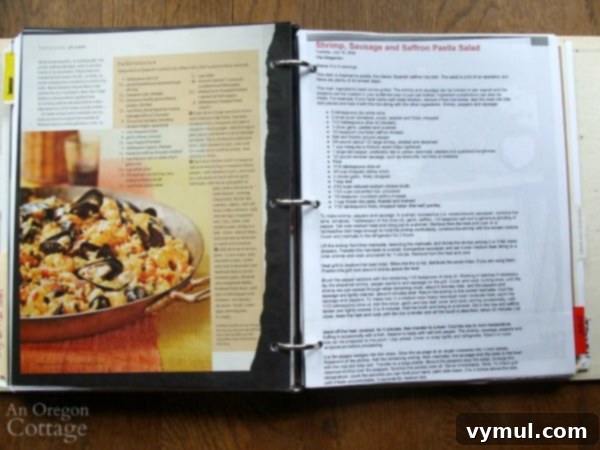
The second type of binder in this system is dedicated to accommodating larger recipes. Since small photo pockets are impractical for full-page printouts from the internet, extensive magazine spreads, or larger handwritten recipes, this standard binder serves as their perfect home.
- Utilize Standard Three-Ring Binders: Employ basic three-ring binders. These are versatile and widely available. Equip them with sturdy divider pages, clearly labeled with categories that mirror or complement those in your photo albums (e.g., Soups & Stews, Poultry, Desserts). This consistent categorization across both binder types creates a cohesive and intuitive system.
- Incorporate Clear Page Protectors: A key element for protecting your recipes is the use of clear page protectors. Simply slide large clippings, magazine pages, or printed recipes into these sleeves. They shield your recipes from spills, tears, and general kitchen wear and tear, ensuring they remain legible and intact for years to come.
- Direct Filing for Printed Pages: For standard 8.5×11 inch printed recipes, a three-hole punch is your best friend. Punch holes directly into the paper and add them straight onto the rings. This method works well for recipes you might want to annotate or update, as they can be easily removed and reinserted.
While this 3-ring binder approach is commonly used by many, what truly transformed my organization was the realization that I didn’t have to force all my recipes into a single size binder. Accepting that it’s perfectly acceptable, and indeed more efficient, to have two distinct systems for different recipe formats was a game-changer. Those tiny clippings and recipe cards were a constant frustration when trying to make them fit neatly into large binders. I’ve found it significantly simpler and more satisfying to slip them into the designated photo pockets of the smaller albums.
When Your Collection Outgrows a Single 3-Ring Binder
Depending on the sheer volume of recipes you accumulate, a single 3-ring binder with well-organized divisions might suffice for a period. However, as your culinary repertoire expands, you’ll likely find the need for more specialized organization.
When my primary binder became too full, I seamlessly transitioned to dividing my categories across three larger binders, each clearly labeled for intuitive access:
- Salads/Mains (encompassing all primary dishes and their accompaniments)
- Appetizers/Breads/Breakfast (for starters, baked goods, and morning meals)
- Cakes/Desserts (a dedicated space for all things sweet and celebratory)
Furthermore, as certain types of recipes began to accumulate significantly, I found it incredibly beneficial to create specific, dedicated binders. This ensures that highly used or specialized recipes are always easy to find:
- Slow-cooker recipes: A growing collection of effortless meal solutions.
- Homemade “Basics” recipes: This includes recipes for Pantry basics (like spice blends, homemade broths) as well as health and beauty recipes I like to make.
- Our past menus: A invaluable resource for future meal planning and seasonal eating.
- Update: Since establishing this system, my needs have continued to evolve. I’ve added new dedicated binders for Instant Pot recipes, Preserving techniques, and Fermenting projects as these areas grew in my kitchen. The beauty of this system is its inherent flexibility – adapt it constantly to ensure it always works optimally for you.
PRO TIP: Keeping an organized record of our past menus is an indispensable tool when planning new weekly or monthly menus. I arrange these past menus by month, which allows me to effortlessly refer back to what we enjoyed eating during specific seasons. This strategy is particularly useful for capitalizing on what’s fresh and in season from the garden, or what produce is currently on sale, ultimately saving money and reducing food waste.
Beyond the Text: The Recipe Organization Video
For those who appreciate a good laugh and a glimpse into Brian’s unique sense of humor, I highly recommend watching the accompanying video we produced about this very topic. It was playfully designed to mimic those serious interview-style shows, which is why I’m intentionally not smiling – it’s all part of the comedic effect! A video about organizing recipes? Yes, I know it sounds a bit niche, but Brian truly brings the humor. He’s absolutely brilliant at making even the most mundane topics entertaining, and that’s precisely what makes life with him so wonderfully fun and unpredictable.
I sincerely hope that this detailed guide has provided you with valuable insights and inspired you to consider how you can effectively organize your own recipe collection to perfectly suit your needs. An organized kitchen is truly a happier kitchen! I’d absolutely love to hear about your unique recipe organizing strategies and tips – please share them in the comments!
This article has been thoroughly updated and expanded to provide even more value. It was originally published in May of 2010.