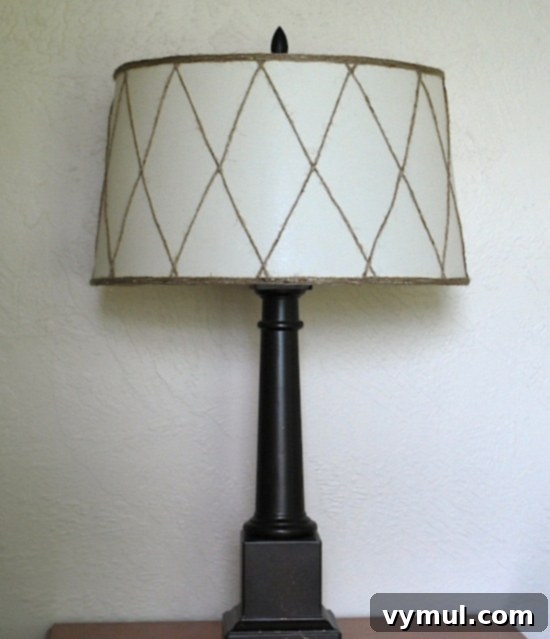
DIY Twine Drum Lampshade Makeover: Create a Stunning Geometric Masterpiece
Witness the effortless transformation of a plain drum lampshade into a captivating decorative statement. With just twine, a hot glue gun, and a few hours of enjoyable crafting, you can create a truly unique piece for your home. This DIY project is not only simple but also incredibly rewarding, allowing you to add a touch of personalized charm and a rustic-modern aesthetic to any room.

I recently had the wonderful opportunity to participate in a special DIY Challenge hosted by Wayfair in collaboration with Hometalk. This exciting event brought together several bloggers, myself included, to unleash our creativity on a chosen home decor item. Participants were given a selection of three items and the freedom to transform them in any imaginative way we desired.
For my project, I eagerly selected a simple yet versatile lamp shade:
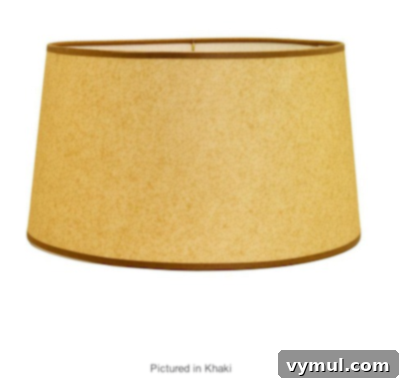
The specific item I chose was the Linen Shallow Drum Shade. While the image above displays it in a lovely khaki hue, the shade I worked with for my DIY endeavor was a beautiful champagne color. This particular shade immediately caught my eye because I’ve been planning to update several lamps in our home with modern drum shades. This challenge provided the perfect catalyst to kickstart that vision and experiment with a fresh look.

The 16-inch drum shade was an ideal fit for a lamp that holds sentimental value, having been a part of our son’s extreme room makeover. This lamp, which once boasted a shiny brass finish, had already undergone its own transformation. The new drum shade instantly gave the lamp a refreshed and contemporary feel. However, I knew I could take it a step further to truly personalize it and make it a standout piece in our decor.
One fascinating aspect of the DIY challenge was the requirement to incorporate a specific theme: participants could choose between a geometric pattern, incorporating rope, or a black & white scheme. I decided to embrace a creative combination, opting to use natural jute twine (which certainly counts as rope!) and apply it in a captivating, yet simple, geometric pattern. This dual approach allowed me to meet the challenge criteria while exploring a design that would add texture and visual interest.
And here is the stunning result of my creative efforts:
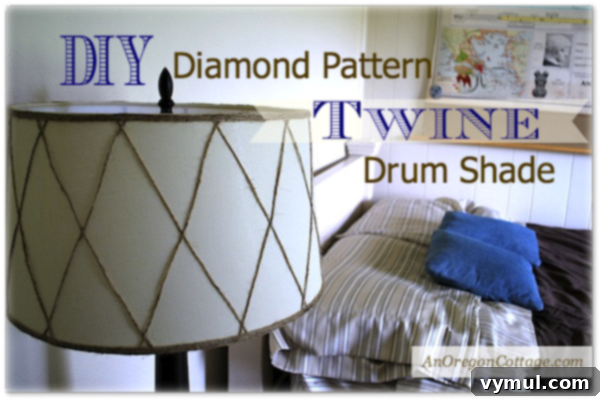
I am absolutely thrilled with how it turned out! The finished lampshade beautifully coordinates with the existing brown and blue color scheme of the bedroom. The subtle yet impactful texture and geometric design add a sophisticated touch that elevates the entire space. Most of our existing lampshades are quite plain, so seeing this personalized creation every time we walk down the hall brings a smile to my face. It truly imparts a polished, decorator-inspired look, don’t you agree?
DIY Diamond Pattern Twine Drum Shade: A Step-by-Step Guide
Embarking on a DIY project like this not only allows for creative expression but also gives you the satisfaction of crafting something unique for your home. This guide will walk you through transforming a plain drum shade into a work of art with a charming diamond pattern using twine.

Preparation: The Foundation for a Flawless Finish
Before diving into the exciting part of wrapping the shade with twine, I noticed a crucial detail that needed attention. The bright, shiny brass wire framing of the drum shade contrasted sharply with the oil-rubbed bronze finish of the lamp. To achieve a cohesive and professional look, it was essential for these elements to blend seamlessly.
Enter brown craft paint – my secret weapon for blending!
I utilized a simple dry-brush technique to lightly dab on brown craft paint. The goal wasn’t to achieve complete, opaque coverage or a perfectly smooth finish. Instead, I aimed for a subtle integration, just enough to mute the bright brass and help it recede, making it less noticeable against the darker lamp base. Since this section of the lamp is often at eye-level and visible from the hallway, this small preparatory step makes a significant difference in the overall aesthetic. This quick paint job took only a few minutes but dramatically improved the shade’s compatibility with its base, proving that sometimes the smallest details have the biggest impact.
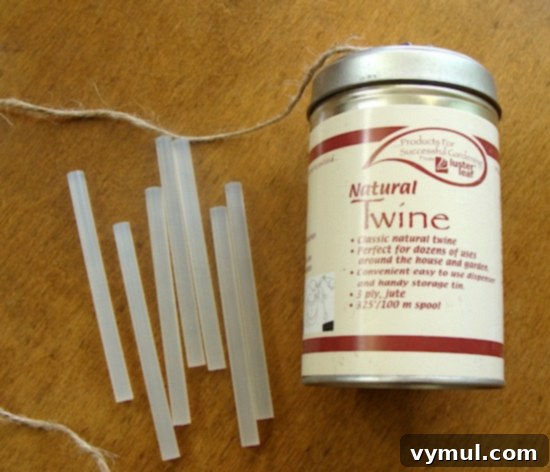
Essential Supplies for Your Twine Lampshade Project
One of the most appealing aspects of this DIY project is the minimal number of supplies required, making it incredibly accessible and budget-friendly. You likely already have some of these items on hand! Here’s what you’ll need to gather:
- Hot Glue Gun and Glue Sticks: This is the cornerstone of the project, providing a strong, quick-drying bond for the twine. A hot glue gun is a staple for many crafters, so chances are you already own one. If not, they are inexpensive and incredibly versatile for various DIY endeavors. Ensure you have plenty of glue sticks to avoid interruptions.
- Natural Jute Twine: The star of our show! I opted for natural jute twine due to its rustic charm, beautiful texture, and earthy color, which perfectly complemented the existing decor. You’ll need a good amount, depending on the size of your shade and the density of your pattern. Consider purchasing a larger roll to be safe.
- Pencil: For making light, erasable guide marks.
- Measuring Tape or Ruler: Crucial for ensuring your pattern is evenly spaced.
- Scissors: For cleanly cutting the twine.
- Good Quality Eraser: In case you need to adjust any pencil marks.
Once you have these simple tools and materials, you’re ready to begin creating your beautiful, custom lampshade!
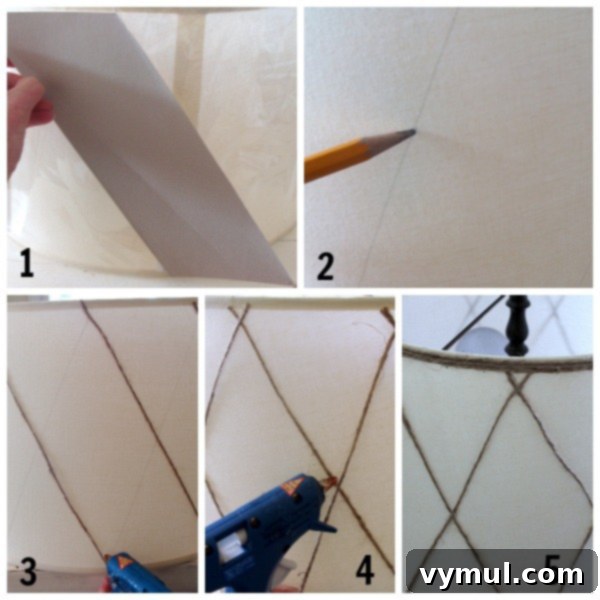
The only part of this project that required a bit of careful attention was ensuring the diamond pattern remained somewhat uniform. However, as with most of my DIYs, I wasn’t striving for absolute perfection. The beauty of handmade items often lies in their slight imperfections, which add character and charm. My main focus was on having the centers of the diamonds align consistently, as I felt this would be the primary focal point for the eye.
Directions to Craft Your Diamond Pattern Twine Shade:
Follow these steps carefully to achieve a beautiful and intricate-looking lampshade with a striking geometric design. Remember, patience and a steady hand are your best friends in this creative process.
- Plan Your Pattern and Measure: Begin by precisely measuring the circumference of your drum shade. For my 16-inch shade, I found that dividing it into 4-inch intervals worked perfectly for creating a balanced pattern. This initial measurement will help you determine how far apart your diagonal lines should be. While I initially experimented with a diagonal paper template and pencil lines, I discovered a much simpler and cleaner method. The key is to establish consistent guide points rather than drawing full lines that might show through.
- Establish Your Guide Marks (The Easy Way!): Forget drawing full lines; it’s often unnecessary and can be tricky to erase completely. Instead, use a pencil to make small, discrete marks. Start by marking 4-inch intervals along both the top and bottom edges of the shade. Next, visualize imaginary diagonal lines connecting these marks and place a tiny pencil mark at the approximate center point of the shade for each of these diagonal paths. These small marks will serve as your crucial guides. If you find it helpful for visualization, you can draw very faint, light pencil lines, but be sure to have a good quality eraser on hand to remove them completely once the twine is applied. The goal is subtle guidance, not visible lines underneath your twine.
- Attach Twine for the First Diagonal Direction: Begin at the back of the shade to conceal the starting point. Apply a small dab of hot glue to one of your guide marks on the top edge. Press the end of your natural jute twine firmly into the glue and let it cool for a few seconds to secure it. Carefully pull the twine diagonally down to the next mark on the bottom edge – crucially, not the one directly below, as this would create a straight vertical line. This diagonal stretch creates the first side of your diamond pattern. Use only small dabs of glue at the top, the center guide mark, and the bottom to avoid messy, visible glue lines along the twine. Once a single diagonal line is secured, snip the twine cleanly. Repeat this process, working your way around the shade until all the lines for the first diagonal direction are complete.
- Attach Twine for the Second Diagonal Direction: Once all the diagonal lines in the first direction are firmly glued and cut, it’s time to create the intersecting lines that will form your diamond pattern. Follow the same gluing and cutting technique as before. This time, connect the remaining guide marks on the top and bottom edges, ensuring your twine crosses over the previously applied lines. Try to avoid gluing the twine directly onto the very top and bottom edges of the shade at this stage. Leaving a small gap will allow for a neater finish when you add the final border rows. However, if some twine does extend to the edge, it can be covered later. The intersecting lines will now visibly form your beautiful diamond pattern.
- Finish the Edges with Border Rows: To give your DIY twine lampshade a polished and professional look, you’ll finish by gluing two or three horizontal rows of twine along both the top and bottom edges of the shade. This step neatly covers any raw ends, minor imperfections, and the initial glue points, creating clean, defined borders for your geometric design. As you apply these finishing rows, strive to keep your lines of hot glue as thin and precise as possible. This minimizes any visible glue residue and ensures a refined, high-quality finish along the twine edges. This final touch truly completes the transformation, making your handmade lampshade look expertly crafted.
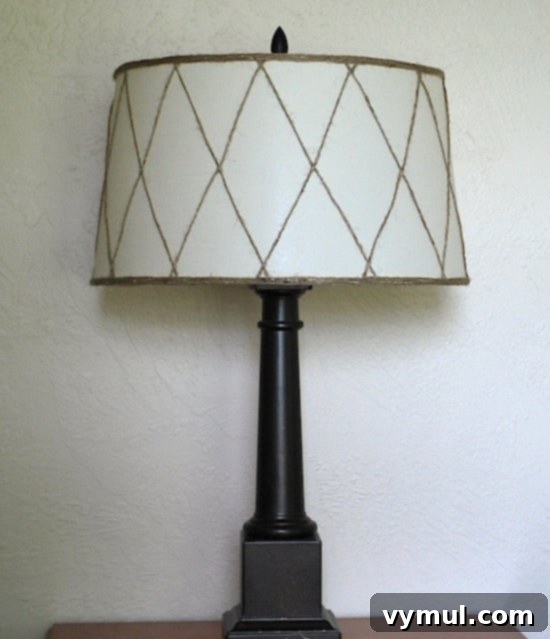
Ta-da! Isn’t the result simply fantastic? I am absolutely delighted with the outcome, and I hope you will be too if you decide to try this project. While this DIY lampshade makeover is incredibly cost-effective and not technically difficult, I’ll be honest about the time commitment. It took me approximately three hours to complete, which was a little longer than my initial estimate. So, if you’re planning to transform a shade like this, make sure to factor in a generous window for your project calculations. It’s a worthwhile investment of time for such a charming and personalized piece of home decor.

And those previously bright brass wires? Thanks to that quick paint job during preparation, they now blend in seamlessly, enhancing the overall cohesive look of the lamp. This subtle detail ensures that the focus remains on the beautiful twine pattern and the lamp’s renewed aesthetic, rather than distracting metallic accents. It’s a testament to how small, thoughtful adjustments can significantly elevate a DIY project.
Oh, and did you notice another little change I made? The original finial that came with the shade simply wasn’t working for me. It felt a bit too bulky and didn’t complement the newly refined lampshade. So, I swapped it out for a smaller, more delicate finial that I already had on hand. It’s amazing how such a minor detail can make such a profound difference in the overall balance and elegance of the piece.
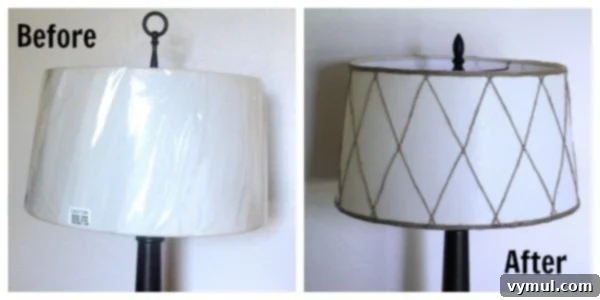
Above, you can see another striking comparison of the before and after – particularly how the finial swap truly makes a difference. The smaller one just looks so much more proportionate and refined with the updated drum shade. This visual emphasizes how thoughtful curation of even the smallest components can significantly impact the overall design and appeal of a decorative item.

I am absolutely enamored with the finished product. The transformation is subtle, yet incredibly impactful. The added texture from the natural jute twine brings warmth and a tactile dimension to the room, while the geometric diamond pattern creates a captivating visual interest without being overwhelming. It adds that perfect little “wow” factor, a personalized touch that makes the space feel more curated and inviting. This project truly exemplifies the power of DIY to infuse personality and unique style into your home decor, turning an ordinary item into something extraordinary.
A heartfelt thank you goes out to Wayfair and Hometalk for inviting me to participate in this incredibly fun and inspiring challenge! It was a fantastic opportunity to unleash my creativity and share this exciting project with you all.
Disclosure: I was graciously provided the lampshade and a $25 gift card to assist with supplies for completing this project. Rest assured, all opinions expressed in this article are 100% my own and reflect my genuine experience.