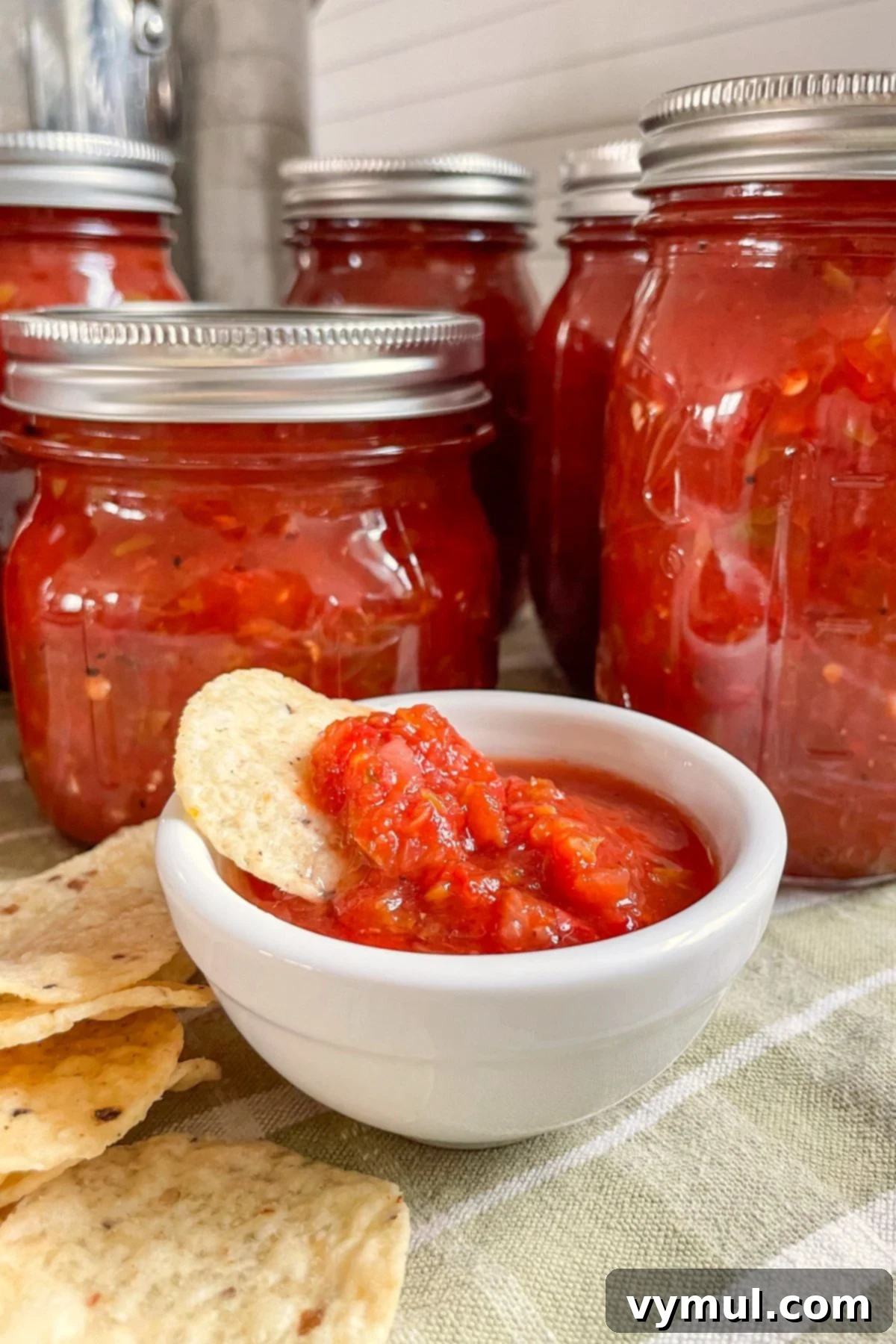
Homemade Thick & Safe Canned Salsa Recipe: Your Ultimate Guide to Preserving Fresh Flavor
Say goodbye to bland, store-bought salsa and discover the vibrant, homemade canned salsa recipe of your dreams! This comprehensive guide will teach you how to create a delicious, safe, and noticeably thicker salsa for canning, using only natural ingredients. Perfect for any gathering, potluck, or simply for elevating your everyday snacking, this recipe has become a cherished family favorite, and we’re confident it will become yours too!
✩ What readers are saying…
“Having grown up in Southern California and Arizona, we are salsa SNOBS! I can’t tell you how many recipes I’ve gone through canning only to be disappointed. This is the second double batch of your salsa I have canned this season because the family can’t stop eating it! Thank you so much!” -Sommer
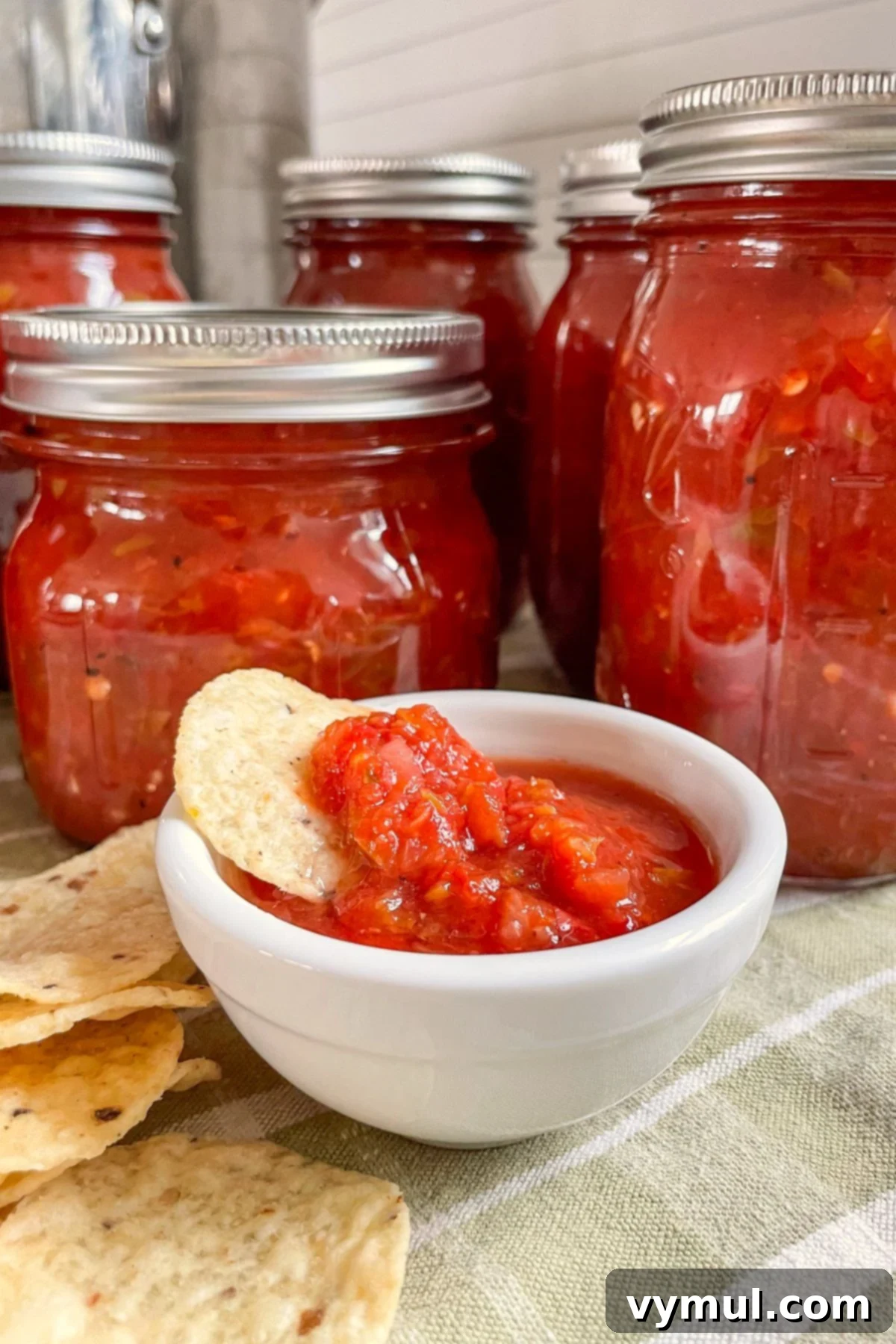
Our family adores salsa – it’s a staple in our home, enjoyed almost daily. Naturally, as a gardener, my desire to create homemade canned salsa from our abundant garden tomatoes, peppers, and onions was strong. In fact, after mastering jams, canning salsa was one of the very first preservation projects I undertook.
However, finding “the one” – a truly safe, flavorful, and thick salsa recipe for canning – proved to be a multi-year quest. Many recipes I tried were disappointingly runny, lacked a balanced flavor profile, or had an overwhelming single note. The most common issue was excessive wateriness, which can ruin the texture of a good salsa.
When I finally discovered this particular recipe, my search ended. Every August and September, I dedicate time to make enough batches to last us until the next harvest season. There’s simply no comparison; store-bought canned salsa cannot hold a candle to the vibrant, fresh taste and perfect consistency of this amazing homemade version.
Understanding Safe Salsa Canning: Why Guidelines Matter
One of the most crucial lessons I learned about how to can salsa safely is the absolute necessity of following recipes from trusted sources that adhere to USDA guidelines. This isn’t just a suggestion; it’s a critical safety measure. Salsa contains a delicate balance of low-acid ingredients, such as peppers, onions, and garlic, which, if not properly acidified, can create an environment for harmful bacteria like botulism to thrive.
Acidic ingredients like tomatoes, vinegar, or lemon juice are essential to ensure the salsa reaches a safe pH level for water-bath canning, making it shelf-stable. Without this careful balance, you risk serious foodborne illness.
Initially, I experimented with various recipes from reputable canning books like Kerr and Ball Blue Book, as well as university extension agencies. While these recipes were undoubtedly safe and often boasted good flavor (thanks to wonderful fresh produce!), they frequently resulted in salsas that were too watery or excessively vinegary for our taste. It seemed a common challenge for many home canners.
My quest led me to a Tomato-Tomato Paste Salsa recipe on the USDA home preservation website. This recipe called for two 12-oz cans of tomato paste and two cups of bottled lemon juice instead of vinegar, which promised a thicker consistency and a less vinegary taste. While it indeed produced a thicker sauce, solving one problem, the search wasn’t entirely over.
We found that this USDA salsa wasn’t spicy enough for our family’s palate. More importantly, when I examined the ingredients of bottled lemon juice (which must be used over fresh lemon juice due to its consistent acid level for canning safety), I discovered it was often “full of preservatives.” This was a significant drawback for me, as I was putting so much effort into growing organic vegetables only to add synthetic preservatives during the canning process. It felt counterproductive to my goal of truly natural, homemade food preservation.
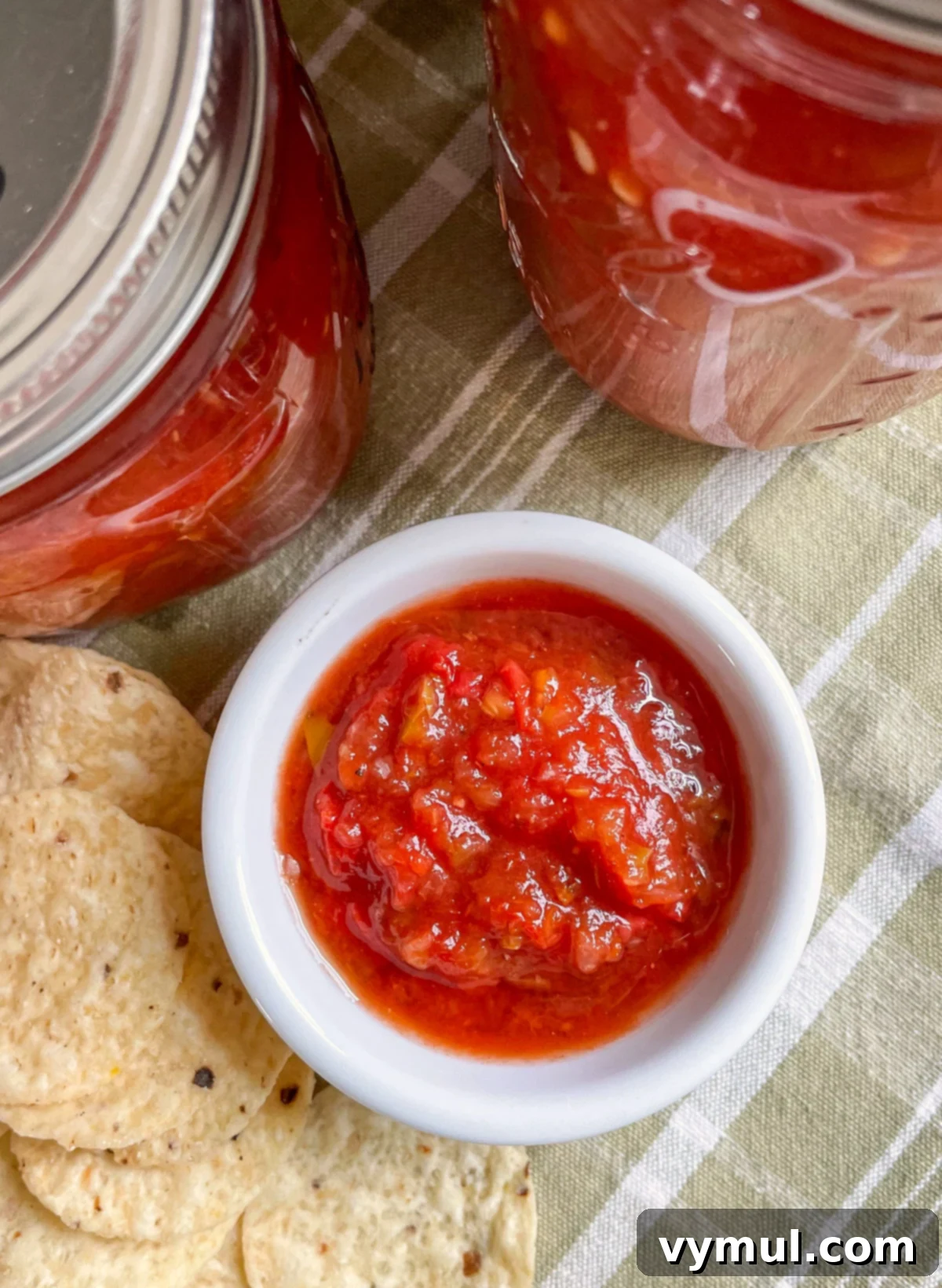
Crafting the Perfect Thick Homemade Canned Salsa
My continued search for the perfect homemade canned salsa recipe eventually led me to a gem in an old library book. Although I no longer recall the book’s title (I simply copied the recipe years ago before blogging became popular!), this recipe formed the foundation for what is now our absolute favorite. It struck the ideal balance: thick, flavorful, and perfectly safe for water-bath canning. It used just one small can of tomato paste and only 3/4 cup of vinegar, resulting in a robust, thick salsa where the vinegar complemented rather than overpowered the fresh vegetable flavors.
UPDATE: A helpful commenter recently pointed out that my base recipe closely matches this Fresh Vegetable Salsa recipe on the Bernardin Canning website! This is fantastic news, as it provides a verifiable, tested source for the foundation of this beloved salsa. You’ll notice I’ve made a few key changes and additions, particularly standardizing the amount of jalapeños to ensure consistent spice levels, as their size and heat can vary greatly by year and variety. Also, an important clarification: you can safely add fresh cilantro if you desire, a detail I had forgotten was part of the original and often advised against in comments, as I personally never include it.
IMPORTANT NOTE ON ACIDITY: According to preservation educators, it is perfectly safe to substitute an equal amount of bottled lemon juice OR bottled lime juice for the vinegar in salsa recipes. However, the reverse is not safe: you absolutely cannot substitute vinegar for lemon juice in recipes that specifically call for lemon juice, as lemon juice is more acidic than most vinegars, and this substitution would lower the overall acidity, making the canned product unsafe.
I adapted the base recipe further to suit our preference for a slightly spicier salsa. This involved increasing the total amount of peppers by 1/2 cup while simultaneously decreasing the onion by 1/2 cup to maintain the recipe’s crucial acid-to-low-acid ingredient balance. If you prefer a milder salsa, simply reverse this modification: use 1/2 cup more onions and 1/2 cup less peppers. This allows for customization of heat level without compromising safety.
Additionally, I incorporated a few more dry seasonings to enhance the depth of flavor. It’s important to remember that changes to dry seasonings (like cumin, oregano, or cayenne pepper) are generally safe in canning recipes because they do not affect the acidity or pH level of the food. However, a critical rule for safe canning is that you cannot add any other fresh ingredients to this recipe, including items like mango, pineapple, or corn. These ingredients have different pH levels and densities, and the recipe has not been tested with them, making such additions a potential safety risk for spoilage or botulism.
Beyond its delicious taste and safety, this homemade salsa recipe is surprisingly easy to make. The majority of the time is spent on ingredient preparation, which can be significantly expedited by using a food processor. The salsa itself only cooks for about 30 minutes, providing the perfect window to prepare your canning equipment and sterilize jars. This streamlined process makes preserving fresh, homemade salsa incredibly efficient and rewarding.
Essential Salsa Ingredients & Canning Equipment
To ensure your homemade canned salsa is both delicious and safe, here are some important notes on key ingredients and the equipment you’ll need:
Ingredient Notes:
- Tomatoes – For the best flavor and texture, especially if you plan to leave the skins on, opt for garden-grown or organic tomatoes. Roma or paste-style tomatoes are excellent for creating a thick, robust texture, while slicing and heirloom varieties contribute a wonderful depth of flavor. I prefer a mix of both, but you can use all paste tomatoes for maximum thickness. Using only slicing tomatoes will result in a thinner salsa, but it’s entirely safe if that’s what you have available.
- Peppers – This recipe allows for great flexibility in pepper choice, provided you adhere to the total volume. You can use any combination of hot, mild, or even sweet bell peppers to suit your heat preference. My personal favorite blend is primarily mild Anaheim or Poblano peppers, accented with a few spicy jalapeños. Feel free to experiment with your preferred varieties, but remember, do not exceed the total pepper amounts listed in the recipe card, as this can affect the acidity balance necessary for safe canning.
- Vinegar (or Bottled Lemon Juice) – I personally favor vinegar over preservative-laden bottled lemon juice for a more natural product. However, if you have a dietary restriction or strong aversion to vinegar, an equal amount of bottled lemon or lime juice can be safely substituted. Crucially, ensure that your chosen vinegar is listed at 5% acidity; some brands are 4%, which is too low for safe canning and preserving.
Tools & Equipment for Safe Canning:
- Cutting board (an over-the-sink type can make prep much easier), a sharp knife, and nitrile gloves (essential for handling hot peppers to protect your hands from capsaicin burn).
- Food processor – While optional, a food processor is highly recommended. It drastically cuts down on chopping time, making the entire process quicker and more enjoyable, especially when processing large batches of tomatoes, peppers, and onions.
- Large stockpot – You’ll need at least a 6-quart pot for a single recipe, or a 10-12 quart pot if you plan on doubling the batch. A heavy-bottomed pot is ideal to prevent scorching.
- 8 cup glass measure – A 4-cup measure can also work, but an 8-cup makes measuring larger quantities of chopped ingredients more efficient.
- Pint canning jars and lids – It is critical to note that quart-sized jars are not recommended for canning salsa due to safety concerns regarding heat penetration (see FAQ below for more details).
- Water Bath Canner – I highly recommend a flat, heavy-bottomed stainless steel canner with a clear lid. The clear lid allows you to monitor the boil without losing heat, and the flat bottom makes it safe and efficient for use on glass-top stoves, which many traditional canners are not.
Homemade Canned Salsa Recipe: Step-by-Step Instructions
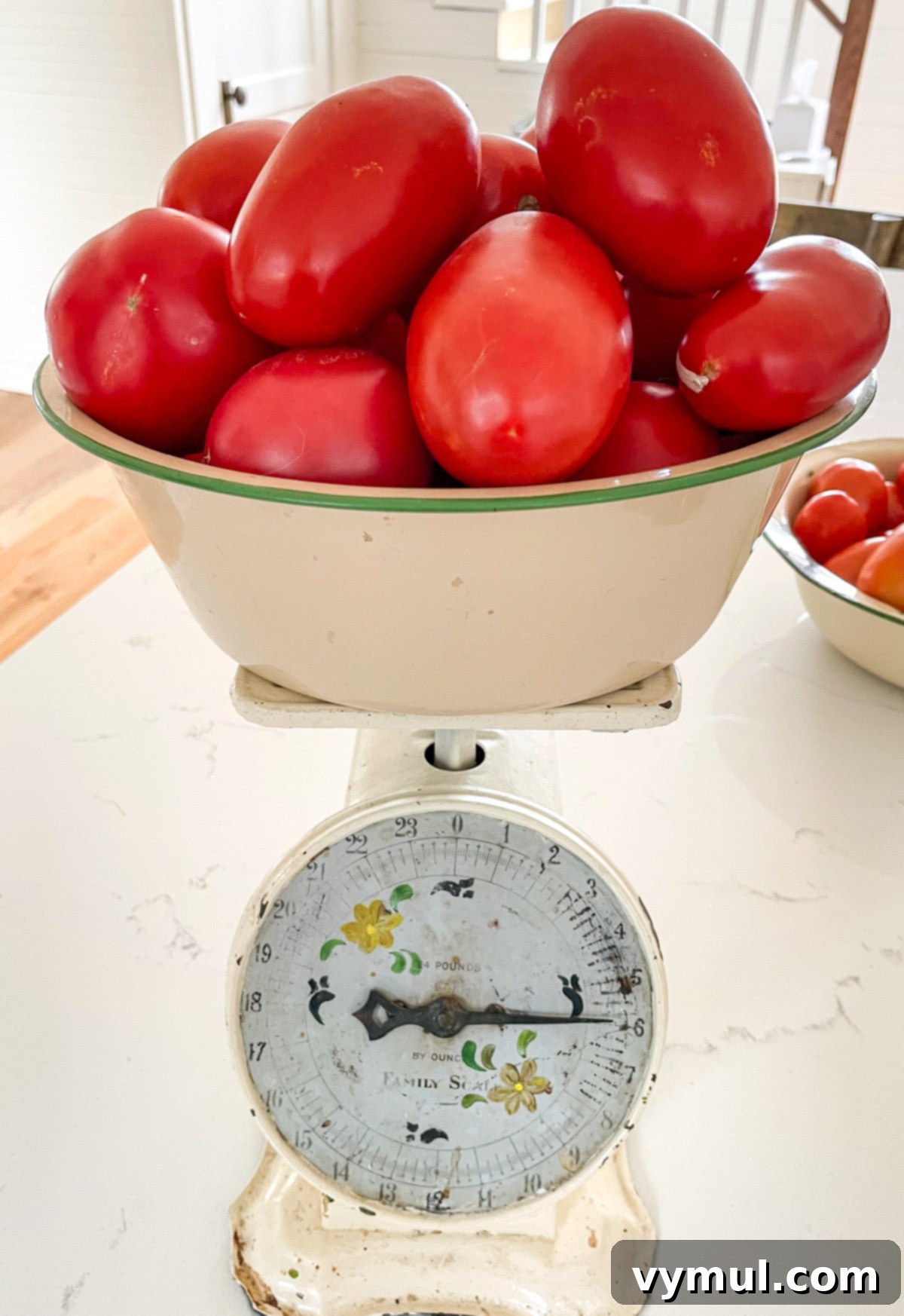
1) Start with 4-6 pounds of washed tomatoes
To achieve the best balance of flavor and thickness in your homemade salsa, I recommend using a combination of about half slicing tomatoes and half paste tomatoes. Slicing varieties contribute a rich, complex flavor, while paste tomatoes (like Romas) add valuable body and reduce wateriness. However, feel free to use any ratio or even all of one type if that’s what you have available. Just note that using all slicing tomatoes may result in a slightly thinner salsa, though it will still be perfectly safe and delicious.
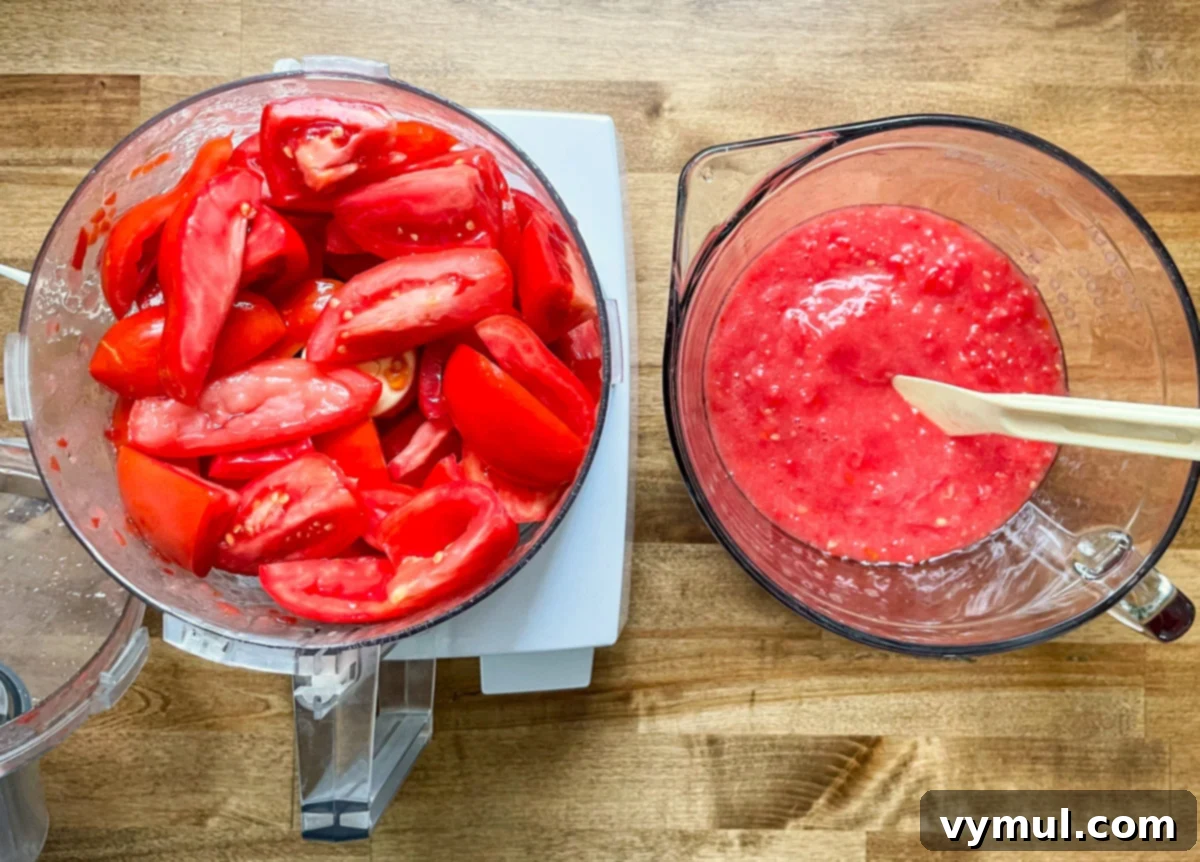
2) Chop Tomatoes
You have two main options for preparing your tomatoes: the traditional method of blanching, peeling, coring, and hand-chopping, or the significantly faster food processor method. After many years of laboriously peeling and chopping by hand, I now enthusiastically endorse the food processor. Simply core and quarter your tomatoes, then pulse them in the food processor – skins and all!
You’ll find that the peels are virtually undetectable in the finished salsa, saving an immense amount of time without sacrificing quality. This time-saving hack is truly a game-changer for home canners.
Regardless of your chopping method, aim to measure out exactly 7 cups of prepared tomatoes. When using a food processor, you’ll naturally get a mix of large and small chunks, which is perfectly fine and adds to the rustic texture of the salsa.
The One Drawback to Processing (and why it’s worth it):
When hand-chopping tomatoes, you have the advantage of being able to drain off any excess water that accumulates during cutting, which directly contributes to a thicker salsa. The quicker food processing method, however, doesn’t allow for this drainage, so the resulting salsa might be slightly thinner. In my experience, the sheer amount of time saved by processing far outweighs this minor difference in consistency. The convenience it offers makes it my preferred method every time.
Do I have to peel tomatoes for canned salsa?
Update on safety of using skins in canned products: This is a frequently asked question among home canners, and for good reason. I consulted with the Oregon State Extension Office for clarification. The associate professor I corresponded with undertook extensive research, noting it was “very difficult to track down any reliable information.”
The core of the issue boils down to this:
“Due to the consistent history of using peeled tomatoes in canning recipes, processing conditions using skin-on tomatoes have never been evaluated. It is possible that the skins have minimal to no impact on the thermal transfer, but this has not been verified.” Joy W., Associate Professor, Oregon State University Extension
She referenced studies that have found some bacteria in tomato cores (which are removed during preparation) but noted the remainder of the tomato is generally low in bacteria. She also highlighted the long-standing recommendation since the 1970s to always add citric acid or lemon juice to canned tomatoes for safety. Beyond this, definitive research on canning tomatoes with skins is scarce, with the NCHFP primarily stating that removing peels is for texture preferences.
So, here’s my practical approach, which I shared with her:
“With modern appliances like food processors, we can finely chop tomatoes and their skins for products like chutney and salsa without issues related to taste or texture. We always core the tomatoes, removing the root and stem ends where bacteria might concentrate, as per the study you mentioned. Furthermore, my tomatoes are organically grown and harvested by me, without pesticides.
Considering we safely eat and can the skins of peppers (often grown alongside tomatoes) in other preserves like jellies and chutneys, why should tomatoes be different?
Given these points, I will continue to process tomatoes for chutney and salsa with their peels, as it offers such a significant time saving. However, I will always include this caution and your recommendation to my readers, empowering them to make an informed decision for themselves.”
Ultimately, the choice is yours!
Optional Pre-Treatment: One commenter shared a method they’ve used for 40 years: a quick bath in a bowl of white vinegar and water before coring. If this provides extra peace of mind, it’s a simple step to add!
3) Transfer tomatoes to a stock pot
Once you have precisely 7 cups of chopped tomatoes, transfer them to a large stockpot. For a single recipe, a 6-8 quart pot is sufficient. If you are doubling the recipe (which is a great way to maximize your canning efforts!), opt for a 12-quart stockpot to accommodate the larger volume of ingredients. Ensure your stockpot has a thick bottom to prevent scorching during cooking.
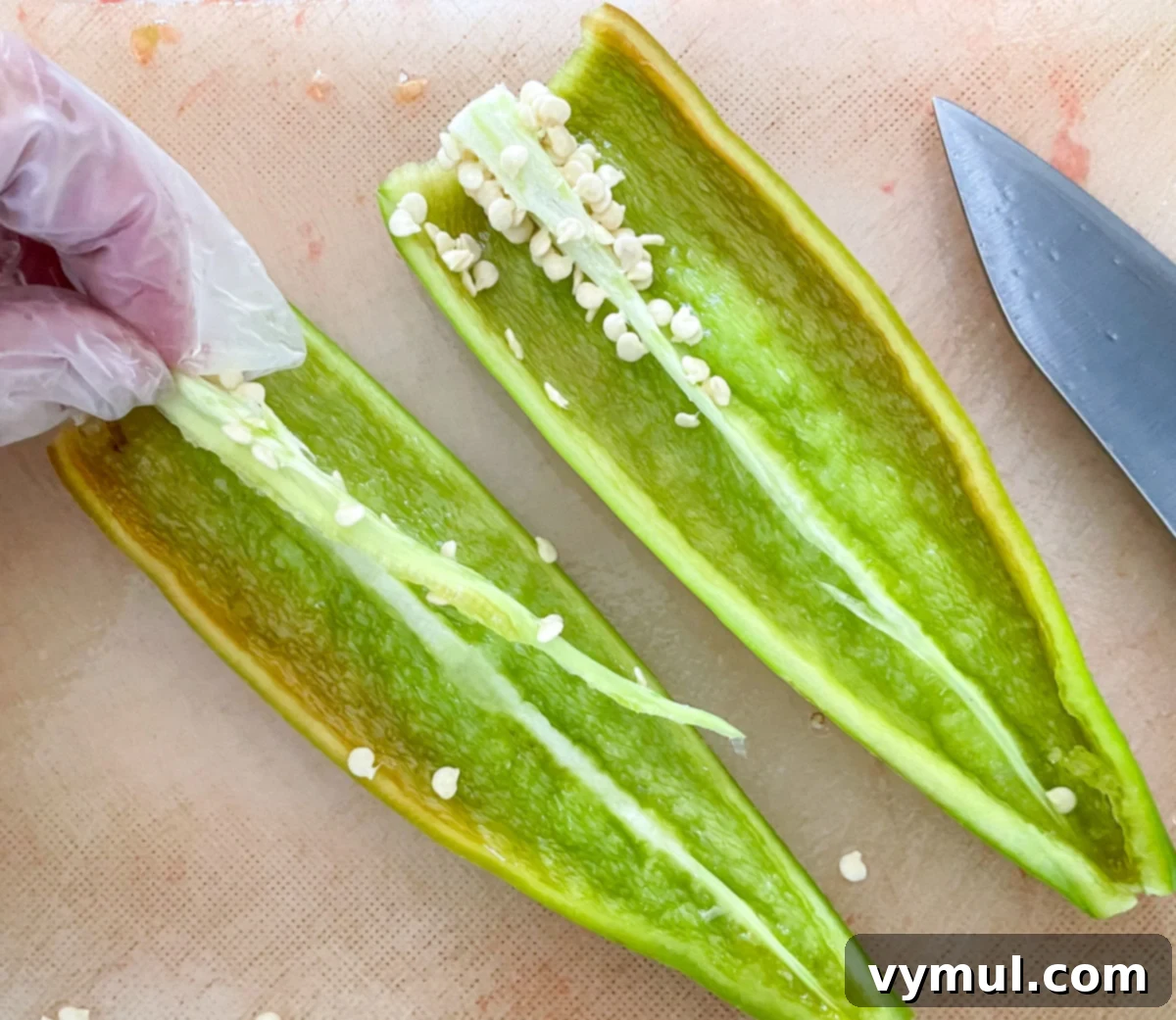
4) Prepare Peppers
This is a critical step where safety comes first: always wear nitrile gloves when handling hot peppers! Trust me, you will regret it if you don’t. I once made the mistake of skipping gloves, and the burning sensation in my hands lasted all night, impervious to any amount of washing. It’s an unpleasant experience easily avoided.
- With gloves on, carefully cut in half and remove the seeds from enough Anaheim or Poblano chilies to yield 1-1/2 cups of chopped mild peppers. You can chop these by hand or use a food processor for speed.
Note on the photos: When these photos were taken, I was doubling the recipe, so you’ll see a larger quantity of ingredients than what a single batch requires. Rest assured, this recipe is easily doubled for a larger yield!
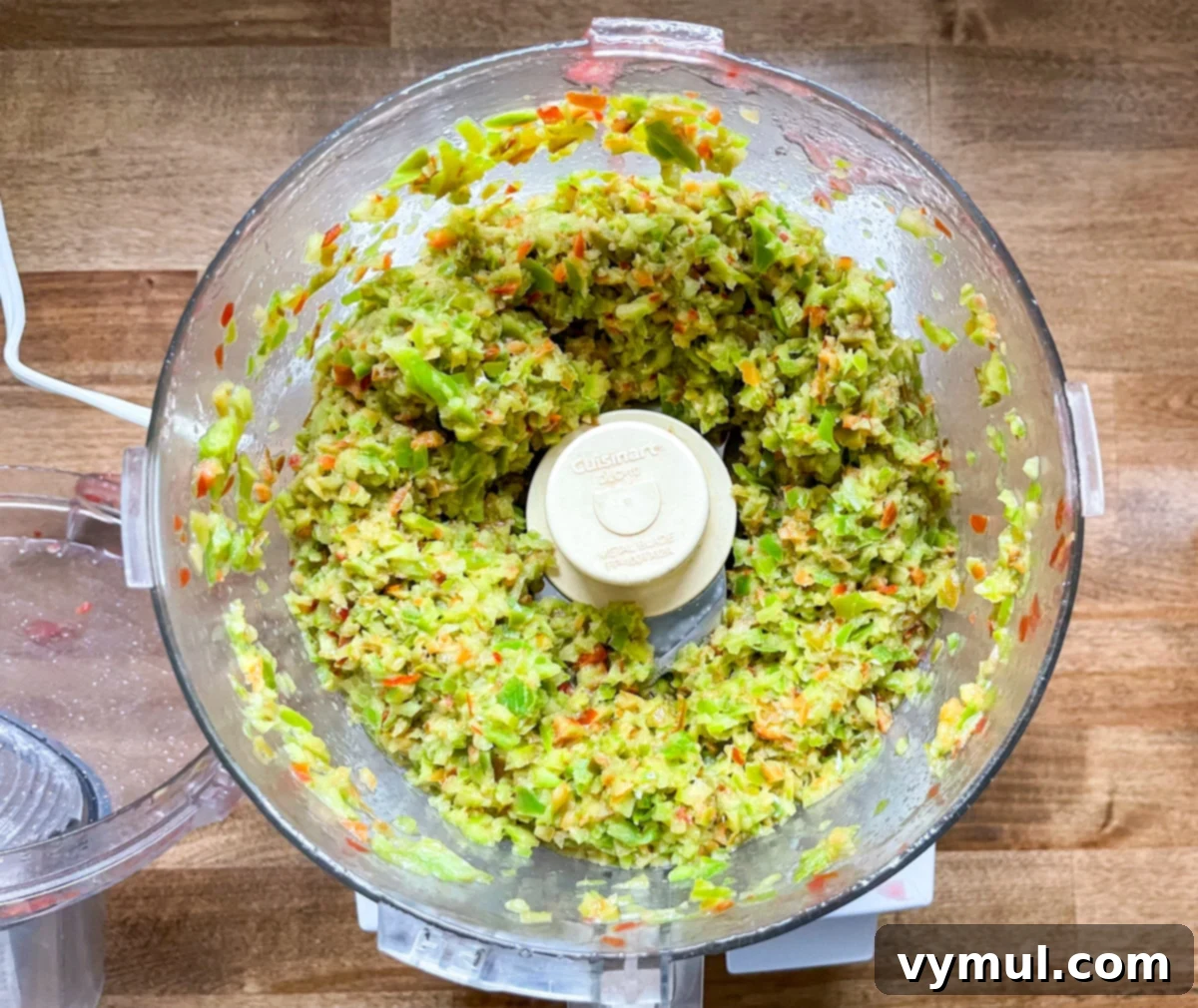
PRO TIP: To save on cleanup, use the same food processor you used for the tomatoes. Simply cut the peppers into large chunks and process them. I find that the food processor creates a desirable texture, mostly fine but with a few larger pieces, ensuring you get some pepper in every spoonful.
- Once chopped and measured, add the mild peppers to the stockpot with your prepared tomatoes.
- Next, chop enough jalapeño peppers to equal 1/2 cup. You can choose to seed these if you prefer a milder salsa; leaving the seeds in will significantly increase the heat. Add the chopped jalapeños to the stockpot as well.
CUSTOMIZATION TIP: To adjust the spice level, you can completely omit the jalapeños for a very mild salsa (using only mild peppers). If you crave more heat, you can slightly decrease the mild peppers and increase the jalapeños, but it is absolutely crucial to adhere to the total volume: a combined total of 2 cups of peppers (mild + jalapeño) per batch is the maximum limit for safety in this tested recipe.
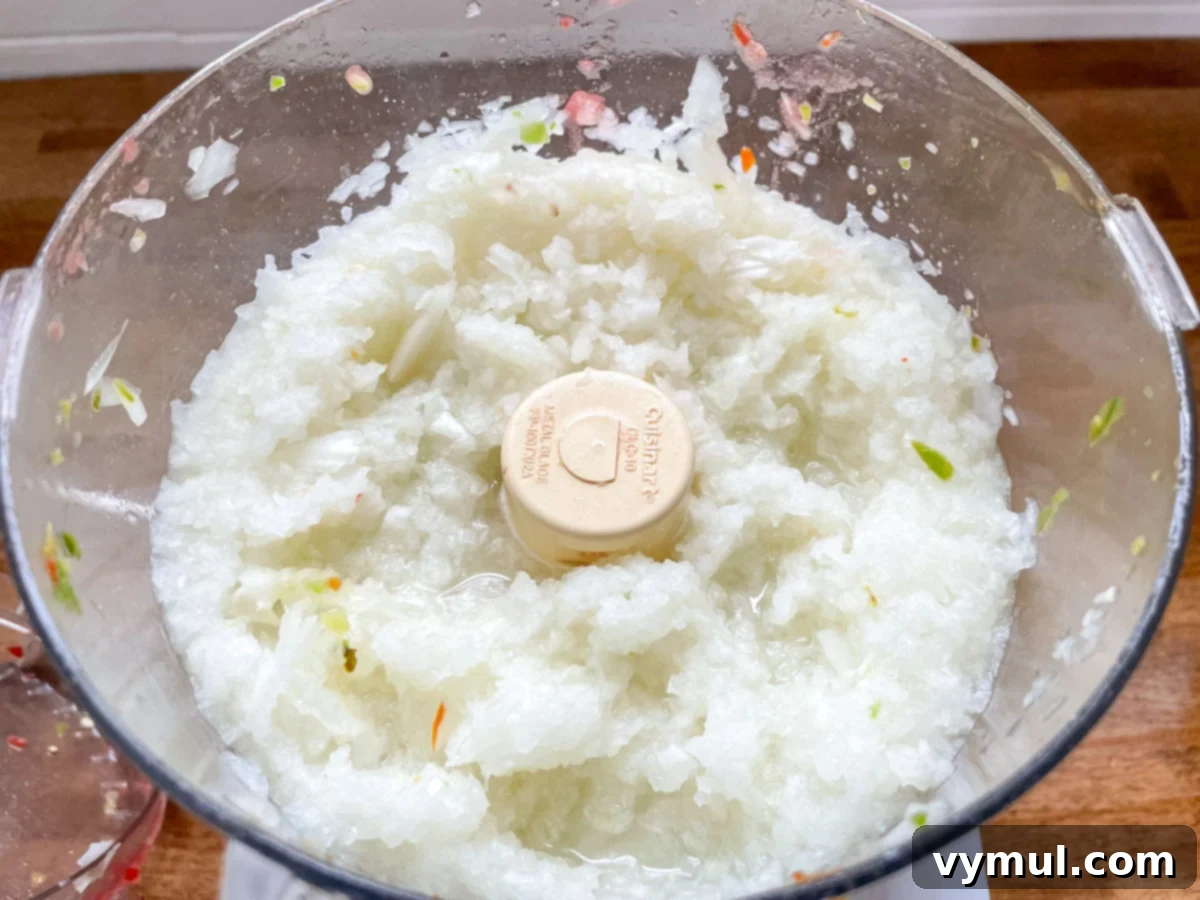
5) Prepare Onions
Peel and quarter your onions. Chop enough to yield 1-1/2 cups. Again, you can do this efficiently by hand or use the same food processor you’ve been utilizing for the tomatoes and peppers. Add the chopped onions to the stockpot with the other ingredients.
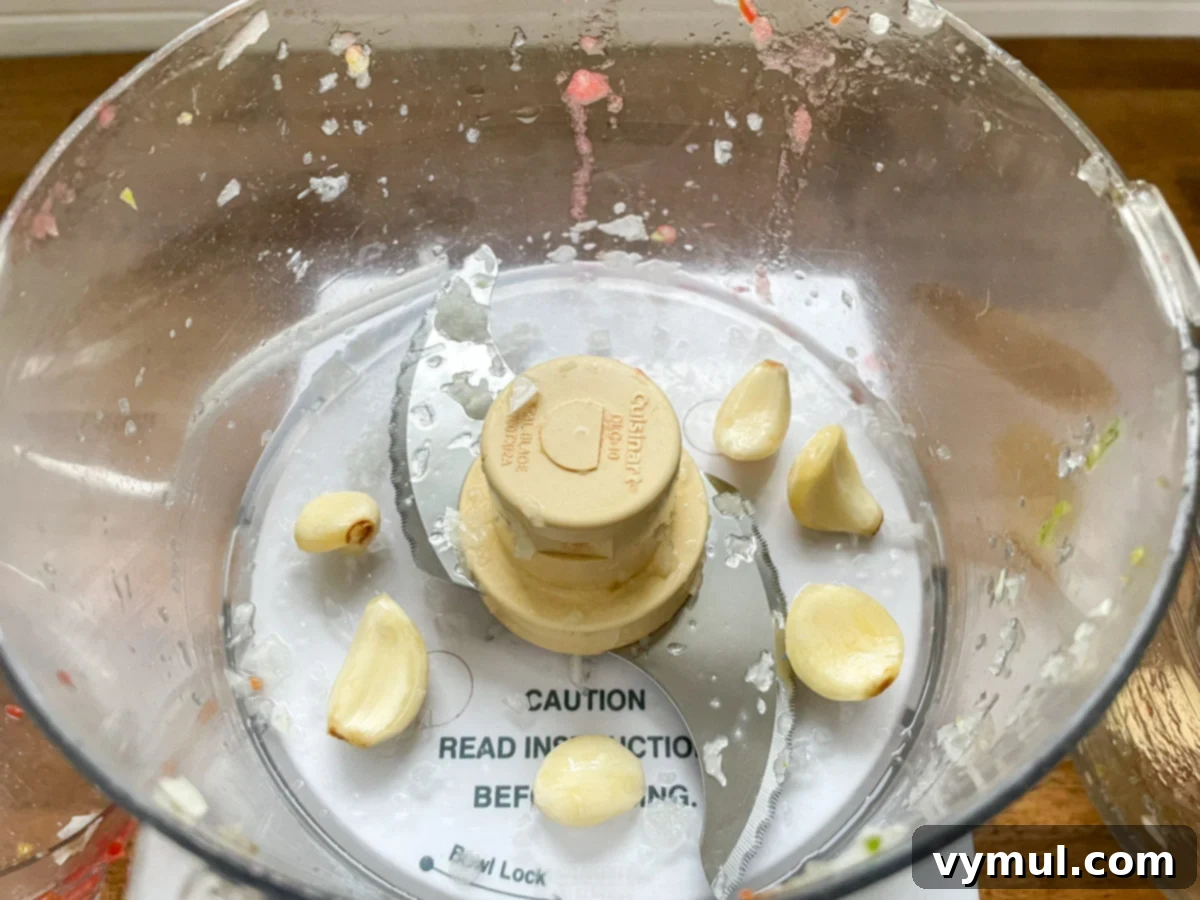
6) Mince Garlic
Finally, mince your garlic. You can finely chop the cloves by hand for a more rustic texture or, for maximum efficiency, toss them into the food processor with the other ingredients. Garlic tends to chop better when combined with other larger vegetables.
PRO TIP: I often add the garlic cloves in with the peppers or onions when processing, as they chop more uniformly with other ingredients, even though the photo shows them separately.
NOTE: The image shows 6 cloves of garlic instead of the 3 specified in the single batch recipe. This is because I was demonstrating a doubled recipe, which typically yields 10 to 11 pints of salsa per canning session.
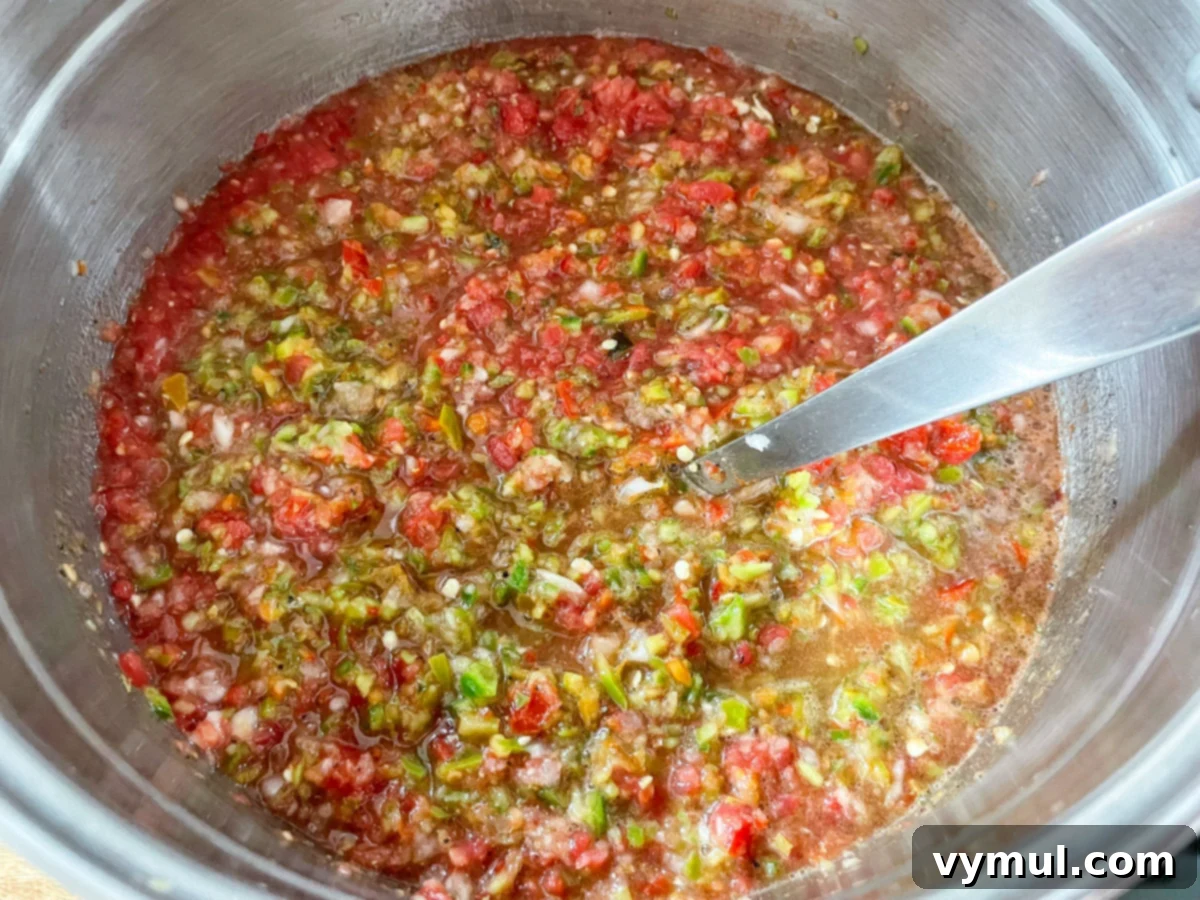
7) Cook Salsa
With all your fresh vegetables prepped and in the pot, it’s time to add the remaining ingredients as listed in the recipe card below (tomato paste, vinegar, cumin, salt, pepper, oregano, and cayenne powder if using). Stir everything together thoroughly.
Bring the mixture to a rolling boil over medium-high heat. Once boiling, reduce the heat to a gentle simmer and allow the salsa to boil gently for 30 minutes. During this cooking phase, it’s crucial to stir the salsa frequently to prevent it from sticking to the bottom and scorching, especially if you’re using a thinner-bottomed pot. This simmering time allows the flavors to meld beautifully and the salsa to thicken to the desired consistency.
PRO TIP: Invest in a quality stockpot. Cheap, thin-bottomed pots are prone to burning the contents, while thicker-bottomed, heavy-gauge pots distribute heat more evenly and prevent scorching. It’s a small investment that makes a big difference in your canning success. #lessonlearned
For a complete list of my recommended canning essentials and tools, click here.
8) Prepare For Water Bath Canning
While your homemade salsa is simmering on the stove, utilize this time efficiently to prepare your water-bath canner, canning jars, and lids. Ensuring all equipment is ready and sterilized beforehand makes the canning process smooth and safe.
If you’re new to canning or need a refresher, I’ve prepared a detailed step-by-step canning guide that walks you through the entire water-bath canning process. Additionally, you can watch the video tutorial below for a visual demonstration:
Wait, do I have to can it? Can I freeze salsa?
Absolutely not! While canning offers shelf-stable storage, you are welcome to freeze your homemade salsa instead. Freezing is an excellent alternative, especially if you prefer not to can or if you wish to experiment with ingredients that aren’t safe for traditional water-bath canning.
To freeze salsa, simply allow the finished product to cool sufficiently, then transfer it into freezer-safe containers or bags. Be sure to leave a generous 2-inch headspace at the top of each container to account for expansion as the salsa freezes. This prevents containers from cracking or bursting.
FREEZING BONUS TIP: A significant advantage of freezing salsa is the freedom it offers with ingredients. You can add as many peppers, more fresh cilantro, or any other fresh ingredients you desire without worrying about strict low-acid food ratios. Since freezing preserves food by temperature rather than acidity, these additions won’t compromise safety.
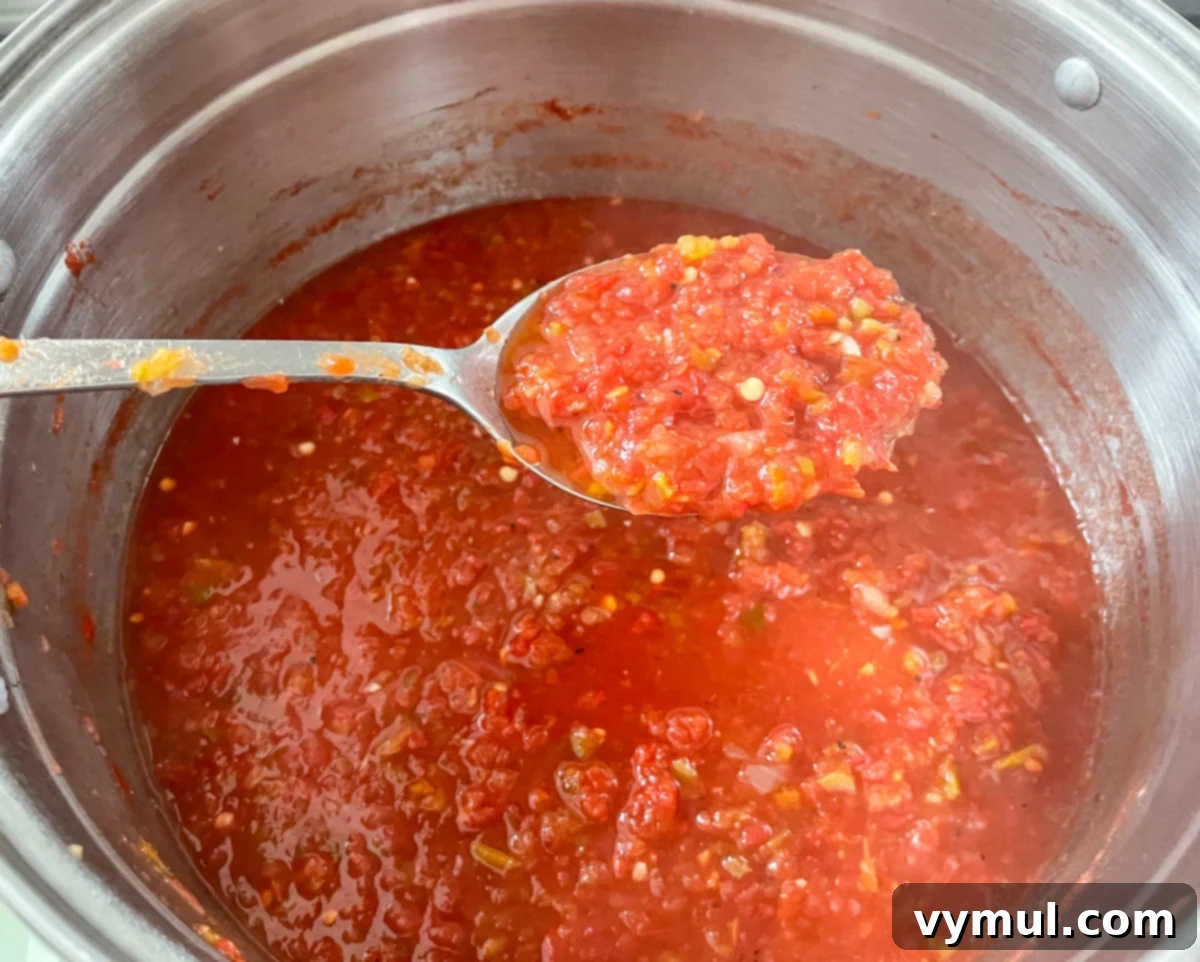
After 30 minutes of gentle simmering, your salsa will have cooked down beautifully, achieving a lovely, thick “salsa-y” consistency. The flavors will have fully melded into a harmonious, irresistible goodness. At this point, you can perform a taste test. The spiciness of peppers can vary greatly depending on the season and growing conditions, so this is your opportunity to adjust it. If you desire more heat, now is the time to stir in additional cayenne pepper to taste.
You can also fine-tune other seasonings by adding more salt, black pepper, or dried herbs. Remember, adjusting dry ingredients at this stage is perfectly safe for canning, as they do not affect the critical acidity level. However, a crucial safety reminder: you cannot add any other fresh ingredients (like fresh cilantro, fresh herbs, or other vegetables) at this stage if you intend to can the salsa, as this would alter the tested pH balance.
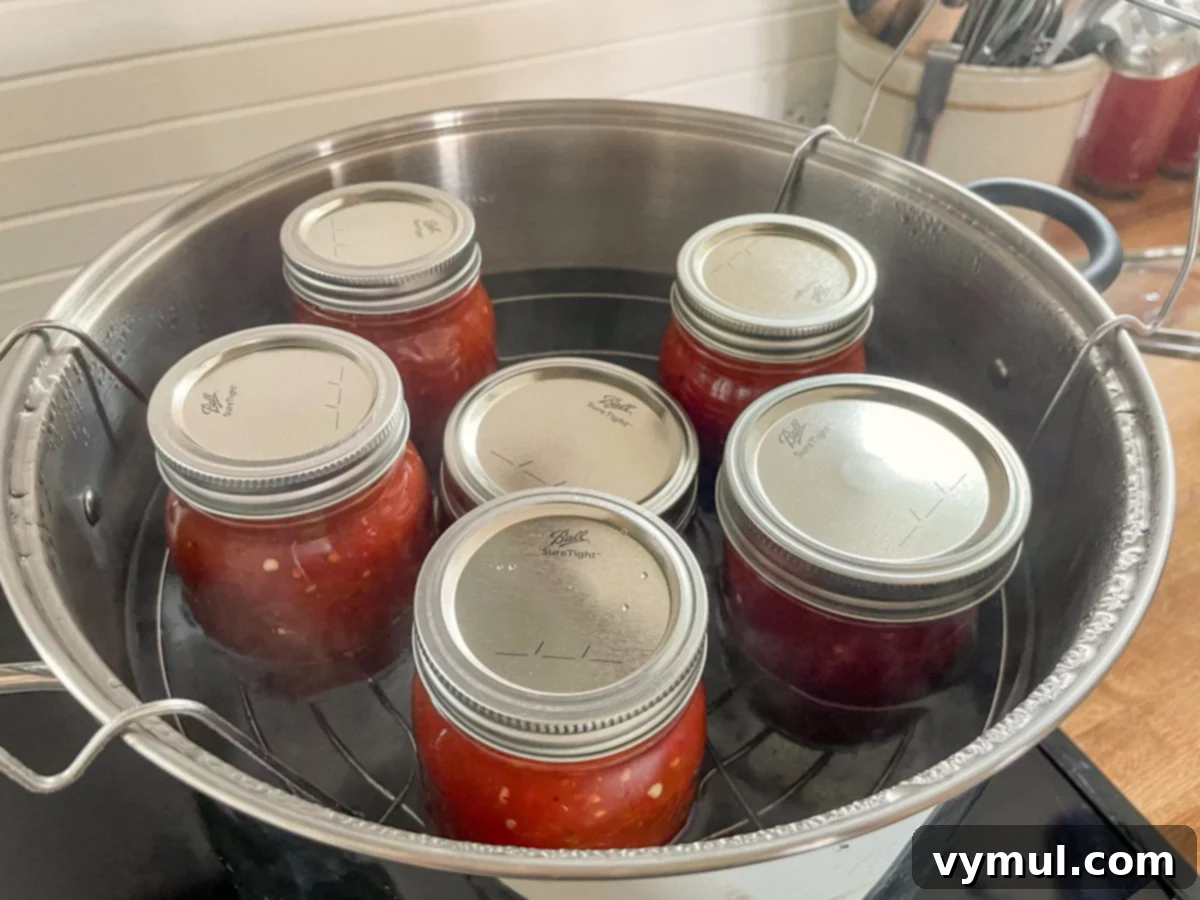
9) Water Bath Canning Salsa
Once your salsa is perfectly seasoned and cooked, it’s time for the final canning steps. Carefully ladle the hot salsa into your clean, hot pint jars, ensuring you leave a precise 1/2-inch headspace at the top of each jar. This headspace is vital for proper sealing and creating a strong vacuum.
Wipe the rims of the jars clean with a damp cloth to remove any salsa residue, then center the lids on top and secure them with screw bands, tightening only to fingertip-tight. Place the filled jars onto the rack in your preheated boiling water bath canner. Ensure the jars are covered by at least 1 inch of water. Bring the water to a rolling boil and process pint jars for 20 minutes. (Remember to adjust processing time for high altitudes as per the recipe notes).
After the processing time, turn off the heat, remove the canner lid, and let the jars rest in the hot water for an additional 5 minutes. This allows the internal temperature of the jars to equalize, reducing the risk of siphoning or thermal shock. Carefully remove the jars from the canner and place them on a towel-lined surface, ensuring they are not touching each other, to cool completely for 12 to 24 hours.
Once cooled, check the seals (the lids should be concave and not flex when pressed). Any unsealed jars should be refrigerated and consumed within a few days. Label your properly sealed jars with the contents and date, then store them in a dark, cool pantry. Properly canned salsa will maintain its quality for a year to a year and a half.
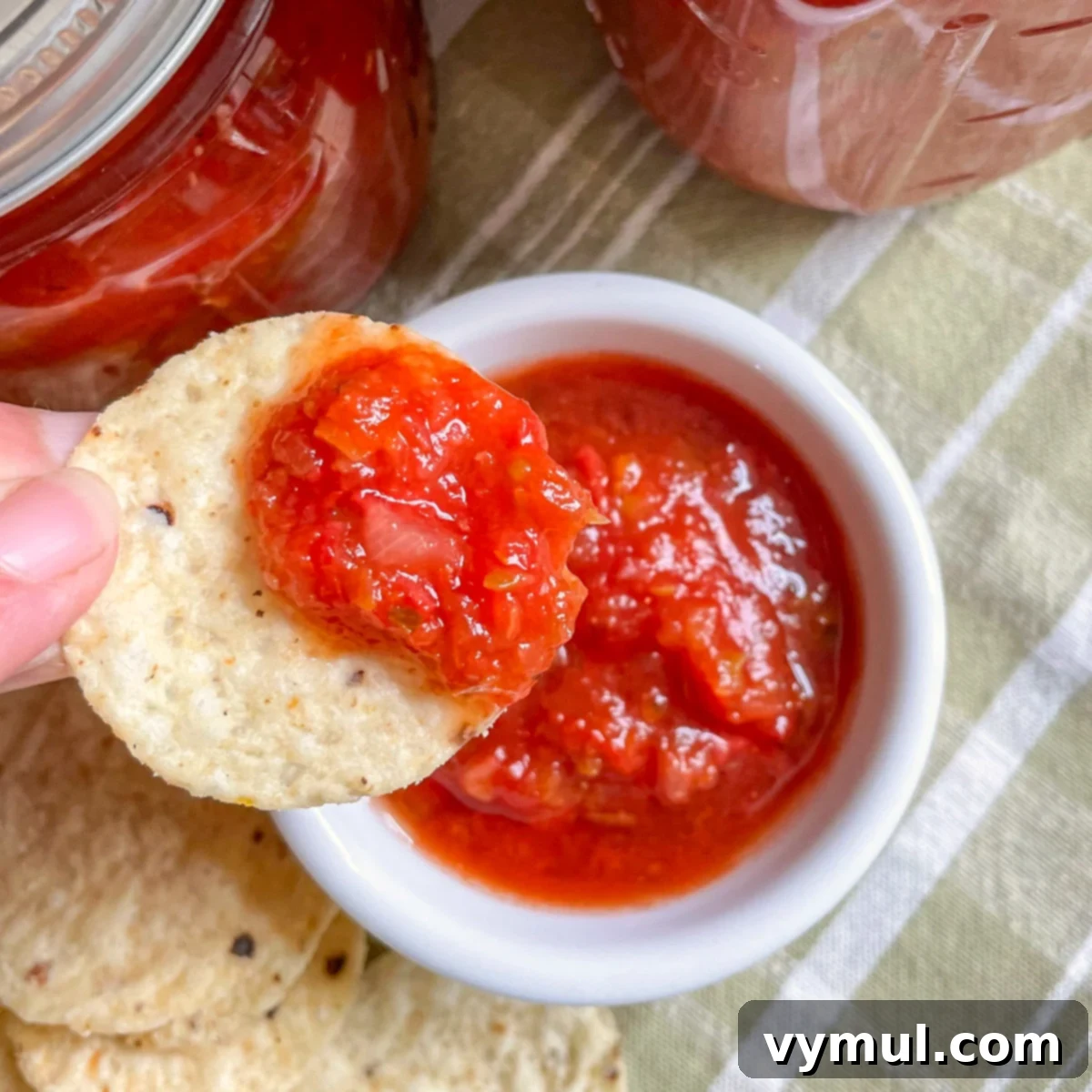
That’s it – you’ve successfully made and canned your own delicious, thick salsa!
The reward of having homemade canned salsa, bursting with garden-fresh ingredients, waiting for you in the depths of winter is truly incomparable. Not only do you save money and avoid preservatives found in commercial options, but you also get to enjoy a flavor that far surpasses any typical store-bought bottled alternative. It’s a taste of summer, preserved for months to come!
What Our Readers Are Raving About
“This salsa recipe is the ONLY one I now preserve. Our family absolutely adores it.” -Mary
“My dad did us a building project favor, and instead of money he asked to be repaid in this particular salsa. His exact words were ‘Ambrosia…food of the Gods.’” -Amanda
“Made this today from my frozen garden tomatoes and some frozen chillies from my mums garden…and frozen garlic from my garden! It’s DELICIOUS! My main chilli fan 14yo son wants to eat it now! He’s disappointed all the lids sealed! I will be making this my every year salsa recipe!” -Linda
“We love this salsa! Canning salsa is our main garden goal. We tried a few different recipes our first year of canning, and have since used yours for three or four years now.” -Megan
“Perfect salsa! And half the work!” -Debby
I genuinely hope you cherish this thick, safe, and utterly delicious canned salsa recipe as much as my family and our readers do! If you give it a try, please be sure to leave a rating and let me know your thoughts – your feedback helps others discover this fantastic recipe!
Print Recipe
Pin Recipe
SaveSaved!
Best Thick Canned Salsa Recipe
Equipment
-
Food Processor optional
-
large stock pot 6-12 quarts
-
boiling water canner,
-
5-6 pint canning jars
Ingredients
- 7 cups chopped cored, peeled tomatoes (if using a food processor, no need to peel), about 4-6 pounds depending on how big cores are and how much needs to be cut out and if processing
- 1½ cups chopped onion
- 1½ cups mild chopped green chili peppers *anaheim, poblano, or even red/yellow sweet for a milder salsa
- 1/2 cup jalapeños ** finely chopped (and seeded if you’d like – leaving the seeds makes it spicer)
- 3 cloves garlic minced
- 1 (6 ounce) can tomato paste
- 3/4 cup white or apple cider vinegar***
- 1 teaspoon ground cumin
- 2 teaspoons salt
- 1 to 2 teaspoons pepper
- 1 to 2 teaspoons dry oregano
- 1 to 2 teaspoons cayenne powder to taste
NEW Option:
- 1/2 cup lightly packed cilantro this is a safe addition according to this site with the base recipe I used
Instructions
-
In a large stainless steel stockpot, combine all the ingredients. Bring to a boil over medium-high heat, stirring constantly to prevent scorching.
-
Reduce heat and boil gently until thickened, about 30 minutes. Stir often to prevent burning.
-
Prepare canner, jars, and lids.
-
Ladle hot salsa into hot jars, leaving 1/2-inch headspace. Wipe rim and attach lids.
-
Place jars in canner, covering by at least 1-inch and bring to a boil. Process for 20 minutes, turn off burner, remove lid and let jars sit for 5 minutes before removing them to cool on a towel-lined surface for 12 to 24 hours. Check seals before labeling and storing.
Notes
**An older version of this recipe called for “8 jalapeños,” which I have standardized to 1/2 cup chopped jalapeños using a USDA recipe to determine the best measurement since each year my jalapeños are different sizes.
***It is okay to substitute bottled lemon juice OR lime juice if you’d prefer (it must be bottled).
Variation for peppers: you can adjust the TYPE of pepper to your tastes – more hot peppers, less hot peppers (you can even use sweet bell peppers) you just CANNOT go over the total of the 2 cups called for in the recipe (1-1/2 cups mild hot peppers + 1/2 cups jalapeños).
High Altitude Adjustment: If processing at an altitude of higher than 1000 feet above sea level you’ll need to adjust the processing time according to this chart.
Nutrition
Your Questions Answered: Canning Salsa FAQs
This is a very common question, but unfortunately, it is not recommended to can salsa in any jar larger than a pint (16 ounces). The reason is simple: there are no officially tested recipes that use quart jars for salsa. Larger jars take longer for heat to penetrate to the center, and without specific processing times tested for quarts, there’s a risk that harmful bacteria might not be destroyed, compromising the safety and shelf stability of your salsa. While you might find unofficial recipes online, they do not adhere to the rigorous safety standards set by organizations like the National Center for Home Food Preservation (NCHFP) or Ball. Ultimately, the decision is yours, but for this specific recipe and for safety in general, I cannot recommend using anything larger than pint jars, as the processing times have only been thoroughly tested for that size.
Yes, it is absolutely essential to cook salsa to a boiling temperature before placing it into jars for either water-bath canning or pressure canning. This “hot pack” method helps to eliminate existing bacteria, aids in creating a stronger vacuum seal, and ensures proper heat penetration during the canning process, which is crucial for achieving a safely preserved, shelf-stable product.
Both vinegar and bottled lemon juice are effective and safe acidifying agents used in salsa canning recipes, and the choice often comes down to personal flavor preference and ingredient considerations. Lemon juice generally has a slightly less pronounced impact on the overall flavor of the salsa and is typically more acidic than vinegar. Vinegar, especially white or apple cider vinegar, contributes a distinct, bright, and classic tang to salsa. The main concern with bottled lemon juice can be the presence of preservatives, which some home canners prefer to avoid.
Crucially, because bottled lemon juice is generally more acidic than vinegar, you can safely substitute an equal amount of bottled lemon juice for vinegar in a recipe that calls for vinegar (as mentioned in this recipe). However, you cannot safely substitute vinegar for lemon juice in a recipe specifically developed and tested with lemon juice, as this would lower the overall acidity of the product below safe levels, making the canned salsa susceptible to spoilage or harmful bacterial growth.
Yes, similar to bottled lemon juice, you can safely substitute an equal amount of bottled lime juice for vinegar in a salsa recipe that calls for vinegar. Just ensure it is bottled lime juice, not fresh, due to consistent acidity levels.
The primary reason fresh lemons and limes cannot be used for canning salsa (or other low-acid foods) is their inconsistent and variable acidity. The pH level of fresh fruit can fluctuate significantly based on ripeness, variety, and growing conditions. For safe home canning, precise and consistent acidity levels are absolutely critical to prevent the growth of microorganisms that cause spoilage or, more dangerously, foodborne illnesses like botulism. Bottled lemon and lime juices, on the other hand, are regulated by the FDA and standardized to a consistent acid level, providing the reliability needed for safe food preservation. As one source states, “The final acidity of a food product is critical to deter the growth of microorganisms that can cause spoilage or foodborne illness.” source
This is another frequently asked question, and after thorough research, including consultation with the Oregon State Extension, the consensus is no, it is not recommended. There are currently no reliable, research-based canning recipes for salsa that utilize citric acid as a sole acidifying agent in place of lemon juice or vinegar. Without tested guidelines, using citric acid would introduce an unacceptable level of risk regarding food safety. If you cannot use either lemon juice or vinegar due to taste or dietary restrictions, an alternative suggested by extension agents is to safely can plain garden tomatoes with citric acid, and then use those canned tomatoes to prepare fresh salsa at the time of consumption.
More Easy Tomato Canning Recipes
If you love preserving fresh tomatoes, be sure to check out these other reliable and delicious canning recipes:
- Safe-to-can Roasted Tomato Sauce
- Perfect Homemade Canned Pizza Sauce
- Homemade “Rotel” Canned Tomatoes and Chilies
- Roasted Chipotle Salsa (Can or Freeze)
This recipe has been thoroughly updated – it was originally published in September of 2009 and revised with new information and improvements in 2017 and 2024.