
Drive Smarter, Live Freer: Embracing a Used Car Philosophy for Financial Independence
What truly defines your “car philosophy?” For many, it’s a topic rarely explored beyond the allure of a new car smell or the latest model. Yet, as we delve into this episode of our podcast, you’ll discover that your approach to car ownership can dramatically influence your financial freedom and overall quality of life. We’re not just talking about saving a few dollars; we’re exploring how rethinking your vehicle choices can unlock significant financial possibilities, allowing you to invest in a home, embark on dream trips, and achieve long-term security.
On average, people are spending an alarming amount on new vehicles, often tying themselves to years of burdensome car payments. We argue that choosing to spend less on your car doesn’t mean sacrificing reliability or comfort. Instead, it offers you a profound level of financial flexibility and freedom you might not have thought possible. Join us as we share our experiences and what we’ve identified as our personal “sweet spot” for used cars – vehicles that are neither too cheap to be problematic nor so expensive that they become a financial drain. These are the reliable workhorses that allow us to live within our means while still getting us where we need to go, comfortably and safely.
Buying a used car strategically requires a slightly different mindset and a few essential tools, primarily a mechanic you can trust implicitly. We’ll detail what to look for, what questions to ask, and how to build that crucial relationship with a reputable service provider. But it’s not all about cars! You absolutely *have* to tune in for our wild goldfish story as part of our ongoing Farmhouse update. Care to guess how many vibrant swimmers were living in the existing pond when we took over? Prepare to be surprised! Plus, we’re excited to share some of the cool books and thought-provoking TV shows we’ve been enjoying lately, offering a little something for everyone.
You can download this insightful episode from Apple Podcasts, Google Play, Stitcher, and TuneIn Radio – or listen to it conveniently below right on your computer! Afterward, use this very page to easily check out any links, notes, or photos we discussed in detail during the episode. Note: If you’re reading this in a feed reader, you might have to click through to the original post to see the embedded player.
Some links in this article are affiliate links, meaning if you click on them and make a purchase, I will receive a small commission at no additional cost to you. These commissions help support our content creation.
Is Your Current Car Draining Your Finances? Understanding the True Cost of Car Ownership
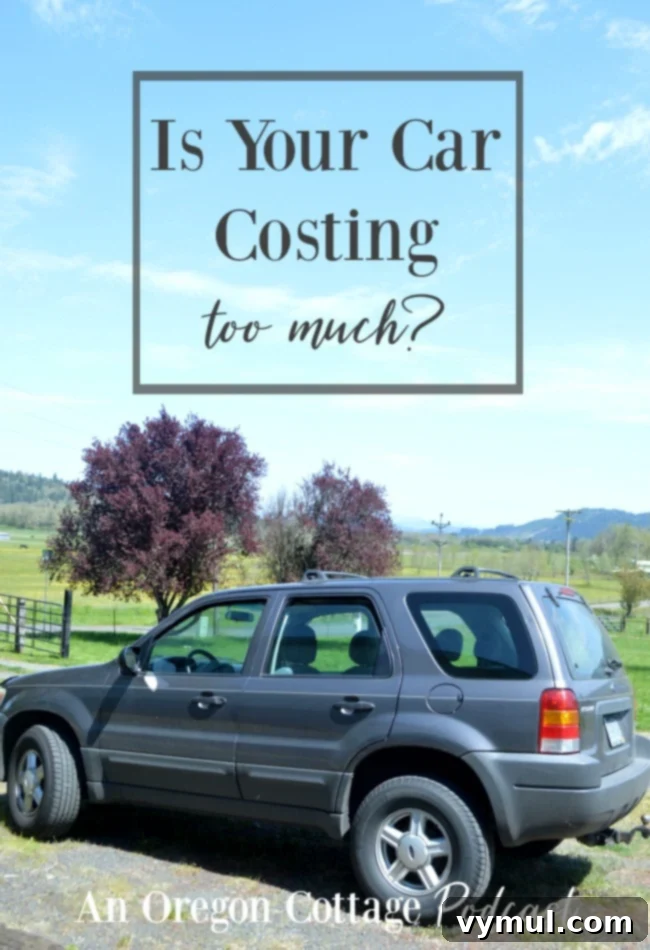
Let’s talk about the image above. That’s our trusty 2004 Ford Escape. It’s hard to believe it’s 14 years old; it certainly doesn’t feel or look that aged. We’ve been its proud owners for about four years, which means it was already a decade old when we first purchased it. Our buying criteria, however, extend beyond just age. We prioritize factors like mileage (this one had under 100,000 miles, which we consider excellent for its age), a thorough inspection by a trusted mechanic, and, most importantly, if it fits squarely within our established “sweet spot” cost-wise. Clearly, it met all our requirements.
Since acquiring this Ford Escape, our experience has been overwhelmingly positive. Our primary expenditures have been limited to replacing the tires and adhering to a routine maintenance schedule. It has proven to be an incredibly reliable and economical vehicle, reinforcing our belief that smart used car purchases are a cornerstone of financial prudence. This approach drastically reduces the total cost of ownership compared to buying new, where rapid depreciation is often the largest hidden expense. By avoiding car payments, we free up substantial monthly cash flow that can be directed towards other critical financial goals, such as saving for a down payment on a house, funding educational pursuits, or simply building a robust emergency fund.
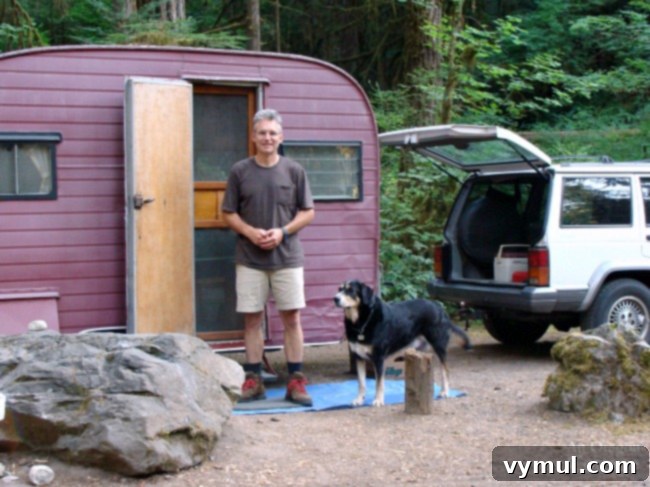
While our Ford Escape has been stellar, our all-time favorite used car has to be our 1995 Jeep Cherokee. You can just glimpse the back of it in the photo above – it was tough to find another picture of it without our beloved vintage camper attached! If you’re curious about our charming vintage trailer and our adventures with it, you can listen to Episode 5 of our podcast, where we share all the details.
We acquired the Jeep around 2001, and at the time, it had accumulated less than 50,000 miles. A significant factor in our purchase was its rebuilt title, which allowed us to negotiate the price approximately $5,000 below its Blue Book value. Our experience with rebuilt titles extends beyond this Jeep, as we’ve actually purchased two vehicles with such titles. Our key advice for navigating these situations is twofold: first, thoroughly understand the exact nature of the damage that was repaired, and second, always, without exception, have a trusted, independent mechanic conduct a comprehensive pre-purchase inspection. This due diligence is paramount for peace of mind and long-term satisfaction.
Understanding the full financial picture of car ownership is crucial. This insightful NerdWallet article, which Brian discovered, meticulously breaks down the total cost of owning a car and even provides tools to help you calculate your personal total. It’s a fantastic resource for anyone looking to make informed decisions about their vehicle expenses, shedding light on factors like depreciation, insurance, fuel, and maintenance, which often go overlooked when solely focusing on the purchase price.
The Foundational Principle: Always Saving for the Next Car
There’s one crucial point we might not have explicitly detailed in this episode (though it was certainly touched upon in Episode 20 about budgeting): the commitment to always saving for your next vehicle when you choose to pay cash for cars. This is a cornerstone of Dave Ramsey’s renowned car philosophy, which we also referenced in Episode 20. The strategy is straightforward yet incredibly powerful: your first used car, often dubbed a ‘beater’ car, might be less glamorous, but it serves a vital purpose. As you drive it, you diligently save the money you would have otherwise spent on car payments. The goal is for this car to last long enough for you to accumulate sufficient funds to pay cash for your next used car – one that will be in even better condition and, consequently, last even longer.
This approach creates a virtuous cycle. Since that next car is expected to last longer, you’ll have an extended period to save for the subsequent vehicle, enabling you to acquire an even more reliable and desirable model, and so on. This method has worked exceptionally well for us, steadily upgrading our vehicles over time without ever incurring a car payment. We’ve already identified the next car we’d like to own and have a clear financial target for how much we need to save before making that purchase. As long as our faithful Ford Escape continues to run smoothly, our savings efforts will persist, building a solid foundation for our next debt-free car acquisition. This systematic saving not only eliminates the stress of monthly payments but also frees up significant capital for other crucial life investments and experiences.
Farmhouse Fixer Updates: From Historical Markers to Goldfish Drama and DIY Transformations
Unearthing History: The 1855 Survey Marker
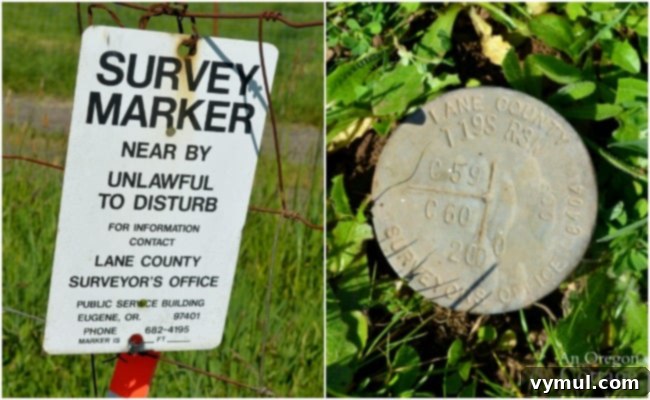
Take a look at this fascinating piece of history on our property: the 1855 survey marker. The small sign attached to the fence clearly indicates where this significant marker can be found, nestled about a foot from the fence line. In today’s hyper-digital world, where GPS and sophisticated mapping tools are commonplace, encountering such an antique and tangible reference point feels incredibly old school, doesn’t it? It’s a direct connection to the property’s origins and a powerful reminder of how land has been measured and claimed for generations. This marker not only defines our property lines but also serves as a subtle, constant reminder of the rich history embedded in the land we now call home, predating so much of the modern technology we take for granted.
The Unexpected Goldfish Saga
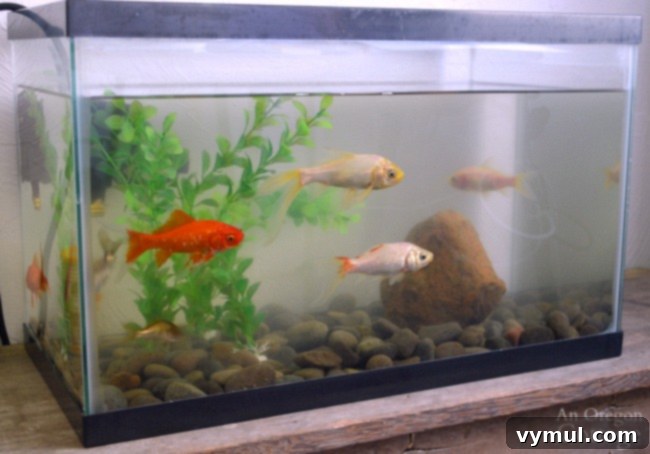
And here they are: our newly acquired goldfish, now comfortably (if somewhat crowdedly) housed in their new thrift store tank. As you can undoubtedly imagine, suddenly becoming fish owners and undertaking the care of an aquarium was certainly not high on our pre-existing to-do list for the farmhouse! The sheer volume of goldfish living in the old pond was staggering – a whopping 37 of them! We were determined not to let any perish, so we tirelessly worked to rehome as many as we possibly could, and believe me, it was a lot! So, here we are, embracing our unexpected roles as fish caretakers. And yes, I am fully aware that the tank looks like it’s constantly in need of a good cleaning – but with this many energetic fish, it seems to return to this state almost immediately after I’ve meticulously scrubbed it!
I understand that it’s a bit too many fish for this tank size, but we are doing our best with the resources and time we have. They are alive, thriving, and have remarkably acclimated well to their new, albeit bustling, surroundings. As we recounted in the podcast episode, these goldfish proved to be incredibly hardy. Despite numerous transfers and moves from one container to another during the pond cleanup and rehoming process, not a single one of the original farmhouse pond inhabitants was lost due to shock or any related stress. (Though, in full transparency, we did inadvertently cause the demise of one fish, but that’s a whole other, slightly more embarrassing, story for another time…). Their resilience has been truly inspiring, turning an unexpected chore into a testament to adaptability.
Transforming Windows with DIY Farmhouse Trim

Finally, another exciting farmhouse update involves our window transformations. This image displays one of the downstairs windows, which we successfully updated to seamlessly match the original, charming windows upstairs. The process involved removing the rather uninspired, skinny molding that had been installed in the 1960s and replacing it with classic, robust trim. The best part? This significant aesthetic upgrade was achieved with a mere $30 worth of standard wood boards from the local hardware store. The impact of this simple DIY project is truly remarkable, instantly elevating the room’s character and period authenticity.
The complete, step-by-step simple farmhouse window trim how-to guide is available here, complete with detailed instructions and photos. This project is a game-changer; it will make any window, regardless of its original state, look absolutely fabulous and perfectly integrated into a timeless farmhouse aesthetic. It’s a testament to how small, affordable DIY projects can make a massive difference in the overall feel and value of your home.
This is Really Cool! Our Latest Entertainment Finds
As always, we love to share what’s been capturing our attention and sparking our interest beyond the daily chores and renovations. Here are a couple of our recent recommendations that we think you’ll enjoy:
Jami’s Pick: Lost In Space Netflix Series (This show offers a refreshing take on family dynamics within a sci-fi setting. It’s clean, genuinely interesting, and presents a realistic portrayal of a family facing extraordinary challenges, making it highly relatable despite its futuristic backdrop. A great watch for all ages!)
Brian’s Pick: The Hiding Place and A Prisoner and Yet by Corrie ten Boom (These books are not only incredibly important from a historical perspective, offering a harrowing and inspiring account of faith and resilience during World War II, but they are also profoundly inspiring on a personal level. Corrie ten Boom’s story of courage, forgiveness, and unwavering hope in the face of unimaginable adversity is a powerful testament to the human spirit.)
Thanks for tuning in! If you found value in this podcast episode and enjoyed our discussions, you can truly help us grow and reach more listeners by sharing it with your friends, subscribing on iTunes, and leaving us a thoughtful review. Your support is invaluable, as it’s how others will discover our podcast too.
And if you’d like to ask a question, share an idea for future podcast topics, or simply want to say hello, you can call (541) 658-0215 to leave a voicemail. We love hearing from our community and will gladly discuss your thoughts and questions on the air!
For even more from An Oregon Cottage, be sure to follow us on Instagram @AnOregonCottage, Facebook, and Pinterest. And to stay completely up-to-date with all our latest content, tips, and updates, remember to subscribe to the AOC newsletter.
Disclosure: Please note that affiliate links present in this post will earn a commission based on sales, but rest assured, this does not alter your purchase price in any way. Click here to read our full disclaimer and advertising disclosure for complete transparency.