
Taming Invasive Himalayan Blackberries: Our Farmhouse Renovation Journey, Sustainable Gardening & More!
If you’re a gardener or landowner in the Pacific Northwest, you’re undoubtedly familiar with the formidable foe known as the invasive Himalayan blackberry. This tenacious plant is more than just a nuisance; it’s a significant ecological challenge, known for its aggressive growth and ability to choke out native flora. In this episode, we’re pulling back the curtain and sharing our personal battles with this pervasive scourge. We’ll confess our past strategies, some successful and others less so, and explain why we’re taking unprecedented, almost extreme measures at our new hundred-year-old farmhouse.
Beyond the thorny topic of invasive species, we’re thrilled to provide some significant updates on the ongoing remodel of our beloved farmhouse. We’ve had some truly exciting breakthroughs and faced a few heart-stopping moments that come with restoring an historic property. But it’s not all challenges; the garden is finally beginning to yield its bounty! We’ll share three delicious dinner menu ideas designed to make the most of your fresh harvest, along with some practical and “cool” discoveries we’ve made recently. There’s a lot packed into this update, promising insights for anyone navigating gardening, home renovation, or simply seeking a more sustainable and fulfilling lifestyle.

You can easily download and listen to this episode on your favorite podcast platform, including Apple Podcasts, Google Play, Stitcher, and TuneIn Radio. Alternatively, you can simply listen directly from your computer using the player embedded below. This page also serves as your go-to resource for any links, detailed notes, or photos mentioned during the episode. Note: If you’re accessing this content through a feed reader, you might need to click through to the original post to view the integrated player.
Some links in this article are affiliate links, meaning that if you make a purchase through them, I may receive a small commission at no additional cost to you. Your support helps keep this content coming!
Confronting the Challenge: Effective Strategies for Invasive Blackberries
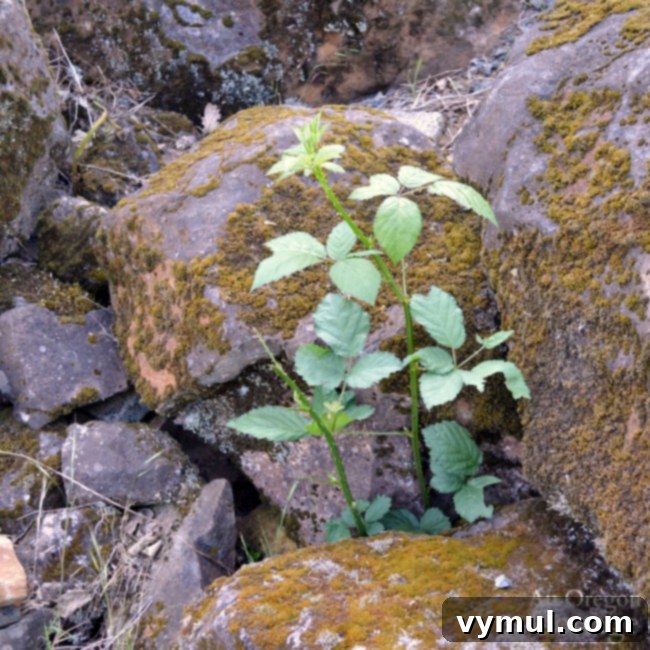
The Pacific Northwest is famously lush, but with its abundance of greenery comes the challenge of managing invasive species, particularly the Himalayan blackberry (Rubus armeniacus). Introduced from Europe in the 1800s, primarily for its fruit, this non-native plant has since run rampant, outcompeting native vegetation, destroying ecosystems, and making vast areas virtually impassable. Its aggressive growth, extensive root systems, and formidable thorns make it a gardener’s nightmare and a significant hurdle for ecological restoration efforts.
While we’re no strangers to these wild blackberries – we even had a stubborn patch on our previous cottage’s acre that proved impossible to completely eradicate – our current situation at the farmhouse presents a unique and particularly daunting challenge. Our property features a massive rock (or rather, boulder) wall, a significant structural feature that ranges from 6 to 8 feet tall and extends approximately 20 feet around a corner. This wall forms the sturdy base of the gravel bed where we are painstakingly building our vegetable garden. And, unfortunately, it is absolutely covered in Himalayan blackberries.
To give you a sense of their tenacity, I attempted to prune these berries back just two weeks before taking the accompanying picture. As you can clearly see, my efforts were entirely unfazed by the plant; in fact, it appears to have relished the pruning, responding with a burst of vigorous new growth! This rock wall, clearly constructed with heavy machinery given the sheer size of the boulders, has more than 20 distinct blackberry plants sprouting from its crevices. If left unchecked, they would quickly overtake the entire structure and surrounding landscape, rendering the area unusable and unsightly. This grim reality is precisely why we’ve committed to taking such drastic measures to reclaim our land.
For those facing similar battles, Invasive.org offers an excellent guide on dealing with Himalayan blackberries, which we highly recommend. Our personal approach to gardening generally aligns with organic principles, which we’ve found not only simplify garden care but also promote healthier plants and a thriving ecosystem. This typically involves a “least-to-most” impactful method: starting with gentler strategies like cutting back, digging up, or smothering with organic materials before escalating to more intensive interventions if those prove insufficient. While our “confession” about the invasive blackberries might seem unusual for an organic gardener, it perfectly illustrates this principle. We’ve exhausted the less impactful methods, and now it’s time for a more decisive solution to control this rampant growth.
A Secret Weapon Against Another Persistent Weed: Field Bindweed
While the podcast focused on blackberries, I want to share another “secret” weapon I reserve for a particularly insidious noxious weed: field bindweed (Convolvulus arvensis). Often mistakenly called wild morning glory due to its pretty white trumpet-shaped blooms, it bears no resemblance in temperament to its cultivated cousin. This plant is unbelievably pernicious and fast-growing. Attempting to pull or dig it up is often counterproductive, as even the smallest root fragments left behind will readily sprout into many more plants. In a back corner of my very first city garden, before I understood what I was battling, field bindweed totally took over and killed entire rose bushes and evergreens.
It’s truly a terrible adversary. I’ve read that its seeds can remain dormant in the soil for an astonishing 50 years, and its roots can penetrate several feet deep, making manual eradication incredibly difficult. This profound longevity and resilience offer yet one more compelling reason to adopt no-till gardening methods, which minimize soil disturbance and prevent dormant weed seeds from being brought to the surface where they can germinate. For bindweed, immediate action with herbicide (applied carefully and directly to avoid impacting desirable plants) is, in my experience, the only effective long-term solution to prevent it from overwhelming your garden entirely.
Farmhouse Updates: Progress and Ingenuity
Our journey to transform this old farmhouse into a modern, sustainable home continues, bringing both exciting milestones and unexpected challenges. Here’s what’s been happening:
Solidifying Our Foundation: Addressing Decades of Wear
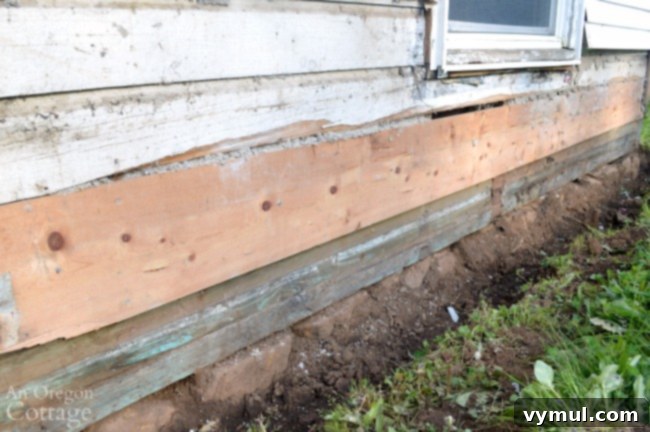
One of the most critical and frankly “scary” aspects of renovating a century-old home is its foundation. As the picture above illustrates, our farmhouse’s original foundation consisted largely of rocks and makeshift supports – a common, though inadequate, practice for homes built in its era. After months of meticulous research, consultations, and seeking out the right experts, we are absolutely thrilled to report that we’ve found a truly exceptional solution. This “more than great” solution involves a comprehensive upgrade, including the installation of a new concrete perimeter and seismic retrofitting, ensuring the structural integrity and safety of our home for another hundred years. The peace of mind this brings is immeasurable, marking a significant milestone in our renovation journey.
A Grand Relocation: Brian’s Ingenious Shed Move
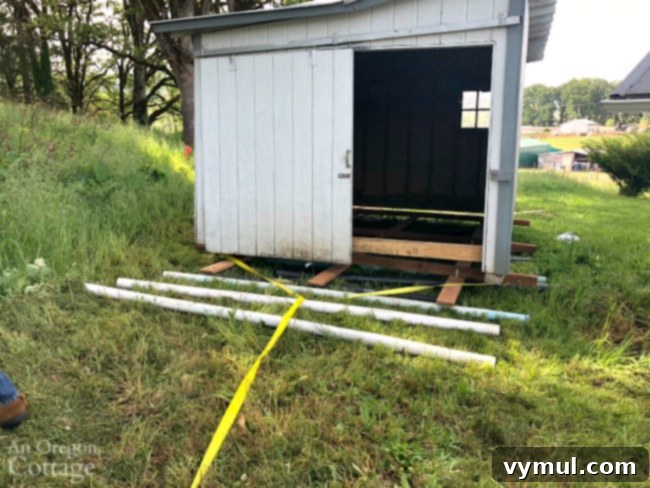
Another major project involved relocating a rather large 10 x 16-foot shed that was awkwardly situated on our property. It was nestled between the barn and a manufactured home on a tricky hillside, making it nearly inaccessible and poorly utilized. Brian, ever the ingenious problem-solver, devised a brilliant method for moving it. He attached sturdy wood beams to the shed’s base to act as “skis,” then used PVC pipes as rollers. With our Jeep in 4-wheel drive providing the pulling power, he systematically moved the entire structure. Initially, he used pull ropes directly attached to the beams, but the immense strain literally split a 4×4 beam in two! Learning from this, he switched to a much longer rope that could wrap entirely around the shed, distributing the force more evenly. This proved to be the winning strategy.
It was a slow, deliberate, and at times heart-stopping process, inching the shed over a slight hill, down the other side, and into its new, much more practical location in the gravel garden area. There were moments when the shed came within mere inches of other structures, making for a truly nail-biting experience! But Brian’s perseverance paid off, and the shed is now perfectly positioned for better access and future utility, freeing up valuable space on the hillside. It was a little crazy, but ultimately a triumphant feat of DIY engineering!
Expanding Our Garden Horizons: New Beds and Potato Experiments
Our garden continues to evolve and grow. We’ve successfully constructed one more raised garden bed, bringing us closer to our vision for a productive and organized vegetable patch. Raised beds offer numerous benefits, including better drainage, warmer soil temperatures in spring, and reduced strain on the gardener’s back. In an exciting new experiment, I’ve also planted seed potatoes in a large plastic garbage can. This method is touted for its potential to yield a bountiful harvest in a compact space, making harvesting incredibly easy. I’m eager to see how it performs and will definitely keep you updated on its progress throughout the season. Have any of you tried growing potatoes in a garbage can? We’d love to hear about your experiences!
What’s Cooking: Fresh Garden Harvests & Simple Dinner Menus

There’s nothing quite like the satisfaction of cooking with ingredients fresh from your own garden. With our lettuce and spinach starting to come in, we’ve put together three dinner menu ideas that celebrate seasonal eating and offer easy, delicious options for weeknight meals. These menus combine our garden-fresh produce with other pantry staples for well-rounded and flavorful dinners:
- Dinner Menu #1: Classic Comfort
Enjoy a wholesome, one-dish Classic Chef’s Salad, packed with fresh greens, protein, and colorful vegetables. This is perfectly complemented by slices of warm, toasted Easy Sourdough Artisan Bread, or if sourdough isn’t your style, our delightful Easy Artisan Bread. - Dinner Menu #2: Mediterranean-Inspired Delight
Feast on a vibrant spinach, cranberry, sweet onion & feta salad, dressed with our tangy Homemade Balsamic Vinaigrette. Pair this refreshing salad with flavorful Sheet Pan Roasted Sausages with Onions and Peppers for a quick and satisfying meal. - Dinner Menu #3: Zesty and Bright
Indulge in an invigorating Orange-Almond Salad, offering a burst of fresh flavors and textures. This light, zesty salad is the ideal accompaniment to our succulent Sheet Pan Lemon-Garlic Roasted Chicken & Vegetables, making for a healthy and easy dinner.
“This is Really Cool!”: Discoveries and Practical Hacks
We love sharing things that make life a little easier or more interesting. Here are two recent discoveries that have impressed us:
- Brian’s Tech Hack: Revitalize Your Old Laptop with CloudReady
Brian recently discovered an amazing way to give old, sluggish laptops a new lease on life: by transforming them into Chromebooks using CloudReady. This free operating system is lightweight, fast, and secure, essentially turning your aging hardware into a Google-powered machine perfect for browsing, email, and cloud-based tasks. It’s an incredibly cost-effective way to extend the utility of your devices and reduce electronic waste. Here’s the article that guides you through the simple steps. It’s truly remarkable how well it works! - Jami’s Personal Care Find: The Non-Homemade Deodorant That Actually Works!
After years of experimentation and a few “smelly secrets” from trying various homemade deodorant recipes, I’ve finally found a non-homemade option that genuinely works wonders: Earth Mama Deodorant in Bright Citrus. It’s natural, effective, and free from harsh chemicals, providing long-lasting freshness without irritation. If you’re curious about my journey and past experiences with natural deodorants, you can read my candid article here, where I asked if homemade deodorant really works and confessed my personal struggles. This Earth Mama product has been a game-changer for me!
Thanks for tuning in! If you enjoy this podcast and find our content helpful, you can make a huge difference by spreading the word. Please tell your friends, subscribe on iTunes (or your preferred platform), and consider leaving us a review – your feedback helps other listeners discover our community too.
And if you have a question you’d like us to answer, or an idea for a future podcast topic, don’t hesitate! You can call us at (541) 658-0215 to leave a voicemail, and we might just discuss your input right on the air! We love hearing from you and building this community together.
For even more inspiration, tips, and behind-the-scenes glimpses from An Oregon Cottage, be sure to follow us on Instagram @AnOregonCottage, connect with us on Facebook, explore our curated boards on Pinterest, and for exclusive content and updates, don’t forget to subscribe to the AOC newsletter.
Disclosure: Please note that affiliate links are included in this post, which means I may earn a commission on sales made through these links. This does not, however, alter your purchase price. Click here to review my full disclaimer and advertising disclosure policy for more details.