Unexpected Encounters: Battling Voles and Weather Woes in the No-Till Garden with My Trusty Pitchfork
Every garden tool has a purpose, but some, like this humble pitchfork, acquire stories that transcend their practical functions. This particular pitchfork carries with it a tale of unexpected challenges, perseverance, and a surprising encounter that perfectly encapsulates the unpredictable nature of gardening. Far from being just a tool for turning soil, it became an instrument in a high-stakes battle against weather and unwelcome garden guests, all within the framework of my cherished no-till gardening philosophy.
The Weather’s Uncooperative Dance: A Spring Planting Saga
The saga began two weekends ago, when the ambition of a well-planned garden schedule collided with the harsh reality of an uncooperative spring. My mission was clear: get the corn planted. It’s a critical early-season task, demanding timely attention to ensure a bountiful harvest later in the year. The initial strategy seemed sound: dedicate Saturday to preparing the garden beds, then swiftly plant the corn on Sunday, ideally before the next wave of rain arrived. The timing was crucial for corn, which thrives in warm soil and needs a good start.
However, nature, as it often does, had other plans. For those who might think my complaints about the weather are excessive, a recent radio broadcast confirmed the severity of the situation: this spring has been our second wettest in a century. Yes, a full 100 years! Such an extraordinary amount of rainfall presents a myriad of challenges for any gardener, from waterlogged soil to delayed planting schedules and an increased risk of fungal diseases. The planned Sunday planting quickly became impossible as buckets of rain poured down, forcing us to postpone. The corn, resilient as it may be, ultimately didn’t find its home in the soil until Tuesday, a delay that always makes a gardener’s heart sink, knowing the precious growing season is ticking by.
Embracing No-Till: A Method and Its Modern Challenges
But I digress from the primary focus, back to the pitchfork and the unexpected twist in our gardening journey. For years, I’ve been a staunch advocate of the no-till gardening method. This approach is more than just a technique; it’s a philosophy that champions soil health, sustainability, and ultimately, easier gardening. The benefits are manifold: it dramatically reduces weeds, preserves the intricate natural layers of the soil, protects beneficial microbes and fungi, enhances water retention, and perhaps most importantly for me, it saves my back from the strenuous work of traditional tilling. By leaving the soil undisturbed, we foster a thriving underground ecosystem that naturally nourishes our plants and minimizes the need for external inputs.
Part of my no-till strategy for weed suppression involves using black plastic to smother unwanted growth, which it usually does with remarkable efficiency. However, upon peeling back the plastic from the corn beds, a new, unforeseen challenge emerged. Beneath the dark, warm covering, I discovered an extensive network of surface tunnels. These weren’t the work of benign earthworms; they were the tell-tale signs of voles, those small, industrious rodents that have an unfortunate habit of treating our garden as their personal playground. It appeared they had mistaken the protective plastic for a thick layer of undisturbed dirt, creating a perfect, hidden haven for their tunneling activities.
The Vole Problem: A Recurring Battle in the Garden
If you’ve followed our journey before, you might recall our video about thwarting voles, which successfully showcased a method for deterring these persistent pests. You might be wondering why, after implementing such a solution, we were still facing a vole infestation. Here’s the critical distinction: the effective vole-proofing method we demonstrated was primarily for our raised beds, specifically the 4’x12’x10″ high structures that allow for a secure barrier installation. These beds are relatively contained and easier to protect from burrowing creatures.
However, a significant portion of our garden consists of four much larger beds, each measuring approximately 9’x20′. These beds are merely edged with 4″x 4″ wood, primarily serving to establish permanent, clearly defined paths around them, rather than creating truly raised, impenetrable barriers. These are the beds where I cultivate our larger, more substantial crops – the corn, the robust potato plants, and the sprawling pole and dry beans. The sheer size and less-contained structure of these beds make them inherently more vulnerable to subterranean invaders like voles. The voles, with their insatiable appetites and relentless tunneling, pose a significant threat to these crops, potentially gnawing through roots and causing irreparable damage to an entire harvest. This realization highlighted the ongoing battle every gardener faces: adapting pest control strategies to the specific needs and vulnerabilities of different garden zones.
The Pitchfork’s Unforeseen Task: Disrupting the Underground Network
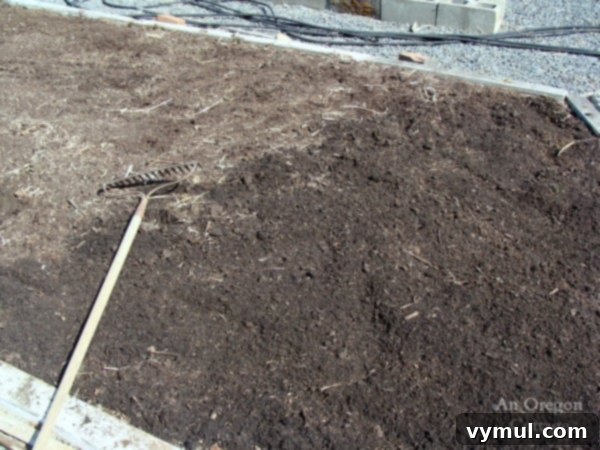
Faced with the extensive network of vole tunnels, I felt a strong imperative to act, even if it meant temporarily veering from my strict no-till principles. Disrupting their underground infrastructure was essential to discourage their continued use of these prime planting areas. And so, I began the arduous, back-breaking job of using a garden fork to carefully break up the surface soil and collapse their tunnels. It was slow, laborious work, requiring significant physical effort to get through even a single bed. The urgency of planting combined with the sheer scale of the task led me to seek assistance.
I called upon my son, who, bless his heart, came out to help without hesitation. I’m certain there were a million other things a teenager would rather be doing on a warm afternoon, but his willingness to assist was truly appreciated. He’s a good kid. Since I was already committed to finishing the first bed with our primary garden fork, I handed him the smaller pitchfork we keep for lighter tasks. I showed him the goal: not to thoroughly dig or turn the soil, but simply to insert the fork and gently rock it back and forth. However, his initial approach was a bit too enthusiastic; he was turning over large blocks of soil that would be difficult to break down later, counter to our goal of minimal disturbance. So, I walked over to demonstrate the more subtle technique required.
“You don’t have to work that hard, just put the fork in like this,” I instructed, demonstrating the action, “and gently move it back and forth to loosen the dirt and collapse the tunnels, not to invert the soil entirely.”
As I explained, my son’s attention seemed to shift, and he cocked his head. “What’s that sound?” he asked, his brow furrowed.
Still focused on my demonstration, rocking the fork gently in the soil, I replied, “What sound? I don’t hear anything unusual.”
“It sounded like a mouse dying!” he insisted, a hint of unease in his voice.
I paused my rocking motion, giving the fork a dutiful nudge. “Sheesh—it’s probably just the squeaky handle,” I suggested, trying to dismiss his concern, “listen.” I moved it back and forth again, and indeed, there was a faint squeak, easily attributable to dry wood or metal.
A Sound, a Discovery, a Shock: The Pitchfork’s Infamous Moment
Satisfied that I had provided a logical explanation for the sound, I prepared to move the pitchfork to a new spot in the bed. As I pulled the tines out of the dirt, we both heard it again – that unsettling sound, clearer this time. Our eyes instinctively darted downwards, following the trajectory of the fork as it emerged from the earth. And there, impaled straight through one of the middle tines, was the very source of the commotion. You guessed it – a vole, often mistaken for a field mouse, speared with grim precision. The sight was startling, to say the least.
My immediate reaction was visceral and entirely unplanned. I threw the handle of the pitchfork down with a clatter and instinctively jumped backwards, a rather silly reaction, I admit, as if the unfortunate creature could somehow leap off the tine and come after me. I might have made a sound – perhaps a gasp or a sharp exclamation, though I’m fairly certain it didn’t escalate to a full-blown scream. But the shock was undeniable. After my initial recoil, curiosity, mixed with a morbid fascination, compelled me to look again. I fully expected it to be motionless, thinking, “It has to be dead; it’s pierced straight through.” Yet, to my utter dismay and disgust, it was still squirming there on the tine. Ugh. The sheer unpleasantness of the moment was overwhelming; a testament to the raw, unfiltered realities that gardening can sometimes present.
Reinforcements and Reflections: The Aftermath of an Unwanted Discovery
Faced with the gruesome sight and the squirming reality of the situation, I knew I needed reinforcements. My son, though a trooper, was completely grossed out, and frankly, so was I. There are some things you just don’t want to handle alone. So, I went to get Brian, my steadfast partner in all things, including the unexpected and unpleasant challenges of garden life. He came out, assessed the situation with his characteristic calm, and without much fanfare, put the little creature out of its misery. It was a grim task, but necessary.
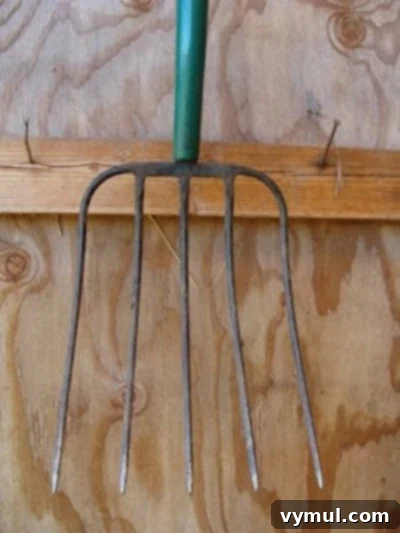
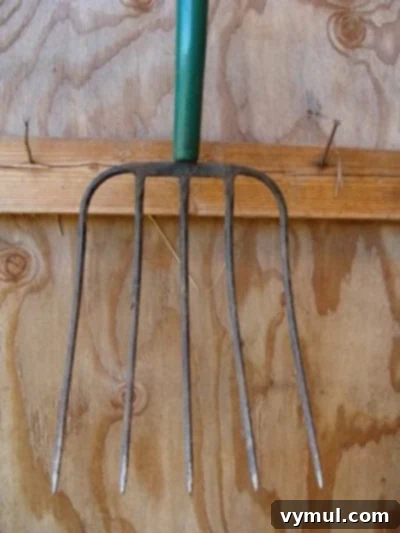
However, Brian, ever the pragmatist with a dry wit, couldn’t resist a comment before dealing with the vole. “You sure you don’t wanna take a picture of this for your blog?” he asked, a twinkle in his eye, knowing full well my sensibilities. Well, you, dear reader, can breathe a sigh of relief that it’s *my* blog and not his! While Brian might be inclined towards the more graphic realities of nature, I prefer to keep things a bit less… explicit for my audience. Therefore, I’m simply showing you a picture of the clean, operational pitchfork, now ready for its next, hopefully less dramatic, use. I trust your good imaginations can fill in the rest of the scene, perhaps even more vividly than any photograph could convey.
The Lingering Impact of a Gardener’s Reality
The incident with the pitchfork and the vole left a subtle, yet undeniable, psychological impact on my gardening routine. For a while, the simple act of turning soil or reaching into a dark corner of the garden became an exercise in heightened awareness. When it finally came time to finish preparing that particular bed, my senses were on high alert. I may or may not have jumped and let out a startled yell when a larger-than-expected dirt clod bounded off the fork and onto the gravel path, momentarily triggering a flash of memory from the previous encounter. Similarly, a little frog, harmless and delightful, found his way to the top of the freshly prepared soil, causing another minor start before I gratefully moved him to a safer, undisturbed corner of the garden.
These little moments, these unexpected jumps and yells, are all part of the authentic gardener’s reality. They remind us that our gardens are not just neat rows of plants, but vibrant, living ecosystems teeming with all manner of creatures, both welcome and unwelcome. They are places of beauty, labor, frustration, and occasional, startling discoveries. The pitchfork, despite its infamous moment, remains an indispensable tool in my gardening arsenal, now imbued with a story that serves as a vivid reminder of the untamed life beneath the surface. And so, the cycle of planting, tending, and occasionally confronting the wild heart of nature continues, making every day in the garden an adventure.