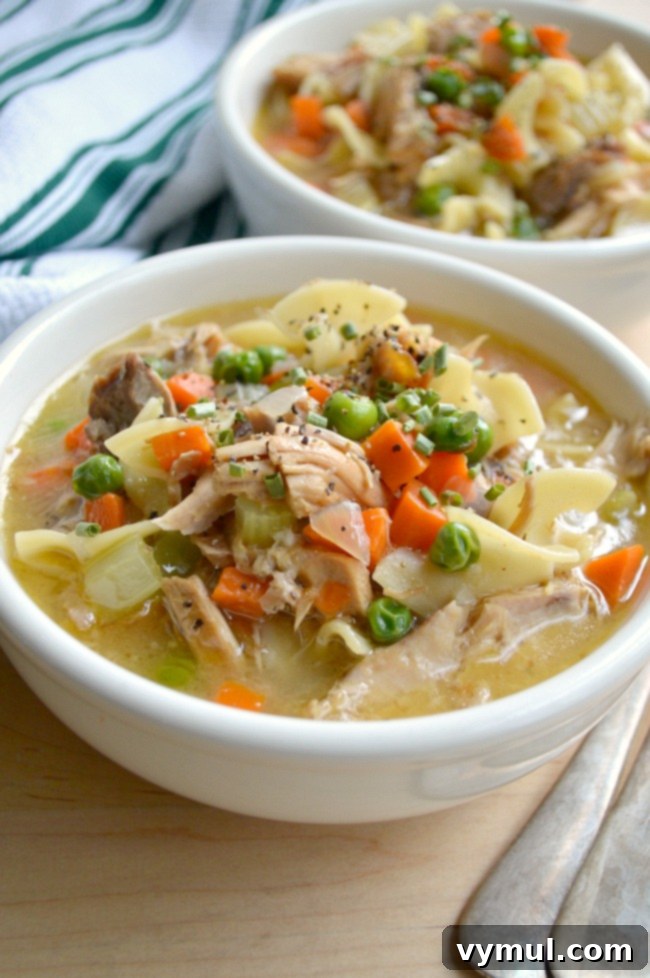
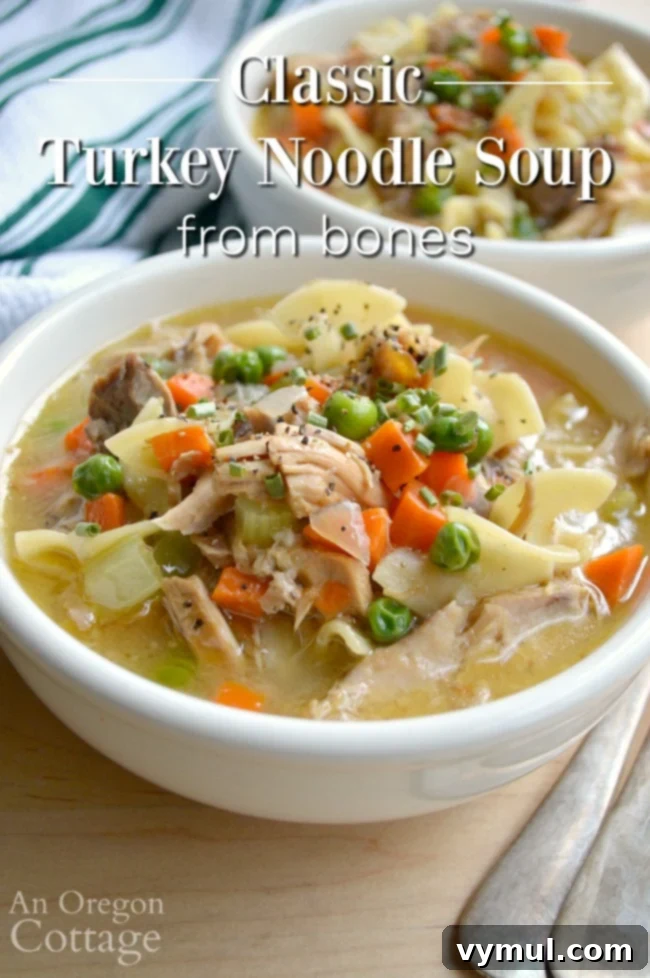
Transform Your Leftover Turkey: The Best Homemade Turkey Noodle Soup Recipe
Turning the leftover carcass and bones from a roasted turkey into a rich, flavorful homemade turkey noodle soup has become one of my most cherished post-holiday traditions. It’s not just incredibly delicious; it’s a brilliant way to extract every last bit of goodness from your bird, packed with the benefits of nutrient-dense bone broth. This recipe also embraces a “nose-to-tail” philosophy, ensuring no part of your turkey (or even your vegetable scraps!) goes to waste.
Once you discover the simplicity and profound flavor of this homemade soup, I believe it will quickly become an indispensable part of your own turkey traditions. And for those who prefer alternatives to traditional noodles, this versatile soup is equally fantastic without them, or with modern twists like zucchini noodles (zoodles) or additional hearty vegetables.
Please note: Some links within this article are affiliate links. If you choose to click on them and make a purchase, I may receive a small commission at no extra cost to you. Your support helps keep this content free.
Do you, like me, find immense satisfaction in making a hearty turkey noodle soup from the bones after roasting your holiday turkey? In my extended family, I often feel like I’m in the minority when it comes to this post-roast ritual. Yet, for me, it’s a culinary highlight – a true celebration of resourcefulness and flavor. I love every step: from utilizing the bones that might otherwise be discarded, to the comforting aroma of simmering broth filling my home, and finally, savoring a warm, nourishing bowl of bone broth brimming with healthy vegetables and tender turkey meat.
This commitment to homemade goodness runs deep. I often intentionally purchase an extra turkey during sale seasons, not just to stock my freezer with cooked meat for future meals (perfect for substituting in dishes like these chicken recipes), but primarily so I can recreate this classic soup. It embodies pure comfort in a bowl, a taste of home that warms you from the inside out.
Why Homemade Turkey Noodle Soup is a Must-Make Tradition
Growing up, the concept of transforming a turkey carcass into soup wasn’t part of our family kitchen. After the holiday feast, the bones were typically discarded without a second thought. However, as I got older and started managing my own food budget, throwing away the turkey frame seemed incredibly wasteful. I could clearly see there was still plenty of delicious meat clinging to those bones, not to mention the untapped potential for a deeply flavorful broth!
Before the internet made every recipe instantly accessible, learning to make soup from scratch involved a bit of trial and error (a charming, if sometimes frustrating, process, wouldn’t you agree?). Through this hands-on learning, I mastered the art of creating a truly warming and profoundly flavorful bowl of turkey noodle soup. This experience taught me that what seems like a daunting task is actually quite simple and immensely rewarding.
If your upbringing was similar to mine and you’re unsure how to approach making stock from poultry bones, fret not! This guide provides a straightforward tutorial, culminating in a comprehensive recipe for this comforting soup. The entire process is essentially divided into three easy steps, requiring surprisingly little active “hands-on” time. Once you experience the magic of homemade turkey bone broth and the resulting soup, I’m confident you’ll be eagerly collecting turkey bones from family and friends at every future holiday gathering, just as I do!
Update for Noodle-Free Options: For those who prefer to skip the noodles, the soup is absolutely delightful on its own as a vegetable-rich broth. Alternatively, you can add zucchini noodles (zoodles) directly to your serving bowl; the heat from the soup will gently soften them to perfection. Explore more delightful variations in the full recipe card below.
How to Make the Best Turkey Noodle Soup From Leftover Bones
Step 1: Crafting Your Nutrient-Rich Turkey Bone Broth
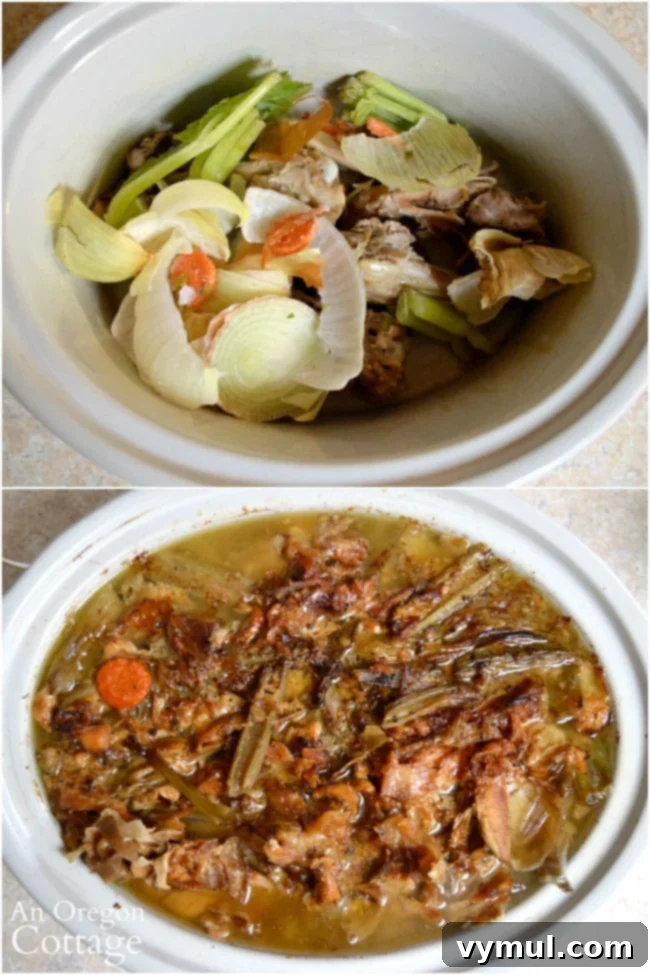
The foundation of an outstanding turkey noodle soup is a deeply flavorful and nutritious bone broth. This initial step transforms what might be discarded into liquid gold. Begin by breaking the turkey carcass into smaller, manageable pieces. This not only makes it easier to fit into your largest pot (a 10 to 12-quart stockpot is ideal) or a 6-quart or larger slow cooker, but also increases the surface area for maximum flavor extraction. I’ve personally come to favor the effortless method of making bone broth in a slow cooker, as demonstrated in my chicken broth recipe, though both stovetop and slow cooker methods yield excellent results.
Don’t forget to include any savory pan drippings from your roasting pan, or even leftover gravy if you have it; these add an incredible depth of flavor. Next, add enough cold water to fully submerge the bones. This ensures a thorough infusion of flavor and nutrients. Crucially, now is the time to add aromatic vegetables. You can use simple onion, carrot, and celery trimmings that you’ve saved (a truly frugal and efficient approach!), or whole pieces like a half onion, one carrot, and a stalk of celery, roughly chopped.
Stovetop Bone Broth Method:
Bring the contents of your pot to a rolling boil over high heat. Once boiling, immediately reduce the heat to low, allowing the broth to gently simmer. Let it cook for at least 1-2 hours, though longer is always better for richer flavor and more extracted nutrients. You’ll know it’s ready when the remaining scraps of meat are practically falling off the bones, and the broth has developed a beautiful golden hue.
Slow Cooker Bone Broth Method:
This method offers unparalleled convenience. Simply place all your broth ingredients into the slow cooker, cover with water, and set it to low. Allow it to cook for a minimum of 8-10 hours, or even longer. For ultimate ease, I often prepare this in the evening, letting it simmer undisturbed overnight and into the next morning, so it’s ready to process when I am.
The Essential Role of Vegetables in Bone Broth:
When I first started experimenting with making turkey or chicken stock from bones, I questioned the necessity of adding vegetables. Being inherently cheap frugal, my initial inclination was to just add water, hesitant to “waste” perfectly good vegetables by discarding them with the bones. The resulting broths, however, were consistently bland – edible, but lacking the vibrant, deep flavor I craved.
Then, I stumbled upon a brilliant tip (likely from The Tightwad Gazette): collect and freeze vegetable ends and trimmings specifically for making homemade broth. This was a revelation! Not only was I using what I already had, but I was repurposing what I was going to throw away anyway. It was a win-win for flavor and frugality.
The impact on the broth was immediate and profound. Both my husband Brian and I noticed a distinct improvement in the soup made with vegetable-infused broth. The flavor became noticeably deeper, more pronounced, and simply superior. Furthermore, research now supports this culinary wisdom, showing that many vital vitamins and minerals in bone broth are derived from the added vegetables. This provides yet another compelling reason to always include them in your broth-making process!
Essential Equipment for Broth Making:
- A sturdy 12-quart stock pot OR
- A reliable 6-quart slow cooker (or a larger capacity model)
Step 2: Harvesting the Goodness: Straining Broth and Collecting Meat
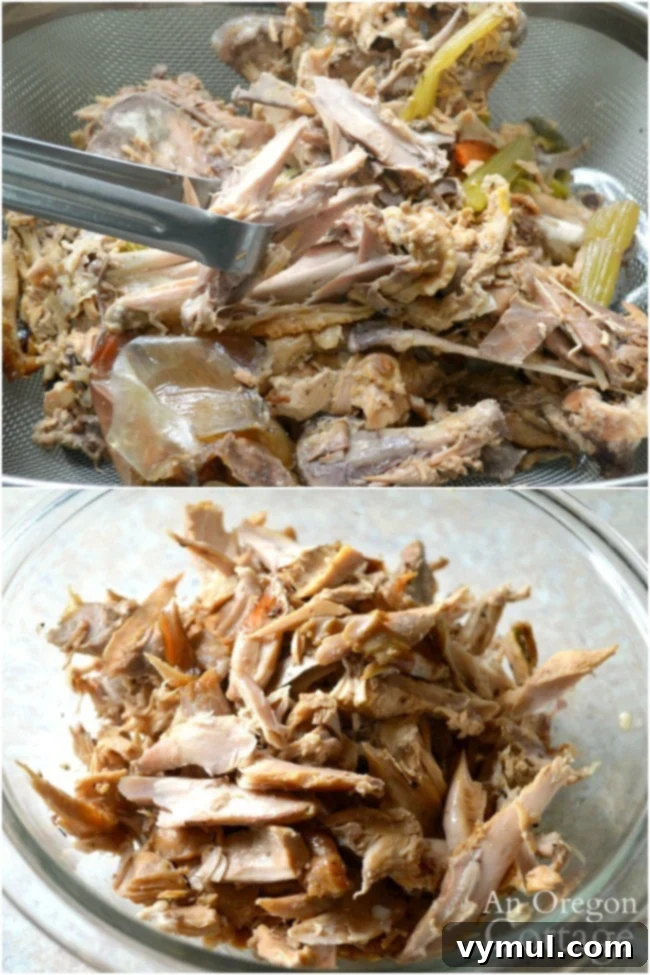
Once your turkey bone broth has simmered to perfection, allow it to cool slightly – enough to handle safely, but still warm enough that the fat hasn’t solidified. This cooling period is crucial for safety and ease of handling. Set up a large strainer (a fine-mesh one is best for clarity) in your sink, positioned over a substantial pot or large heat-proof bowl. Carefully pour the entire contents of your cooking pot through the strainer to separate the rich, golden broth from the bones, vegetables, and meat scraps.
For this step, I highly recommend using a large, sturdy strainer that conveniently rests on the sides of your sink. This type of strainer is typically capacious enough to hold all the bones and allows you to strain the broth directly into a 6-quart or larger soup pot. A vital tip I learned the hard way: always remember to place a pot or bowl underneath the strainer to collect that precious, wonderfully aromatic broth. Trust me, few things are as disheartening as watching your hard-earned broth disappear down the drain!
After straining, you’ll be left with the cooked bones and tender bits of meat. Separate the meat from the bones, discarding the bones and any spent vegetables. Collect the succulent turkey meat in a separate bowl. Even after a bit of cooling, the bones and meat can still be quite hot, so I often use small kitchen tongs, like the ones pictured, to protect my hands and make the process easier.
Addressing the “Time-Consuming” Myth of Meat Removal:
I understand this is often the point where some people hesitate, thinking, “I just don’t have the time to pick through all those bones” or “I simply don’t want to deal with them.” If you find yourself in this camp, let me offer some reassurances:
- It’s quicker than you think! I’ve timed this process, and for a 14-pound turkey, it took me a mere 8 minutes to efficiently separate the meat from the bones. That’s a small investment for such a significant yield of delicious, wholesome turkey meat.
- You don’t have to be exhaustive. If time is truly a constraint, you are not obligated to meticulously strip every single shred of meat from the carcass. Simply pick out the larger, more obvious pieces of meat that are easy to access, and don’t worry about the rest. You will likely still gather plenty of turkey for your soup, and you can reclaim those “extra” minutes for something else. Of course, this means accepting that some perfectly good meat might end up in the compost or trash, but it’s a compromise many find acceptable.
Immediate Use or Storage for Later:
Congratulations! You now have a batch of incredible, nourishing homemade turkey bone broth. At this juncture, you have two excellent options:
- Continue immediately: Proceed directly to the next step to transform your broth into a delicious soup right away.
- Refrigerate for later: Pour the broth into an airtight container and refrigerate it for a day or two. This is a convenient option if you prefer to make the broth one day and assemble the soup the next.
When I make broth on the stovetop, I often prefer to cook the bones and then refrigerate the broth overnight, ready to make soup the following day. However, with the slow cooker method, since it often cooks overnight, I usually proceed with making the soup without bothering to refrigerate the broth first.
Pro Tip for First-Timers: If you’ve never made bone broth before, don’t be alarmed if it takes on a gelatinous, jello-like consistency when cold. This is actually a sign of excellent quality! It indicates the presence of natural gelatin derived from the marrow and collagen in the bones, which is one of the key reasons homemade stock is so beneficial and nourishing. It will liquefy beautifully once reheated.
Managing Excess Broth:
It’s quite possible you’ll end up with more glorious broth than you need for a single batch of soup. For the soup recipe that follows, a 6-quart soup pot filled approximately halfway (roughly 10 cups of broth) is ideal, leaving enough room for your additional ingredients. Any extra broth is a treasure!
Pour any surplus broth into freezer-safe containers, ensuring you leave a little headspace for expansion. Label each container clearly with the date and contents, then freeze. This homemade bone broth can be stored in the freezer for up to a year, providing you with a convenient, healthy base for countless future soups, stews, risottos, or gravies.
Step 3: Assembling Your Perfect Turkey Noodle Soup
Now that you have your incredible homemade turkey bone broth ready, you are truly just minutes away from enjoying a magnificent bowl of soup – it’s that simple and satisfying!
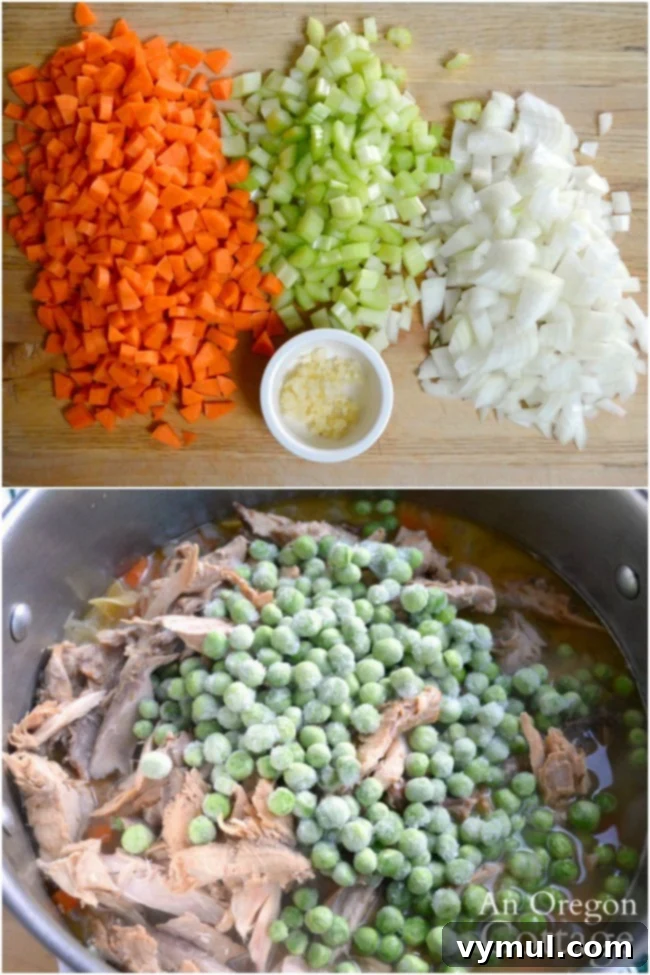
Whether you’re cooking immediately or retrieving your broth from the refrigerator, begin by heating your strained broth in the pot you intend to make the soup in (a 6-quart or larger pot is recommended). While the broth is gently heating, take this time to dice your fresh vegetables for the soup base. I always include a couple of cloves of freshly minced garlic for an extra layer of aromatic flavor, though this is an optional addition and not strictly traditional. Add your diced onions, carrots, and celery to the heating broth.
Bring the soup mixture to a gentle boil, then reduce the heat to a simmer. Allow the vegetables to cook until they are tender-crisp, which usually takes about 15 minutes. This ensures they retain some texture and their vibrant flavors are perfectly integrated into the broth.
Once your main vegetables are cooked to your liking, it’s time to add the more delicate ingredients: your egg noodles (if using) and frozen peas, or any other quick-cooking vegetables you desire. Adding them at this stage prevents them from becoming overcooked and mushy. This is also the perfect opportunity to incorporate any additional holiday leftovers from your turkey feast. Leftover roasted vegetables, a spoonful of mashed potatoes, or a swirl of leftover gravy can all be added now. The mashed potatoes and gravy, in particular, will contribute a wonderful creaminess and richness to the finished soup, transforming its texture beautifully.
A VERY IMPORTANT TIP: Always Taste and Adjust for Salt! Since we are starting with a homemade, unsalted bone broth, it is absolutely crucial to taste your soup and add salt as needed. You will likely need to add more salt than you might for other soups made with store-bought, pre-seasoned broths. Don’t be shy; proper seasoning is key to unlocking the full, delicious potential of your homemade turkey noodle soup!
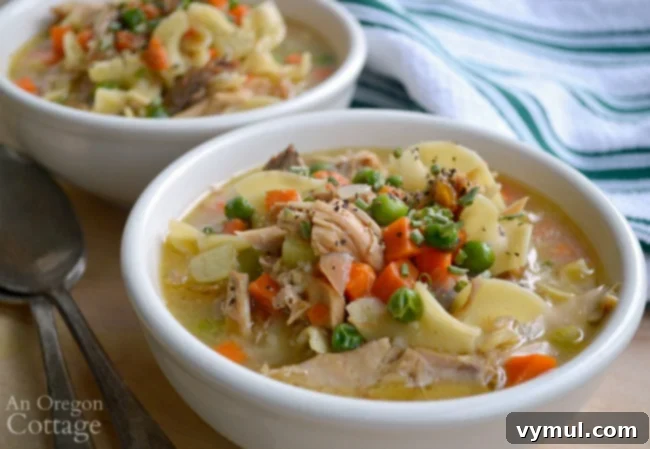
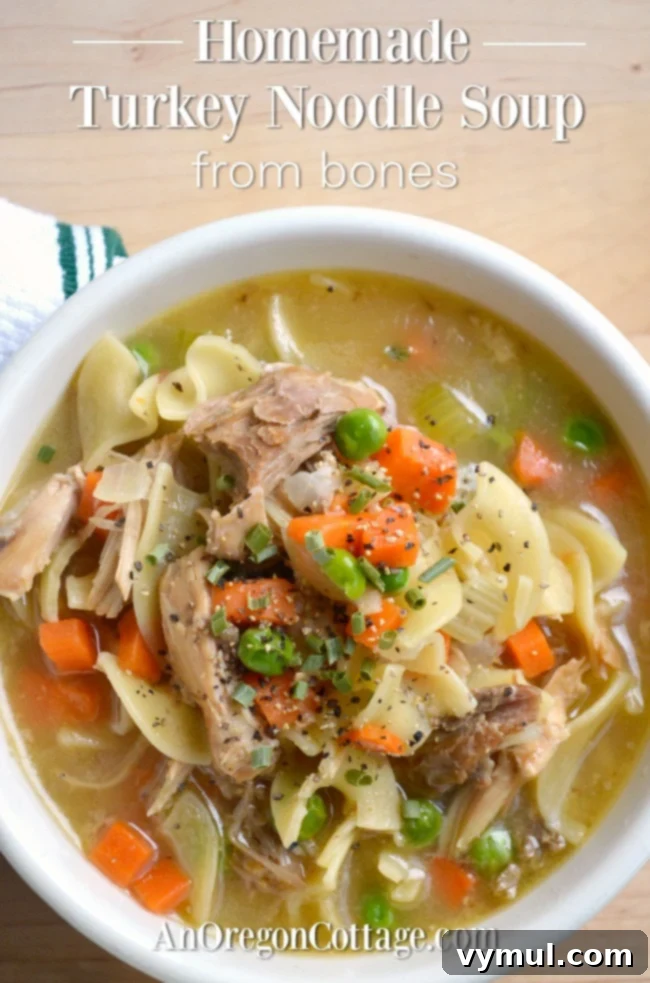
And there you have it! The journey from a humble turkey carcass to an extraordinary bowl of classic homemade turkey noodle soup is complete. Whether you choose to enjoy it with noodles, as a robust turkey vegetable soup, or any other variation born from your delicious broth, you’ll be rewarded with a meal that is both profoundly comforting and incredibly satisfying.
And doesn’t it feel wonderful to have utilized every part of your food, embracing sustainability and reducing waste? That’s a bonus that makes every spoonful taste even better!
Versatile Variations for Your Turkey Soup
While classic turkey noodle soup is undeniably a crowd-pléaser, its homemade broth base makes it incredibly adaptable. Here are a few ways to customize your soup to suit different preferences or to simply try something new:
- Turkey Vegetable Soup: Easily transform this into a hearty vegetable soup by simply omitting the egg noodles. Instead, consider boosting the vegetable content with additions like diced potatoes (add with initial vegetables), fresh or frozen green beans, spinach, or kale (stir in towards the end until just wilted).
- Creamy Turkey Noodle or Vegetable Soup: For an extra layer of indulgence and a velvety texture, stir in about 1 cup of heavy cream or half-and-half just before serving. This creates a richer, more comforting bowl that’s perfect on a chilly day.
- Turkey Zoodle Soup: For a low-carb or gluten-free alternative, prepare the soup as directed, but skip adding traditional noodles. When serving, ladle the hot turkey soup over a bed of freshly spiralized zucchini noodles (zoodles). The residual heat from the soup will perfectly soften the zoodles, offering a fresh, light, yet satisfying texture without overcooking them.
- Spicy Kick: For those who enjoy a little heat, add a pinch of red pepper flakes or a dash of hot sauce along with the garlic in Step 3.
- Herb Boost: Fresh herbs like parsley, dill, or thyme, added at the very end, can brighten the flavor profile.

Print Recipe
Pin Recipe
SaveSaved!
Classic Homemade Turkey Noodle Soup from Leftover Bones
Ingredients
For the Turkey Bone Broth:
- 1 leftover turkey carcass and/or bones from a roasted turkey
- Enough water to cover
- Assorted vegetable trimmings or whole pieces (e.g., ends of carrots, celery stalks, onion peels/halves)
- Pan juices and/or leftover gravy from roasting turkey (optional, but recommended for depth)
For the Noodle Soup:
- 1 large onion diced
- 1 cup diced carrot approximately 1 lb.
- 1 cup diced celery from 4-5 stalks
- 1-2 cloves fresh garlic minced (optional)
- 8 ounces egg noodles
- 1 cup frozen green peas
- 1 tablespoon salt or to taste (you will need more than you think with unsalted broth)
- 1 teaspoon ground black pepper or to taste
- Reserved cooked turkey meat from step 2
Instructions
Part 1: Make Your Turkey Bone Broth (Stock)
-
Stovetop Method: Break up the bones of the leftover turkey carcass into smaller pieces and place them in a large stockpot (12 qt. or larger is ideal). Add your carrot, celery, and onion trimmings/pieces, along with any optional pan juices or leftover gravy. Cover all ingredients completely with cold water. Bring the pot to a boil over high heat, then immediately reduce the heat to low and let it gently simmer for 1-2 hours. For an even richer and more nutritional broth, aim to simmer for a longer duration, until the remaining meat is easily falling off the bones and the broth has achieved a beautiful golden color.
-
Alternate Slow Cooker Method: For maximum convenience, place all bone broth ingredients (turkey carcass/bones, vegetable trimmings, pan juices if using) into the bowl of a 6-quart or larger slow cooker. Cover completely with water. Cook on the LOW setting for at least 8-10 hours; cooking overnight is an excellent way to extract deep flavor and nutrients without active effort.
-
Once the broth is done cooking, allow it to cool slightly. Carefully pour the entire contents of the pot through a large strainer (positioned over a large soup pot or bowl) to separate the liquid broth from the solids. Discard the bones and spent vegetables. Separate any remaining meat from the bones and reserve this cooked turkey meat in a separate bowl for later use in the soup.
Part 2: Assemble Your Delicious Turkey Noodle Soup
-
Heat the strained turkey broth in a clean 6-quart or larger soup pot. (If you refrigerated the broth, it will become gelatinous; simply reheat to liquefy). Add the freshly diced onion, carrot, celery, and minced garlic (if using) to the heating broth. Bring the mixture to a boil, then reduce the heat and simmer for approximately 15 minutes, or until the vegetables are tender-crisp.
-
Now, add the egg noodles, the reserved cooked turkey meat from the bones, and the frozen green peas to the pot. Increase the heat to bring the soup to a boil once more. Cook for about 8 minutes, or until the noodles are tender and fully cooked.
-
Before serving, taste the soup and generously season with salt and black pepper to your preference. Remember, homemade broth is unsalted, so don’t be afraid to add enough salt to bring out all the flavors. Serve hot and enjoy!
Notes
Delicious Variations for Your Turkey Soup:
- Turkey Vegetable Soup: Omit the noodles and increase the quantity of other vegetables. Great additions include diced potatoes (add with initial vegetables), fresh or frozen green beans, spinach, and/or kale (stir in towards the end until just wilted).
- Creamy Turkey Noodle or Vegetable Soup: For a richer, more decadent soup, stir in 1 cup of heavy cream or half-and-half just before serving.
- Turkey Zoodle Soup: Prepare the soup as directed, but skip adding traditional noodles. When serving, ladle the hot soup over a bed of fresh zucchini noodles. The heat from the soup will gently soften the zoodles to a perfect al dente texture.
- Add Leftovers: If you have leftover mashed potatoes or gravy from your holiday meal, add them in Step 3 to thicken the soup slightly and add extra flavor and creaminess.
Nutrition

More Easy & Healthy Homemade Soup Recipes to Explore:
- Classic Chicken Noodle Soup
- Warm Curried Turkey and Rice Soup (also great with Chicken!)
- Comforting Creamy Turkey-Rice Soup (delicious with chicken, too!)
- Hearty Harvest Vegetable Ham Bone Soup Recipe (Crockpot, Instant Pot, or Stovetop methods)
This beloved recipe was originally published in December of 2009 and has since been updated and refined for even greater clarity and enjoyment.
Disclosure: As an Amazon Associate and through other affiliate programs, I earn from qualifying purchases made through links in this article. This comes at no additional cost to you. Click here to read my full disclaimer and advertising disclosure for more information.