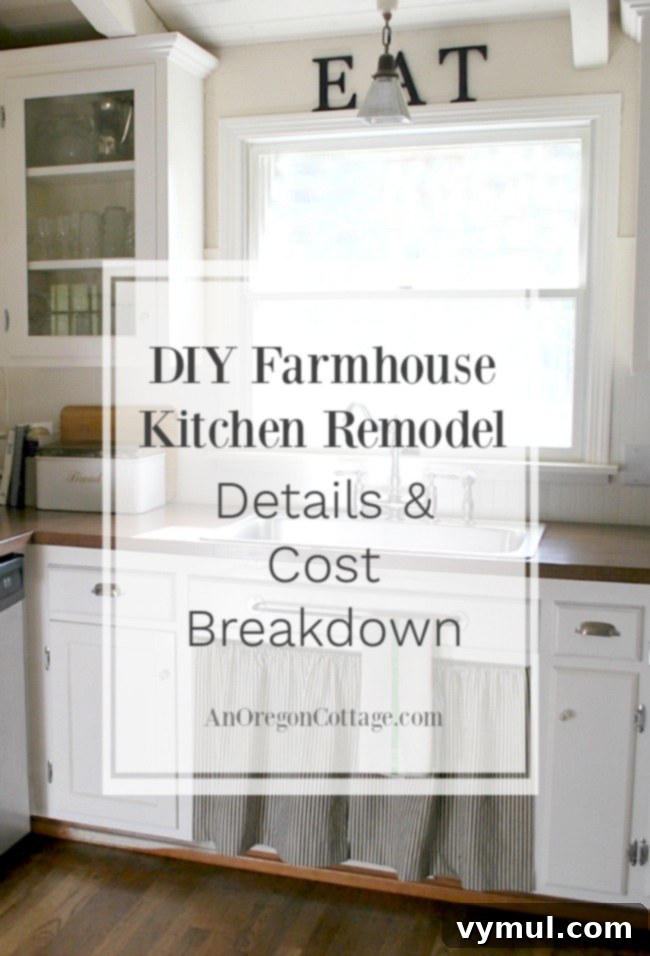
Budget DIY Kitchen Remodel: From Dated 80s to Modern Farmhouse Fresh (Under $1200!)
Welcome to the detailed reveal of our budget-friendly DIY kitchen makeover! We transformed a tired, dated 1980s kitchen into a charming, functional modern farmhouse space, all without breaking the bank. Here, we’ll share every detail of the process and a transparent cost breakdown that will truly surprise you.
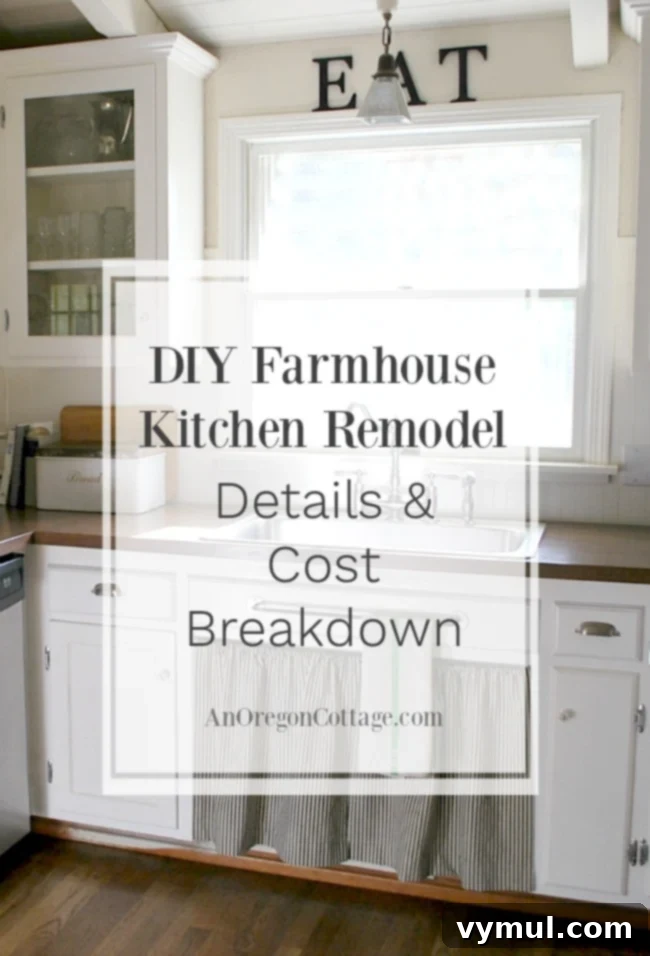
There’s nothing quite as rewarding as seeing a vision for your home come to life, especially when it’s achieved through your own hands. But what’s almost as thrilling? Reading through all the wonderful comments you left on our initial Kitchen Reveal article! Your sweet words are truly the highlight of this entire blogging journey, and we’re so grateful for your support.
After a slight delay since that initial reveal (we hope you weren’t on the edge of your seats too long!), we’re finally laying out all the nitty-gritty details you’ve been asking for. This includes a comprehensive breakdown of what this transformation cost us. Prepare to be amazed: the final tally for such a dramatic and beautiful renovation is incredibly low, proving that a dream kitchen doesn’t require an exorbitant budget when you embrace the DIY spirit.
Even we were surprised when we finally did the math! Perhaps taking our time over a few years to complete various aspects contributed to keeping costs down. This journey taught us valuable lessons in patience and resourcefulness. This article is quite detailed, so grab a cup of coffee and settle in. We’ve also included affiliate links for products we used and love, which help support our work at no extra cost to you.
Our Modern Farmhouse Kitchen Remodel Details & Cost Breakdown

The Heart of the Kitchen: Butcher Block Counters
The centerpiece of our kitchen transformation, and arguably the most impactful change, is our beautiful butcher block countertops. They were such a crucial element that our remodel was delayed by a year simply because IKEA was out of stock! If you want to catch up on the initial stages of this project, this post covers all the early steps we tackled.
Why We Chose Wood Counters
Many people ask us why we opted for wood countertops, so let’s dive into our reasoning:
- Warmth and Aesthetics: We absolutely adore the natural beauty and inviting warmth that wood brings to a kitchen. It instantly makes the space feel more cozy and grounded, a perfect fit for our farmhouse style.
- Cost-Effective: Compared to many other countertop materials, wood butcher block is surprisingly affordable, often comparable in price to laminate, yet offering a significantly superior aesthetic and the genuine feel of a natural material.
- DIY-Friendly: With our limited DIY experience, wood counters were a manageable project. Cutting and installing them, while requiring care, was well within our capabilities, saving us on labor costs.
- Timeless Appeal: Unlike trendy materials that quickly look dated (like the “harvest-y gold” tile we removed), wood counters possess a classic, timeless quality that will endure for years to come.
- No Grout Lines: This was a huge selling point for me! As someone who loves to bake, the thought of flour and crumbs getting stuck in grout lines fills me with dread. Smooth wood surfaces are incredibly easy to clean and maintain, a dream for any avid cook.
- Easy to Repair: Unlike laminate which can burn or chip irreversibly, minor gouges or marks on wood counters can be easily sanded and re-finished, making them a very durable long-term choice. It’s a sustainable option that offers longevity.
Maintenance and Durability: Our Experience
The most frequent question we receive concerns the upkeep of wood counters. We chose to seal our oak counters with a water-based polyurethane coating. While it’s not food-grade, it’s not an issue for us as we don’t cut directly on the counters or routinely place food on the bare surface. For food prep, we always use cutting boards.
Our primary concern was avoiding the monthly, bi-monthly, or even yearly reapplication required by other finishes like oils or waxes. We know ourselves well enough to admit we wouldn’t consistently keep up with such a regimen. The poly coating, combined with clear caulking around the sink and edges, provides a robust, fairly water-tight seal that stands the test of time.
This isn’t our first rodeo with wood counters; we installed them in our Portland bungalow kitchen and they performed beautifully for three years with minimal upkeep beyond daily wiping. When we prepared to sell, a quick light sanding and a few new layers of finish by the sink area made them look brand new again. This reparability is another compelling reason we prefer wood over materials like chipped tile or burned laminate.
Working with IKEA Wood Counters
This remodel marked our first experience with IKEA’s solid oak butcher block counters. In our previous kitchen, we crafted custom pine boards, as IKEA wasn’t an option in Oregon at the time. We had successfully installed a beech IKEA counter in our cottage bathroom and initially planned the same for the kitchen. However, stock issues at our Portland store (a two-hour drive away) led us to the more expensive Numerar solid oak counters after a year-long wait. They offered three wood options, but only oak was available.
(Update: IKEA no longer carries these specific counter choices. Be sure to check their current options carefully, as some are solid wood while others are veneer over particle board.)
Working with the solid oak was quite challenging. It was incredibly heavy, making maneuvering, positioning, and fitting the counters a strenuous task. Cutting through the dense oak also proved difficult. Brian invested in a special saw to help, but it was still a beast of a job. To assist others, he even created a video demonstrating his cutting technique for solid wood IKEA counters.
Cost For Counters:
- Butcher block counters (2 x 8-ft + 2 x 6-ft pieces) = $630
- Wood Conditioner, Special Walnut Wood Stain, water-based polyurethane finish, satin + supplies = $43 (For an update on this finish a few years later, see this post)
- 7.25″, 40-tooth circular saw blade for oak = $35
Total for Counters = $708

The Practical & Elegant: Sink & Faucet
The Stainless Steel Single Sink
This large, single stainless steel sink might just be my favorite part of the entire remodel, which is quite surprising given my initial desire for a classic white farmhouse sink. While I absolutely adore the aesthetic of white sinks against wood, my experience living with one in our previous bungalow taught me a valuable lesson: for someone who cooks, gardens, and preserves food frequently, keeping a white sink looking pristine and clean is a constant battle. Stainless steel, on the other hand, cleans up beautifully with a simple wipe-down.
Embracing the stainless steel sink has been a revelation in kitchen functionality. Its generous size makes a world of difference! I can easily stack a multitude of dishes, wash huge pots and pans without a struggle, and have ample space for cleaning fresh vegetables. It makes kitchen tasks so much more efficient and enjoyable.
But the true star is the custom rack at the bottom of the sink. This was, without a doubt, the best $30 we spent. Whether it’s just one or two dishes needing to air dry, or a pile of muddy potatoes, everything can sit on the rack without touching the wet bottom of the sink. It prevents puddles on the counter and serves countless purposes. I also invested in the fancier drain and basket, which is deep and features a convenient bail handle for easy emptying – truly the most user-friendly basket I’ve ever had.
I purchased the sink online from Mr. Direct. The price was incredibly low, making me wary that I might get what I paid for. Reviews were a mixed bag, but at such an unbeatable price, I decided to take a chance. Indeed, the first sink arrived with a bent corner and two significant scratches. However, Mr. Direct’s customer service was exceptional – super friendly and easy to work with. I simply handed the damaged sink back to the UPS driver when the replacement arrived. The second sink was perfect. It’s made of heavy-duty steel and feels much more expensive than it was. I would not hesitate to order from them again.
The Farmhouse Bridge Faucet
Since a true farmhouse sink wasn’t in the cards for me, I opted for a beautiful farmhouse bridge faucet from Pegasus Lyndhurst, found on Amazon. I initially thought this might be a lesser-quality brand, but this faucet has far exceeded our expectations. It’s a significant upgrade from anything we’ve owned before (which, admittedly, isn’t a high bar, but still!).
The faucet itself is incredibly heavy, constructed with solid brass fittings, exuding quality. We often encourage friends to try out the sprayer – I’m not kidding, it feels like it weighs a pound! There’s no flimsy plastic here; this component is built to last. A testament to its durability: after four years, the sprayer hose developed a leak. A simple call to the company resulted in a brand new sprayer being sent out immediately. That’s customer service you can appreciate!
Sink & Faucet Cost:
- Sink, custom rack, & drain basket = $133 (Tip: Check the Mr. Direct website directly for ordering the rack and basket, as Amazon listings can vary.)
- Pegasus Lyndhurst Faucet = $111 (Note: prices fluctuate, this link may now be more expensive.)
Total for Sink & Faucet = $244
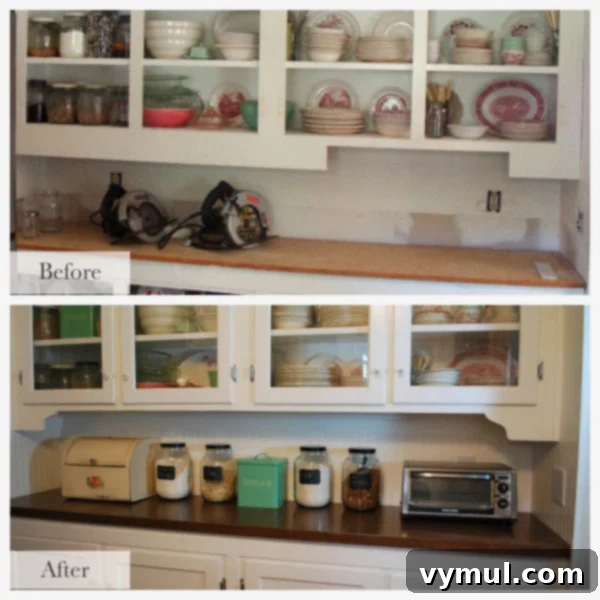
The Charming & Functional: Butler’s Pantry Area
This particular section of our kitchen, which I affectionately call the “butler’s pantry” (a playful nod to our cottage), has become one of my favorite spaces. It perfectly describes its utility, positioned outside the main working triangle of the kitchen with convenient 18-inch counters. We believe a previous owner cut out a large rectangle in the deep skirt of the upper cabinets to accommodate an oversized microwave (remember those bulky 80s models?), which unfortunately detracted from the area’s charm.
Brian brilliantly repurposed the existing structure. Using a jigsaw, he skillfully cut elegant scrolls into the ends and continued the design along the straight part to the other side. While he initially wasn’t thrilled with the results, a little wood filler, sanding, and fresh paint worked wonders to conceal any imperfections! It’s a prime example of our “cottage life” philosophy: embracing charmingly imperfect DIY solutions. The transformation is remarkable, and I absolutely love the unique character it adds.
Cost for Butler’s Pantry Area:
Molding pieces were used to cover the openings in the bottom cabinets, visible in the before picture here.
Total = $10

The Rejuvenated: Slide-In Range
Many of our friends wondered why we chose to keep our old stove. The simple answer is: it works perfectly! It’s a high-quality Jenn-Air stove that continues to function flawlessly, and it still coordinates well with our other kitchen appliances. The original range, likely a 90s model, was added to the kitchen later and had a peculiar, ugly back panel that made it appear like a freestanding unit, despite being a slide-in model. This panel easily screwed off, as you can see in the before shot here. Furthermore, the old tile counters didn’t extend to the edge of the range, creating unsightly gaps where food and water would routinely fall, which was quite unhygienic.
Now, with our new counters, it’s a true, seamless slide-in range, sitting beautifully atop the counter. The transformation is fantastic! No more gaps, no more hidden messes—just a clean, integrated look. It’s a small detail that makes a huge difference in both appearance and cleanliness.
Cleaning tip: I discovered online that Bar Keeper’s Friend is incredibly effective for cleaning older, heat-stained stainless steel stovetops. I dedicated an hour to meticulously cleaning all the nooks and crannies of our stovetop, and the results were astounding! It truly works wonders on stubborn stains.
To complete the transformation, I ordered new, correctly fitting burner pans online. And voilà! With these simple updates, our existing stove looks and feels brand new, perfectly complementing our refreshed kitchen without the expense of a full replacement.
Cost for Slide-In Range Update:
- Jenn-Air burner pans = $22
- Bar Keeper’s Friend = $4
Total = $26

The Cohesive Touch: Beadboard Backsplash & Accents
A significant element in achieving our desired farmhouse aesthetic and ensuring continuity throughout our home was the addition of beadboard paneling as a backsplash, extending up to the cabinets. This choice beautifully ties the kitchen in with the beadboard we used in our bathrooms and laundry room, creating a cohesive and harmonious design flow across the cottage.
When we retrofitted the cabinet above the stove to perfectly accommodate the microwave, it left us with a smaller upper cabinet whose original doors no longer fit. While I was perfectly content to use it as an open shelf, the exposed electrical outlet and microwave cord were an eyesore. Brian, ever the problem-solver, crafted a clever false back for this shelf. He used leftover beadboard and screen molding, designed to simply set in place. To ensure it could be easily removed when needed (it’s a snug fit!), he thoughtfully added a small screw-in hook to pull it out. Such ingenuity! He truly is a keeper.
Beadboard Cost:
- Beadboard paneling
- Corner and flat screen moldings for edging
- Wood filler
Total = $115

The Finishing Detail: Painting Our Cabinets
Ah, painting the cabinets – definitely not my favorite part of the remodel, primarily because I had to do it twice! While the final result is beautiful and perfectly matches our vision, the process itself was a bit of a setback. My top tip for anyone embarking on cabinet painting: double-check that the paint store has mixed your color precisely right! A mis-mixed batch set us back a couple of weeks and likely added a few gray hairs to my head.
Despite the hiccup, I must sing the praises of foam rollers. They are absolutely essential for achieving a smooth, professional-looking finish on cabinets. I used a brush to cut in the corners and intricate areas, then rolled all the flat surfaces and cabinet bases with foam rollers. The difference in smoothness compared to using brushes alone is remarkable. Foam rollers truly make the paint job look flawless and are a game-changer for cabinet painting.
Paint Cost:
- One gallon of Creamy White by Behr paint
- Foam roller and refills
Total = $47
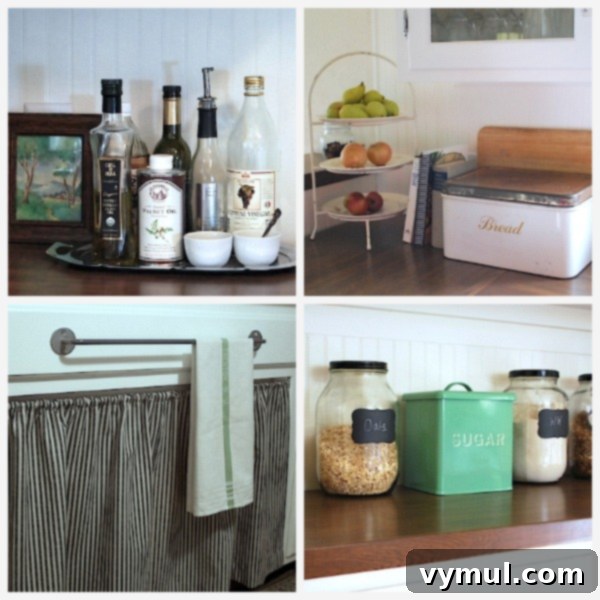
A Few More Favorite Kitchen Remodel Details & Smart Solutions:
Beyond the major transformations, it’s often the small, thoughtful details that truly enhance a kitchen’s functionality and charm:
- For quite some time, I’ve kept oils and other cooking essentials neatly organized next to the stove on a thrift store tray. However, the recent addition of small bowls for kosher salt and coarse ground pepper has been a game-changer! This simple change makes cooking incredibly easier. No more fumbling with shakers or dealing with steam fogging up containers. Just a quick pinch, and you’re good to go. I highly recommend trying it to experience the convenience!
- The awkward space next to the cabinet, with the bread box underneath, always puzzled me. Since this area is visible from the front door, I wanted it to feel less utilitarian. I incorporated a tiered cupcake/dessert stand, and I couldn’t be happier with how it beautifully fills the space. It looks elegant from the doorway and, even better, it’s incredibly practical for holding our fruits and vegetables. No more fruit bowls cluttering the counter – it’s an awesome, dual-purpose solution!
- I crafted a new sink skirt using just one yard of black and cream ticking fabric, costing only $8. While some people might question the choice of a sink skirt (and I did consider putting the cabinet doors back on), I find it incredibly convenient for quick access to the compost bucket or the trash bin without having to open a door. Plus, they’re easily washable, making them a practical and charming addition. The fact that it looks so cute is just an added bonus!
- Our dry goods storage jars (repurposed old restaurant pickle jars) originally had green lids. When placed together with our sugar container, the greens clashed, disrupting the visual harmony of the butler’s pantry area. Since I had previously added chalkboard tags, I decided to repaint all the lids a sleek black to create a more cohesive and sophisticated look. It’s a small detail, but these little touches truly work wonders in bringing a space together.
One final, yet impactful, detail was Brian’s decision to replace all the old, off-white electrical outlets with crisp white ones before installing the new white covers. It’s astounding how such a small thing – costing approximately $10 in materials and a couple of hours of work – yields such a huge payoff. We haven’t always prioritized this step in past remodels (our bathrooms, for example, are still waiting for this upgrade!), but it truly provides a polished, finished look that elevates the entire space.
And now, for the grand total for our extensive DIY kitchen remodel:
$1,165.00!
(I’ve even included an extra $1 for the pendant shade I revamped, just in case you’re meticulously adding things up!)
Can you believe we achieved such an awesome, functional, and beautiful kitchen for less than $1,200? The double blessing in all of this is truly God’s provision. We paid for this entire project with cash we saved up from extra jobs we took on over the past couple of years, meaning absolutely no debt. Yay for a beautiful kitchen and financial peace of mind!
If you’ve stayed with me through all these details, thank you so much! Now, tell me, what’s your favorite part of our transformed kitchen? Are there any ideas or tips you’re planning to incorporate into your own kitchen? Share your thoughts in the comments below!
Disclosure: This post contains affiliate links. By clicking on these links and making a purchase, you help support An Oregon Cottage at no extra cost to you. We only share products and resources that we genuinely love and recommend. (You can always read our full disclosure policy here.)