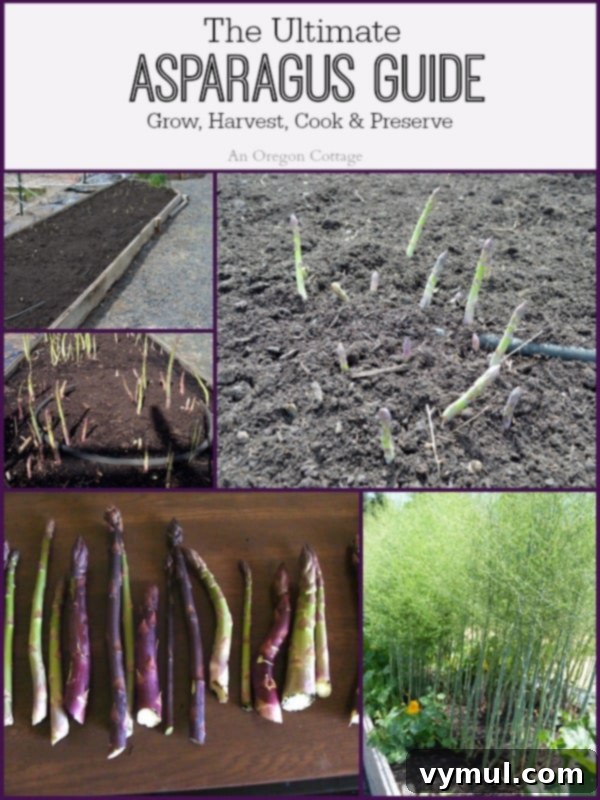
The Ultimate Asparagus Guide: Growing, Harvesting, Preserving, and Delicious Recipes
Unlock the secrets to cultivating a bountiful asparagus patch, from planting healthy crowns to mastering the harvest and transforming your spears into culinary delights. This comprehensive guide draws insights from a decade-old asparagus patch, offering practical tips for both novice and experienced gardeners, alongside an extensive collection of preserving and cooking recipes.
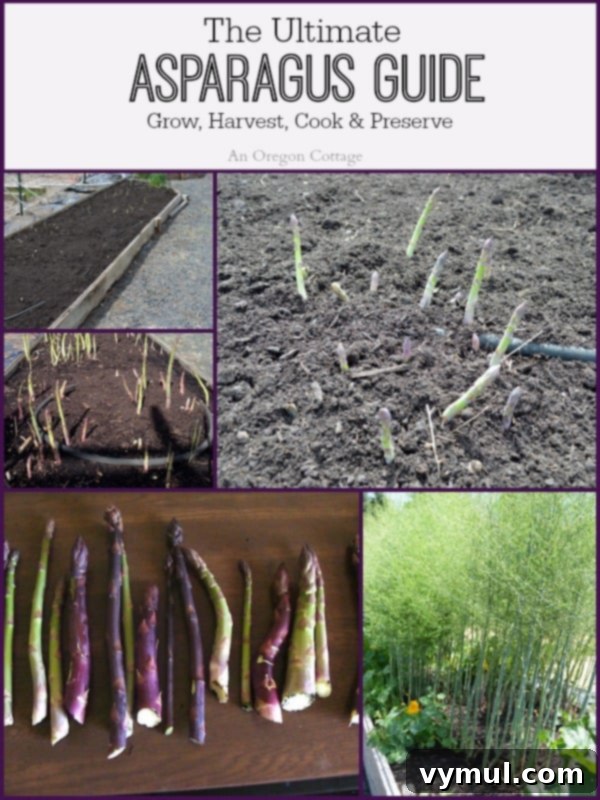
Asparagus stands out as a truly rewarding perennial vegetable for any home garden, provided you have the space and patience. While it requires an initial investment of a few years to establish, once settled, it becomes a remarkably low-maintenance food crop that will yield delicious spears for decades. Its adaptability means it can thrive in most regions of the US, with only consistently mild, wet climates like Florida proving less ideal. The emergence of those first vibrant green spears in spring is a joyous occasion for any gardener, heralding the arrival of a new growing season. Their unparalleled freshness and tenderness are a testament to the benefits of home cultivation, offering a taste experience far superior to store-bought varieties.
Our family’s asparagus patch, now a venerable decade old, consistently provides an abundant supply of fresh asparagus each spring—sometimes even more than we can consume! Beyond its delicious harvest, it gracefully transforms into a lush, green hedge, beautifully framing one side of our vegetable garden for the remainder of the season. Given the frequent inquiries I receive about this incredible crop from both my blog readers and garden visitors, I felt compelled to compile this exhaustive resource. Much like our Ultimate Rhubarb Guide, this asparagus guide aims to be your go-to source for essential information on growing, harvesting, and enjoying asparagus, complemented by a curated selection of fantastic recipes for both preserving and cooking your harvest.
How to Grow Asparagus Successfully
Cultivating asparagus is a long-term commitment that pays dividends for 20 years or more, making careful planning crucial. Here’s a step-by-step guide to establishing a thriving asparagus patch:
- **Selecting Your Crowns:** Begin your asparagus journey with 1-year-old asparagus “crowns.” These are readily available at local nurseries or online retailers in early spring. These crowns consist of a central bud and long, fleshy roots. For optimal spear production, I highly recommend choosing an all-male variety, such as ‘Jersey Knight’. While I initially aimed for an all-male patch, I’ve found many of my plants are female, leading to a prolific production of berries that unfortunately reseed tiny asparagus plants throughout the garden – a task I constantly battle. All-male varieties are superior because they channel all their energy into producing more spears rather than berries and seeds. We grow both green and purple varieties; the purple ones tend to be exceptionally hardy with thicker stems, though it’s worth noting that purple asparagus spears turn green when cooked.
- **Choosing the Perfect Location:** Asparagus beds are permanent fixtures, potentially yielding for two decades or more, so selecting the right spot is paramount. They require full sun exposure (at least 6-8 hours daily) and absolutely no competition from weeds, which can quickly strangle their extensive root systems. Excellent drainage is non-negotiable for asparagus, as soggy roots are prone to rot. For this reason, planting in a raised bed is highly recommended, as it naturally provides superior drainage and allows for easier soil amendment. An additional, vital tip: avoid planting asparagus anywhere near aggressive berry plants like raspberries or blackberries, as their rampant root systems can quickly invade and eventually kill an asparagus patch.
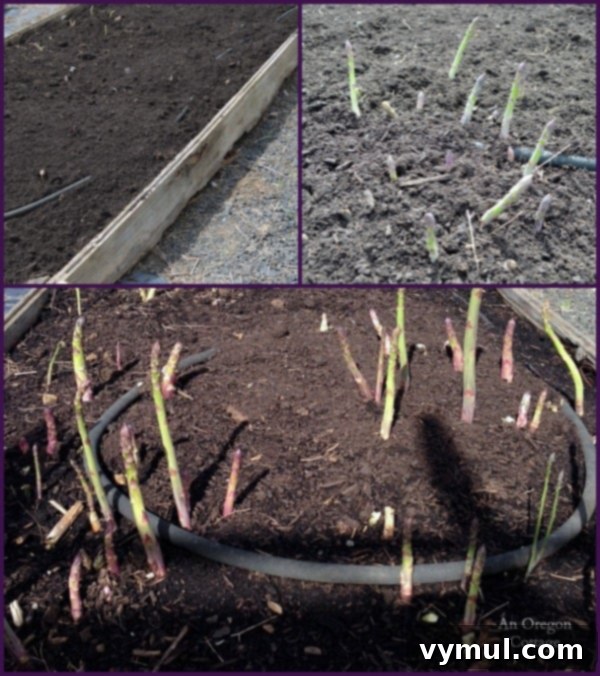
- **Soil Preparation and Planting:** Once you’ve chosen your ideal spot, prepare the soil by incorporating a generous amount of well-rotted manure or high-quality compost. This enriches the soil and improves its structure and fertility. Dig a trench approximately 6 inches deep and wide. Carefully place your asparagus crowns in the trench, ensuring their roots are spread out, and space them about 18 inches apart to allow for ample growth. Cover the crowns with about 3 inches of the amended soil. Water thoroughly after planting. As the asparagus plants grow throughout their first year, gradually fill in the trench with more soil until it’s level with the surrounding garden bed.
- **Mulching and Winter Care:** After planting, generously mulch the surface of your asparagus bed with straw, wood chips, or shredded leaves. This thick layer of mulch is crucial for suppressing weeds and retaining soil moisture. During the first growing season, allow the spears to grow unchecked, developing their characteristic ferny foliage. This foliage is essential for photosynthesis, feeding the roots and helping the plant store energy for future harvests. In late fall, the ferny foliage will naturally turn brown and die back. The Farmer’s Almanac suggests leaving this browned foliage over winter to provide an extra layer of protection for the crowns. In early spring, before new shoots emerge, cut back and remove all the old, brown fronds.
- **Ongoing Maintenance for Longevity:** Once established, asparagus is a remarkably low-maintenance perennial. Its primary needs are consistent: keep the bed meticulously weed-free to prevent root competition, water regularly, especially during dry spells, and provide a top dressing of barnyard compost or a balanced organic fertilizer each spring as new growth begins. Remember to cut down the brown fronds in early spring to make way for the new spears.
- **Avoiding Competition Within the Bed:** Due to their extensive and sensitive root systems, asparagus plants dislike competition. For this reason, I strongly advise against interplanting any other crops directly within the asparagus bed. While I do allow nasturtiums to reseed at the front edge of the bed for aesthetic reasons, I diligently remove any that attempt to grow on or near a producing asparagus crown to ensure the asparagus gets all the nutrients and space it needs.
How Much Asparagus to Plant for Your Family
Determining the right quantity of asparagus to plant can be a bit tricky, as recommendations vary widely. I’ve often seen suggestions of 10-25 plants for a family of four. However, this advice doesn’t always account for individual preferences—what if not everyone in your family enjoys asparagus, or conversely, what if some members absolutely adore it and want to eat it daily during the season? Furthermore, space limitations in your garden will inevitably play a significant role in your decision.
Let me offer our own experience as a practical example: we initially planted two raised beds, each measuring approximately 20 feet long by 3 feet wide, with about 12 crowns in each bed. In the early years, this seemed like a perfectly manageable amount. However, as the patch matured and became incredibly productive, it now provides far too much asparagus for our family of four to consume fresh. In hindsight, just one of these beds would have likely been sufficient for our needs. That being said, the surplus has become a delightful gift, allowing us to share with friends and neighbors, and this year, I even had enough to sell some at a local market. So, the “too much” turned into an enjoyable abundance!
Ultimately, the decision on how much asparagus to plant should be based on a careful assessment of your family’s actual consumption habits, your desire to preserve asparagus, and the physical space you have available in your garden. Start with a conservative estimate, knowing that a well-maintained patch will only grow more generous with each passing year.
How to Harvest Asparagus: Patience and Technique
Harvesting asparagus requires patience in the initial years, but once established, it becomes one of the most rewarding gardening tasks. Understanding the correct timing and technique is vital for both a bountiful harvest and the long-term health of your plants.
- **The Waiting Game: Years 1-3:** It takes considerable time and energy for an asparagus patch to become robustly established. You should plan on very minimal, if any, harvesting for the first 2-3 years after planting. This critical period allows the crowns to develop strong, deep root systems, which are essential for future productivity.
- **Year 1:** Absolutely no harvesting. Let all spears grow into ferns to feed the roots.
- **Year 2:** If your plants appear exceptionally healthy and vigorous, you might cautiously harvest a small handful of spears (perhaps for just a week) as a small reward for your patience. This should be a very limited harvest.
- **Year 3:** You can typically begin harvesting for a short period, generally the first 2-3 weeks in spring after the spears start growing. If the patch seems less robust or spears are sparse, err on the side of caution and harvest for an even shorter duration.
- **Establishing Your Harvest Window:** Once your asparagus patch is fully established (typically from year 4 onwards), the critical rule is to **harvest only for approximately 6-8 weeks in spring.** Some sources suggest a shorter window of 2-3 weeks, but in my experience with a healthy, strong patch, a 6-8 week harvest period has proven sustainable without detrimental effects. After this designated harvest period concludes, **it is absolutely crucial to allow the remaining spears to grow freely and develop into tall, ferny foliage.** This period of unchecked growth is paramount to the health and longevity of the plant; the ferns perform photosynthesis, feeding the roots and allowing the crowns to store energy for the following year’s harvest, ultimately leading to bigger and stronger plants.
- **The Art of Harvesting:** To harvest a spear, you have two primary methods:
- **Snapping:** The easiest and often preferred method is to simply snap the spear off close to ground level. Hold the spear near its base and bend it until it breaks cleanly. The spear will naturally break at the point where it becomes tender, ensuring you only harvest the edible portion.
- **Cutting:** Alternatively, you can use a sharp knife to cut the spear at or just below ground level. I personally find snapping easier because I’ve accidentally cut too many newly emerging spears when using a knife, which can damage the developing crown. Whichever method you choose, aim to harvest spears that are at least 6-8 inches tall and pencil-thick or larger.
- **Understanding Spear Size Variation:** In all my years of growing asparagus, I’ve observed that spears are *never* uniformly sized, even from the same root system within the same harvest period. You’ll consistently find a mix of thick, robust spears and thinner, more delicate ones right from the beginning of the harvest. Therefore, the often-repeated recommendation to “harvest until most of the spears are smaller than a pencil” doesn’t quite apply to my experience. This is why I rely on the 6-8 weeks rule for determining the end of the harvest season, rather than spear thickness.
- **Maintain a Clean Bed During Harvest:** During the active harvest period, your goal is to prevent any spears from developing into ferns. This means you should keep the entire patch cut down. If you encounter any spears that are too tiny, stringy, or malformed, harvest them anyway and simply add them to your compost pile. This encourages the plant to produce more vigorous spears.
- **Alternate Fall Harvest Period (Advanced):** For adventurous gardeners, a secondary fall harvest is possible, though it requires strategic planning. To achieve this, divide your asparagus patch into two distinct sections. Harvest one side normally in the spring, allowing the spears in the other half to grow into ferns without any harvesting. In August, cut down all the ferny foliage on the side that you let grow in spring. With favorable conditions, you should then be able to harvest new spears as they emerge in September and October from this section. This method ensures one part of your patch still feeds its roots adequately for the following spring.
The Astonishing Summer Growth of Asparagus
Here’s the most important thing to be prepared for when growing asparagus, especially if you’re new to it:
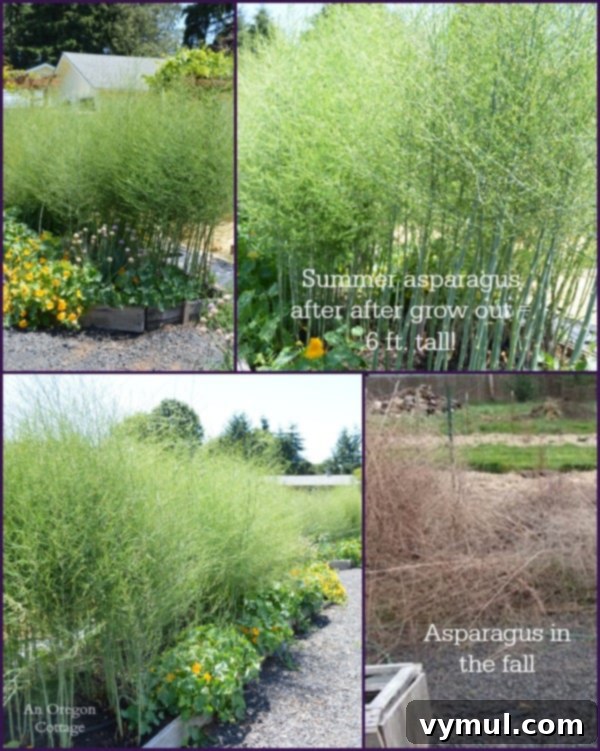
After the spring harvest concludes and you allow the remaining spears to grow, they will transform into a HUGE, dense, 6-foot-tall hedge by the height of summer! This transition often surprises many people. When visitors tour my garden in July, the most common question I always receive is, “What is that?” as they point to the towering asparagus hedge. Many are simply unfamiliar with what asparagus plants look like as they mature beyond the edible spear stage. I certainly didn’t have a clue before I started growing it, and its impressive, fern-like growth never ceases to amaze me. This lush greenery not only provides a beautiful backdrop for the rest of the garden but is also vital for the plant’s health, as the ferny foliage is responsible for photosynthesizing and storing energy in the roots for the following spring’s harvest.
Asparagus Recipes: From Preserving to Plate
Once your asparagus patch is yielding a bountiful harvest, you’ll be delighted by its culinary versatility. Whether you’re looking to enjoy its fresh, vibrant flavor immediately or preserve it for year-round enjoyment, asparagus shines in countless dishes. Below, you’ll find a curated collection of recipes, ranging from essential preserving methods to diverse cooking preparations that highlight this spring delicacy.
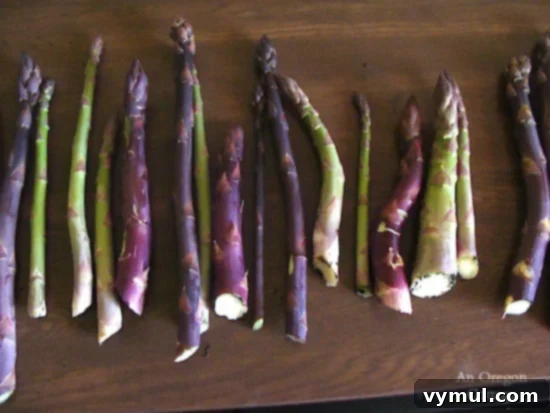
Preserving Asparagus Recipes
With an abundant harvest, preserving asparagus ensures you can enjoy its unique flavor long after spring has passed. These methods help lock in freshness and taste for future meals.
Pickling and Canning Asparagus
Sweet Pickled Asparagus @ Taste of Home
Quick Refrigerator Pickled Asparagus @ Tasting Table
How to Freeze, Dry & Ferment Asparagus @ Common Sense Homesteading
Pressure Canned Asparagus @ Well Preserved
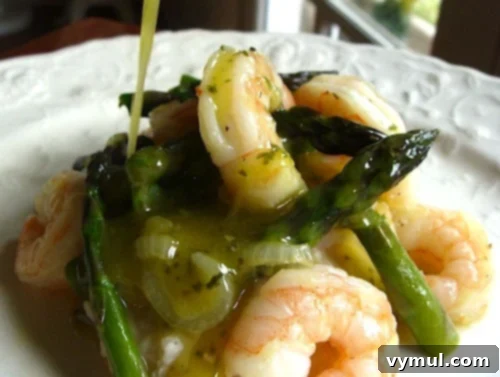
Cooking Asparagus Recipes
From simple roasted preparations to gourmet dishes, asparagus is incredibly versatile. Explore these recipes to discover new and delicious ways to incorporate this beloved vegetable into your meals.
Shrimp and Asparagus over White Bean Puree
Quick Pickled Green Bean or Asparagus Roll-Up Appetizer
Spicy Noodle Salad with Asparagus (or other seasonal vegetable)
Spring Asparagus Quiche
Asparagus & Ham Egg Cups with Easy Hollandaise Sauce
Chicken-Spinach Frittata with Feta & Tomatoes (and Asparagus!)
Grilled Asparagus & Prosciutto Wraps @ Dad Cooks Dinner
Oven-Roasted Asparagus @ Empress of Dirt
Bacon Wrapped Caramelized Sesame Asparagus @ How Sweet Eats
Asparagus and Gruyere Tart @ Tidy Mom
Honey Breadcrumb Asparagus @ Framed Cooks
Parmesan-Crusted Asparagus @ Cooks Country via Chef’s Catalog blog
Asparagus Gratin @ Apron Appeal
Balsamic Asparagus @ Six Sister’s Stuff
Penne with Chicken and Asparagus @ All Recipes

Sources: Farmer’s Almanac, Organic Gardening