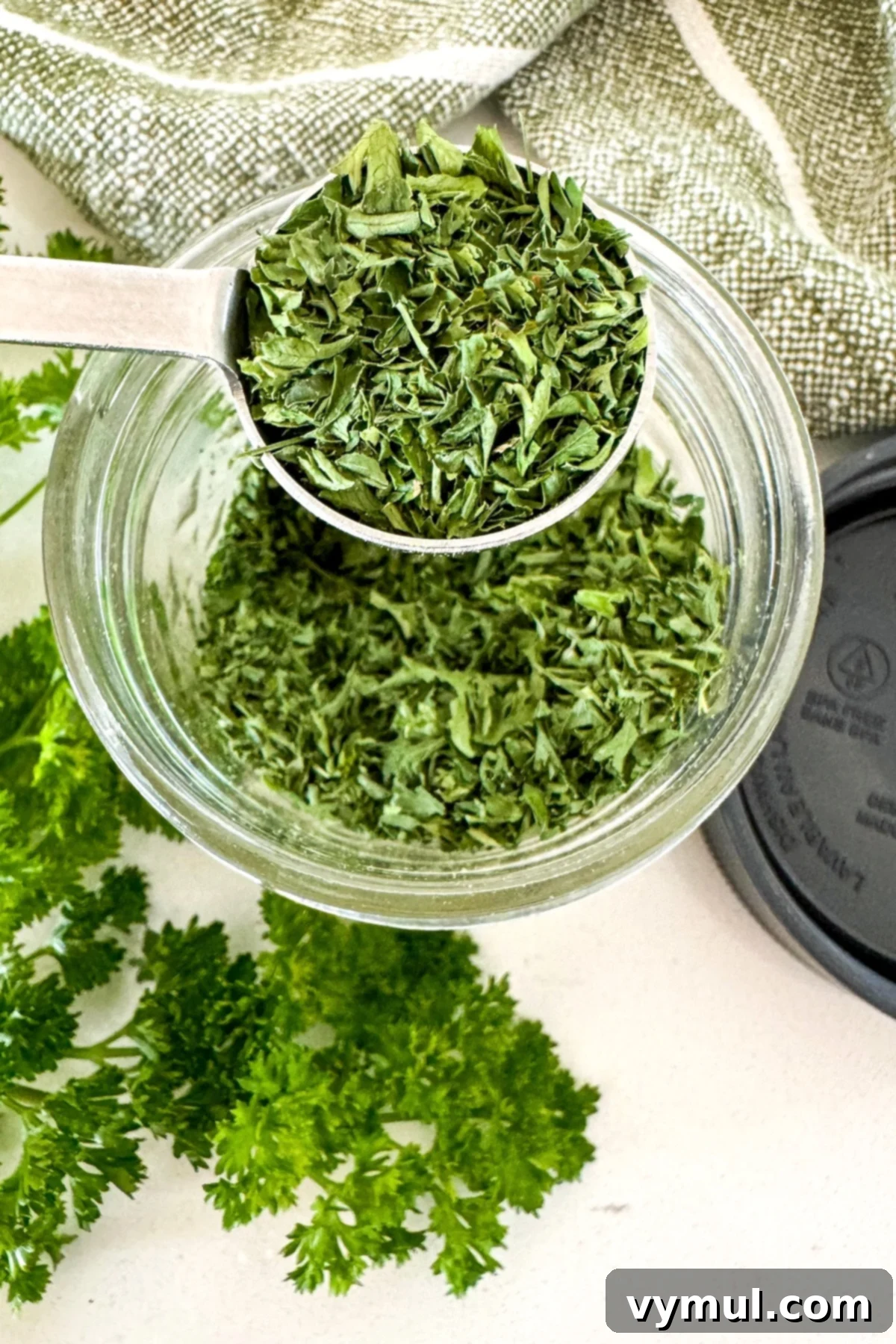
Mastering Dried Parsley: Your Complete Guide to Oven, Dehydrator, and Air Drying
Discover how to easily dry fresh parsley using your oven, a food dehydrator, or even by simple air drying. With these clear, step-by-step instructions—and an analysis of the pros and cons of each technique—you’ll be able to preserve an abundant supply of dried parsley to elevate your dishes throughout the entire year!
Home-dried parsley is an incredibly versatile herb that adds a fresh, herbaceous note to countless recipes. I frequently incorporate it into staples like Kid Approved Ranch Dressing and Simple Lemon Vinaigrette Dressing. It’s also a fantastic addition to hearty meals such as Cajun Barley Vegetable Soup or light bites like 15 Minute Crispy Tuna Patties. Having a supply of this vibrant herb on hand means you’re always ready to infuse your cooking with garden-fresh flavor, even when fresh parsley isn’t in season.
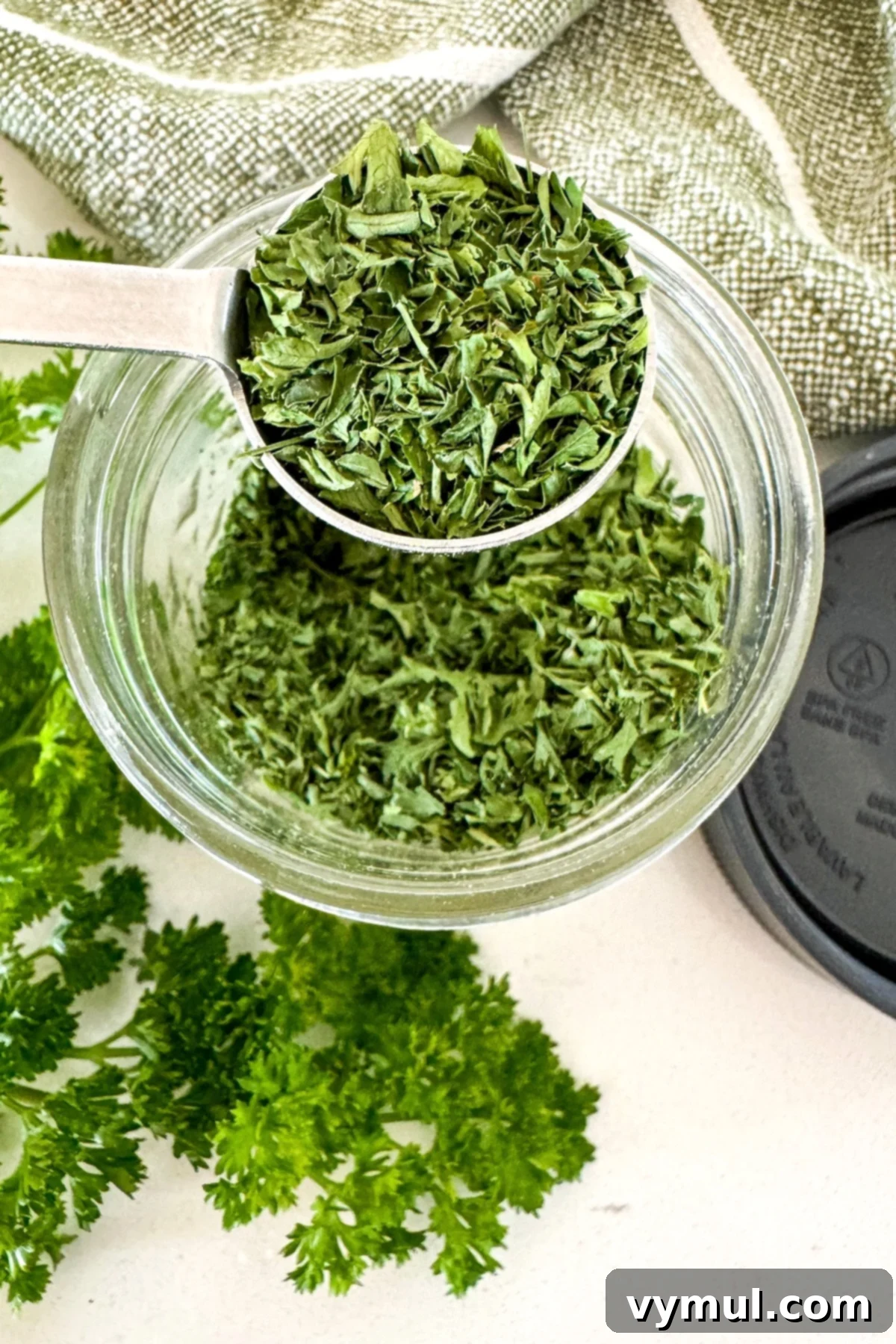
While dried parsley might seem like a common background herb in your spice rack, often overshadowed by bolder flavors like basil or oregano, its value goes far beyond its subtle taste. For a long time, I didn’t give it much thought, using it primarily for garnish or a mild green touch in recipes.
However, my perspective completely shifted when I delved into an article highlighting the remarkable healthy benefits of dried parsley – yes, specifically the dried form, not just fresh! It turns out that the drying process actually concentrates certain compounds in parsley. This increases the levels of beneficial flavonoids, particularly apigenin. Apigenin is a powerful antioxidant that has been studied for its potential to help fight cancer, improve sleep quality, reduce anxiety, and even regulate hormones. This incredible discovery transformed dried parsley from a mere seasoning into a valuable wellness ingredient in my kitchen. (source)
Of course, fresh parsley is also a nutritional powerhouse, packed with essential vitamins K, C, and A, along with beneficial beta-carotene, potassium, and calcium. The good news is that parsley retains a significant portion of these vital nutrients even after drying, more so than many other delicate herbs. This makes it an excellent choice for preserving and enjoying its health-boosting properties year-round.
Knowing all this, I now make it a point to meticulously dry all the parsley I harvest from my garden. I liberally add it to tomato sauces, enriching soups, and hearty stews throughout the colder months. It’s an easy and delicious way to ensure my family and I benefit from its concentrated goodness, making every meal a little more nutritious and flavorful.
How to Prepare Parsley for Drying
Proper preparation is the first and most crucial step to ensure your dried parsley retains its vibrant flavor and health benefits. Starting with clean, fresh, and thoroughly dry parsley will lead to the best results, regardless of your chosen drying method.
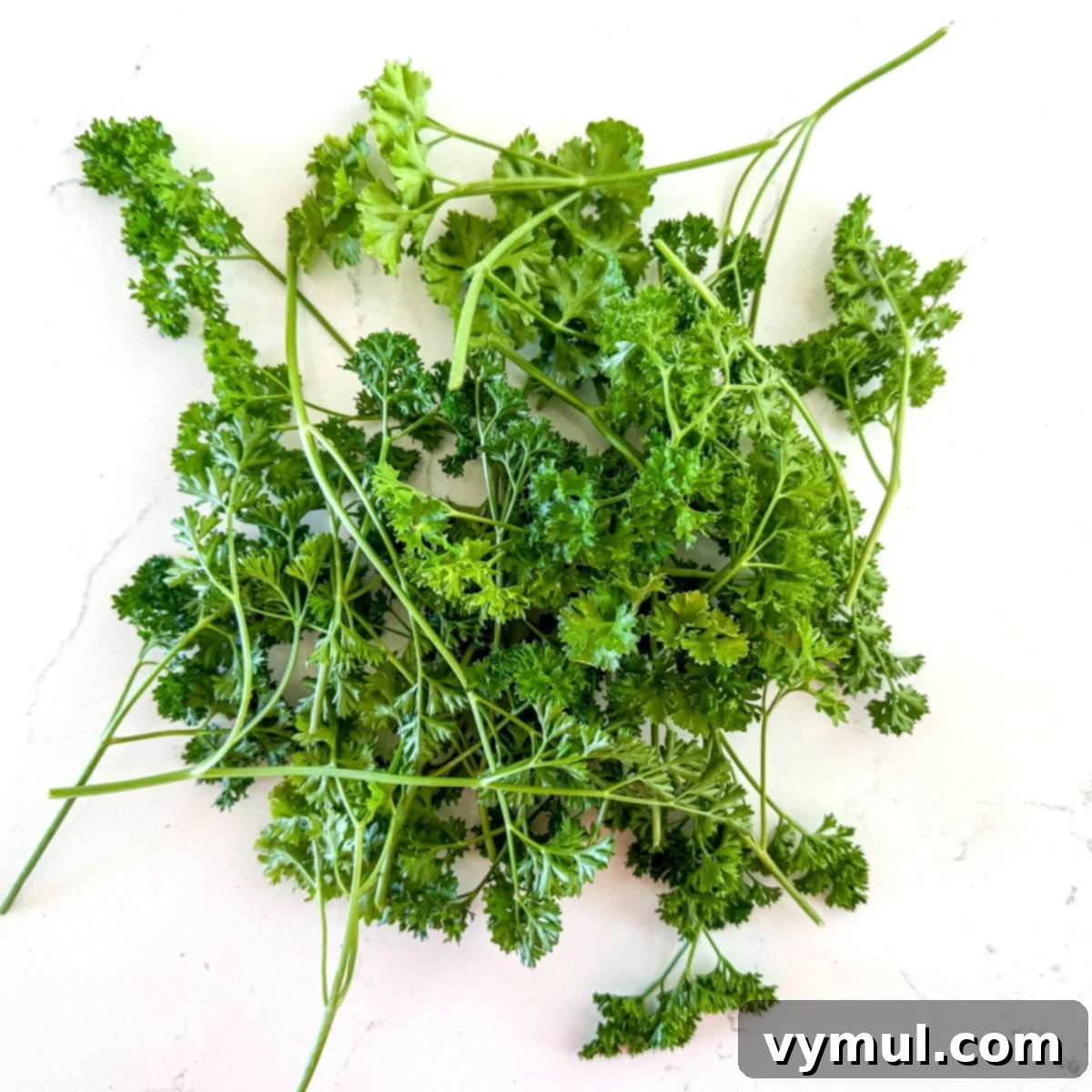
- Gather Your Parsley. You can dry any variety of parsley, whether it’s the common curly-leaf parsley or the more robust flat-leaf (Italian) parsley. Both dry beautifully and retain their essential qualities. Begin by collecting a generous bunch, either from your garden harvest or fresh from the grocery store. Look for vibrant green leaves without any yellowing or wilting.
- Wash the Cuttings Thoroughly. Rinse the parsley stems and leaves under cool running water to remove any dirt, dust, or potential pests. It’s essential to be gentle to avoid bruising the delicate leaves. After rinsing, shake off excess water. For optimal drying, use a salad spinner to remove as much moisture as possible. Spin the parsley in batches until it appears completely dry. Any remaining water can hinder the drying process and potentially lead to mold.
TIP: When harvesting from my own organic garden, I often skip washing unless the leaves have visible dirt. However, if you’re unsure about the source or if the parsley looks dirty, a thorough wash is always recommended for safety and cleanliness.
3. Choose Your Drying Method. Once your parsley is clean and dry, it’s time to select the preservation method that best suits your resources and preferences. We’ll explore three effective ways to dry parsley: air drying, oven drying, and using a food dehydrator.
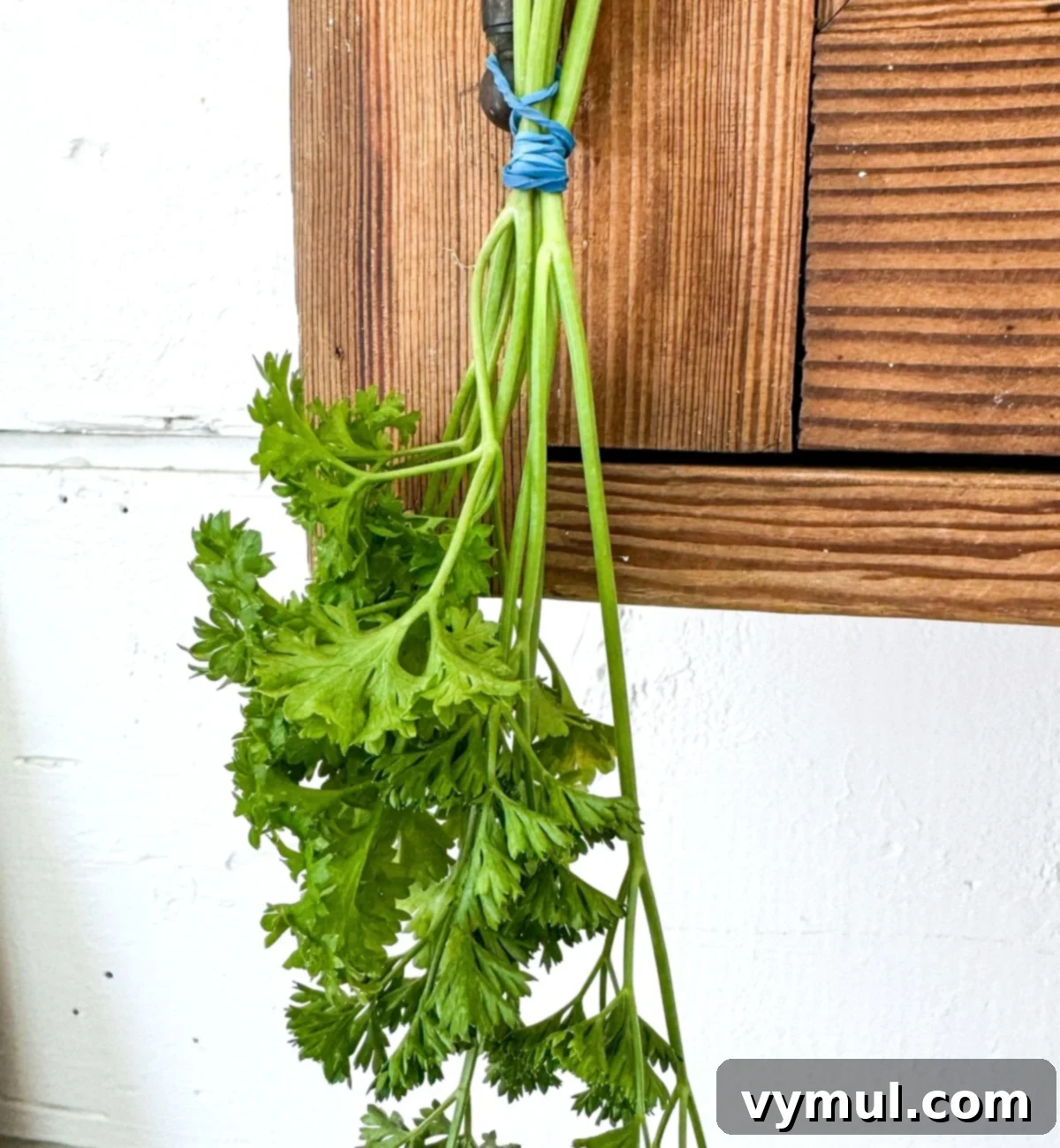
Air Drying Parsley: The Traditional Method
Air drying is one of the oldest and simplest methods for preserving herbs, requiring no special equipment and minimal electricity. It’s an excellent choice for those who prefer a natural approach, as long as you have the right conditions.
- Bundle the Stems. Take small amounts of parsley stems, creating compact bundles. Use a rubber band to securely tie the stems together near their base. Avoid making the bundles too large, as this can hinder air circulation and prolong drying time, increasing the risk of mold. Small, loose bundles dry more efficiently.
- Hang in an Ideal Location. Find a cool, dry place away from direct sunlight and with good air circulation. Low humidity is key for successful air drying. Popular spots include a pantry, a spare room, or an attic. If your only option is a brighter area, protect the parsley by loosely placing a brown paper bag around each bundle. Remember to poke several holes in the bag to allow for ventilation while shielding the herbs from light and dust. The drying process can take anywhere from one to two weeks, depending on your environment.
TIP: Always use a rubber band when air drying herbs and flowers. As the stems lose moisture and shrink during drying, the rubber band will contract automatically, keeping your bundles securely together. String, by contrast, would loosen and allow the herbs to fall apart.
PROS: This method is incredibly easy and requires absolutely no specialized equipment or electricity, meaning it won’t contribute to heating up your home during warmer months. It’s a truly hands-off approach once the bundles are hung.
CONS: Air drying can be slow, sometimes taking up to two weeks for the parsley to become thoroughly crisp. This prolonged drying time, especially in less-than-ideal conditions, carries a slight risk of mold developing before the herbs are completely dry, which would render them unusable.
NOTE: If you live in an area with high humidity, air drying might not be the most effective method. In such environments, consider using an oven or a dehydrator to ensure proper and safe drying.
Drying Parsley With An Oven: A Quick Solution
The oven provides a faster alternative to air drying, utilizing an appliance most kitchens already have. It’s a great option when you need to dry parsley quickly or if your environment is too humid for air drying.
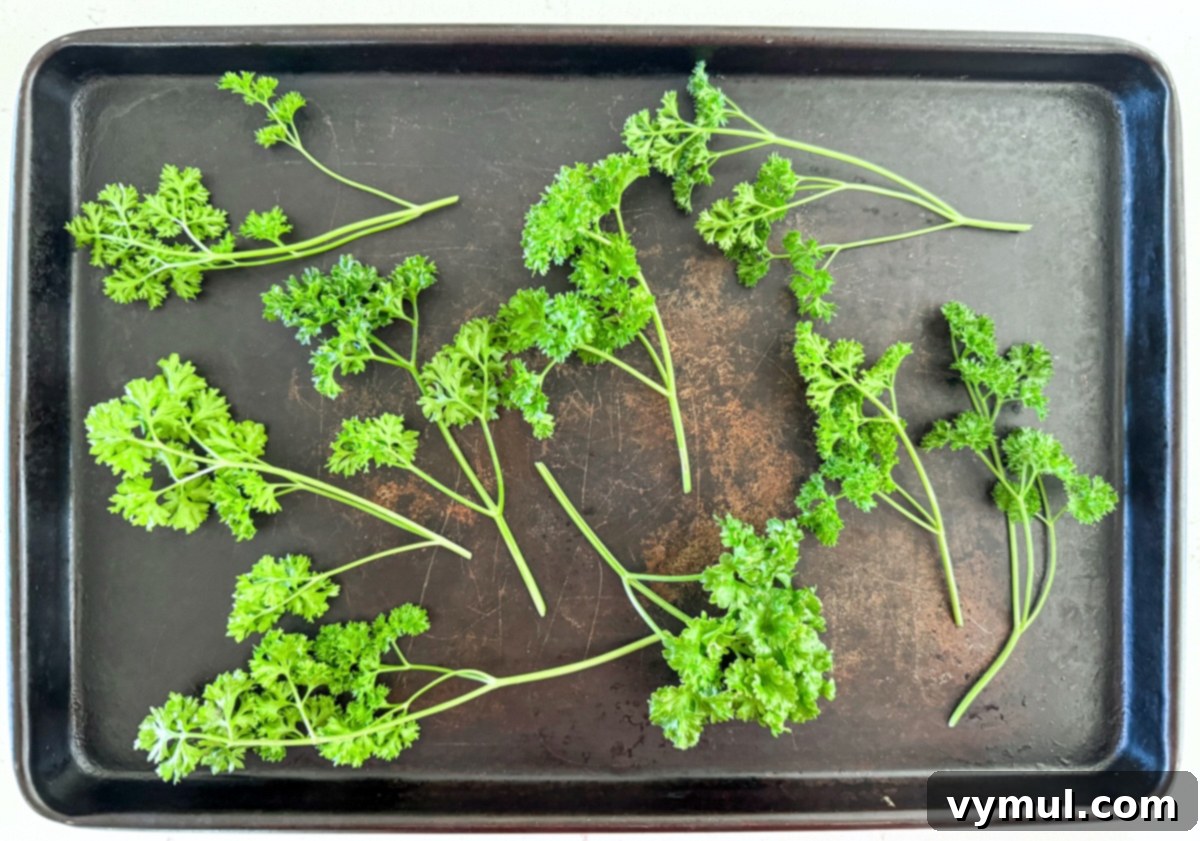
1. Prepare and Preheat. Preheat your oven to its absolute lowest setting, typically around 170 degrees Fahrenheit (77 degrees Celsius). If your oven has a convection bake option, use it, as the increased airflow will significantly speed up the drying process and promote even dehydration. Arrange your washed and dried parsley in a single layer on a baking tray. To save time during preparation, you can leave the leaves on the stems; they are much easier to remove once completely dry and brittle.
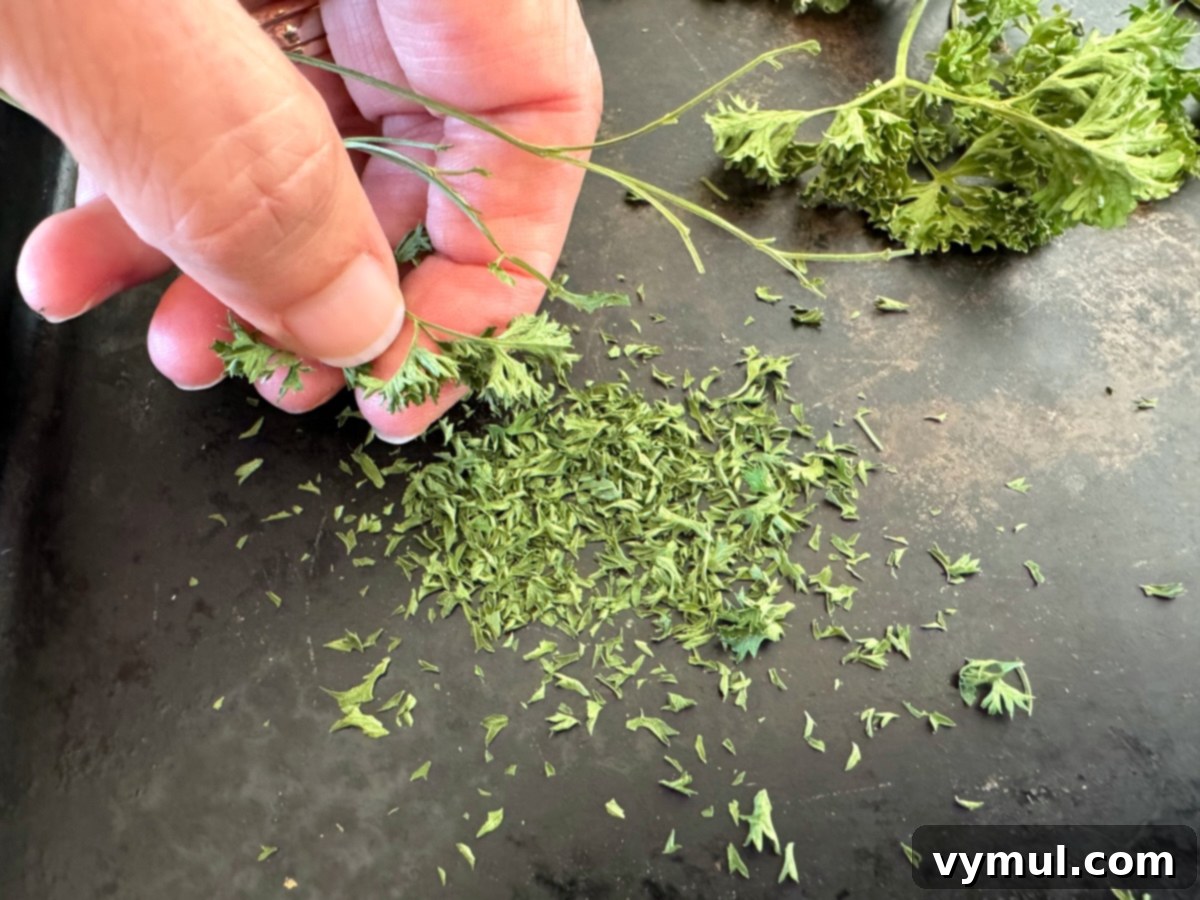
2. Bake and Check for Crispness. Begin baking for approximately 20 minutes. After this initial period, start checking the parsley every 5 minutes. The goal is for the leaves to become completely crisp and easily crumbled between your fingers. Drying times can vary significantly based on your oven’s calibration, whether you’re using convection, and the initial moisture content and size of your parsley. For instance, in a non-convection oven, it might take up to 35 minutes or even a bit longer. Once crisp, turn off the oven and allow the parsley to cool completely on the tray before handling. This cooling period helps to further crisp the leaves. Then, simply crumble the dry leaves off the stems with your fingers.
TIP: The absolute key to successful oven drying, especially with delicate herbs like parsley, is constant vigilance. Parsley leaves are thin and can go from perfectly dry to burnt very quickly. Set a timer and check frequently to prevent scorching.
PROS: Oven drying is a relatively quick method, making it ideal if you’re short on time. It also uses an appliance that is standard in almost every household, so no extra equipment is needed.
CONS: The primary drawback is that running an oven, even at a low temperature, can significantly heat up your kitchen, which might be undesirable in warmer climates or seasons. There’s also a higher potential for burning the delicate herbs if they are not watched carefully, which can ruin your entire batch.
Drying Parsley With A Dehydrator: Efficient and Consistent
A food dehydrator offers a controlled and consistent environment for drying herbs, often yielding superior results in terms of color, flavor, and nutrient retention compared to oven drying. It’s an excellent investment for anyone serious about preserving their garden harvests.
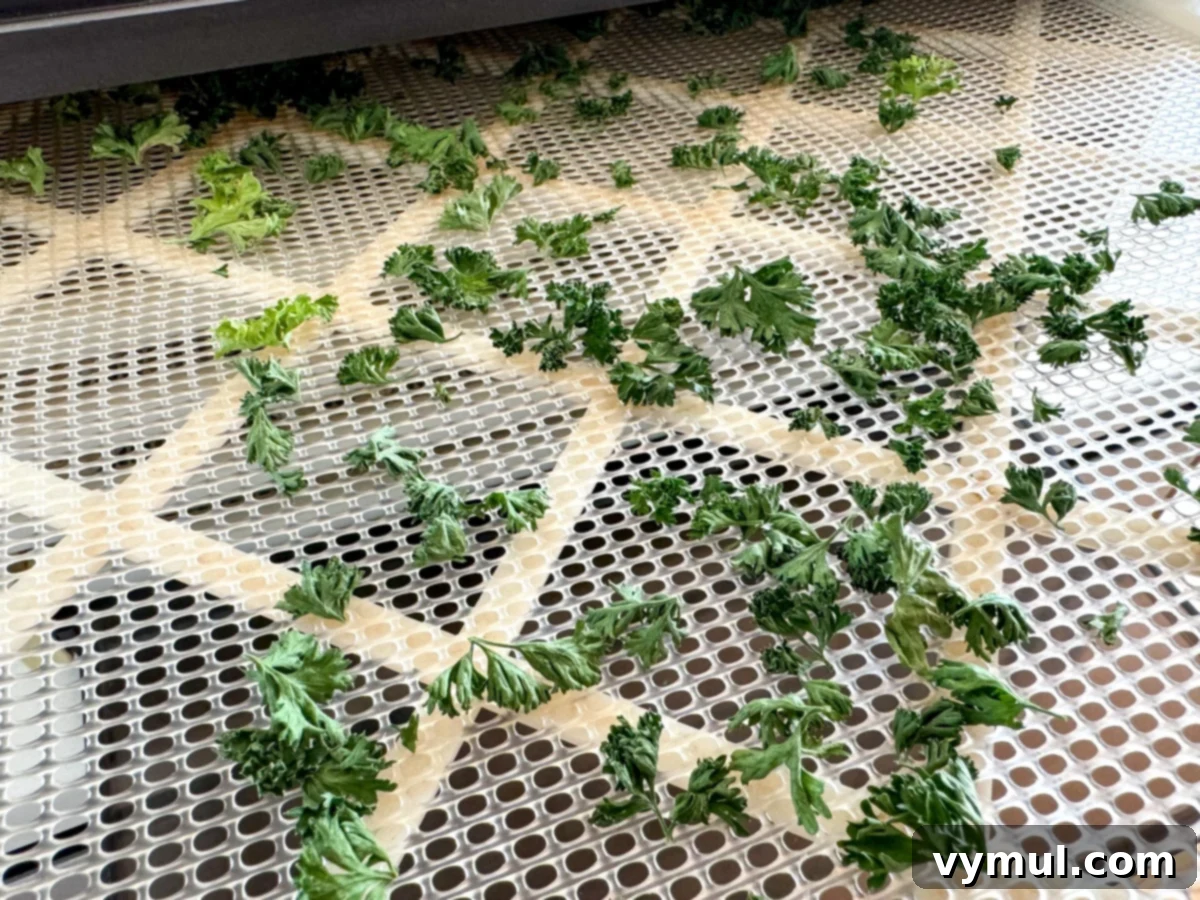
1. Arrange on Trays and Set Temperature. Carefully lay out the washed and dried parsley leaves in a single layer on your dehydrator trays. For dehydrating, I usually remove the leaves from the thicker stems to maximize the amount of parsley I can fit on each tray and ensure more uniform drying. Set your dehydrator to a low temperature, typically between 95-120 degrees Fahrenheit (35-49 degrees Celsius). This low and slow approach helps to preserve the parsley’s volatile oils, resulting in a more flavorful dried herb. Drying can take anywhere from 2 to 6 hours. Begin checking the leaves frequently after about 2 hours until they are completely brittle and crumble easily when rubbed between your fingers.
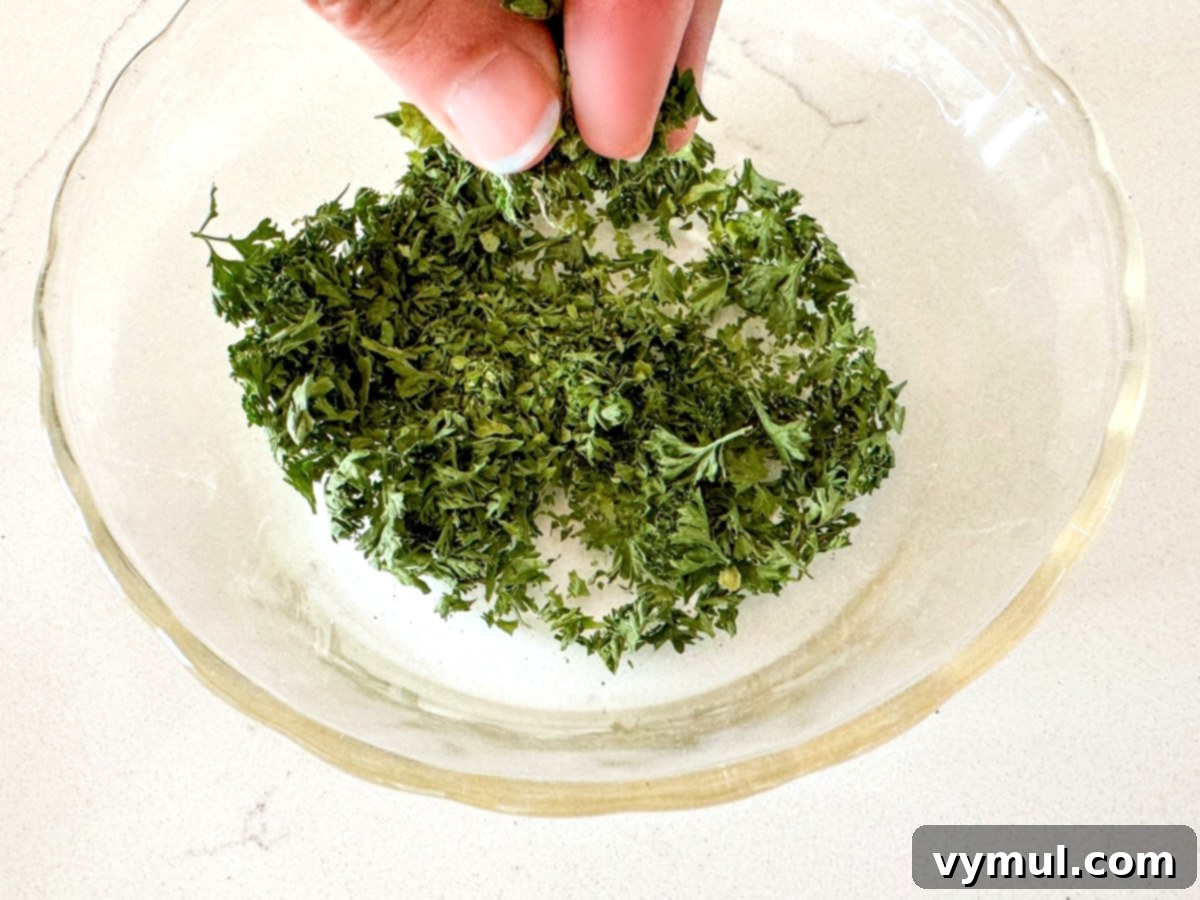
2. Crumble and Store. Once the parsley leaves are thoroughly dry and crisp—they should snap and crumble readily, with no pliability—carefully transfer them from the dehydrator trays into a large bowl. Using your fingers, gently crumble the dried leaves into smaller pieces. You can achieve a finer consistency by rubbing them between your palms or by using a spice grinder or a dedicated coffee grinder for a very uniform powder, though finger-crumbling is perfectly adequate for most uses. This prepares your parsley for easy storage and usage.
TIP: The precise drying time will depend on your specific dehydrator model, the humidity in your kitchen, and the thickness of your parsley leaves. The first time you dry parsley with a new machine or in a new environment, start with a lower temperature setting and check the leaves often. This will help you learn the optimal time and temperature for your setup. For instance, my older 1970s dehydrator might take 5-6 hours at 120 degrees, while a more modern, efficient unit could finish in as little as 2 hours at 100 degrees.
PROS: Dehydrators are highly efficient and, depending on their size, allow you to process large quantities of parsley at once. They generally consume less electricity than ovens for extended drying periods. Furthermore, if the weather is warm, you can conveniently place the dehydrator outside or in an unused room to minimize noise and heat in your main living space.
CONS: The drying process in a dehydrator typically takes longer than oven drying, though it is more hands-off. The machine can also be quite loud, which might be a concern if kept indoors (my family often voices complaints!). While generally effective, dehydrators can sometimes dry herbs slightly less evenly than an oven if not carefully loaded or rotated.
Storing Your Dried Parsley
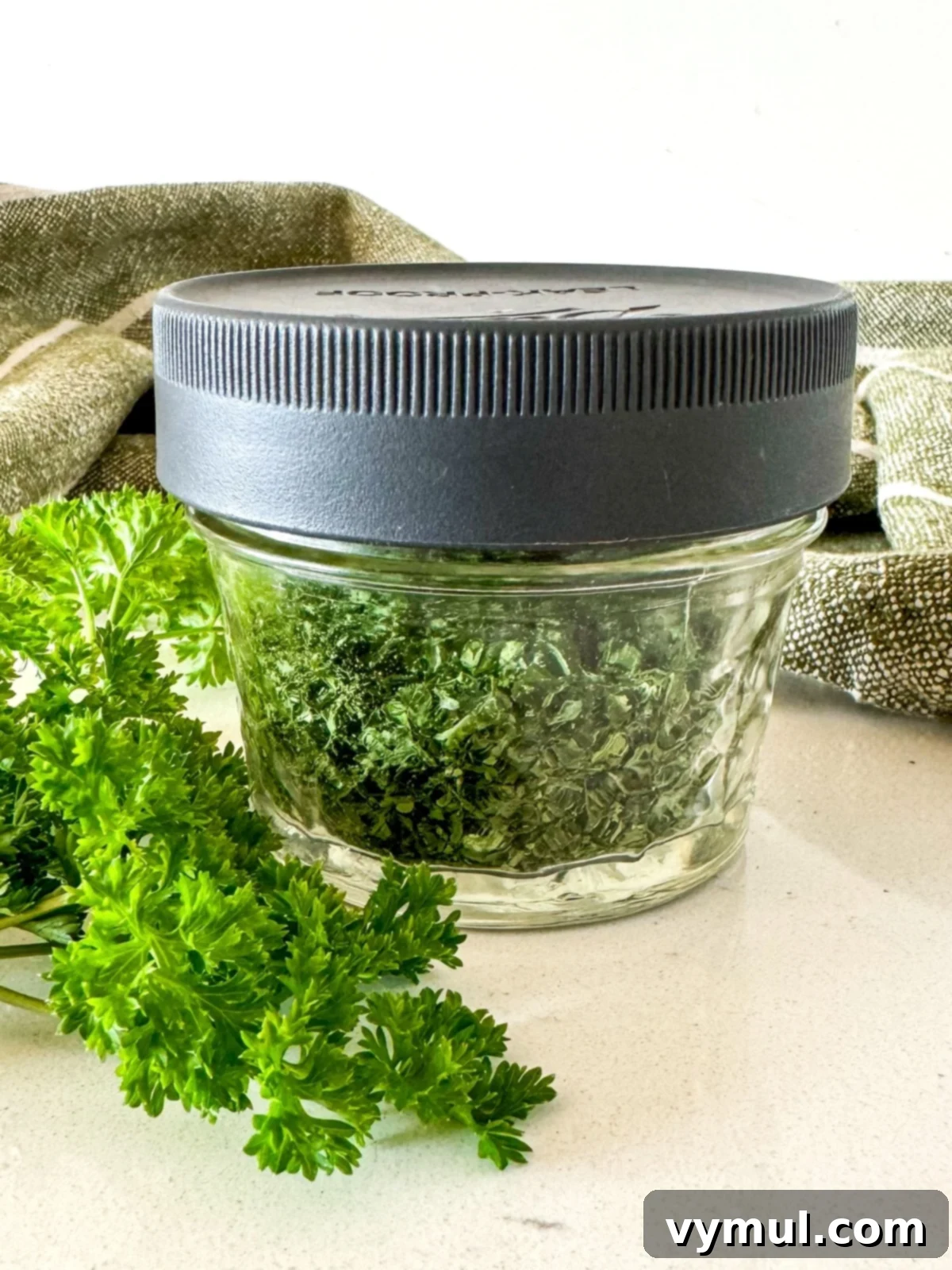
Once your parsley is thoroughly dried and crumbled, proper storage is essential to maintain its flavor, aroma, and nutritional integrity for as long as possible. The key is to protect it from moisture, light, and air.
How long does dried parsley last?
When stored correctly in an airtight container in a cool, dark place, away from heat and direct light, dried parsley can retain its quality and potency for 1 to 2 years. While it may still be safe to consume after this period, its flavor and aroma will gradually diminish.
How much dried parsley do I use in place of fresh?
A good rule of thumb for substituting dried parsley for fresh in recipes is to use approximately one-third of the amount. So, if a recipe calls for 2 tablespoons of fresh parsley leaves, you would use 1 teaspoon of dried parsley. Remember that dried herbs are more concentrated in flavor.
Want to preserve more food by drying?
If you’ve enjoyed the process of drying parsley, you might be interested in exploring other food preservation techniques. Drying is a fantastic way to extend the shelf life of many fruits and vegetables, allowing you to savor garden goodness all year long. Here are a few other drying tutorials to inspire your next kitchen project:
- How to Dry Tomatoes And Store In Olive Oil
- How To Dry Plums (Not Your Mother’s Prunes!)
- Homemade Dried Cherries Two Ways – Which is Best?
I genuinely hope you found this comprehensive tutorial on how to dry parsley using three distinct methods—air drying, oven drying, and dehydrating—both helpful and inspiring. Preserving your own herbs is a rewarding endeavor that brings fresh flavor to your table long after the growing season ends. If you give any of these methods a try, please be sure to leave a 5-star rating and share your experience so I can hear about your success!
Print Recipe
Pin Recipe
SaveSaved!
How to Dry Parsley – Oven, Dehydrator, or Air Dry
Equipment
-
Food Dehydrator optional
Ingredients
- 1 bunch fresh parsley, curly or flat-leaf
Instructions
Prep Parsley
-
Harvest or buy fresh parsley. For air drying, leaves can remain on stems. For oven or dehydrator drying, remove leaves from any overly thick stems if you wish to maximize space or speed up drying.
-
Rinse parsley leaves gently under cool water.* Pat dry thoroughly with a towel or use a salad spinner to remove all excess moisture. This step is critical for successful drying.
-
To make dried parsley, choose one of the following drying methods:
Oven Drying:
-
Preheat your oven to its lowest possible setting (around 170°F / 77°C). If you have a convection setting, use it for better airflow. Spread parsley leaves in a single layer on a baking tray. No need to line with parchment paper unless you prefer.
-
Bake for 20 minutes, then check every 5 minutes until the leaves are completely dry and crisp. Total time typically ranges from 20-35 minutes, depending on your oven and leaf size. The leaves should easily crumble. Let cool completely on the tray before handling.
Dehydrator Drying:
-
Lay out parsley leaves in a single layer on dehydrator trays. Dry at 95-120°F (35-49°C) for 2-6 hours. Check frequently; the leaves are dry when they are brittle and crumble when rubbed. Drying time varies by machine and humidity.
-
The parsley is dry when the leaves are totally crispy and crumble easily. They should not bend or have any soft areas, but sound crunchy and fall apart in your fingers. This may take longer than 6 hours depending on your dehydrator, kitchen humidity, and type of parsley.
Air Drying:
-
Gather small bundles of parsley stems and tie them at the base with a rubber band. Hang upside down in a cool, dry place out of direct sunlight. Ensure good air circulation.
-
Allow to dry completely until crisp, which can take 1 to 2 weeks depending on humidity. If hanging in a bright area, cover bundles with a paper bag poked with holes for ventilation.
Store
-
Crumble (or not). For all methods, once the leaves are completely dry, pour them into a small bowl and use your fingers to crumble them into desired pieces. You can also store leaves whole and crumble as needed, or use a spice grinder for a finer texture.
-
Place your dried parsley crumbles or whole leaves into small glass jars with airtight lids. Label and date each jar. This is IMPORTANT because many dried green herbs look similar once on your spice shelf!
Notes
TIP for Dehydrators: I’ve found that the absolute lowest setting for ‘herbs’ can sometimes be too low for my machine, requiring almost 24 hours to dry most parsley leaves. This consumes more electricity than I prefer for perceived “better quality.” A temperature of 95-120°F is still low enough to preserve the parsley oils and vitamins and will complete the drying in a more reasonable timeframe of a few hours. Make your own decision on how “low and slow” you want to go.
How long does dried parsley last?
Stored in an airtight container in a cool, dark place, dried parsley will last 1-2 years, or until you notice its aromatic intensity beginning to fade.
How much dried parsley do I use in place of fresh?
1 tablespoon of fresh parsley leaves = 1 teaspoon of dried parsley.
Nutrition