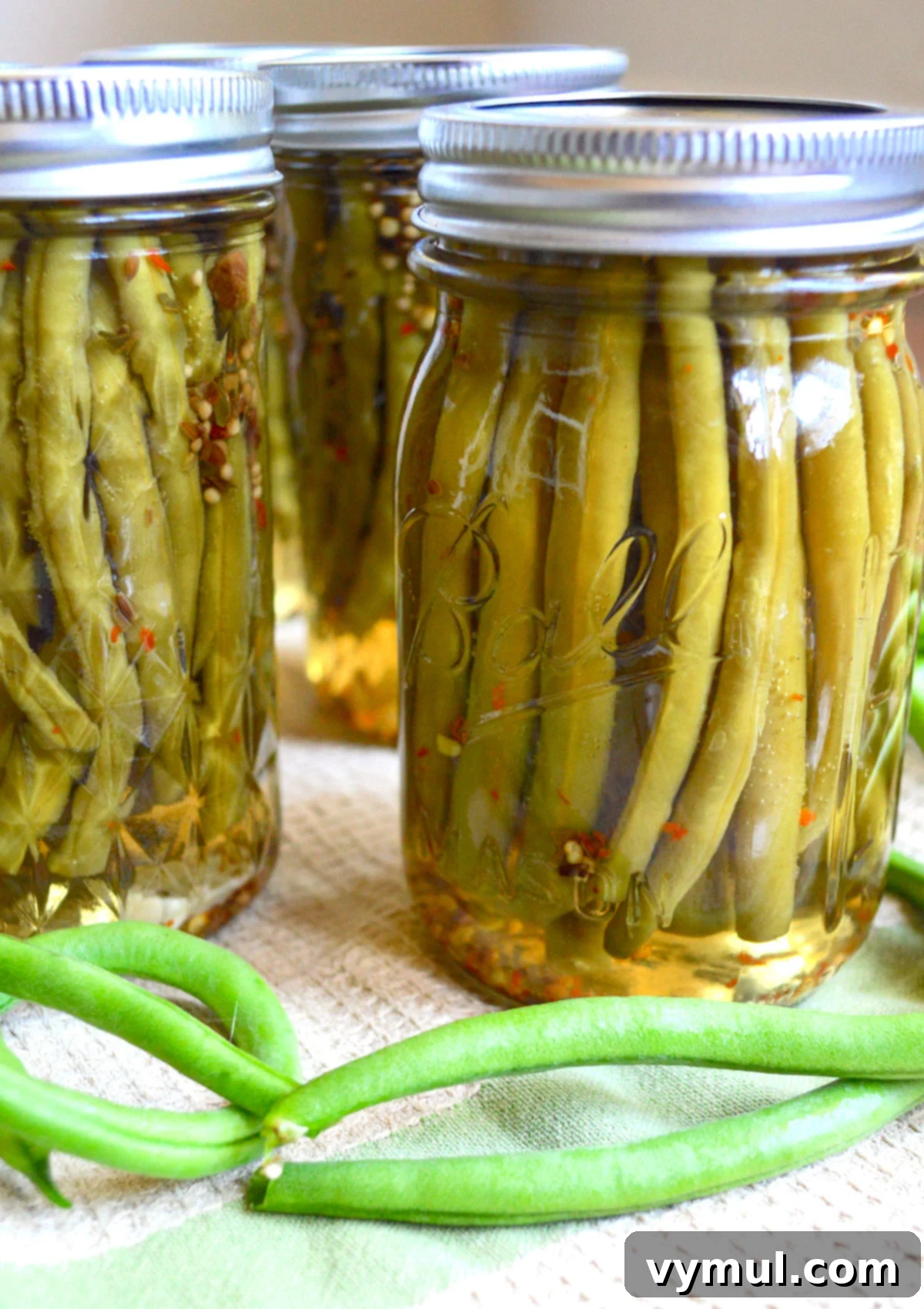
Homemade Spicy Garlic Pickled Green Beans: Your Guide to Flavorful Water Bath Canning
Welcome to the world of home canning, where garden fresh green beans meet a vibrant pickling brine infused with aromatic garlic, pungent mustard seeds, and a delightful kick of red pepper flakes. This comprehensive guide will walk you through the process of creating your own jars of perfectly balanced, spicy, salty, and subtly sweet pickled green beans. Ideal for elevating your salads, enriching antipasto platters, serving as a delightful appetizer, or simply enjoying straight from the jar as a crunchy snack, these homemade treasures are a true revelation for any food enthusiast.
✩ What readers are saying…
“Excellent just made these again today. Easy process, cut to size, packed in there with their garlic and dried chillies from the garden the rest is all down to your recipe. They are just perfect! We love them.” – Julie
Some links in this article are affiliate links and if you click on them I will receive a small commission at no cost to you.
My journey to creating these beloved pickled green beans began, surprisingly, without much prior experience or even a particular fondness for them. Before I started growing my own vegetables, especially the abundant green beans from my garden, I had never considered buying pickled green beans from the store – and frankly, I don’t even recall ever having tasted them! The motivation stemmed from a simple problem: a seemingly endless harvest of fresh green beans. I needed a way to preserve them beyond just eating them fresh, and at that time, my only canning expertise lay with a water-bath canner.
Given the safety guidelines for canning beans, which require a pressure canner for plain green beans, my options for water-bath canning were limited to pickling. So, pickled beans it was! This necessity led to a culinary adventure, transforming what could have been a monotonous task into a delightful discovery.
Update: It’s interesting how preferences evolve! Initially, traditional frozen green beans weren’t my favorite due to texture issues. However, after discovering this incredibly easy method for freezing green beans without blanching, we now thoroughly enjoy them. I also eventually learned to use a pressure canner, but we found that home-canned regular beans didn’t quite appeal to us as much as the frozen, unblanched variety. So now, my preservation strategy is twofold: I freeze green beans for everyday use, and I meticulously prepare these delicious pickled beans for their unique flavor and versatility. It’s truly the best of both worlds!
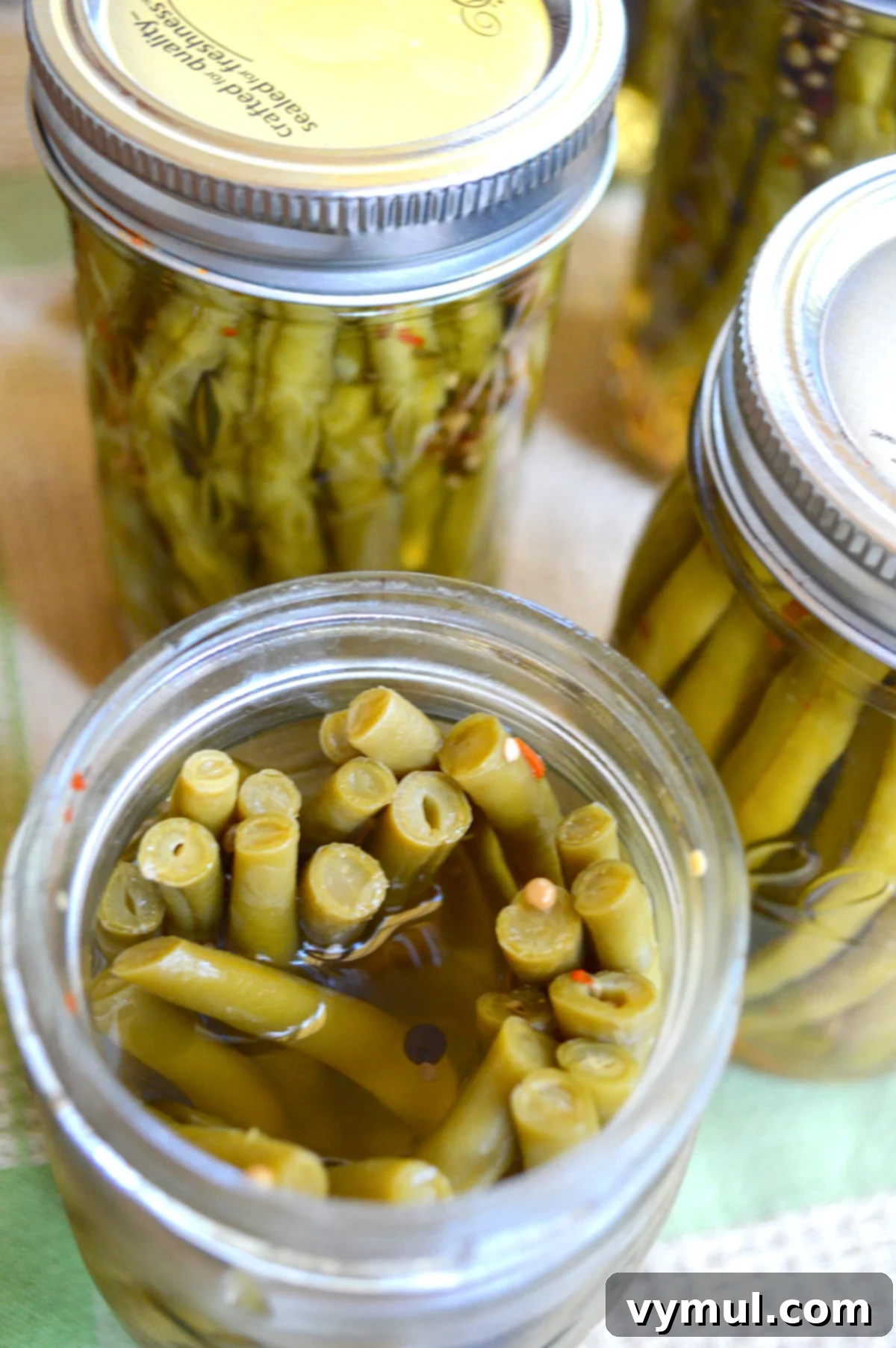
After that first experimental batch, I discovered that my entire family unexpectedly loved pickled beans. Though, to be honest, that initial test wasn’t perfect – they were a bit too sweet and lacked sufficient flavor for our taste. This spurred me on a quest to find the ultimate recipe, one that would achieve the ideal balance between zesty spice and subtle sweetness, without overpowering the natural freshness of the beans.
My journey involved combining elements from several trusted recipes. Crucially, I always adhered to the same reliable liquid measurements provided in the Ball Blue Book, a cornerstone for safe home canning practices. The result of this careful experimentation was nothing short of spectacular: our all-time favorite pickled beans, bursting with the irresistible flavors of garlic and a perfectly calibrated spice blend. Notably, this recipe doesn’t include dill – a deliberate choice, as I wasn’t aiming for traditional cucumber pickle flavors, but something distinct and memorable.
How Do You Use Pickled Green Beans? Unexpected Culinary Delights
Once you’ve experienced the delightful tang and crunch of homemade pickled green beans, you’ll find endless ways to incorporate them into your meals and snacks. Their versatile flavor profile makes them a fantastic addition to a variety of dishes. Here are just a few of our personal favorite applications that might inspire you:
- Elevate Your Salads: Chop them up and sprinkle them generously over any green salad. Their sharp, vinegary bite and crunchy texture add an exciting contrast to leafy greens, creamy dressings, and other vegetables. It’s a simple way to transform an everyday salad into something truly special.
- The Perfect Vegetable Plate Companion: Serve them alongside classic crudités like carrots, celery, and bell peppers. They offer a gourmet touch to a simple veggie platter, providing a more complex flavor profile than standard raw vegetables.
- Star on Your Antipasto or Charcuterie Platter: Pickled green beans are a fantastic addition to any antipasto or charcuterie board. Their bright, briny flavor cuts through the richness of cured meats and cheeses, offering a refreshing palate cleanser alongside olives and crackers.
- Quick & Tasty Appetizers: They can be the star of a super easy and incredibly delicious appetizer. For example, wrap them in a slice of deli meat or roll them up with cream cheese for a delightful bite-sized treat. (Discover a super easy, super tasty appetizer idea here!)
- Holiday Table Essential: During holiday gatherings, place a small bowl of pickled beans next to the olives and cranberry sauce. They offer a festive and unique element, often becoming a surprising hit among guests who are new to their charms.
It’s truly rewarding to see how these pickled beans have won over even my extended family members, many of whom had never tasted them before. They are as straightforward to prepare as pickled asparagus. In fact, the most time-consuming part of the entire process is simply cutting the beans to precisely fit into the jars. The actual canning, once everything is prepped, takes literally minutes, making it a highly efficient way to preserve your garden’s bounty.
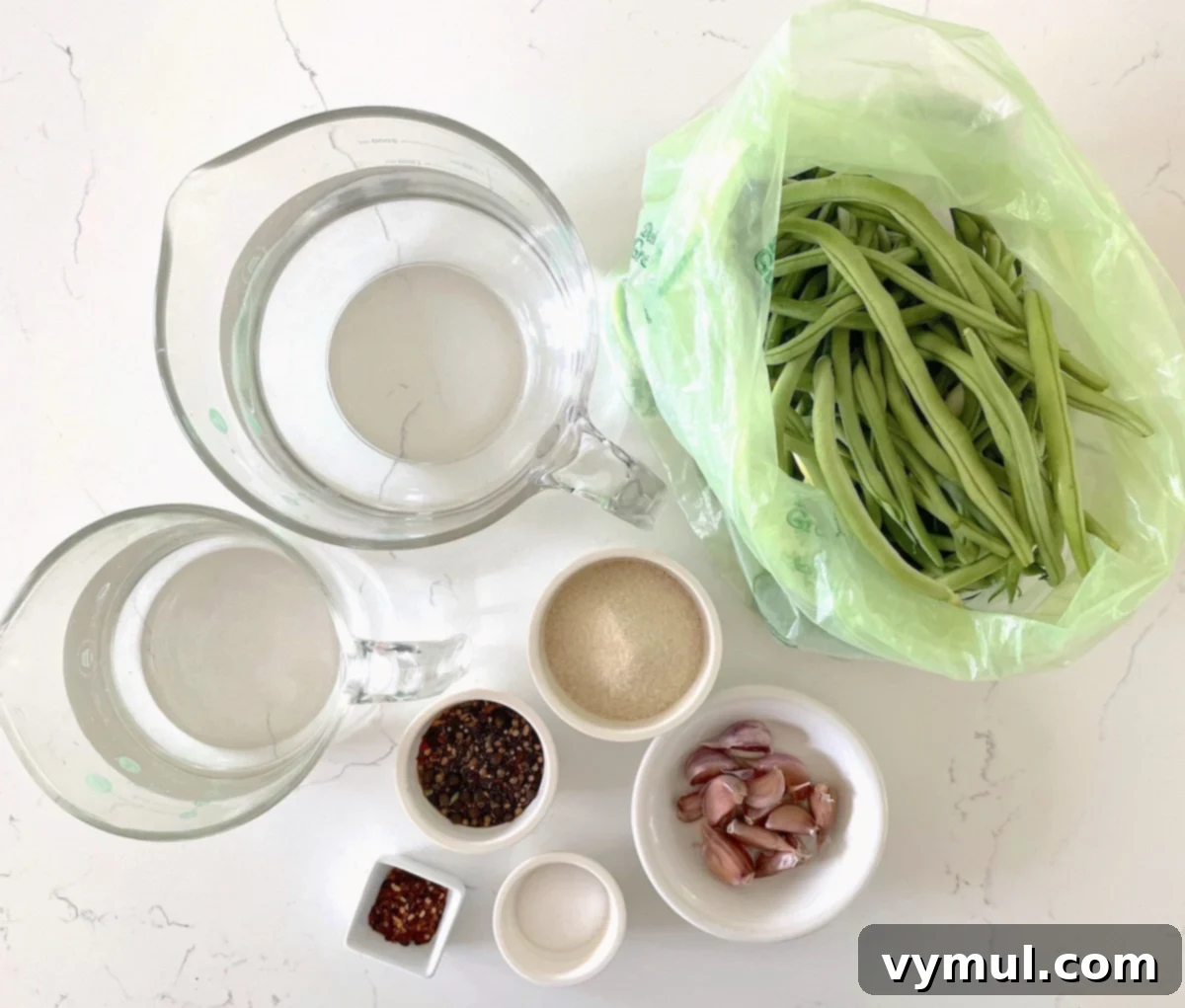
Key Ingredients & Smart Substitutions for Your Pickled Green Beans
Crafting the perfect jar of pickled green beans starts with selecting the right ingredients. Each component plays a vital role in achieving that signature balance of sweet, salty, and spicy. Here’s a detailed look at what you’ll need and how you can adapt it to your taste:
- Green Beans: Aim for about 4-5 pounds of the freshest green beans you can find. Freshness is key to a crisp pickle! Look for firm, vibrant beans without blemishes. While various types of green beans work, slender varieties tend to pack more tightly and offer a more delicate texture.
- Vinegar: I typically use regular white vinegar (5% acidity), which provides a clean, sharp pickling base. However, for a slightly milder, fruitier undertone, you could absolutely use apple cider vinegar. Ensure your vinegar is at least 5% acidity for safe canning.
- Granulated Sugar (Cane Sugar): Many pickled bean recipes call for significantly more sugar – sometimes two or three times the amount in my recipe. I’ve intentionally reduced it to strike a delicate balance, ensuring the beans aren’t overly puckery nor excessively sweet. If you’re feeling adventurous, you could try substituting part or all of the sugar with honey, though I haven’t tested this specific modification myself. Start with a smaller amount of honey as it is generally sweeter than granulated sugar.
- Quick Homemade Pickling Spice: This is where much of the unique flavor develops! While a store-bought mix works, I highly recommend making your own pickling spice for a truly custom and vibrant taste. If you prefer to keep it simple or don’t have a full blend, mustard seeds are, in my opinion, the most essential component for this recipe and can be used on their own for a foundational flavor.
- Pickling Salt: This specialized salt is crucial because it’s free of anti-caking agents and iodine, which can cloud your brine and discolor your pickles. If pickling salt isn’t available, plain fine sea salt without additives can be used as a suitable alternative. Avoid table salt.
- Garlic Cloves: You’ll need two whole, peeled garlic cloves for each pint jar. For an even more intense garlic flavor that permeates the beans, I highly recommend cutting each clove in half. This increases the surface area exposed to the brine, allowing more of that pungent goodness to infuse your pickles.
- Red Pepper Flakes: For me, these are absolutely essential to achieve the perfect level of spicy warmth we adore. However, the beauty of homemade canning is customization. Feel free to adjust the amount of red pepper flakes to your personal preference – decrease them for a milder pickle or omit them entirely if you prefer no heat.
Essential Equipment for Safe and Successful Canning
Having the right tools on hand makes the canning process smooth, efficient, and most importantly, safe. Here’s a list of the equipment you’ll need to prepare your delicious pickled green beans:
- Sharp Knife and Cutting Board: For efficiently trimming and sizing your green beans. A good knife makes all the difference!
- 6-8 Quart Stockpot: This pot will be used to prepare your pickling brine. Its size ensures there’s ample room for all the liquid ingredients.
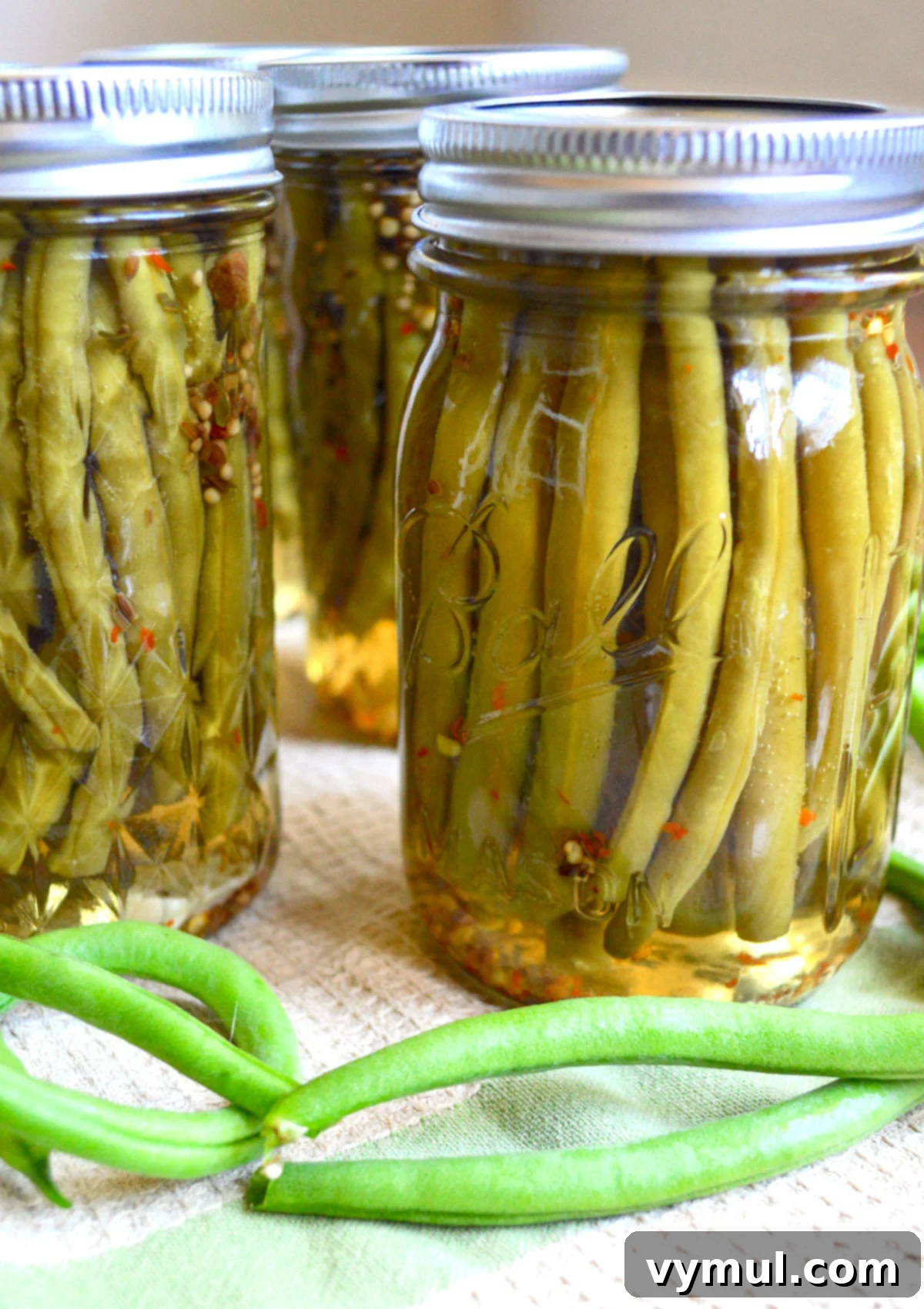
- Pint Size 16-oz. Canning Jars (or 12-ounce jars): Such as the charming quilted ones pictured. Make sure you have enough for your yield (typically 7 pints for this recipe). You’ll also need new lids for proper sealing, and regular or wide mouth bands to secure the lids during processing.
- Water Bath Canner and Jar Lifter: A water bath canner is essential for processing high-acid foods like pickled beans. A jar lifter is an indispensable tool for safely placing hot jars into and removing them from boiling water. This stainless steel canner is highly recommended; it’s superior to cheaper enamel canners and safe for use on glass-top stoves, offering better visibility with its glass lid.
- Stainless Steel Canning Funnel andStainless Steel Ladle: Stainless steel tools are preferred when working with hot foods and water, as they are durable, easy to clean, and non-reactive. The funnel helps you neatly fill jars without spillage, and the ladle is perfect for transferring hot brine.
How to Make Canned Pickled Beans: A Step-by-Step Tutorial
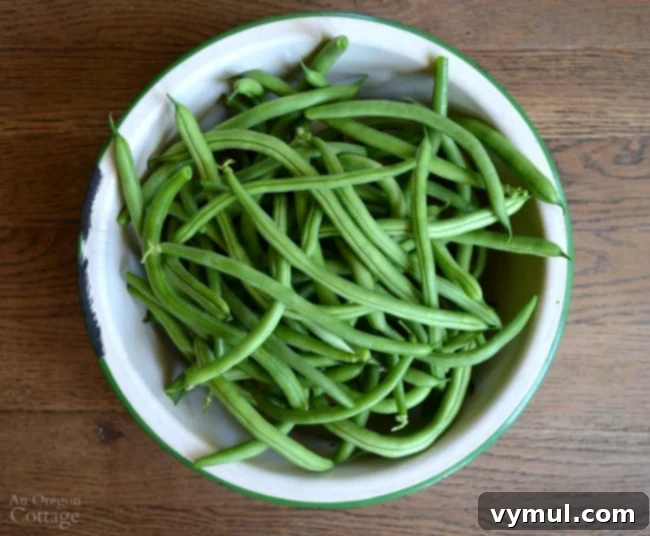
While the full recipe card below provides precise quantities and instructions, these additional tips and detailed steps will help ensure your success in making delicious, perfectly canned pickled green beans.
1. Start by washing a generous amount of green beans.
When I’m harvesting from my garden, I often don’t bother with weighing; I just start cleaning and cutting whatever I have on hand. But for your convenience and precision, I’ve measured it out. For a standard canner load of 7 pint (or 12-ounce) jars, you’ll generally need between 4 and 5 pounds of fresh green beans. This amount can vary slightly depending on the size and thickness of your beans and how densely you pack them into each jar.
2. Prepare and trim your beans, and begin heating your canner.
For optimal safety and to prevent thermal shock (which can lead to broken jars or floating beans), it is strongly recommended to prepare each jar one at a time. This involves removing a warm, cleaned jar from the sink (where it has been waiting filled with hot water, as detailed in this canning tutorial), filling it with your spices and beans, covering it with hot brine, attaching the lid, and then placing it onto the raised rack of your canner before moving on to the next jar.
Expert Tip for Cutting Green Beans to Fit Your Jars Perfectly
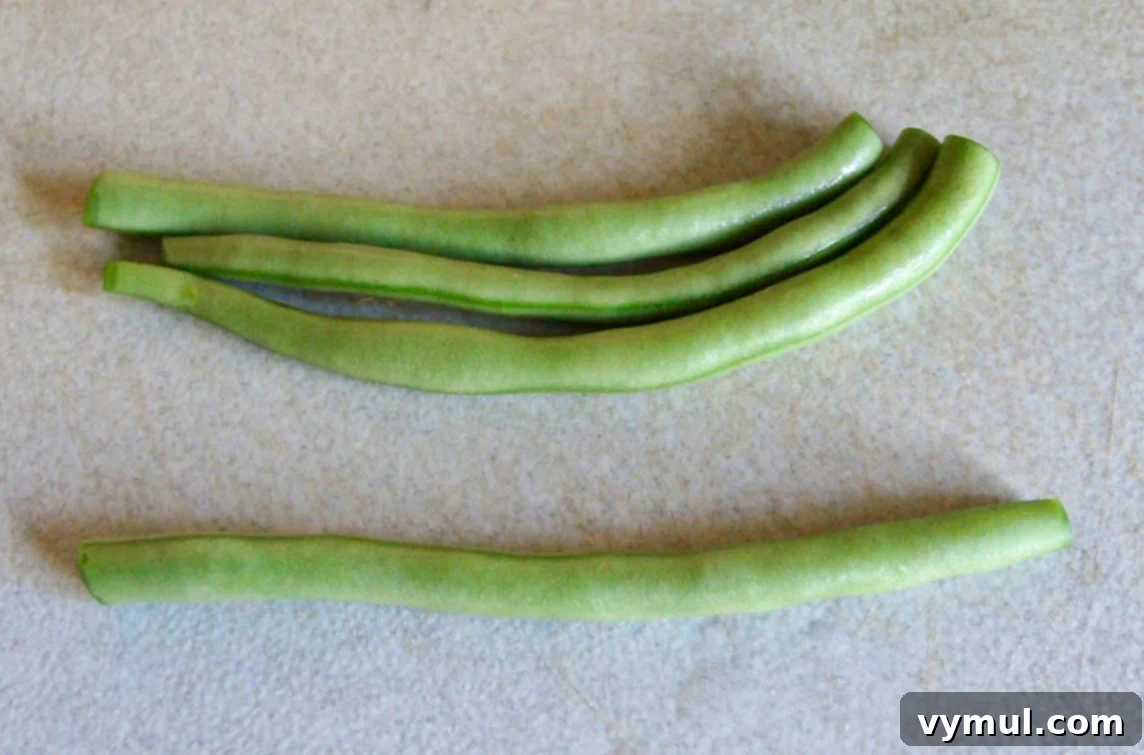
After washing your beans thoroughly, it’s time to trim the ends. Lay as many beans as you can comfortably handle on your cutting board and slice off both ends. When dealing with a large batch, I simply can’t be bothered “snapping” each end individually; a swift slice through multiple beans is far more efficient.
A quick note on aesthetics: while I’ve admired beautiful food photos featuring beans with their curly, untrimmed ends, I’ve also tried eating them. The reality is, those tiny ends can be quite fibrous and pokey, creating an unpleasant texture. For a more enjoyable eating experience, I strongly advocate for trimming them off. Of course, the choice is yours!
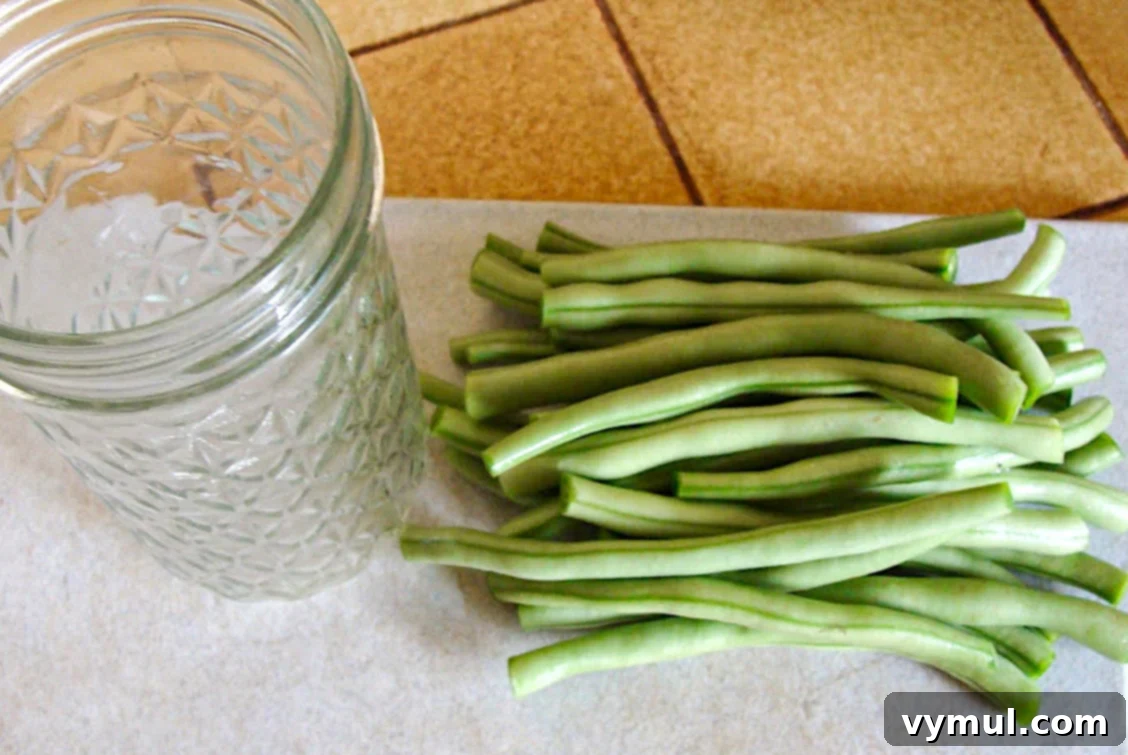
To ensure a perfect fit, take one bean and place it into one of your clean jars. Measure it against the jar, trimming it so there’s approximately 1/2 inch of headspace from the top of the jar rim. This bean will serve as your measuring guide for all subsequent beans. Use it to quickly cut the remaining beans to the correct length.
To estimate how many cut beans you’ll need for each jar, simply fill an empty jar with your trimmed beans. Then, remove these beans and arrange them in a pile. Refill that jar with hot water to keep it warm. Now you have a visual representation of the quantity of beans required for each individual jar, making the packing process much smoother.
Once all your beans are cut, create seven small, roughly equal piles. I always add a few extra beans to each pile just to be safe – it’s better to have a little too much than not enough! With your beans prepped this way, you’re ready to proceed one jar at a time, as the actual canning steps move along quite swiftly.
3. Prepare the flavorful brine according to the recipe instructions.
This liquid is the heart of your pickled beans, imparting the delicious sweet, salty, and spicy notes while also acting as the primary preservative. Follow the recipe carefully to combine your vinegar, water, sugar, pickling spice, and salt in a stockpot. Bring this mixture to a boil and then simmer it for a few minutes to allow all the flavors to meld and the sugar and salt to fully dissolve. Keep the brine hot while you fill your jars.
4. Fill each prepared jar with beans and brine.
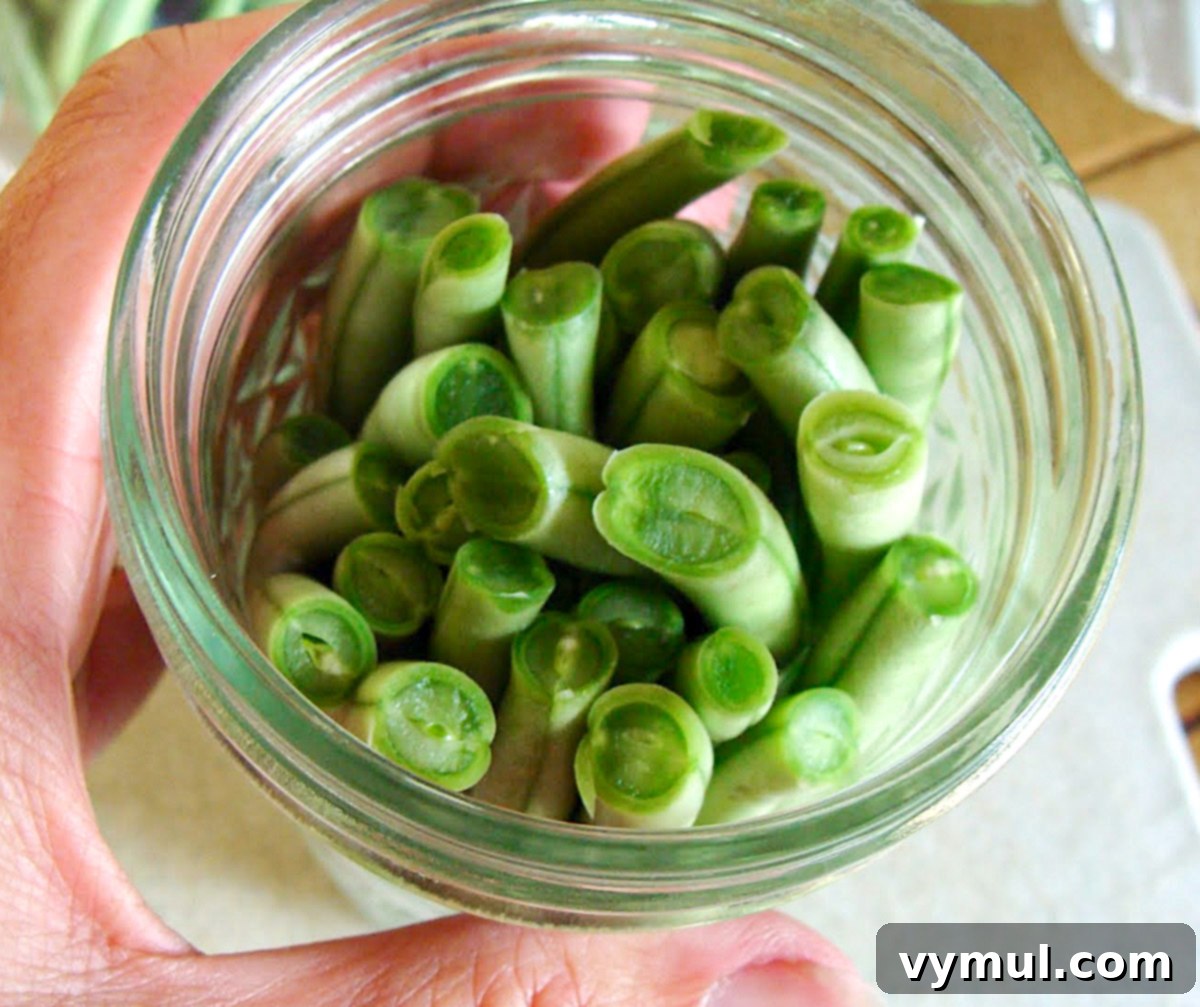
Working one jar at a time, first add the peeled and halved garlic cloves along with the red pepper flakes to the bottom of the warm jar. Then, vertically pack your trimmed green beans into the jar as tightly as possible without bruising them, leaving about 1/2 inch of headspace from the rim. Using your stainless steel canning funnel and ladle, carefully pour the hot brine over the beans, again ensuring that you maintain 1/2 inch of headspace. A helpful tip: try to distribute some of the pickling spices from the brine into each jar as you pour.
Next, use a plastic spatula or chopstick to gently remove any trapped air bubbles from around the beans. Wipe the rim of the jar thoroughly with a clean, damp cloth to ensure a perfect seal. Center a new, clean lid on the jar, then screw on a band “fingertip tight” – just until you feel resistance, don’t overtighten. Immediately place the filled and sealed jar onto the raised rack inside your simmering water bath canner. Repeat this process until all your jars are filled and ready for processing.
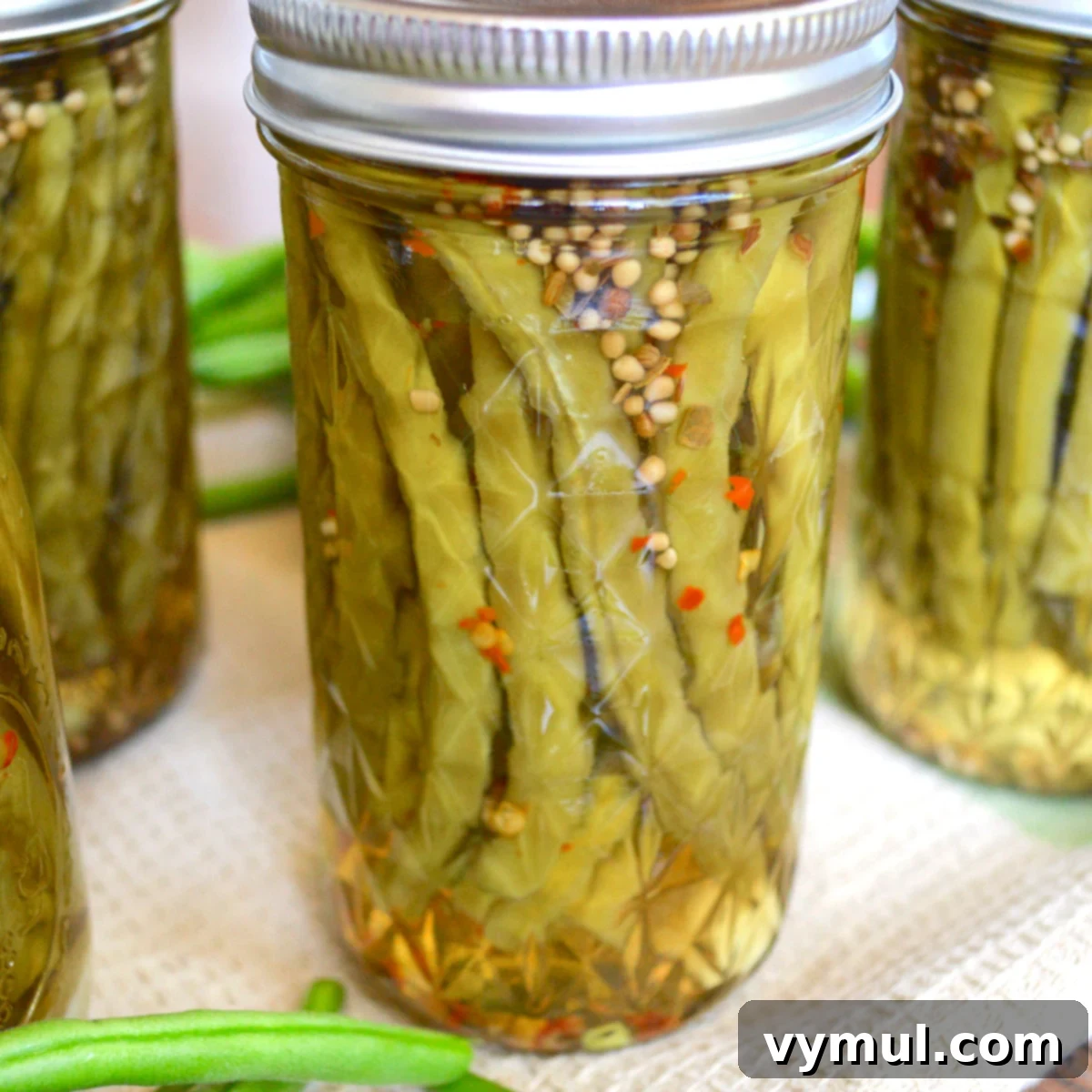
5. Process the jars in the water-bath canner for 10 minutes.
Once all your jars are on the rack, carefully lower the rack into the canner, ensuring the jars are fully submerged in water by at least an inch. Cover the canner with its lid and bring the water to a full, rolling boil. Once boiling vigorously, start your timer for 10 minutes. Reduce the heat slightly to maintain a steady, gentle boil throughout the processing time. The clear glass lid of the stainless steel canner I love is particularly useful for monitoring the boil.
When the 10 minutes are up, turn off the heat, remove the canner lid, and allow the jars to sit undisturbed in the hot water for an additional 5 minutes. This helps prevent siphoning and aids in a more secure seal. Carefully remove the jars from the canner using your jar lifter and place them on a towel-lined surface (a tray is great for easy, undisturbed movement if needed). Allow them to cool completely, undisturbed, for 12 to 24 hours. After cooling, check the lids to ensure they have sealed (they should be concave and not flex when pressed). Label your jars with the date and contents, then store them in a cool, dark place.
The most important step after all this hard work? Patience! You’ll want to wait for about a month – ideally 3 to 4 weeks – for the flavors to fully infuse and develop within the beans before you enjoy your perfectly pickled creations. This waiting period is crucial for achieving that deeply balanced and delicious taste.
PRO TIP: Don’t be alarmed if your beans look a bit shriveled immediately after canning. This is a common occurrence! Rest assured, they will plump back up and regain their crisp texture by the time they are ready to eat in a few weeks, as the flavors continue to marry and infuse.
Need a canning refresher? Click here for a complete Water Bath Canning Tutorial.
I genuinely hope you love these homemade canned pickled beans as much as my family and I do. If you give them a try, please remember to leave a recipe rating and share your experience – I’d love to know what you think!
Print Recipe
Pin Recipe
Garlic Spiced Canned Pickled Beans Recipe
40 mins
10 mins
50 mins
Equipment
- Sharp knife and cutting board
- 6-8 quart stockpot
- 7 Pint (or 12-ounce) canning jars and new lids, regular or wide mouth
- Water bath canner and jar lifter
- Stainless steel canning funnel and ladle
Ingredients
- 4 to 5 pounds green beans, washed and trimmed to fit pint jars
- 6 cups white vinegar or apple cider vinegar
- 3 cups water
- 3/4 cup granulated sugar
- 3 tablespoons pickling spice, homemade or store bought
- 1 tablespoons pickling salt or pure fine sea salt
- 14 garlic cloves, peeled and cut in half
- 1/8 teaspoon red pepper flakes for each jar, or to taste
Instructions
- Prepare 7 pint jars, bands, lids, and canner for processing. Heat canner and keep water simmering while preparing beans.
- Prepare green beans by washing and trimming to fit pint jars, leaving 1/2 inch headspace.
- Combine vinegar, water, sugar, pickling spice, and salt in 6-8-qt. pot and bring to a boil. Lower heat and simmer 3 minutes.
- Add two garlic cloves (4 halves) and the red pepper flakes to each warm jar before tightly packing with beans. (Do one jar at a time, pouring hot brine over and sealing before moving to the next jar.)
- Ladle the hot brine over beans, leaving 1/2″ headspace. Remove air bubbles with a plastic spatula or chopstick, wipe the jar rim with a damp cloth, and attach the lid, fingertip tight. (TIP: Try to get a bit of the pickling spices in each jar as you pour.) Continue until all the jars are full.
- Lower rack of canner, cover and bring to a boil. Process in a boil-water canner for 10 minutes, adjusting heat as needed to keep at a low boil. When timer goes off, remove lid and let jars sit in canner for 5 minutes.
- Remove jars from canner to a towel-lined surface and leave undisturbed for 12-24 hours before checking lids for seal, labeling with date and storing.*
- Wait for 3-4 weeks before eating for best flavor. Use within a year to 18 months.
Notes
Altitude Adjustment: Higher altitudes will have to adjust and add processing time according to this chart.
If you have any jars that don’t seal (which is rare!), store them in the fridge and use first.
Nutrition
Calories: 54kcal |
Carbohydrates: 11g |
Protein: 1g |
Fat: 0.2g |
Saturated Fat: 0.1g |
Polyunsaturated Fat: 0.1g |
Monounsaturated Fat: 0.01g |
Sodium: 256mg |
Potassium: 151mg |
Fiber: 2g |
Sugar: 7g |
Vitamin A: 451IU |
Vitamin C: 9mg |
Calcium: 35mg |
Iron: 1mg
Did you make this recipe?
Mention @anoregoncottage or tag #anoregoncottage!
Frequently Asked Questions (FAQs) About Pickled Green Beans
Over the years, many readers have reached out with excellent questions about this pickled green bean recipe. Here are some of the most common inquiries, which might just answer your questions too:
Properly canned and sealed pickled green beans have an impressive shelf life of 1 to 1-1/2 years (18 months). For best quality and to maintain their vibrant flavor and color, always store them in a cool, dark place, such as a pantry or cellar. Avoid extreme temperature fluctuations.
Patience is key for truly delicious pickled green beans! While they are technically safe to eat after sealing, you will want to wait at least 3 to 4 weeks before opening a jar. This waiting period allows the flavors of the brine, garlic, and spices to fully infuse into the beans, creating a much richer and more complex taste. A good visual indicator that they are ready is when they plump up again, as they often appear slightly shriveled immediately after the canning process.
The sugar in this recipe serves a specific purpose: to gently balance the acidity of the vinegar, preventing the pickles from being too tart or “puckery.” While some pickled bean recipes omit sugar entirely (and others use far more), I’ve found this particular amount creates a harmonious balance that our family prefers. You can certainly experiment by reducing or even omitting the sugar, or by trying honey as an alternative sweetener. If using honey, remember it’s generally sweeter than granulated sugar, so start with a smaller quantity and adjust to your personal taste. Always taste your brine before canning to ensure it meets your preference.
Absolutely! This recipe is quite adaptable and scales down beautifully. You can easily halve or even quarter the recipe to suit a smaller batch of beans or if you’re just starting out with canning. Just ensure you maintain the correct proportions of vinegar, water, and salt for food safety.
Yes, you can certainly adapt this recipe to create refrigerator pickled green beans if you prefer not to water-bath can them. For refrigerator pickles, the processing step is skipped, and the jars are simply stored in the fridge. To ensure a pleasant texture, you might consider blanching the green beans in boiling water for about 3 minutes (and then plunging them into ice water to stop the cooking) before filling the jars. This can help prevent them from tasting too raw. However, I haven’t specifically tested this recipe as a refrigerator pickle, so I would suggest trying both ways – blanch one jar of beans and leave another unblanched – to see which texture and flavor profile you enjoy most!
Don’t let that flavorful brine go to waste! If you have leftover pickling liquid, you have a couple of excellent options:
1. Quick Pickles: Store the leftover brine in a clean jar in the fridge. As you harvest or purchase other fresh vegetables (like roasted beets, sliced cauliflower florets, cucumber slices, or thinly sliced onions), add them to the brine. Let them sit for a week or so, and you’ll have a delicious batch of quick refrigerator pickles!
2. Reuse in a New Batch: If you plan to make more pickled beans or other pickled vegetables soon, you can save the brine. Simply bring it to a boil with any additional fresh ingredients you need for a new batch of canned veggies. This is a great way to recycle flavors and reduce waste.
Explore More Easy & Delicious Canning Recipes
If you’ve enjoyed the rewarding process of making these pickled green beans, you might be ready to explore other home canning adventures. Here are some of our other popular and easy canning recipes that transform fresh produce into pantry staples:
- Easy Pickled Beets for Canning or Refrigerator
- Water Bath Safe Canned Roasted Tomato Sauce
- Perfect Homemade Canned Pizza Sauce
- Canned Sweet Onion Marmalade (Sweet & Spicy)
This recipe was originally published in August of 2009, with updates in 2016 and 2023 to refine the process and enhance the flavor profile.
Disclosure: Affiliate links in this article will earn commission based on sales, but it doesn’t change your price. Click here to read our full disclaimer and advertising disclosure.