The Ultimate Guide to Pruning Shrubs: Seasonal Tips for Lush Gardens and Confident Care
Embark on a journey to master the art of pruning with this comprehensive, easy-to-follow guide! Discover how to approach your shrubs with confidence, ensuring they flourish with vibrant blooms and maintain their optimal health and shape. This guide includes essential techniques for all shrub types, along with a detailed seasonal pruning calendar to keep your garden looking its best year-round.
For even more in-depth knowledge, you can now download all the pruning tips and this seasonal guide as a free, convenient ebook by clicking here!
For many gardeners, the thought of pruning shrubs can be daunting. There seems to be an overwhelming number of rules, and the fear of making a mistake – potentially harming or even killing a beloved plant – often leads to inaction. I used to be one of those hesitant gardeners, paralyzed by the worry that I might commit a “senseless torture and mutilation” as humorously coined by organizations like Plant Amnesty.
This apprehension meant I often left my shrubs to their own devices, allowing them to grow without any interference. While this approach might seem safe, I quickly learned that most flowering shrubs thrive and produce significantly more blooms with some thoughtful, basic pruning. Without it, my once-beautiful shrubs became overgrown, leggy, and produced sparse flowers, losing their charm and vitality.
Once I started implementing a regular pruning regimen, a surprising realization dawned on me: there was truly nothing to fear. As long as I approached the task thoughtfully and avoided overly aggressive cuts, it was remarkably difficult to cause permanent damage to most shrubs. In fact, the benefits were almost immediate, with a surge of healthy new growth following each pruning session. I also discovered that a light pruning can often be done at almost any time of the year without severely harming the plant. While you might sacrifice a few blooms if you prune at an “incorrect” time, it’s far better to do some pruning than none at all. This flexibility significantly boosted my confidence, especially since strict adherence to specific pruning schedules often felt impractical for my busy life.
So, if you’ve been questioning the why, when, or how of pruning, or if you’ve struggled with a lack of confidence as I once did, I wholeheartedly encourage you to take the plunge. Your shrubs will reward your efforts with robust new growth, a profusion of beautiful blooms, and an overall healthier appearance. Let’s demystify pruning together!
Why Prune Our Shrubs? The Essential Benefits of Strategic Trimming
Pruning isn’t just about making a plant look tidy; it’s a vital practice that contributes significantly to the long-term health, beauty, and productivity of your shrubs. The reasons to prune are multifaceted and impactful:
- Promote Plant Health: Regular pruning removes dead, diseased, or damaged branches that can harbor pests and diseases. By clearing out crowded areas, you improve air circulation and light penetration, reducing the risk of fungal infections and allowing the plant to allocate energy to strong, healthy new growth.
- Encourage Flower and Fruit Development: For many flowering shrubs, proper pruning stimulates the production of more blooms. Depending on whether a plant flowers on “old wood” (growth from the previous year) or “new wood” (growth from the current year), strategic cuts can either encourage the development of future flower buds or channel energy into producing more flower-bearing shoots. It also helps remove spent blooms, which can encourage re-blooming in some species.
- Improve Plant Appearance: Pruning allows you to shape your shrubs, maintaining their natural form, preventing them from becoming leggy or overgrown, and ensuring they fit harmoniously into your garden design. It can transform a sprawling, unkempt shrub into a vibrant, well-structured specimen.
- Control Plant Size and Shape: Without pruning, many shrubs can outgrow their allotted space, encroaching on pathways, other plants, or even structures. Pruning helps manage their size, keeps them within desired boundaries, and allows you to create specific forms, whether it’s a neatly clipped hedge or a gracefully arching specimen plant.
Understanding these fundamental benefits is the first step toward confident pruning. While there are general pruning steps applicable to almost all shrubs, specific seasonal guidelines exist based on a shrub’s blooming time. However, remember the overarching principle: a light pruning, even outside the “ideal” window, is often better than no pruning at all, especially for removing dead or unsightly parts. Don’t let perfection be the enemy of good – enjoy your shrubs by keeping them healthy and beautiful!
How to Prune Shrubs – General Steps for All Types
Before diving into seasonal specifics, mastering these universal pruning steps will lay a solid foundation for healthy shrubs and successful bloom production. These techniques apply to virtually all shrubs, regardless of their blooming season.
1. Use Good, Sharp Pruners and Trimmers.
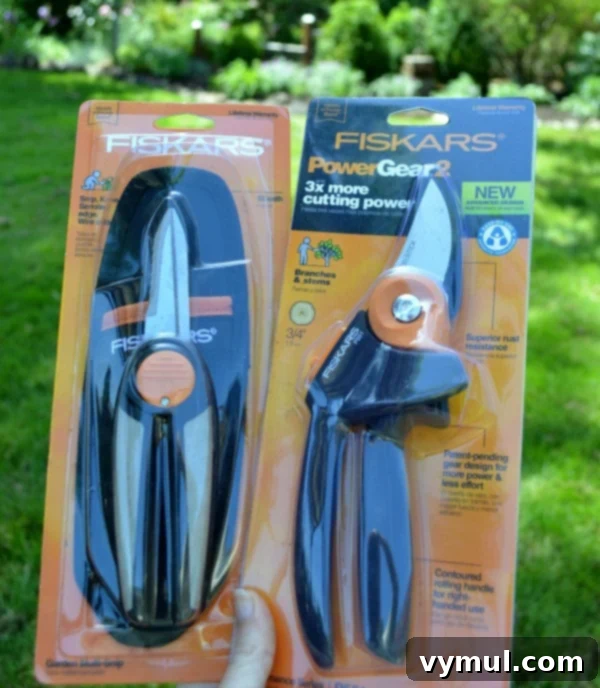
The right tools make all the difference. Sharp tools create clean cuts that heal quickly, minimizing stress on the plant and reducing the risk of disease. Dull tools, on the other hand, can crush stems, leaving jagged wounds that are slow to heal and invite pests or pathogens. Invest in quality bypass pruners for cutting live stems up to 3/4 inch thick. For larger branches (up to 1 1/2 inches), loppers are essential, providing extra leverage. Hedge shears are ideal for shaping formal hedges, while micro-tip snips are perfect for delicate tasks like deadheading or harvesting herbs. While expensive, top-tier brands are excellent, mid-range options like Fiskars offer superb performance and durability without breaking the bank. Remember to clean and sharpen your tools regularly to maintain their effectiveness and prevent the spread of diseases between plants.
Here are some recommended tools that I’ve used and found reliable over the years:
- Fiskars Power Gear2 Pruners: Excellent for comfortable, powerful cuts.
- Felco Bypass Pruner: A classic choice known for its precision and longevity.
- Micro Tip Pruner: Perfect for detailed work and harvesting without damaging delicate plants.
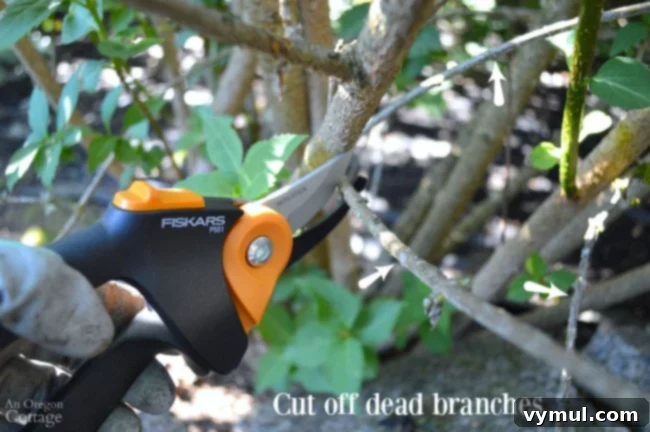
2. Remove Dead, Diseased, or Damaged Stems.
This is arguably the most critical pruning step for plant health and can be performed at any time of year. Dead wood is brittle, often discolored (gray or brown instead of green), and lacks buds or leaves. Diseased stems might show cankers, unusual growths, or discolored patches. Damaged stems are broken or split. Removing these immediately prevents the spread of diseases to healthy parts of the plant, discourages insect infestations, and directs the plant’s energy towards productive growth. Always cut back to healthy wood, ensuring you remove the entire affected section.
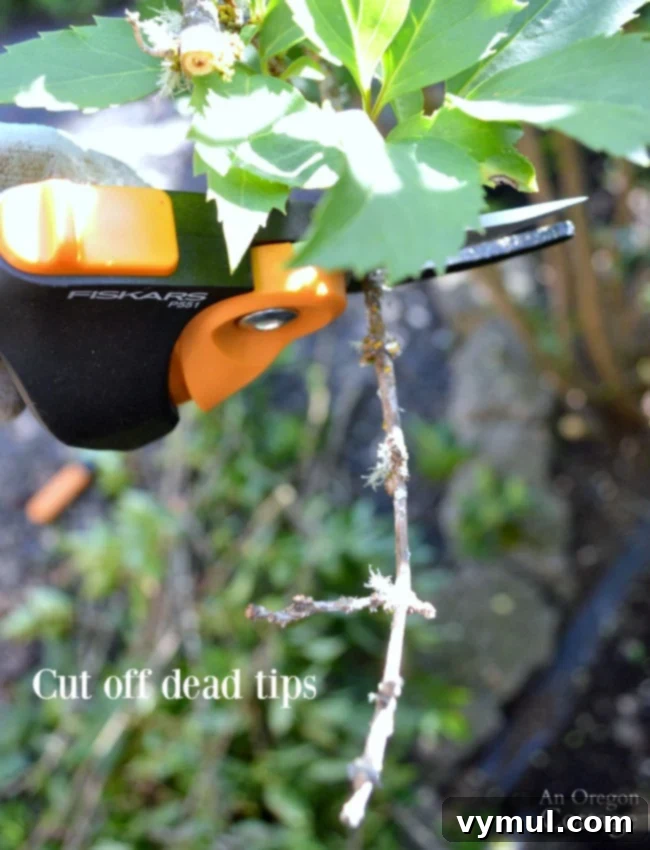
3. Remove Any Dead Tips or Old Flowers Back to New Growth.
Similar to removing entirely dead branches, this step focuses on the smaller details that enhance a shrub’s appearance and can promote further blooming. “Deadheading,” or removing spent flowers, prevents the plant from expending energy on seed production and instead encourages it to produce more flowers or put energy into overall growth. By cutting back dead tips to a healthy outward-facing bud or new side shoot, you encourage bushier growth and a tidier appearance. This can be done continuously throughout the growing season without sacrificing future blooms, as you are simply tidying up existing growth.
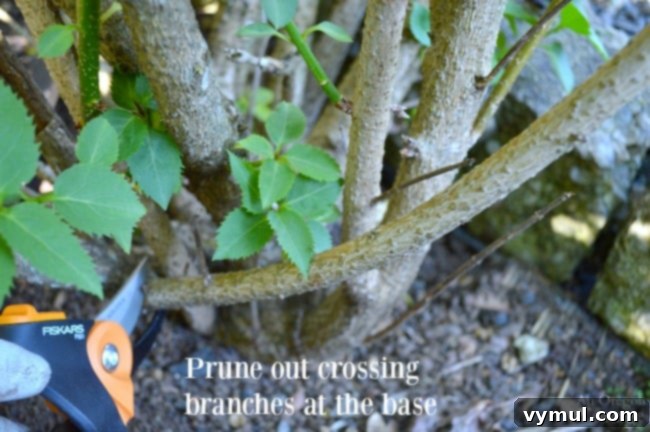
4. Remove Any Crossing Branches, Water Sprouts, or Suckers.
Branches that rub against each other can create open wounds, serving as entry points for diseases and pests. Removing these crossing branches improves air circulation within the plant’s canopy and allows more light to reach interior foliage, leading to healthier growth. Additionally, keep an eye out for “water sprouts” – vigorous, upright-growing shoots that often emerge from the trunk or main branches – and “suckers” – shoots that develop from the base of the plant or even the roots below ground. These growths are typically unproductive and consume valuable energy that could otherwise go to healthier, more desirable branches and blooms. Remove them flush with the point of origin to prevent regrowth.
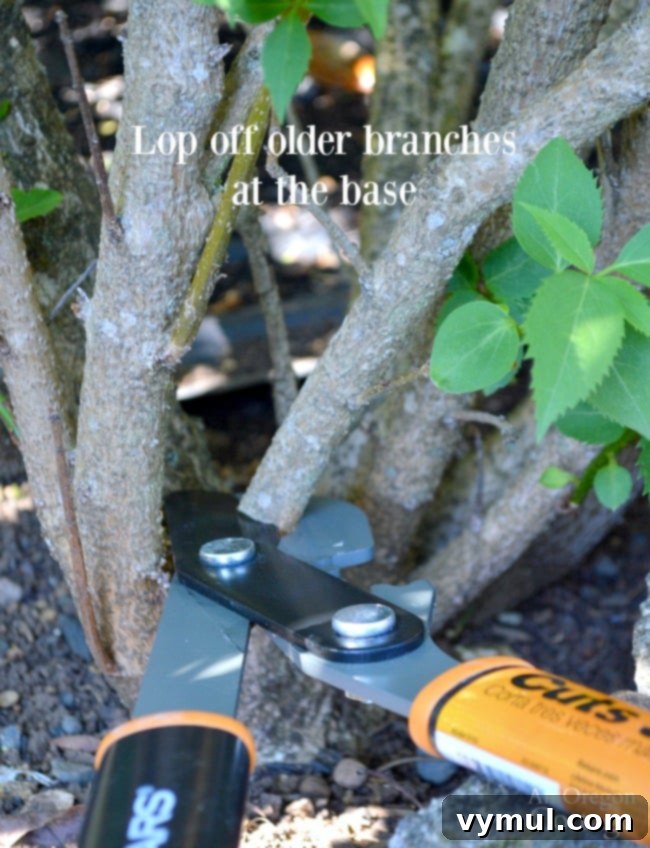
5. Remove Some of the Oldest Shoots All the Way to the Ground on Well-Established Plants.
This technique, known as “rejuvenation pruning” or “renewal pruning,” is particularly beneficial for many deciduous shrubs, especially those that bloom in spring. Over time, older stems become less vigorous and produce fewer flowers. By cutting a few of the oldest, thickest stems back to the ground (typically about 1/4 to 1/3 of the total stems each year), you encourage the plant to produce strong, young, and more floriferous new growth from the base. This method keeps the shrub productive, maintains its vitality, and prevents it from becoming a woody, unproductive tangle. You’ll likely need a sturdy pair of loppers for these thicker cuts.
Free Pruning Guide Ebook
How to Prune Shrubs – A Seasonal Guide for Optimal Blooms
While the general pruning steps are universal, the timing of major pruning is crucial and often depends on when your shrubs bloom. Pruning at the wrong time can significantly reduce or even eliminate that season’s flower display. Understanding whether your shrub blooms on “old wood” (last year’s growth) or “new wood” (current year’s growth) is key.
Spring Blooming Shrubs: Prune After Blooming
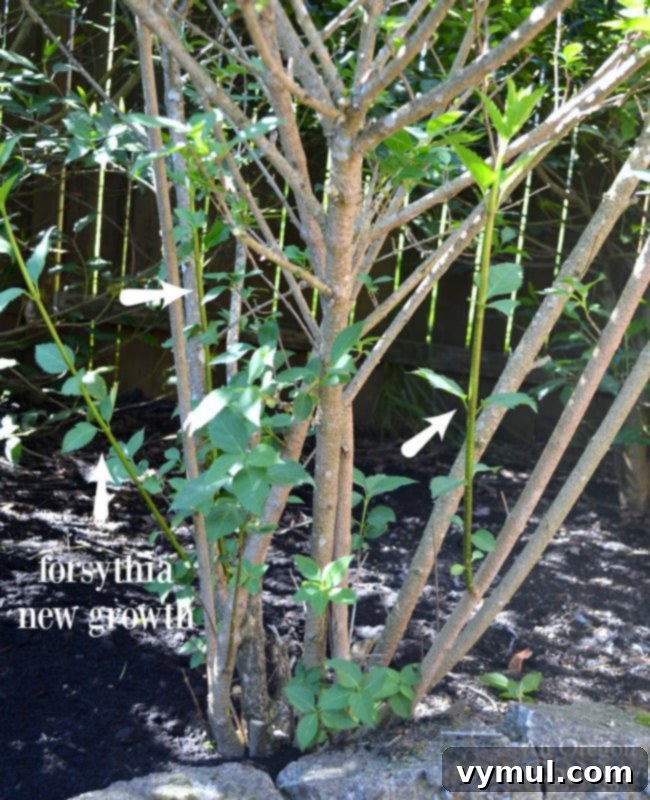
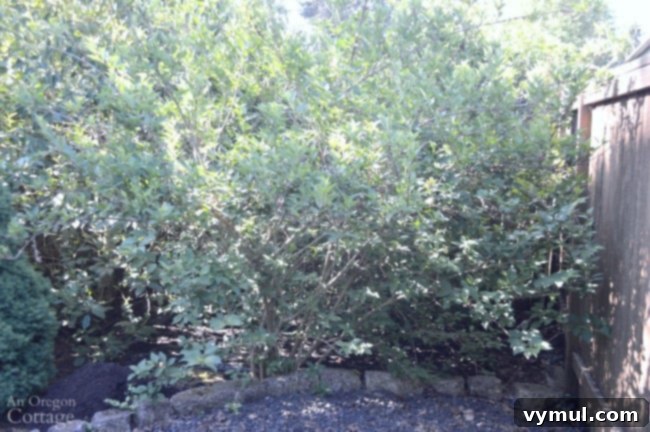
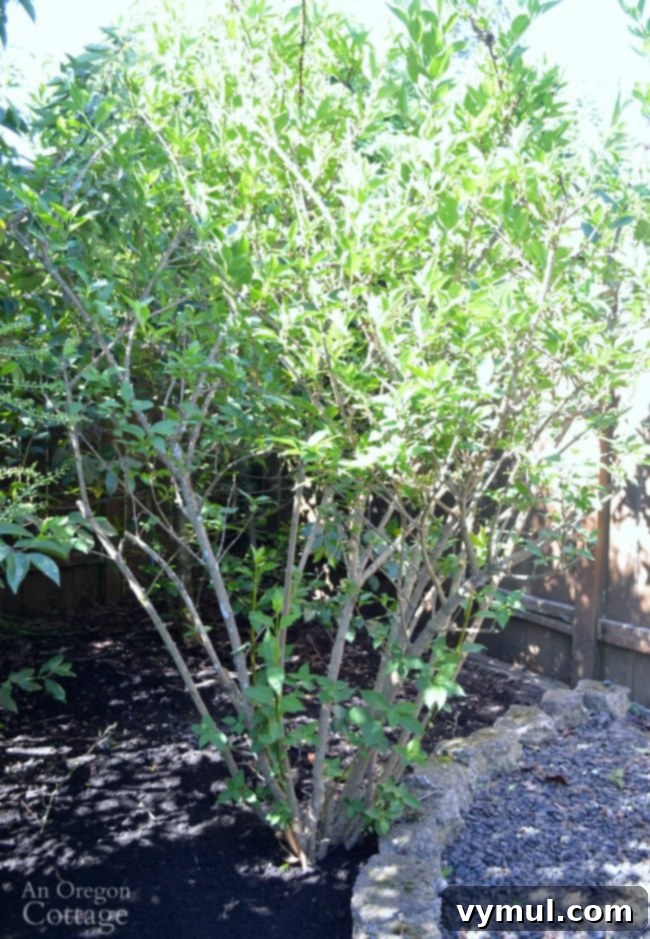
Shrubs that grace your garden with early spring flowers typically bloom on “old wood” – meaning their flower buds were formed on the stems that grew the previous year. To maximize their spectacular display, prune these shrubs within a month or two after their flowering period concludes. For example, the forsythia pictured above, which was pruned in early May, demonstrates how cutting after blooming allows new growth to emerge and mature, where next year’s flower buds will then form. If pruned too early in winter or early spring, you would effectively remove all the flower buds for the upcoming season.
The Forsythia in the example hadn’t been pruned in several years, resulting in a sparse bloom and an abundance of long, leggy branches with leaves only at the tips. Post-pruning, a surge of vigorous new growth is evident, ensuring a much more spectacular bloom for the following year. This rejuvenation keeps these shrubs productive and beautiful.
Other beloved spring bloomers that follow this “prune after bloom” rule include:
- Azalea & Rhododendron: Prune lightly after flowers fade to shape and remove spent blooms.
- Lilac: Remove spent flowers (deadhead) to encourage better blooming next year, and selectively remove old, unproductive stems after flowering.
- Magnolia: Generally requires minimal pruning, but if needed, prune after flowering to remove crossing branches or shape.
- Early Blooming Spirea (e.g., ‘Bridal Wreath’): Prune after flowering to maintain shape and encourage new growth.
- Climbing and Old Garden Roses (once-blooming varieties): Prune after their single flush of flowers to clean up and encourage healthy cane development for next year.
Summer Bloomers: Prune in Winter or Early Spring
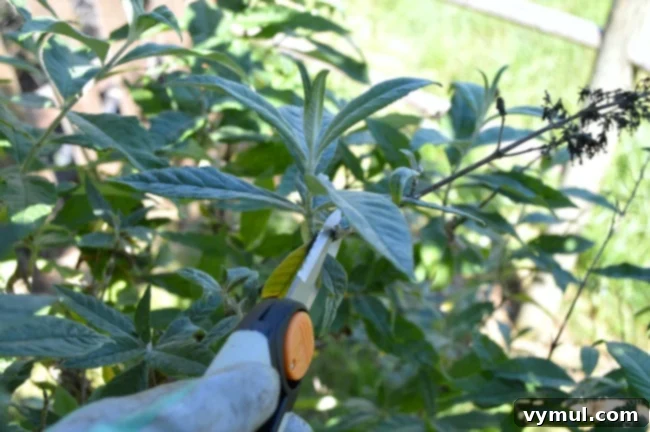
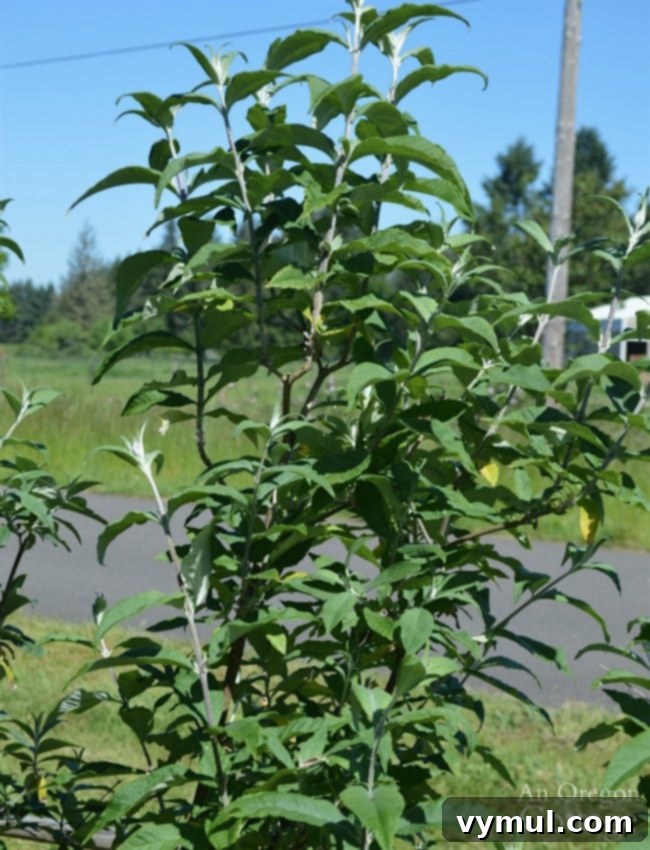
Shrubs that burst into bloom during the summer months, such as the vibrant butterfly bush (Buddleia) shown above, produce their flowers on “new wood”—the growth that develops in the current growing season. This characteristic means the ideal time for major pruning is during their dormant period, typically in late winter or very early spring, just before new growth begins to emerge. Pruning at this time allows the plant to channel all its energy into producing strong, new shoots that will bear the season’s flowers.
While winter pruning is effective, many gardeners find it easier to prune in early spring when the plant just starts to show signs of new growth. This allows you to clearly identify live wood and make precise cuts back to healthy buds. Many aggressive summer bloomers, like Buddleia, can even be cut back dramatically, almost to the ground, in late winter, and they will still produce abundant blooms that very same summer, emerging with renewed vigor and a more compact shape.
Other popular summer-blooming shrubs that benefit from winter or early spring pruning include:
- Potentilla: Prune in late winter or early spring to shape and encourage new flowers.
- Crape Myrtle: Best pruned in late winter to remove spent flowers, shape the plant, and encourage new growth for summer blooms.
- Shrub Roses & Repeat-Blooming Roses: While general tidying can be done throughout the season, major shaping or removal of winter-damaged canes is best done in early spring.
- Late-Blooming Spirea: Prune similarly to early-blooming varieties, but do so in late winter/early spring.
- Rose of Sharon: Prune in late winter or early spring to control size and shape, as flowers appear on new growth.
And then there are my favorite, hydrangeas, which merit their own dedicated section due to their diverse pruning needs:
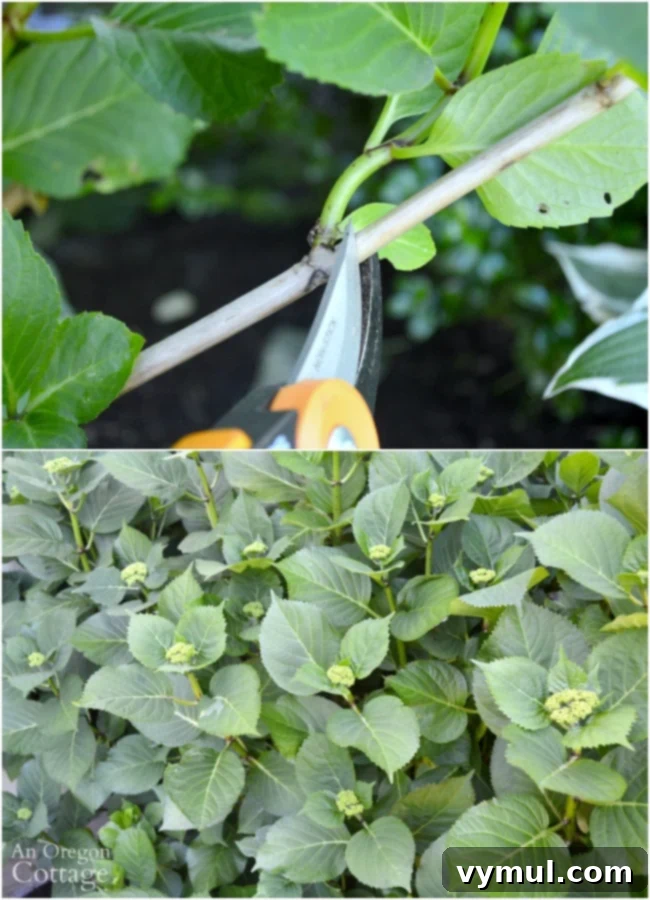
Hydrangeas: A Pruning Guide for Every Type
Hydrangeas are undoubtedly the queens of summer and fall gardens, offering months of captivating interest with their magnificent blooms in shades of blue, pink, purple, and white, often with surprisingly little maintenance. However, their diverse varieties mean that a “one-size-fits-all” pruning approach simply won’t work. Understanding which type of hydrangea you have is crucial for successful pruning and abundant flowering.
Here’s a clear, general pruning guide for the most common hydrangea varieties:
- Old Fashioned Mophead, Lacecap, & Oakleaf Hydrangeas (Hydrangea macrophylla, Hydrangea quercifolia): These varieties are notorious for blooming on “old wood.” This means their flower buds are formed on the previous year’s growth. The critical rule here is to wait until midsummer to prune, *after* they have finished blooming. If you prune in winter or early spring, you will inadvertently remove all of this season’s potential flower buds, resulting in no blooms. Pruning after flowering allows you to remove spent blooms, shape the plant, and thin out old stems, while still giving the new growth time to develop flower buds for the following year.
- Paniculata Hydrangeas (e.g., PeeGee, Limelight, Annabelle – Hydrangea paniculata, Hydrangea arborescens): In contrast to their old-wood cousins, these robust hydrangeas bloom on “new wood.” This makes them incredibly forgiving to prune. You can prune them any time during their dormant season – late winter or early spring – and they will still produce spectacular blooms on the current year’s growth. In fact, many gardeners prune ‘Annabelle’ hydrangeas back to just a few inches from the ground each year to encourage strong stems and enormous flowers. The general guideline is to avoid pruning right before their bloom time, which typically starts around June.
- Endless Summer Hydrangeas (Reblooming Mopheads): These innovative hydrangeas are a gardener’s dream because they bloom on BOTH new and old growth. This remarkable characteristic gives you immense flexibility. You can prune them whenever you feel necessary – in late winter to shape and remove old growth, or after their first flush of blooms to encourage reblooming. This “best of both worlds” trait makes them an excellent choice for beginners who might be nervous about pruning timing.
By identifying your hydrangea type, you can confidently prune for the most spectacular and consistent floral displays.
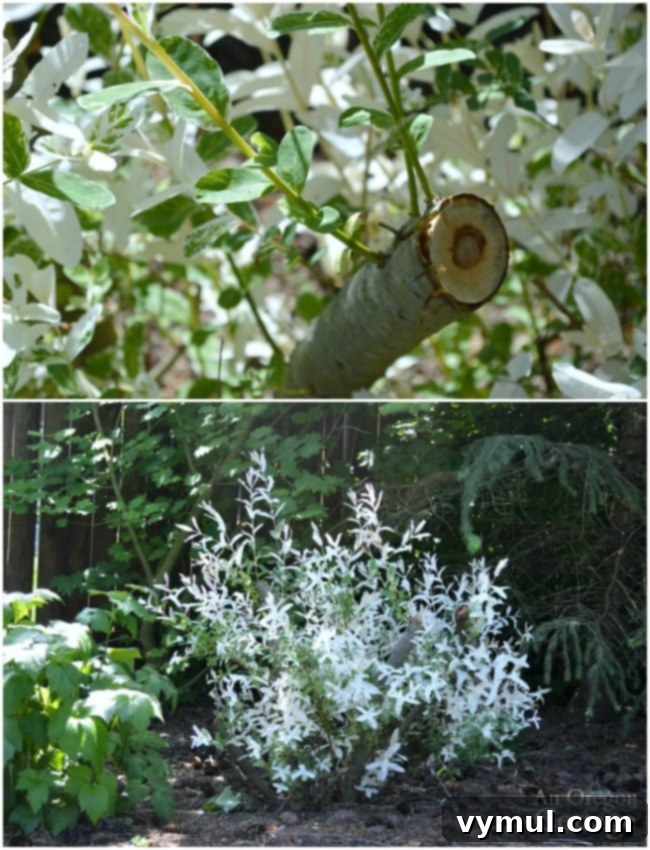
Shrubs Grown For Foliage: Prune Winter, Spring, or Summer
Shrubs primarily valued for their attractive foliage rather than their flowers, such as the striking dappled willow (Salix integra ‘Hakuro-nishiki’) pictured above, offer more flexibility in pruning time. The goal for these plants is often to maintain a desired shape, promote dense growth, or encourage the vibrant new growth that makes them so appealing. You can cut these back almost any time, with one crucial exception: avoid heavy pruning in late autumn. Pruning too late in the season can spur tender new growth that won’t have enough time to harden off before winter’s frost, leading to damage.
For major structural pruning or significant size reduction, like the extensive cutting back I performed on the dappled willow, it’s generally best to prune when the shrub is dormant in winter or just as new growth begins to emerge in early spring. This allows the plant to recover and put energy into vigorous new shoots. Many foliage shrubs, especially evergreens like boxwood and arborvitae, respond well to shearing with hedge trimmers to create formal shapes or maintain density. However, for a more natural look, selective pruning of individual branches can also be employed. Even with shearing, avoid going overboard; a light shaping to prevent sprawling or flopping branches is often sufficient to maintain their aesthetic appeal and health.
Other popular foliage shrubs that thrive with flexible pruning include:
- Evergreens (e.g., Otto Luykens Laurel, Arborvitae, Juniper): Prune to shape and maintain size.
- Barberry: Prune for shape and to encourage colorful new foliage.
- Burning Bush: Prune in late winter or early spring to shape and manage size, enhancing its fall color.
- Redtwig Dogwood: Prune in late winter to encourage new bright red stems, which provide the best winter interest.
- Ninebark: Prune in late winter or early spring to promote fresh foliage and maintain a neat habit.
- Smokebush: Prune in late winter or early spring to maintain size and encourage the vibrant “smoke” plumes.
- Sumac: Can be cut back hard in early spring to encourage large, dramatic foliage.
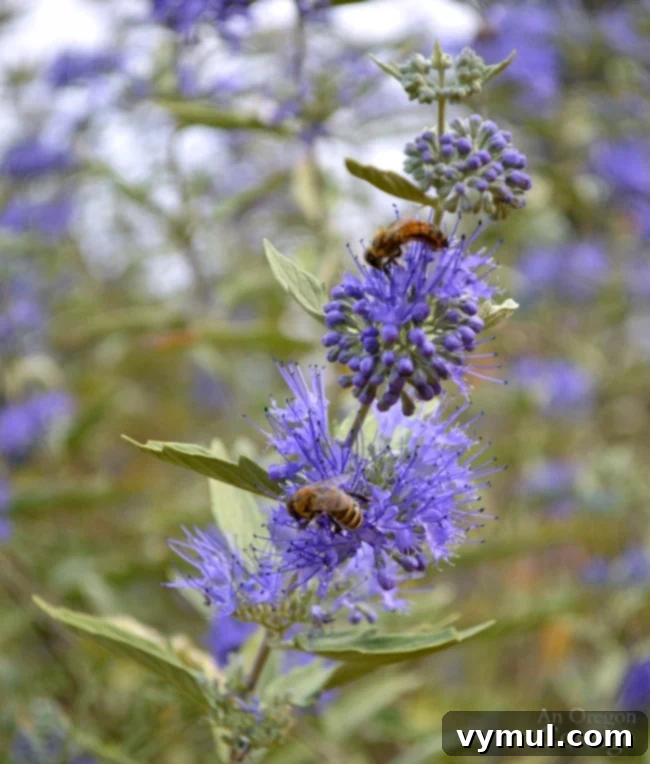
Fall Blooming Shrubs: Prune Late Winter or Spring
It’s interesting to note that truly “fall-only” blooming shrubs are less common; many of our autumn flower displays come from summer bloomers like hydrangeas and roses that continue to produce flowers into the cooler months. However, those shrubs that primarily bloom in the fall are typically treated much like their summer-blooming counterparts: they produce flowers on new wood. Therefore, the optimal time for their major pruning is during their dormant period, in late winter or early spring, before new growth actively begins.
Pruning at this time allows the plant to develop fresh, vigorous stems throughout the spring and summer, which will then bear the beautiful flowers that light up the autumn garden. This timing ensures that you encourage the most robust bloom production without accidentally removing future flower buds.
Examples of shrubs that bloom predominantly in the fall and should be pruned in late winter or early spring include:
- Blue Mist Shrub / Bluebeard (Caryopteris, shown above): Known for its delicate blue flowers in late summer to fall, this shrub benefits from hard pruning in early spring to encourage a compact form and abundant blooms.
- Beautyberry (Callicarpa): While grown more for its striking purple berries in fall, it does produce inconspicuous flowers on new wood. Prune in late winter/early spring to promote strong fruiting branches and maintain shape.
- Summersweet (Clethra alnifolia): Blooms in late summer to early fall. Prune in late winter or early spring to shape and encourage new growth.
- Hibiscus (some varieties like Confederate Rose): Many varieties bloom on new wood and can be pruned in early spring to control size and enhance blooming.
I sincerely hope this simple yet comprehensive guide on how to prune shrubs has been incredibly helpful! May you now feel empowered and confident to approach any shrub-pruning task, banishing any lingering fears and embracing the joy of a beautifully maintained, thriving garden. Happy pruning!
Disclosure: I received product and/or compensation for this post. As always, the opinions, thoughts, and projects are all mine and I will NEVER promote something I don’t love and think you will find helpful – promise! This article also contains affiliate links which earn commission based on sales, but it doesn’t change your price. For more info, you can read our entire disclosure page here.
This article has been updated – it was last published in May of 2016.