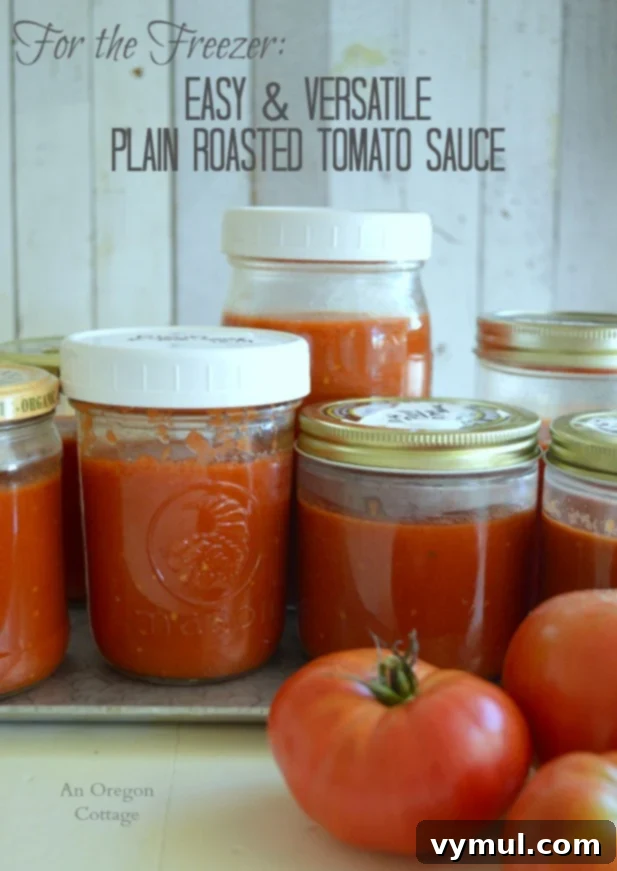
Easy Freezer Plain Roasted Tomato Sauce: Preserve Your Garden Harvest Effortlessly for Year-Round Flavor
Discover the simplest, most versatile method to preserve your abundant tomato harvest: easy freezer plain roasted tomato sauce. This recipe allows you to transform end-of-season tomatoes into a foundational ingredient that can be frozen and effortlessly incorporated into any dish calling for canned tomato sauce, ensuring your garden’s bounty never goes to waste.

For many home gardeners, the late summer or early fall brings a bittersweet feeling. It’s the peak of harvest, a time of immense satisfaction seeing the fruits (and vegetables!) of your labor. Yet, it also heralds the end of the growing season, often accompanied by an overwhelming abundance of produce. This is the moment when the sheer volume of tomatoes, peppers, and zucchini can feel like a delicious burden. I’ve heard countless stories from friends who, faced with overflowing baskets, simply allowed some of their hard-earned produce to return to the earth. For me, that’s a tough pill to swallow.
Having nurtured these plants from tiny seeds, guided them through the vulnerable stages of planting, battled potential diseases, and watched them endure various weather challenges, these magnificent tomatoes are truly the culmination of my effort and passion. While I admit a few might occasionally succumb to rot if left unattended for too long, my primary goal is always to maximize their use. My underlying motivation is always positive; I strive to preserve as much as possible, as efficiently as possible.
My constant quest revolves around finding **quick, easy, and effective methods to handle the late-season surge of produce**, particularly tomatoes, peppers, and zucchini. These simple preservation techniques allow me to enjoy my garden’s bounty long after the growing season has ended. Here are a few ways I usually tackle this:
- I love to chop and freeze a variety of sweet and hot peppers. This method is incredibly fast and ensures I have a steady supply of peppers all winter long, perfect for enhancing soups, stews, and stir-fries.
- Excess zucchini is often transformed into delightful baked goods. I prepare numerous batches of zucchini breads, decadent cakes, and moist cupcakes, all of which freeze beautifully.
- I also find great utility in freezing gallon-sized bags of paste tomatoes. These are set aside, patiently awaiting their destiny to be transformed into rich home-canned pizza sauce at a more convenient time.
- Throughout the season, I dedicate time to making batches of my flavorful, seasoned Roasted Tomato Sauce, my favorite thick Salsa for canning, and the truly Addictive Tomato Chutney.
Despite all these efforts, guess what? I often still find myself with an abundance of tomatoes! And these aren’t just any tomatoes; they’re typically the **last remnants of the season, plucked from dying vines, many exhibiting cracks or blemishes that make them unsuitable for traditional canning methods.** Canning requires pristine produce to ensure safety and quality, ruling out these “imperfect” but still delicious tomatoes.
Since these late-season beauties aren’t ideal for canning, and I’ve already stocked up on my seasoned tomato sauces, I turn to a truly indispensable solution: this super versatile plain roasted tomato sauce. It’s the perfect way to utilize these otherwise challenging tomatoes, transforming them into a fundamental ingredient that can be used in practically any recipe that calls for canned tomato sauce, without competing with other flavors.
This recipe stands out as the quickest and easiest tomato sauce you’ll ever make. It consistently yields between 2 to 4 quarts of pure, unadulterated tomato goodness, frozen in convenient sizes tailored to your culinary needs. I often envision its use in hearty Mexican dishes, where it forms an excellent foundation for a homemade enchilada sauce, or as the star ingredient in a comforting bowl of homemade tomato soup. Its plain nature means it’s a blank canvas, ready to absorb and enhance whatever flavors you introduce later.
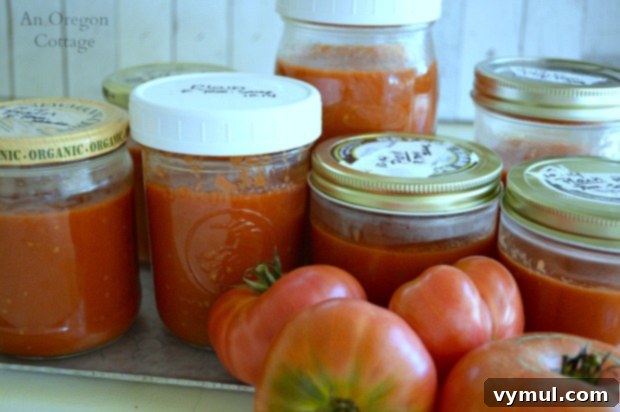
Simple Ingredients for Maximum Flavor
One of the beauties of this plain roasted tomato sauce is its minimalist ingredient list, allowing the natural flavor of the tomatoes to shine through with minimal fuss. You truly only need three core ingredients!
- Tomatoes – The star of the show! Any variety of fresh tomatoes will work beautifully here. This recipe is particularly forgiving, making it ideal for utilizing a mix of garden varieties, overripe tomatoes, or those with minor blemishes that wouldn’t be suitable for canning whole. Roasting concentrates their sweetness and mellows their acidity, making even less-than-perfect tomatoes taste fantastic.
- Olive oil – A touch of olive oil helps to prevent sticking during roasting, facilitates even caramelization, and adds a subtle richness to the finished sauce. It also aids in carrying the fat-soluble flavors of the tomatoes.
- Salt – While optional, a pinch of salt significantly enhances the overall flavor profile of the sauce, balancing the sweetness and acidity of the tomatoes. You can adjust the amount to your preference or omit it entirely if you plan to use the sauce in dishes where you’ll control the salt content later.
That’s it! With just these basic items, you’re on your way to creating a versatile pantry staple.
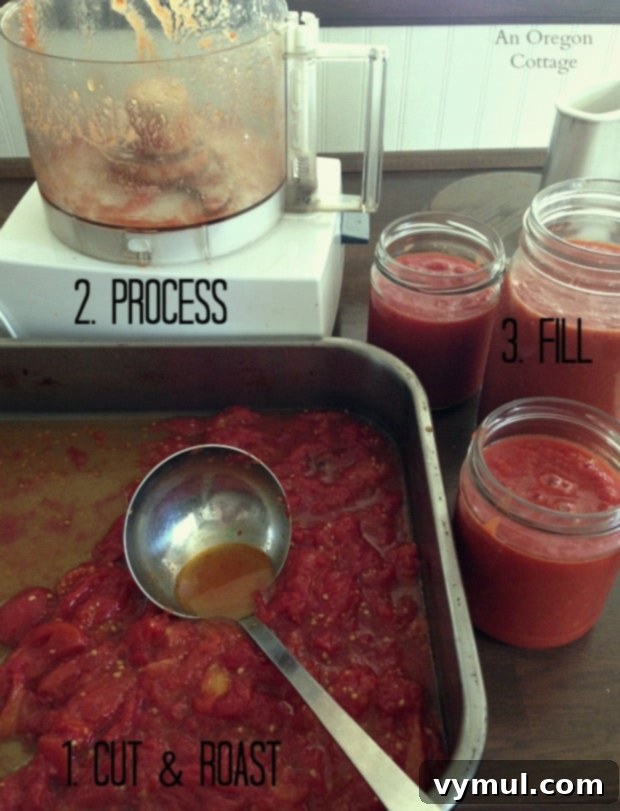
Step-by-Step Guide: How to Make Easy Plain Roasted Tomato Sauce
Making this plain roasted tomato sauce is remarkably simple, sharing many similarities with my seasoned roasted tomato sauce recipe. The best part? There’s no need for the tedious process of peeling the tomatoes before roasting, saving you valuable time and effort. The roasting process itself will loosen some skins, and any remaining bits are easily blended for a smooth finish.
- Prepare Your Tomatoes – Begin by thoroughly washing your fresh tomatoes. For larger tomatoes, simply cut them in half. For smaller varieties, you can just slice off the very top where the stem was attached. Core each tomato to remove the tough, woody part at the stem end, then place them, cut side down, in an oiled roasting pan. Arranging them cut-side down helps prevent them from drying out too quickly and allows the juices to collect, concentrating the flavor. Ensure you use enough roasting pans to accommodate all your tomatoes in a single layer for optimal roasting.
- Roast for Flavor Perfection – Place your prepared roasting pans in a preheated oven set to 425 degrees Fahrenheit (220 degrees Celsius). Roast the tomatoes for approximately 40-45 minutes. During this time, the heat of the oven will work its magic, softening the tomatoes, concentrating their sugars, and developing a rich, caramelized flavor. You’ll know they’re ready when many of the peels appear blistered and puffy, indicating that the tomatoes have cooked down beautifully.
- Handle the Skins (Optional Peeling) – After roasting, allow the tomatoes to cool for about 10 minutes. At this point, some of the peels will be visibly blistered and easily removed with tongs or your fingers. While you can certainly pick off these loosened skins for a smoother sauce, it’s not strictly necessary. Any remaining skin will simply be blended into the sauce during the next step, adding valuable fiber and nutrients without compromising the texture significantly.
- Blend to Smoothness – Carefully spoon the roasted tomatoes, along with all their accumulated juices from the roasting pan, into a blender or food processor. Process until the mixture is completely smooth. You can blend it to your desired consistency – whether you prefer a slightly chunky sauce or one that’s silky smooth.
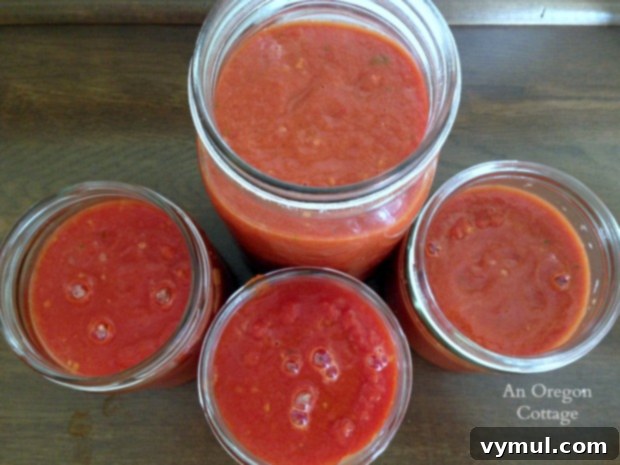
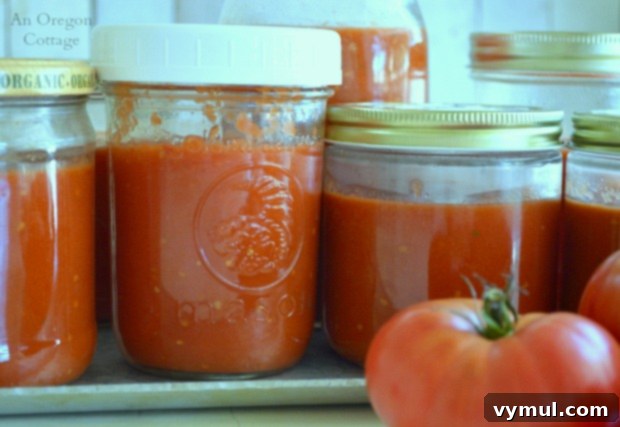
- Prepare for Freezing – Transfer the freshly blended plain roasted tomato sauce into wide-mouth jars or other freezer-safe containers. This step is crucial for safe and effective freezing. Remember to leave a generous one-inch (or more) of headspace between the sauce and the rim of the jar. This space is essential to accommodate the expansion that occurs as liquids freeze, preventing your jars from cracking.
- Label and Freeze – Securely add lids to your filled jars. For easy identification later, label each container with the name of the sauce (“Plain Roasted Tomato Sauce”) and the date it was prepared. Masking tape and a permanent marker work wonderfully for this. Once labeled, place your jars in the freezer. This homemade, plain roasted tomato sauce will maintain its quality for a year or even longer, offering you a taste of summer whenever you need it.
Essential Tips for Freezing Homemade Sauces
Freezing homemade sauces like this plain roasted tomato sauce is a fantastic way to preserve flavor and convenience. However, a few key practices can help ensure success, prevent breakage, and make your life easier when you’re ready to use your frozen bounty.
- Always Leave Ample Headspace for Expansion: When freezing any liquid, it’s absolutely vital to **leave at least a one-inch space at the top of your container.** Water expands when it freezes, and if your jars are filled too high, the expanding ice can create enough pressure to crack or shatter the glass. This headspace acts as a buffer, allowing the liquid to expand safely without damaging your containers.
- Utilize Varied Jar Sizes to Mimic Store-Bought Cans: Think about the recipes you frequently make. Many call for 8-ounce or 16-ounce cans of tomato sauce. By freezing your homemade sauce in similar measurements (e.g., 1-cup and 2-cup portions), you create ready-to-use equivalents that seamlessly integrate into your favorite dishes. This saves you the hassle of measuring out frozen blocks of sauce later and reduces waste.
- Prioritize Wide-Mouth Jars for Freezing: Whenever possible, opt for wide-mouth jars when freezing liquids. Their straight sides minimize the risk of glass breakage during expansion. Furthermore, the wider opening makes it significantly easier to remove the frozen sauce, even if it’s still partially frozen, saving you time and frustration when cooking. Standard mouth jars, with their tapered shoulders, are more prone to breaking and harder to empty.
- Embrace Reusing Glass Jars: While dedicated canning jars are generally designed to be freezer-friendly (though I’ve occasionally experienced breakage), I often find success reusing smaller glass jars from store-bought foods, provided they have wide-mouth openings. During experiments, I haven’t noticed a significant difference in breakage rates between these recycled wide-mouth jars and my canning jars. This is a wonderfully sustainable and cost-effective practice. Just ensure the jars are clean, dry, and free of any cracks or chips before filling. Avoid thin glass or jars with narrow necks.
- Consider Alternative Freezer-Safe Containers: Beyond glass jars, several other options work well for freezing tomato sauce. Heavy-duty freezer bags are excellent for space-saving storage; simply lay them flat to freeze, then stack. You can also freeze sauce in silicone muffin tins or ice cube trays for individual portions, then transfer the frozen blocks to a larger freezer bag. These smaller portions are perfect for adding a burst of flavor to single servings or quickly thawing for immediate use.
- Proper Labeling is Key: Always label your frozen sauce with the contents (“Plain Roasted Tomato Sauce”) and the date it was prepared. This ensures you can easily identify what’s in your freezer and use it within its optimal freshness window, typically up to a year.
The Delight of a Well-Stocked Freezer
There’s immense satisfaction in looking at a freezer stocked with homemade goodness. I’m always incredibly pleased to have a generous stash of this plain roasted tomato sauce. The best part? It typically takes me only about an hour of active work to transform a mountain of ripe, end-of-season tomatoes into several quarts of this versatile staple. Even more gratifying is the knowledge that none of these precious tomatoes went to waste, embodying the true spirit of mindful gardening and sustainable living.
This “recipe” is truly more of a flexible process or a guide to smart preservation. It’s designed to be adaptable, working perfectly regardless of the exact quantity of tomatoes you have on hand or how many fit into your roasting pans. The beauty of this method lies in its forgiving nature – you don’t need precise measurements, just a desire to make the most of your harvest.
If you decide to make this easy plain roasted tomato sauce, please don’t hesitate to share your plans for using it! I’m always eager to discover new and creative ways to incorporate this foundational ingredient into various dishes and would love to hear your innovative ideas.
Print Recipe
Pin Recipe
SaveSaved!
Easy Freezer Plain Roasted Tomato Sauce
Ingredients
For each large roasting pan:
- 1 tablespoon olive oil
- 4 to 5 pounds fresh tomatoes*
- 1 to 2 teaspoons salt optional
Instructions
-
Heat oven to 425 degrees.
-
Prep however many baking pans you need for your tomatoes, or will fit in your oven by spreading 1 tablespoons of olive oil on the bottom of each
-
Cut large tomatoes in half, core and slice off blossom ends. Set cut side down in oiled pans. For smaller tomatoes, simply slice the tops, core and set sliced top down in pan (the blossom ends of smaller tomatoes aren’t usually noticeable, but if they are, go ahead and slice them off, too).
-
Fill the pan(s) with a single layer of tomatoes. It’s okay for them to touch, but don’t heap them on top of each other.
-
Sprinkle with a teaspoon or two of salt, if desired.
-
Roast for 40-45 minutes, turning half way through (in a non-convection oven) and rotating if using more than one pan until the tops of many tomatoes are blistering and puffing up.
-
Remove from oven and cool for about 10 minutes. While cooling, use tongs to remove blackened tomato skins if needed.
-
Spoon an even amount of tomatoes and juices into a blender or food processor, process until smooth and then transfer to freezer jars or containers, leaving 1-inch or more room at the top for expansion.
-
Add lids, label with name and date (I use masking tape and a sharpie) and freeze.
-
This sauce will last for a year or more in the freezer.
Notes
Use this plain tomato sauce in any recipe that calls for a can of tomato sauce like soups, enchiladas and stews.
Nutrition
More Delicious Tomato Recipes To Try
If you love preserving tomatoes, here are a few other fantastic recipes to help you make the most of your abundant harvest:
Click For Recipe
Click For Recipe
Click For Recipe