DIY Post-and-Rail Fence Repair: A Comprehensive Guide to Restoration
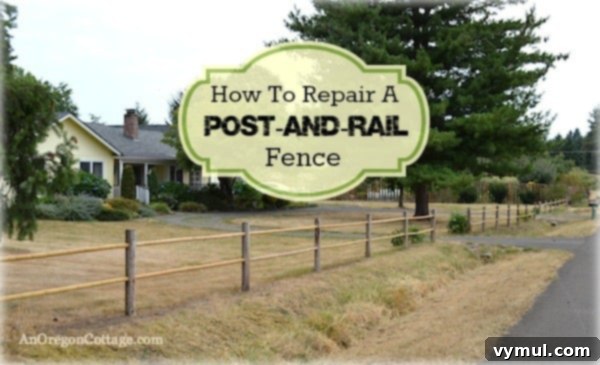
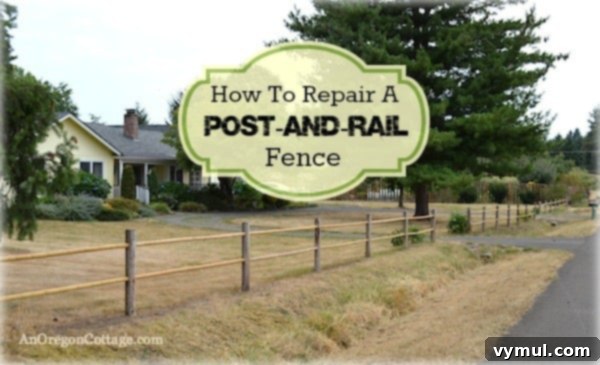
Eight years ago, when we first moved into our new home, we inherited a classic post-and-rail fence. This particular style featured charming round posts and matching round rails, creating a rustic, inviting boundary for our property. At the time, it showed its age with some bent rails and a gentle covering of moss, but critically, every single rail was still in place. It added character, a sense of established charm, and a defined boundary to our landscape. Little did we know, this would be the beginning of a long journey toward fence restoration and a valuable lesson in DIY home improvement.

The Gradual Decline: From Moss to Rotting Wood
Over the years, the subtle signs of wear began to escalate into more significant damage. The innocent moss eventually gave way to widespread rotting wood, the structural integrity of the posts was compromised by unsightly splits, and one by one, the once-intact rails started to break. The picturesque wooden fence that had initially charmed us slowly transformed into an eyesore, a constant reminder of a pending project that weighed on our minds. Each time we drove up to our home, the deteriorating post-and-rail fence was the first thing we saw, sparking the familiar thought: “We really need to tackle that fence repair.”
However, as any homeowner knows, the list of home improvement projects is often endless and ever-evolving. The fence repair consistently found itself bumped down the priority list by more pressing or appealing tasks. There was the urgent need to paint the house to refresh its curb appeal, the ambitious project of ripping out old carpet to update the interior, or the massive undertaking of a complete kitchen remodel to modernize our living space. The fence, while visually unappealing, didn’t pose an immediate structural threat to the house, so it lingered, a silent testament to our overflowing to-do list.
Navigating the Challenge of Round Post-and-Rail Fence Repair
Another significant factor contributing to our procrastination was a lack of knowledge regarding how to approach the repair of this specific type of round post-and-rail fence. Unlike fences where rails simply rest on or attach to the outside of posts, our fence featured round rails that fit snugly into pre-drilled holes in the posts. This design, while robust when new, made the idea of repairing or replacing individual components seem incredibly complex. We worried that attempting to remove the tightly fitted, often swollen or rotted, rails would be a nightmare, potentially damaging the remaining structural integrity of the posts further. The daunting prospect of a full fence replacement, which would entail ripping out the entire structure, seemed like a monumental and costly endeavor we weren’t ready to tackle. We simply weren’t sure where to begin with a DIY fence fix of this nature.

The Peculiar Driveway Section: A Gap in the Property Line
Adding to the fence’s overall disarray was a peculiar section of our property where the post-and-rail fence abruptly stopped. The previous owners had installed an access drive, used only very occasionally by us, which created an odd, unfenced gap. The fence simply ended on one side of this driveway access, with no continuation on the other. This visual discontinuity always struck me as strange and incomplete, leaving our property line feeling undefined. I often found myself questioning its purpose and contemplating whether the entire fence should just be removed to achieve a more cohesive look for the front of the property, despite the potential cost and effort involved in complete demolition.
I was strongly leaning towards the “remove it completely” option, considering it a simpler, albeit potentially more expensive, solution than figuring out the repair process. However, a stroke of luck and Brian’s keen eye changed everything. He discovered that a local farm store (Wilco) stocked round rails for an incredibly affordable price of just $5 each. What made these rails perfect was their design: they were slightly longer than the existing space between our posts and were conveniently pointed at one end. This discovery was a game-changer for our fence restoration project. With only one of our original posts requiring replacement, this meant we could salvage most of the existing structure, drastically cutting down on labor and material costs. Suddenly, the seemingly impossible task of repairing our aging post-and-rail fence became an achievable, budget-friendly DIY project that promised to restore our property’s curb appeal.
Brian’s Ingenious System for Round Post-and-Rail Fence Repair: A Step-by-Step Guide
Brian’s simple yet effective system for repairing our round post-and-rail fence rails proved to be remarkably straightforward and efficient. This method allowed us to replace damaged rails without needing specialized tools or extensive experience, transforming what seemed like a complex job into a manageable DIY task. Here’s a detailed breakdown of his step-by-step approach, ensuring a solid and aesthetically pleasing fence repair:

- Assess Existing Posts and Gather Materials: Before starting any rail replacement, thoroughly inspect the integrity of your existing fence posts. Ensure they are still sturdy, plumb, and free from excessive rot or damage that would prevent them from securely holding a new rail. If a post is severely compromised, it must be replaced first. Gather all necessary materials: your new round rails (purchased slightly longer than needed), a sturdy handsaw (a sharp pruning saw or general-purpose handsaw works well), a measuring tape, and a marker. For safety, always wear appropriate gloves and eye protection when working with wood and tools.
- Prepare the Work Area and Remove Old Rails: If you’re replacing a broken rail, carefully remove any remaining pieces from the post holes. Sometimes, these pieces can be stubborn due to swelling or decay. A pry bar, hammer, or even a drill with a large bit can help to break up and extract old wood from the holes, clearing the way for the new rail. Ensure the holes are free of debris for a clean fit.
- Insert the Flat End of the New Rail: Take one of your new round rails. Identify the end that is flat (not pointed). Carefully insert this flat end into an existing hole in one of the fence posts. Push it in as far as it will comfortably go, ensuring it’s seated firmly. This establishes the first anchor point for the new rail.
- Position and Align the Pointed End: With the flat end securely in the first post, bring the pointed end of the rail towards the opposite post where it will eventually connect. Hold the pointed end precisely against the face of this second post, aligning it directly over the center of the existing hole. Ensure the rail is level and properly positioned relative to any adjacent rails or the desired height for a uniform fence line.
- Accurate Marking for a Perfect Fit: While holding the pointed end firmly in place against the post, use your marker to clearly indicate the exact point where the post meets the rail. This mark signifies precisely how much of the pointed end needs to be removed to allow the rail to fit snugly and evenly between the two posts. Precision at this step is crucial for both structural integrity and aesthetic appeal.
- Sawing the Rail to Size: Carefully take the rail to a stable work surface, like a sawhorse or workbench. Using your handsaw, saw off the pointed end precisely at the mark you just made. Aim for a clean, straight cut. For a smoother finish, you might lightly sand the cut edge, though for a rustic fence, this isn’t strictly necessary. The goal is to create a new, flat end that will fit into the second post hole.
- Final Insertion and Centering: Now, you should have a rail with two flat ends, cut to the perfect length for the span. First, fully insert one end into its corresponding post hole. Then, gently guide the newly cut flat end into the opposite post hole. It might require a little force, twisting, or wiggling to seat it properly into the timber post. Once both ends are in, carefully center the rail between the two posts. The objective is to have an equal amount of rail inserted into each post hole, ensuring balanced support, optimal strength, and a uniform appearance across your repaired fence section.

The efficiency of this DIY fence repair method was truly remarkable. We were both incredibly pleased with the results, and the fact that Brian could complete the replacement of a single rail in approximately five minutes was a testament to its simplicity. This quick success immediately boosted our morale and made the daunting task of repairing the entire post-and-rail fence feel entirely achievable, transforming a long-deferred project into a satisfying accomplishment.
Aesthetic Transformation: Old vs. New Rails

The visual contrast between the old, weathered, and broken rails and the newly installed, sturdy replacements was striking. While the new rails were a bit thinner and, for now, significantly lighter in color than the aged posts, the improvement in overall appearance was undeniable. The fence immediately looked SO much better, regaining a sense of order, strength, and definition. We anticipate that after enduring just one winter season, the new rails will naturally weather to a similar hue as the existing posts, creating a more uniform and cohesive look across the entire fence line. Beyond aesthetics, the restored structural integrity brought a renewed sense of security and property definition.
Addressing the Driveway Gap: A Creative Solution for Fence Extension

The peculiar unfenced section of the property at the access driveway required a more involved solution than simply replacing rails. This part of the fence extension demanded new post holes to be dug and secured with cement, a task that inherently takes more time and effort. Fortunately, we had several old fence posts lying around from previous projects. We were able to repurpose these by cutting them down to the precise height needed for this new section, minimizing waste and additional material costs, which further contributed to the overall budget-friendliness of our DIY fence project.
For the post positioned directly in the middle of the access driveway, we opted for a unique, ingenious solution: making it removable. While we don’t foresee ourselves needing to remove it frequently, the thought was to provide future flexibility for ourselves or any subsequent owners of the property – because, as homeowners know, circumstances can always change. Brian’s clever approach involved cementing a one-gallon plant pot directly into the newly dug hole. Once the pot was securely set in the ground, he placed the fence post inside the pot and then tightly filled the surrounding space with rocks. This method provided exceptional stability for the post while simultaneously allowing for its removal should the need ever arise. It’s a testament to finding practical, “whatever works” solutions in DIY projects, blending durability with adaptability.
The Final Outcome: Enhanced Curb Appeal and Property Definition
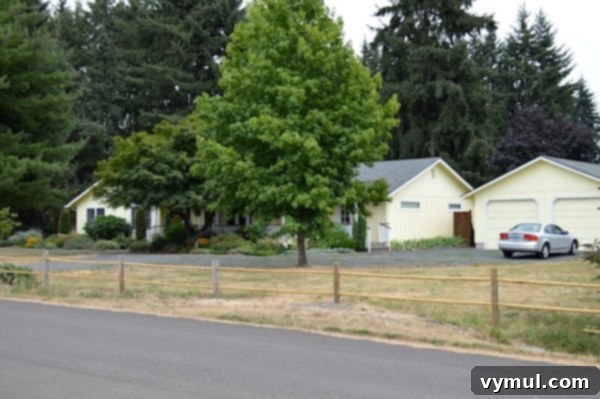
Seeing the fence finally extend across the entire front of our property, with every single rail intact and sturdy, brings immense satisfaction. The days of the unsightly, deteriorating barrier are behind us. While a complete fence removal might have been slightly cheaper in the short term, we firmly believe in the value that a well-maintained fence adds. It not only provides clear definition to our property lines and significantly enhances curb appeal but also offers a subtle sense of enclosure and privacy. Considering the significant visual and structural upgrade, investing approximately $200 in this much-needed post-and-rail fence repair project feels like an absolute bargain in the broader realm of home improvement endeavors. This project not only restored our fence but also instilled a renewed sense of pride in our home’s exterior and demonstrated the effectiveness of simple DIY solutions.
To Repair or To Replace? Weighing Your Fence Options
Our experience highlights a common dilemma faced by many homeowners: when to repair and when to completely replace a deteriorating structure like a wooden fence. In our case, the availability of affordable new rails and the relatively good condition of most existing posts made repair the clear winner. Repairing offers numerous benefits, including significant cost savings, reduced waste (making it an environmentally friendlier option), and often a quicker turnaround time compared to a full replacement. It also allows you to maintain the original character and charm of an existing structure, which can be invaluable for certain property styles or historic homes. However, if posts are extensively rotted, if the fence style is outdated and doesn’t fit your aesthetic, or if you desire a completely different look or material, then full replacement might be the more practical long-term solution. It’s crucial to thoroughly assess the extent of the damage, consider your budget, and evaluate the desired outcome before making a decision on your fence maintenance.
Maintaining Your Restored Post-and-Rail Fence for Longevity
Now that our post-and-rail fence has been beautifully restored, ongoing maintenance is key to ensuring its longevity and protecting your investment. Regularly inspect your fence for any new signs of wear, loose rails, or developing rot, especially after harsh weather. Address small issues promptly before they escalate into major problems, which could require more extensive fence repairs down the line. Applying a wood preservative or stain every few years can significantly extend the life of your wooden fence by protecting it from moisture, damaging UV rays, and insect damage. Keeping vegetation, such as shrubs and vines, away from the fence line also helps to prevent moisture buildup and inhibit moss or mold growth, which contribute to wood decay. With a little proactive care and attention, your repaired post-and-rail fence can continue to enhance your property’s beauty and functionality for many years to come.
What would you have done in our situation – opted to remove the fence completely, or undertaken a thoughtful and cost-effective repair?