Mastering Organic Weed Control: The Paper and Mulch Method for a Pristine, Weed-Free Garden
Every gardener dreams of lush, vibrant beds and borders, but the relentless battle against weeds often turns that dream into a tiring chore. Imagine a world where your garden thrives with minimal weeding, where plants are healthier, and your soil is richer – all achieved through a simple, organic technique. This isn’t a pipe dream; it’s the reality offered by the paper and mulch method for effective organic weed control. This comprehensive guide, complemented by our insightful video tutorial, will reveal the secrets to transforming your garden into a virtually weed-free sanctuary.
For years, I’ve passionately shared my favorite, most effective strategy for keeping weeds at bay in flower, shrub, and perennial beds and borders: the ingenious layering of readily available materials like newspaper, brown paper, or cardboard beneath a generous blanket of rich garden compost mulch. This method isn’t just a suggestion; it’s the cornerstone of my gardening philosophy, dramatically reducing the time and effort spent on weeding while simultaneously nurturing the soil.
This powerful weed-blocking technique has been a recurring theme across our gardening resources. You can explore its foundational principles in this article on the 5 steps to organic weed control. Discover its application in establishing new garden spaces with this guide to creating a new flower bed in just 8 no-dig steps. Further insights into the broader uses of mulch in the garden are available in this piece dedicated to garden mulching, and for a general overview of comprehensive weed management, refer to this article on keeping weeds out of your garden. Each resource underscores the enduring effectiveness and simplicity of this organic approach.
Why Embrace Organic Weed Control with Paper and Mulch?
The allure of this paper and mulch method for organic weed control extends far beyond its simplicity. It’s a comprehensive solution that addresses multiple gardening challenges simultaneously, making it an indispensable technique for both novice and seasoned gardeners. Here’s a closer look at the profound benefits:
- Unparalleled Weed Suppression with Minimal Effort: This is unequivocally the most effective strategy I’ve discovered for achieving virtually weed-free beds with the absolute least amount of mental energy, financial investment, and precious time. Crucially, its effects are remarkably long-lasting. Forget expensive chemical treatments or the tedious reapplication cycles throughout the season; with this method, you perform the task once, and you’re set for the entire year, allowing you to reclaim your weekends from endless weeding. The paper layer acts as a physical barrier, effectively blocking sunlight from reaching weed seeds and existing weeds, smothering them before they even have a chance to sprout.
- Building Long-Term Garden Resilience: The impact of this method compounds significantly over time. In the initial year, especially on a heavily weed-infested bed, you might still encounter a few persistent stragglers. However, the consistent application of paper and mulch actively depletes the weed seed bank in your soil. With each subsequent spring, as rains encourage new growth, you’ll observe fewer and fewer weeds attempting to return. Maintain this yearly application, and you’ll experience a dramatic reduction in weed pressure. This continuous smothering not only tackles existing weeds but prevents new weed seeds from establishing, effectively breaking the weed cycle. It even keeps notoriously pernicious weeds, such as stubborn violets, firmly in check, gradually weakening their presence until, eventually, you may find yourself able to transition to an every-other-year application schedule.
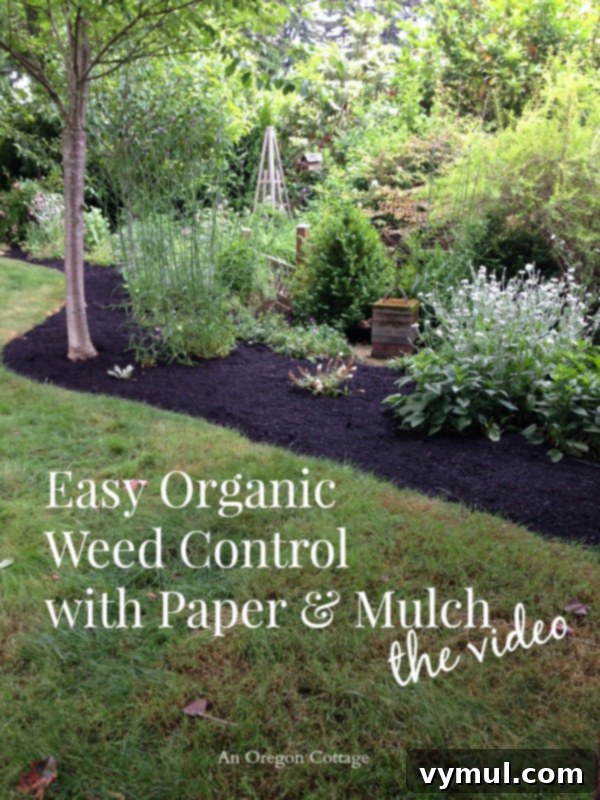
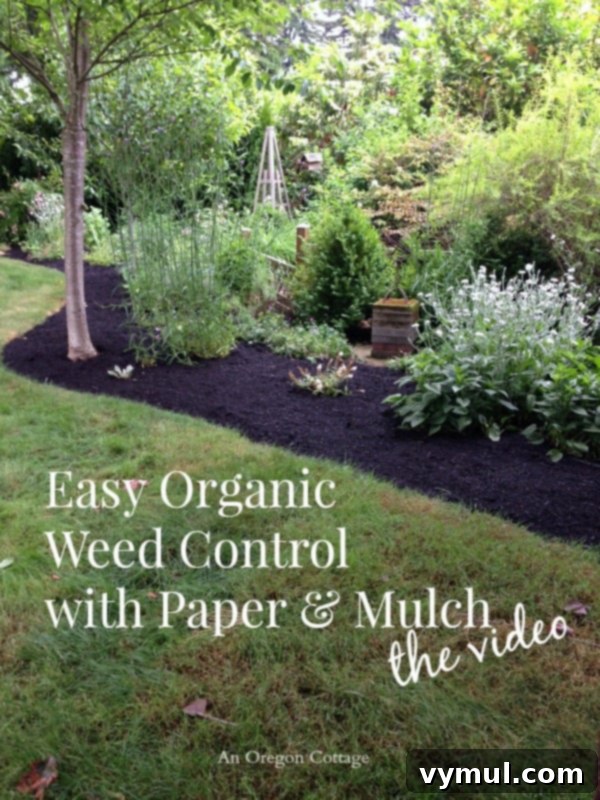
- Nourishing Your Soil and Plants Naturally: By utilizing a rich garden compost as your mulch layer, you’re doing far more than just suppressing weeds. You are actively feeding your plants and profoundly enriching your soil. As the organic material breaks down naturally over time, it releases a slow and steady supply of essential nutrients directly to your plant roots. This process simultaneously improves soil structure, enhances drainage, increases water retention capacity, and fosters a thriving ecosystem of beneficial microorganisms. Take a look at the photograph above: that bed, now 9 years old, has never received any synthetic fertilizer. Its vitality and growth are solely a testament to the yearly (or, ahem, every-other-year) application of paper and compost. This natural feeding regimen benefits all plants, from delicate roses and robust perennials to established shrubs.
- Sustaining Optimal Soil Moisture: During the often-dry summer months, maintaining consistent soil moisture is a constant challenge. The paper and mulch layer acts as an insulating blanket, significantly reducing water evaporation from the soil surface. This means your plants remain hydrated for longer periods, reducing the frequency of watering and conserving precious water resources. Consistent moisture is crucial for healthy root development and overall plant vigor, preventing stress during periods of heat and drought.
- Cultivating a Tidy and Appealing Garden Aesthetic: Beyond its practical benefits, this method immediately transforms the visual appeal of your garden. The uniform layer of rich compost creates a healthy, clean, and tidy appearance, instantly giving your yard a finished, well-maintained look. It establishes a sense of order and readiness, signaling the start of a beautiful and productive gardening season, enhancing the overall curb appeal of your home.
Believe me when I say that without discovering this method – which I first learned about through the now-defunct Organic Gardening magazines back in the 1990s when my husband Brian and I bought our first home – our garden beds would be nowhere near as extensive or as manageable as they are today. The sheer thought of maintaining such large areas through traditional weeding methods would simply not be worth the monumental effort. It was a game-changer for us, revolutionizing our approach to gardening.
And so, I continue to advocate for this method from every platform available, effectively shouting its praises from the rooftops. By that, I mean through this very site and our YouTube channel, which feels like the 21st-century equivalent of a rooftop proclamation, doesn’t it? We’ve added this essential video tutorial on layering paper and compost mulch to our growing library of gardening videos (which also includes helpful guides like our solution to rural weeds & pasture grass).
Implementing the Paper and Mulch Method: A Practical Guide
Putting this method into practice is straightforward and requires only a few key steps. Understanding these will help you maximize its effectiveness:
1. Preparing Your Garden Beds
While the paper and mulch method is incredibly powerful, a little initial preparation goes a long way. Start by clearing away any large debris, dead plant material, or particularly stubborn, mature weeds. You don’t need to meticulously hand-weed every tiny sprout, as the paper layer will take care of much of that. The goal is simply to provide a relatively clear surface for the paper application. If you have particularly aggressive perennial weeds, a light initial weeding can help, but for annuals and most seedlings, the paper will be sufficient.
2. Laying the Paper Barrier
This is the core of the weed suppression. You’ll need plain newspaper (avoid glossy inserts and colored inks, as they may contain heavy metals, sticking to black and white print), plain brown packing paper, or corrugated cardboard. For newspaper, layer it at least 6-8 sheets thick. For cardboard, lay it flat, overlapping the edges by at least 4-6 inches to prevent weeds from finding gaps. Crucially, thoroughly wet down each layer of paper or cardboard as you lay it. This helps it conform to the soil, prevents it from blowing away, and initiates the decomposition process. Ensure the paper extends right up to the base of your desired plants, but leave a small gap for air circulation if working around established shrubs or tree trunks.
3. Applying the Mulch Layer
Once your paper barrier is in place, it’s time for the mulch. While various mulches exist, rich garden compost is highly recommended for this method. Apply a generous layer, at least 2-4 inches deep, over the entire paper-covered area. The mulch serves multiple purposes: it holds the paper down, insulates the soil, conserves moisture, and, most importantly, continuously breaks down to enrich your soil with vital organic matter and nutrients. If compost is scarce, you can use a combination of compost and another organic mulch like wood chips or bark, but prioritize compost for its soil-building benefits.
Choosing Your Materials Wisely
- Paper: Stick to black and white newspaper (avoiding glossy ads), plain brown packing paper, or corrugated cardboard (remove all tape and labels). These materials are biodegradable, non-toxic, and break down efficiently without introducing harmful chemicals into your garden.
- Mulch: While shredded leaves, straw, or wood chips can work as mulch, *garden compost* is the superior choice for this method. It not only suppresses weeds but also actively improves soil structure, introduces beneficial microbes, and provides a slow-release fertilizer for your plants. A good quality, finished compost is key to reaping the full benefits of this organic approach.
So tell me, do you currently use this highly effective organic weed control method in your garden beds and borders, too? We’d love to hear about your experiences and successes!
If not, what’s your favorite way to keep weeds under control in your garden? Share your wisdom and help inspire other gardeners!