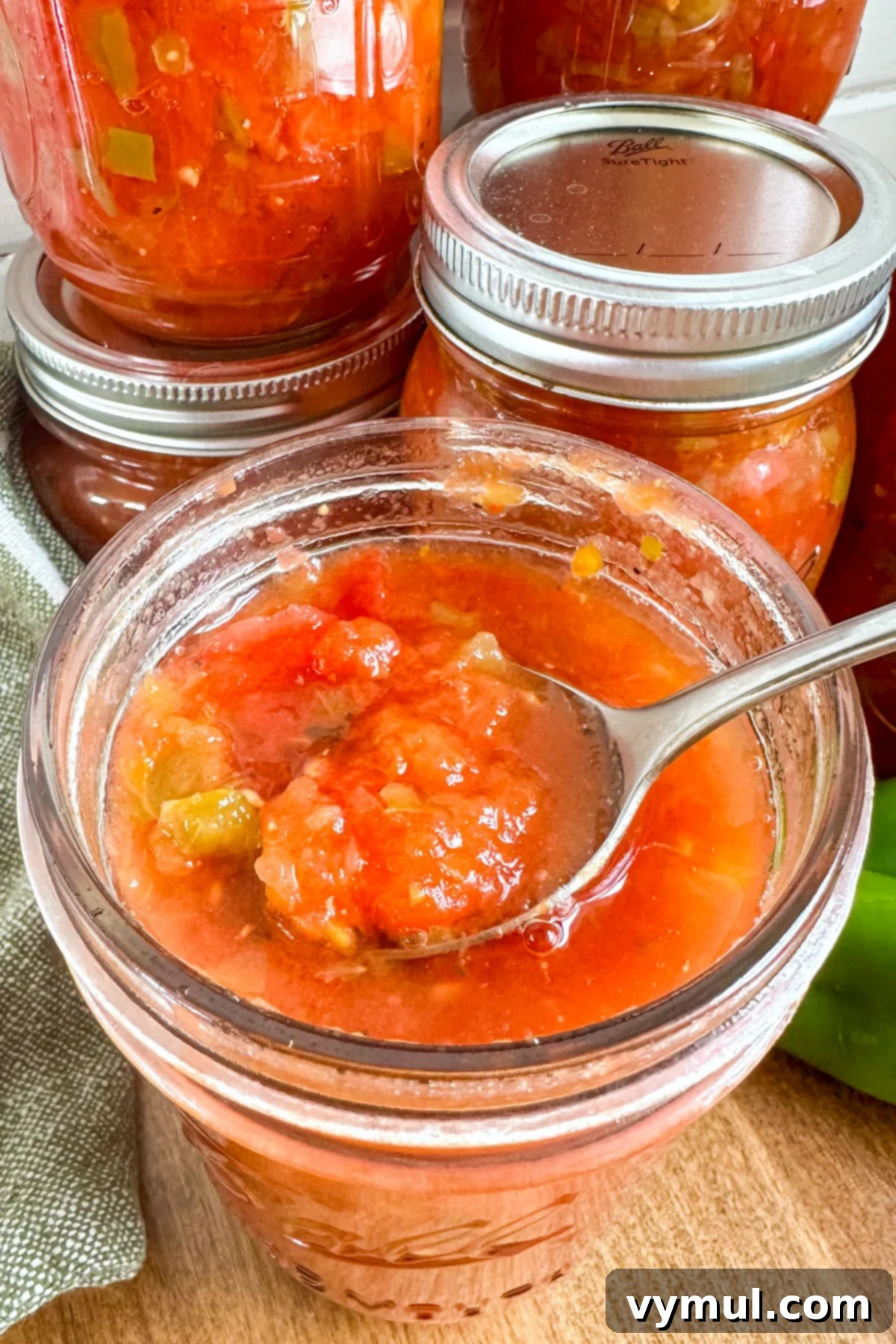
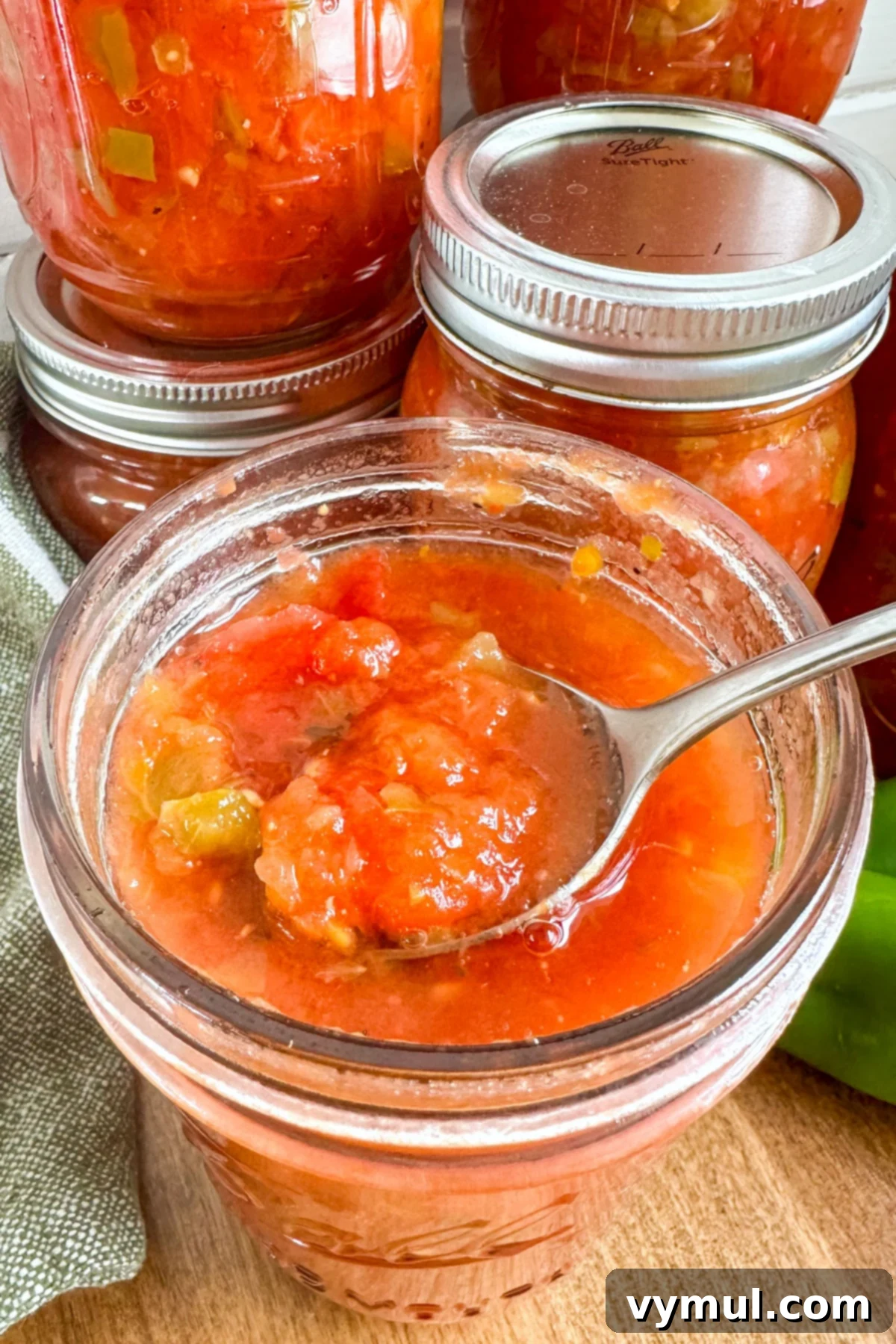
Homemade Rotel: The Ultimate Copycat Recipe for Canned & Frozen Tomatoes with Chilies
Imagine having that perfect blend of zesty tomatoes and mild green chilies ready for all your favorite dishes, straight from your pantry or freezer! This incredibly simple copycat Rotel recipe allows you to recreate the familiar flavor you adore, using fresh, wholesome ingredients from your garden or local market. Designed specifically for safe water-bath canning or freezing, this recipe combines the authentic ingredient list found on a can of store-bought Rotel with a rigorously tested home canning method. The result? Jars of vibrant, homemade Rotel-style tomatoes and chilies, poised to elevate your soups, dips, casseroles, chili, and more, any time of the year. Say goodbye to store-bought cans and embrace the fresh, controlled goodness of homemade!
✩ What readers are saying…
“You nailed it! I like it even better than the store bought variety. Thanks for this. I’m going to use this recipe a lot!” -Mike
Some links in this article are affiliate links and if you click on them I will receive a small commission at no cost to you.
As avid home cooks and garden enthusiasts, we rely heavily on tomato products for countless recipes, from hearty soups and comforting stews to vibrant casseroles and more. For years, I’ve dedicated myself to preserving our bountiful harvests, transforming homegrown tomatoes and garden produce into a variety of pantry staples. This includes an amazing roasted tomato sauce perfect for freezing, homemade canned salsa, delicious pizza sauce, and of course, our renowned addictive tomato chutney.
However, one specific item frequently appeared on recipe ingredient lists that I hadn’t yet mastered at home: Rotel-style diced tomatoes and chilies. The convenience of having this flavorful combination on hand for various dishes, especially when I had an abundance of chili peppers from the garden, sparked my quest for a reliable, homemade version. I knew if I could make my own, it would be a game-changer for our cooking year-round, adding that signature kick to everything from cheesy dips to Mexican-inspired meals.
Want growing tips to get abundant harvests, too? Check out the Ultimate Tomato Guide and the Ultimate Hot Pepper Guide – both also have lots of recipes to use them, too.
My search for an authentic, safe, and can-friendly copycat Rotel recipe proved surprisingly challenging. Many online recipes I encountered veered significantly from the classic Rotel profile. Some included additional vegetables like onions, which would transform the product into more of a salsa than a true Rotel. Even more concerning, several recipes suggested adding a significant amount of sugar – sometimes as much as 1-1/2 cups! This was a clear departure from the simple, savory flavor profile of commercial Rotel, which notably contains no added sugar. My goal was to create a recipe that precisely mirrored the store-bought product’s taste and texture, while also ensuring it was safe for home canning and made with fresh, quality ingredients.
What are the Authentic Ingredients in Rotel?
To ensure this homemade Rotel copycat recipe was truly authentic, I started with the most reliable source: the ingredient list printed on the back of a commercial Rotel can. This quick reference revealed a straightforward and surprisingly simple combination, free from unnecessary additives, sugar, or onions:
- Tomatoes: The foundational ingredient, providing the bulk and tang of the product. Using ripe, fresh tomatoes is key to achieving a superior flavor.
- Chilies: The peppers lend their distinctive mild heat and earthy notes. The type of chili chosen significantly impacts the final spice level.
- Salt: Essential for seasoning and flavor enhancement, as well as playing a role in the preservation process.
- Spices: While not explicitly detailed on the can, a subtle blend of spices contributes to Rotel’s characteristic flavor. This recipe uses a thoughtful combination to achieve that authentic taste.
- Citric Acid: A crucial ingredient for canning safety, especially with tomatoes, and it also contributes to the overall acidity and bright flavor profile.
- Cilantro: Listed as the final ingredient, meaning it’s present in the smallest quantity. Given its fresh nature, adding fresh cilantro directly to a tested canning recipe is generally not safe due to potential pH changes. For canning, I’ve substituted dried coriander (which comes from the seeds of the cilantro plant) to infuse a similar flavor profile without compromising safety. If you prefer the vibrant taste of fresh cilantro, it’s best added just before serving your homemade Rotel. However, if you’re determined to include a small amount of fresh cilantro before canning, remember that it’s imperative to remove an equal volume of chilies to maintain the tested fresh vegetable ratio, ensuring the recipe remains safe for water bath canning. Be aware that the flavor of fresh cilantro will be very mild after the canning process.
Developing a Safe Canning Recipe for Tomatoes and Chilies
Creating a homemade Rotel recipe that is both delicious and safe for long-term storage, whether through canning or freezing, was my top priority. Tomatoes, while acidic, can sometimes be borderline for water-bath canning without added acid, and chilies are classified as a low-acid ingredient. This combination necessitates a carefully tested and approved recipe to prevent spoilage and ensure food safety.
My breakthrough came when I discovered the Minnesota Method for canning a tomato mixture. This particular method stood out because it clearly states that its ratio of tomatoes to low-acid ingredients has been extensively tested and is considered safe for water-bath canning. This provided the perfect foundation for adapting my copycat Rotel recipe, giving me the confidence that the end product would be shelf-stable and secure for my family.
The original Minnesota Method recipe included onions and celery, which are not part of Rotel’s authentic ingredient list. To adapt it for a true Rotel-style product, I omitted the 1-1/2 cups of chopped celery and onions. Recognizing the importance of maintaining the tested low-acid to high-acid ratio, I carefully adjusted the amount of chilies. Instead of simply substituting the full 1-1/2 cups with chilies (which would have resulted in an excessively spicy product, not to mention a potentially unsafe low-acid ratio increase), I increased the chilies by only 1/2 cup. This strategic adjustment meant that the total quantity of low-acid ingredients added to the 12 cups of tomatoes actually decreased from 2 cups (in the original Minnesota Method) to just 1 cup in my adapted recipe.
This careful adaptation is vital for safety. While I technically increased the amount of chilies compared to some other recipes, the overall reduction in total low-acid vegetables from the original tested method results in a significantly improved and safer ratio for water bath canning. Therefore, you can proceed with confidence, knowing that this recipe not only delivers on flavor but also adheres to rigorous food safety standards.
Mastering Boiling Water Canning: A Step-by-Step Tutorial
For those new to the world of home canning, the process might seem daunting, but I assure you, it’s incredibly straightforward and immensely rewarding. If you’re feeling unsure, I highly recommend consulting the comprehensive water-bath canning tutorial I’ve prepared here, or watching the helpful video demonstration provided below. With just a few essential tools, you’ll be safely preserving your garden’s bounty in no time. The investment in these basic canning items is truly worthwhile for the year-round enjoyment of homemade goodness.
Do I Have to Can This? Can I Just Freeze It?
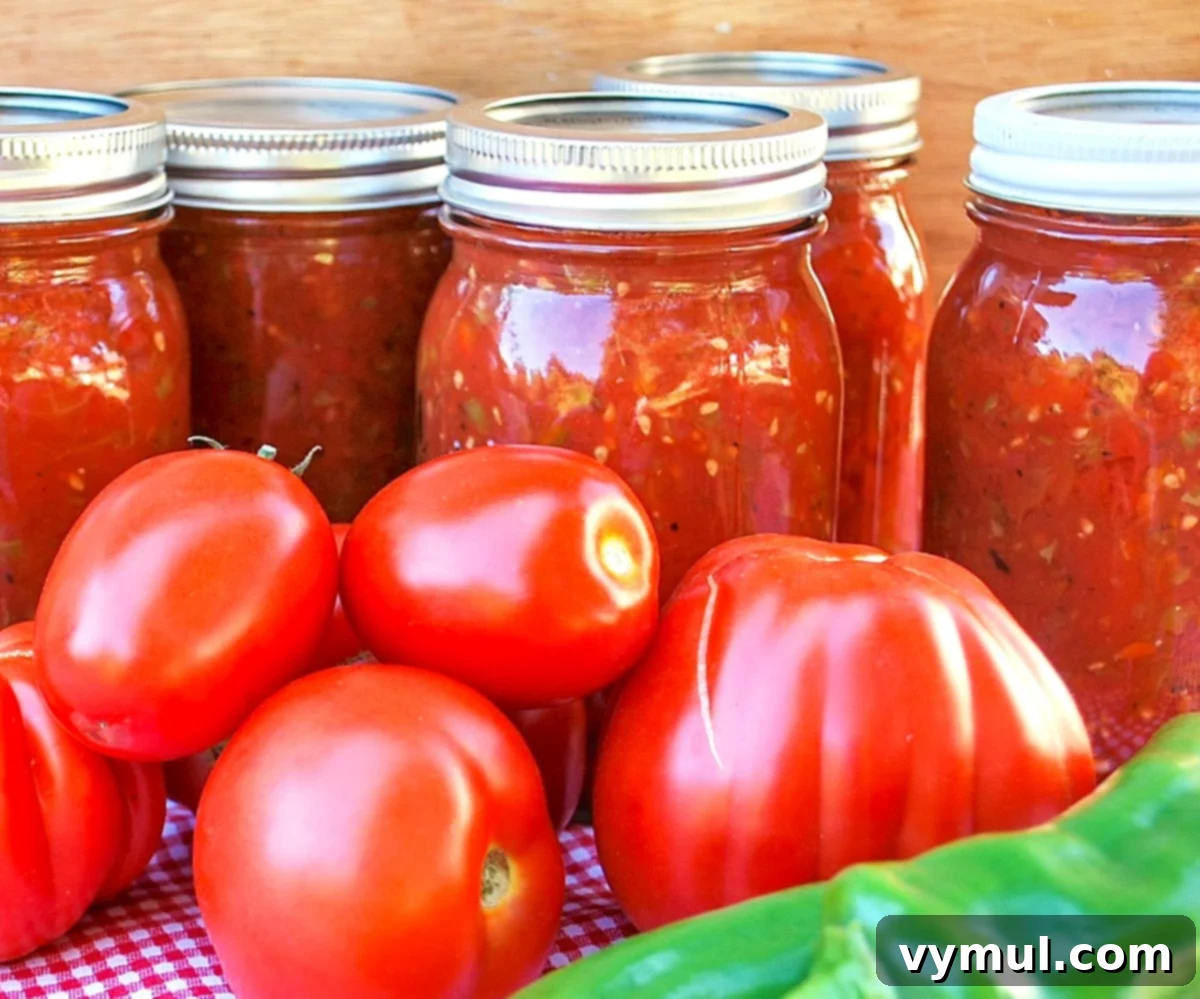
Absolutely, freezing is a perfectly viable and easy option for preserving this homemade Rotel-style tomatoes and chilies. Just like other beloved tomato products such as salsa, chutney, and various sauces, this recipe freezes beautifully. In my experience, there’s no noticeable difference in taste or texture between the frozen and canned versions once they’re used in cooking. The primary advantages of canning lie in its sheer convenience (no defrosting required) and superior storage stability, as canned goods don’t take up precious freezer space and are always ready to use.
To Freeze: After cooking the mixture for 10 minutes, allow it to cool completely. Once thoroughly cooled, transfer the Rotel mixture into freezer-safe containers. For best results and to avoid plastic, I exclusively use glass mason jars for freezing food nowadays. Remember to leave adequate headspace – at least one inch – at the top of each container to allow for expansion as the contents freeze. Properly label and date your containers, and they can be safely stored in the freezer for up to one year, providing you with fresh-tasting Rotel whenever you need it.
Note on Citric Acid for Freezing: A common question from readers is whether the citric acid or lemon juice can be omitted if you choose to freeze the Rotel instead of canning it. The short answer is yes, you can leave it out if freezing. However, it’s worth noting that citric acid is a listed ingredient in commercial Rotel, so its omission might slightly alter the characteristic tangy citrus flavor. If you’re aiming for the closest possible copycat taste, consider keeping a small amount of citric acid even when freezing.
Essential Recipe Ingredients for Your Homemade Rotel
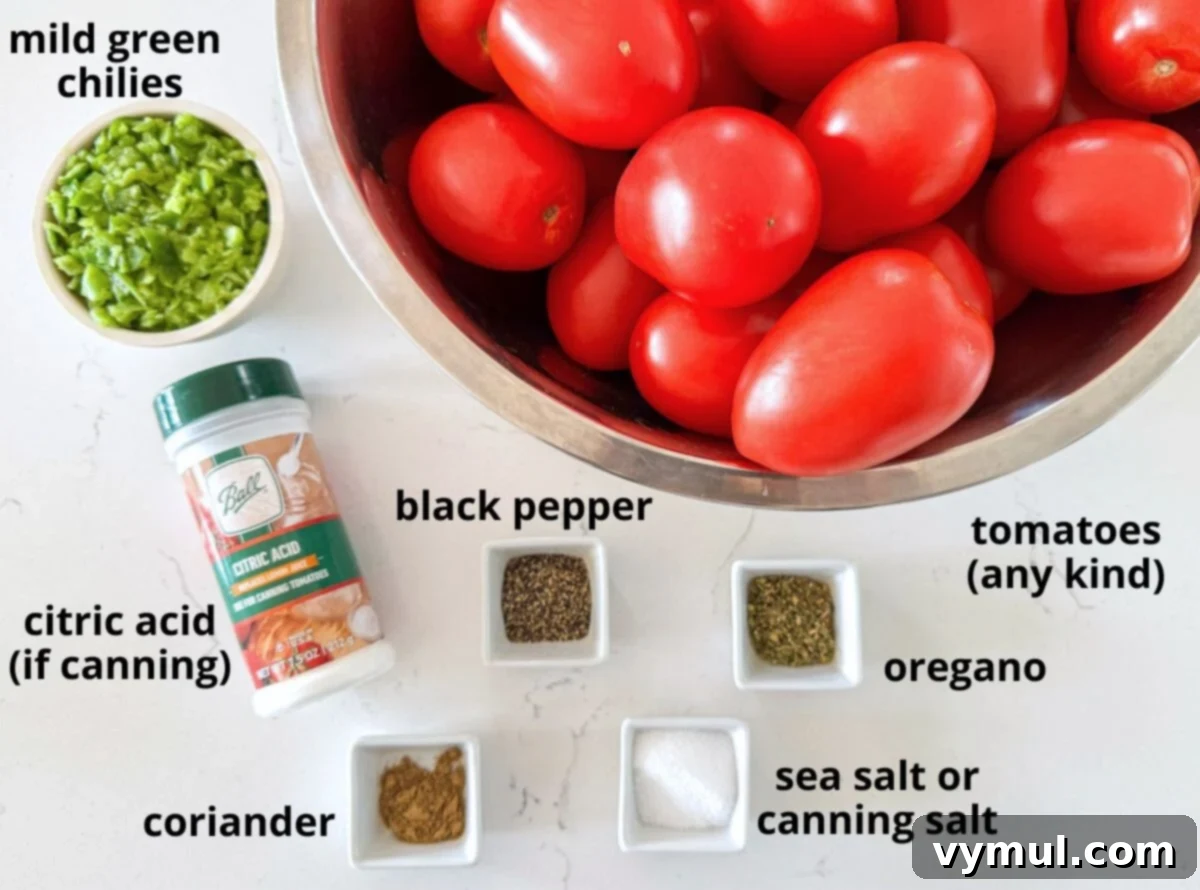
Crafting your own batch of homemade Rotel-style tomatoes and chilies is incredibly satisfying, especially when you start with fresh, quality ingredients. This recipe’s components are simple and intentionally chosen to perfectly mimic the authentic flavor profile of store-bought Rotel:
- Tomatoes: The backbone of this recipe. While almost any type of tomato can be used, paste tomatoes (like Roma or San Marzano) are highly recommended. Their meatier texture and lower water content mean they’ll hold together better during cooking and produce a less watery, more concentrated final product, closer to the consistency you expect from Rotel. Fully ripe tomatoes will provide the best flavor.
- Mild Chili Peppers: To achieve that signature Rotel kick without overwhelming heat, mild to medium chili peppers are ideal. Anaheim and poblano peppers are my top choices, offering a delightful balance of flavor and gentle spice. Hatch peppers, when in season, are another fantastic option for their distinctive taste. If you prefer a bit more heat, you can introduce a jalapeño or two as part of your total chili measurement, as discussed in the tips section below.
- Salt & Black Pepper: Simple yet crucial for seasoning. Always use canning salt or a pure sea salt that is free of anti-caking agents, as these can cloud your canning liquid. Freshly ground black pepper adds a superior aromatic depth compared to pre-ground varieties.
- Spices: Oregano and Coriander: These two spices are carefully selected to contribute to the Tex-Mex inspired flavor profile without overpowering the fresh tomato and chili notes. Oregano brings a warm, earthy quality, while coriander (which is the ground seed of cilantro) offers a citrusy, slightly sweet undertone that mimics the subtle hint of cilantro found in commercial Rotel. This combination is versatile and complements a wide range of dishes.
- Citric Acid: This is a non-negotiable ingredient if you plan on water-bath canning your homemade Rotel. It significantly lowers the pH level of the tomatoes, making them safe for this preservation method. Additionally, citric acid contributes to the bright, tangy flavor that is characteristic of Rotel. If you opt to freeze your Rotel instead, while you technically could omit it, I recommend including it to maintain that authentic taste, as it is present in the commercial version (see the note in the freezing section above).
Essential Supplies Needed for Canning and Freezing
To successfully prepare and preserve your homemade Rotel, having the right equipment on hand will make the process smooth and enjoyable. Here’s a list of the key supplies you’ll need:
- Large Stock Pot: You’ll need a substantial pot to cook down your tomatoes and chilies. I find a 12-quart heavy-bottomed stock pot to be ideal, as its weight helps prevent scorching. An 8-quart pot could also work for smaller batches.
- Water-Bath Canner: This specialized pot is essential for safe water-bath canning. My preference is this stainless steel version with a clear lid, which allows for easy monitoring of the water level and boiling. Its flat bottom is also compatible with glass-top stoves.
- Canning Jars: The recipe yields approximately 6 pints, so you’ll need pint (16-ounce) jars. Half-pint (8-ounce) jars are also an option for smaller portions. For those who want to replicate the exact 10-ounce size of commercial Rotel cans for specific recipes, you can use specialized 10-ounce canning jars like these. Don’t forget new lids and rings!
- Canning Funnel: A wide-mouth funnel is invaluable for cleanly transferring the hot tomato-chili mixture into jars, minimizing spills and keeping jar rims clean. I highly recommend a stainless steel funnel for durability and ease of cleaning when working with hot liquids.
- Stainless Ladle & Jar Lifter: A sturdy ladle is necessary for scooping the hot mixture, while a jar lifter is an indispensable tool for safely placing hot jars into and removing them from the boiling water canner without burning yourself. Both are absolute must-haves for home canning.
For a more comprehensive list of essential (and nice-to-have) canning supplies, click here.
Tips & Variations For Your Perfect Copycat Rotel Tomatoes
Once you’ve mastered the basic recipe, feel free to experiment with these tips and variations to customize your homemade Rotel to your family’s preferences while still ensuring canning safety:
- Customizing Dry Spices: This recipe’s chosen blend of oregano and coriander is designed to closely match the subtle spice notes in authentic Rotel and complements a wide range of Tex-Mex and other cuisines. However, dry spices are generally safe to adjust in tested canning recipes, meaning you can easily tailor the flavor profile to your liking. Feel free to experiment by adding a pinch of cumin for a smokier depth, or a touch of paprika for added color and a different earthy note. Just remember to use dry spices, as adding fresh herbs (beyond what’s noted for cilantro/coriander) can alter the pH and potentially compromise canning safety.
- Adjusting Heat Levels with Peppers: For a Rotel that most closely resembles the store-bought mild version, stick with all mild peppers like Anaheim or poblano. However, if your household enjoys a bit more heat, this recipe offers flexibility. In my initial batches, I started with just one jalapeño within my 1 cup of chilies, but found it surprisingly mild after canning. Now, I typically add 2-3 jalapeños, depending on their size and perceived heat, to achieve a more noticeable kick. The key rule here is crucial for safety: you cannot exceed the total amount of chilies (1 cup), but you absolutely can mix and match different types of chilies to achieve your desired spice level. Consider removing seeds and membranes for less heat, or leaving them in for maximum spice.
- Optimizing Tomato Texture: Quartering vs. Chopping: Achieving the ideal texture for Rotel-style diced tomatoes is important. Initially, quartered tomatoes might seem too large for a typical Rotel product. However, I’ve found that they break down considerably during the 10-minute simmering process, resulting in perfectly sized, chunky pieces. When I experimented with finely chopped tomatoes, the end product was closer to a chunky sauce, losing that distinct diced tomato characteristic. Therefore, I highly recommend simply quartering your tomatoes for the best results. A small caveat: if you are using exceptionally firm and large paste tomatoes (which can vary significantly in consistency, especially if purchased from a store), you might find it beneficial to cut the quartered sections in half again to ensure they cook down adequately and integrate well into the mixture.
- Citric Acid vs. Bottled Lemon Juice: Choosing Your Acidulant: Both citric acid and bottled lemon juice serve the vital role of acidifying your tomatoes for safe water-bath canning. For several years, I’ve exclusively used citric acid in my tomato canning. This preference stems from a few factors: many brands of bottled lemon juice contain preservatives, and citric acid is also a listed ingredient in commercial Rotel, making it an authentic choice. Furthermore, citric acid is a concentrated powder, requiring a much smaller quantity compared to lemon juice. However, if bottled lemon juice is what you have on hand, it is a perfectly acceptable and safe alternative, and the recipe below provides the correct measurements for both options.
Let’s Make the Copycat Rotel Recipe!
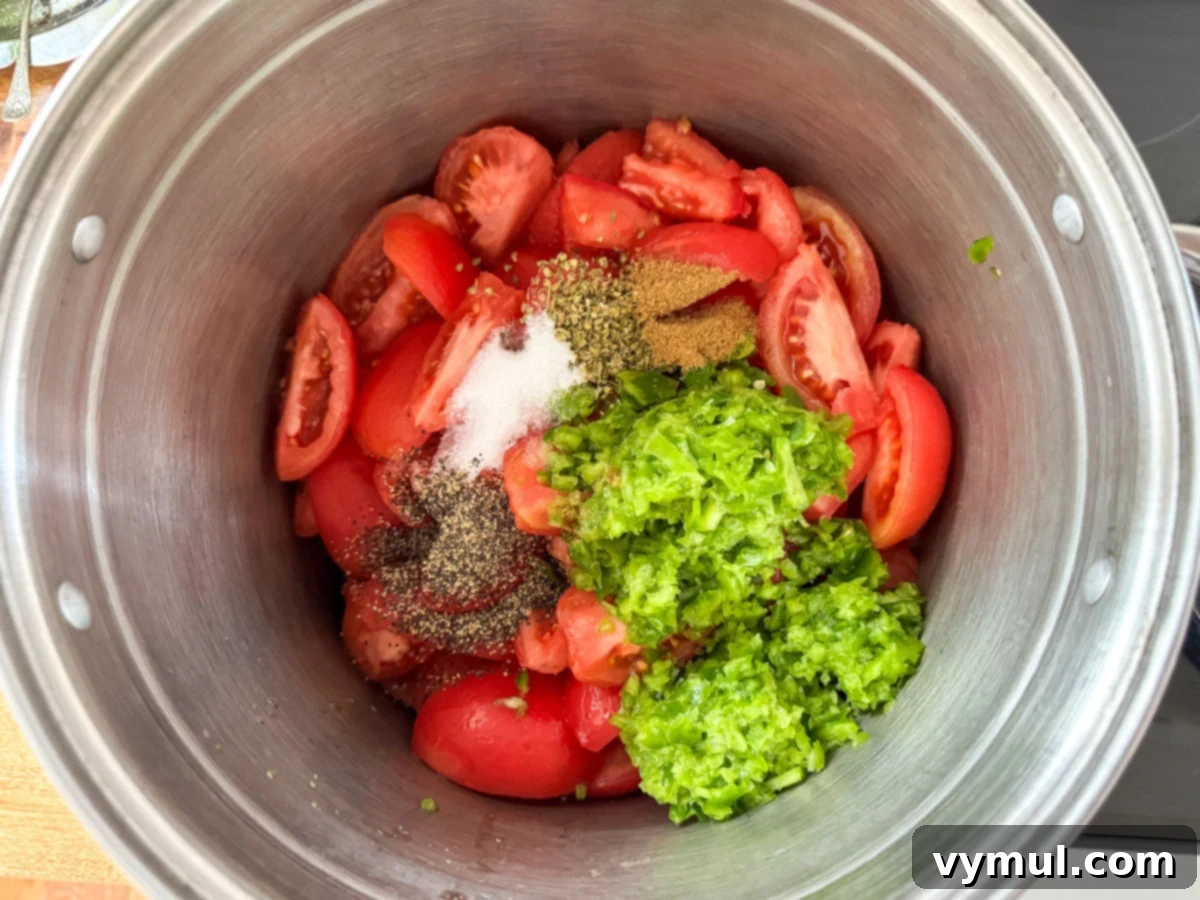
Step 1: Prep All Ingredients. Begin by meticulously gathering and preparing all your fresh ingredients. This includes washing, coring, peeling, and quartering your tomatoes. (TIP: For a super-easy tomato peeling method, click here!) Wash, stem, and seed your chilies (leaving seeds in will increase spiciness). Finely chop the chilies by hand or use a food processor for a quicker, uniform chop. Add all prepped ingredients, along with salt, pepper, oregano, and coriander, directly to a large stockpot.
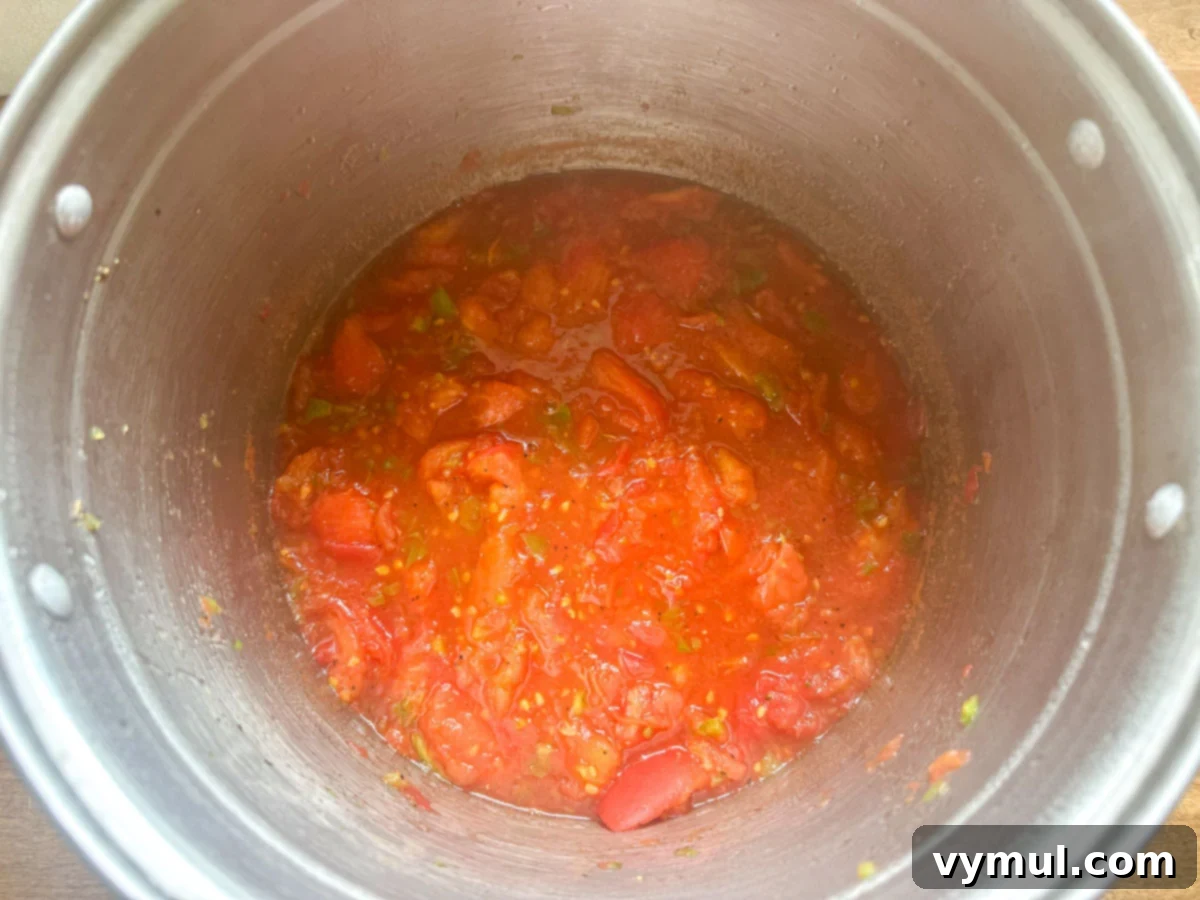
Step 2: Cook the Mixture. Place the stockpot over medium-high heat and bring the tomato and chili mixture to a rolling boil. Once boiling, reduce the heat to a gentle simmer and continue to cook for 10 minutes, stirring frequently to prevent any sticking or scorching at the bottom of the pot. If you plan to freeze your Rotel, allow the mixture to cool completely at this stage, then pour it into freezer-safe containers, leaving appropriate headspace. If canning, proceed with the subsequent steps.
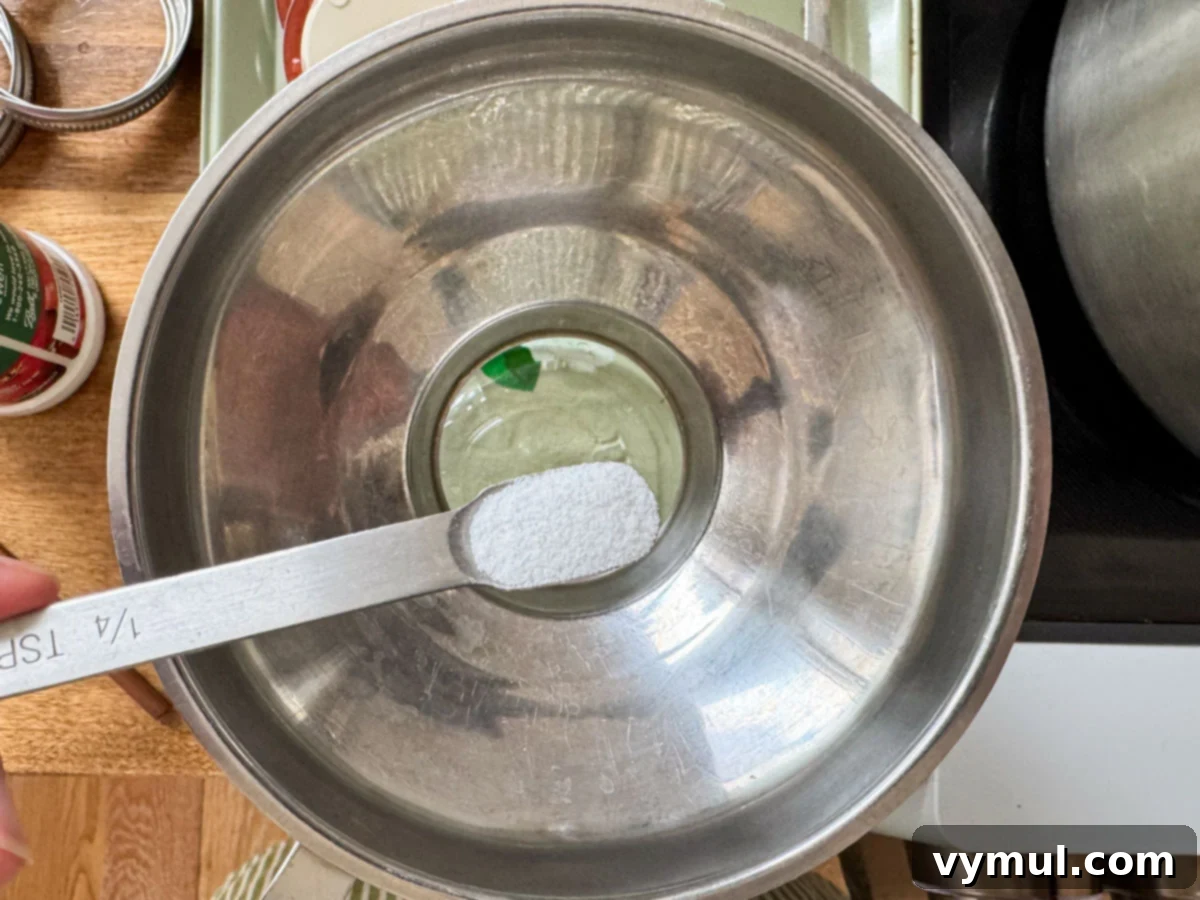
Step 3: Prepare Jars and Acid. While your tomato mixture simmers, prepare your canning station. Gather all your canning supplies: warm, clean canning jars, new lids and rings, a jar lifter, a canning funnel, a ladle, and your chosen acidulant (citric acid and a 1/4 teaspoon measure, or bottled lemon juice). TIP: Arrange everything neatly on a clean tray next to your stove for maximum efficiency and easy clean-up. One jar at a time, add the specified amount of citric acid (1/4 teaspoon for pint jars, 1/2 teaspoon for quart jars) or bottled lemon juice (1 tablespoon for pints, 2 tablespoons for quarts) to the bottom of each warm, clean jar.
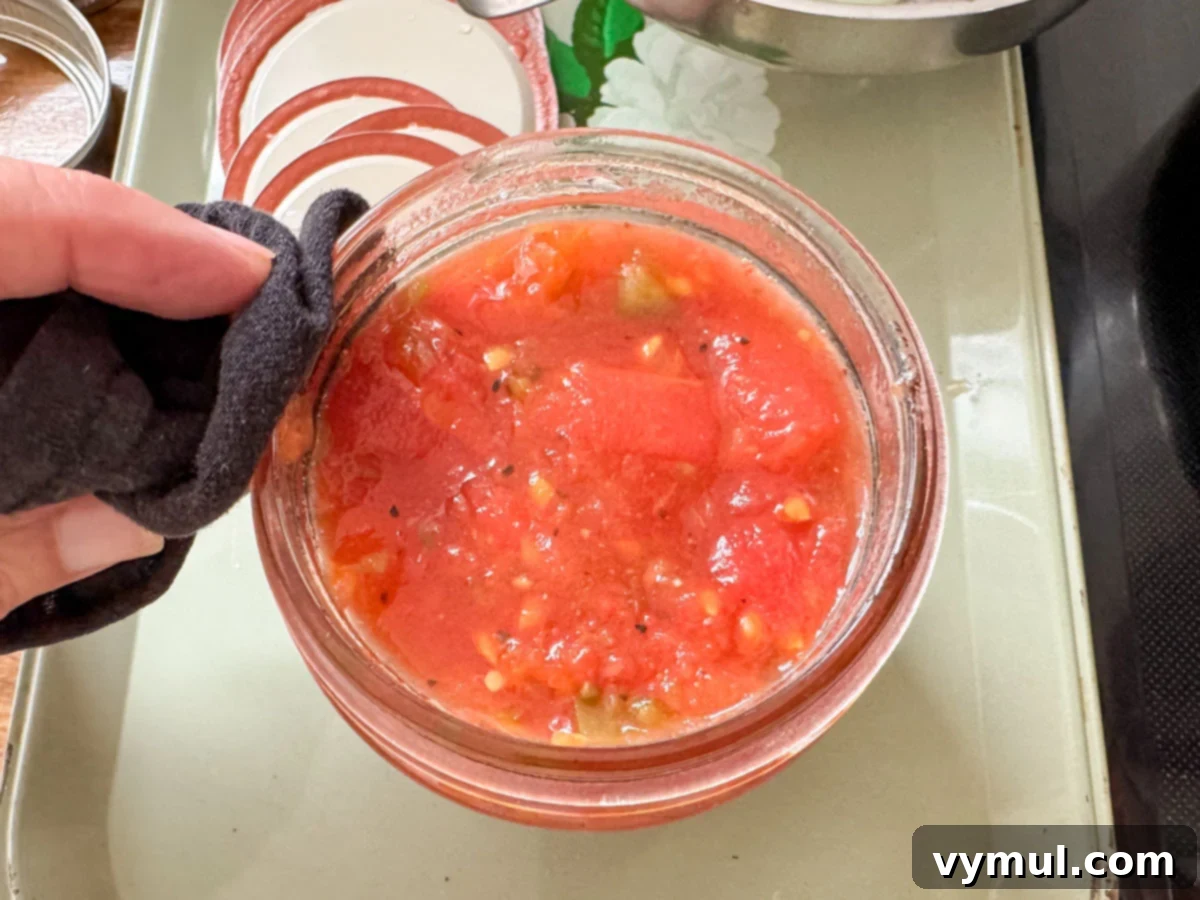
Step 4: Fill Jars and Seal. Using your canning funnel and ladle, carefully fill each prepared jar with the hot tomato-chili mixture and its juice. Ensure you leave a precise 1/2-inch headspace from the rim of the jar – this is crucial for proper sealing. Use a clean, non-metallic spatula to remove any trapped air bubbles by running it around the inside of the jar. Wipe the rims of each jar thoroughly with a damp cloth or paper towel to remove any food particles, which could prevent a good seal. Center a new, warm lid on each jar, then screw on the band fingertip-tight. Place the filled jar into the raised rack inside your water-bath canner, above the simmering water. Repeat this process for all remaining jars.
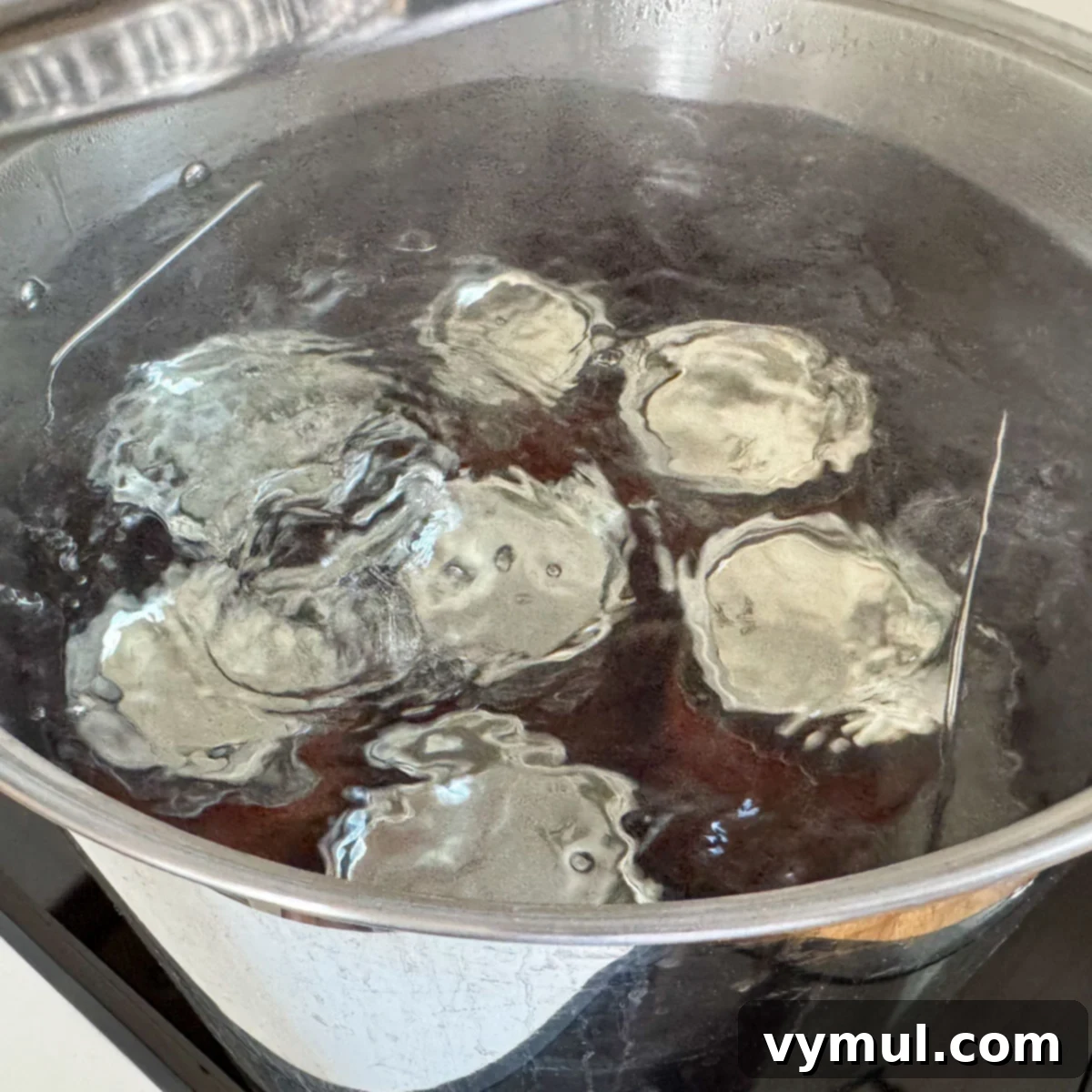
Step 5: Process Jars in Canner. Once all jars are in the rack, carefully lower the rack into the canner, ensuring the jars are fully submerged under at least 1 inch of water. Cover the canner with its lid. Bring the water to a full, rolling boil. Only once the water reaches a sustained boil, begin your timer: process pint jars for 40 minutes, and quart jars for 50 minutes. Throughout the processing time, monitor the water level and heat, adjusting as needed to maintain a consistent, gentle boil – avoid a super-high, roiling boil. Once the processing time is complete, turn off the burner, remove the canner lid, and allow the jars to sit undisturbed in the hot water for an additional 5 minutes. This helps prevent siphoning and aids in a stronger seal.
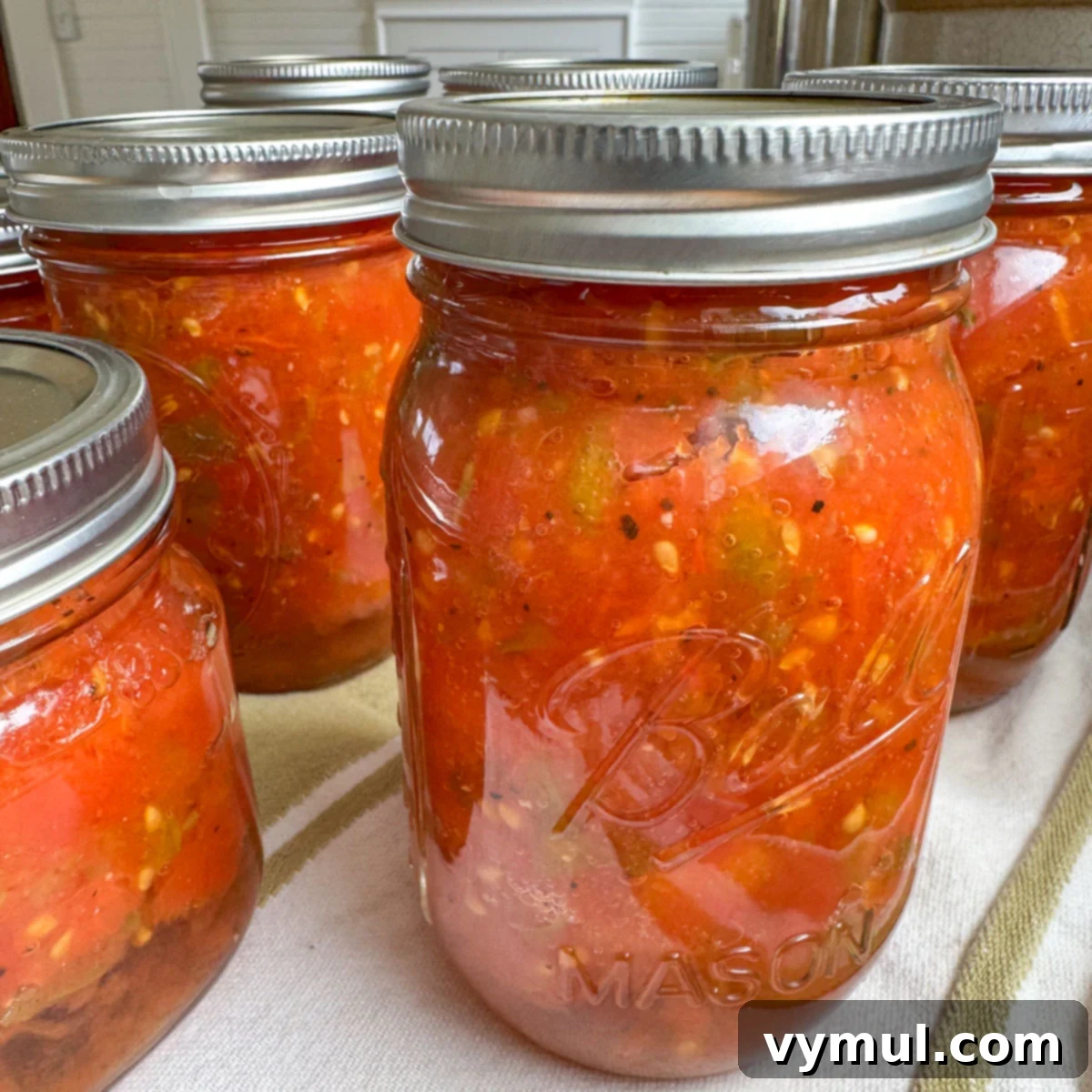
Step 6: Cool and Store Jars. Using your jar lifter, carefully remove the hot jars from the canner, lifting them straight up and placing them on a clean, towel-lined surface or a cooling rack. Ensure there is adequate space between jars to allow for even airflow and cooling. TIP: I often use a sturdy cutting board or tray underneath the towel, allowing me to move the jars if necessary without disturbing them as they cool. Let the jars cool undisturbed for 12 to 24 hours. During this time, you should hear the satisfying “ping” sounds as the lids seal. After cooling, check each lid to ensure it has sealed properly by pressing down on the center (it should not flex) and gently trying to pull the lid up with your fingers. Remove the screw bands for storage to prevent rust and allow any unsealed jars to be easily identified. Store sealed jars in a cool, dark place. Any jars that did not seal should be refrigerated and consumed within a week.
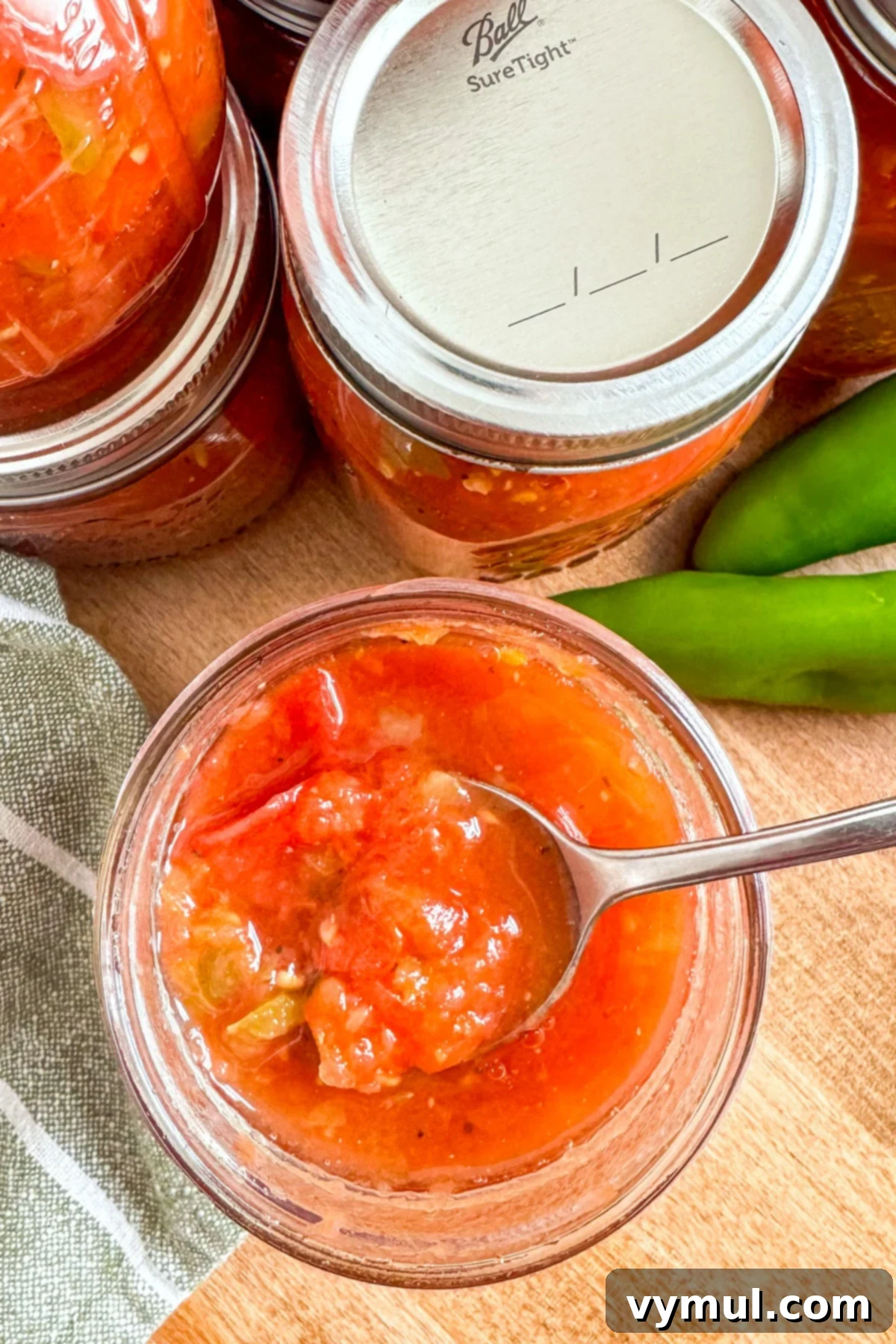
What to Make with a Jar of Homemade Rotel
Once you have a pantry full of your homemade Rotel-style tomatoes and chilies, the culinary possibilities are endless! This versatile ingredient can instantly add a burst of Tex-Mex flavor to a wide array of dishes:
- Chili – Elevate your next bowl of wonderful chili by substituting plain diced tomatoes with a jar of homemade Rotel for an extra layer of flavor and a gentle kick.
- Dips – The classic cheese-Rotel dip is just the beginning! Combine it with melted Velveeta or cream cheese for an irresistible party appetizer.
- Chicken Chili – Make a quick and flavorful meal with this easy, slow cooker chicken chili, using your homemade Rotel for a depth of taste.
- Taco Soup/Enchilada Soup – Add a can to any Mexican-inspired soup recipe for instant zesty tomato and chili goodness. It’s a key ingredient for authentic flavor.
- Mexican/Spanish Rice – Stir a jar into your rice as it cooks to infuse it with vibrant color and a delicious, savory Tex-Mex essence.
- Flavorful Beans – Cook pinto or black beans with a can of Rotel for a ton of robust flavor. Perfect as a side dish or a base for burritos and tacos.
- Shredded Chicken for Tacos/Bowls – Slow cook chicken breasts with a jar of Rotel until tender, then shred the chicken for easy tacos, burrito bowls, quesadillas, or nachos.
- Breakfast Scrambles – Stir into scrambled eggs or an omelet for a spicy and flavorful breakfast.
- Quesadillas – Layer a spoonful into your cheese quesadillas before cooking for added moisture and flavor.
I truly hope you enjoy making and using this homemade Rotel recipe. It’s guaranteed to make your cheese dips, soups, stews, and countless other dishes taste that much better, with the added satisfaction of knowing exactly what went into them!
Reader Raves
“Thank you so much for sharing this wonderful recipe. My hubby and I can’t get enough of it! I made 15 half pints (froze 3) and I can imagine they will be gone in no time! This was the first time canning anything and you made the process easy! I thank you!” -Deb
“I’ve been canning these for 5 years or so – delicious!” -Kris
“Made this today. I looked for a true Rotel recipe without the onions, etc. Your recipe hit the right spot. It is a fairly easy recipe. It’s lovely in the jar and tastes so good. Thanks for posting it.” -Karen
I hope you love this authentic recipe for homemade Rotel-style canned tomatoes and chilies. If you make it, please be sure to leave a recipe rating so I know how much you enjoyed it!

Print Recipe
Pin Recipe
SaveSaved!
Best Copycat Rotel Recipe (Canned Tomatoes & Chilies)
Equipment
-
large stock pot
-
water bath canner
-
canning jars and lids
Ingredients
- 12 cups cored, peeled, and quartered tomatoes, about 12 pounds (or 32 medium-round tomatoes)
- 1 cup finely chopped chili peppers- anaheim, poblano, or other mild pepper *
- 1 tablespoon canning salt or pure sea salt
- 1 teaspoon black pepper
- 1 teaspoon dried oregano leaves
- 1/2 teaspoon coriander (powdered dried cilantro seed)
- Citric Acid to add to jars if canning: 1/4 teaspoon for each pint 1/2 teaspoon for quarts OR 1 tablespoon bottled lemon juice for pints (2 tablespoons for quarts)
Instructions
-
Wash, core, peel and quarter tomatoes. Add to a large stockpot.
-
Wash, stem, and seed chilies (leave the seeds to increases spiciness if you’d like). Finely chop by hand or cut into large pieces and finely chop in a food processor.
-
Add chilies, salt, pepper, oregano, and coriander to tomatoes in stockpot, bring to a low boil, reduce heat and simmer for 10 minutes.
-
While tomato mixture is simmering, prepare canner, jars and lids (see note for a tutorial for water-bath canning).
-
To clean, hot, pint canning jars, add 1/4 teaspoon citric acid or 1 tablespoon lemon juice (if using quart jars, add 1/2 teaspoon citric acid or 2 tablespoons lemon juice).
-
Ladle the tomato-chili mixture into each jar, leaving 1/2-inch headspace. Remove bubbles with a spatula, wipe rims, and attach lids.
-
Add jars to canner, cover, bring to a boil and process 40 minutes for pints (50 minutes for quarts), adjusting heat as needed to maintain a soft boil. When timer goes off, remove lid, turn off heat and allow jars to sit in canner 5 minutes.
-
Remove jars from canner to a towel-lined counter and let cool 12 to 24 hours. Remove rings for storage and check lids to be sure they’ve sealed (gently pull up with your fingers). Refrigerate any that didn’t seal.
Notes
TIP: Use 10-ounce canning jars to replicate the size of Rotel cans. Process the same time as pints.
High Altitude Adjustment: If processing at an altitude of higher than 1000 feet above sea level you’ll need to adjust the processing time according to this chart.
To Freeze Instead of Canning:
- At step 3, remove from heat and let cool a bit before transferring to freezer-safe containers (if using plastic, cool completely before transferring).
- Label and date containers and freeze for up to a year.
- Note: if freezing, you could leave out the citric acid if you want, but since it is an ingredient in the commercial Rotel, it may affect the flavor.
Click here to see how to easily peel tomatoes.
Click here for a tutorial on water-bath canning.
Nutrition
More Easy Canning Recipes To Try
- The Perfect Salsa for Canning
- Honey-Sweetened Jalapeño Jelly
- Addictive Tomato Chutney
This recipe has been updated – it was originally published in September of 2012, updated in 2019 and 2025.
Disclosure: affiliate links in this article will earn commission based on sales, but it doesn’t change your price. Click here to read our full disclaimer and advertising disclosure.