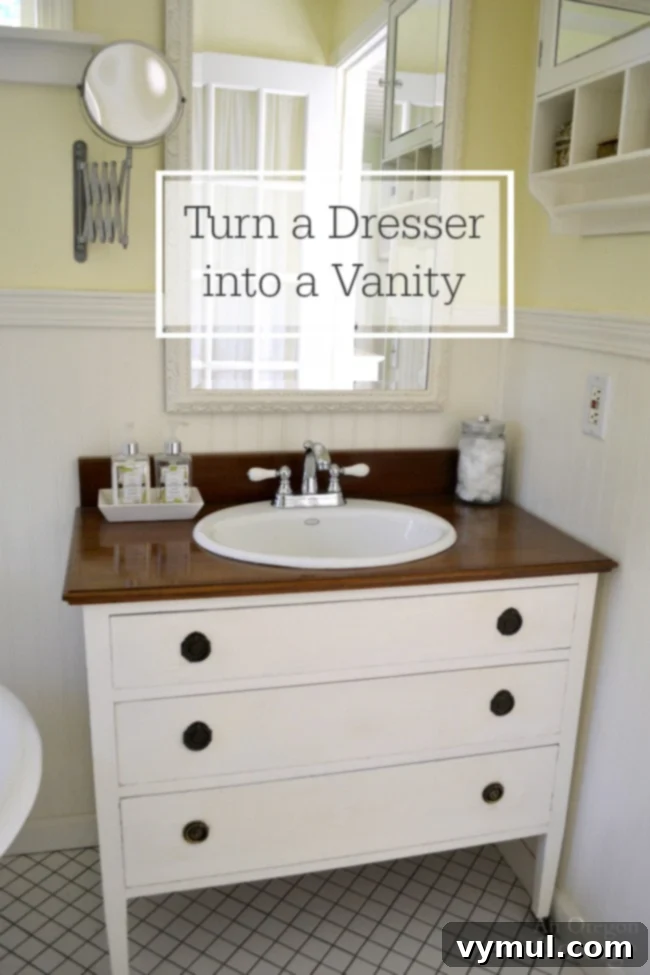
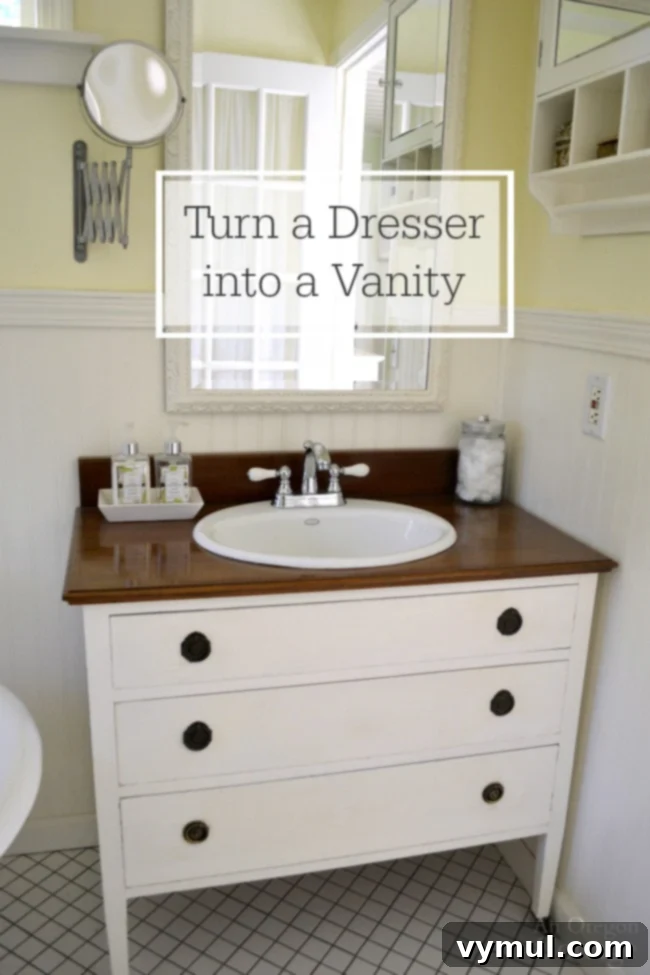
Transform Your Bathroom: A Step-by-Step Guide to Turning an Old Dresser into a DIY Vanity
Revamp your bathroom with a project that seamlessly blends charm, practical functionality, and significant cost savings. Converting an old dresser into a stylish and unique bathroom vanity is a profoundly rewarding DIY endeavor that promises a distinctive design statement unmatched by off-the-shelf options. This comprehensive photo tutorial will meticulously guide you through the process of repurposing a vintage dresser into a one-of-a-kind bathroom vanity, offering innovative ideas and practical solutions for adapting its drawers to retain valuable, functional storage space. Bid farewell to generic, mass-produced vanities and embrace a custom-built centerpiece that truly reflects your personal aesthetic and ingenuity.
Please note: This article contains affiliate links. If you click on these links and proceed to make a purchase, I may receive a small commission from the retailer, at absolutely no additional cost to you. Your support through these links helps sustain this website and enables me to continue bringing you valuable DIY inspiration and guides.
For many years, the captivating idea of transforming an old dresser into a distinctive bathroom vanity has resonated deeply with me, ever since I first encountered the concept in a Do-It-Yourself magazine long ago. The appeal was immediate and multifaceted. Not only does this approach yield a truly unique and individualized look that effortlessly bypasses the ‘cookie-cutter’ aesthetic of standard home store offerings, but it also presents a significant opportunity for financial savings. When you successfully source a vintage dresser at an advantageous price, the overall investment can be dramatically lower compared to purchasing a new, furniture-style bathroom vanity, which often carries a premium price tag.
In our first home, a charming city bungalow, the compact dimensions of both bathrooms unfortunately precluded the possibility of incorporating a dresser-vanity. However, when the time arrived to embark on a major remodel of the bathrooms in our ranch-turned-cottage, I was absolutely thrilled to discover that the master bath, which also featured a beautiful claw foot tub, would offer just enough precious space for this long-awaited project – albeit with precise measurements needed.
During my initial explorations, I observed that the market had evolved significantly; various manufacturers were now producing pre-made vanities designed to mimic the elegant appearance of antique dressers. It was clear that the appeal of this style was widely recognized! For a brief moment, I considered opting for one of these ready-made solutions for the sake of convenience. However, my enthusiasm quickly waned upon seeing the price tags, which typically started around $300 and escalated rapidly from there. This stark reality served as a clear reaffirmation: the original DIY vision was undoubtedly the best path forward.
Once we successfully located a dresser that perfectly met our spatial requirements and aesthetic preferences, the process of adapting it to hold a sink, integrate the necessary plumbing, and still provide practical storage for our bathroom essentials proved remarkably straightforward. In the end, our total expenditure for both the dresser and the sink was approximately $150. Fortuitously, we already possessed the required paint, wood stain, and protective finish for the surface, along with a suitable faucet. Achieving the exact, custom look I had envisioned for literally half the price of a comparable ready-made option felt like an undeniable triumph!
If you are inspired to undertake this rewarding project and transform an ordinary dresser into an extraordinary bathroom vanity, please continue reading. This comprehensive guide will provide you with all the necessary supplies, detailed step-by-step instructions, and invaluable insights you’ll need to confidently create your very own, truly unique and custom-designed vanity.
DIY Bathroom Vanity Video Tutorial
We have created the informative video above to further illustrate the process, sharing additional steps and practical tips specifically designed to help you confidently turn any suitable dresser into a functional and beautiful bathroom vanity. Utilize both this video and the detailed written instructions provided below as your comprehensive guides to successfully creating your own custom vanity.
Comprehensive Guide: How to Make a Dresser into a Bathroom Vanity
Essential Supplies and Tools Needed for Your Project:
- Dresser: Select a dresser whose width, depth, and desired height perfectly complement your bathroom space. It’s important to note that unlike kitchen cabinets, there isn’t a universally standard height for bathroom vanities; measurements typically range from 30 inches to 38 inches. Our dresser, at 32 inches high, fits comfortably within this spectrum. If you find a dresser you adore but it’s a bit too short, consider constructing a sturdy platform base to elevate it to your preferred height. Prioritize solid wood construction for enhanced durability in a moisture-prone bathroom environment.
- Sink to Fit the Dresser Top: Choose a sink that will fit snugly within the internal top measurement of your chosen dresser. Popular options include a self-rimming (drop-in) sink, which partially rests on the countertop, or a vessel sink, which sits entirely on top of the dresser. Your choice will influence both the aesthetic and the plumbing setup.
- Faucet for Sink: Select a faucet that complements your chosen sink and the overall style of your bathroom. Ensure it has the correct number of holes and spacing to match your sink. A classic style like ours, featuring elegant white handles, often pairs beautifully with a vintage-inspired vanity.
- Jigsaw: An indispensable power tool for precisely cutting out the sink opening in the dresser top and creating access points for plumbing in the dresser’s back panel and drawers.
- Palm Sander and Sanding Paper (variety of grits): Essential for preparing all dresser surfaces, ensuring they are smooth and ready for paint or stain, and for achieving a professional-quality finish.
- Paint and/or Wood Stain: Select finishes that harmonize with your bathroom’s color scheme. For our project, we opted for Minwax Special Walnut stain to achieve a rich, durable top surface, and Behr’s ‘Creamy White’ in a semi-gloss finish for the painted body of the dresser. Semi-gloss is highly recommended for bathrooms due to its moisture resistance and ease of cleaning.
- Water-based Polyurethane Sealer: Crucial for protecting the dresser top from moisture, spills, and general wear and tear in a bathroom environment. We utilized this specific brand in a satin finish for its durability and elegant look.
- Synthetic Paint Brushes: High-quality synthetic brushes are recommended for a smooth, streak-free application of both paint and polyurethane.
- Clear Caulking Sealer: Used to create a watertight seal between the sink and the dresser top. Clear caulk is often preferred for wood surfaces as it offers a much cleaner, less noticeable finish than white caulk.
- Long Screws and Drill: Necessary for securely attaching the completed vanity to the bathroom wall studs, ensuring stability and preventing any accidental tipping.
- Wood Glue and Small Nails: These will be vital for modifying the dresser drawers, especially when constructing new internal compartments or reinforcing cut sections.
- Measuring Tape, Pencil, and Marker: For precise measurements and clear markings throughout the project.
- Safety Glasses and Gloves: Always prioritize personal safety when operating power tools and handling finishing products.
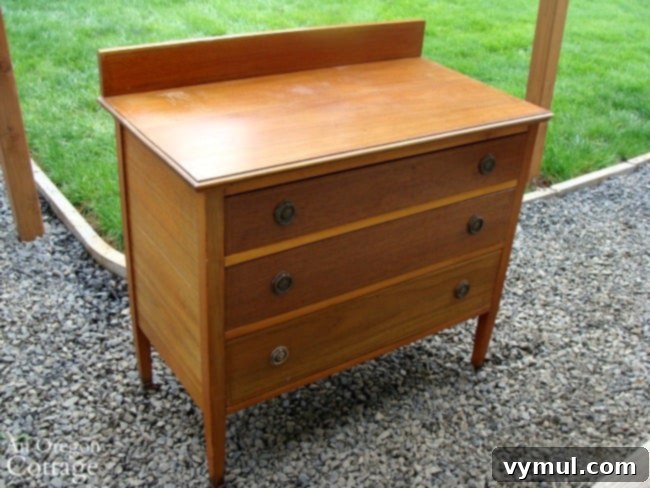
First Things First: Discover Your Perfect Dresser
The initial and arguably most exciting phase of this DIY project is locating the ideal piece of furniture for your transformation. Begin your diligent search at various venues such as local thrift stores, consignment shops, antique markets, or online marketplaces like Craigslist and Facebook Marketplace. Before you even start browsing, it is absolutely crucial to meticulously measure the specific area in your bathroom designated for the vanity. This includes measuring the width, depth, and desired height, keeping in mind the flexible range of vanity heights discussed in our supplies section. If your vision includes a magnificent double-sink vanity, expand your search to include longer dressers, elegant sideboards featuring two distinct cupboard sections, or even robust vintage tables that can be creatively adapted.
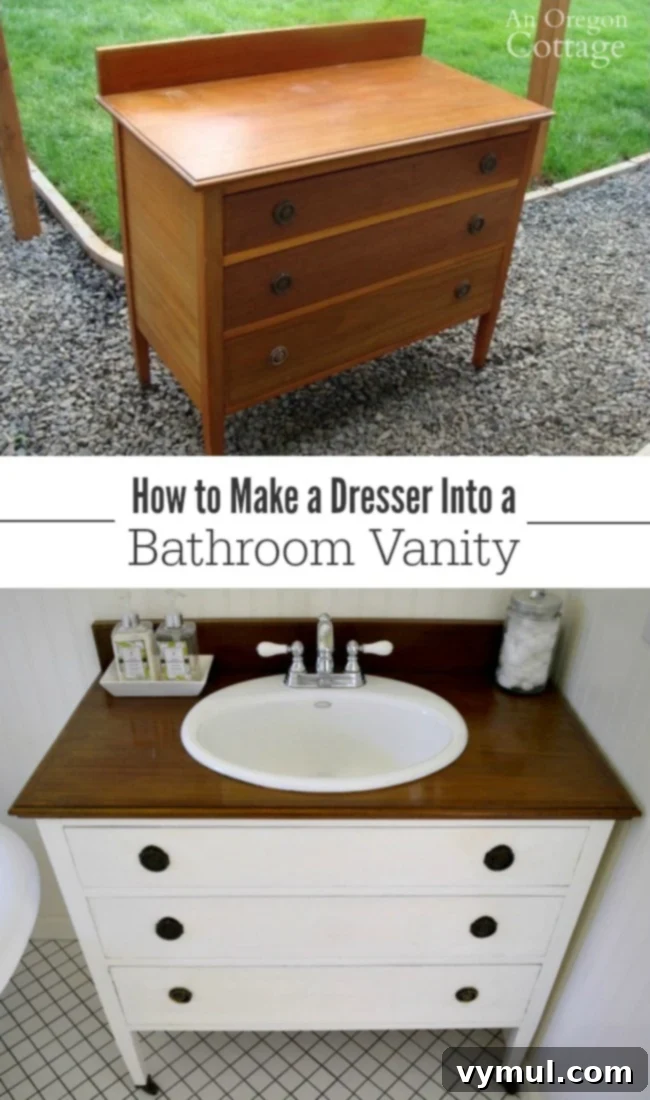
Our featured dresser, showcased in the image above, was an extraordinary find – a $79 purchase from the Salvation Army. Initially, I had acquired it with the intention of using it as a nightstand (mistakenly believing I needed the extra storage, which I didn’t, so it sat empty). However, its generous dimensions, measuring 32 inches high and 34 inches wide, proved to be an ideal fit for our bathroom vanity project. While you might be fortunate enough to unearth an even more budget-friendly treasure, remember that when searching for specific measurements and a suitable style, the absolute lowest price isn’t always the paramount factor. Nevertheless, securing a functional, character-filled dresser for just $79 to convert into a bathroom vanity represents an exceptional value!
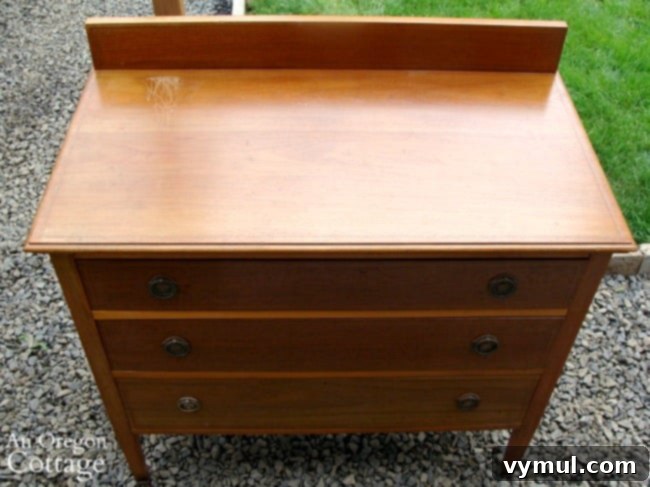
Our particular dresser, as you can discern from the photographs, was far from being a flawless antique. It exhibited several signs of its age and previous life: the original slats that separated the drawers had been replaced with wood of a noticeably lighter color, and both of the side panels featured prominent cracks that required careful filling and structural repair. Furthermore, the top surface bore a significant scratch (clearly visible in the top left of the image above) that had penetrated all the way through to the underlying raw wood. This made it an ideal candidate for a complete paint job and a thorough top refinishing. Crucially, beyond its aesthetic imperfections, it was the exact size we needed, fitting perfectly into the constrained space between our charming clawfoot tub and the adjacent wall. Once you have successfully acquired your perfect piece – be it a classic dresser, a practical sideboard, or even a sturdy old table – you are now ready to meticulously follow the steps outlined below to create your very own, exquisitely unique dresser-to-bathroom-vanity masterpiece.
Detailed Steps to Create Your Dresser-to-Vanity Masterpiece
1. Purchase Your Sink First – Precision is Absolutely Key: Before making any cuts whatsoever, it is an essential first step to purchase your chosen sink. This crucial preliminary action allows you to utilize the sink’s precise template for accurately cutting its opening into the dresser top. When measuring for the sink, do not solely rely on the overall dimensions of the dresser’s top surface. Instead, meticulously measure the *true cabinet interior* by temporarily removing the top drawer to access the internal dimensions. Many dressers feature an overhang, and you must ensure that the sink basin will fit comfortably and securely within the internal structure of the cabinet. We specifically sought out the smallest, most basic self-rimming sink we could find for this dresser, choosing a model similar to the one pictured here. Exercise extreme caution by carefully examining the dimensions, as many standard sink models may prove to be too large. While we briefly considered a more modern vessel sink like this one, the additional cost of a new, taller faucet required for such a sink would have more than doubled our project budget (as we had already invested in a new faucet), making the self-rimming option a more economical choice.
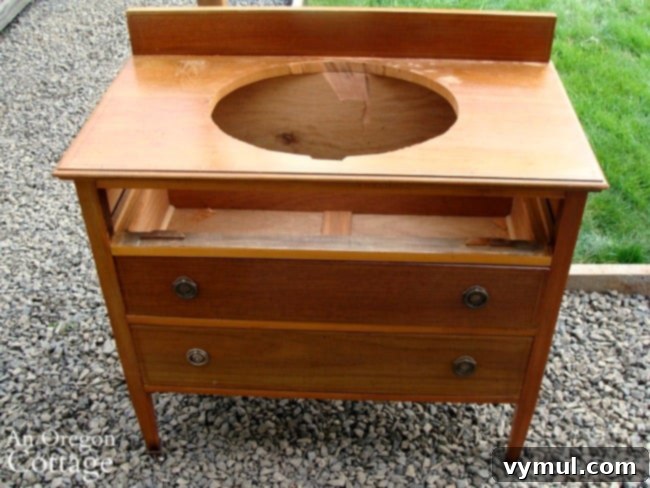
2. Precisely Trace the Sink Hole on the Dresser Top: With your chosen sink now in hand, carefully remove the top drawer(s) from the dresser to gain clear access to the top panel. Lay the paper template that typically accompanies your sink (or meticulously create one if not provided) onto the dresser top. Ensure it is perfectly centered and optimally positioned within the internal boundaries of the cabinet. Using a fine-tipped marker, such as a Sharpie, accurately trace the precise outline of the sink opening onto the dresser’s surface. Always double-check your placement and alignment before finalizing the trace.
3. Confidently Cut Along the Marked Lines with a Jigsaw: This step is where precision meets power! Take a deep, steadying breath and, utilizing your jigsaw, carefully and steadily cut along the traced lines. It’s often helpful to drill a pilot hole inside the traced area first, which provides a convenient starting point for inserting the jigsaw blade. Always prioritize safety by wearing appropriate safety glasses. Take your time, allowing the tool to do the work rather than forcing it, and remember: you are absolutely capable of executing this step successfully!
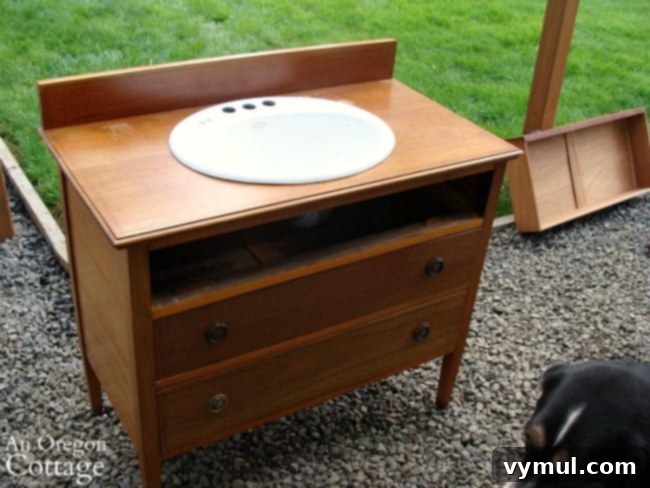
4. Test Fit the Sink and Experience a Well-Earned Sigh of Relief: Gently lower and place the sink into the newly cut opening on the dresser top. This crucial moment allows you to verify the accuracy of your cutting. If the sink fits snugly and correctly, take a well-deserved moment to appreciate your precise handiwork. Should any minor adjustments be required, make small, careful trims with the jigsaw or gently sand the edges until the sink sits perfectly level and secure within the opening.
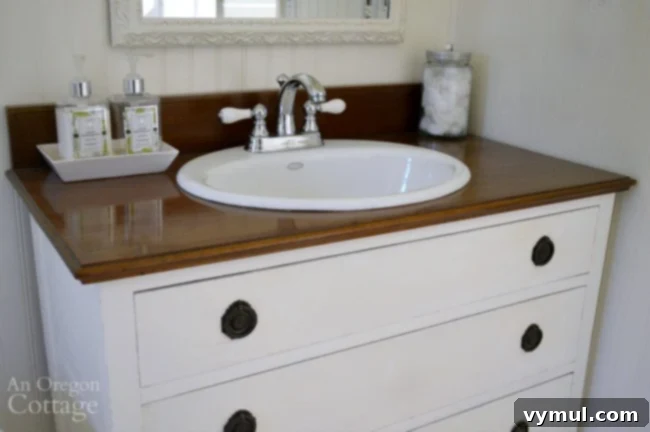
(My apologies for the regrettable absence of photographic documentation for these subsequent essential steps. Sometimes, the immersive excitement of a DIY project regrettably causes one to forget the camera!)
5. Thoroughly Finish the Dresser Top and Body: Once the sink test fit is complete, carefully remove the sink from the opening. This is the optimal time to meticulously sand and refinish the dresser top. If you intend to stain or apply a clear finish, ensure the surface is flawlessly smooth using a variety of sanding paper grits, progressing from coarser to finer for a professional result. Alternatively, the top can be painted. Simultaneously, paint the entire body of the dresser and any remaining drawers with your chosen color and desired finish. Ensure all surfaces are impeccably clean, dry, and free of dust before applying any paint, stain, or sealer for optimal adhesion and a smooth finish.
6. Apply Protective Coats of Polyurethane to the Dresser Top: To create a robust, water-resistant surface that is absolutely essential for a bathroom vanity, apply 4 to 5 coats of a high-quality water-based polyurethane sealer to the dresser top. A satin finish offers a beautiful, subtle sheen that is both durable and elegant. This particular brand and this other option have consistently yielded excellent results in our experience. If your dresser features a short back piece (often called a backsplash), pay extra meticulous attention to thoroughly sealing the joint where it meets the main top surface. This critical step will prevent any potential water from seeping into vulnerable areas, thereby protecting your investment and prolonging the life of your vanity.
7. Secure the Sink to the Dresser Top with Caulk: Once the polyurethane finish on the dresser top is completely dry and fully cured, apply a continuous, even bead of *clear* caulking sealer around the entire rim of the sink opening on the dresser top. Clear caulk is highly recommended for applications involving wood counters, as it blends in seamlessly and is far less noticeable than white caulk. The type of caulking we successfully utilized is found here. Carefully lower the sink back into the opening, pressing down gently but firmly to ensure excellent contact with the caulk. A key professional tip: you do not need to apply an additional, visible bead of caulk around the top outer rim of the sink bowl once it’s in place – a clean, internal seal is the hallmark of a professional-looking DIY installation.
8. Cut Opening for Plumbing in the Back Panel: With the sink now securely in place on the dresser top, carefully maneuver the vanity as close as possible to its final designated spot in the bathroom. This strategic positioning allows you to precisely measure and mark where the existing wall plumbing (water supply lines and drain pipe) will align with the back of the dresser cabinet. Based on numerous past DIY experiences, we no longer trust theoretical measurements alone; we strongly advocate for using both visual assessment and precise measurements for this step. Utilize your jigsaw to cut a square or rectangular opening in the dresser’s back piece of wood, ensuring it is sufficiently large to accommodate all necessary plumbing components without obstruction and allows for future access. Once the cutout is completed, carefully slide the vanity into its permanent spot against the wall.
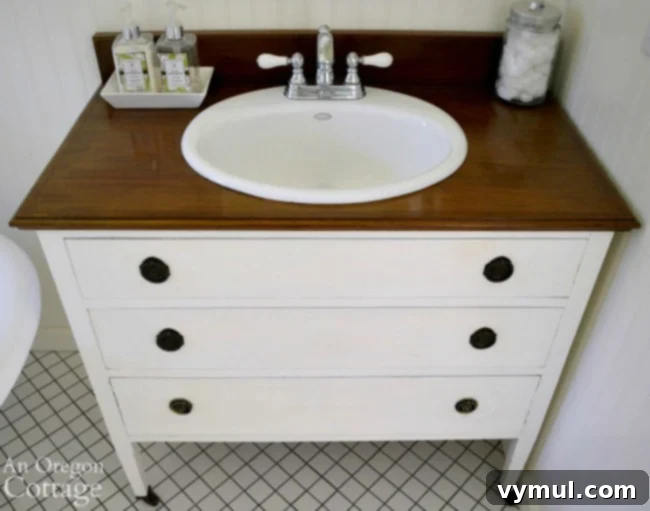
9. Securely Attach the Vanity to the Wall: For maximum stability, safety, and longevity, it is absolutely paramount to securely fasten your newly transformed vanity to the bathroom wall. Begin by locating the wall studs using a reliable stud finder. Once the studs are identified, drill a couple of long screws through the back panel of the dresser directly into these studs. This crucial step prevents the vanity from tipping or shifting, which is especially important in a bathroom setting. In our specific case, because our dresser had a slight overhang at the back, we found it necessary to add a small piece of scrap wood as a spacer. This spacer was placed between the dresser and the wall to create a flush surface for screwing, ensuring a rock-solid attachment. However, it’s worth noting that not all dressers will require this additional spacing step; assess your individual piece carefully.
10. Connect the Faucet and Plumbing Lines: With the dresser now firmly and securely attached to the wall, it’s time to connect the faucet and all necessary plumbing lines. This intricate step is most easily accomplished *without any drawers currently in place*, as this allows for unobstructed access to all connections. Install the faucet onto the sink according to the manufacturer’s instructions, then proceed to connect the hot and cold water supply lines, as well as the drain assembly, to the sink and the corresponding wall plumbing. Once all connections are securely made, carefully turn on the main water supply to thoroughly check for any leaks and to ensure that everything is properly sealed and fully functional. If you are not entirely confident in your plumbing skills, it is highly advisable to enlist the services of a professional plumber for this critical step to prevent potential, costly water damage.
11. Thoughtfully Customize Your Drawers for Maximum Storage: This is where the true ingenuity and personalized functionality of a DIY dresser vanity truly come to life. Each individual drawer will likely necessitate a distinct approach to maximize its usable space while intelligently accommodating the sink basin and the various plumbing components. This bespoke customization ensures that you not only have a visually appealing vanity but also a highly practical and organized storage solution for all your bathroom essentials.
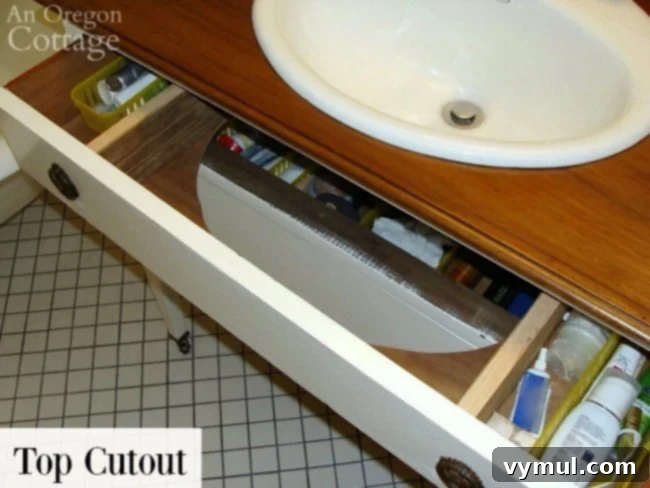
Top Drawer Customization Options:
- Convert to a False Drawer Front: The most straightforward option is to completely remove the entire top drawer box. The front panel of the drawer can then be carefully cut off and re-attached directly to the dresser’s frame as a fixed, decorative false front. This method maintains the aesthetic of a drawer without any functional storage.
- Install a Flip-Out Tray Kit: A clever solution involves utilizing a specialized kit designed specifically to convert sink drawers in cabinets into narrow flip-out storage trays. These kits typically include a small plastic holder that attaches to the drawer front and pivots forward, creating perfect hidden storage for sponges, small brushes, or other compact items.
- Create Customized Storage Pockets (Our Preferred & Most Recommended Method): For those seeking to maximize every inch of storage, the best approach is to adapt the drawer to fit precisely *around* the sink basin while still retaining usable space. This involves carefully cutting out the sections of the existing drawer box that would otherwise interfere with the sink’s footprint. We then strategically used 1×4 wood scraps to construct new, shallower sides and a back for the remaining sections of the drawer. These new components were securely joined using wood glue and small nails. This ingenious solution effectively created small, functional pockets on either side of the sink’s plumbing, which are absolutely perfect for organizing items like toothbrushes, toothpaste, deodorant, and lotions. We were extremely satisfied with the efficiency and practicality of this solution. (A helpful note: if you are lucky enough to find a dresser featuring three smaller drawers across the top, the easiest and often most storage-efficient approach is to completely remove the center drawer and retain two fully functional side drawers – this would be an ideal scenario for maximized organization).
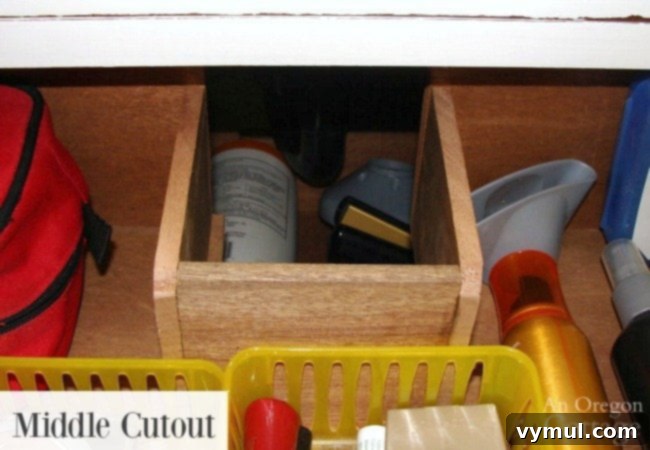
Middle Drawer Customization (Navigating Complex Plumbing):
The middle drawer often presents the most significant and intricate challenge due to the presence of the primary plumbing lines, particularly the P-trap and water supply connections, which typically run through this section. This step generally necessitates the construction of a custom, box-like internal structure designed to house and ingeniously conceal the plumbing, thereby allowing the drawer to slide in seamlessly around it. While I (the article’s author) primarily provided the creative vision and oversight, the meticulous woodworking and precise execution for this particular part were expertly handled. We diligently built a custom box using scrap lumber, securely fastened with wood glue and small nails, creating an effective enclosure for the P-trap and supply lines. This clever solution not only tidily hides the plumbing but also preserves a surprising amount of usable drawer space for toiletries, cleaning supplies, and other bathroom essentials, effectively transforming a potential obstacle into a valuable organizational opportunity.
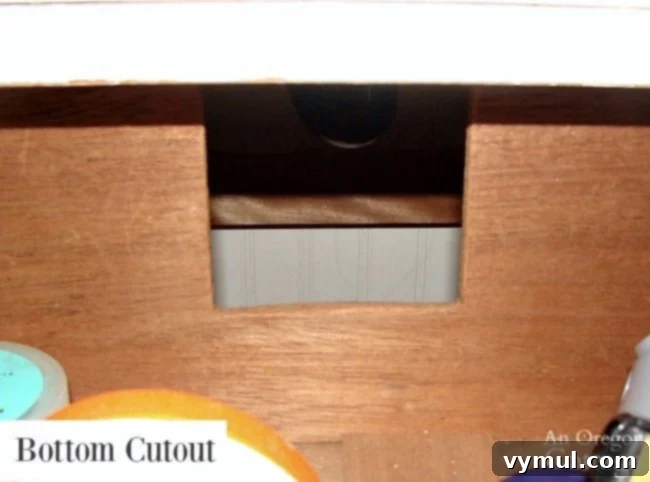
Bottom Drawer Customization (Simple Drain Pipe Clearance):
The bottom drawer is typically the least complicated and simplest to modify among all the drawers. For our dresser, the modification was quite straightforward: we simply cut a precise square or rectangular notch out of the *back* panel of the drawer box. This strategic cutout was designed solely to provide adequate clearance for the main drain pipe. Thanks to this minimal and well-placed modification, this bottom drawer lost virtually no usable storage space at all, retaining its full capacity for larger items like towels, cleaning products, or spare bathroom supplies. Always measure the pipe’s exact location carefully and cut only what is necessary to allow the drawer to slide smoothly in and out without obstruction.
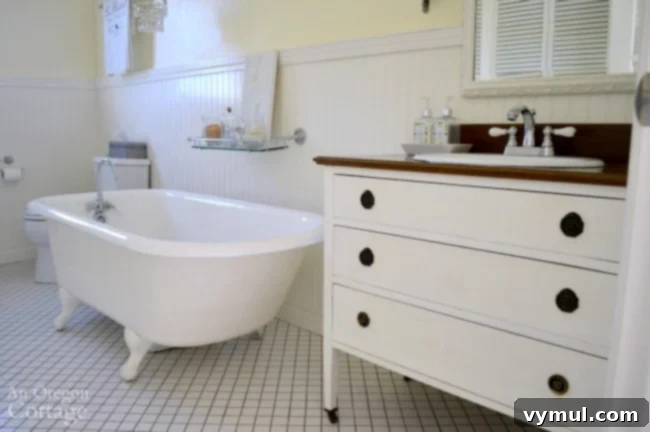
Finally, carefully reinsert all of your thoughtfully customized drawers into their respective slots, turn on the water supply to ensure that everything is operating flawlessly and without leaks, and then step back to truly admire your beautiful, unique, and entirely functional DIY bathroom vanity. You have successfully transformed an ordinary piece of furniture into an extraordinary, custom-built focal point for your bathroom!
And there you have it – a comprehensive and detailed guide on how to confidently turn an old dresser into a stunning vanity, adding an undeniable touch of charm, character, and personalized elegance to your bathroom decor, all while being incredibly budget-friendly. This rewarding project stands as a testament to the fact that with just a little creativity, some basic tools, and a willingness to learn, anyone can achieve a custom-looking vanity that truly stands out from the ordinary. I sincerely hope this thorough tutorial empowers and inspires you to undertake this rewarding DIY endeavor in your very own home!

This article has been thoroughly updated and significantly expanded to provide even more detailed instructions, practical advice, and helpful insights. It was originally published in May 2010.
Disclosure: As a final reminder, this article does contain affiliate links. This means that if you click on these links and subsequently make a purchase, I may earn a small commission based on the sales generated. Please be assured that this arrangement does not, in any way, alter the price you pay for any products or services. For a more comprehensive understanding of my disclosure practices and advertising policies, please feel free to click here to read my full disclaimer and advertising disclosure.