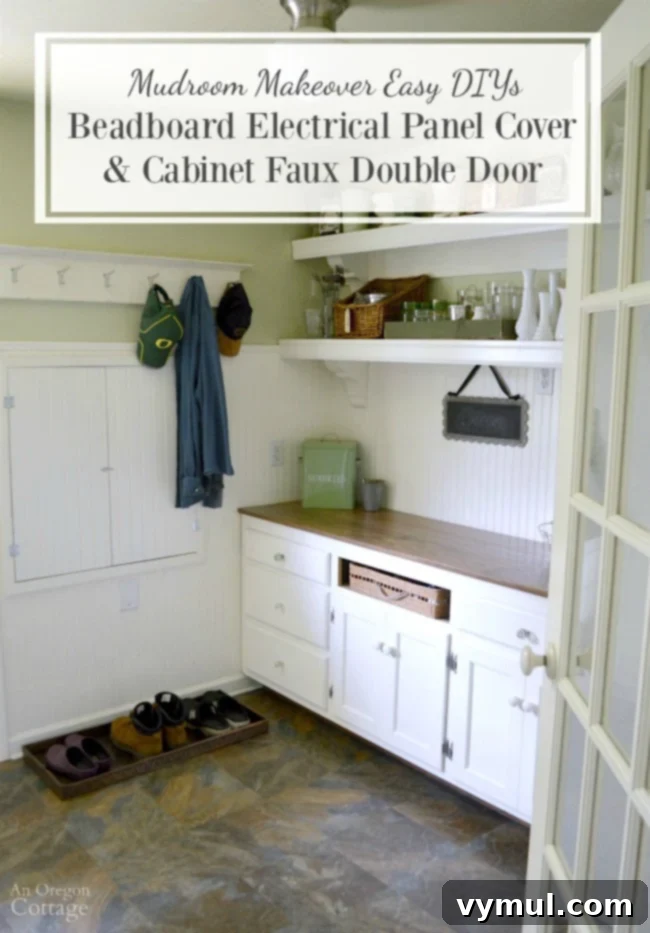
DIY Mudroom Makeover: Clever Solutions for Concealing Electrical Panels and Creating Faux Double Cabinet Doors
Welcome to an inspiring guide featuring two ingenious DIY projects perfect for transforming your mudroom! In this tutorial, you’ll learn how to construct an elegant farmhouse-cottage style beadboard cover to seamlessly hide an unsightly exposed electrical panel. Additionally, we’ll walk you through the process of crafting a clever faux double door for an upcycled cabinet, solving common design dilemmas with creative flair and enhancing your home’s functionality and aesthetic appeal.
Please note: Some links within this article are affiliate links. If you click on them and make a purchase, I may receive a small commission at no additional cost to you. Your support helps keep this content free and inspirational!
Embarking on a home renovation journey often involves tackling unexpected challenges, especially when converting functional spaces. When we undertook the ambitious project of transforming a garage into a vibrant mudroom, followed by a comprehensive laundry-mudroom makeover, two specific design hurdles emerged. The first was an obtrusive, exposed electrical panel, a necessary but visually unappealing utility feature. The second involved an upcycled cabinet that, while perfect for the space, required a creative solution after being cut down to fit snugly into its new home.
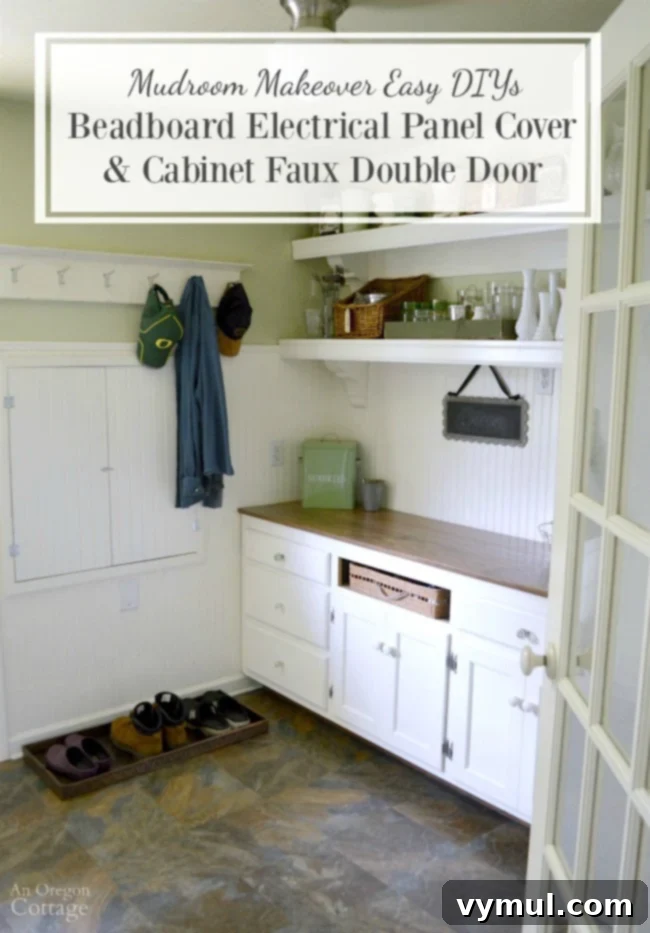
Fortunately, we discovered charming farmhouse-cottage inspired methods to address both issues. We designed and built a beautiful beadboard electrical panel cover, allowing the utilitarian area to blend seamlessly into the room’s aesthetic. For the modified cabinet, we devised a clever faux double door, ingeniously resolving the dilemma of insufficient space for traditional hinges. These two simple yet impactful DIY fixes were game-changers, finally bringing our mudroom to its desired state of completion and cohesion. We are incredibly thrilled with the results and eager to share these accessible DIY ideas, hoping they spark your creativity and encourage you to tackle similar projects in your own home!
Crafting a Seamless Beadboard Electrical Panel Cover
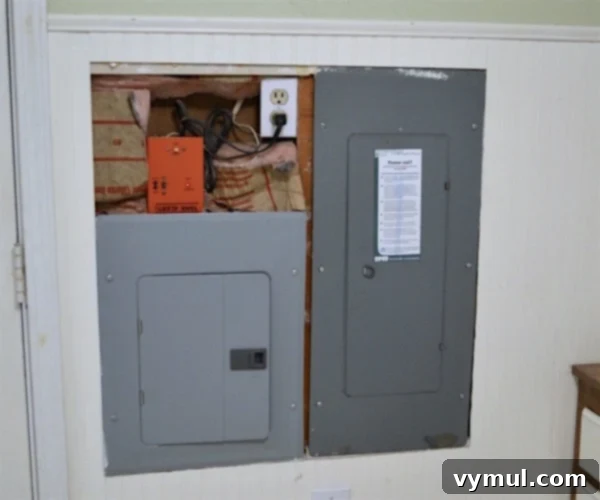
Concealing the electrical panel was a priority from the very inception of our home remodel. Having successfully implemented a similar solution in our previous Portland bungalow, we envisioned a beadboard cover that would perfectly complement the high wainscoting already present in the mudroom. This particular panel, however, presented a unique challenge due to its significant size. It wasn’t just the original main panel; it also housed a smaller auxiliary panel intended for a generator (a feature the previous owners had installed, but one we don’t utilize), alongside a septic tank warning alarm with its own protruding plug.
For far too long – dare I say, years – this eyesore remained hidden behind a jumble of coats and jackets, a classic “out of sight, out of mind” scenario familiar to many DIY enthusiasts. When we finally committed to addressing it, the process proved to be surprisingly straightforward and achievable. The transformation was truly satisfying, turning a utilitarian necessity into an integrated design element. (This section includes affiliate links to provide examples of products used; your purchase through these links is greatly appreciated!)
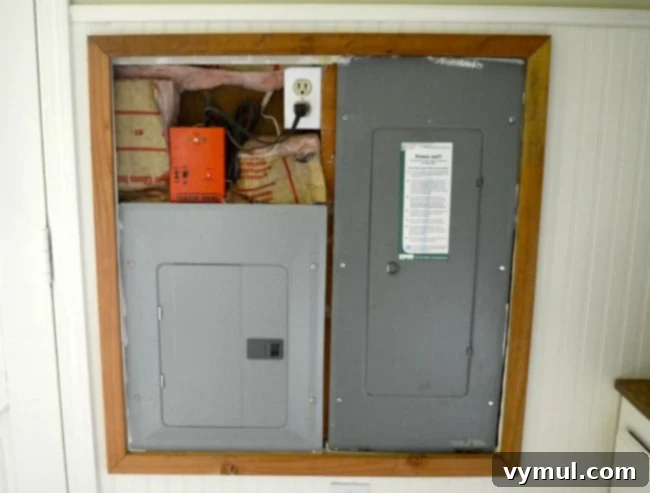
Detailed Steps to Construct Your Electrical Panel Cover
Creating this custom electrical panel cover is a project that yields significant visual impact with relatively simple construction techniques. Here’s how we did it, ensuring both safety and aesthetic appeal:
- Step 1: Frame the Opening. Begin by framing the entire electrical panel opening using 1 x 2 pine boards. For a professional and polished look, meticulously cut the corners with mitered joints. This framing provides a crucial 3/4-inch clearance from the future doors, which will be attached flush with the top of the frame. This clearance is essential to accommodate the various components that protrude slightly from the electrical panel, such as switches and wires. For the septic alarm’s plug, which required even less space, we opted for a short extension cord featuring a flat plug-in design, reducing its projection to a mere 1/2 inch. Ensure the frame is securely fastened to the wall studs.
- Step 2: Measure and Cut Beadboard. With the frame securely in place, carefully and *precisely* measure the exact dimensions of the door opening. Accuracy here is paramount for a snug and professional fit. Purchase your beadboard panels (readily available at most home improvement stores) and have them cut-to-fit either by the store’s cutting service or with your own tools. If cutting yourself, ensure clean, straight lines for a seamless finish. Remember, measure twice, cut once!
- Step 3: Prepare and Paint. Before painting, meticulously fill any gaps or imperfections in the mitered corners of the frame using wood putty. Once dry, sand smooth to achieve an impeccable surface. Then, apply your chosen paint color to both the frame and the newly cut beadboard doors. Painting them to match your existing mudroom wainscoting or trim creates a cohesive and integrated look, making the panel virtually disappear into the wall. Allow adequate drying time between coats and before proceeding to the next step.
Finishing Touches for a Functional and Elegant Cover
Once the paint is dry, it’s time to add the hardware that will allow your new beadboard cover to function perfectly while maintaining its aesthetic appeal and ensuring easy access when needed:
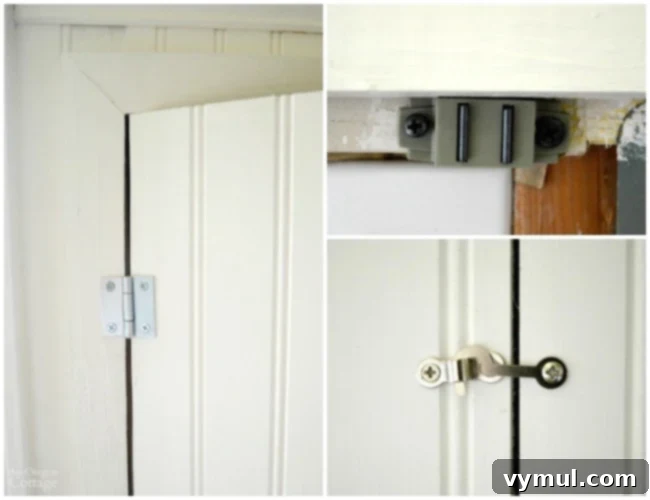
- Attach the Doors with Hinges. To ensure the doors sit perfectly flush with the frame, use simple 1-inch narrow utility hinges. Install two hinges on each side of the beadboard panel doors for robust support and smooth, effortless operation. Position them evenly at the top and bottom of each door to provide balanced weight distribution and prevent warping over time.
- Secure with Magnetic Catches. To keep the doors completely closed and neatly aligned when not in use, attach a cabinet magnetic catch set. Install the magnetic catch discreetly on the inside of the frame, and the corresponding metal plate on the inside of one of the doors. This provides a subtle yet reliable closure mechanism, keeping the panel hidden until access is required.
- Add a Simple Latch for Extra Security. Given that this panel doesn’t require frequent access, a simple hook-and-eye type of cabinet closure adds an extra layer of security and ensures the doors remain firmly shut and rattle-free. A style similar to this one would be ideal, blending functionality with a touch of farmhouse charm, offering peace of mind that the cover will stay closed.
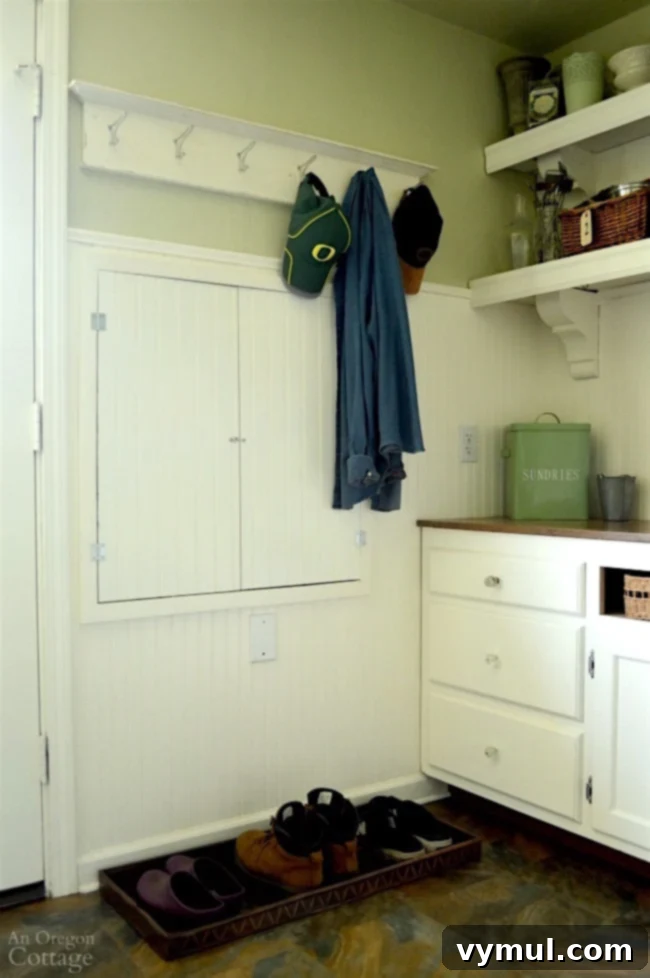
The process is quite straightforward, isn’t it? We are absolutely thrilled with the finished look; it’s truly a “why didn’t we do this sooner?” moment! The transformation from a cluttered, exposed utility area to a clean, integrated design element is remarkable. Every time we walk into the mudroom, we appreciate the seamless finish, proving that even the most mundane necessities can be elegantly disguised and contribute positively to your home’s overall aesthetic.

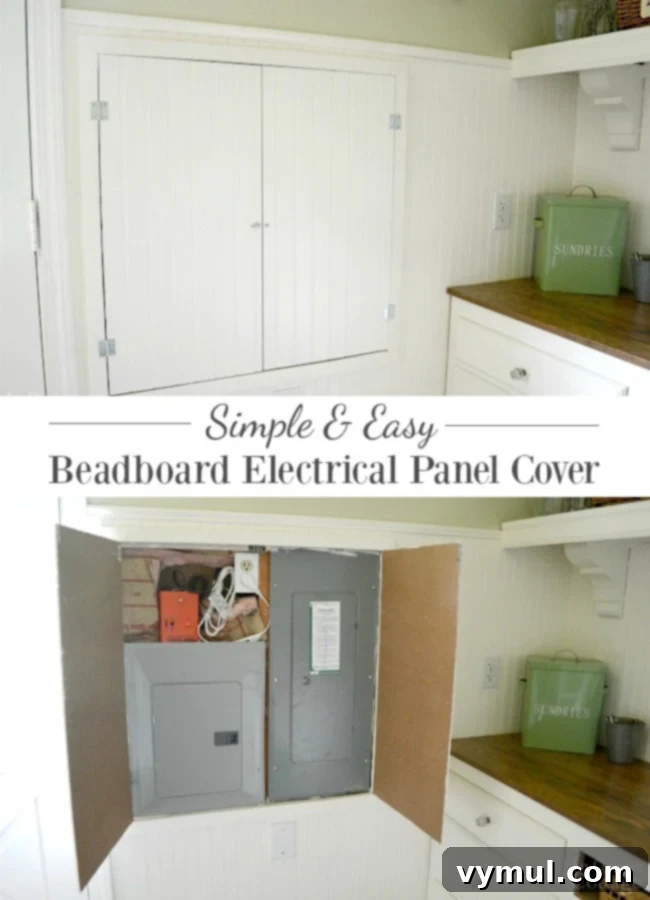
Now, let’s move on to another favorite feature of this transformed mudroom – the cleverly designed faux double cabinet door!
Ingenious Faux Double Cabinet Door for Upcycled Storage
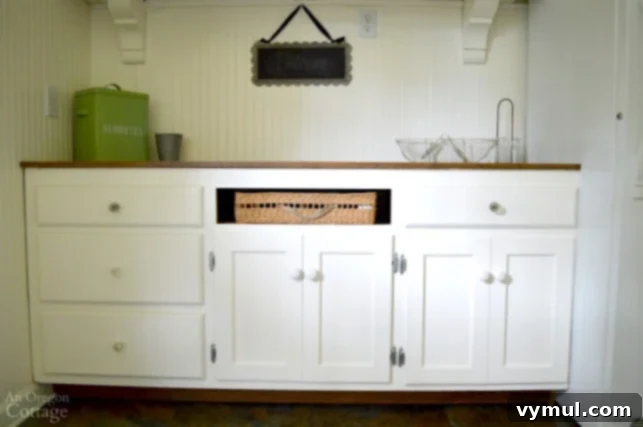
This particular cabinet embarked on quite a journey before finding its ideal home in our mudroom. It was originally situated in our main bathroom. During that renovation, we relocated a cabinet from the master bath into the main bathroom, which then created the perfect spot for our charming dresser-vanity next to the new clawfoot tub. At first glance, the cabinet now looks perfectly normal and integrated into the mudroom’s design, right? It’s a testament to how intelligent repurposing can breathe new life into existing furniture.
The cabinet, in its ‘after’ state, truly looks fantastic, but achieving this seamless appearance required some ingenuity. Its current placement next to the stand-up freezer necessitated that it be cut down to fit the specific dimensions of the space. A quick look to the right side of the cabinet reveals just how *close* it is to the adjacent wall. This spatial constraint becomes even more evident when viewing the cabinet in its ‘before’ configuration, where the original full size made its integration challenging and impractical for a high-traffic mudroom area.
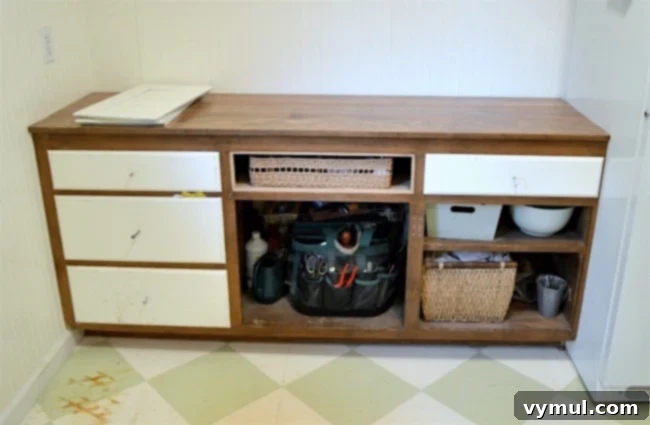
Given that this is a mudroom, a highly functional space, it needed ample and accessible storage for essentials like gardening supplies, pet towels, and other practical items that are often stored in such an area. My vision was to have both sets of double doors reattached, not only for functionality but also to maintain a clean, organized aesthetic. However, my husband, Brian, repeatedly pointed out the inherent challenge: “Unfortunately, it can’t be done; there’s simply not enough room for traditional hinges on the right side due to the proximity of the freezer.”
For me, “it can’t be done” is usually an invitation to explore every possible alternative before conceding defeat. (Poor Brian, always enduring my relentless pursuit of solutions!) So, I posed a crucial question: “Is there a way to make it *appear* as if there are double doors in that challenging right-hand section, even if they don’t function independently?” This sparked a creative problem-solving session that led to a truly brilliant solution, allowing us to have the visual symmetry without requiring the impossible hinge space.
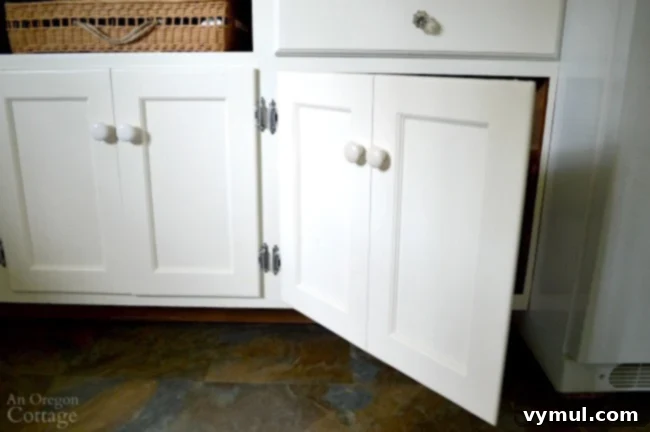
And that’s precisely what he accomplished! I absolutely adore this “secret” little door. It not only delivers the cohesive, tidy look I desired for the area but also stands as a testament to Brian’s ingenuity in finding a workaround for a seemingly impossible design constraint. It’s truly a win-win, achieving both aesthetic appeal and practical functionality within a tight space. We often find that some of the most satisfying DIY projects are born out of limitations, forcing us to think creatively and embrace innovative solutions that might not be obvious at first glance.
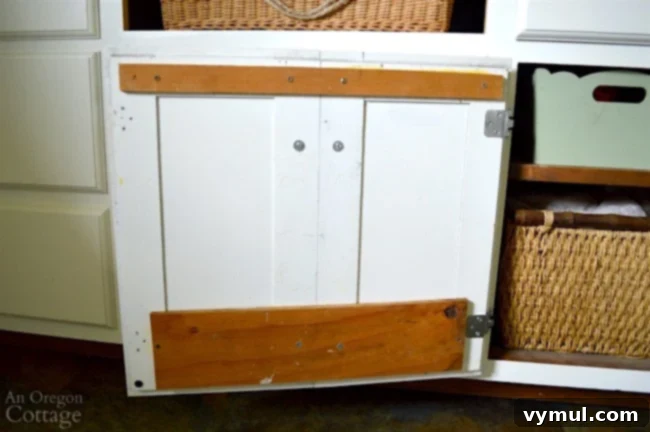
Creating Your Own Faux Double Cabinet Door: A Step-by-Step Guide
This ingenious solution allows you to maintain the visual symmetry of double doors even when space constraints dictate otherwise. It’s a fantastic way to upgrade an upcycled cabinet. Here’s how you can replicate this clever trick:
- Step 1: Prepare the Doors. Begin by laying the two cabinet doors face down on a clean, flat, and stable surface. Ensure any knobs or pulls are removed to prevent damage and allow for a flush working area. Thoroughly clean the surfaces to ensure optimal glue adhesion in subsequent steps.
- Step 2: Cut Connecting Wood. Cut two pieces of scrap wood or plywood to serve as internal connectors. These pieces should measure the full length of the two doors combined. When determining their width, make sure to leave sufficient room on one side for the single set of hinges you will be using to attach this combined unit to the cabinet. This connecting wood will effectively bind the two doors together into one rigid, functional unit, creating the illusion of two distinct doors.
- Step 3: Glue into Place. Apply a generous, even layer of high-quality wood glue to one side of each of the cut wood pieces. Carefully position these glue-side down onto the back of the cabinet doors. Place one connecting piece along the outer edge of what will become the hinged door, and the other along the seam where the two doors meet in the middle. Ensure they are perfectly aligned and flush with the door edges for structural integrity and a clean finish.
- Step 4: Secure with Screws. While the glue is still wet (but holding the pieces in place), pre-drill pilot holes where you intend to place your screws. It’s crucial to pre-drill to prevent wood splitting, especially when working close to edges. Place screws on the outer edges of the door frames (where the connecting wood overlaps) and, importantly, where the two doors come together, securing them firmly to the connecting wood strips. Using 3/4-inch wood screws, carefully attach them one at a time. Throughout this process, continually realign the doors as needed to ensure the ‘faux’ opening remains perfectly closed and the door fronts stay even and flush.
- Step 5: Dry and Attach. Allow the wood glue to dry completely according to the manufacturer’s instructions, often several hours or overnight. Once dry, the two doors will function as a single, solid unit. Now, attach this combined door to the cabinet using your one set of hinges on the designated side. In some cases, you might find the need to add a magnetic door clasp to ensure it stays securely closed, but in our experience, the combined weight and rigidity of the new unit kept it perfectly in place without additional hardware.
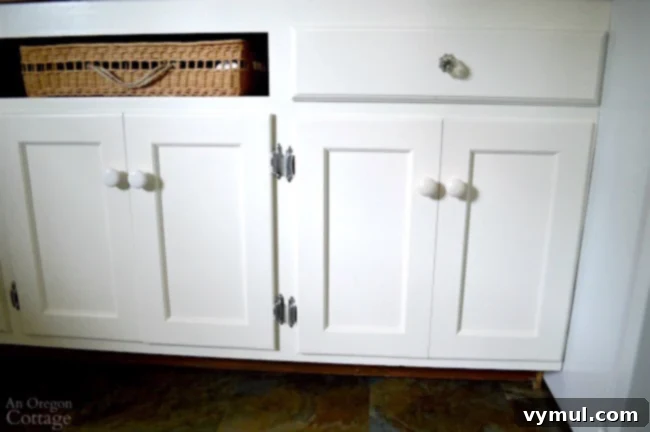
And there you have it – another successful project born from creative problem-solving! While the phrase “thinking outside the box” might feel overused, it perfectly describes the approach required for this kind of clever home improvement. It’s a testament to how minor adjustments and innovative thinking can dramatically enhance both the functionality and aesthetics of your living spaces, turning obstacles into opportunities for creative design.
We sincerely hope these two accessible DIY projects, which effectively addressed persistent eyesore areas and functional challenges in our home, inspire you on your own do-it-yourself adventures. Please share with us if you embark on similar transformations or discover unique solutions in your remodeling endeavors – we love hearing about your creative projects!
Disclosure: This article contains affiliate links, meaning that if you make a purchase through them, I may earn a commission based on sales. Rest assured, this does not affect the price you pay for any products. For more detailed information, please click here to review my full disclaimer and advertising disclosure policy.