Effortless IKEA Butcher Block Cutting: A DIY Guide for Perfect Countertops
Embarking on a kitchen remodel can be one of the most rewarding home improvement projects, transforming your space into a functional and beautiful heart of the home. For many DIY enthusiasts, IKEA butcher block countertops offer an irresistible blend of affordability, natural beauty, and versatility. However, the prospect of cutting these thick, solid wood slabs with precision can be daunting. Fear not! Following up on our extensive DIY kitchen remodel journey, we’re finally sharing a game-changing technique that simplifies this critical step. While we previously delved into the details and cost breakdown of our remodel, one crucial element remained largely untold: Brian’s ingenious method for achieving perfectly straight, accurate cuts on our IKEA butcher block countertops using nothing more than a circular saw and a simple guide.
This method transforms a potentially stressful task into a straightforward process, ensuring your countertops fit flawlessly into your dream kitchen. Whether you’re working with the standard 1 1/2-inch thick oak, birch, or any other variety of butcher block, this technique is universally applicable and highly effective.
The Enduring Appeal of Butcher Block Countertops
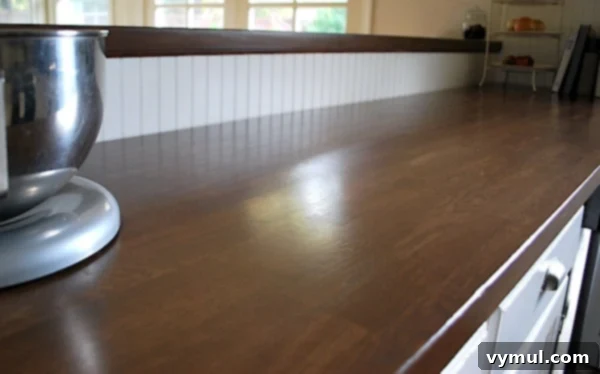
Butcher block countertops have surged in popularity, becoming a staple in modern, farmhouse, and traditional kitchen designs alike. Their warm, inviting aesthetic, coupled with their durability and natural feel, makes them a top choice for homeowners looking to add character and functionality. IKEA, in particular, has democratized access to these beautiful surfaces, offering a range of wood types at competitive prices. We experienced firsthand the high demand for these counters; they were perpetually out of stock when we were ready to purchase! We eventually invested in the thicker, premium options, but the beauty of this cutting technique is its adaptability across all thicknesses and wood species.
Why Choose IKEA Butcher Block?
- Affordability: Compared to stone or solid surface options, IKEA butcher block offers excellent value.
- Natural Beauty: Each slab boasts unique grain patterns, bringing organic warmth to any kitchen.
- Versatility: They can be stained, oiled, or left natural to complement various design schemes.
- DIY-Friendly Potential: With the right techniques, they are perfect for home renovators.
The Challenge: Achieving Perfectly Straight Cuts on Thick Wood
Cutting thick wood, especially for a prominent feature like a kitchen countertop, demands precision. Freehand cutting with a circular saw, even for experienced DIYers, often results in wobbles, uneven edges, or frustrating inaccuracies. The natural hardness and thickness of butcher block amplify these challenges, making a clean, straight cut seem elusive. Many people resort to expensive professional services or specialized tools, believing it’s the only way to ensure a flawless finish. However, our method offers a simple, cost-effective alternative that delivers professional-grade results right in your home workshop or garage.
Introducing the Easy & Accurate Cutting Technique: The Simple Jig
The core of Brian’s technique lies in its elegant simplicity: utilizing a straight piece of molding as a guide, or “jig,” for your circular saw. This eliminates the guesswork and the need for a steady hand, ensuring every cut is perfectly straight and precisely where you need it to be. This approach not only enhances accuracy but also significantly reduces the stress associated with making irreversible cuts on your valuable countertops.
The Core Principle: A Simple Jig for Straight Cuts
Brian has meticulously crafted a video (see below) that provides a comprehensive, step-by-step walkthrough of this technique. However, at its heart, the butcher block countertop cutting technique operates on a very straightforward principle:
- Countertop Face Down: Position your butcher block countertop with its finished, visible side facing down. This crucial step prevents tear-out on the top surface, ensuring a clean edge where it matters most.
- Attach a Straight Guide: Secure a perfectly straight piece of molding (or any suitable straight edge like a level or another piece of wood) to the back of the countertop. This piece acts as your “jig” – a reliable guide for your circular saw’s base plate.
- Slide and Cut: With the jig firmly in place, you simply slide the base plate of your circular saw along this guide as you make the cut. This mechanical guidance ensures a perfectly straight line, every single time.
Using this method, Brian, who admits he “can NOT cut a straight line freehand to save his life” (his words, not mine!), was able to effortlessly cut the 1 1/2″ thick oak to the exact dimensions required for our kitchen. This anecdote perfectly illustrates the power and reliability of this technique, empowering even those less confident in their freehand cutting skills.
Step-by-Step Guide to Precision Cutting Your Butcher Block
To ensure your success, let’s break down the process into detailed, manageable steps. Adhering to these guidelines will help you achieve clean, professional-looking cuts on your butcher block countertops.
Tools and Materials You’ll Need
- Circular Saw: A standard circular saw is sufficient. Ensure it’s in good working order.
- Fine-Tooth Blade: Crucial for clean cuts on wood. A plywood blade with a high tooth count (e.g., 60-80 teeth) is ideal for minimizing tear-out.
- Measuring Tape & Pencil: For accurate measurements and markings.
- Straight Edge Molding/Guide: A piece of wood molding, a metal level, or any other perfectly straight edge. Ensure it’s long enough for your cut.
- Clamps: Several clamps are needed to secure both the countertop and your guide.
- Safety Glasses & Hearing Protection: Always prioritize safety.
- Sander & Sandpaper: For finishing the cut edges (80-220 grit).
- Wood Conditioner/Sealer: To protect and enhance your butcher block.
Preparation is Key
- Measure Twice, Cut Once: Carefully measure the space where your countertop will be installed. Account for any overhangs or specific dimensions required. Mark your cut line clearly on the underside of the butcher block.
- Determine Saw Offset: This is a critical step. Measure the distance from the edge of your circular saw’s base plate to the cutting blade. This “offset” measurement is vital for positioning your guide correctly. For example, if your blade is 1.5 inches from the edge of the base plate, your guide will be placed 1.5 inches away from your desired cut line.
- Prepare Your Workspace: Ensure you have a stable, level surface to work on. Support the butcher block adequately, especially the section being cut off, to prevent it from dropping and splintering the wood at the end of the cut. Sawhorses are perfect for this.
- Flip the Countertop: Place the butcher block with the finished side facing DOWN. As mentioned, this minimizes tear-out on the visible surface.
The Jig Setup: Your Secret Weapon
- Mark the Guide Line: On the underside of the countertop, measure and mark a line parallel to your intended cut line, but offset by the distance you measured from your saw’s base plate to its blade. This is where your straight-edge guide will be placed.
- Position the Guide: Align your straight piece of molding precisely with this offset guide line. Double-check its alignment to ensure it’s perfectly parallel to your desired cut.
- Secure the Guide: Use several clamps to firmly attach the molding to the butcher block. Ensure it’s tight and won’t shift during the cut. Wiggle it to test its stability. The more secure, the better the cut.
Making the Cut
- Set Blade Depth: Adjust your circular saw’s blade depth so that it just barely clears the thickness of the butcher block plus your guide. Too deep, and you risk cutting into your support surface; too shallow, and you won’t cut through.
- Test the Fit: Before cutting, place your circular saw against the guide and slide it along the path. Verify that the blade aligns perfectly with your marked cut line on the countertop. This is your final check for accuracy.
- Initiate the Cut: With safety glasses and hearing protection on, power on your saw. Let it reach full speed before engaging the blade with the wood.
- Execute the Cut: Slowly and steadily push the saw along the guide. Maintain even pressure and a consistent speed. Avoid rushing or forcing the saw, as this can lead to an uneven cut or blade binding.
- Support the Off-Cut: As you approach the end of the cut, ensure the off-cut piece is well-supported to prevent it from breaking away prematurely and causing tear-out on the main piece.
- Complete the Cut: Continue until the cut is fully completed, then release the trigger and wait for the blade to stop spinning before removing the saw.
Why This Technique Works So Well
This simple jig technique offers several compelling advantages for cutting butcher block:
- Unmatched Accuracy: The fixed guide eliminates human error, resulting in perfectly straight and consistent cuts every time.
- Reduced Tear-Out: Cutting with the finished side down and using a fine-tooth blade significantly minimizes splintering and tear-out, giving you a clean, smooth edge.
- DIY-Friendly: It’s a method accessible to all skill levels, turning a challenging task into an achievable one for any home renovator.
- Cost-Effective: You utilize tools you likely already own or can easily rent, avoiding expensive specialized equipment or professional cutting services.
- Repeatable Results: Once you master the offset measurement, you can confidently apply this technique to multiple cuts, ensuring uniformity across all your countertop pieces.
Essential Tips for Success
- Blade Choice is Paramount: A general-purpose blade is not enough. Invest in a dedicated fine-tooth blade (60-80 teeth) designed for cutting plywood or laminates. This will make a huge difference in the quality of your cut.
- Keep it Clean: Regularly clear sawdust from your cut line and guide path to maintain visibility and prevent the saw from binding.
- Make a Practice Cut: If you have a scrap piece of butcher block or similar thick wood, perform a practice cut. This helps you get a feel for the saw, the guide, and the material.
- Secure Your Workpiece: Beyond clamping the guide, ensure the butcher block itself is clamped securely to your saw horses or workbench to prevent any movement during the cut.
- Patience Pays Off: Don’t rush the cut. A slow, steady pace is key to preventing jagged edges and ensuring the blade does its job effectively.
Finishing Your Butcher Block Countertops
Once your cuts are complete, the next step is finishing the edges. Gently sand the newly cut edges, starting with 80-grit sandpaper to smooth out any minor imperfections, then progressing to 120-grit and finally 220-grit for a silky-smooth finish. After sanding, clean the entire surface thoroughly and apply your chosen wood finish. Whether you opt for a natural food-grade mineral oil, a tung oil finish, or a polyurethane sealer, proper finishing protects your butcher block from moisture and wear, ensuring its longevity and enhancing its natural beauty.
Visual Aid: Watch Brian in Action
Sometimes, seeing is believing. To truly grasp the simplicity and effectiveness of this technique, watch Brian demonstrate each step in detail. His video is an invaluable resource that complements these written instructions, providing visual clarity that makes the process even easier to understand and replicate.
Longevity and Maintenance of Your New Counters
Once installed, butcher block countertops require ongoing care to maintain their beauty and hygiene. Regular oiling (every few weeks to months, depending on use) helps prevent drying, cracking, and water damage. Spills should be wiped up promptly, and cutting directly on the surface without a cutting board should be avoided to minimize knife marks. With proper care, your IKEA butcher block countertops will provide years of durable service and aesthetic appeal, becoming a cherished part of your kitchen.
Conclusion: Empowering Your DIY Kitchen Journey
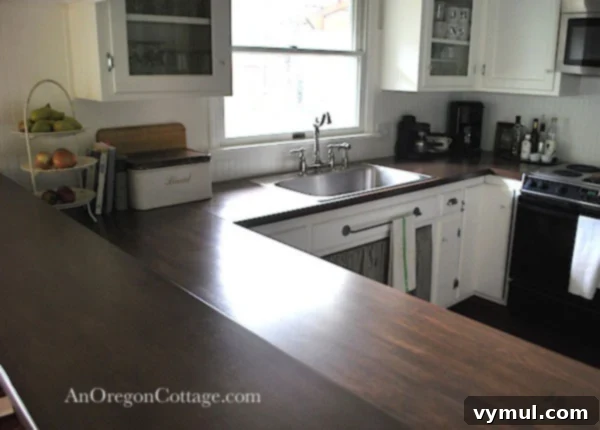
We sincerely hope that this detailed guide and Brian’s innovative technique empower you to tackle your IKEA butcher block countertop installation with confidence. The satisfaction of successfully completing such a crucial step in your kitchen remodel is immense, and with these instructions, you’re well-equipped to achieve professional-level results. Our own wood counters have brought so much warmth and character to our kitchen, and we’re certain yours will too. Embrace the DIY spirit, trust the process, and enjoy the beautiful, custom countertops you’ve created with your own hands!