DIY Barn Exterior Makeover: Transform Your Outbuilding with Budget-Friendly Style and Salvaged Finds
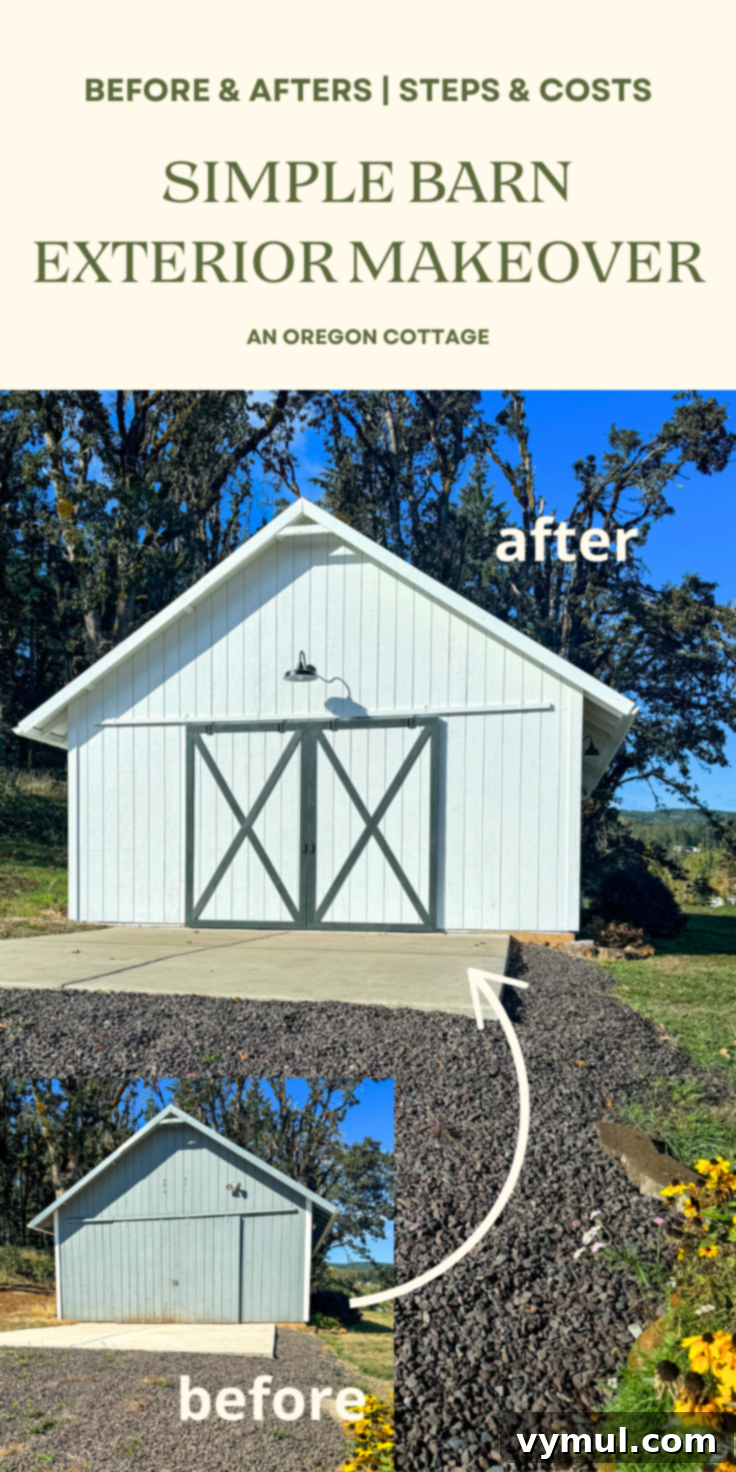
This simple yet dramatic before and after of our barn exterior clearly demonstrates the incredible difference a thoughtful application of paint and strategic molding can make! We revitalized the structure further by adding replacement windows (cleverly salvaged from our farmhouse renovation), installing new lighting fixtures, and updating the door hardware. These seemingly minor details collectively breathed new life into what was once a tired, rustic outbuilding, elevating its overall aesthetic. I’m excited to share the straightforward steps we took over approximately one month, along with a detailed cost breakdown. Our journey aims to inspire you to reimagine and transform any outbuildings on your property, viewing them through a fresh, new lens of possibility and charm.
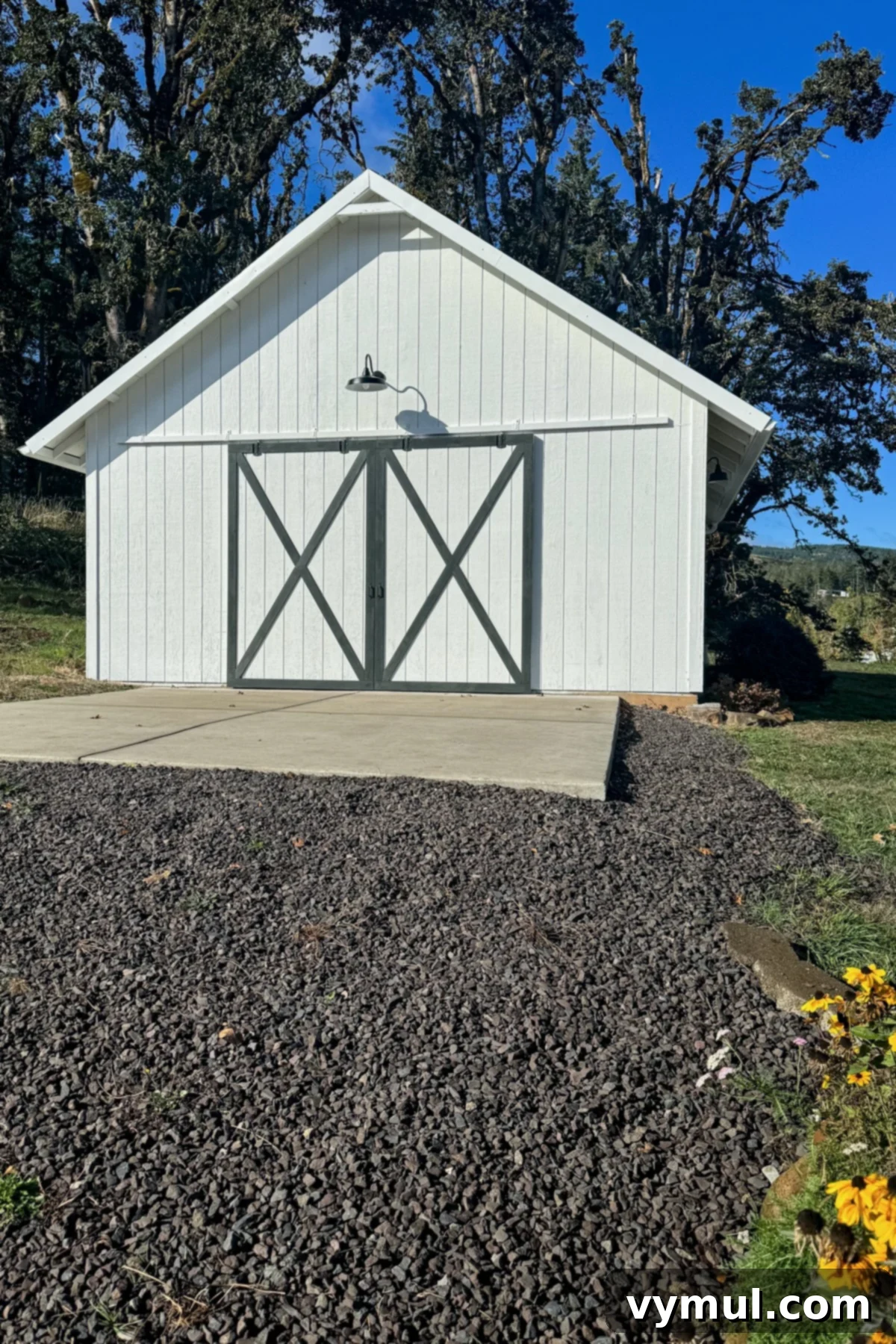
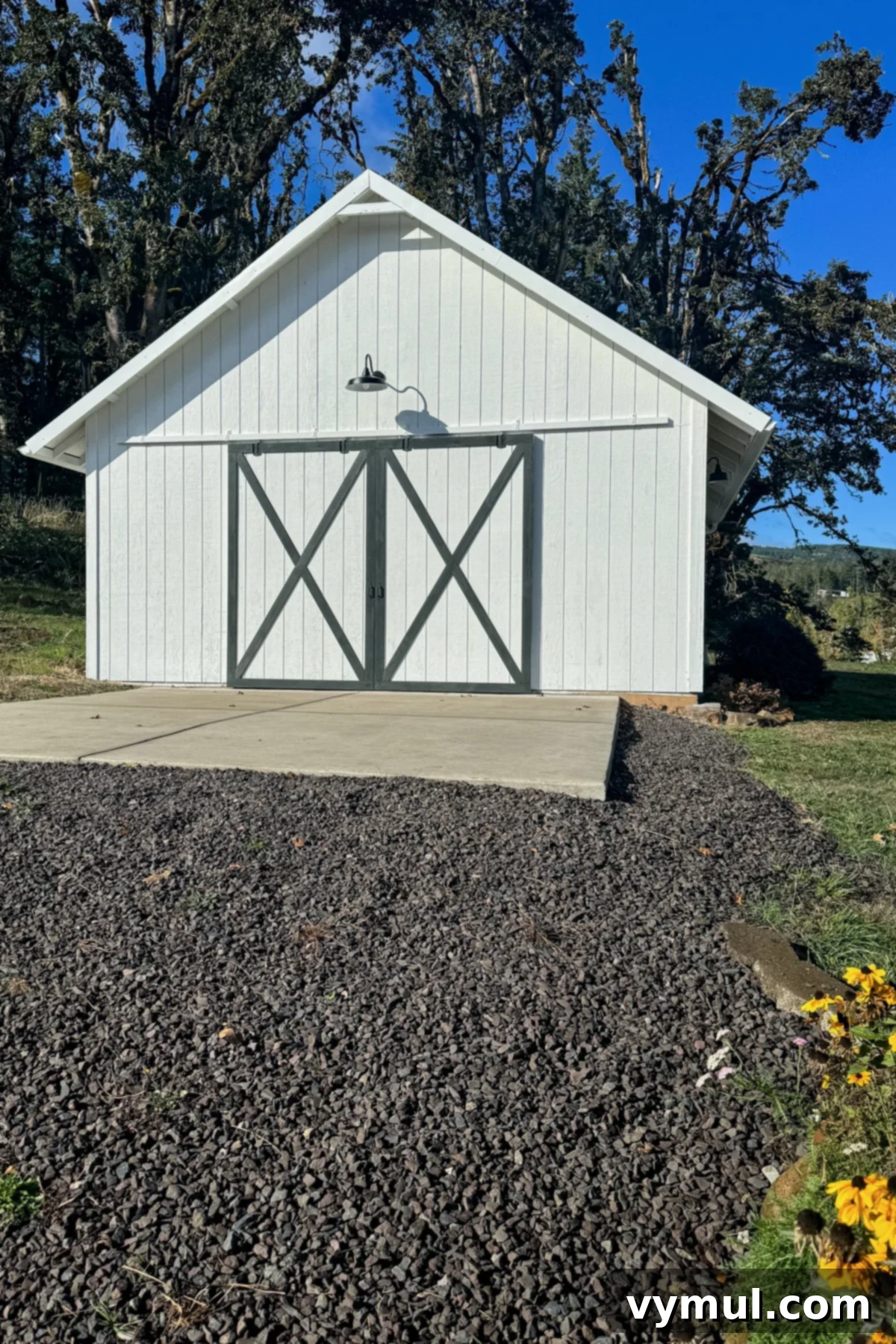
I am absolutely thrilled to finally share the complete reveal of our barn exterior makeover! This project stands as a testament to the fact that refreshing an outdoor building doesn’t have to be an overwhelming or prohibitively expensive endeavor. With just a few simple, manageable, and highly achievable steps, you can effortlessly transform any plain or neglected outbuilding into a captivating structure brimming with character and charm. It’s a journey that proves the power of thoughtful design and a little elbow grease.
When we first settled into our beloved farmhouse property, the three acres came with only two secondary structures: a single-car garage and a smaller building equipped with prominent barn doors, which had previously served as a functional wood shop. While the garage, already painted a respectable white, needed some attention, its position set back from the road meant it wasn’t a glaring eyesore, allowing us to postpone its renovation.
The story was quite different for the other building. Its exterior was a mosaic of flaking blue-gray paint, punctuated by oddly placed and outdated lighting fixtures. The windows were old, foggy metal panes, and large, unsightly holes marred the siding, stark remnants from the previous owner’s basketball hoop. It was, in short, a structure desperately crying out for a transformation.
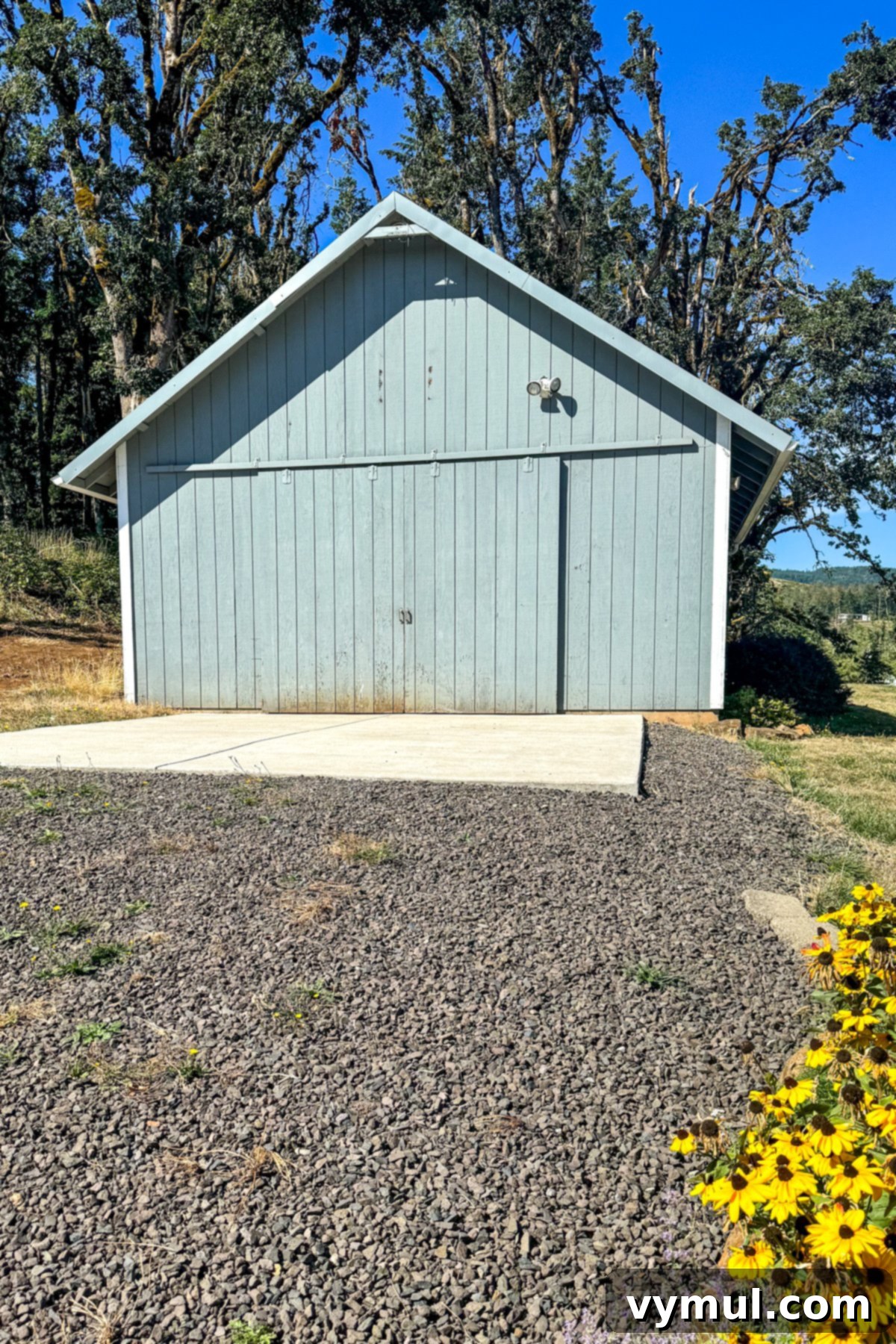
Its prominent location meant it was highly visible to every passerby on our road, and its dilapidated state became even more pronounced after we completed our main farmhouse renovation and painted the nearby manufactured home. Furthermore, it was visible from nearly every window on the west side of our farmhouse, making its neglected appearance a constant visual distraction.
From the moment we acquired the property, I had a clear vision for this small building, especially due to its distinctive barn doors. My immediate thought was to accentuate these doors with classic ‘X’ molding and install a stylish barn light above them. This simple addition, I reasoned, would instantly declare its identity as a barn to all who saw it! (While it primarily serves as storage for tools and workout equipment, the aesthetic appeal and defining look were paramount, right?)
However, as is often the case with property ownership, years passed. Other pressing tasks and larger renovation projects took precedence, pushing the barn upgrade further down our priority list. Until, finally, the time arrived. My long-held dream for this charming little building materialized over the course of about a month. This period was dedicated to meticulous work: we replaced the old metal windows with salvaged farmhouse vinyl windows, painstakingly caulked and filled various imperfections, sanded surfaces smooth, applied fresh coats of paint, and carefully added the decorative molding. The transformation was truly remarkable.
And the result? It’s everything I had envisioned and hoped for – and more!
Below, you’ll find a series of compelling before-and-after images that vividly illustrate the profound impact paint and a few well-placed pieces of molding can have. I’ll also walk you through the precise steps we took to achieve this stunning exterior makeover, accompanied by a basic cost breakdown. Be warned: the final cost was slightly more than my initial estimate – who knew molding could be that expensive, or that we’d need additional electrical wire? Despite the slight budget creep, the outcome was well worth the investment.
I sincerely hope this detailed account proves both inspiring and helpful for your own property improvement projects!
Barn Exterior Makeover: A Striking Before and After Transformation
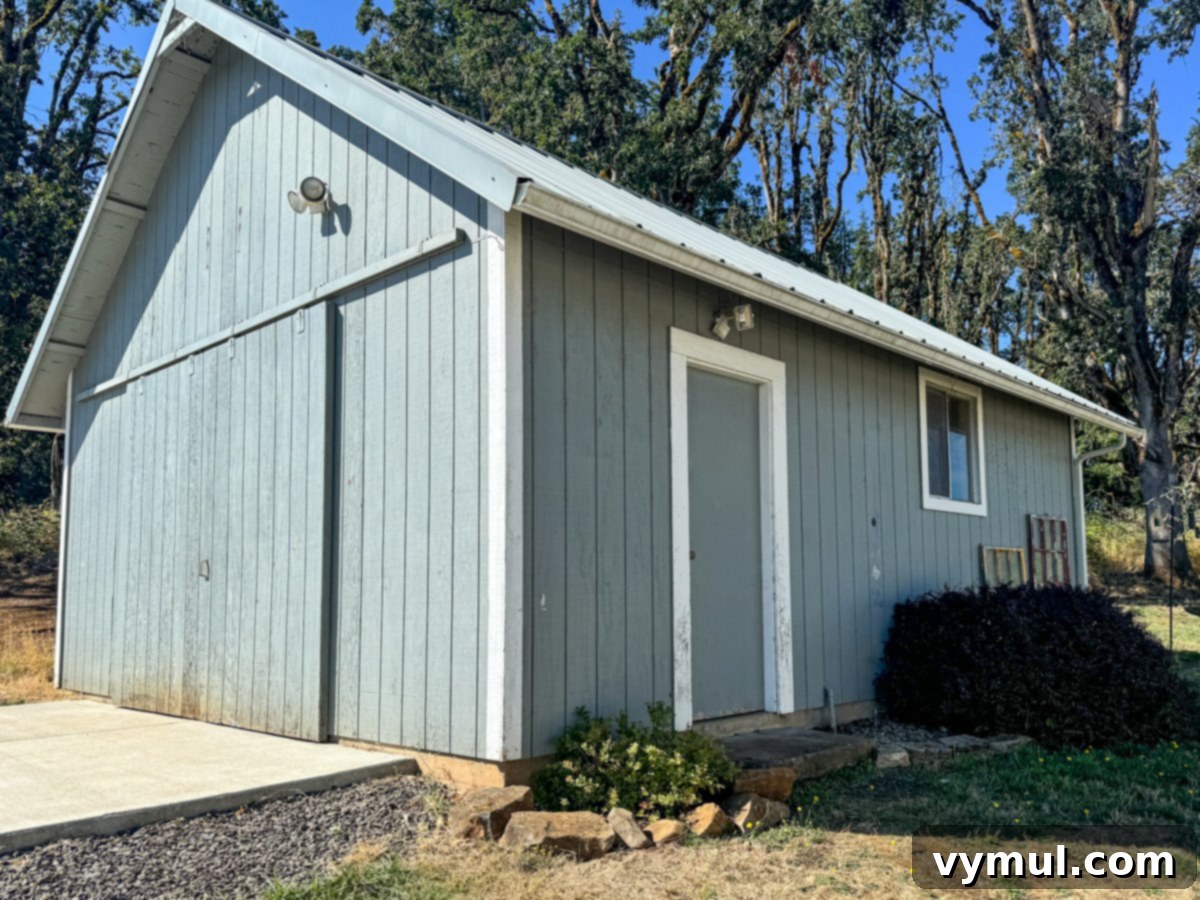
Corner of barn before. This section was plagued by broken, off-center light fixtures, a dated metal window, and a visibly damaged door, contributing significantly to the building’s neglected appearance.
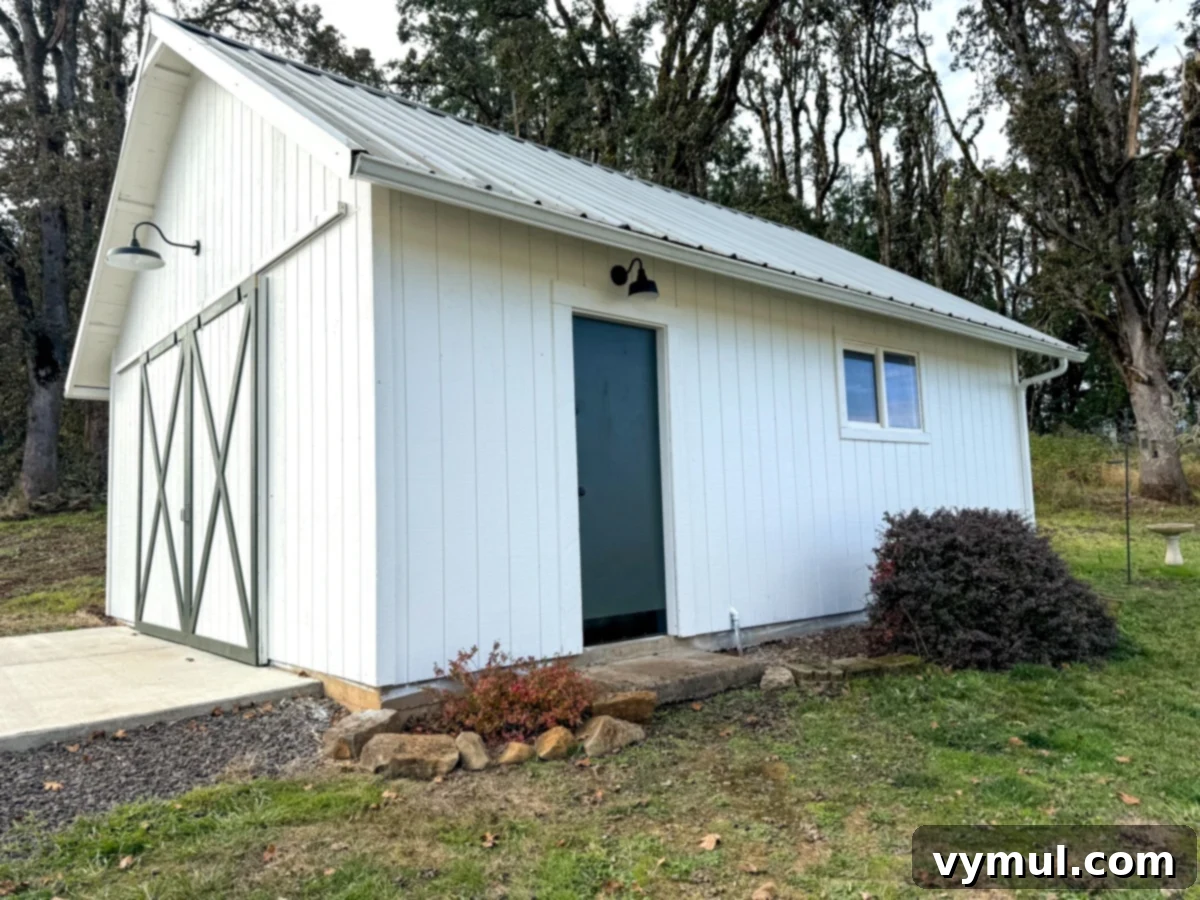
Corner of barn after. The transformation is dramatic, featuring crisp white paint on the siding, a fresh dark green hue on the door, accented by new barn door molding, sleek new lights, and upgraded door hardware. The entire area now exudes a cohesive, farmhouse-chic vibe.
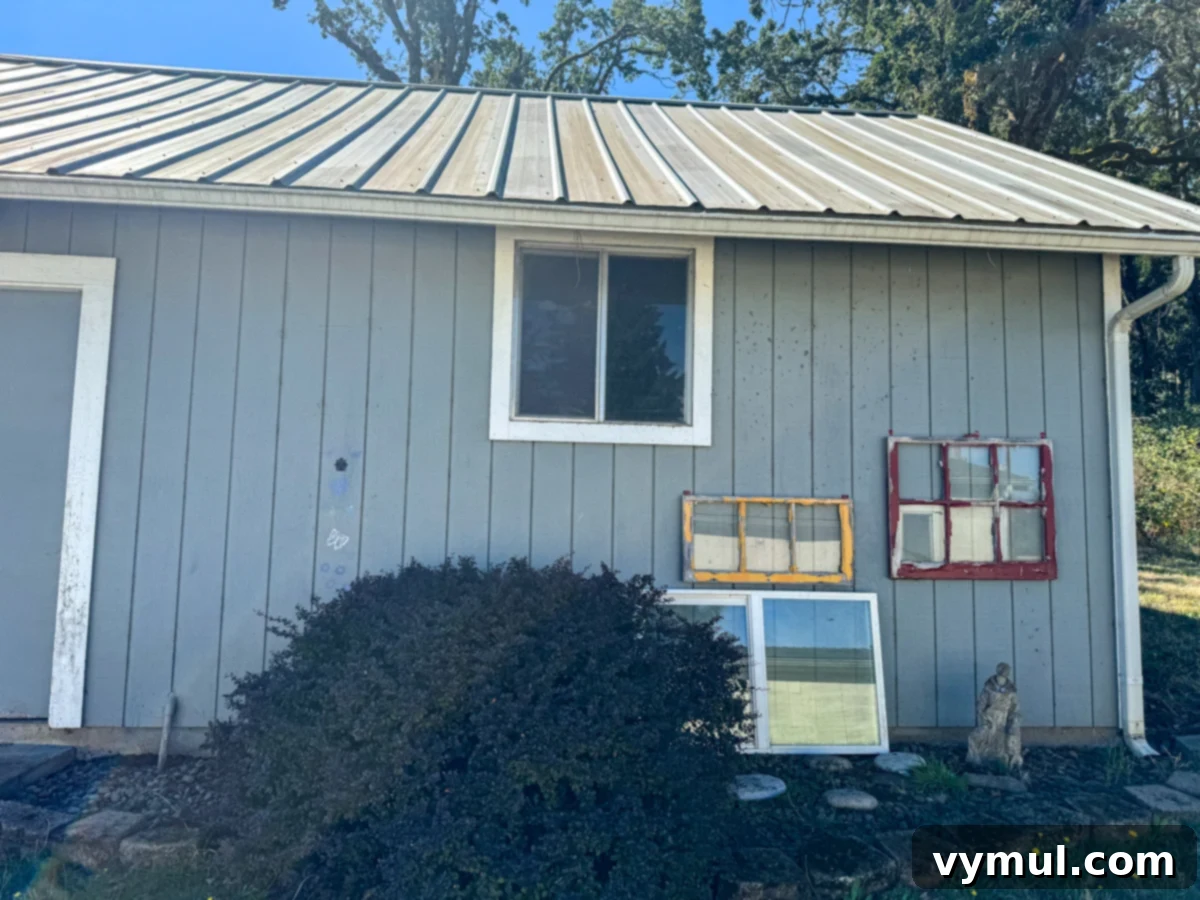
Barn side door and window before. The original metal window was awkwardly tall, extending all the way into the eaves, which gave the facade an unbalanced and unappealing look.
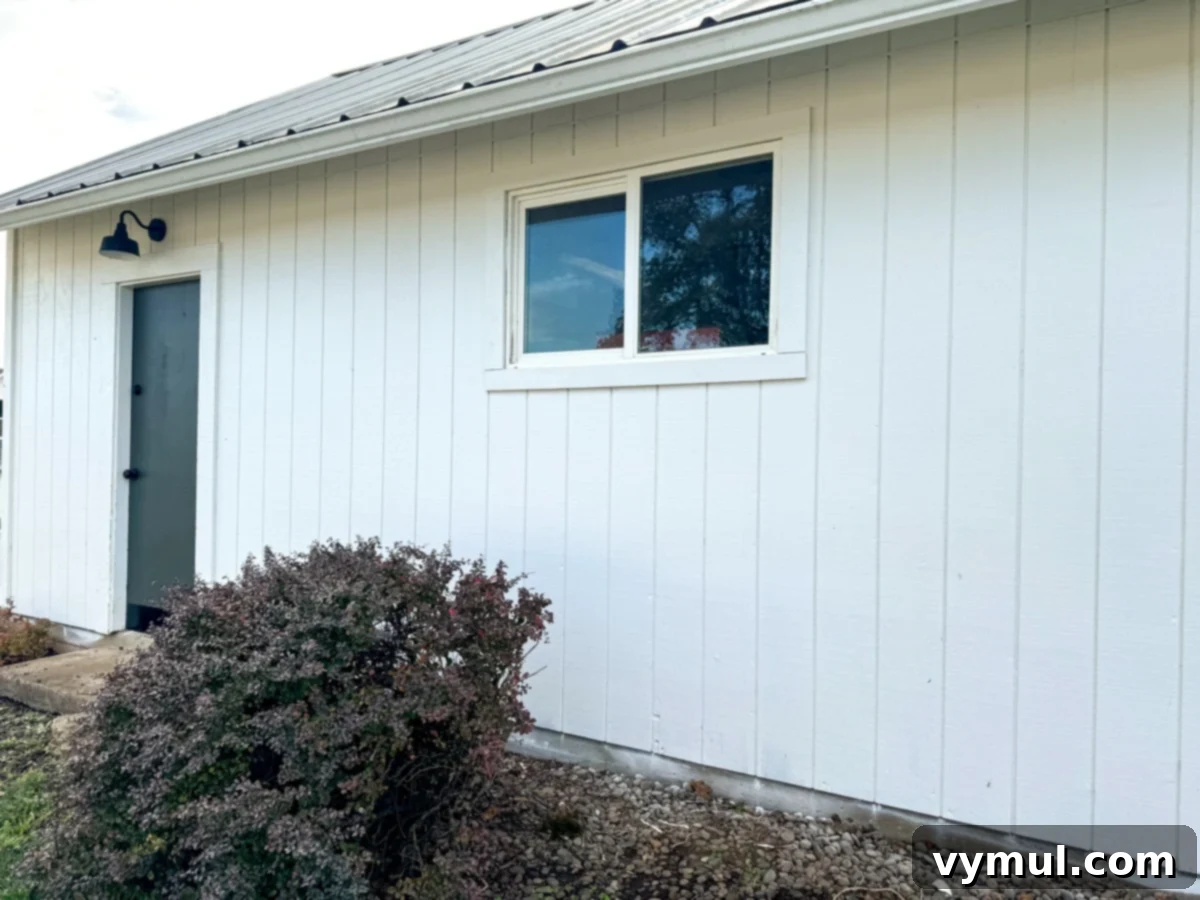
Barn side door and window after. Observe how the new salvaged window integrates seamlessly and proportions itself much better with the structure! We cleverly added a kick plate to the bottom of the hollow-core door to effectively disguise its peeling finish. This was a practical solution, as the door was obviously an interior model, and we simply didn’t have the time or immediate resources to replace it entirely.
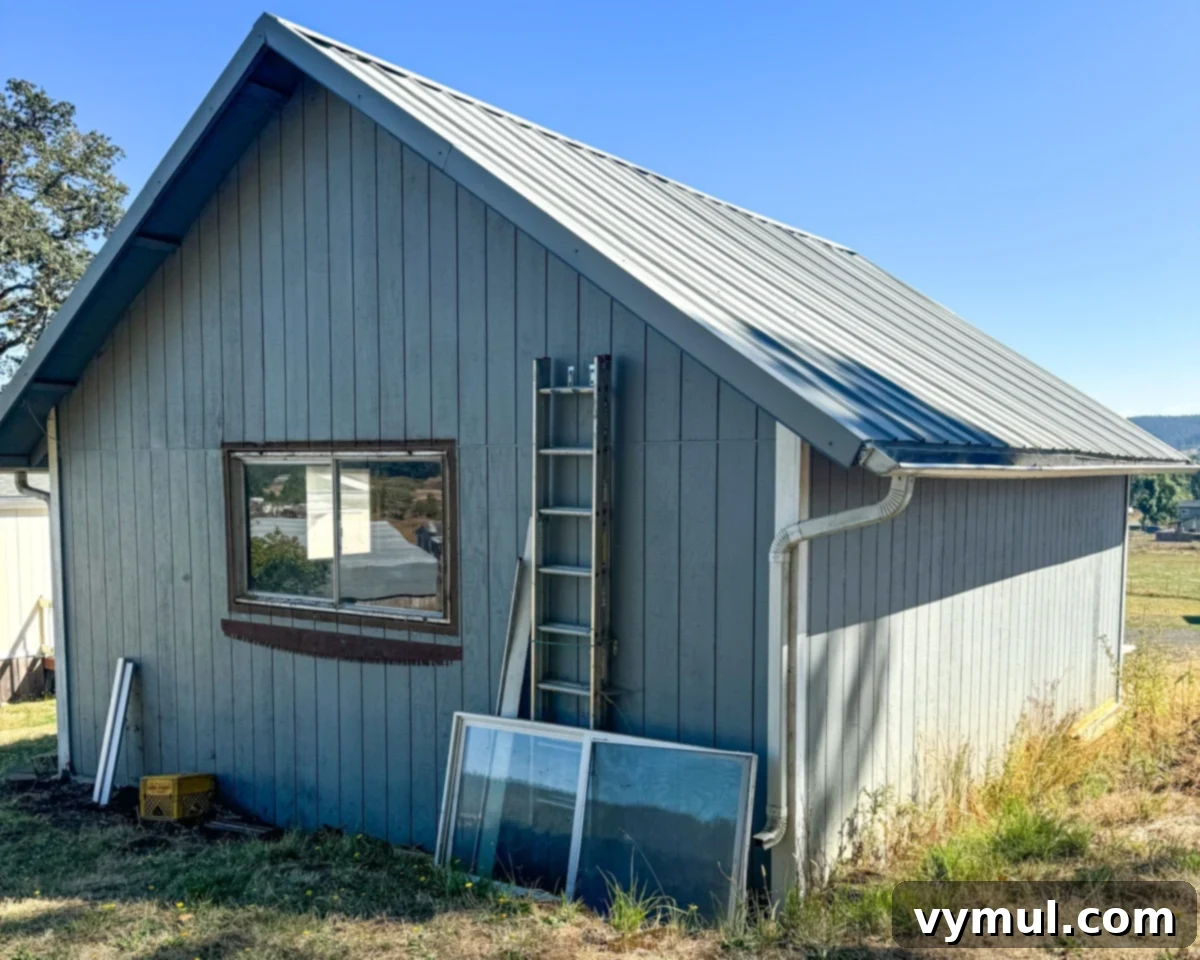
Back of the barn before. Beyond a general cleanup, this side primarily required the installation of a new window, along with essential caulking and filling to address minor imperfections.
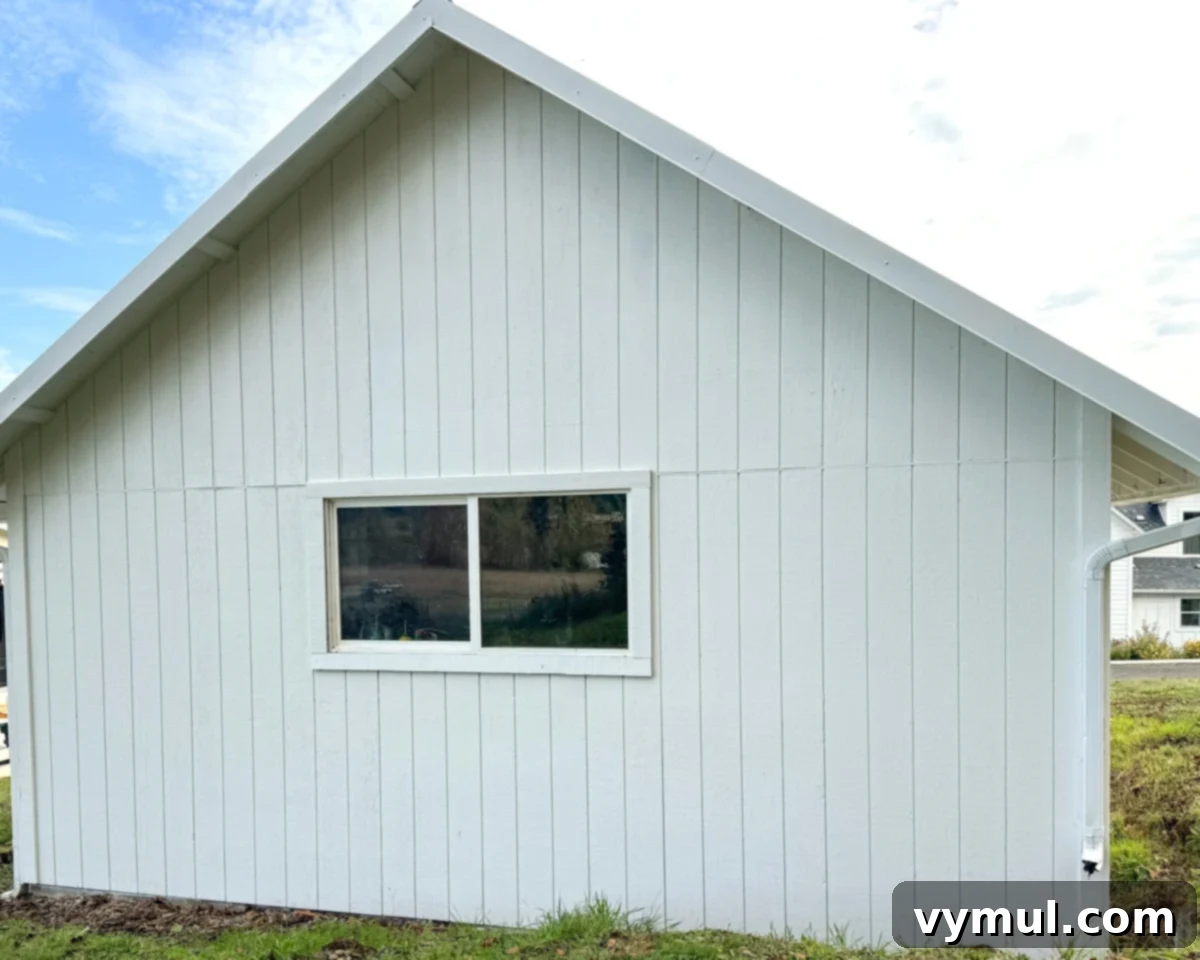
Back of the barn after. Fortuitously, this particular window, salvaged from our farmhouse’s old enclosed porch, was an exact fit for the opening! We were also able to reuse the original window trim, which was a fantastic bonus and a great cost-saver.
Detailed Steps for a Stunning Barn Makeover
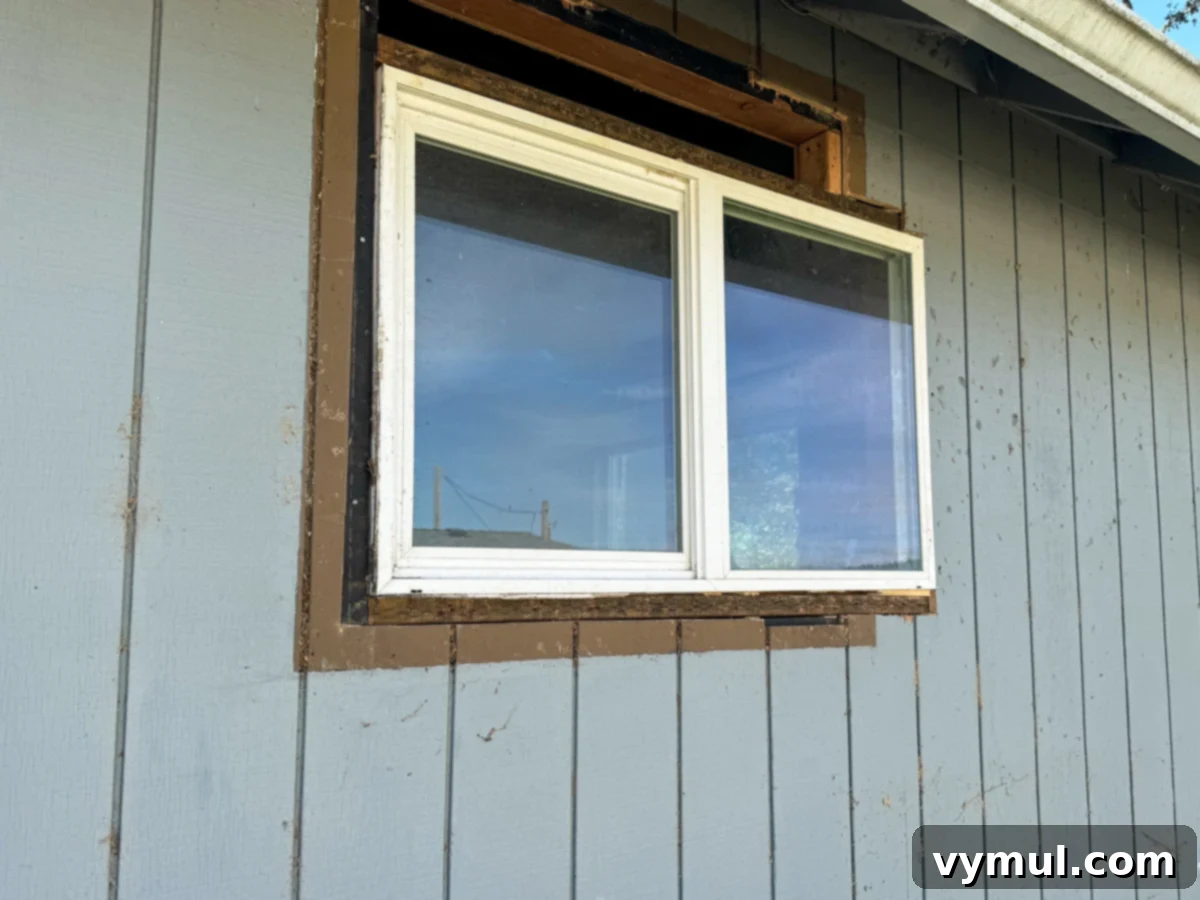
Step 1: Replace old metal windows with salvaged ones. A key part of our budget-friendly approach was using windows we had saved specifically for this project during our farmhouse remodel. The original metal windows were not only outdated but poorly sized for the aesthetic we desired. For the side window, which was shorter and longer than the existing opening, Brian skillfully cut out the siding to accommodate the new dimensions. He then created a robust header for the window frame and added salvaged siding pieces to flawlessly fill the newly created gap at the top. This ensured a tight, professional fit while maintaining our salvage-and-reuse ethos.
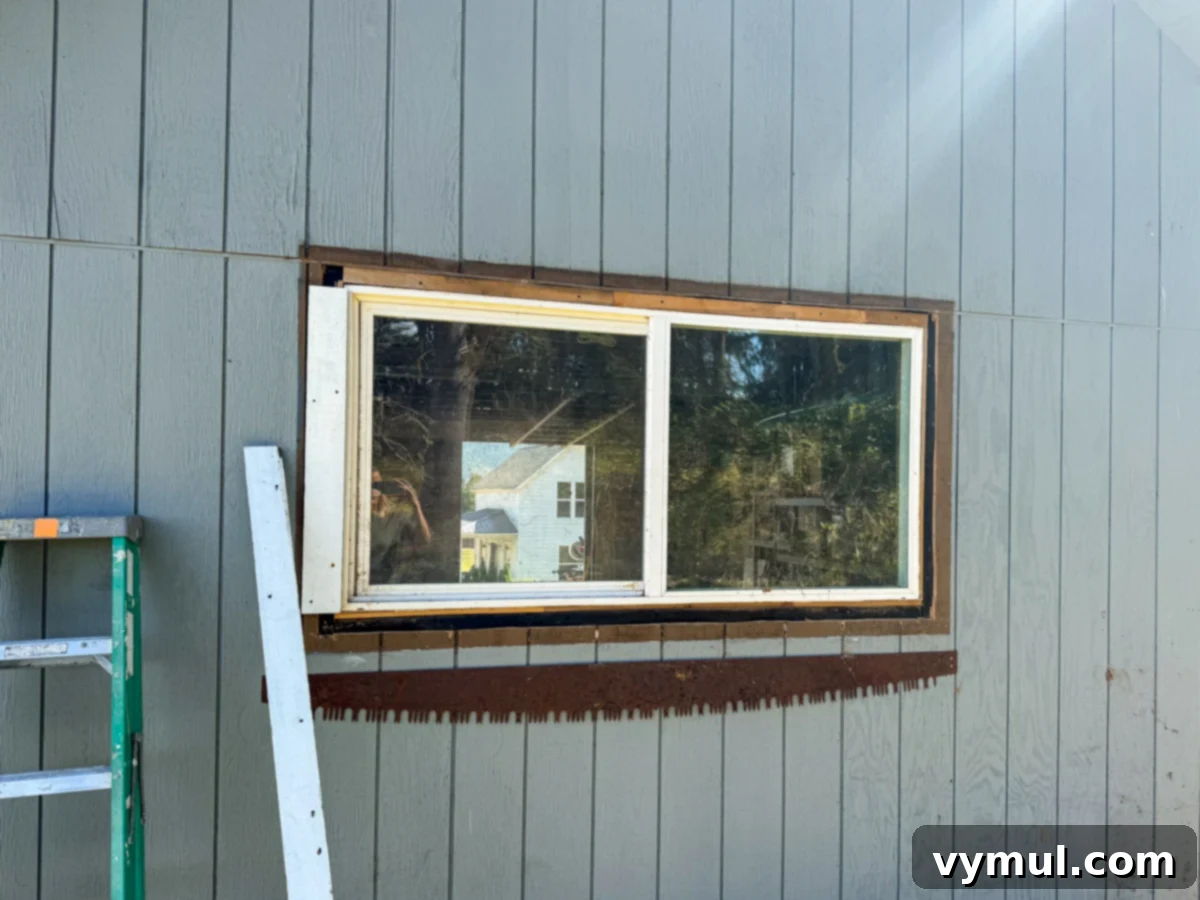
The back window proved to be an unexpected stroke of luck – it was the perfect size, fitting precisely into the existing opening without any modifications to the siding. We were delighted to be able to reuse all of the trim from this window, and even managed to salvage two pieces from the side window. This meant we only had to purchase two new trim pieces, significantly reducing material costs and aligning perfectly with our sustainable DIY approach.
Step 2: Thorough power washing. Once all the new windows were securely in place, the next crucial step was a comprehensive cleaning. We used a powerful pressure washer to thoroughly clean every inch of the barn’s exterior, including the siding, doors, eaves, and gutters. This essential preparation removed years of accumulated dirt, grime, loose paint flakes, and mildew, providing a pristine and ideal surface for the subsequent painting and finishing stages. A clean base is vital for paint adhesion and a long-lasting finish.
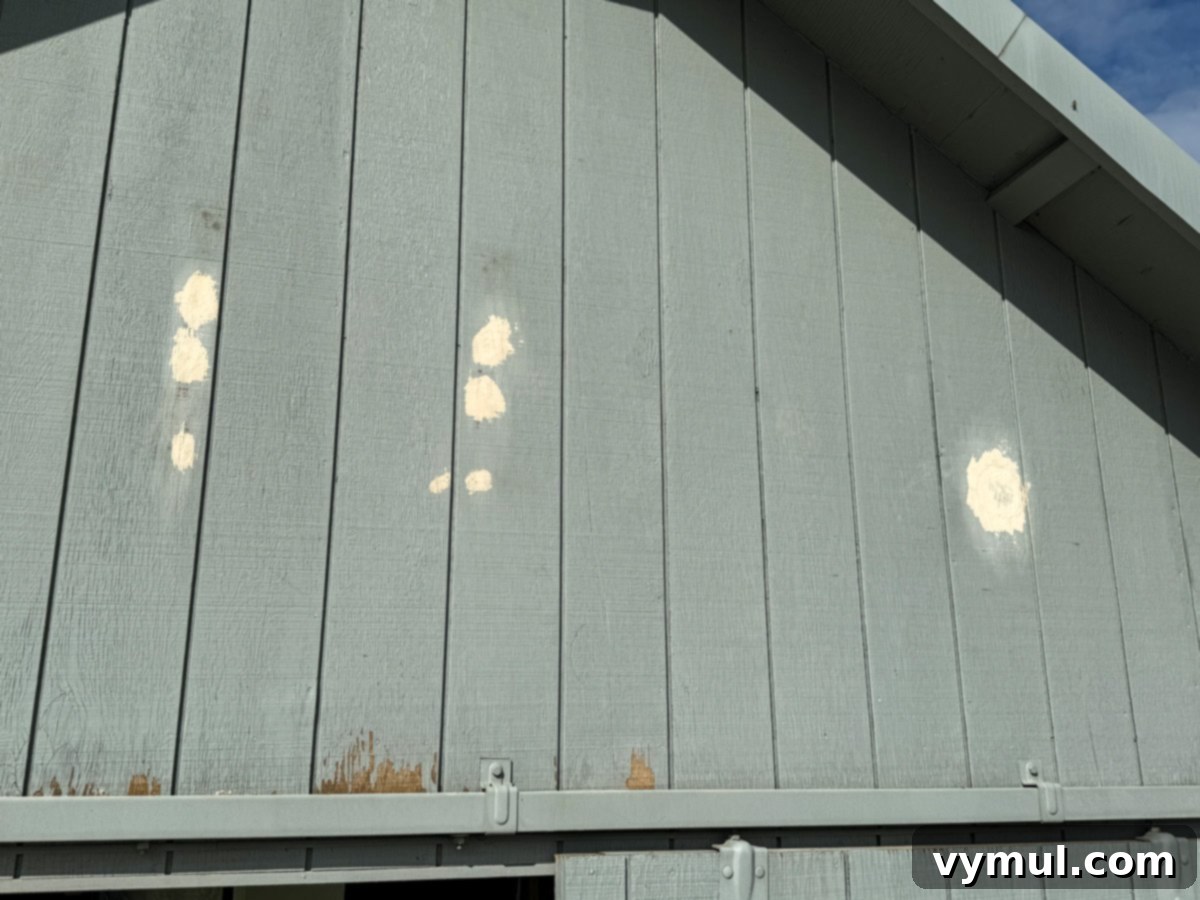
Step 3: Precision caulking and hole filling. With the exterior cleaned, we moved on to perfecting the surface. We meticulously caulked all around the newly installed windows, sealing any gaps to prevent moisture intrusion and create a seamless look. For areas like the trim and the various holes left by the old basketball hoop, we applied high-quality wood putty. A particularly large hole, previously accommodating an off-center light fixture, required a bit more ingenuity: we first filled it with a perfectly cut piece of salvaged siding, then smoothed over the surface with wood filler. This ensured a uniform and smooth canvas for painting, erasing all signs of previous damage.
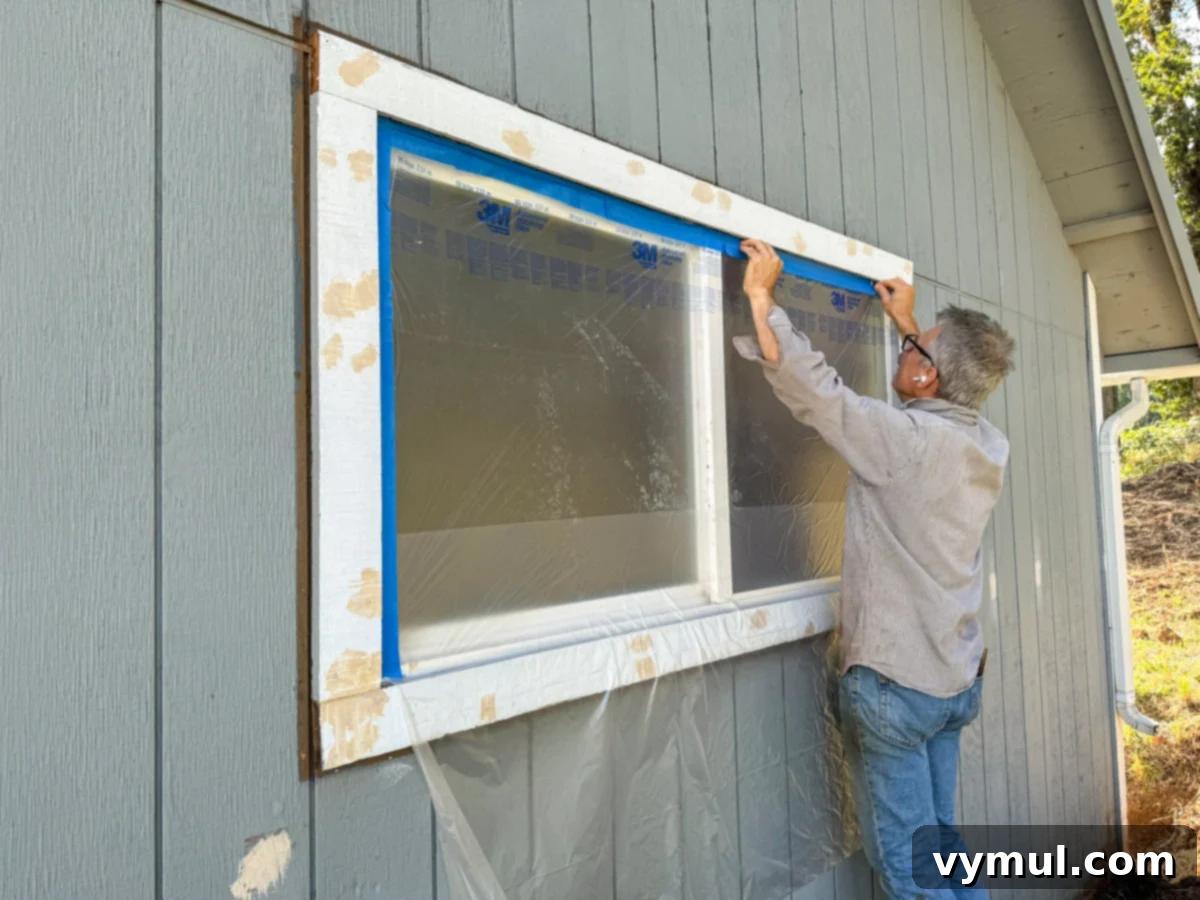
Step 4: Sanding, scraping, and meticulous taping. Proper surface preparation is paramount for a professional and durable paint job. We carefully sanded all the filled areas to ensure they were perfectly smooth and flush with the surrounding surface. Any remaining areas of peeling or flaking paint were meticulously scraped away. Once these preparations were complete, we moved on to taping and masking. We meticulously taped off all windows and doors to protect them from paint splatter, preparing the entire structure for painting with our sprayer. For efficiency and ease, we utilized this pre-taped sheeting, which significantly sped up the masking process.
Jami’s Biggest Tip For Filling Large Holes/Gaps Efficiently
My brother-in-law once shared an invaluable tip with me for tackling large gaps where standard caulk or wood filler might simply sink or require excessive amounts. He introduced me to the concept of using foam backer (also known as foam caulk saver), and it has been an absolute game-changer in all our old house renovations. This product works wonders for substantial holes, such as the one left by the basketball hoop we encountered. I simply cut a piece of the foam, shaped it into a small circle, and firmly stuffed it into the hole before applying wood filler on top. This technique prevents the filler from sinking, ensuring a perfectly smooth and durable repair. It’s truly been a lifesaver for numerous gaps and cracks in older homes – just insert this foam, then caulk or fill over it, and you won’t have to worry about frustrating shrinkage! Remember, the foam backer comes in various thicknesses, so I always keep both a thinner and a slightly thicker option readily available for any project that arises.
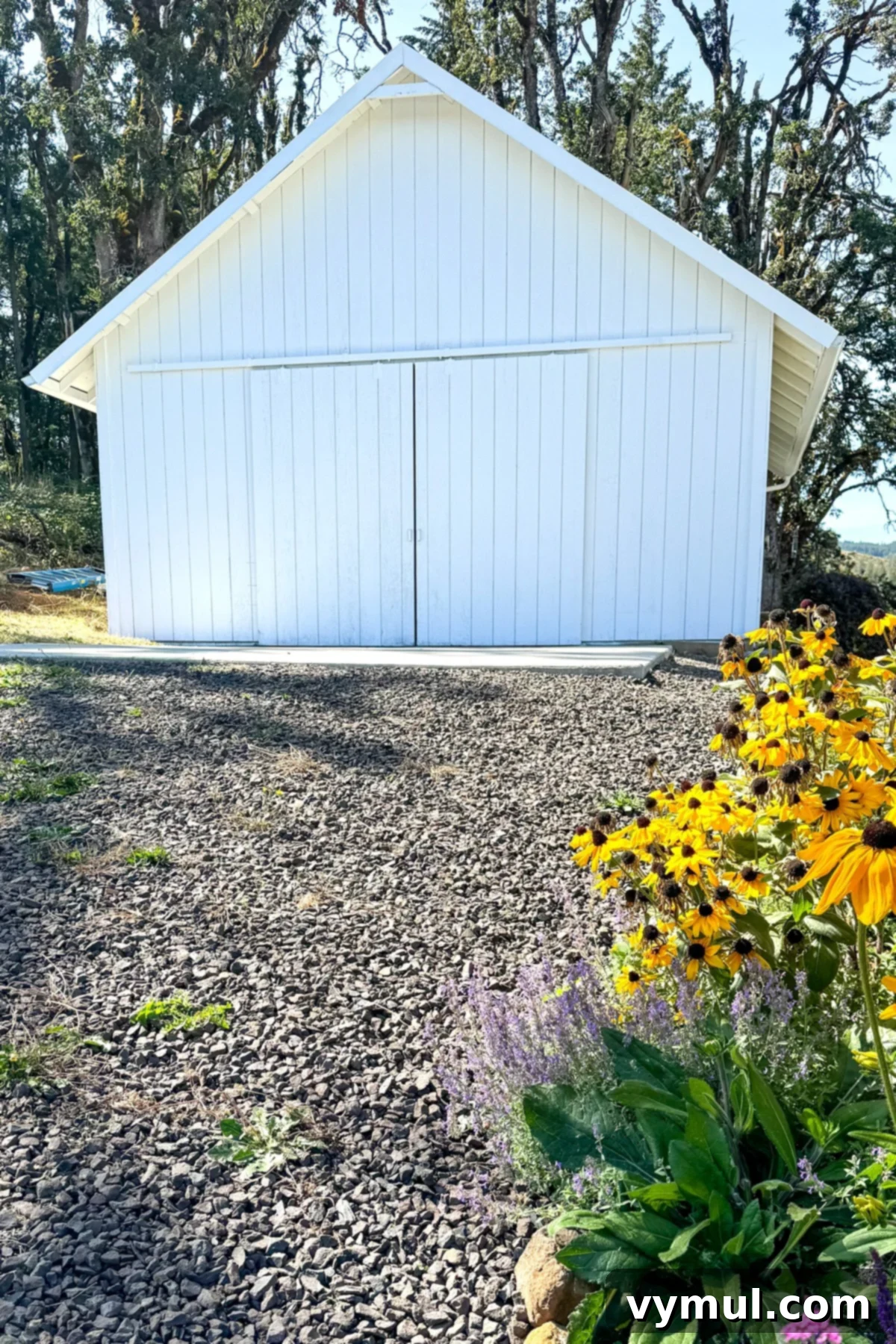
Step 5: Applying the perfect paint. With all the meticulous preparation complete, it was finally time for the most visually impactful step: painting. To achieve a cohesive look with our main farmhouse, we opted for Behr Premium Plus exterior paint in the inviting shade of Silky White. This premium paint provides excellent durability and coverage, perfect for an outdoor structure exposed to the elements. We utilized our paint sprayer for this step; while a sprayer can sometimes use more paint than traditional rolling, the significant time savings and the incredibly smooth, even finish it provides make it our preferred method for large exterior projects.
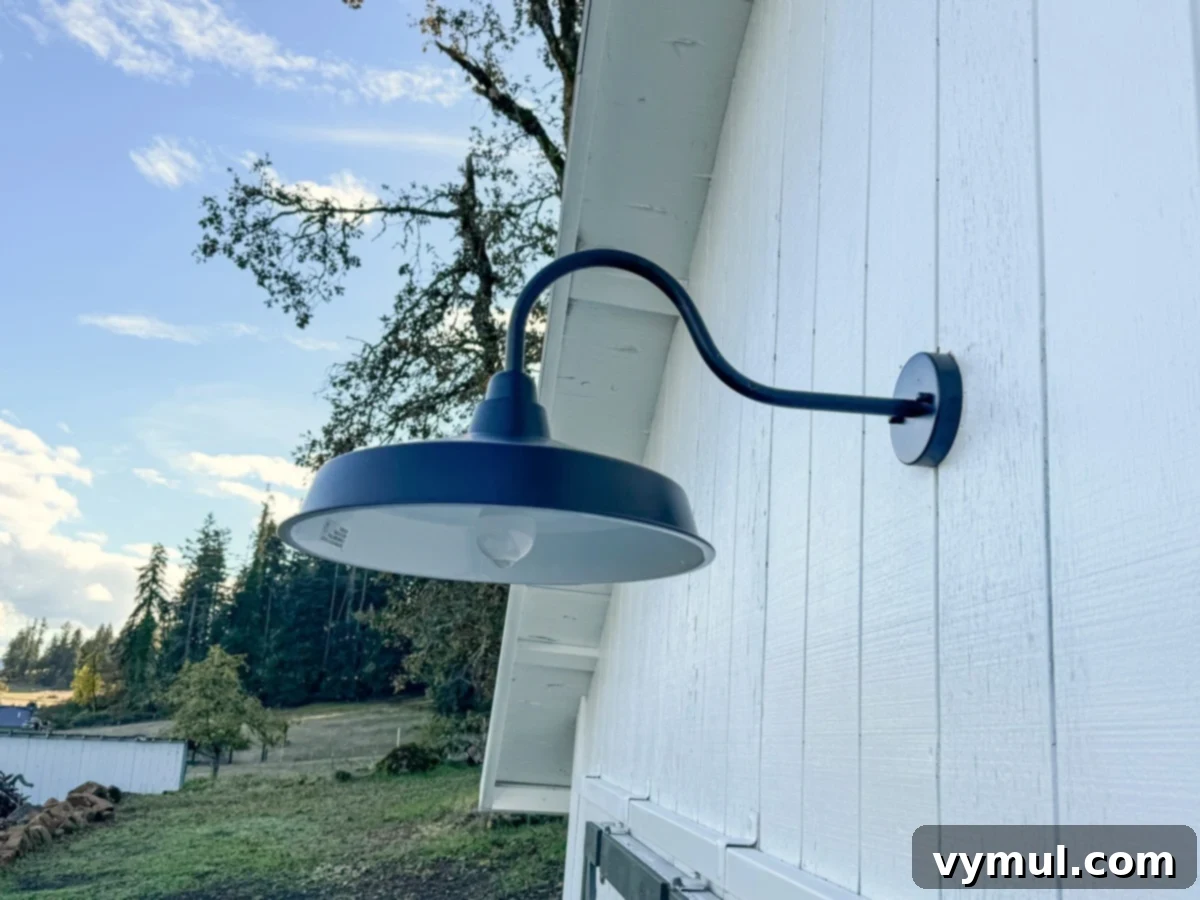
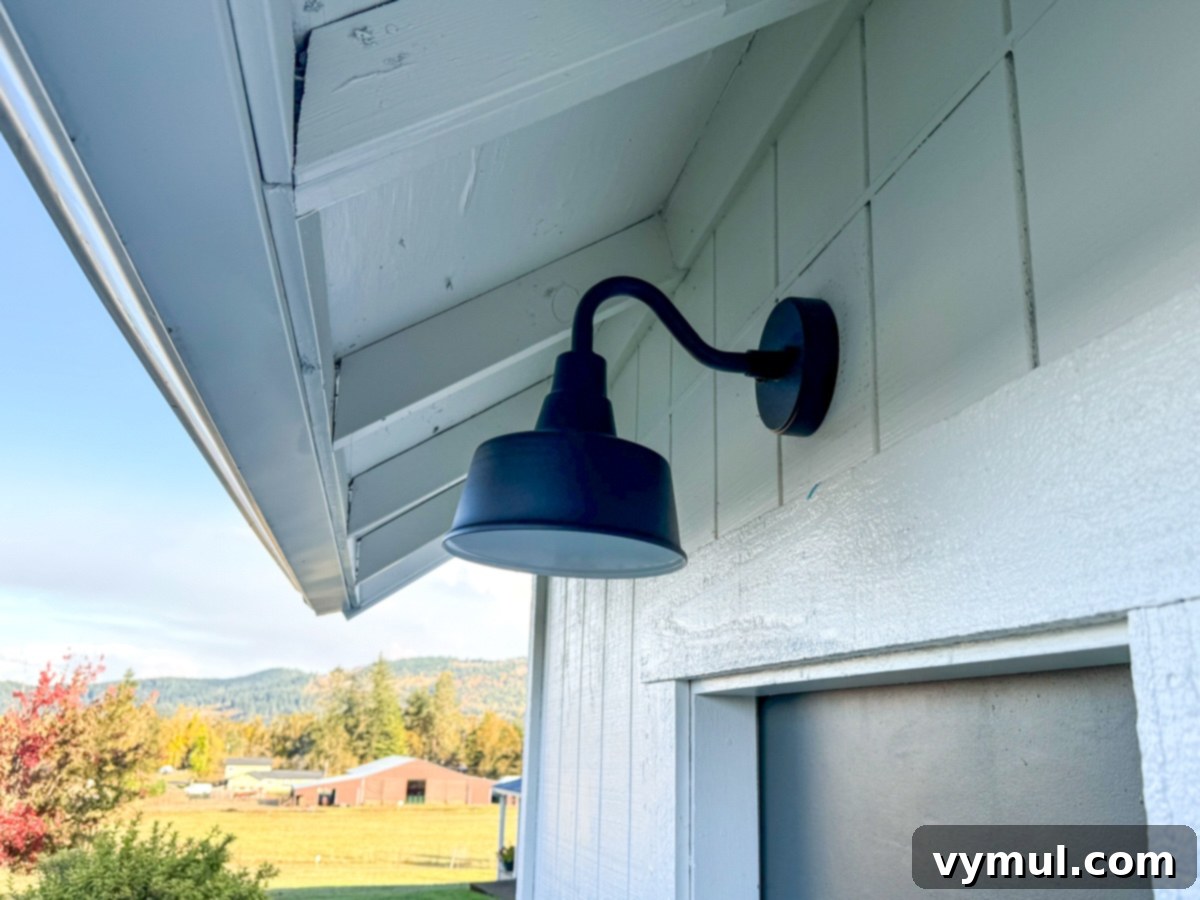
Step 6: Installing stylish and functional lighting. With the fresh coat of paint drying, our attention turned to illuminating the barn. I embarked on a search for affordable yet classic barn lights – a task that proved surprisingly challenging! Many options were either too modern or excessively priced. However, I eventually found two perfect candidates, both sourced from Home Depot, which I absolutely adore for their blend of vintage charm and modern efficiency:
- For a striking focal point above the main barn doors, we chose the Large 16-inch black barn light. Its generous size makes a bold statement.
- To complement this, a smaller, equally charming Small 10-inch black barn light was installed above the side door, ensuring cohesive lighting throughout.
- A truly clever addition was installing these motion sensor light bulbs in each fixture. They function flawlessly, only activating from dusk till dawn when movement is detected. This offers a much more aesthetically pleasing solution than bulky, external motion sensor lights, don’t you agree?
Brian did have to relocate the electrical box to perfectly center the large light fixture over the barn doors. This added slightly to the overall cost (electrical wiring and components can be surprisingly expensive!), but thankfully, after numerous DIY projects around our home, he has developed the skills to handle basic electrical work like this safely and efficiently.
Step 7: Upgrading the side door hardware. The original side door was equipped with rusty, old gold hardware that detracted from the barn’s newly refreshed look. We decided to upgrade it to an inexpensive yet stylish black knob and deadbolt set, which instantly modernized its appearance and provided enhanced security. Additionally, as mentioned earlier, we installed a practical black door kick plate at the bottom. This served a dual purpose: it concealed the visibly peeling paint on the lower edge of the hollow-core door (a quick fix for an interior door used externally) and added a touch of decorative finish.
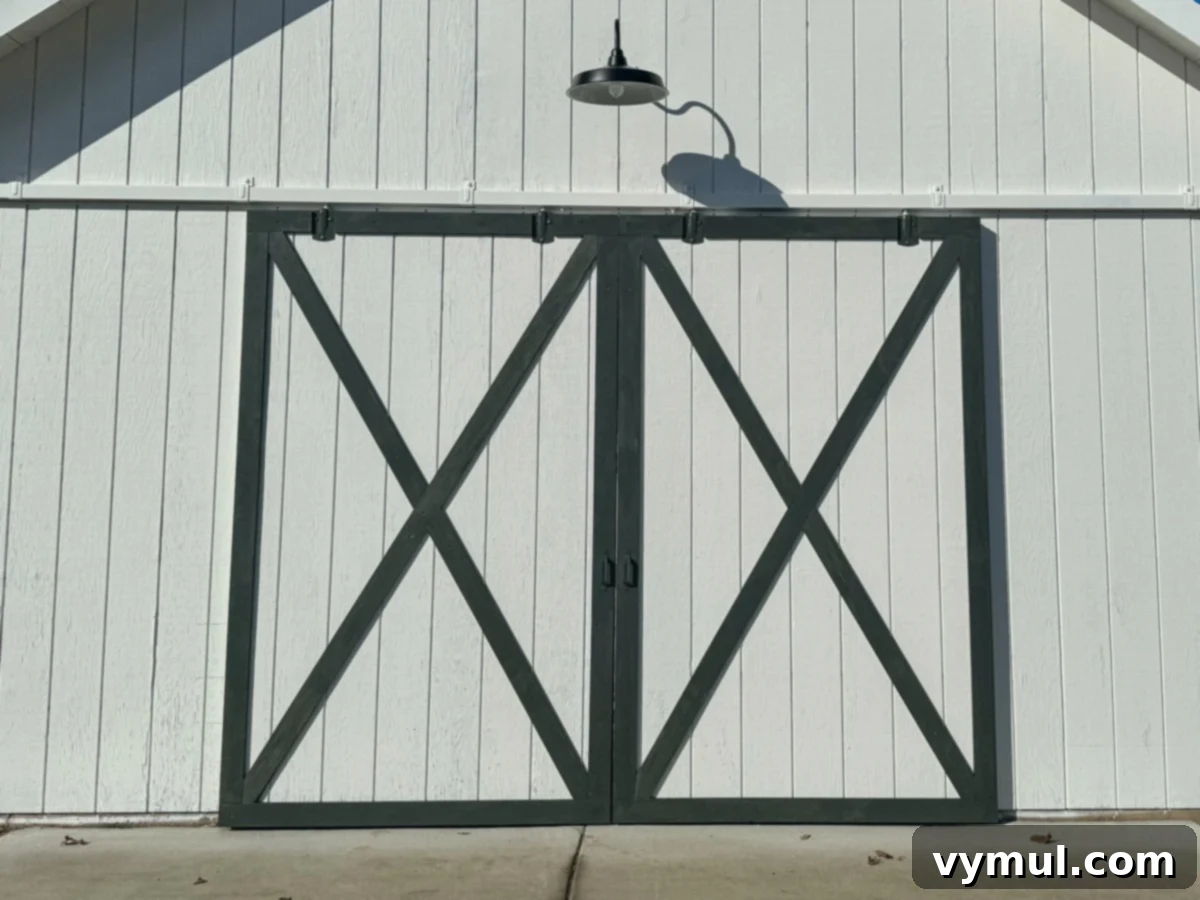
Step 8: Attaching the signature barn door trim. This particular step, while ultimately defining the barn’s new character, proved to be the most challenging part of the entire makeover. However, it was also the element we knew would truly bring the building to life and firmly establish its identity as a barn! The primary difficulty lay in accurately mitering the corners for the distinctive ‘X’ patterns. After some trial and error, Brian ingeniously created a template that ensured perfect, consistent cuts every time, making the process much smoother.
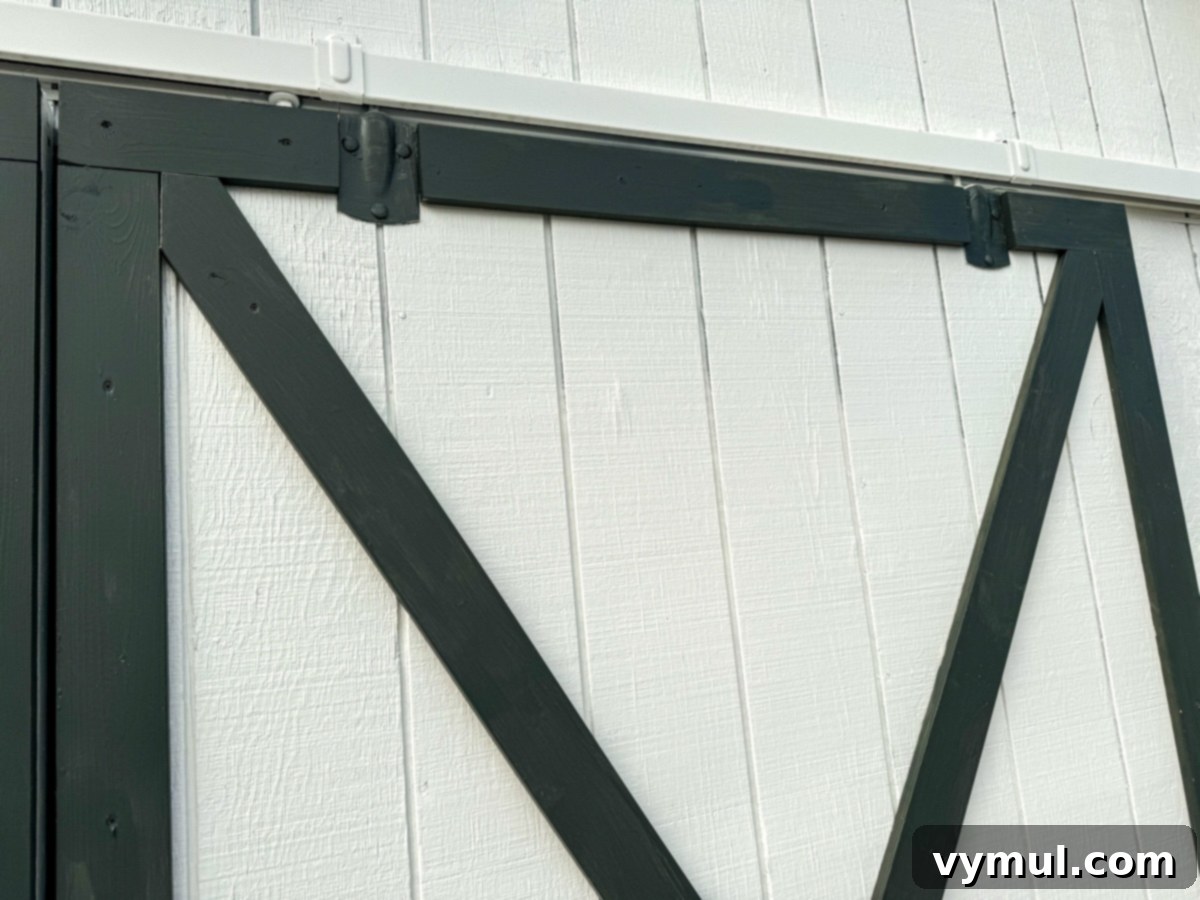
Another point of deliberation arose regarding how to seamlessly integrate the existing door hardware, which was attached to the exterior of the doors (unlike many barn doors where hardware is mounted behind). After some discussion, we decided on a practical and aesthetically pleasing solution: we simply ran the trim pieces up to the edges of the existing hardware. Once all the trim was installed, we painted both the trim and the hardware in a matching dark green hue. This clever approach minimized alterations to the functional hardware while ensuring a cohesive and polished final look. I believe it turned out exceptionally well!
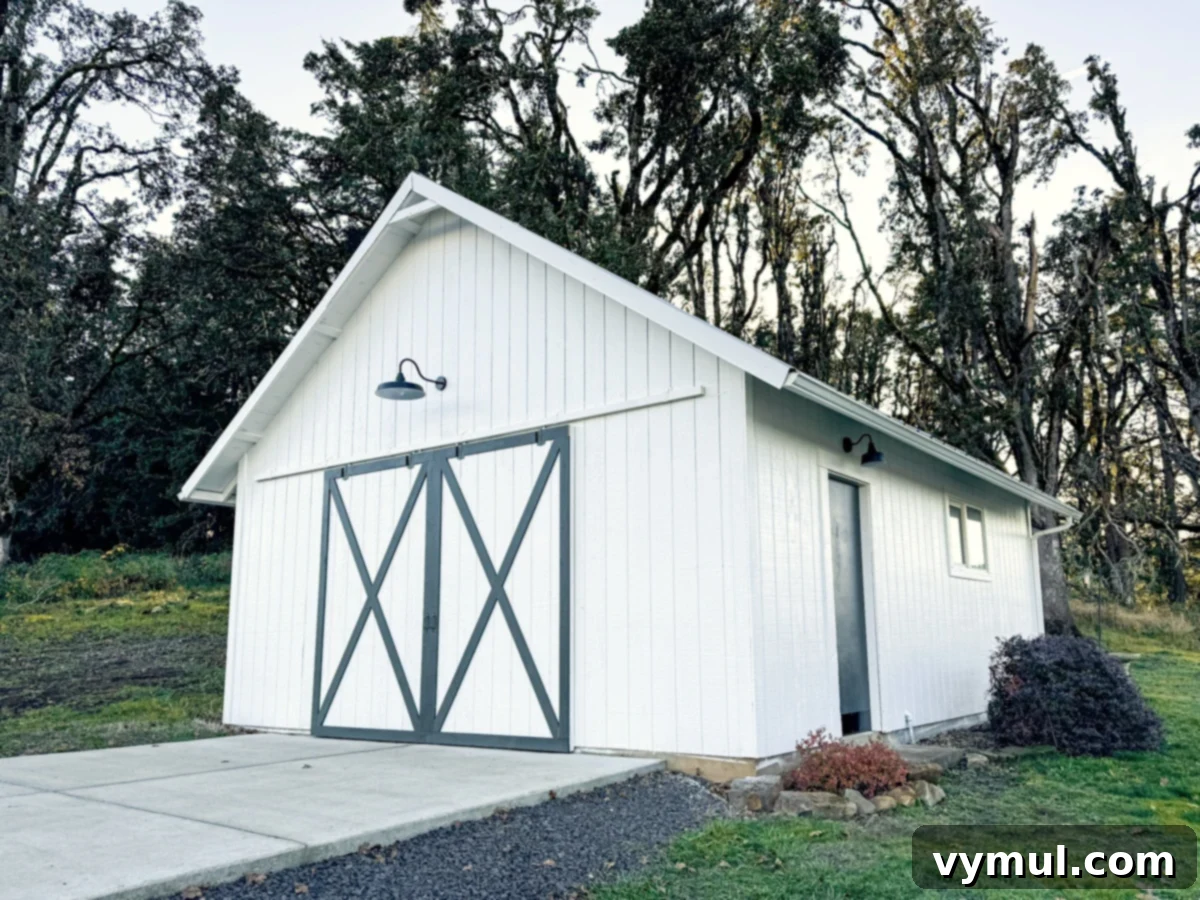
As I mentioned, I am absolutely delighted with the final outcome of this project. The building now looks exactly like a charming, picturesque little barn, truly fulfilling the vision I had for it for so long! The transformation is astonishing.
From start to finish, the entire project took us approximately one month to complete. This involved working during some weekends and dedicating a few hours here and there during evenings. Considering the dramatic improvement and the scope of work involved, I believe it was an incredibly efficient and productive use of our time. It’s amazing what can be achieved with a focused, consistent effort.
Transparent Barn Makeover Cost Breakdown
When we embarked on this barn exterior makeover, my initial hope was to keep the total cost around the $500 mark. However, as anyone who has tackled home renovations knows, projects rarely stick strictly to the original budget. We did utilize our own paint sprayer, which, while incredibly efficient and time-saving for large surfaces, tends to use slightly more paint than traditional rolling methods. Despite this, the time efficiency and professional finish it provides are invaluable to us. Here’s a detailed breakdown of the specific costs we incurred:
- 2 Vinyl windows – cleverly reused from our farmhouse remodel, resulting in significant savings = $0
- Wood for window moldings (some pieces were also reused from existing materials) – 2 cedar 1×6 boards purchased = $15
- Pre-primed outdoor molding specifically for the barn doors, sourced from a local home improvement store = $130
- Siding to fill gaps – salvaged pieces from previous projects = $0
- Behr Premium Plus exterior paint in Silky White, 8 gallons total ($42 for a 5-gallon bulk container; then $47 for each additional gallon as needed)= $368
- Behr Premium Plus exterior paint in Evergreen Fields for the trim and barn doors = $0 (leftover from our farmhouse renovation, another great saving!)
- Plastic sheeting for masking and taping off areas = $12.50
- Wood filler for imperfections and holes = $15
- White exterior caulk, $5 per tube x 2 tubes = $10
- Foam backer (caulk saver) – only a small amount was needed from supplies we already had on hand = $0
- Electrical supplies – including wiring, cover plates, and a ground switch for the new lighting = $45
- Large 16-inch black barn light for the main barn doors = $65
- Small 10-inch black barn light for the side door = $46
- Black door knob and deadbolt set for the side door = $36
- Black door kick plate for the side door = $30
TOTAL PROJECT COST = $772.50
In the grand scheme of things, while the final cost of $772.50 exceeded my initial modest estimate, it certainly wasn’t an exorbitant expense for such a significant exterior transformation. Given the dramatic visual impact and the enhanced functionality we achieved, I am incredibly pleased with the overall outcome and the value we were able to accomplish. It truly demonstrates how strategic DIY efforts can lead to stunning results without breaking the bank.
So, tell me, what do you think – can we now confidently refer to this charming outbuilding as a barn, rather than just a dusty old shop? I certainly think so! 😀