From Sourdough Struggles to Spectacular Success: A Beginner’s Journey to Artisan Bread
Embarking on the sourdough baking journey can be an incredibly rewarding experience, transforming simple flour and water into magnificent loaves of bread. Yet, for many, myself included, it often begins with a series of perplexing challenges and amusing failures. This is my story of perseverance, learning, and ultimately, triumph in the wonderful world of sourdough. If you’ve ever felt discouraged by a flat loaf or a reluctant starter, keep reading – you’re not alone, and success is absolutely within reach!
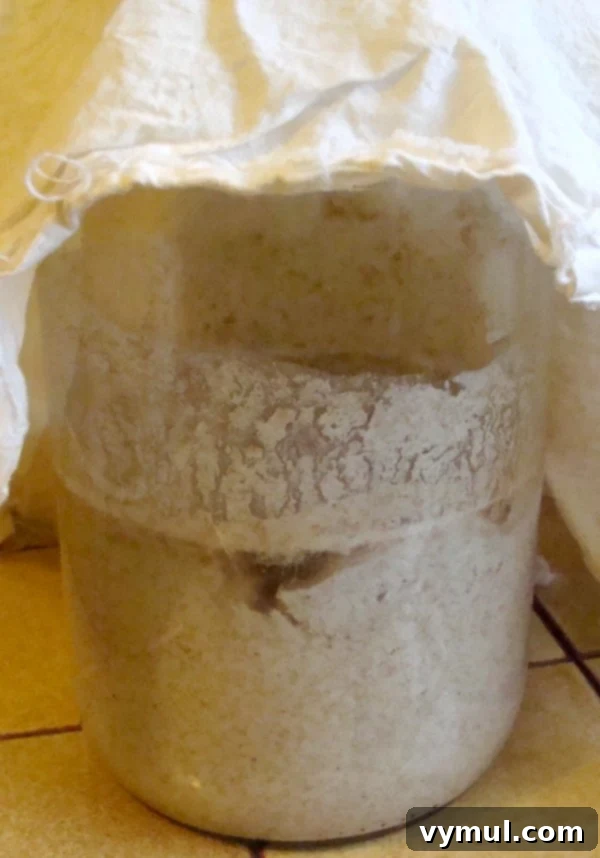
The image above captures one of my initial attempts at cultivating a sourdough starter. I’m sharing this to underscore a crucial message: don’t let early setbacks deter you. My journey was full of humorous mishaps, but by embracing the learning process, the results eventually became truly amazing. Stick around until the end to witness my sourdough successes firsthand!
Many years ago, I first ventured into the world of sourdough. My ambition was to cultivate a vibrant starter and bake delicious, wholesome bread. Unfortunately, that initial attempt resulted in loaves that were, to put it mildly, deeply disappointing. They were so unappetizing that my family declared we would never eat sourdough bread again. At that point, I honestly believed my sourdough days were over. The complexity seemed overwhelming, and the effort simply didn’t justify the outcome.
However, the allure of sourdough, particularly its touted health benefits, continued to nag at me. I kept seeing enthusiastic posts on various healthy living blogs, highlighting how sourdough fermentation makes whole grains more digestible and nutritious. This resonated deeply with my desire for healthier eating. Inspired, and perhaps a little stubborn, I decided to give it another shot. I began searching for a comprehensive tutorial on how to make my own sourdough starter from scratch, hoping this time I could finally crack the code.
After much research, I settled on following the detailed Heavenly Homemakers sourdough guide. Their instructions seemed clear and encouraging, providing a glimmer of hope that this attempt would be different. The process of creating a sourdough starter is essentially harnessing wild yeast and bacteria from the environment and flour to create a living culture. It’s a daily commitment of feeding and nurturing, often referred to as “fermentation.” Typically, it involves mixing equal parts flour and water, letting it sit, and then “feeding” it regularly by discarding a portion and adding fresh flour and water.
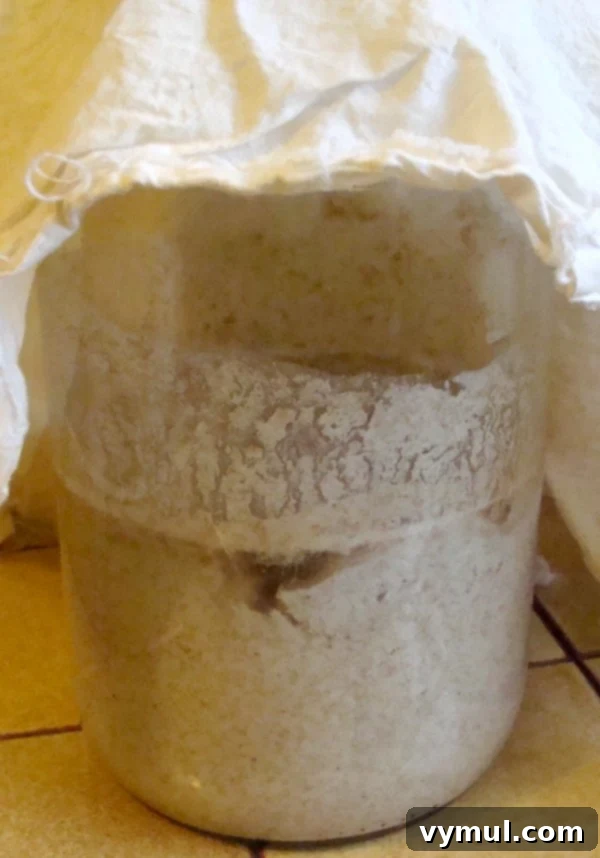
The picture above was taken on day two of my starter journey. To my delight, it looked remarkably similar to the images provided in the guide, with small bubbles beginning to form. Things appeared to be progressing smoothly, and my optimism soared. I diligently continued the feeding schedule and observation through day seven, carefully noting the changes and trying to understand the nuanced signs of a healthy, active starter. The guide emphasized consistency, temperature, and using unchlorinated water, all factors I tried my best to control.
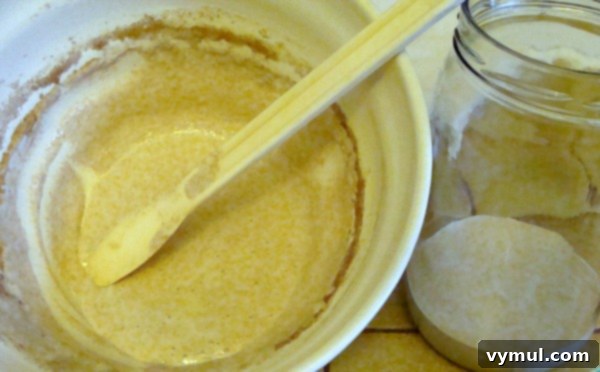
By day seven, my starter was finally ready for its first baking adventure. The instructions called for using three cups of the starter to make the inaugural bread batch. After carefully scooping out the required amount, I transferred the remaining starter into a jar for storage in the refrigerator. A crucial lesson for beginners is that sourdough starters grow quite rapidly when actively fed, sometimes requiring transfers to larger bowls or jars. This explains the generous quantity of starter you see in the photo – a testament to its vigorous growth! However, even at this stage, the aroma of the starter was undeniably potent and distinctively sour. Whew, it certainly smelled like serious fermentation was underway!
With my fresh, albeit extremely pungent, starter in hand, I enthusiastically proceeded with the bread recipe. The process involved several key steps: mixing the starter with flour, water, and salt to form the dough, followed by thorough kneading to develop the gluten structure, and finally, shaping three individual loaves, aiming for that beautiful artisan bread aesthetic. A critical point highlighted in the recipe, and one that often catches new sourdough bakers off guard, is the rise time. Unlike commercial yeast, which can prove dough in an hour or two, natural sourdough yeast works at a much slower pace. The recipe warned that it might take upwards of three hours, or even longer, for the dough to adequately rise.
To facilitate the rising process, I placed one of the shaped loaves in my dedicated warming cupboard. This ingenious setup, a kitchen cupboard located directly above a heat vent, creates a consistently warm environment, ideal for proofing dough, especially in our often-cold kitchen. (I regularly use it for our popular whole wheat sandwich bread.) Unfortunately, the other two loaves wouldn’t fit in my cozy cupboard. After a moment of contemplation, I surveyed my kitchen for the next warmest spot. My gaze landed on the mantelpiece situated above our wood stove – a prime candidate, I thought, for providing the necessary warmth.
That evening, I baked the loaf that had been proofing in the warming cupboard. Regrettably, I didn’t take any pictures of it, and for good reason – it wasn’t exactly a vision of culinary beauty. What it *was*, however, was incredibly dense and remarkably flat. The crust was so extraordinarily hard that I struggled to cut through it with a sharp knife. My mind drifted, longing for the lovely results of our standard easy artisan bread. A thought then playfully crossed my mind: since traditional artisan bread becomes more sour the longer it sits in the fridge, couldn’t that technically qualify it as sourdough? A humorous justification for a less-than-perfect loaf, perhaps.
In the aftermath of my first sourdough loaf’s uninspiring debut, I promptly and completely forgot about the other two loaves patiently (or impatiently) sitting on the mantelpiece. Oops. This oversight would lead to a truly memorable, albeit disastrous, outcome.
It wasn’t until around 2:30 the following afternoon, a full twenty-four hours after I had placed them there, that the forgotten loaves resurfaced in my memory. A wave of mild panic, followed by immense curiosity, washed over me. Oh my gosh, I had never seen anything quite like them! They had transformed into something truly unique. Despite their bizarre appearance, my innate aversion to throwing things away, especially after putting so much effort into making the starter, kicked in. I decided to bake them anyway, clinging to the faint hope that the heat of the oven might somehow coax them into rising, even at this late stage.
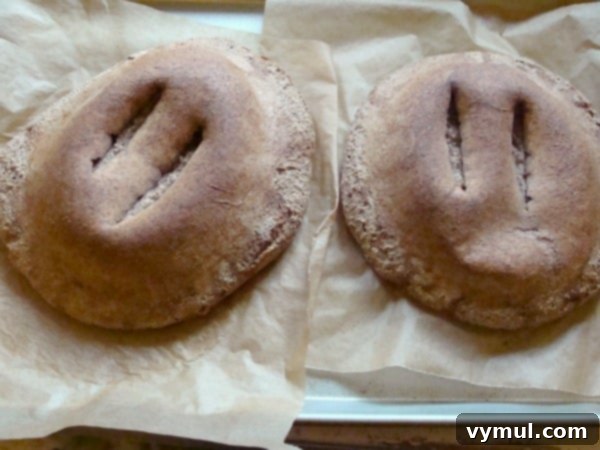
Um, no. My optimistic assumption was hilariously incorrect. Looking at these baked creations now, I can’t help but laugh out loud! Have you ever witnessed anything so comically misshapen? My husband, Brian, thought they bore an uncanny resemblance to UFOs, while I, with a straight face, suggested they looked more like pig snouts. The sheer absurdity of their form was undeniable. They were not merely hard; they were petrified. I truly believe they could have served as excellent practice objects for discus throwing – a testament to their incredible density and rigidity.
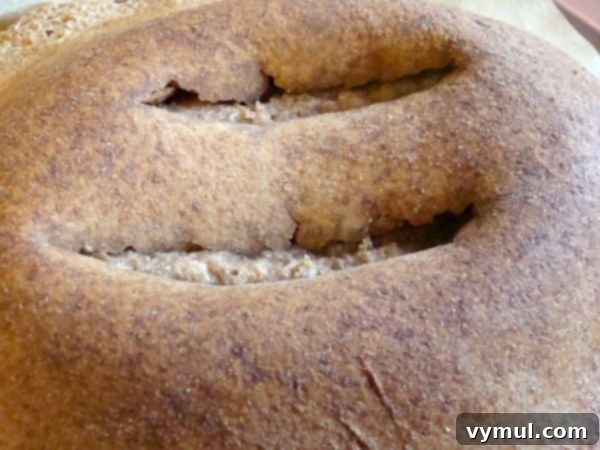
So, what exactly went wrong here? When I finally removed the towel covering the dough, the tops were already incredibly stiff, almost like a dry crust had formed during their extended proofing. Despite this obvious sign that they were unlikely to puff up, I proceeded to slice the tops, a common technique in artisan bread baking to encourage oven spring, just in case a miracle might occur and the dough would expand in the oven. This act, in hindsight, was a blend of hope and a desperate attempt to follow the standard procedure for a loaf that had clearly gone off-script.
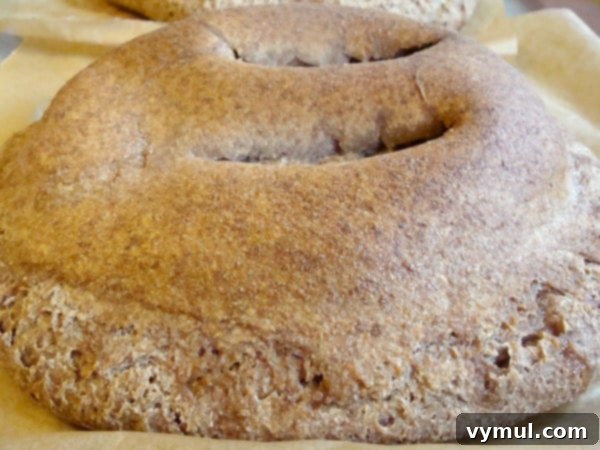
Yeah, as you can probably tell from the image, there was absolutely no need to worry about any dramatic puffing or oven spring. The loaves emerged from the oven looking much the same as they went in, just slightly browner. And no, that peculiar texture you see in the center isn’t raw dough; it’s simply how it stayed even after being thoroughly cooked! This lack of proper crumb development, often caused by over-proofing, insufficient gluten development, or a weak starter, resulted in an incredibly dense, almost brick-like interior, completely devoid of the airy pockets characteristic of good sourdough bread.
Despite the overwhelming evidence of culinary failure, we did muster the courage to try a piece. Call us gluttons for punishment, but curiosity got the better of us! The taste was only marginally more sour than the first loaf I had cooked right away, which was a small mercy. However, the crust… oh my goodness, the crust! It was so incredibly hard and unyielding that I genuinely feared for the integrity of my teeth. It was an experience that solidified my understanding of what *not* to do in sourdough baking.
My son, ever the astute observer, offered a comment that perfectly encapsulated the moment: “Well, I hope you’re not putting that on your blog.” I chuckled, realizing he didn’t quite grasp the essence of blogging. This, my dear son, is precisely what blogs are all about! They are platforms for sharing not just our triumphs and successes, but also our blunders, our learning curves, and the things that didn’t quite work out as planned. There’s immense value in transparency and in showing the reality of a creative process, especially one as nuanced as sourdough baking. And besides, sometimes the biggest failures lead to the biggest laughs. I’ve been chuckling about these “discus loaves” for days, and I thought you might enjoy joining me in the laughter and perhaps finding some encouragement in my missteps!
Update! The Journey Continues: From Failures to Flourishing Sourdough!
As you’ve read, my initial foray into sourdough was… eventful, to say the least. But I didn’t give up! These early failures taught me invaluable lessons and fueled my determination to master the art of sourdough. I am thrilled to report that I not only conquered the challenges of keeping and growing a healthy, active sourdough starter, but I also gained crucial insights into why my first attempts went awry. For instance, a common mistake for beginners is trying to bake complex artisan breads with a very young or new starter, which often lacks the strength and robust flavor profile needed for optimal results. It turns out, we really DO live and learn, right? Every failed loaf was a stepping stone towards understanding the nuances of fermentation, proofing, and baking with wild yeast.
Through continued experimentation and a lot of patience, I even developed a foolproof recipe that consistently yields a terrific sourdough artisan bread with remarkable ease. This transformation from utter frustration to confident baking has been incredibly rewarding.
My hope is to encourage you to persevere on your own sourdough journey. If you’re eager to bake with sourdough, don’t let a few initial challenges deter you. There’s a wealth of knowledge to explore, and the satisfaction of pulling a perfectly baked, tangy loaf from your oven is truly unparalleled. To help you along, here are some links to articles and recipes I’ve created and found incredibly helpful – they cover everything from starter care to delicious sourdough creations:
- How To Grow, Keep, & Use A Sourdough Starter: Your Comprehensive Guide
- Essential Sourdough Tips for the Occasional Baker: Making It Work for Your Lifestyle
- Recipe: Amazing Sourdough Waffles – A Perfect Introduction for New Starters!
- Recipe: Wholesome Sourdough Whole Wheat Crackers – Another Great New-Starter Option
- Recipe: My Go-To Easy Sourdough Artisan Bread – Achieve Bakery-Quality at Home
- How To Make Delicious Homemade Sourdough Bagels: A Step-by-Step Tutorial
- Recipe: Easy Homemade Whole Wheat Sourdough English Muffins – A Breakfast Favorite!