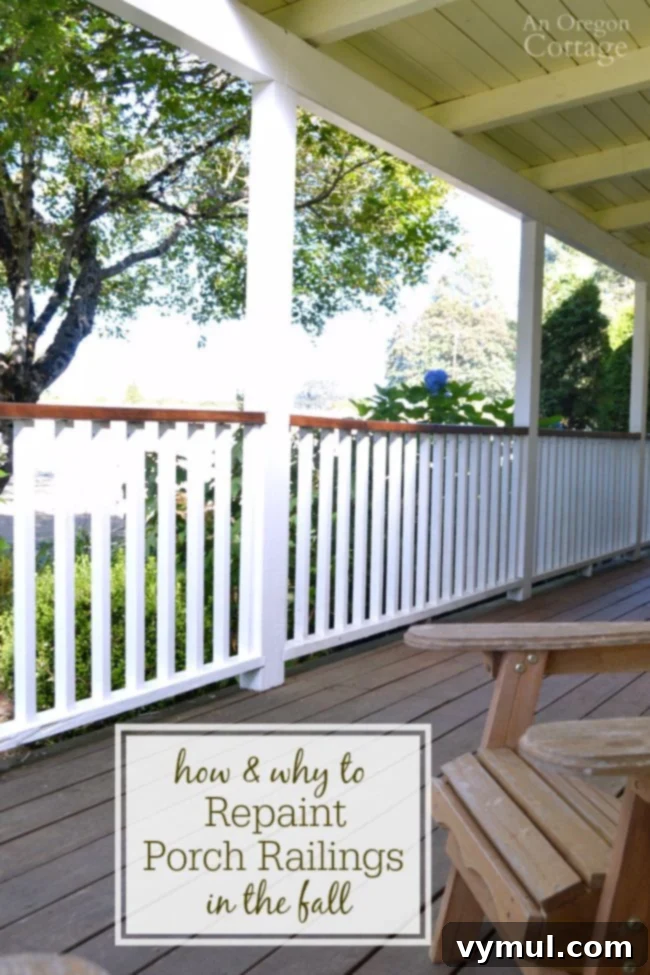
Revitalize Your Porch: An Expert Guide to Repainting Railings for Lasting Durability and a Flake-Free Finish
Are you wondering how to effectively repaint porch railings to minimize future flaking and extend their lifespan? Discover why early fall is arguably the best time to tackle exterior painting projects, especially for areas constantly exposed to the elements. This comprehensive guide will walk you through the process, sharing essential tips for a professional-looking and durable finish.
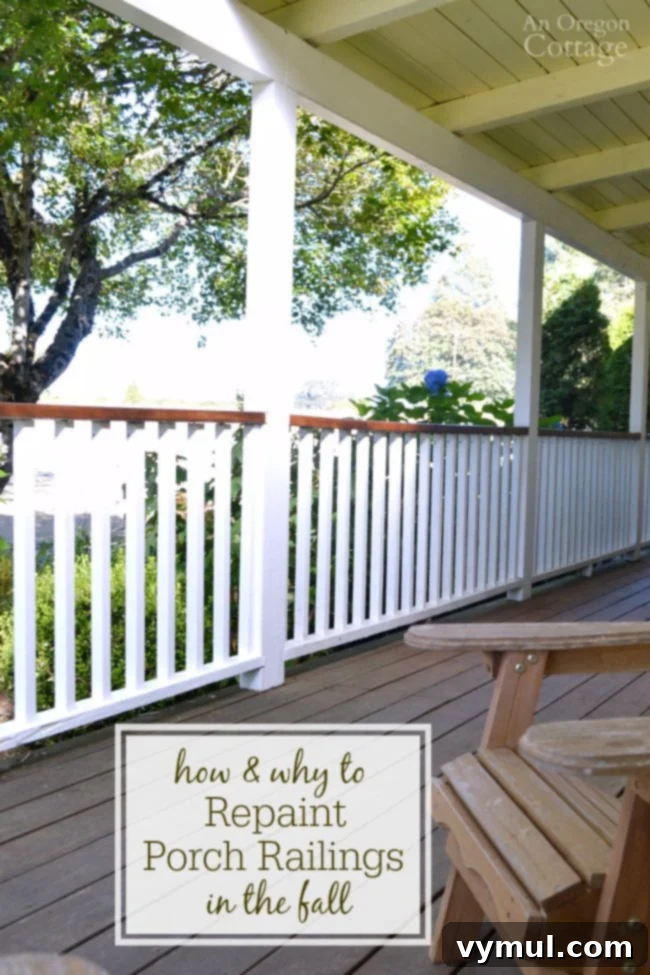
This post is sponsored by Behr. All opinions and text, as always, are mine. Some links in this article are affiliate links and if you click on them and purchase, I will receive a small commission at no cost to you. Your support helps me continue to bring valuable content and DIY tips to you!
When you think of preparing your home for the changing seasons, does painting or repainting exterior elements like porch railings, house trim, or wooden garden features come to mind in early fall? For many homeowners, spring or summer might seem like the obvious choice. However, Brian and I have discovered that early fall actually presents an ideal window for exterior painting, particularly for surfaces that endure constant exposure and typically require more frequent touch-ups, such as porch railings, fences, and decorative garden structures like arbors.
Our journey with home renovation led us to add a beautiful, long porch to our 1980s ranch house. This addition wasn’t just about enhancing curb appeal; it transformed our home, infusing it with charming farmhouse-cottage character and providing a delightful outdoor space to enjoy throughout the year. While we adore the aesthetic and functionality it offers, we’ve observed that the white porch railings, especially sections beneath a pergola and clear roofing system (as opposed to a solid roof), frequently need repainting every few years.
Previously, we often opted for budget-friendly paints and primers, which, in hindsight, proved to be a false economy, leading to premature paint failure and more frequent maintenance cycles. I was convinced that investing in higher-quality primer and exterior paint could significantly extend the time between repainting projects, ultimately saving both time and effort in the long run. This realization made me particularly excited to partner with Behr for this crucial porch railing repainting project. I’m eager to share our experience, the valuable painting tips we picked up, and our newfound conviction that fall is one of the absolute best times to paint outdoors, ensuring a more durable and beautiful result.
Porch Railings Before: A Story of Wear and Tear
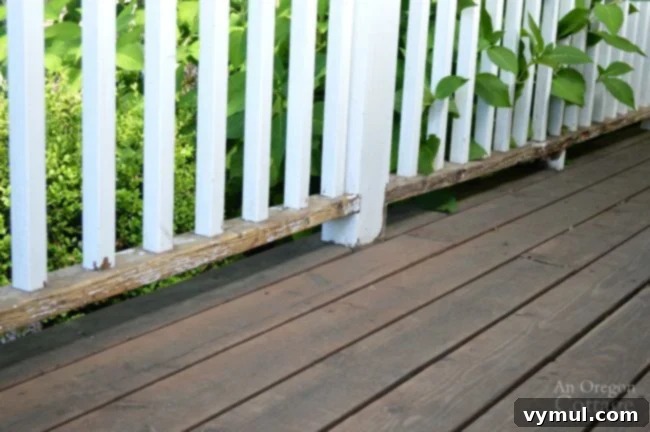
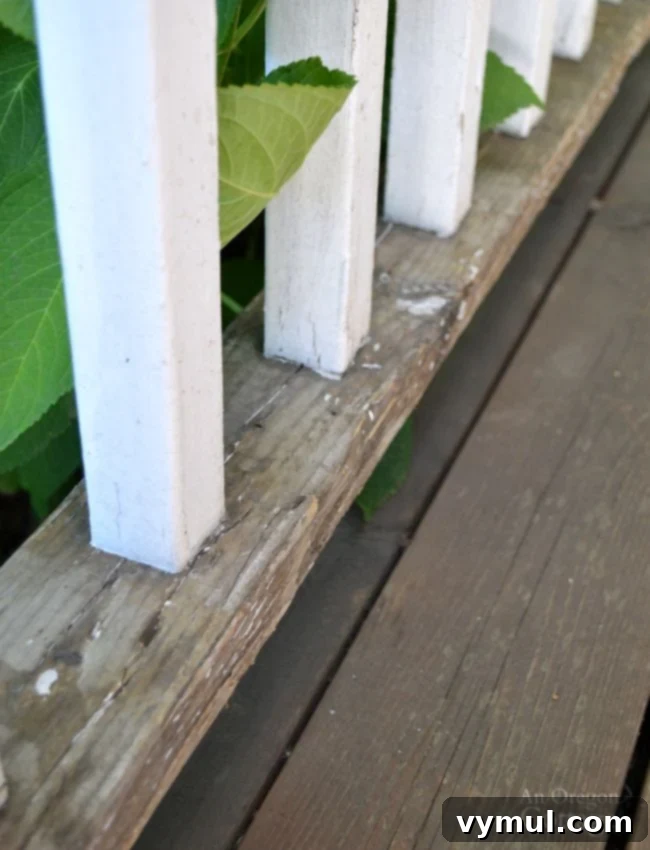
The image above illustrates the condition of our porch railings at the start of this DIY makeover. While the balusters and posts were in relatively fair shape, the bottom rail told a different story. This section, being closest to the ground, bears the brunt of weather exposure – splashes, standing water, and fluctuating temperatures. Consequently, it had almost no paint left, with large areas completely stripped down to bare wood. In fact, we had already scraped off a significant portion of the remaining paint before taking this “before” shot, revealing the extent of the damage.
It’s somewhat disheartening to admit that we had scraped and repainted this very same rail just two years prior. This frequent need for repainting served as a stark lesson: some home maintenance tasks genuinely benefit from a greater initial investment. While it may take us a while to shift completely from a “cheaping out” mentality, we are steadily learning that spending a bit more on quality materials upfront can save considerable time, effort, and prevent larger problems down the road. This project was a perfect opportunity to apply that lesson and aim for a truly long-lasting finish.
Why Fall is the Optimal Season for Exterior Painting
This brings us to a crucial point: one of the primary reasons early fall is an excellent time to repaint and refresh exterior trim and molding. By this time of year, wooden surfaces have had ample opportunity to thoroughly dry out from the summer months. This thorough dryness is paramount for any bare wood areas, as it allows primers and paints to adhere properly and create a strong, durable bond.
Consider the alternatives: In spring, despite periods of sunshine, there’s typically intermittent rain, and your exposed railings and trim might harbor moisture deep within the wood, even if the surface feels dry to the touch. This trapped moisture is a notorious culprit for causing paint flaking and peeling once temperatures rise. By the time summer arrives, bringing consistently dry conditions, the heat and intense sun often make spending hours painting outdoors an uncomfortable and inefficient task. High temperatures can cause paint to dry too quickly, leading to brush marks, poor adhesion, and an uneven finish.
This is precisely why we advocate for repainting and refreshing exterior railings, trim, and garden structures in the fall. The wood is reliably dry, having had weeks of summer sun, and the weather is generally mild and pleasant – not too hot, not too cold. These moderate temperatures and lower humidity levels allow paint to cure slowly and evenly, fostering superior adhesion and a smoother, more resilient finish that can withstand the upcoming winter and beyond.
Choosing the Right Paint and Primer for Durability
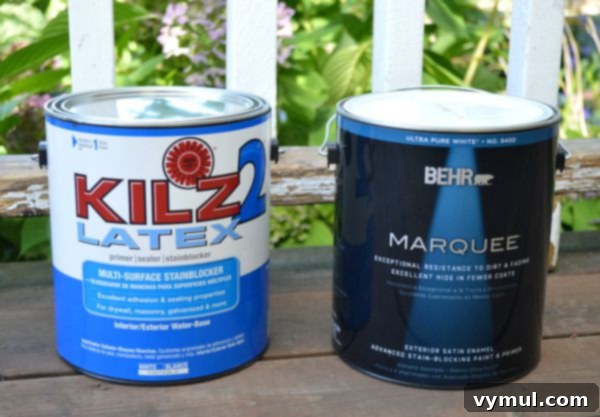
To ensure our porch railings received maximum protection and a long-lasting finish this time, we opted for a robust layering approach: a high-quality primer followed by a premium exterior paint. Our choices for this project were KILZ 2, a versatile and effective primer, and BEHR MARQUEE Exterior Paint & Primer, known for its exceptional performance.
When selecting paint for exterior elements like porch railings, resistance to harsh outdoor conditions is key. The BEHR MARQUEE Exterior line specifically offered the qualities we were looking for, including superior resistance to dirt accumulation and fading from UV exposure. An added benefit we discovered with this particular paint is its “early rain resistance,” meaning it can withstand rainfall as little as 60 minutes after application. While I personally prefer not to paint that close to a rain forecast, this feature provides invaluable peace of mind, especially during the unpredictable fall season, knowing the paint can hold up if an unexpected shower occurs.
The combination of a dedicated primer like KILZ 2, which provides excellent adhesion, seals the wood, and offers a uniform base, with a top-tier exterior paint designed for durability, creates a formidable barrier against the elements. This proactive approach significantly enhances the longevity of the paint job and reduces the likelihood of future flaking and peeling, making the effort truly worthwhile.
How to Repaint Porch Railings: Essential Tips for an Easier Process
Supplies You’ll Need
Having the right tools is crucial for a smooth and efficient painting project. Here’s what we recommend:
- Quality Primer: Such as KILZ 2, for excellent adhesion and sealing.
- Quality Exterior Paint: Like BEHR MARQUEE Exterior Paint & Primer, for superior durability and finish.
- Putty Knife: For scraping off loose or flaking paint.
- Sandpaper: Medium-grit (e.g., 80-120 grit) for smoothing surfaces and preparing bare wood.
- Paint Brushes:
- 2 to 2.5-inch angled primer brush: Ideal for reaching into corners and applying primer evenly.
- 1.5-inch angled paint brush: Perfect for detailed work and first coats on narrow surfaces like balusters.
- 4-inch Foam Paint Roller: An absolute game-changer for smooth, even coats and speed.
- Paint Tray: For holding paint for roller application.
- Flattened Cardboard: Essential for protecting your porch floor from splatters.
- Narrow-Sided Cardboard Box: Large enough to comfortably hold a paint can and a damp rag for easy mobility and spill protection.
- Rags: For quickly wiping up any spills or drips.
Step-by-Step Directions for a Durable Finish
1. Prepare the Surface: Scrape and Sand Thoroughly.
This initial preparation step is arguably the most critical for a long-lasting paint job. Use a putty knife to meticulously scrape away any loose, peeling, or flaking paint. It’s vital that the old paint is completely removed from any areas where it’s not firmly adhered. Once scraped, use medium-grit sandpaper to smooth out any rough patches, feather the edges of remaining paint, and lightly abrade any glossy surfaces to provide “tooth” for the new primer and paint to grip. Pay extra attention to any areas that may have been damaged during scraping (like our son’s slightly over-zealous efforts above!) to ensure a smooth, even surface. After sanding, thoroughly clean the entire railing surface to remove all dust, dirt, and debris. A damp cloth followed by time to air dry is usually sufficient.
2. Prime Well for Enhanced Adhesion and Durability.
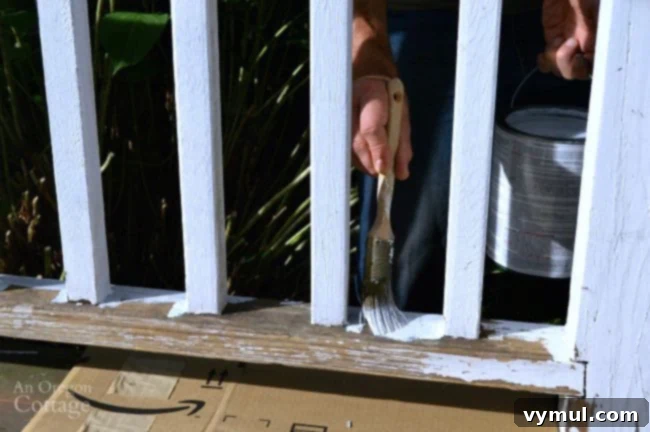
Once your railings are clean and dry, apply a generous, even coat of quality primer, especially on areas that were previously bare wood or heavily exposed to the elements. We utilized an angled paint brush for this step, which proved invaluable for reaching into all the nooks, crannies, and tight spaces of the railings and balusters. Ensure full coverage, as the primer acts as a foundational layer, enhancing paint adhesion, sealing the wood from moisture, and providing a uniform base for the topcoats. We dedicated a couple of hours one afternoon to priming. While many primers, including KILZ 2, allow for subsequent coats within 30 minutes, we ran out of daylight and opted to apply the paint coats the following day. This extended drying time certainly didn’t hurt the primer’s performance.
3. Apply Two Coats of Exterior Paint for Lasting Protection.
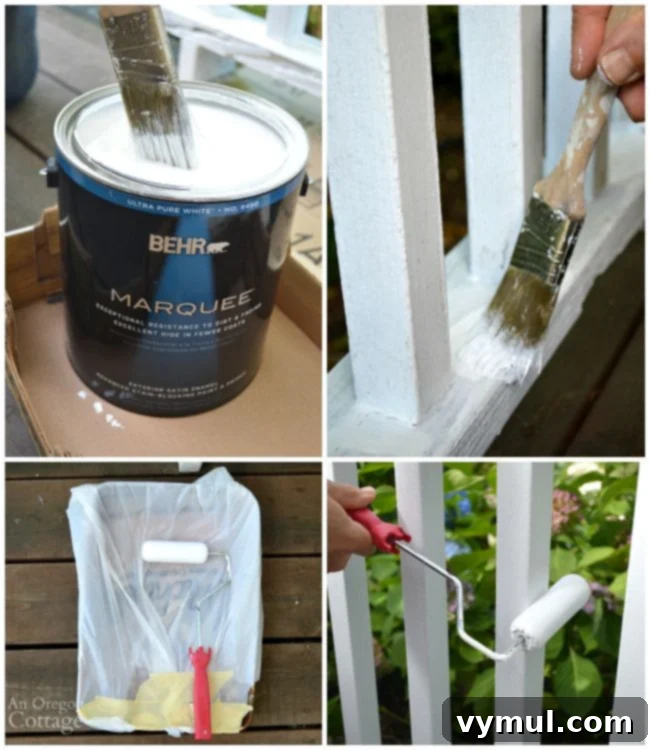
Now for the transformation! Apply at least two thin, even coats of your chosen exterior paint. We found that the following tools made the painting process significantly easier and more efficient, particularly for all the edges and surfaces of the porch railings:
- A narrow 1.5-inch angled brush: This size, roughly the width of our balusters, was perfect for applying the first coat over the primed areas. The full contact of the brush with the surface minimizes drips and ensures thorough coverage in tight spots.
- A 4-inch foam paint roller: This tool was truly a revelation! We used it for the second coat and for touching up all other areas. Whoever invented the foam roller deserves immense gratitude from DIY enthusiasts everywhere. It dramatically simplified painting our kitchen cabinets and now our porch railings. Foam rollers provide incredibly smooth coverage, reduce drips significantly, and allow for much faster application compared to brushes on flat or slightly curved surfaces. We absolutely love the flawless finish it provides.
Painting Tip: Improvised Paint Tray Liner
If you find yourself without commercial paint tray liners, don’t fret! A clean plastic grocery bag can serve as an effective substitute. Simply line your paint tray with the bag, taping it down as needed to secure it in place. This trick works wonderfully in a pinch and ensures easy cleanup when you’re done painting.
4. Protect Your Surroundings with Cardboard.
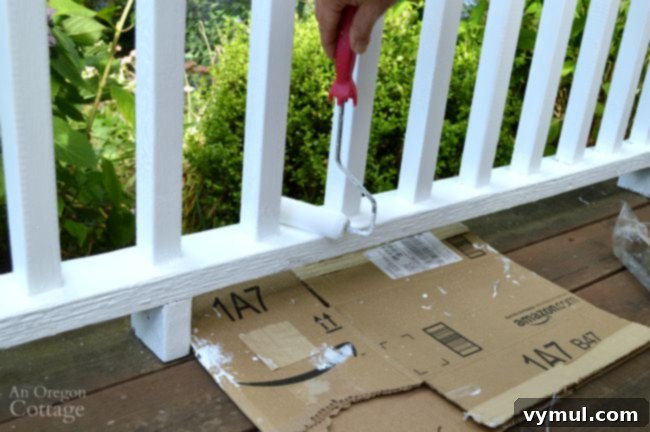
Accidental paint splatters are inevitable, especially when working on railings. To protect your porch floor or surrounding areas, we highly recommend using flattened cardboard boxes. We found that strategically placing pieces of flattened cardboard directly under the section we were working on effectively caught any drips and splatters. This method is incredibly practical because cardboard is easy to move as you progress along the railing, and at the end of the project, it’s far simpler to gather and dispose of compared to managing large drop cloths or meticulously taped-off areas.
Additionally, we kept our paint can within a cardboard box with low sides. This made it easy to scoot the paint container along with us as we moved down the long railing, keeping the paint readily accessible while providing an extra layer of protection for our wooden deck from accidental spills. This simple protection hack can save a lot of cleanup time.
Enjoy Great Autumn Weather With a Refreshed Porch
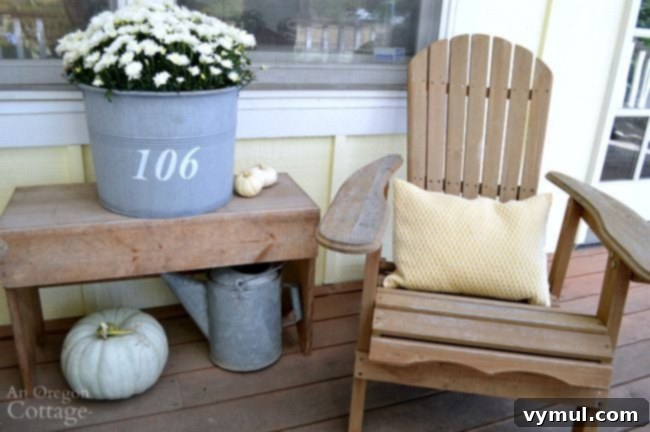
The entire process, from scraping and sanding to priming and applying two coats of paint, took a surprisingly manageable amount of time. The priming phase occupied a few hours on the first afternoon, followed by a couple of hours for each coat of paint on subsequent days. Considering the dramatic improvement, this isn’t a long commitment at all to transform a tired, dusty, and peeling space into a crisp, clean, and inviting area perfect for enjoying the autumn season.
Now, we can truly unwind and relax on our newly refreshed fall porch. There’s immense satisfaction in admiring the view of our neighborhood, knowing that our freshly painted white porch railings are looking their absolute best and are well-protected for years to come. The effort put into this project has paid off in both aesthetic appeal and enhanced durability.
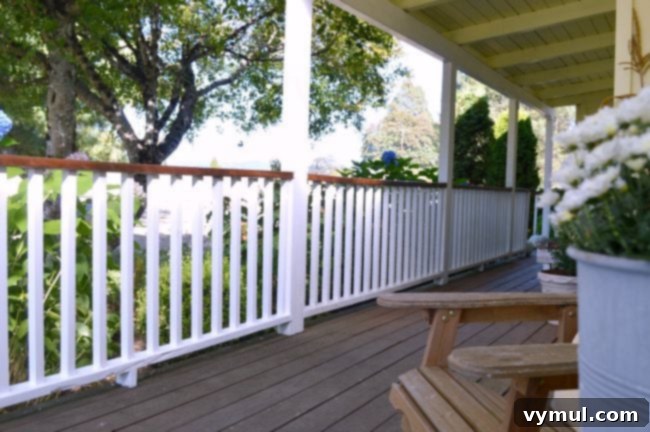
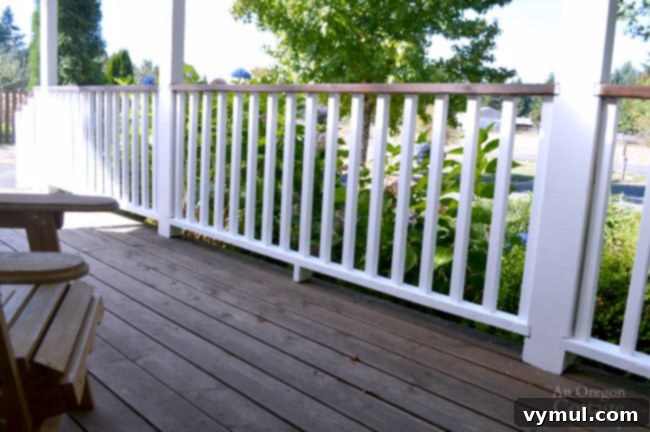
We’ve also discovered that we aren’t the only ones appreciating the rejuvenated porch railings. The transformation was so striking that when friends visited after we completed the project, it was one of the first things one of them immediately noticed and commented on! While it was a tad embarrassing to reflect on how worn and neglected the railings had looked previously (yikes!), I am now genuinely confident that by treating these railings the right way—with proper preparation and high-quality materials—they will maintain this fresh, beautiful appearance for a significantly longer period. This experience reinforces the value of investing in quality and proper technique for lasting home improvement.
UPDATE: Curious to see how these freshly painted railings performed after enduring a full winter season? Click here to read the update and see for yourself!
Disclosure: I received product and/or compensation for this post. As always, the opinions, thoughts, and projects are entirely my own, and I will NEVER promote something I don’t genuinely love and believe you will find helpful—that’s a promise! This post also utilizes affiliate links that may earn a commission based on sales, but this will not affect your purchase price. Click here to read my full disclaimer and advertising disclosure policy.