Effortless Abundance: A Year 3 Tour of Our Low-Maintenance Raised Bed Vegetable Garden with Expert Tips
Embark on a captivating summer tour of our low-maintenance raised bed vegetable garden, now in its third thriving year – the season where all the planning and hard work truly blossomed into a cohesive, highly productive system. Discover invaluable inspiration and practical tips on optimal growing techniques, efficient garden layout, and seamless transitions for starting a flourishing fall garden.
I am genuinely thrilled to share the splendor of our vegetable garden at the peak of its summer glory. This isn’t just because it brings immense joy and a bountiful harvest (though that’s certainly a major part!), or because virtual tours of other gardens are always so inspiring. My excitement primarily stems from the fact that our garden project is, at long last, truly *complete*.
Indeed, the third summer marked the culmination of our multi-year endeavor. This was the season we successfully finished constructing all the raised beds, installing the essential deer fencing, implementing our efficient automatic watering system, and adding the charming gates with their elegant gate arbor. Seeing everything come together after dedicated effort is incredibly rewarding, transforming the space into a functional and beautiful oasis.
“Three years to build a garden? Isn’t gardening supposed to be simple – just dig some dirt, sow seeds, add plants, and water?”
In theory, yes, that sounds appealingly straightforward. However, in reality, this approach often leads to a patch overwhelmed by weeds, a constant battle that both you and your struggling plants will face throughout the entire summer. It’s a common misconception that can quickly deter aspiring gardeners.
I’ve personally witnessed such scenarios and initially thought gardening wasn’t for me because of the perceived struggle. I’ve also conversed with countless individuals who express similar sentiments, often recalling, “I tried gardening once, but I gave up when it got hot and dry, and the weeds completely took over.” This common experience highlights the need for a more sustainable and less labor-intensive approach.
The definitive answer to these gardening woes, as meticulously detailed in my eBook, Vegetable Gardening The Easy Way, lies in four key components: robust raised beds, thoughtfully designed permanent paths, a generous application of mulch, and precise watering directly at the roots. These elements form the foundation of a truly low-maintenance and highly productive garden system.
While the initial setup does require a bit more time and effort – depending on your chosen layout and materials – the long-term benefits are immeasurable. It is, without a doubt, a worthwhile investment that pays dividends in reduced labor, healthier plants, and abundant harvests.
Allow me to demonstrate how these principles are flourishing in our three-year-old farmhouse garden. For those interested in seeing these methods applied elsewhere, you can also explore our previous garden. That earlier project was on a larger scale and utilized gravel paths, a choice I wouldn’t repeat in a vegetable garden. The reason? Dirt from planting and mulching inevitably settled into the gravel, creating an ideal breeding ground for weeds. It became a constant maintenance headache, which informed our current, much more efficient design.
So, settle in with a warm cup of coffee or tea and join me for a comprehensive tour. You can follow along either through the accompanying video, the detailed photos below, or ideally, both for the full experience!
Raised Bed Vegetable Garden Summer Tour Highlights
Thriving Tomatoes: A Harvesting Dream
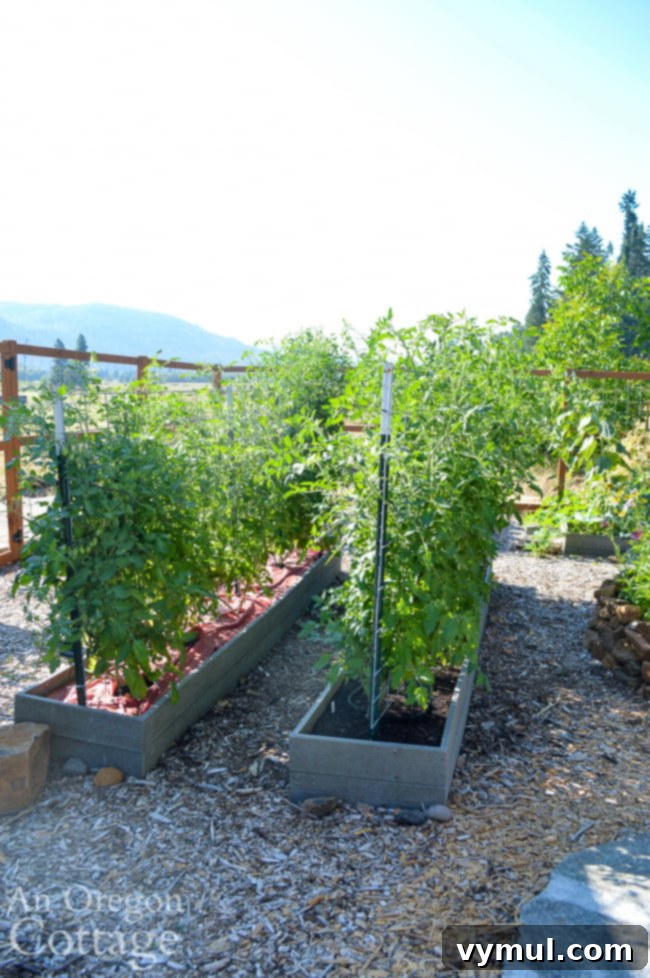
Upon entering the garden, your eyes are immediately drawn to the vibrant tomato beds. This particular garden design features long 2×12 beds, a new approach for me, specifically dedicated to growing single rows of tomatoes. In the past, I cultivated them two plants across and four to six plants down within 4×10 beds. I must say, the single-row method has significantly simplified harvesting, as it allows for easy access to both sides of the plants. This design improvement is a game-changer and something I wholeheartedly recommend to any raised bed gardener seeking greater efficiency and less back strain.
- Discover my tried-and-true method for planting tomatoes to ensure they thrive all season long. The accompanying video vividly illustrates just how small and spindly the tomato starts were initially, a stark contrast to their current robust and healthy stature. Tomatoes are remarkably resilient plants that respond exceptionally well to proper planting techniques.
- Explore my innovative use of cattle/hog panels for trellising these plants, and learn about the simple yet effective materials I employ to secure them to the panels for vertical growth and support.
Expert Tomato Pruning Techniques
As you can observe in the image above, the lower sections of our tomato plants have been strategically pruned. I was quite aggressive with this process in early July, primarily because the bottom leaves were beginning to exhibit early signs of blight – a persistent issue in our Pacific Northwest climate, particularly exacerbated by the unusually cool and wet June we experienced. This proactive measure is crucial for disease management.
Following the initial heavy pruning, I’ve had to remove only a few additional leaves as needed. The plants have since remained remarkably healthy, showing no further widespread signs of blight. This demonstrates the effectiveness of timely intervention.
It’s my consistent practice to prune the bottom of tomato plants once they reach approximately three feet in height. I remove leaves and suckers up to about ten inches from the ground. This serves multiple vital purposes: it significantly discourages the spread of blight by preventing soil-borne pathogens from splashing onto foliage, enhances air circulation around the base of the plant, and redirects the plant’s energy toward upper growth and fruit production. Beyond this foundational pruning, I only selectively trim here and there to maintain plant control and prevent overgrowth.
As the gardening season gradually winds down towards the end of September, I implement a final pruning strategy: I remove any new growth or flowering branches. This crucial step encourages the plant to channel all its remaining energy into ripening the existing fruit, ensuring a final, abundant harvest before the first frost.
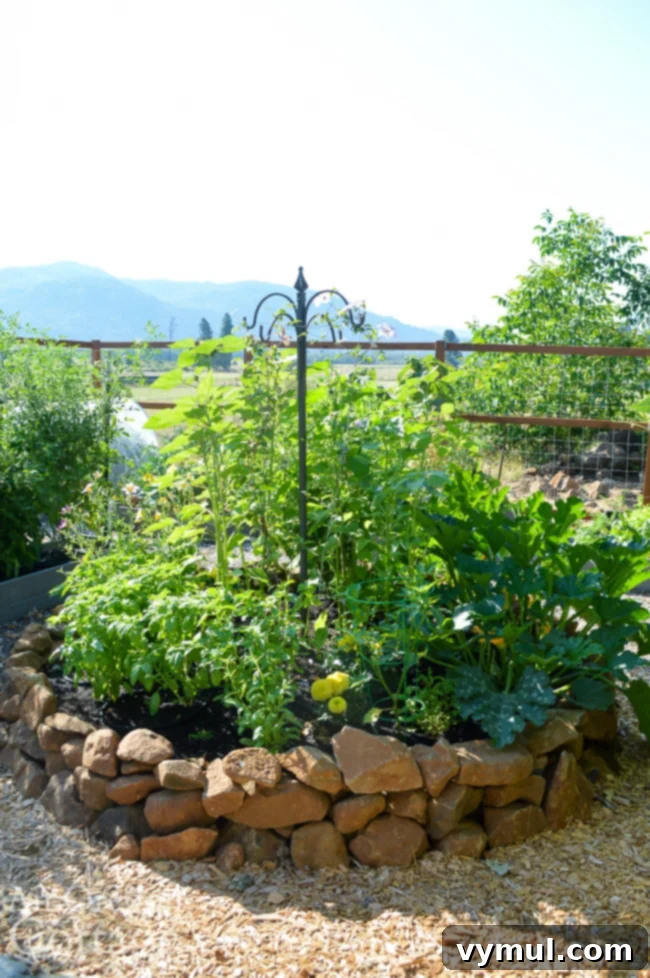
The Unique Rock Wall Raised Bed
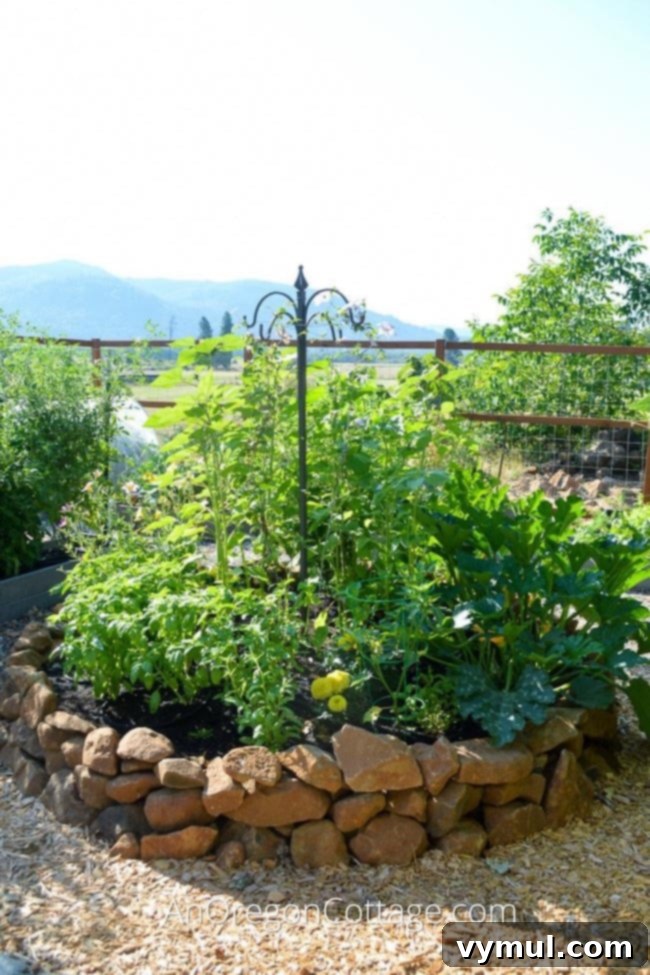
Adjacent to the prolific tomato beds stands our distinctive round rock wall bed. This eye-catching feature was meticulously crafted using rocks sourced directly from our property, specifically those excavated during the foundation work for the farmhouse. I simply stacked them securely, employing a dry-stack method, and it has proven to be incredibly stable and durable!
Given that this is a six-foot-diameter round bed, the very center isn’t practically accessible for routine harvesting. Consequently, I dedicate the central space to growing beautiful flowers. A graceful clematis ascends the central trellis, offering early spring blooms, which are then succeeded by sunflowers that I sow for a glorious summer display. This dual-purpose design maximizes aesthetic appeal and practical use of space.
The outer perimeter of the bed is consistently reserved each year for our beloved basil and zucchini, along with any overflow plants I might have. This season, it hosts an extra Cherokee Purple tomato that I started from seed and a self-seeded tomatillo, a happy volunteer from last year’s crop. Interspersed among the edibles, I always include a few marigolds for their pest-deterring properties and vibrant color. This year, I also experimented with cultivating Salpiglossis (also known as painted tongue). While these are undeniably beautiful flowers, I’ve discovered they don’t make the best cut flowers as their blooms only last a day or two, making them better suited for garden enjoyment.
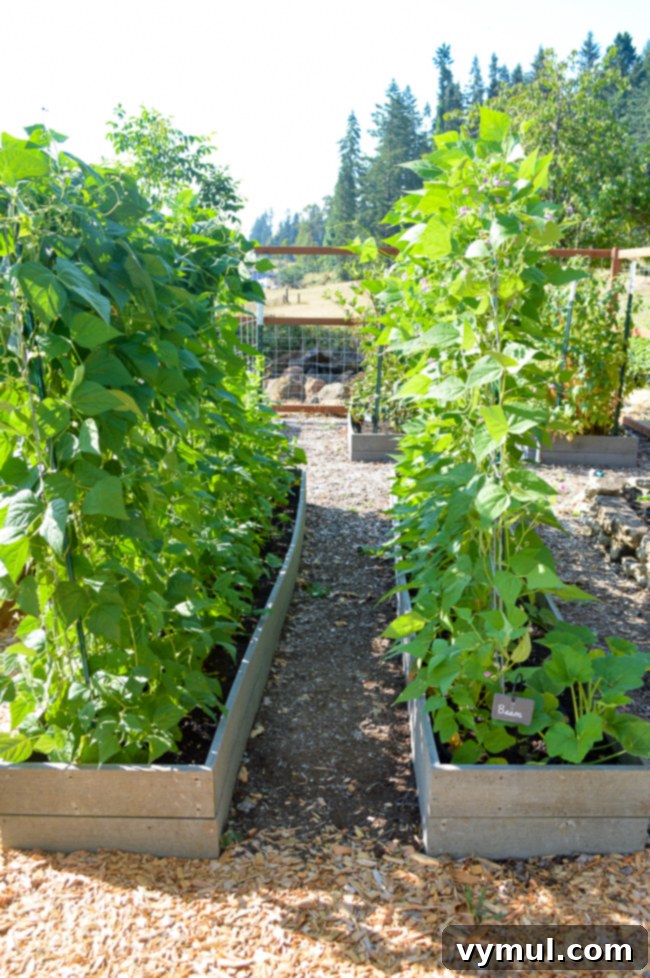
Bountiful Pole Beans: Our Favorites
To facilitate crop rotation and optimize garden productivity, we constructed four of the long raised beds, allowing us to alternate growing tomatoes and beans in them each year. You can gain a comprehensive understanding of our complete garden layout here. This year, the beds situated to the right of the rock wall bed are dedicated to our pole beans – specifically, my two favorite varieties that consistently earn a spot in our garden every season:
- Emerite Pole Bean (I’ve extensively detailed why these harder-to-find beans are so exceptional here, emphasizing their flavor and yield.)
- Fortex Pole Bean
Both of these varieties are classic filet-type beans, a characteristic that makes them incredibly desirable. This means they are stringless and remain wonderfully tender, whether harvested at their smaller, more delicate stages or when they grow larger. This attribute is particularly advantageous when the harvest truly begins to come in, and you find yourself barely able to keep up with the continuous picking!
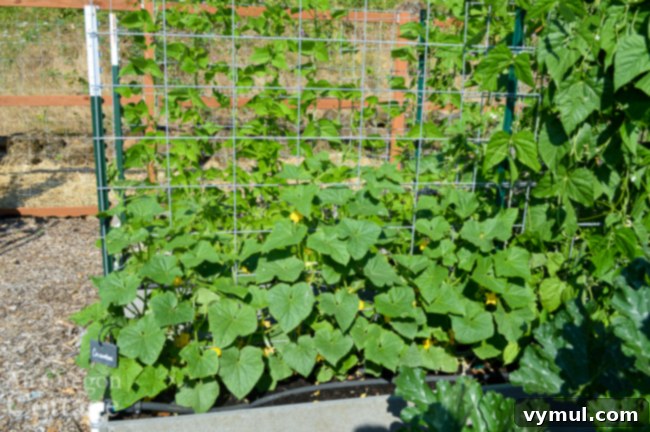
Vertical Cucumbers for Efficient Pickling
At the far end of one of the twelve-foot-long bean beds, I’ve dedicated a specific section to cultivating cucumbers, primarily for pickling. These vigorous plants are effortlessly ascending the cattle/hog panel trellis, demonstrating the same robust vertical growth as they did on the wooden and metal trellises I previously showcased in this comprehensive article detailing the five compelling reasons to grow cucumbers vertically.
A reader once expressed concern that cucumbers might not climb these panels effectively, but my experience has been quite the opposite; I’ve encountered no issues whatsoever in guiding their vines upwards. Despite a somewhat slow start to the season, these cucumbers are now producing abundantly. From this relatively short row, I’ve already been able to can five quarts of delicious pickles and have had more than enough for Brian to enjoy fresh. (Interestingly, I personally prefer cucumbers only as small pickles, unlike the fresh variety!). Growing them vertically not only saves space but also keeps the fruit cleaner and improves air circulation, leading to healthier plants and easier harvesting.
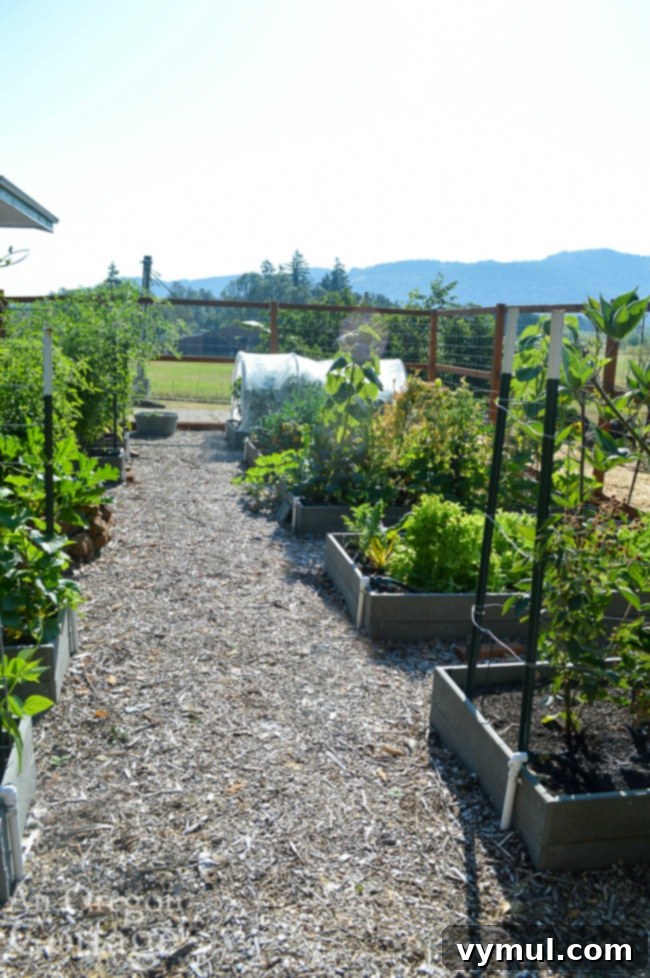
Navigating the Main Garden Path: Low-Maintenance Essentials
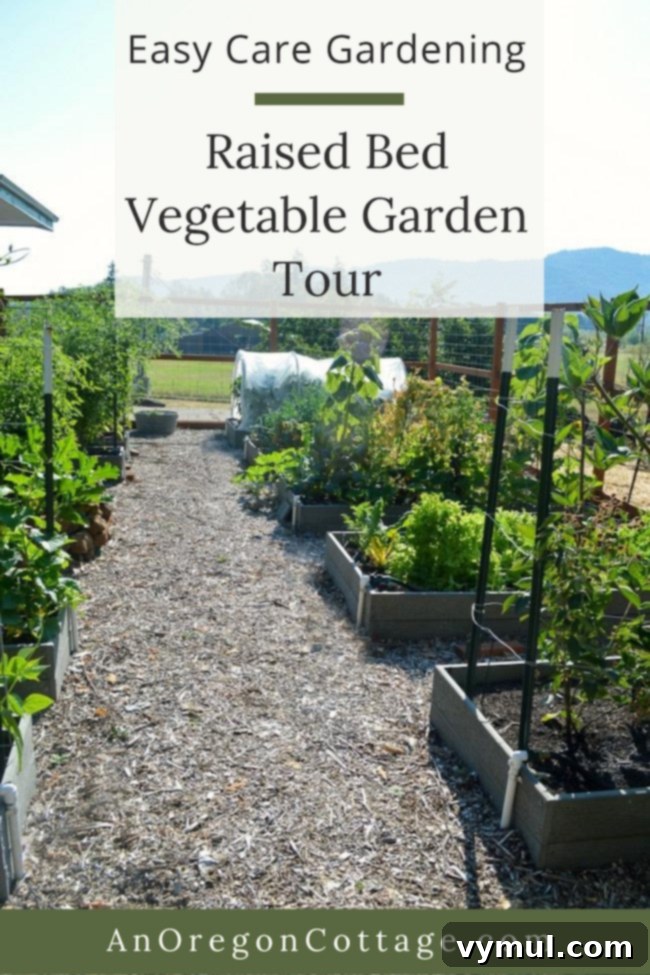
As you stroll past the thriving bean beds, you enter the main artery of our garden – a central path flanked by beds on both sides. The raised beds I’ve previously highlighted are visible to the left in the photograph above, while to the right, you’ll see a series of six 4×8 beds, each contributing to our diverse harvest. Our garden also boasts an incredible view, making time spent here even more enjoyable and inspiring.
There are two more crucial elements that underpin this garden’s remarkably low-maintenance design:
- Our paths are meticulously covered with layers of cardboard and wood chips. This method effectively suppresses weeds and retains moisture. See the simple process of how I lay them here for a robust and long-lasting weed barrier.
- The strategically placed spigots leading to each bed, integral to our automatic watering system. This system is arguably my absolute favorite feature in this new garden, saving countless hours and ensuring consistent hydration for every plant.
The primary reason these wood chip paths demand significantly less maintenance than the gravel paths we had in our previous garden boils down to one word: weeds. When weeds inevitably begin to emerge through the wood chips, the solution is refreshingly simple. I merely lay down another layer of cardboard, followed by more wood chips, and the problem is resolved. If soil spills from planting or when applying mulch, it’s easily integrated and does not create new weed havens.
This stands in stark contrast to the gravel paths of our old garden. Any spilled dirt, no matter how small an amount, created a fertile seedbed that weeds absolutely adored. Furthermore, moles would burrow up through the gravel, further disrupting the surface and allowing weeds to quickly take over. There was no effective layering method with gravel to combat this. It became an endless cycle of weeding and frustration – a true maintenance mess. This experience was a valuable lesson in garden design: #liveandlearn, and always choose your path materials wisely!
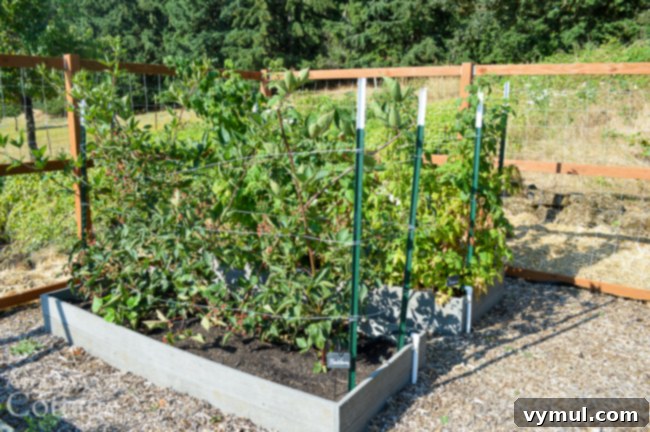
Sweet Harvests from the Berry Beds
Within the series of six shorter raised beds, two are lovingly dedicated to producing a vibrant array of berries. One bed proudly hosts three “Triple Crown” Thornless Blackberries, known for their generous yield and ease of picking. Alongside them, we cultivate a delightful golden everbearing raspberry aptly named ‘Anne’ – its flavor is truly exceptional, offering a sweet, nuanced taste (do check out the video tour for more glowing details about this fantastic berry!). The second bed is home to two red everbearing raspberry varieties.
Interestingly, I ordered the red raspberries via mail and discovered this year that they were inadvertently mislabeled. I had intended to receive ‘Canby,’ a thornless summer-bearing variety. However, what grew were thorny canes that have been consistently bearing small handfuls of delicious berries since June. Now, they are brimming with larger quantities, with even more small berries continuously developing. This growth pattern is characteristic of everbearing varieties, which produce fruit over an extended period. Despite the mix-up, these berries are still incredibly delicious, and I’ve been relishing them almost daily since June, especially as a topping for my homemade granola! It’s a wonderful reminder that sometimes, garden surprises can be pleasant indeed.
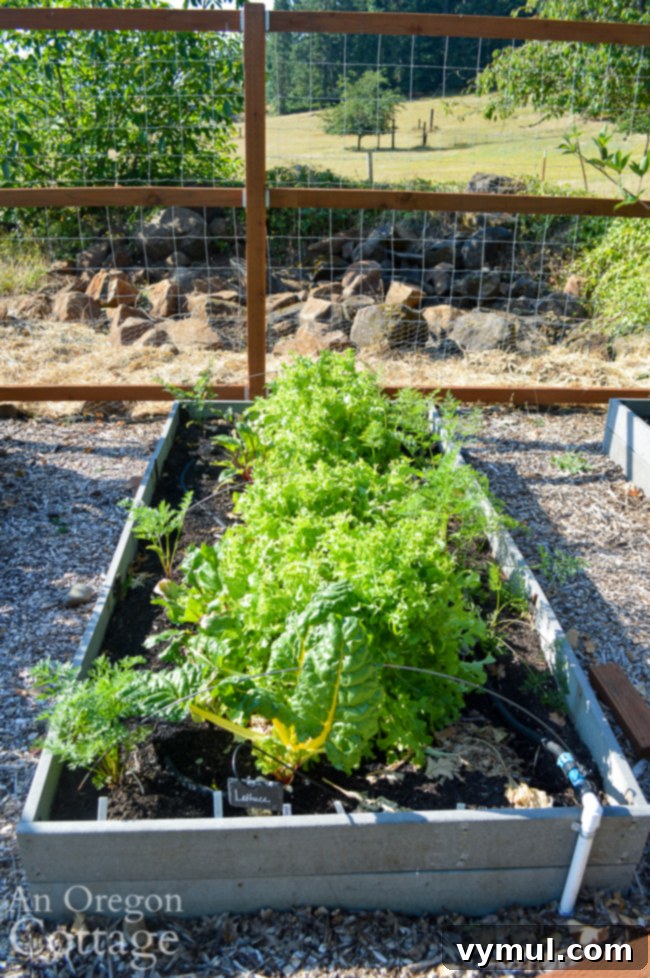
Succession Planting for Lettuce & Root Crops
This particular bed proved to be an absolute workhorse, supplying us with fresh salads from May right through July, when the intense summer heat finally caused the lettuce to bolt. In addition to the continuous lettuce harvest, I also successfully gathered two generous rows of crisp carrots and one row of earthy beets. It’s worth noting that the lone chard plant visible in the front was the only survivor out of four that I started from seed in the spring, highlighting the occasional unpredictability of seed germination.
In the comprehensive video tour available on this page, you’ll observe that shortly after this photograph was taken in late July, I efficiently pulled out the spent lettuce. Following this, I replenished the soil with organic fertilizer and immediately replanted the bed with new lettuce transplants. These had been started approximately a month prior, cultivated outdoors but kept in the protective shade to encourage robust growth before transplanting. My hope with this succession planting strategy is that these new lettuce plants will thrive and provide us with fresh greens well into the fall season, maximizing the bed’s productivity.
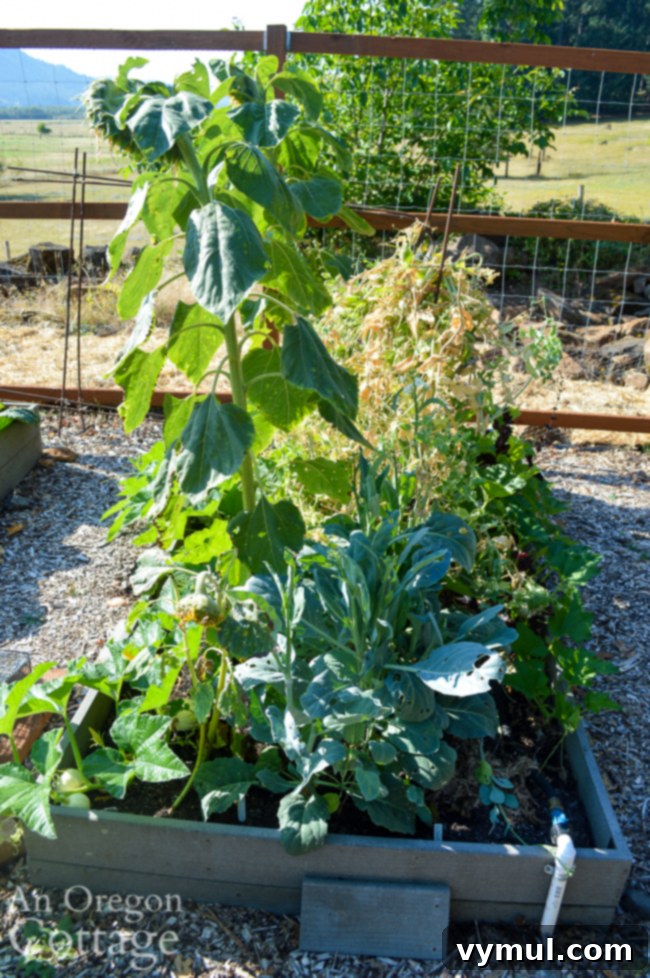
Transitioning to Fall: Peas, Lettuce & Garden Surprises
This is another bed that underwent a significant transformation shortly after the photograph was captured, and you’ll notice its refreshed state in the video tour. I had already cleared out the exuberant volunteer sunflowers and the spent spring pea vines, preparing the bed for its next act. Following this cleanup, I immediately replanted the area with a fresh succession of fall peas and Chinese cabbage. These were diligently started alongside the lettuce in trays back in July, consistently watered and kept in the shade as much as possible to ensure their healthy establishment before being transplanted into the main bed.
Along the edges of this bed, you’ll spot the charming vines of ‘Baby Boo’ pumpkins, delightful volunteers that spontaneously reappeared from last year’s crop. I cultivate these mini pumpkins primarily for decorative purposes and allow them to sprawl gracefully along the garden paths, adding a whimsical touch to the landscape without taking up precious bed space.
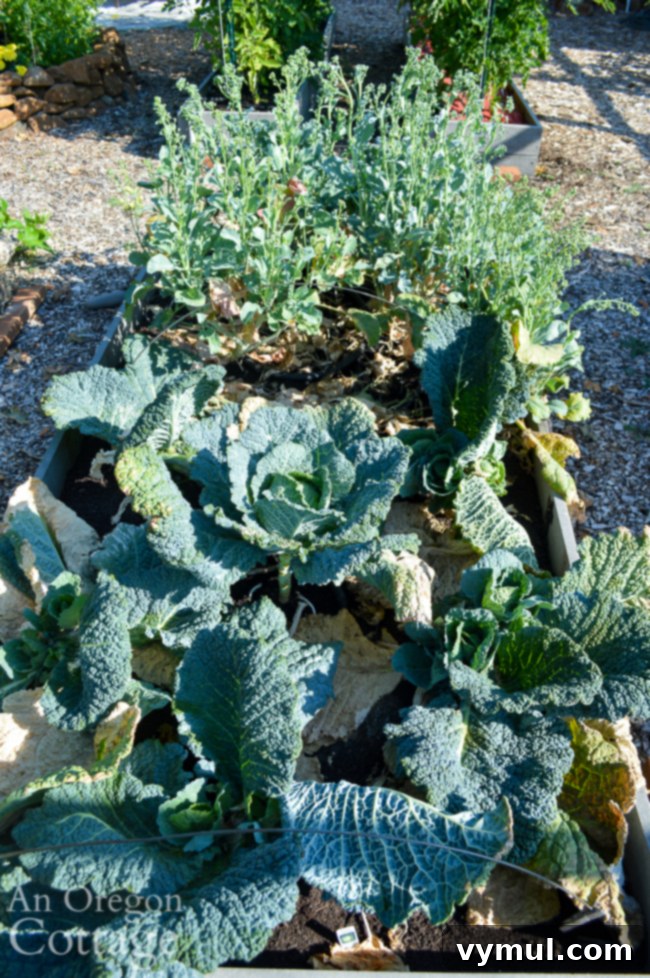
Brassicas: Extending Harvests of Cabbage & Broccoli
Not long after the above photograph was taken, I harvested the smaller cabbage heads that had begun to grow on the cut stalks. This is a fantastic little-known trick: if you leave the main stalk after cutting the primary head, smaller, delicious baby cabbages will often emerge. These “side cabbages” can be harvested, cut in half, and are utterly delicious roasted or added fresh to salads, offering an extended harvest from a single plant!
Following this initial harvest, I revitalized the soil with a generous application of bagged manure to replenish nutrients. Then, I replanted the area with new cabbage seedlings that I had started from seed, specifically for a robust fall crop. This continuous cycle ensures a steady supply of fresh produce.
The other prominent plants in this bed are our broccoli, which has been consistently producing succulent side shoots for us since the spring. This particular variety is a unique cross between traditional broccoli and broccoli raab, resulting in thinner, tender shoots that are incredibly versatile. I often find that with a carefully selected variety that yields abundant side shoots, I only need one planting of broccoli for the entire season. They simply keep producing, offering a continuous harvest of nutritious greens and florets!
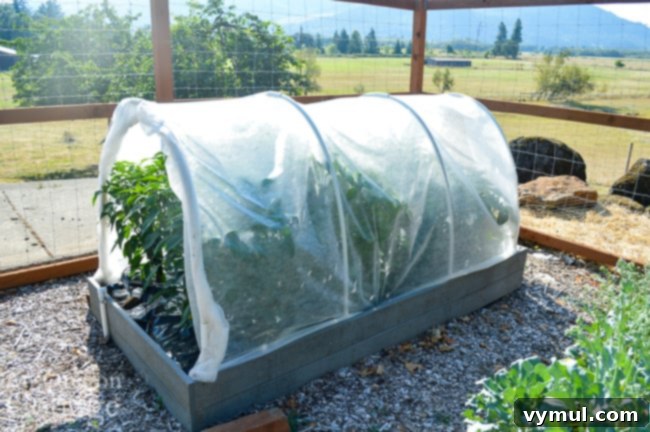
Sweet & Hot Peppers: Maximizing the Growing Season
Immediately after capturing this photograph, the evenings and days had finally become consistently warm enough that I was able to remove the protective row cover from our pepper hoop house. This cover provides crucial warmth during cooler spring and early summer periods, giving the peppers a head start. As the nighttime temperatures eventually begin to dip back into the 40s Fahrenheit, I will strategically replace the row cover. This will help to insulate the plants, encouraging any remaining peppers to fully ripen and extending the harvest period until the very first hard frost arrives.
Currently, I have an incredibly abundant yield of jalapeños and Anaheim peppers on the plants, promising a bountiful harvest. With such a generous supply, I’ll be busy preparing fermented jalapeño slices, along with refrigerated sliced pickled jalapeños, and of course, batch after batch of my favorite canning salsa! These preservation methods ensure we can enjoy the spicy goodness long after the growing season ends.
The bed also features several small sweet pepper varieties, which I allow to ripen fully to their vibrant orange color for maximum sweetness and flavor. Additionally, a couple of larger bell peppers are cultivated here; these will remain on the plant until they transform into fully ripened, wonderfully sweet red peppers, a testament to patience paying off in the garden.
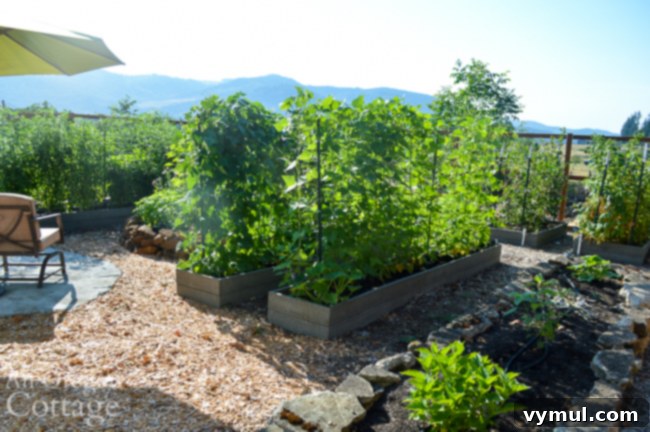
And that concludes our comprehensive summer garden tour for year three! I sincerely hope you’ve gained a clear understanding of how effortlessly manageable this garden truly is. Weeds? Ha! I can genuinely say I’ve only had to pluck a minuscule handful here and there throughout the entire season. Yet, despite the minimal maintenance, the sheer volume of produce we are harvesting is simply incredible.
You may have noticed one of the beds above that I didn’t explicitly detail during the tour – it’s a long, fascinating border bed crafted from broken concrete. This unique bed is dedicated to growing flowers that, unfortunately, cannot thrive outside the protection of our deer fence due to local wildlife. Primarily, it’s home to hydrangeas, which I absolutely adore, and is envisioned to house a selection of other beautiful cut flowers in the coming seasons. This demonstrates how even challenging circumstances can lead to creative and beautiful gardening solutions.
The video tour offers even more glimpses of our evolving landscape, including the thoughtful plantings just outside the deer fence as you enter the garden, and additional views of the inviting broken concrete patio, partially visible to the left in the image above.
It’s on this very patio where you’ll most often find me on Sunday afternoons, immersed in a good book, soaking in the pleasant weather, marveling at the garden’s abundance, and simply enjoying the breathtaking view! This garden isn’t just a place for growing food; it’s a sanctuary for relaxation and appreciation.
How does your garden grow? Share your low-maintenance tips and successes!