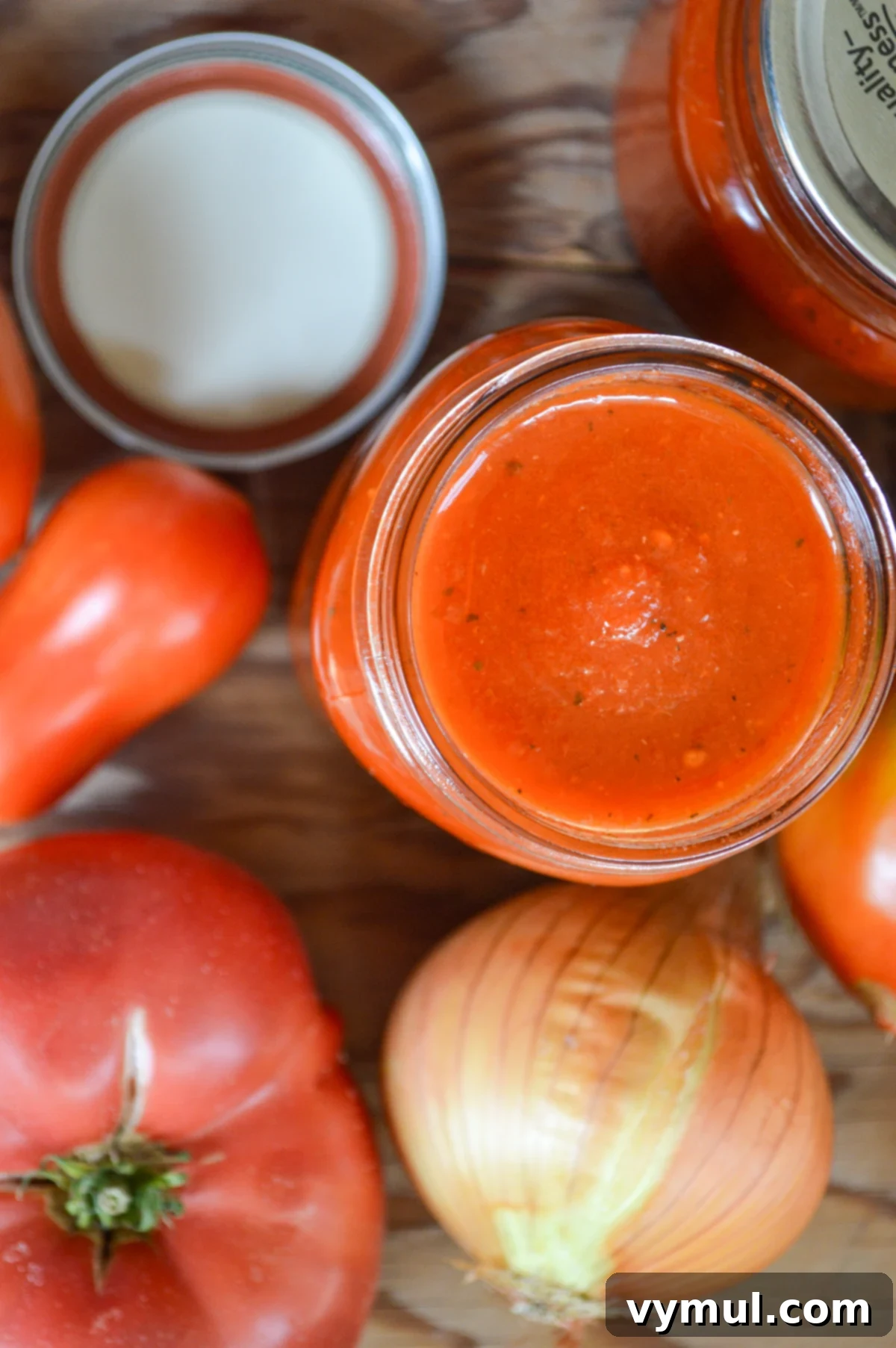
Safe & Flavorful Water Bath Canned Roasted Tomato Sauce: Your Ultimate Guide to Shelf-Stable Summer Flavor
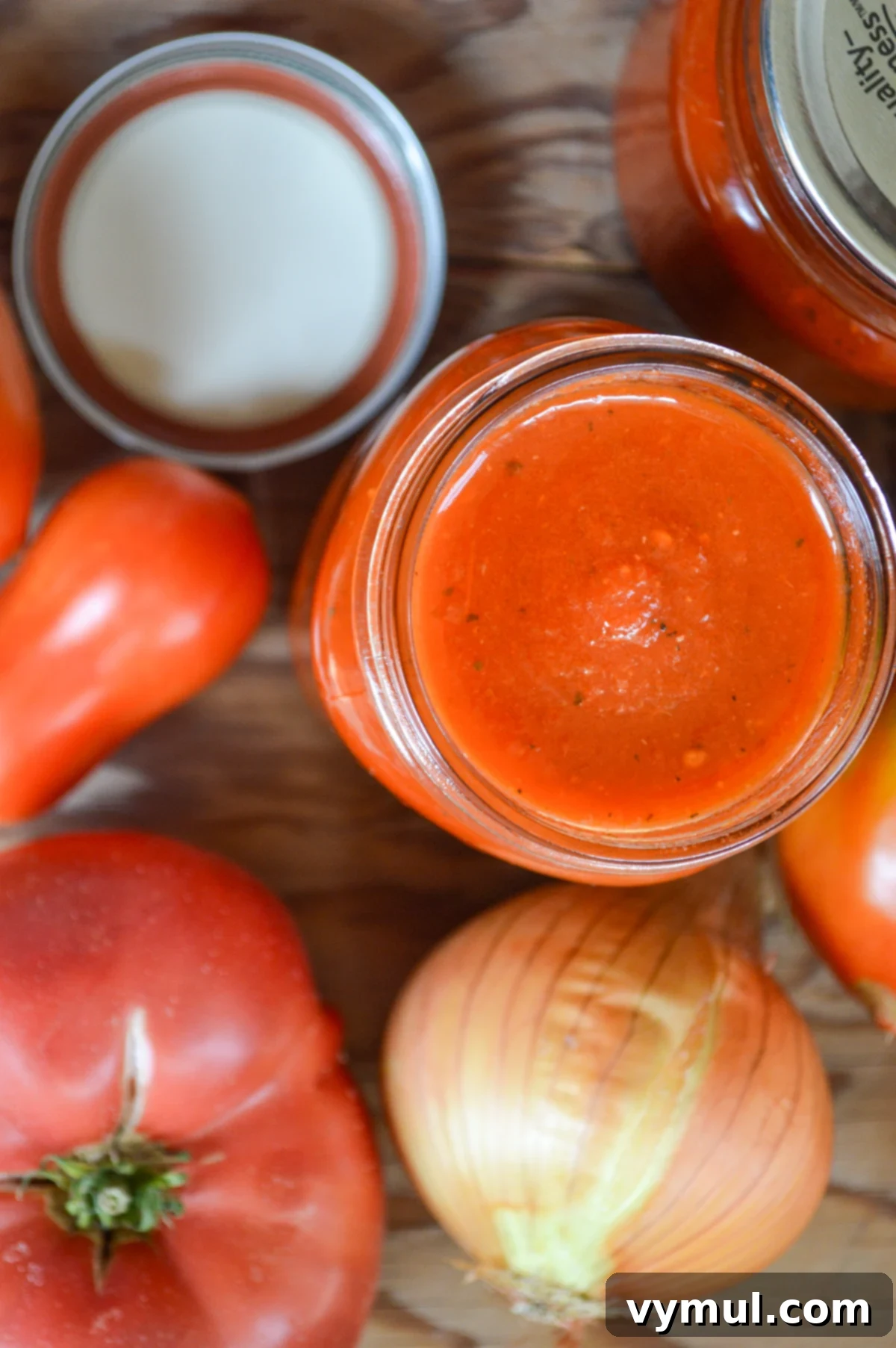
Absolutely! You can safely create a water bath canned roasted tomato sauce, and its rich, smoky flavor will utterly amaze you. This incredible recipe is carefully adapted from a trusted Ball Blue Book original, ensuring you produce a delicious roasted tomato sauce that is perfectly safe to preserve using a boiling water canner. The result? A pantry stocked with shelf-stable jars of vibrant tomato goodness, ready to transform your weeknight dinners with the authentic taste of summer, no matter the season. Imagine the convenience of having homemade, deeply flavored sauce at your fingertips, making meal prep a breeze and bringing that incredible garden-fresh essence to your table whenever you crave it.
✩ What readers are saying…
“This was delicious! I’ve canned quite a few tomato sauce recipes over the years, but this was the easiest and best I’ve tried.” – Laurie
Some links in this article are affiliate links and if you click on them I will receive a small commission at no cost to you.
I am absolutely thrilled to share this meticulously developed recipe for canned roasted tomato sauce with you – a recipe that is not only bursting with flavor but also rigorously tested and approved for safe boiling water bath canning! This means you can enjoy the unparalleled taste of roasted tomatoes all year round, knowing that your pantry staples are both delicious and safe.
For a long time, I scoured the internet and various canning resources, desperately seeking a proven recipe to safely preserve roasted tomato sauce using a boiling water canner. My goal was simple: to capture the exceptional, deep flavor of our family’s beloved Roasted Tomato & Vegetable Sauce, which we typically freeze, but in a shelf-stable format. The convenience of having jars of this exquisite sauce readily available in the pantry, eliminating the need for thawing, was a dream I was determined to make a reality.
Spoiler alert: My extensive search yielded no existing, water bath-safe roasted tomato sauce recipe. Undeterred, I devised a brilliant workaround that has since become a cherished staple in our kitchen. The solution involved taking a meticulously tested, established tomato sauce recipe and intelligently incorporating the roasting step for the vegetables. The results were nothing short of phenomenal – this sauce is SO incredibly good, boasting an unparalleled depth of flavor that a simple boiled sauce can’t match!
However, before we dive into the specific steps of this incredible recipe, I believe it’s essential to share my journey of discovery and how this safe method came to be. Understanding the principles behind safe canning is paramount, and a few extra paragraphs dedicated to educating yourself on this topic are undoubtedly worth your time and attention. Your family’s safety and the success of your preserving efforts depend on it!
Prioritizing Safety in Canning Tomato Sauce
During my extensive research for safe canned tomato sauce recipes, I encountered numerous so-called “recipes” online that lacked precise measurements. These often instructed users to “fill a pan with tomatoes, throw in a good handful of ______, etc.,” yet still provided directions for boiling water bath canning, sometimes with the addition of citric acid. It’s critical to understand that such methods carry significant risks.
These types of recipes are unequivocally NOT considered safe by the USDA for water bath canning. Simply adding citric acid to a mixture laden with low-acid ingredients – such as olive oil, onions, garlic, fresh herbs, or various peppers – does not magically render it safe or shelf-stable for boiling-water canning, particularly when ingredient quantities are not accurately measured or specified. The precise balance of acidity is crucial for inhibiting harmful bacterial growth. For a deeper understanding of why traditional family recipes might not be suitable for modern canning methods, I highly recommend consulting this informative article.
While I recognize that some individuals may have practiced canning in these ways for generations, my firm belief is that when it comes to preserving food, safety must always come first. The potential risk of foodborne illness, however slight, is simply not worth it. (It’s important to note that while pressure canning offers slightly more flexibility for low-acid foods and sauces, even then, strictly adhering to tested and approved recipes is always the recommended and safest approach.)
Now that I’ve stepped off my soapbox regarding canning safety, you might be wondering how, after all that exhaustive searching, I managed to develop this truly boiling water bath safe canned roasted tomato sauce. The answer lies in a combination of culinary creativity and rigorous adherence to established preservation guidelines, ensuring both exceptional flavor and absolute peace of mind.
Ensuring the Safety of This Canned Tomato Sauce
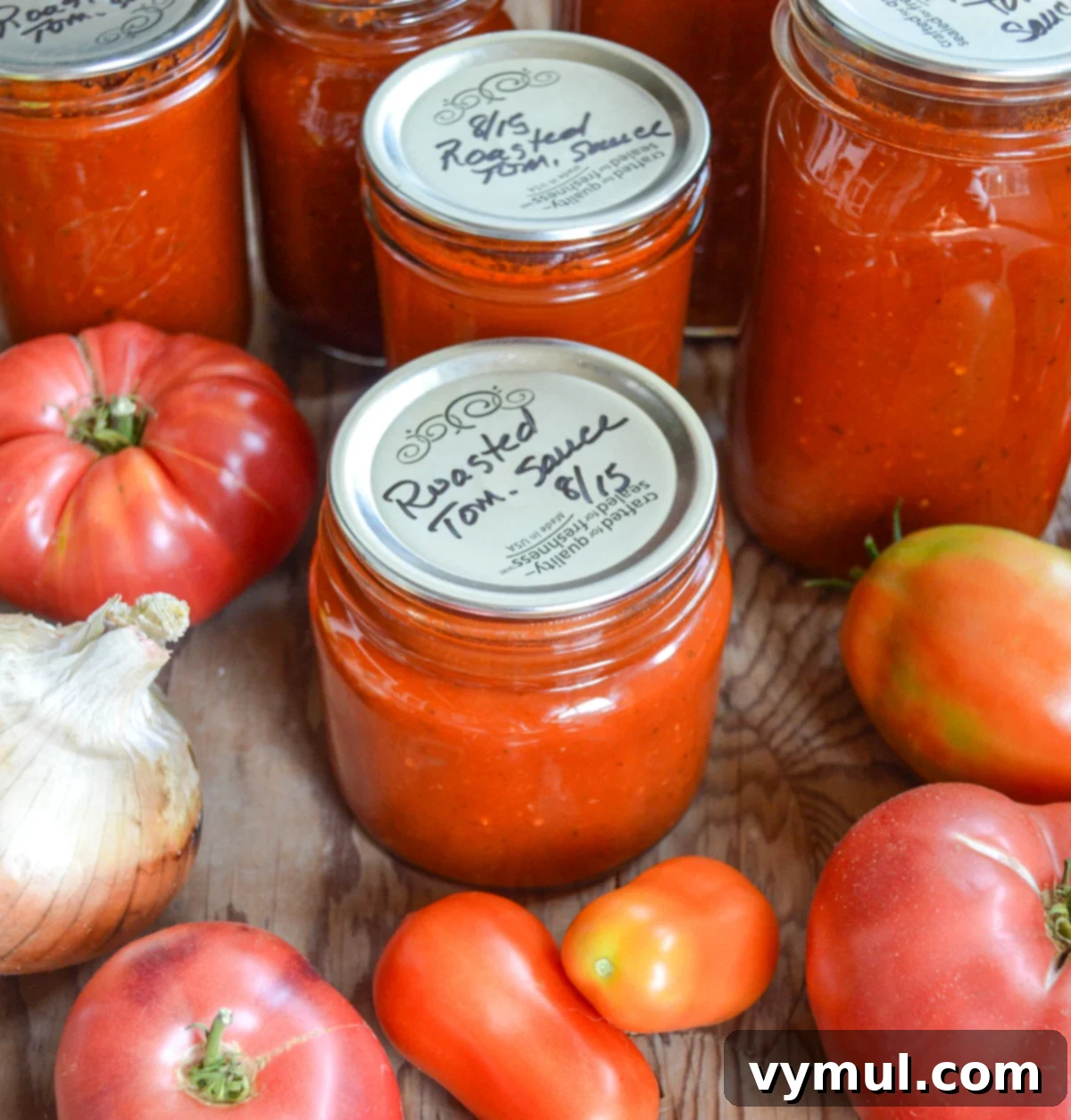
It’s excellent that you’re questioning and prioritizing safety – it’s crucial for all of us to truly understand what we’re feeding ourselves and our loved ones, especially when it comes to home preservation.
Here’s the fundamental truth: after extensive searching, I could not locate any readily available, *roasted* tomato sauce recipe specifically deemed safe for canning in a boiling water bath canner. This presented a significant challenge, as the unique depth of flavor that comes from roasting was precisely what I wanted to capture.
However, a thought sparked: why couldn’t I simply adapt the proven tomato sauce recipe from the revered Ball Blue Book, a recipe I had successfully canned numerous times, by merely altering the initial cooking method? Instead of boiling the tomatoes and other ingredients, what if I roasted them instead? Logically, all the precisely measured, high-acid ingredients would remain identical; only the preliminary cooking technique would change. This seemed like a promising avenue, provided it could be validated for safety.
Always remember: when in doubt, or if you have any questions about food preservation, consult your local extension service! They are invaluable resources.
To definitively ensure that my proposed modification would maintain the safety standards required for water bath canning, I directly contacted the food preservation hotline at our local university extension agency (Oregon State University, in my case). I presented my method, explaining that I intended to roast the vegetables instead of boiling them, while keeping all other ingredient ratios and canning procedures consistent with the tested recipe. I also informed them that I planned to share this method with my website’s readers. To my immense relief, they thoroughly reviewed and approved the new cooking method!
Their only caution was to ensure that I strictly adhered to the original tested recipe’s quantities for all other low-acid ingredients and to absolutely include the specified amount of citric acid or bottled lemon juice. This, of course, was a non-negotiable part of my plan, as maintaining the proper pH level is paramount for safety.
And the outcome?
Roasting the tomatoes worked absolutely wonderfully, infusing this sauce with that incredible, complex flavor profile that makes our favorite freezer sauce so special. It was the exact sauce I had been searching for – a truly safe, shelf-stable, and incredibly delicious roasted tomato sauce for my pantry!
Crafting Water Bath Canned Roasted Tomato Sauce: A Step-by-Step Guide
To embark on your journey of making this delightful roasted tomato sauce, begin by gathering these essential ingredients. Each component plays a vital role in both flavor and the critical safety of your canned product:
- Tomatoes: Feel free to use any variety of ripe, fresh tomatoes you have on hand. PRO TIP: Incorporating paste tomatoes (like Roma or San Marzano) is highly recommended, as their lower juice content means less time spent cooking down the sauce to achieve the desired thickness. Additionally, I find that a mix including some heirloom tomatoes significantly enhances the sauce’s complexity and depth of flavor, creating a more robust and interesting profile. A thoughtful combination is often the secret to the best homemade sauce.
- Olive oil: It is absolutely crucial to adhere strictly to the exact amount of olive oil specified in the recipe. In canning, increasing the quantity of oil or other low-acid fats can alter the pH balance and compromise the safety of the preserved product for water bath methods. Precision is key here.
- Balsamic vinegar: While technically optional, I enthusiastically recommend including balsamic vinegar. It contributes a remarkable depth and tangy sweetness that perfectly complements the roasted tomatoes, echoing the beloved flavor profile of our favorite freezer roasted sauce. It adds a gourmet touch without compromising safety.
- Onions & garlic: Just like olive oil, the specified amounts of onions and garlic must be strictly followed. These are low-acid ingredients, and increasing their quantity beyond the tested recipe’s limits can dangerously alter the overall acidity of the sauce, making it unsafe for water bath canning. If you desire a more pronounced onion or garlic flavor, you can safely add garlic powder or onion powder to taste *after* opening a jar of sauce, or even when you’re preparing the sauce for a meal.
- Seasonings (Dried Herbs & Spices): This is an area where you have some flexibility for personal taste! You can adjust the quantities of the *dried* herbs (like oregano and basil) and spices (such as black pepper and red pepper flakes) to suit your preferences. However, it is imperative that you do not use fresh herbs in this water bath canning recipe, as they are low-acid and can introduce unsafe conditions. For salt, you don’t necessarily need “canning salt,” but it’s essential to choose a pure salt that contains no anti-caking agents or additives, such as a pure sea salt. The salt’s primary role here is for flavor, not preservation safety.
- Citric acid or bottled lemon juice: These are absolutely non-negotiable for ensuring the sauce’s acidity is high enough for safe water bath canning. I personally favor using citric acid because commercially bottled lemon juice (which is the only type safe for canning due to its consistent acidity) often contains preservatives. Both options are effective and will ensure your sauce is properly acidified. Never use fresh lemon juice, as its acidity can vary wildly.
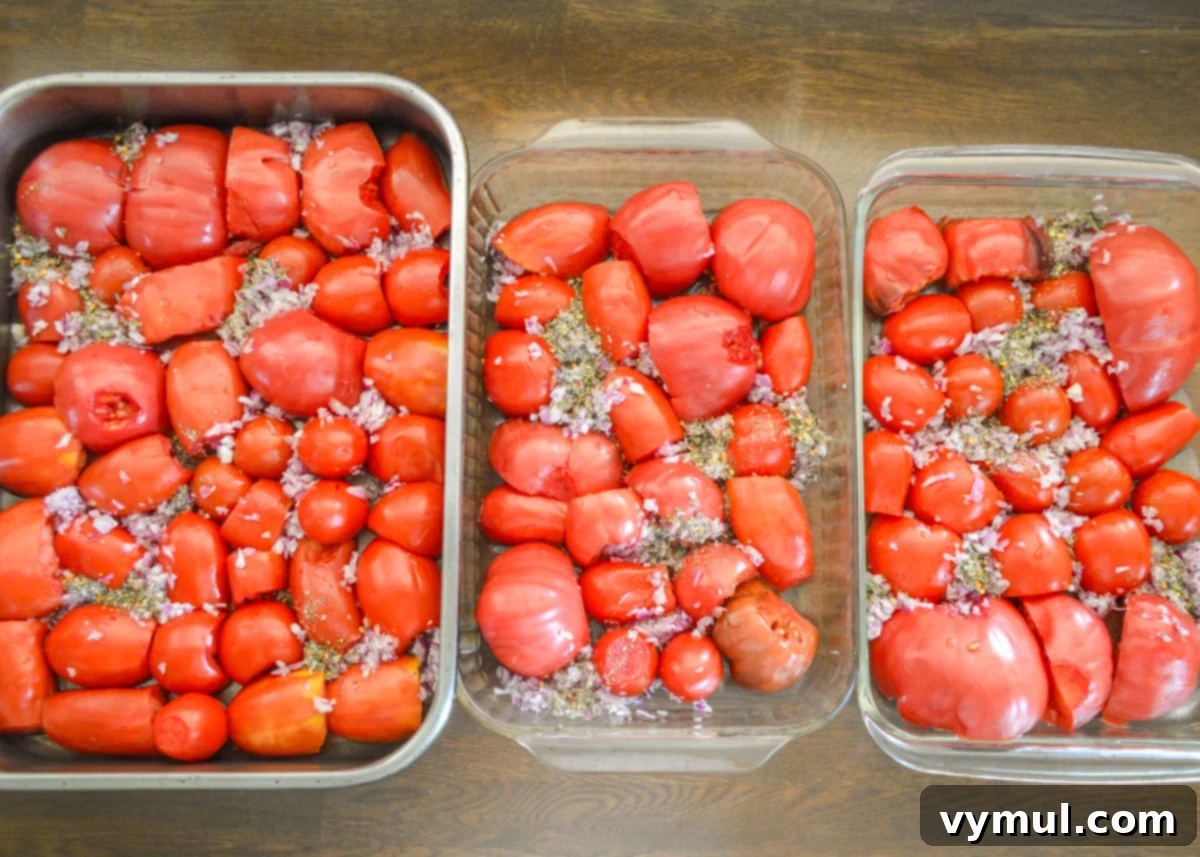
Step 1: Prepare Tomatoes and Aromatics for Roasting. To manage the full recipe efficiently, you’ll typically work in two batches. Begin by dividing all ingredients – except for the tomatoes and citric acid – equally between two or three large roasting pans, depending on what comfortably fits in your oven. Thoroughly wash your tomatoes, then carefully cut each in half, removing the tough core and the blossom end. Gently squeeze each half to release some of the excess seeds and juice. Arrange the halved tomatoes, cut-side down, over the distributed seasonings and aromatics in your prepared pans. This placement allows the tomato flesh to caramelize beautifully.
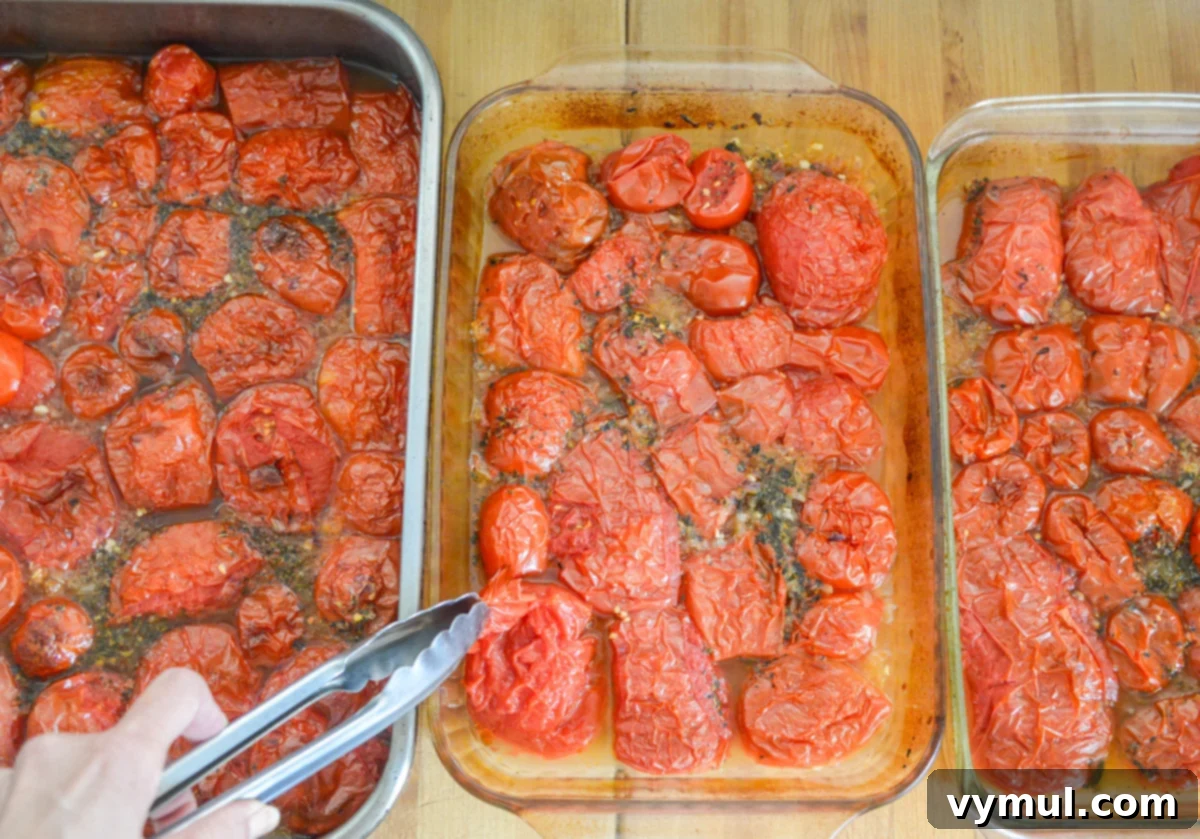
Step 2: Roast for Deep Flavor and Easy Peeling. Place the first batch of prepared pans into your preheated oven and roast for approximately 40 minutes. You’ll know they’re ready when the tomato skins become visibly puffed, wrinkled, and show signs of browning or charring. Once roasted, carefully remove the pans from the oven. Using kitchen tongs, you’ll find that the darkened peels come off with remarkable ease. Beyond the incredible flavor enhancement that roasting provides, this method offers a significant advantage: it largely eliminates the need for the traditional and often cumbersome boiling-water-peeling step, saving you considerable time and effort in the overall process.
While it typically requires two separate roasting batches to process the full quantity of tomatoes for this recipe (as most home ovens, like mine, can only accommodate three roasting pans at once), this method is still significantly more efficient and less labor-intensive than the traditional process of blanching and peeling tomatoes before the main cooking phase. The ease of post-roasting peel removal truly makes a difference!
IMPORTANT NOTE ON TOMATO SKINS IN CANNING: The original, tested recipe from the Ball Blue Book explicitly specifies the removal of tomato skins, and therefore, I adhere to this instruction for this particular sauce to maintain its safety integrity. However, it’s worth noting that I do leave the skins on for other canned items, such as my favorite thick and flavorful salsa and my addictive tomato chutney. You might be tempted to leave the skins on for this roasted sauce as well. From my research, I have not encountered any definitive studies or reputable guidance suggesting that the presence of skins directly impacts the crucial acid ratio required for safe water bath canning. Nevertheless, if you choose to leave the skins on, it is absolutely paramount to ensure your tomatoes are impeccably clean. Furthermore, meticulously removing both the core and the blossom end is essential, as these are areas where soil-borne bacteria or contaminants are most likely to reside. As of my latest update in 2024, despite various claims and trends circulating among online influencers, I have yet to find any conclusive scientific studies that contradict the safety of leaving skins on for certain high-acid products, provided other safety protocols are followed. I stand by my personal research and, more importantly, the specific guidance I received directly from an Oregon State University Extension Agent, which I’ve thoroughly detailed within my comprehensive salsa recipe. For this roasted sauce, however, to remain strictly aligned with the Ball Blue Book adaptation, skin removal is part of the process.
In essence, Steps 1 and 2 cleverly replace the initial blanching, peeling, and boiling phase of the traditional Ball Blue Book recipe with the more flavorful and efficient roasting of the ingredients. Once all your tomatoes and aromatics have been beautifully roasted and peeled, the next crucial phase begins. Even after roasting, it is absolutely essential to bring the entire mixture to a rolling boil again. This ensures the sauce is sufficiently hot before being ladled into jars, which is a critical factor for achieving a proper seal and safe processing in the water bath canner.
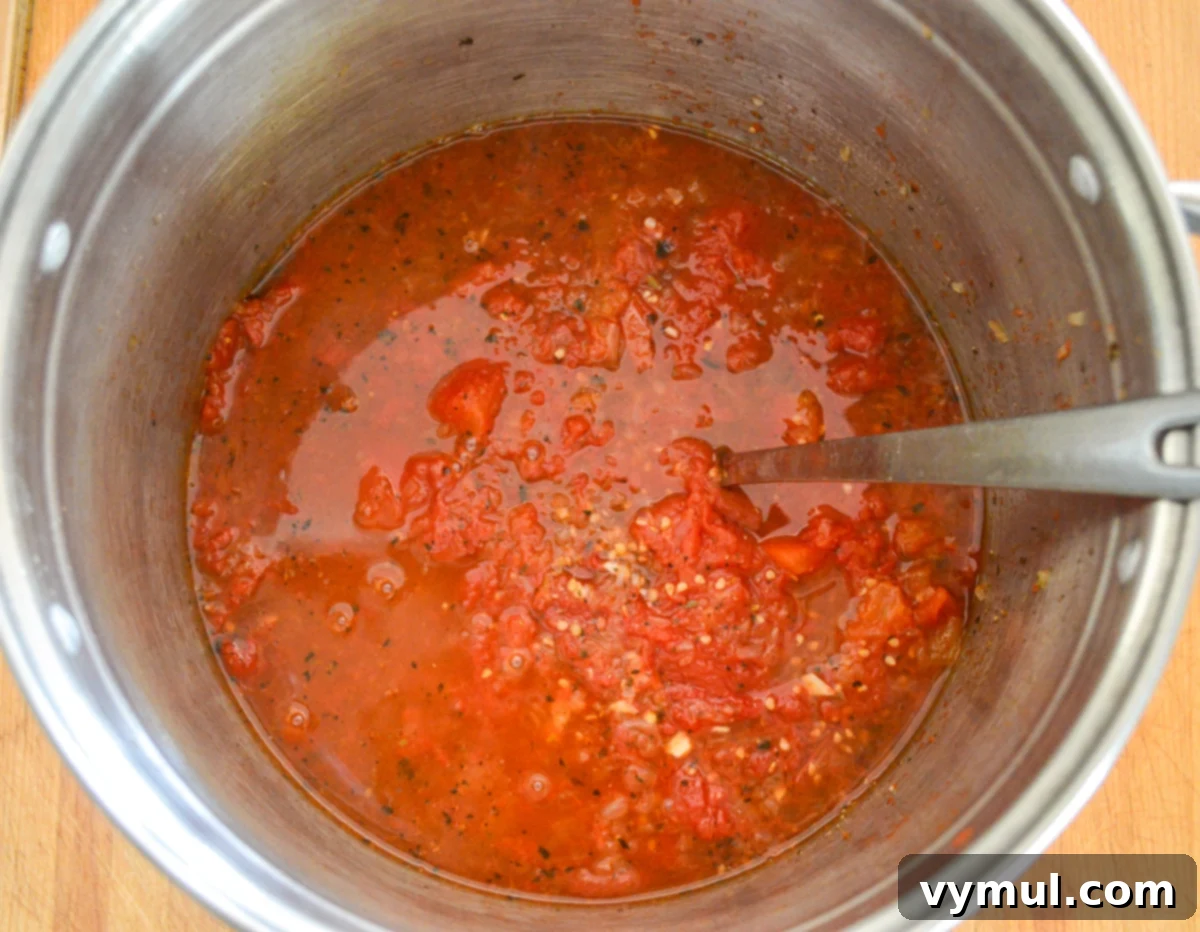
Step 3: Transfer to a Stockpot and Achieve a Smooth Blend. Once the roasting process is complete for all batches, carefully transfer all the delicious roasted vegetables and their juices into a large, sturdy stockpot. This approach offers practical flexibility; the first batch can comfortably wait in the pot while the subsequent batches are roasting, ensuring efficient workflow. Once ALL the roasted batches have been added to the stockpot, it’s time to transform them into a silky-smooth sauce. For this, an immersion blender is my absolute favorite tool – it’s incredibly efficient and minimizes mess. Alternatively, you can achieve the same result using a standard blender or a food processor, working in batches if necessary, until your sauce reaches your desired consistency.
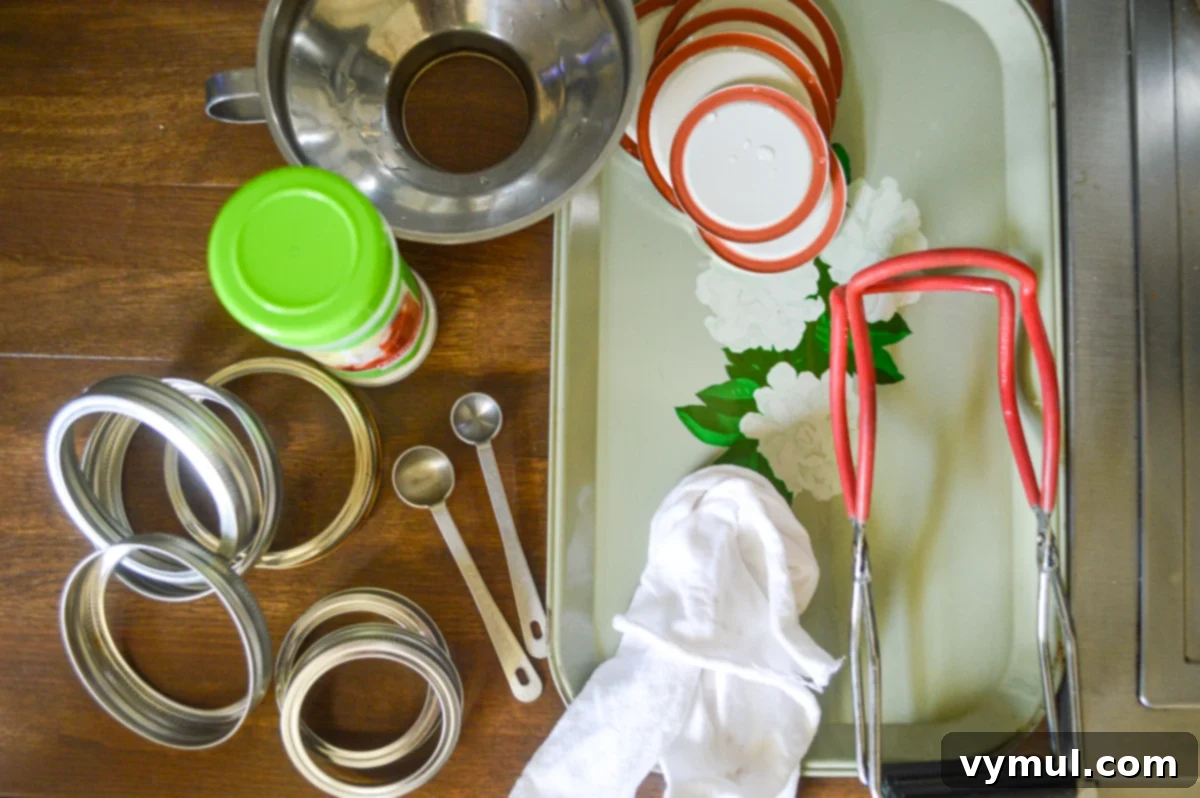
Step 4: Cook Down the Sauce and Prepare for Canning. After blending, bring your newly smooth tomato sauce to a vigorous boil over medium-high heat. Once boiling, reduce the heat and allow the sauce to simmer gently, stirring frequently to prevent sticking, until it thickens to your preferred consistency. This simmering process typically takes about an hour, though it can vary depending on the juiciness of your tomatoes. While the sauce is simmering, meticulously prepare your water bath canner, sterilize your canning jars, and warm your lids. HELPFUL TIP: I find it immensely helpful to set up my entire canning station right next to the stove (as shown in the image above). Using a tray underneath helps contain any drips or spills, making cleanup significantly easier. When you are ready to fill the jars, remember this crucial safety step: add the precise amount of citric acid or bottled lemon juice directly into each individual jar *before* spooning in the hot tomato sauce. This ensures proper acidification. Then, carefully ladle the piping hot sauce into the hot jars, leaving exactly 1/2-inch of headspace. Wipe the rims clean, secure the lids and bands, and then carefully place the jars into the canner rack. Process the jars according to the size – refer to the detailed recipe card below for specific processing times based on your jar size and altitude.
A QUICK NOTE on Tomato Seeds: In our family, we don’t mind the presence of a few tomato seeds in our sauce; in fact, I intentionally squeeze out a good number of them during the initial tomato preparation for roasting. However, if your preference leans towards a perfectly smooth, seedless sauce, you have the option to strain the sauce through a fine-mesh sieve or a food mill after you’ve blended it in Step 3. This step is entirely optional and depends on your textural preference, as it does not affect the safety of the canned product.
IMPORTANT NOTE #2: A Lesson Learned from Experience: I must confess, some of the in-process photographs you see above were taken before I discovered a more efficient method. Through trial and error, I’ve learned that it is far more effective to add the olive oil, balsamic vinegar, onions, garlic, and dried seasonings to the roasting pans *first*, spreading them evenly. Then, you place the halved tomatoes, cut-side down, on top of these ingredients. This strategic layering prevents the smaller ingredients from getting stuck to the pan as much and makes it significantly easier to pluck off the roasted tomato skins later without inadvertently losing valuable spices or aromatics. It’s a small adjustment that makes a big difference in streamlining the process – a true “live and learn” moment I’m happy to share!
Essential Tools for This Recipe
Having the right equipment makes the canning process much smoother and more enjoyable. Here are the tools I personally rely on for this roasted tomato sauce recipe:
- Food Scale: Essential for accurately measuring tomatoes, ensuring recipe consistency.
- Immersion Blender: My top recommendation for effortlessly blending the roasted ingredients into a smooth sauce directly in the stockpot, minimizing cleanup.
- Stainless Steel Boiling Water Canner with this flat canning rack: A durable canner with a flat rack is perfect for efficient water bath processing.
- Stainless Steel Canning Funnel: Helps to fill jars neatly without making a mess, ensuring proper headspace.
- Stainless Steel Ladle: Ideal for transferring hot sauce safely and precisely into jars.
- Pint Mason Jars and Lids: High-quality canning jars are a must for safe, long-term storage.
Water Bath Canning Tutorial Video
Are you new to canning or simply need a quick refresher on the boiling water bath method? Here’s a concise video tutorial that walks you through the simple, essential steps for safe and successful boiling water canning:
Alternatively, if you prefer a visual guide with detailed photographs and written instructions, you can visit this comprehensive article for a step-by-step breakdown.
Storage Guidelines for Your Canned Roasted Tomato Sauce
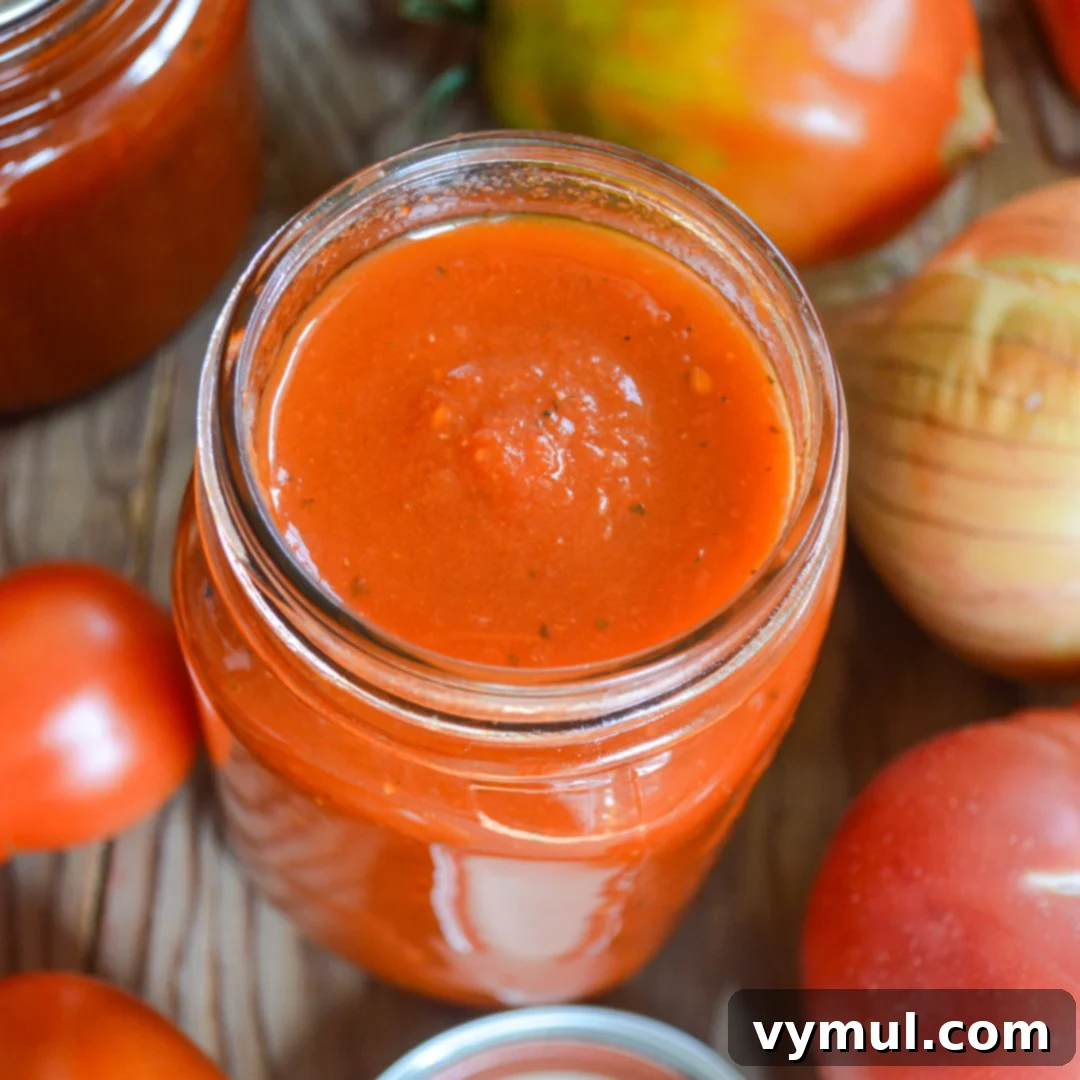
Once properly processed and sealed, your homemade roasted tomato sauce will be a fantastic, shelf-stable addition to your pantry. Like any correctly canned product, these jars will maintain their quality and safety for up to 18 months when stored in a cool, dark, and dry place. Before opening any jar, always perform a quick check: ensure the seal is still firm and concave, and inspect for any visible signs of spoilage, though this is exceedingly rare with properly canned goods. Enjoy the fruits of your labor for months to come!
I hope you enjoy this yummy sauce as much as we do!
Your Burning Questions About Canned Roasted Tomato Sauce, Answered!
Since first publishing this recipe in 2015, I’ve received a multitude of insightful questions from fellow home canners. I’ve compiled the most frequently asked questions here, along with detailed answers, in case you have some of the same inquiries. Your peace of mind and canning success are my top priorities!
Absolutely, yes! This is a perfectly acceptable and often practical approach for managing large batches of roasted tomatoes. I have personally used this method many times. Since the recipe requires you to bring the entire tomato sauce mixture to a rolling boil and simmer it for an extended period just before ladling into jars, any potential bacterial growth that might have occurred during the overnight storage will be eliminated. Always ensure the roasted tomatoes are stored properly in the refrigerator in a clean, airtight container to maintain freshness until you are ready to complete the canning process.
Unfortunately, no, you cannot safely add green bell peppers (or any other type of fresh bell pepper) directly into this recipe if you intend to water bath can it. Peppers are classified as low-acid vegetables, and their addition would significantly alter the carefully calculated acid ratios that are fundamental to making this recipe safe for boiling water bath canning. Deviating from these tested ratios could create an environment conducive to the growth of harmful bacteria. If you love the flavor of peppers, you can certainly add roasted or sautéed peppers to your sauce *after* opening a jar and just before serving, or incorporate dried pepper flakes for heat without compromising the sauce’s safety.
While adding heat is a great idea, it’s crucial to understand the distinction between fresh and dried ingredients in canning. You can absolutely incorporate dried chili flakes to infuse a touch of heat into your sauce, as dried spices do not affect the acidity or density in the same way. However, you must not add fresh chili peppers or any other fresh low-acid ingredients at any stage of a water bath canning recipe unless they are specifically included and tested within that exact recipe. Fresh peppers, like bell peppers, are low in acid and would compromise the safety profile of this sauce for water bath preservation. For fresh chili flavor, add them when you heat up the sauce for a meal.
Even if you haven’t experienced issues in the past, it’s vital to prioritize current, scientifically tested canning guidelines. Adding any fresh, low-acid ingredients such as roasted red peppers – even if they are pre-roasted – to this sauce before processing would unfortunately render it unsafe for water bath canning. The moment you introduce ingredients not specified in the original tested recipe (especially low-acid ones), you risk altering the critical acid ratio. This means the processing time and method designed for the original high-acid profile would no longer be sufficient to ensure safety against spoilage or harmful bacteria. The safest practice is to always add ingredients like roasted red peppers, or any other flavorful low-acid additions, *after* you open a jar of the safely canned sauce and are preparing it for consumption. This way, you enjoy the added flavor without compromising the shelf-stability and safety of your preserved goods.
Yes, absolutely! Cherry tomatoes can be wonderful in this roasted tomato sauce recipe. Their intense sweetness and tendency to burst during roasting can add another layer of flavor and texture. Feel free to use 100% cherry tomatoes if that’s what you have in abundance, or incorporate them into a mixed batch with paste tomatoes or slicing varieties. The key is to ensure you still remove the cores and blossom ends and follow all other steps for safe canning, especially adding the required acidifier.
Yes, you can absolutely use yellow cherry tomatoes, or any other yellow tomato varieties, in this recipe. While yellow tomatoes often present a sweeter taste and might *seem* less acidic than their red counterparts, official canning guidelines and reputable sources confirm that their pH levels are generally similar enough to red tomatoes to be safely processed in the same way. Therefore, you can use them following all the exact same instructions and safety guidelines, including the critical step of adding the required amount of bottled lemon juice or citric acid to each jar. This ensures their acidity is boosted to a safe level for water bath canning, providing you with a delicious, shelf-stable alternative to freezing.
Yes, absolutely! Using frozen tomatoes from your garden for this recipe is a fantastic way to utilize your harvest. When freezing tomatoes, it’s ideal to weigh them before they go into the freezer and note the weight on the outside of the bag; this makes measuring for recipes much easier later on. However, if you didn’t do that, you can still weigh them while frozen. There’s a common misconception that frozen tomatoes weigh more, but reliable sources confirm that their weight remains consistent whether fresh or frozen. Just thaw them slightly so you can halve them and remove cores/blossom ends before roasting, then proceed with the recipe as usual. They might release more liquid during roasting, but this will simply mean a slightly longer simmer to achieve your desired sauce consistency.
Regrettably, no, it is generally not considered safe to add additional tomato paste to this recipe for canning purposes unless that specific modification has been tested and approved. The primary concern is that adding tomato paste significantly thickens the sauce, which can then impact the heat penetration during the canning process. If the sauce is too dense, the heat may not reach the center of the jar effectively enough to destroy all harmful bacteria within the specified processing time, compromising safety. If you find your sauce is not thickening to your preference (or within the time you have available!), my recommendation is to proceed with canning it as is. Then, when you go to use a jar of sauce for a meal, simply make a note on the lid to ‘add tomato paste when heating’ to achieve your desired thickness at the point of consumption. This ensures your canned product remains safe and shelf-stable.
Yes, you absolutely can add sugar to this recipe! Sugar is considered a safe additive in canning recipes because it is included purely for taste and does not interfere with the critical acid ratio of the product. Therefore, you can adjust the amount of sugar to your personal preference, adding as much or as little as you desire to achieve the perfect balance of sweetness for your roasted tomato sauce, without affecting its safety for water bath canning. Feel free to experiment to find your ideal flavor profile!
Yes, you can certainly use commercially canned whole peeled tomatoes as a convenient base for this recipe! This can be a great option if fresh garden tomatoes are not available. While there might be a slight reduction in overall quality or freshness compared to using freshly roasted tomatoes (as produce undergoes some textural and flavor changes each time it’s processed), it is perfectly safe to proceed with the water bath canning method as described in the recipe. Just ensure you still follow all the other steps, particularly the addition of the required acidifier (citric acid or bottled lemon juice), to maintain the safety standards.
No, it is unequivocally not safe to use fresh lemon juice for this canning recipe, and pre-boiling it would unfortunately not mitigate this safety concern. The crucial reason is that the acidity level in fresh lemons can vary significantly from fruit to fruit, making it impossible to guarantee the precise pH required for safe water bath canning. Commercially bottled lemon juice, however, is standardized to a consistent acidity level, which is why it is the only type recommended for safe canning practices. This is also why I personally opt for citric acid in this recipe; it offers a uniform, reliable acidity without the need for bottled lemon juice, which often contains preservatives (though some brands offer preservative-free frozen bottled lemon juice, which is an acceptable alternative if you can find it). Always prioritize tested and consistent acidifiers to ensure the safety of your home-canned goods.
Fresh herbs are generally discouraged in water bath canning recipes primarily because they are low-acid ingredients. Introducing them in quantities not specified in a tested recipe can unpredictably alter the overall acidity of the sauce, making it unsafe for water bath processing. The tested recipe’s safety relies on precise acid ratios. Regarding pressure canning: while pressure canners are used for low-acid foods, you cannot simply assume that a recipe designed for water bath canning with dried herbs can be safely adapted for pressure canning by adding fresh herbs. Each recipe, especially when involving low-acid ingredients like fresh herbs, must be rigorously tested for specific pressure canning times and pressures based on jar size and density. Without a tested pressure canning recipe that includes fresh herbs, I cannot recommend it as a safe alternative. Furthermore, from a culinary perspective, fresh herbs tend to lose much of their vibrant flavor after undergoing the intense heat of canning, and some can even develop a bitter taste. Dried herbs, on the other hand, retain their flavor much more effectively through the canning process, which is another reason why they are preferred in shelf-stable recipes. For these critical safety and quality reasons, tested recipes rarely feature fresh herbs for preservation.
The salt included in this recipe serves purely as a flavoring agent. Unlike its role in some other preservation methods, salt in this tomato sauce recipe does not contribute to the safety or acidity of the canned product for water bath processing. Therefore, you have complete flexibility to adjust the amount of salt to your taste preferences, or even omit it altogether, without any impact on the safety or shelf-stability of the sauce. This allows you to tailor the sodium content to your dietary needs or personal palate.
Absolutely, yes! If you love a wonderfully chunky sauce, you can certainly opt to roughly chop your roasted tomatoes (after removing the peels) rather than blending them into a smooth puree. This textural preference will not affect the safety of the canned product, provided all other canning guidelines – especially the addition of citric acid or bottled lemon juice – are strictly followed. Be mindful, however, that the yield of your sauce might be slightly different. Pureeing typically results in a more concentrated sauce, so leaving it chunky might give you a slightly higher volume, or a less dense sauce, which may take a bit longer to simmer down if you desire a thicker consistency. Enjoy your chunky creation!
More Delicious Canned Tomato Recipes To Try
If you’ve enjoyed making this roasted tomato sauce, you’ll love exploring other ways to preserve your bountiful tomato harvest! Here are some more of my favorite, tested canning recipes featuring tomatoes, perfect for stocking your pantry with homemade goodness:
- The Best Thick and Flavorful Salsa for Canning: A crowd-pleasing recipe that delivers a rich, vibrant salsa perfect for chips or as an ingredient.
- Canned Green Chilies & Tomatoes (aka, Rotel): Create your own versatile “Rotel-style” tomatoes with a kick, ideal for Tex-Mex dishes.
- Canned Pizza Sauce (from frozen tomatoes): Transform your frozen tomato stash into an irresistible, ready-to-use pizza sauce.
- Addictive Tomato Chutney: A unique and flavorful chutney that’s perfect for pairing with cheeses, meats, or Indian-inspired meals.
Reader Raves: What Others Love About This Sauce
“It was all I could do from pouring bunch in a soup bowl and diving in. Fabulous flavor.” -Diane
“This is SO delicious! We use the resulting sauce to make a sort of instant tomato soup – add broth, maybe some cream, simmer a few minutes and have a bowl of summer to enjoy.” -Cathleen
“Great recipe, I have been canning for years, and found this to be an excellent and flavorful recipe. Major upside, it kept my kitchen much cleaner than when blanching to remove peels, and seem to waste a lot less “juice”. It will also make your kitchen smell a bit like heaven!” -Dawn
I genuinely hope you enjoy the incredible flavor and convenience of this water bath canned roasted tomato sauce! If you decide to make it, please be sure to leave a recipe rating and review below. Your feedback helps me and other home canners, letting me know how much you loved it and if you have any tips to share!
Print Recipe
Pin Recipe
SaveSaved!
Safe Water Bath Canned Roasted Tomato Sauce
Ingredients
- 23 pounds tomatoes a variety of paste, heirloom and cutting provides the best flavor & consistency
- 2 tablespoons olive oil
- 2 tablespoons balsamic vinegar optional, but adds amazing flavor
- 3 cups chopped onions
- 6 medium cloves garlic chopped**
- 2 tablespoons canning salt or pure sea salt (use a salt with no additives)
- 1 tablespoons dried oregano*** to taste
- 1 tablespoons dried basil*** to taste
- 2 teaspoons black pepper to taste
- 1 teaspoons crushed red pepper flakes optional, but we love it
- Citric acid or bottled lemon juice see amounts needed for different size jars below
Instructions
-
Heat oven to 425 degrees. Halving all ingredients to work in two batches, divide olive oil, balsamic vinegar (if using), onions, garlic, and dry seasonings between 2 or 3 roasting pans (what you have that will fit in your oven).
-
Wash tomatoes, remove cores and blossom ends, cut in half and squeeze gently to remove some of the seeds. Place tomatoes, cut side down, on top of ingredients in prepared pans.
-
Roast for about 40 minutes until most of the tomato skins are puffed and browned. Remove from oven and pluck skins off with tongs (it’s okay not to get every bit).
-
Scrape roasted vegetables into a large stockpot, set aside and repeat the prep and roasting with remaining half of ingredients (unless you are making just a half batch – then just proceed to next step).
-
Using an immersion blender, whir roasted ingredients until smooth (alternately, you can scrape from the roasting pans into a blender in batches and then add to the stockpot). If you’d like to strain to remove seeds, now is the time for that, too, using a wire mesh sieve.
-
Bring the smooth sauce to a boil over med-high heat, lower heat and then simmer sauce until it reaches desired consistency, stirring often, about 45 minutes to 1 hour, or more depending on your tomato varieties. You can adjust salt or dry seasonings to taste at this point if you wish.
-
Prepare a water bath canner, jars, and lids.
-
Add 1/4 teaspoon citric acid to pint jars (1/2 teaspoon to quarts) OR 1 tablespoon lemon bottled juice to pint jars (2 tablespoons for quarts) and then ladle the hot tomato sauce into hot jars, one at a time with 1/2-inch headspace. Wipe rims, attach lids and place in canner rack.
-
Process 35 minutes for pints and 40 minutes for quarts (if processing both pints and quarts together, use the longer processing time). Note: start the processing time after canner comes to a full boil and then adjust heat to keep a low boil for the timed amount.
-
Turn off burner, remove lid and set timer for 5 minutes to let jars rest in canner. Transfer jars from canner to a towel-lined surface and let cool 24 hours. Check seals, label & store for up to a year.
Notes
**The tomatoes aren’t roasted long enough to fully roast whole garlic cloves, so you’ll want to chop them.
***Do not replace dried herbs with fresh, though you can increase or decrease the amounts given and add any other dried herbs you’d like.
This recipe can easily be halved or even quartered, depending on how many tomatoes you have.
High Altitude Adjustment: If processing at an altitude of higher than 1000 feet above sea level you’ll need to adjust the processing time according to this chart.
If you have any jars that don’t seal (which is rare!), store them in the fridge and use first.
Nutrition
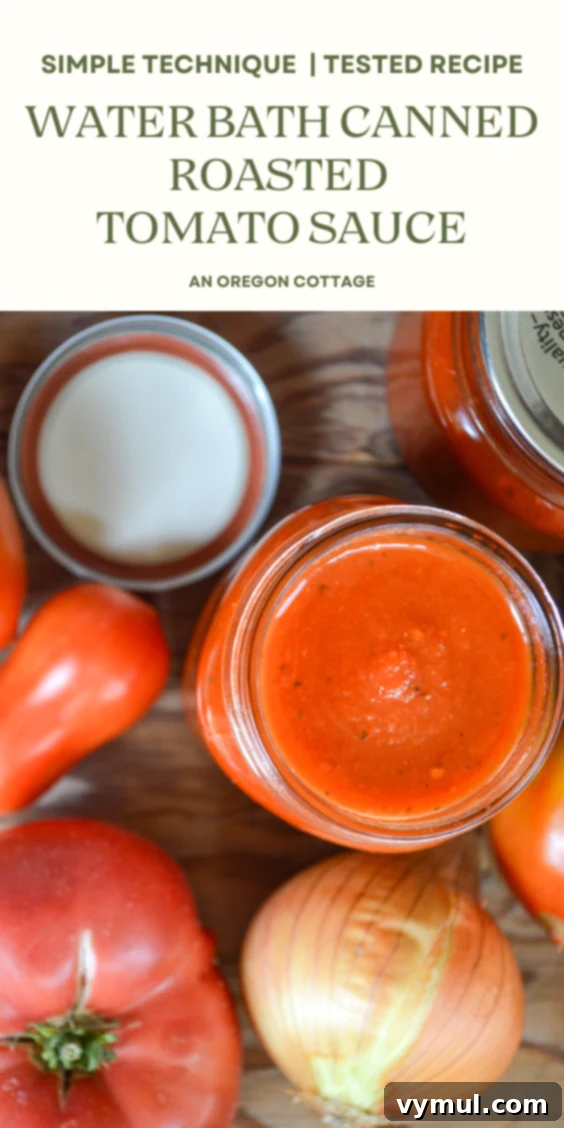
This recipe and accompanying article have been extensively updated with larger, more detailed photos, clearer, expanded instructions, and a comprehensive FAQ section to address common inquiries. It was originally published in 2015 and continues to be a favorite among home canners.
Disclosure: Please note that some links within this article are affiliate links. If you choose to click on them and make a purchase, I will receive a small commission at no additional cost to you. This helps support the content I create. Click here to read my full disclaimer and advertising disclosure policy for more information.