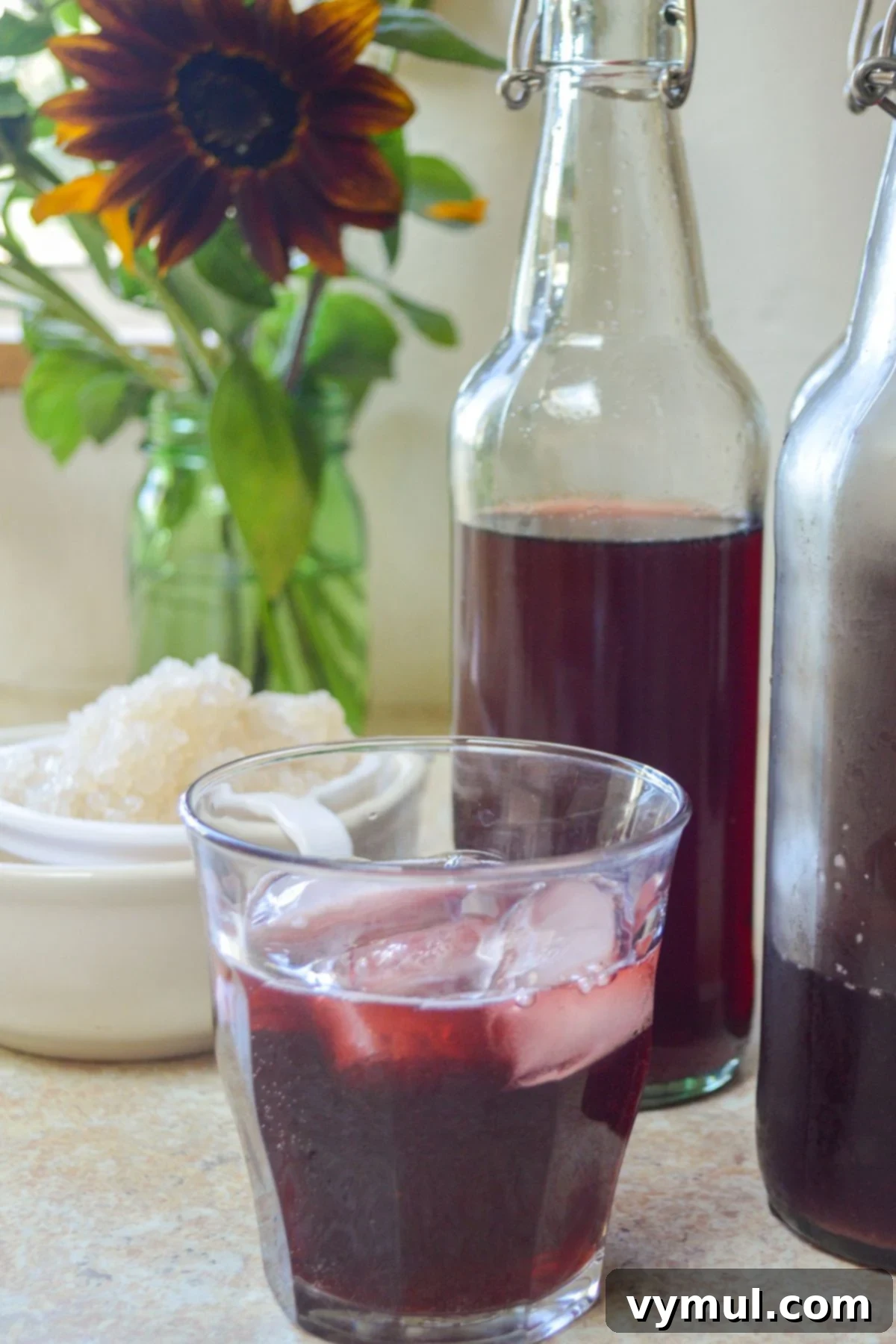
Mastering Homemade Water Kefir: Your Ultimate Step-by-Step Guide to Probiotic Perfection
Embark on a delightful journey to create your own easy, effervescent, and incredibly healthy water kefir right at home. This comprehensive, step-by-step method and recipe will guide you through making this refreshing probiotic carbonated drink, unlocking its numerous health benefits and savoring its delicious taste.
✩ What readers are saying…
“I just jumped on the water kefir bandwagon, and I have to say … your instructions are the best I’ve found! This shouldn’t surprise me since I’ve gleaned so many tips and great recipes from your blog over the years.” – Lauren
Some links in this article are affiliate links, meaning if you click on them and make a purchase, I may receive a small commission at no additional cost to you.
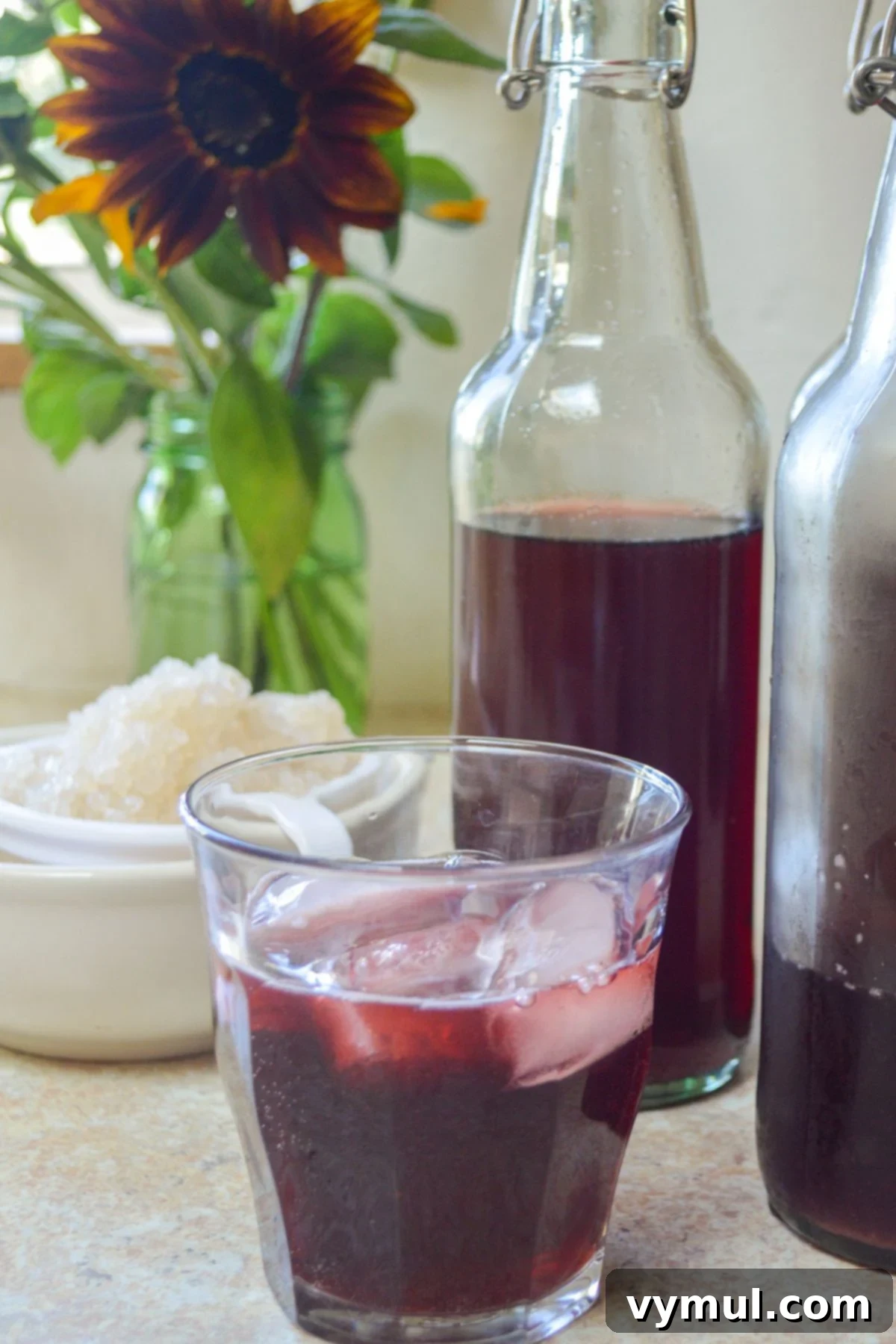
For a long time, I’ve wanted to share one of my favorite daily routines with you: making and enjoying water kefir. This incredible fermented drink is not just healthy but also incredibly delicious and wonderfully refreshing. It has become a staple in my household, and I’m thrilled to show you just how simple it is to incorporate into your life.
My journey into fermented foods began with a focus on improving gut health. I started with staples like sauerkraut, fermented vegetables, and fermented corn relish. It wasn’t long before I realized that fermented drinks offered an equally easy and enjoyable way to boost my daily probiotic intake.
While I’ve always appreciated the health benefits of yogurt, I’ve struggled to enjoy its taste, making dairy kefir an unsuitable option for me. Kombucha, another popular fermented drink, also presented its own set of challenges, primarily dealing with the SCOBY and the delicate balance between a fruity beverage and a sharp vinegar. I needed something simpler, more consistent, and equally beneficial.
That’s when I discovered water kefir. Intrigued, I delved into extensive research, learning everything about its preparation, various flavoring techniques, and the impressive spectrum of health benefits it offers. I discovered that water kefir is a powerful probiotic, vital for maintaining a healthy gut microbiome. Beyond that, it’s known to aid digestion, reduce inflammation, boost energy levels, and even show promise in supporting the body’s fight against certain cancers.
Once I established a straightforward system for consistent brewing – requiring only about 10 minutes of hands-on work every couple of days, plus an effective storage method for when I needed a break – I was completely hooked. For years now, making and drinking water kefir has been a simple, rewarding part of my daily life.
My goal with this comprehensive tutorial is to empower you to start making and enjoying your own healthy, delicious water kefir. Get ready to transform your approach to well-being with this easy and incredibly satisfying probiotic beverage!
Understanding Water Kefir: What Is It?
At its core, water kefir is a lightly fermented, naturally carbonated beverage crafted using water kefir grains. These “grains” aren’t actual cereal grains but rather a symbiotic colony of bacteria and yeast (SCOBY) encased in a polysaccharide matrix, resembling small, translucent crystals. These amazing grains feed on sugar water, transforming it into a probiotic-rich, fizzy drink.
Water kefir stands out as an excellent alternative for various dietary needs and preferences:
- It’s a fantastic **dairy-free alternative** to traditional milk kefir.
- It offers a refreshing **caffeine-free option** for those who find kombucha too stimulating.
- It’s a wonderfully **low-sugar, healthy choice** compared to sugary sodas or alcoholic beverages, as the grains consume most of the sugar during fermentation.
While I’ll provide extensive details in the steps below, remember that the fundamental process is incredibly simple and can be completed in under 10 minutes of active preparation time. Like all fermentation projects, water kefir requires patience and time for the magic to happen, but most of this time is hands-off.
Water Kefir Tutorial Video
The Art of Crafting Water Kefir: A Two-Stage Fermentation Process
Crafting truly exceptional water kefir involves a TWO-STAGE fermentation process:
- The First Ferment: Cultivating the Grains. This initial stage involves placing the water kefir grains in a sugar-water solution. During this period, the beneficial bacteria and yeast within the grains metabolize the sugar, producing carbon dioxide (which contributes to carbonation), various organic acids, and more probiotic cultures. While technically drinkable after this stage, the first ferment typically has a less appealing aroma and flavor, often lacking significant carbonation or sweetness.
- The Second Ferment: Flavoring and Carbonation. This is where your water kefir truly transforms into a delightful, bubbly beverage. After straining out the grains from the first ferment, you’ll add fruit juice (or fresh fruit) to the fermented sugar water. This second fermentation allows the remaining sugars in the juice to be consumed by the microbes, creating a more robust carbonation and infusing your kefir with wonderful flavors. This stage is crucial for achieving the refreshing, fizzy drink you desire.
Essential Supplies for Water Kefir Brewing
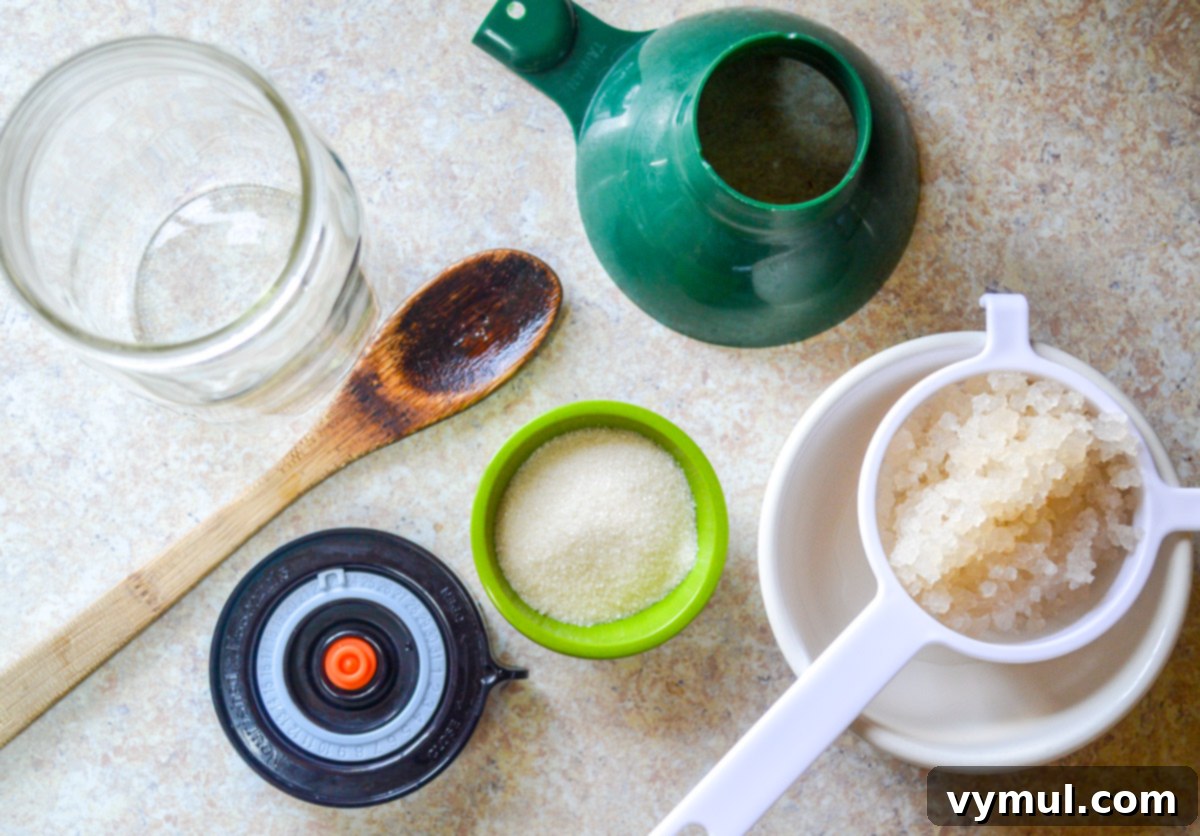
Before you begin your first ferment, gather these crucial items. Having everything prepared will make the process smooth and enjoyable:
- Water Kefir Grains: These are the heart of your water kefir. Unfortunately, the specific live grains I’ve used in the past are no longer available. When sourcing, always prioritize live cultures, as dried grains (like those from Brands like Cultures for Health) often have a limited lifespan (2-7 uses) and cannot be propagated indefinitely. Consider options like these live grains or these live grains from Florida, carefully checking descriptions for “live” and “indefinite use.”
- Sugar: You’ll need sugar to feed your grains. Refer to the detailed list below for acceptable types and combinations.
- Nylon/Plastic Mesh Strainer: It’s best to avoid metal coming into prolonged contact with your kefir grains, as it can sometimes harm them. A nylon or plastic strainer is ideal for separating the grains from the liquid.
- Quart Jar, Wide Mouth: A wide-mouth glass jar provides ample space for the grains to thrive and makes handling easier.
- Wooden Spoon: Again, avoid metal. A wooden spoon is perfect for stirring your sugar water mixture.
- Fermenting Lid (Optional but Recommended): While you can use a coffee filter or muslin cloth secured with a rubber band, an Easy Fermenter Lid simplifies the process by creating an airlock, reducing the risk of contamination and allowing gases to escape safely.
- Funnel (Optional): A funnel can be helpful for easily transferring grains into jars, minimizing spills.
The Role of Sugar: What to Use and What to Avoid
Sugar is the food source for your water kefir grains. The type of sugar you use can influence the flavor and mineral content of your final beverage. Here’s a breakdown:
- Refined White Sugar: This pure, mineral-free sugar yields a straightforwardly sweet water kefir. It’s a reliable choice for consistent fermentation.
- Organic Cane Juice Crystals: Less refined than white sugar, with a low mineral content, these also produce a sweet water kefir. This is often my preferred choice for its balance.
- Turbinado or Raw Sugar: With most molasses removed, this sugar has a medium mineral content and results in a slightly less sweet, more complex flavored water kefir.
- Rapadura or Sucanat: These are pressed and dried sugar cane juice, boasting a high mineral content. They will produce a stronger-flavored, less sweet water kefir, adding depth.
- Brown Sugar: Essentially white sugar with some molasses retained or added back, brown sugar has a high mineral content and will yield a more robust, less sweet water kefir. I often use a combination of white and brown sugar, as demonstrated in the video, for a balanced flavor and mineral boost.
Types of Sugar NOT to Use (and why)
It’s crucial to avoid certain sugars, as they can harm your water kefir grains or fail to provide the necessary nutrients for fermentation:
- Coconut/Palm Sugar: While appealing for its natural qualities, these can damage the delicate balance of your water kefir grains if used in large quantities. A very small amount (e.g., a teaspoon) can be added for mineral content, but it’s not ideal as the primary sugar.
- Maple Sugar/Syrup: Similar to coconut/palm sugar, maple products can be detrimental to the grains. If you wish to add a touch for minerals, keep the amount to a teaspoon.
- Honey or Molasses (as primary sugar): These do not provide the ideal food source for water kefir grains and can lead to grain damage. However, if using cane sugar, adding ½ teaspoon of unsulfured blackstrap molasses can be an excellent way to introduce essential minerals, especially if your water is naturally low in them. This is an exception, not a rule for the main sugar.
- Sugar Substitutes (e.g., stevia, monk fruit, agave, Splenda): Water kefir grains rely on fructose and sucrose for their metabolic processes. These substitutes lack these essential sugars and will not only fail to feed your grains but can actively harm them. Stick to natural, fermentable sugars.
Days 1 & 2: The First Ferment – Activating Your Grains
This is the foundational stage where your water kefir grains come to life, transforming sugar water into a probiotic-rich base.
Step 1: Prepare Your Sugar Water Mix
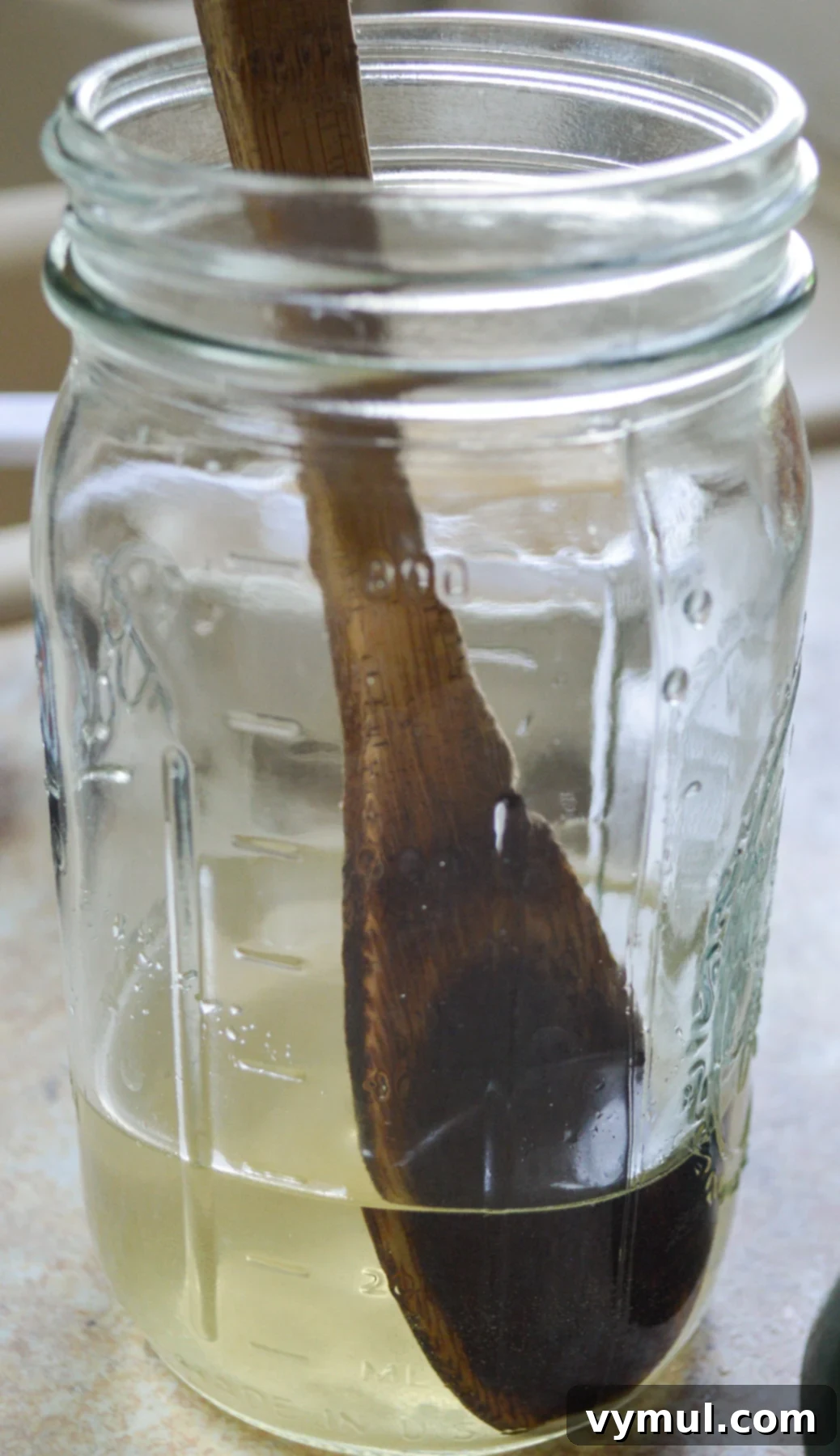
- Add 1/8 to 1/4 cups of your chosen sugar(s) to a clean quart jar. The amount of sugar can be adjusted based on your preference and grain activity.
LOW SUGAR TIP: Many recipes recommend 1/4 cup of sugar per quart (or even more), which I personally found too sweet. Through experimentation, I’ve discovered that a rounded 1/8 cup of sugar works perfectly, yielding a less sweet beverage without compromising grain growth or activity. Feel free to adjust to your taste, starting with less and increasing if desired.
- Add about 1/3 cup of hot water (approximately 110-120°F, usually the hottest from your tap) to the jar. Stir thoroughly with a wooden spoon until the sugar is completely dissolved.
- Fill the remainder of the jar (approximately 3/4 full, totaling about 2-1/2 cups of water) with cold water, stirring as you add it. The goal is for the final water temperature to be around room temperature (70-75°F) before adding the grains, as extreme temperatures can harm them.
WATER QUALITY IS KEY: The quality of your water significantly impacts the health and activity of your water kefir grains. Hard water, rich in minerals, is ideal. Well water or natural spring water typically works wonderfully, which is why I can often use tap water.
If you use treated city water, it’s advisable to let it sit uncovered for 24 hours to allow chlorine to dissipate, or use a reliable water filter. If your water is soft (low in minerals) or if you use a reverse osmosis system, you’ll need to regularly add mineral supplements to keep your grains healthy and thriving.
To add minerals, choose one of these options each time you prepare a new first ferment:
- ⅛ teaspoon unrefined sea salt (provides essential trace minerals)
- ¼ teaspoon plain baking soda (helps balance pH and provides minerals)
- ½ teaspoon unsulfured blackstrap molasses (a powerhouse of minerals, adds a richer flavor)
Step 2: Strain & Add Grains to Your Prepared Jar
Your water kefir grains will be residing in a previous sugar water mixture—whether they’re newly acquired and “fed,” roused from refrigeration, or simply finishing a prior ferment. Your next crucial step is to gently separate these precious grains from their old liquid.
Use your nylon/plastic mesh strainer for this process, ensuring no metal touches the grains:
- If you’re using new grains for the first time or waking them from refrigerated storage, discard the old sugar water. It will have been consumed by the grains or is no longer viable for a second ferment.
- If you’re continuing a cycle (after a first ferment), you will catch the strained liquid in a clean container for the second ferment (detailed below).
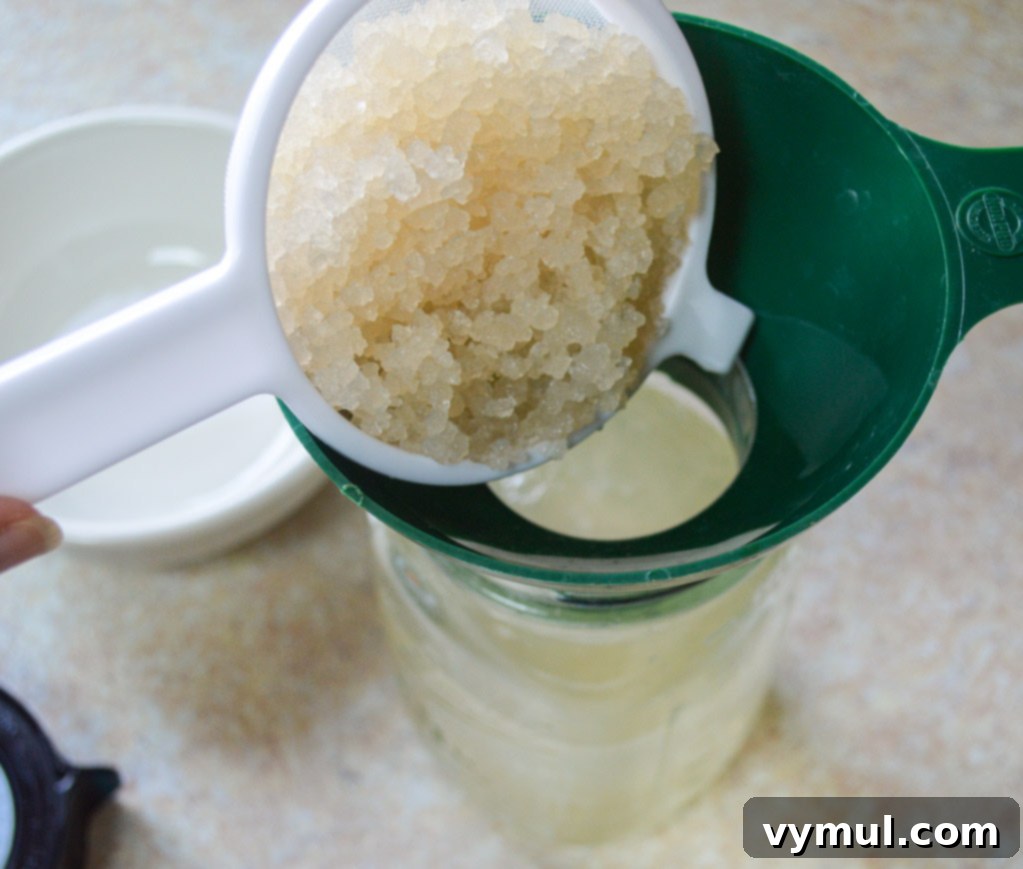
Gently add the strained kefir grains into the prepared room-temperature sugar water mixture. A funnel can make this transfer easier and less messy. Give the mixture a gentle stir with your wooden spoon to ensure the grains are fully immersed and distributed.
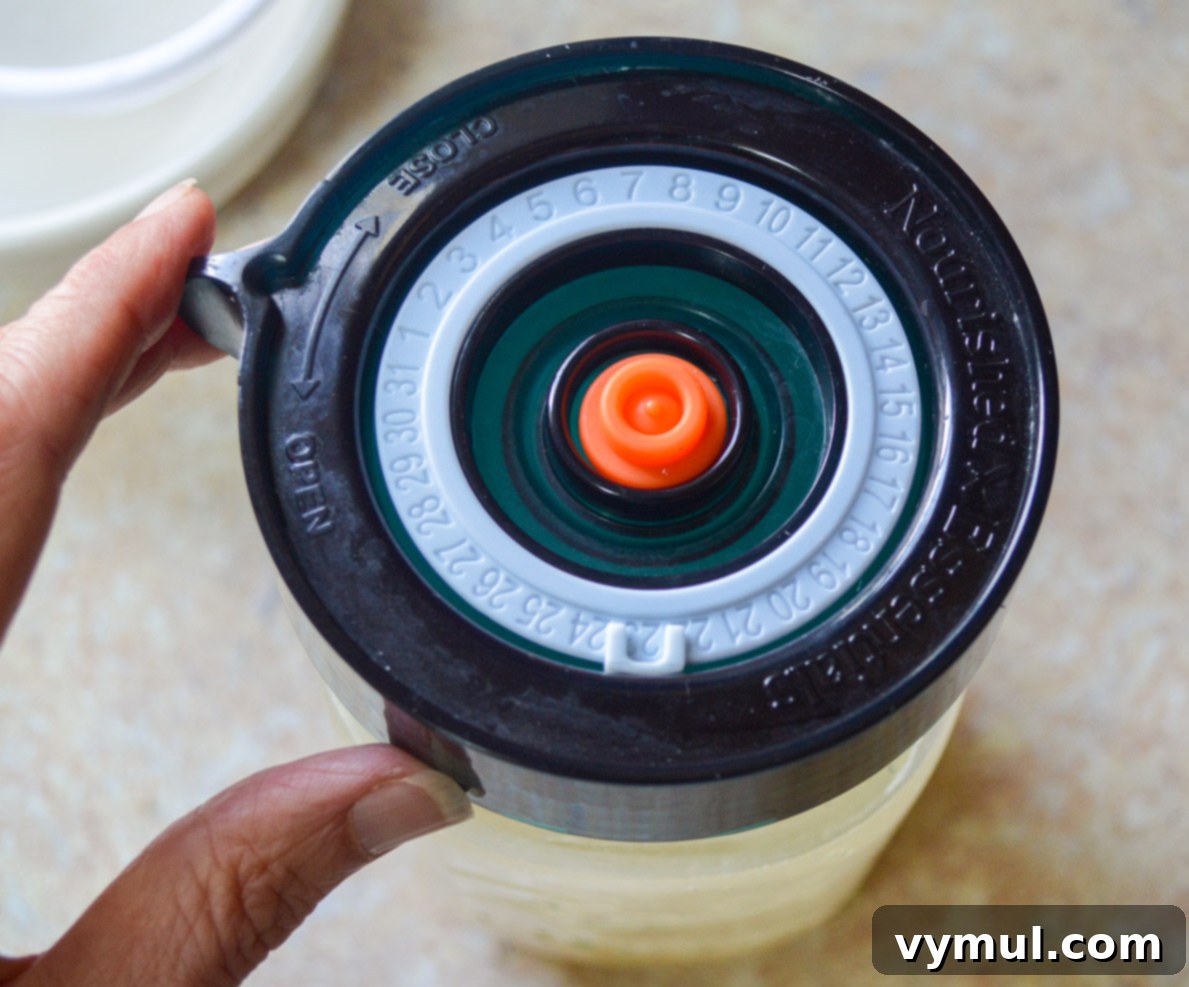
Secure an Easy Fermenter Lid onto the jar, and set the date dial for two days in advance. If you’re using a simpler method, cover the jar with a coffee filter or a piece of breathable muslin cloth, secured tightly with a rubber band. This allows for airflow while protecting the ferment from contaminants.
Step 3: Allow the Fermentation to Commence
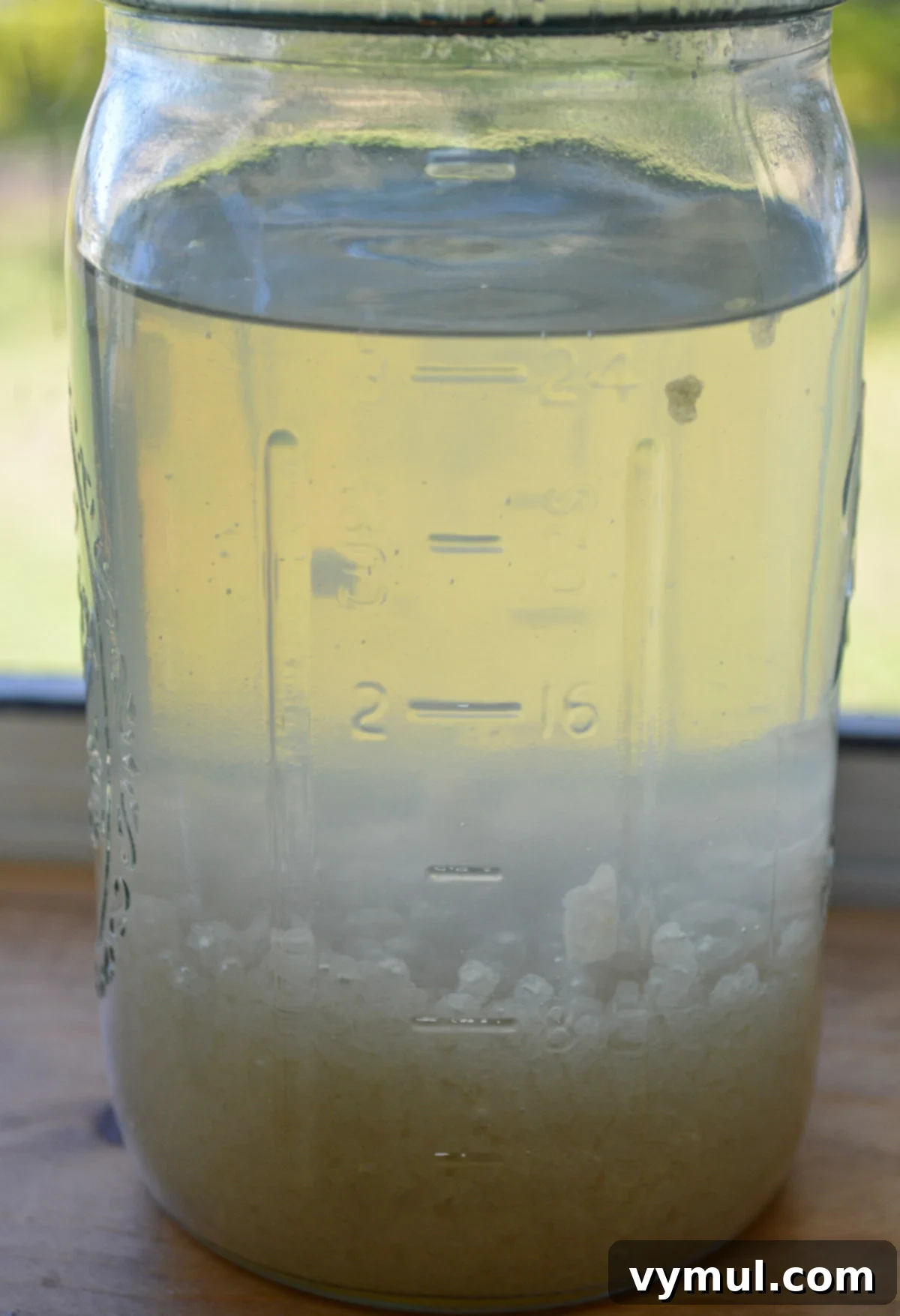
Place your jar on the counter at room temperature, allowing it to ferment for up to 48 hours. During this period, you should begin to observe signs of active fermentation:
- When you gently move the jar, you’ll likely see small bubbles rising, indicating carbon dioxide production.
- Some of your water kefir grains may float to the surface, while others remain submerged or drift throughout the liquid. This is a normal and healthy sign of activity.
TEMPERATURE TIP: The ideal fermentation temperature is between 68°F and 78°F (20-26°C). If your kitchen is on the colder side, try to find a warmer spot for your water kefir jar. This could be near a gentle warming light (like an appliance light), in a warm pantry, or even on top of a refrigerator (which often emits a slight warmth). Consistent temperature helps ensure active and healthy grains.
Day 3: The Second Ferment – Flavoring and Carbonation
This is where your water kefir truly shines, developing its unique flavor and characteristic fizz!
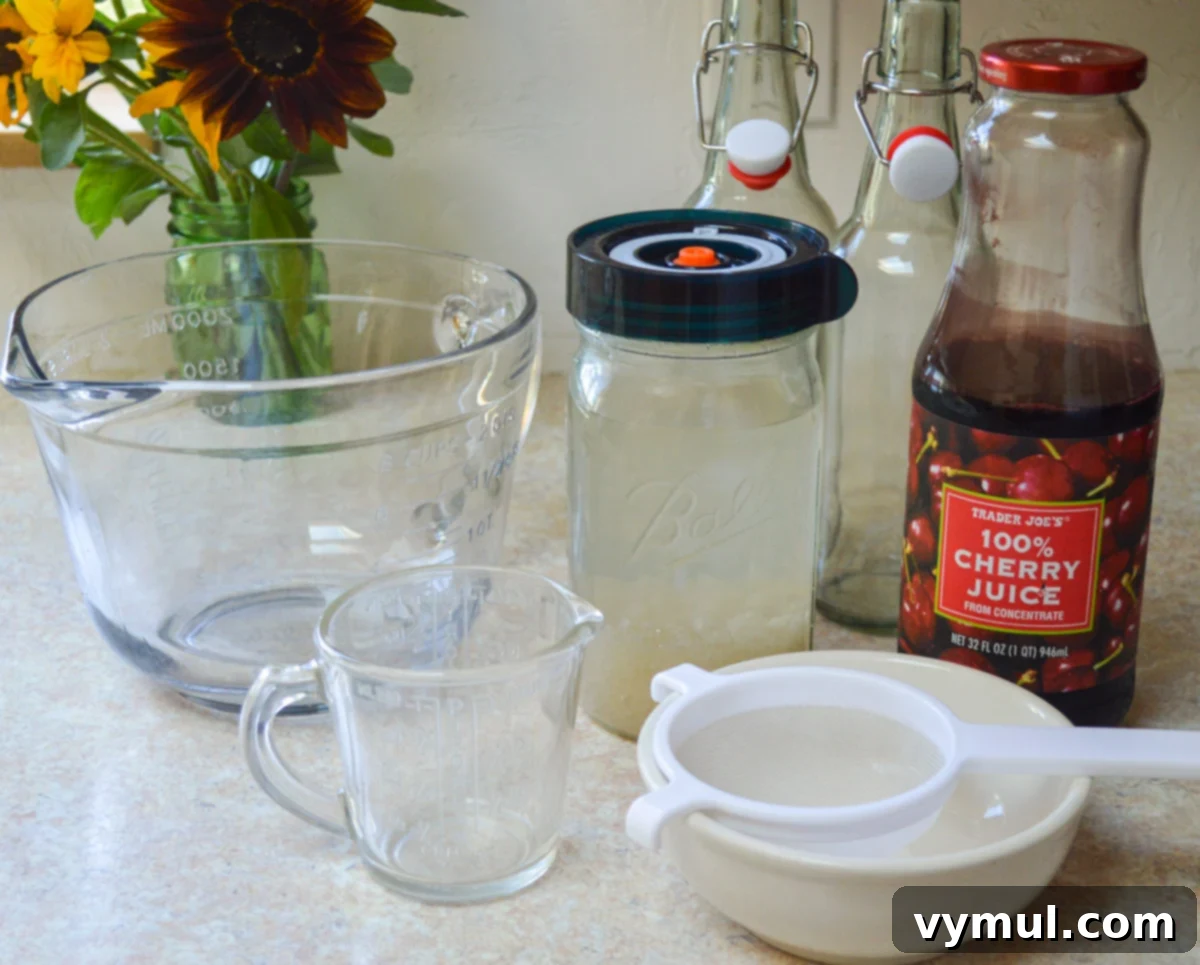
Supplies for the Second Ferment
Before proceeding, ensure you have these items ready:
- Water Kefir: Your fermented liquid from the first ferment (after 48 hours).
- 100% Fruit Juice: This is your primary flavoring agent and a source of sugar for secondary fermentation. Experiment with different varieties to discover your favorites. While fresh fruits and spices can be used, fruit juice offers the easiest and most consistent flavoring method.
- Swing Top Glass Bottles: These specialized bottles are essential for creating carbonation. Their airtight seals allow pressure to build, resulting in a fizzy drink. This set is highly recommended.
- Nylon/Plastic Strainer: You’ll need this again to separate the grains from the first ferment.
- One Quart (4-cup) Glass Measuring Cup: A measuring cup with a pour spout will make transferring the flavored kefir into bottles much easier and less messy. (The image shows a larger 8-cup measure, but a 4-cup one is sufficient.)
- Optional: A 1-cup measure for juice (though your larger measuring cup can often serve this purpose too).
Step 1: Prepare a New Sugar Water Batch for Your Grains
Before you even strain your current ferment, prepare another quart jar with fresh sugar water, following the exact same method as in Step 1 of the First Ferment. This ensures your grains have a new home and food immediately after being strained, maintaining their vitality.
Step 2: Strain Grains, Relocate, and Flavor Your Kefir
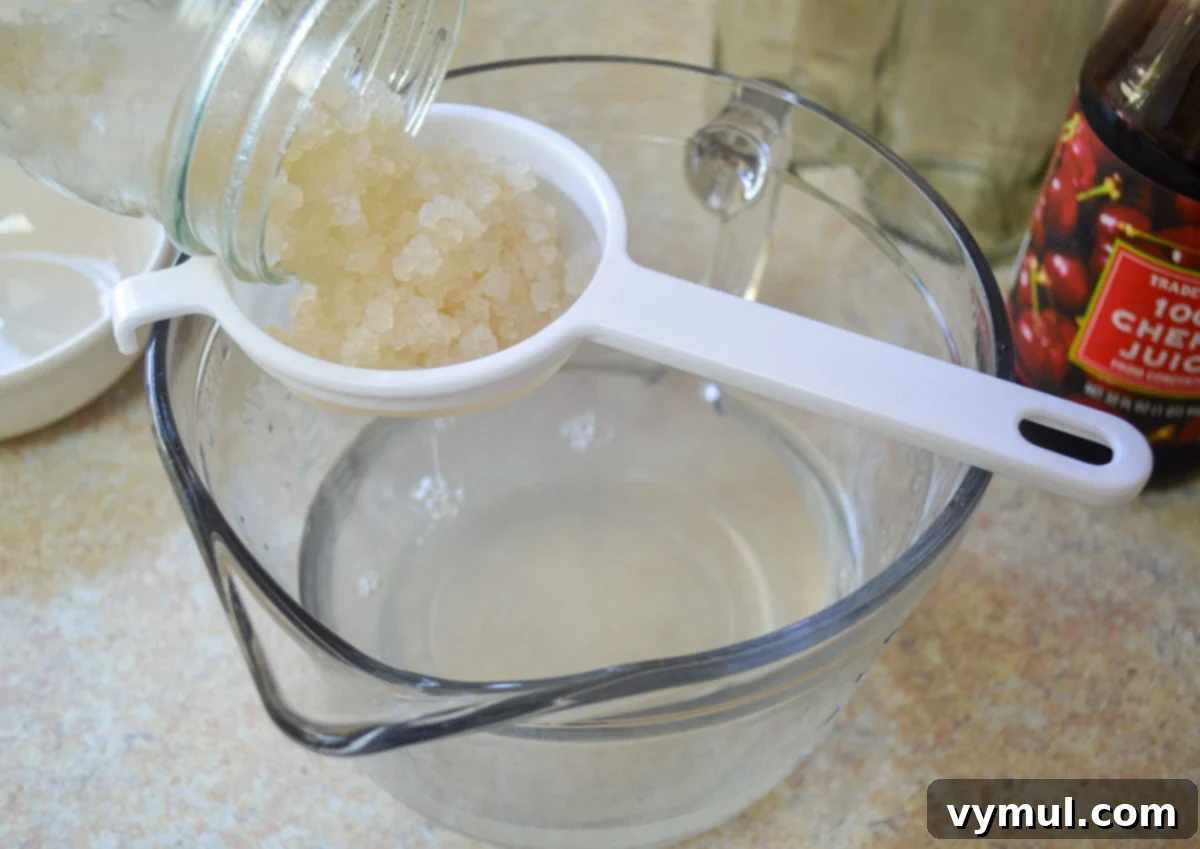
Carefully strain the entire first ferment through your nylon sieve directly into the 1-quart (4-cup) glass measuring cup. Once the liquid has passed through, gently transfer the strained water kefir grains into the newly prepared sugar water jar you made in Step 1. Place a lid on this new jar, set its date dial for two days ahead, and return it to a room temperature spot. This ensures your grains continue their fermentation cycle uninterrupted.
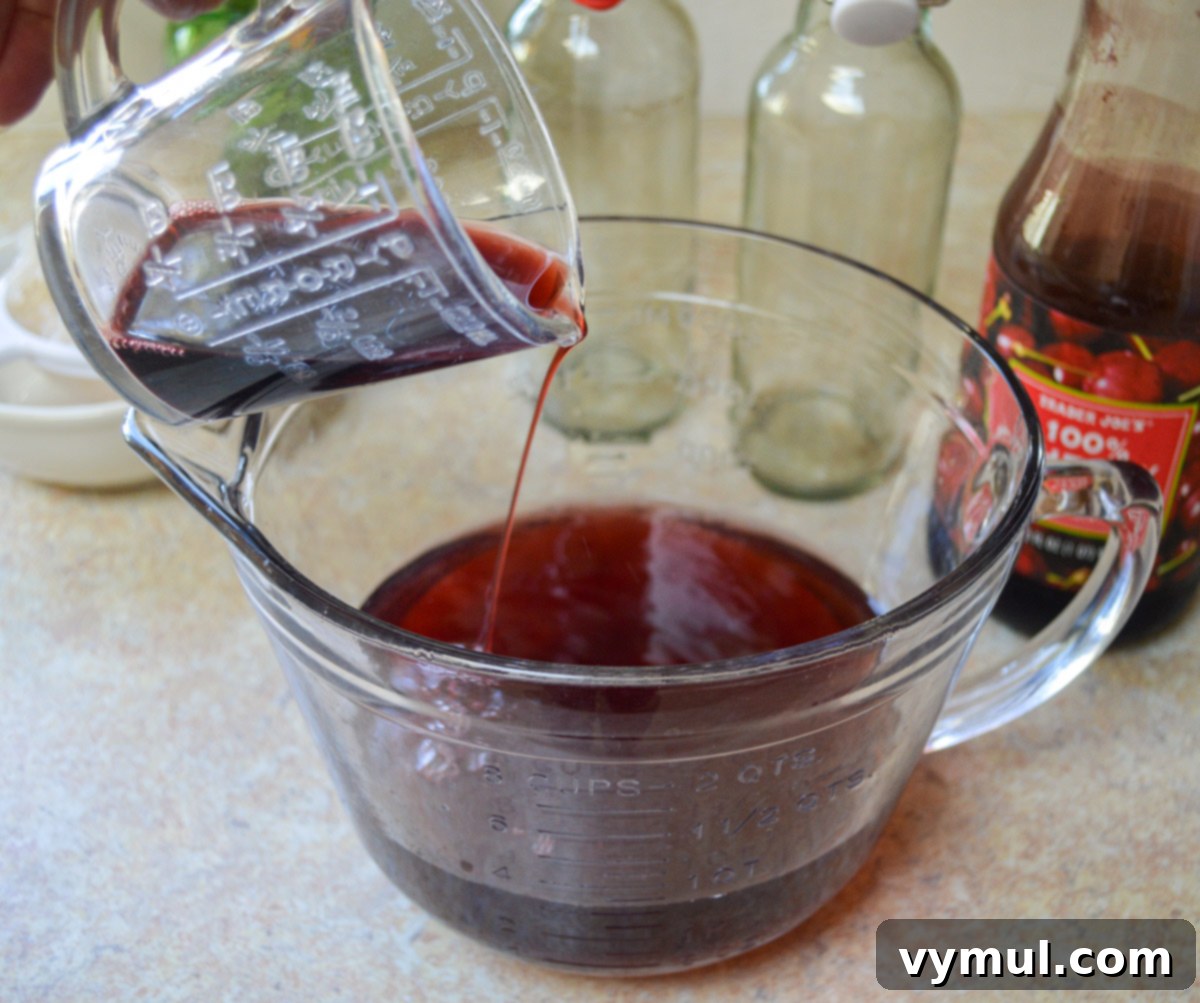
The fermented kefir water in your glass measure should be approximately 2-1/2 to 3 cups. Now, add 1 cup of your desired 100% fruit juice. I personally love the tangy zest of tart cherry and grapefruit, but the possibilities are endless! Mix thoroughly with your wooden spoon to evenly distribute the juice. Feel free to experiment with different juices to discover your perfect flavor combinations.
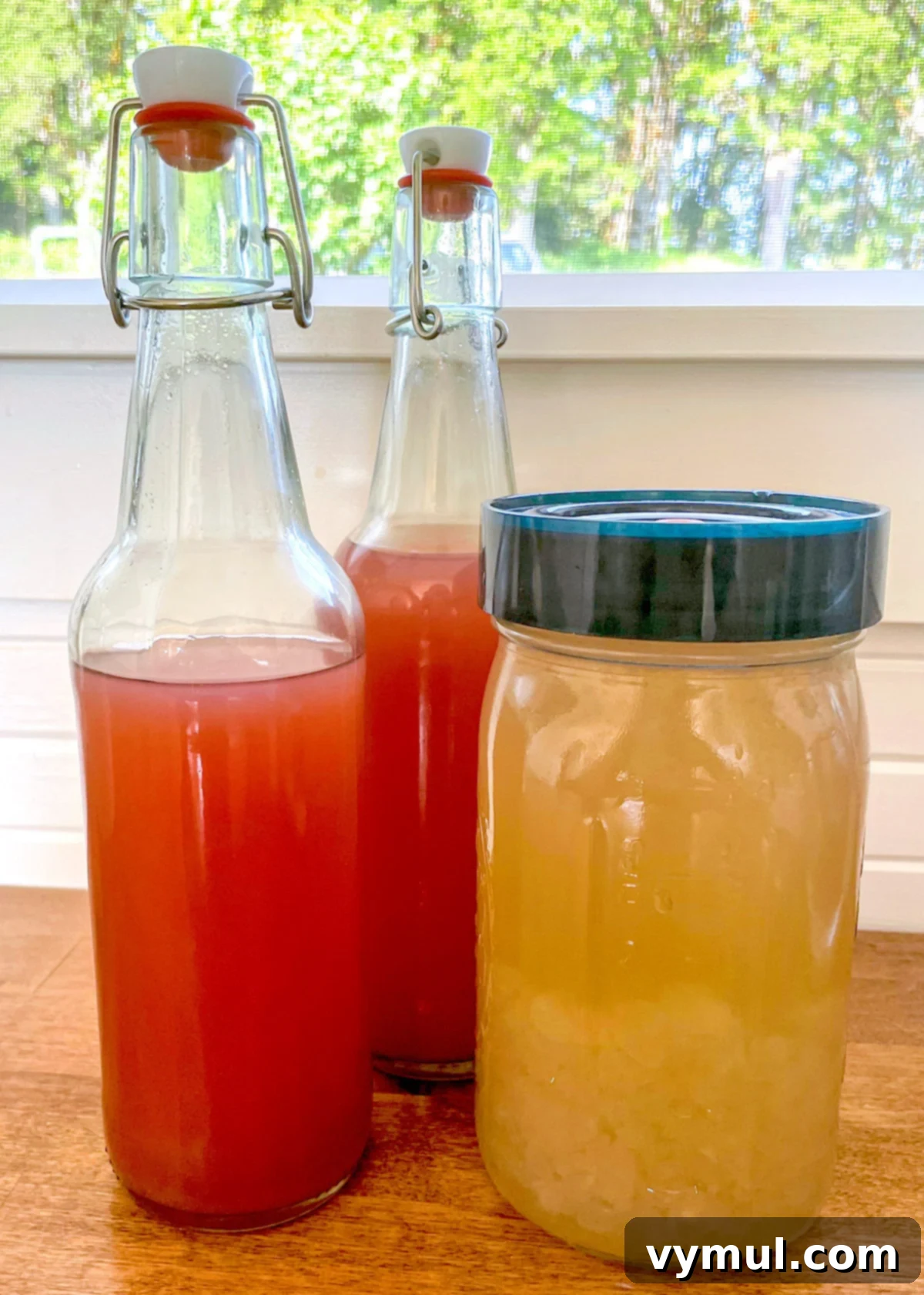
Step 3: Bottle, Ferment Again, & Refrigerate for Optimal Enjoyment
This is the final stage where your water kefir develops its signature fizz and is ready for consumption.
- Bottle Your Kefir: Carefully pour the water kefir-juice mixture into your clean swing-top bottles. Typically, one quart jar of first ferment liquid, once flavored, will fill two pint-sized bottles. If you prefer larger servings, you can opt for quart-sized bottles, yielding one bottle per batch.
- Second Ferment (Carbonation): Seal the bottles tightly and place them back on the counter at room temperature for another two days. This is where the magic of carbonation happens! The remaining sugars from the juice are fermented, producing carbon dioxide. Keep a close eye on your bottles; you should start to see small bubbles accumulating at the top or clinging to the sides. In warmer environments, this carbonation might develop in as little as one day, while in colder conditions, it could take up to three days. (As pictured above, you can ferment these bottles alongside your next first ferment batch.)
- Refrigerate for Flavor and Preservation: Once you observe consistent bubbling, indicating sufficient carbonation, transfer the sealed bottles to your refrigerator. Chilling the water kefir not only stops the fermentation process (preventing excessive carbonation and potential explosions) but also significantly enhances the flavor and crispness. Water kefir tastes best when served cold. It can be stored in the refrigerator for up to a month at 40° to 45°F (4-7°C). While technically it can be left at room temperature (68° to 78°F / 20-26°C) for 3-4 days, I consistently find the flavor and refreshment superior when refrigerated.
Continue to repeat this enjoyable process – both the first and second ferments – as long as you have bottles and desire fresh water kefir. It’s a sustainable cycle that provides a constant supply of this healthy drink!
How to Take a Break from Water Kefir Fermentation
Sometimes you might need a break from daily brewing, whether for travel or simply to reduce your workload. Fortunately, water kefir grains can be easily stored for extended periods.
In STEP 2 of the Second Ferment instructions (above), after you’ve strained your grains and transferred them to a new batch of sugar water, instead of using a fermenting lid, simply place a regular storage lid tightly on the jar. It’s a good practice to add a bit more sugar (e.g., 1/4 cup total) to this storage water to provide extra nourishment for the grains during their dormant period.
Place this jar in the fridge for anywhere from a few weeks up to 6 months. The cold temperature significantly slows down the metabolic activity of the grains, putting them into a state of hibernation. While the sugar water will slowly feed them, it’s recommended to replace the sugar water every few weeks if possible, especially for longer storage periods. However, I’ve personally left them for a month while traveling, and they revived perfectly fine.
How to Restart Refrigerated Grains
When you’re ready to resume making water kefir, reviving your dormant grains is a simple process:
- Remove the jar of kefir grains from the refrigerator.
- Strain the grains from the old sugar water using your nylon strainer. This water will be depleted of nutrients and should be discarded.
- Add the revived grains to a fresh batch of sugar water prepared exactly as described in the “First Ferment” section above.
Your grains should quickly spring back to life, and you can resume your regular fermentation cycle, enjoying fresh water kefir once more!
Expert Tips for Perfect Water Kefir Every Time
Over years of making water kefir, I’ve gathered some valuable insights to help you achieve the best results:
- Understanding Carbonation: The fizz level in your finished drink can vary significantly. Factors include room temperature during the second ferment, the exact duration of fermentation, and the overall activity level of your grains. Sometimes it might be barely carbonated, while other times it can be vigorously bubbly and even overflow upon opening (as seen in the video!). Most often, you’ll achieve a pleasant carbonation without overflowing. However, I highly recommend placing a clean rag over the top of the bottle when unsealing, just in case of a lively overflow! Always open over a sink or a bowl.
- The Importance of a Second Ferment: While it’s technically possible to drink water kefir after the first ferment, I personally don’t enjoy its flavor or aroma at that stage. The second ferment, with added juice, is crucial for developing the delicious taste and satisfying carbonation that makes water kefir so enjoyable.
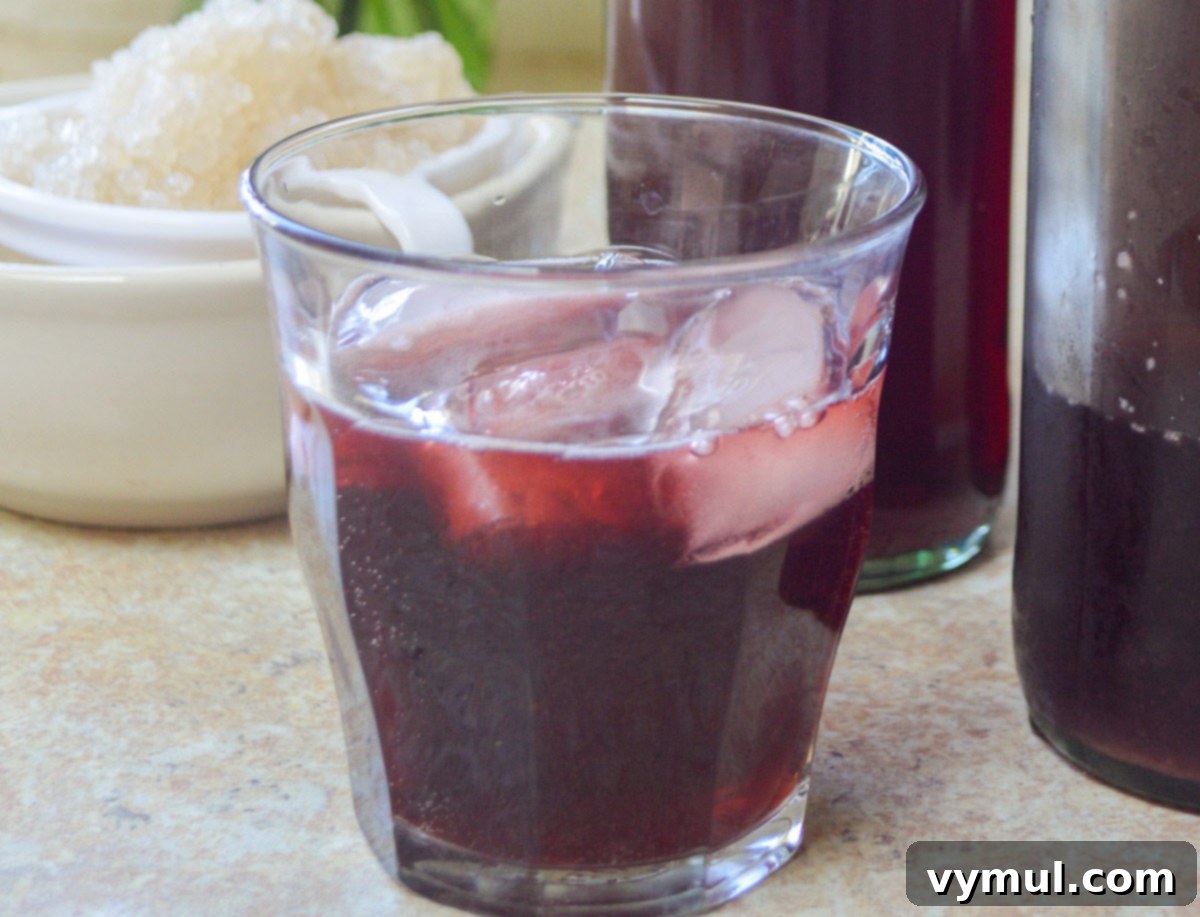
- Serve It Cold: In my opinion, fermented water kefir is best enjoyed chilled. Ensure you refrigerate it long enough for it to become completely cool before drinking for the most refreshing experience.
- Initial Adjustments: Some individuals report mild gastrointestinal issues like bloating, nausea, constipation, or diarrhea when first introducing water kefir into their diet. This is similar to the body adjusting to new probiotics. I personally never experienced these issues with my daily cup (half of one of my pint bottles). If you’re concerned or have a sensitive digestive system, start with a small amount, such as 1/4 cup per day for a week, and gradually increase as your body adjusts. Listen to your body!
- Mineral Support for Grains: Even with my semi-hard well water from a spring, I occasionally add one of the mineral supplements (sea salt, baking soda, or molasses) to ensure my grains remain robust and healthy. It’s good practice to alternate between the three listed options, and never use more than the recommended amount to avoid mineral overload, which can also stress the grains.
I genuinely hope you fall in love with the water kefir you make using this tutorial. If you try it, please be sure to leave a recipe rating so I can hear about your experience!

Print Recipe
Pin Recipe
Save
Saved!
How to Make Water Kefir – Easiest Step-by-Step Method
Equipment
-
Nylon/plastic mesh strainer
-
quart jar wide mouth
-
Wooden spoon
-
Fermenting Lid, or muslin or coffee filter and rubber band
-
swing-top glass bottles, 1 pint
-
4 cup glass measuring cup
Ingredients
First Ferment
- water kefir grains, 2 tablespoons to 1/4 cup – can use more
- 1/8 cup sugar, see types to use and not use below in notes (can use up to 1/4 cup)
- 2½ cups water, total (use well/spring water; filter or leave treated water out 24 hours and add a mineral supplement each first ferment)
Mineral Supplements (use if water doesn’t have or if grains appear sluggish)
- 1/8 teaspoon unrefined sea salt
- 1/4 teaspoon plain baking soda
- 1/2 teaspoon unsulfured blackstrap molasses
Second Ferment
- strained water kefir
- 1 cup 100% fruit juice
Instructions
First Ferment
-
Add 1/8 of sugar(s) of choice to a quart jar (I often use half cane sugar and half brown sugar). Add one of the mineral supplements, if needed, here.
-
Add about 1/3 cup of hot water (about 110-120 degrees, which is typically your hottest tap water) and stir well with a wooden spoon to dissolve. Fill the jar with cold water, stirring, until it’s about 3/4 of the way full (about 2-1/2 cups total). NOTE: The resulting water temperature should be about room temperature (70-75 degrees) to not damage/kill the grains.
-
Use a nylon strainer to separate the water kefir grains from the water in the jar they’re in – if it’s from storage, DO NOT keep the water; if it’s from another ferment, keep the water in a large glass measure.
-
Gently add the strained kefir grains to the prepared room temperature sugar water, using a funnel if you’d like. Give it all a little stir. Attach the Easy Fermenter Lid and set the date for 2 days ahead. Or use a coffee filter or piece of muslin attached with a rubber band.
-
Let sit at room temperature for up to 48 hours – you should see bubbles when you move the jar and maybe some of the grains floating. TIP: If it’s cold in your kitchen, find the warmest place for your water kefir or provide a warming light next to it.
Second Ferment
-
Make another quart jar of sugar water the same way as the first ferment.
-
Strain the first kefir ferment through the nylon sieve into a 1-quart (4-cup) glass measure.
-
Transfer the strained kefir grains to the newly prepared jar. Place the lid on and set date dial for two days and keep at room temperature (now you will just be repeating this until you have enough water kefir or you want to move it into refrigerated storage).
-
The fermented kefir water in the glass measure should be about 2-1/2 to 3 cups. Add 1 cup of your choice of 100% juice and mix with wooden spoon.
-
Pour the water kefir-juice mixture into swing top bottles. A quart jar fills two pint-sized bottles, you can also use quart size bottles if you’d like one bottle from each quart jar.
-
Set the bottles on the counter to ferment again (the second ferment) for another two days – OR until you see some bubbles on the top. In warm weather, it may only take one day, in colder weather maybe three.
-
Once you see the bubbles, place the sealed jars into the fridge where they can stay for up to a month at 40° to 45°F. (Technically, you can leave it at room temperature (68° to 78°F) for 3 to 4 days, but I’ve always thought it tastes better refrigerated.)
-
Keep repeating this process – both the first and second ferments – until you run out of bottles or you need to take a break.
Storing Water Kefir
-
In the second ferment above, after straining the grains and adding them to the new sugar water, place a regular storage lid on the jar instead of the fermenting lid (note: I do add 1/4 cup sugar when making water for storage just to give the grains more food).
-
Place this in the fridge for a few weeks up to 6 months. While the sugar water will feed the grains slowly, it’s still recommended to replace the sugar water every few weeks if you can (I have left them for a month while traveling and they were fine).
To Wake Up Refrigerated Grains
-
Remove the jar of kefir grains in water from the fridge and strain the grains from the water, THROWING OUT the water that’s been used up while in hibernation.
-
Add the grains to a new sugar water jar and start the process again.
Notes
- Refined White Sugar
- Organic Cane Juice Crystals
- Turbinado or raw sugar
- Rapadura or Sucanat
- Brown Sugar
Types of Sugar NOT to Use:
- Coconut/Palm Sugar
- Maple Sugar/Syrup
- Honey or Molasses (okay to use 1/2 teaspoon molasses as a mineral supplement)
- Sugar Substitutes (including stevia, monk fruit, agave)
Nutrition
Frequently Asked Questions (FAQs) About Water Kefir
Absolutely! Fermented water kefir is a fantastic source of beneficial probiotics. Its microbial diversity can be extensive, featuring hundreds of strains, with prominent ones often including Lactobacillus, Lactobacillus hordei, and Lb. nagelii (source). The exact strains and their concentrations can vary depending on the specific grains, fermentation conditions, and the fruits or juices used for flavoring. Beyond gut health, water kefir may also contribute to a stronger immune system and has shown promising properties in potentially fighting certain cancers (source). It’s a holistic addition to a healthy lifestyle.
While generally well-tolerated, some individuals might experience temporary side effects such as bloating, nausea, constipation, or diarrhea when they first start drinking water kefir. These symptoms are quite common when introducing new probiotics to your digestive system, as your gut microbiome adjusts. Typically, these effects subside as your body adapts. I personally did not experience any such issues, but if you’re concerned or have a sensitive stomach, I recommend starting with a small daily amount, perhaps 1/4 cup, for a week before gradually increasing your intake to monitor your body’s reaction.
The precise origin of water kefir grains remains a bit of a mystery, but they are found globally under various names (source). These “grains” are not derived from cereal grains like wheat or rye; rather, the term describes their crystalline, grain-like appearance. They are complex communities of bacteria and yeast that coexist in a symbiotic relationship, held together by a unique polysaccharide structure. They are living, self-replicating cultures that, with proper care, can provide an endless supply of water kefir.
The most obvious difference lies in their base: milk kefir is fermented with dairy milk, while water kefir uses a sugar-water solution. Consequently, water kefir is a fantastic dairy-free option. In terms of microbiology, water kefir generally contains fewer strains of bacteria and yeasts compared to milk kefir. However, it still boasts a significantly higher concentration and diversity of probiotic bacteria than many other popular cultured products, such as yogurt, making it a powerful probiotic beverage in its own right.
Due to the fermentation process, water kefir contains a very small, naturally occurring amount of alcohol. This level typically varies from batch to batch, but it is generally quite low, usually less than 0.5% ABV (Alcohol By Volume), similar to many kombuchas or naturally fermented sodas. This minimal alcohol content is a result of the short brewing period and the specific yeast strains present in the grains. It’s generally not considered an alcoholic beverage in the conventional sense.
Both water kefir and kombucha are excellent low-sugar fermented drinks packed with probiotics and other health benefits. Kombucha often contains a broader range of enzymes and antioxidants, while water kefir tends to have a greater diversity and quantity of probiotic bacteria. The choice between them often comes down to personal preference for taste, caffeine content (kombucha typically contains caffeine from tea, water kefir is caffeine-free), and ease of preparation. From a brewing perspective, water kefir is generally considered much easier to make consistently, with less fuss over SCOBY maintenance and a more forgiving fermentation window, making it ideal for beginners.
Water kefir typically has a minimal impact on blood sugar levels, especially compared to the sugary beverages it often replaces. During fermentation, the bacteria and yeast actively break down sucrose (table sugar) into fructose and glucose. Importantly, fructose is metabolized differently by the liver and does not cause the rapid blood sugar spikes associated with sucrose. Furthermore, the longer you allow your water kefir to ferment, the more sugar the microbes consume, resulting in a less sweet finished product and an even lower sugar content. This makes it a great option for those mindful of their sugar intake.
More Fermenting Recipes to Explore
If you’ve enjoyed making water kefir, you might be interested in exploring other delightful fermented food recipes. Here are some of my favorites:
- Super Easy Fermented Pickled Jalapeños Recipe
- Best Mild Homemade Sauerkraut Recipe (That Happens to Be Super Easy!)
- 5-Minute Foolproof Fermented Corn Relish Recipe
- Easiest Fermented Pickled Vegetables Ever

Disclosure: Affiliate links in this article will earn a commission based on sales, but it doesn’t change your price. Click here to read our full disclaimer and advertising disclosure.