
The Ultimate Raised Bed Vegetable Garden Plan: Design, Planting Guide, and Deer-Proof Strategies for Abundant Harvests
Embarking on a new gardening adventure at the farmhouse calls for a well-thought-out plan! This comprehensive guide details our raised bed vegetable garden design, complete with a seasonal planting schedule. Our goal is to provide fresh produce throughout the year, plus a surplus for preserving, ensuring a bounteous harvest even for winter. Join us as we share the progress of our new, deer-proof garden and all the exciting steps involved in bringing it to life.

Life at the farmhouse is a whirlwind, balancing interior renovations with the pressing call of spring planting. As the calendar urges us to get seeds in the ground, our attention shifts outdoors. However, it’s not simply a matter of immediate planting; the foundation of our raised bed vegetable garden needs to be meticulously constructed first. This initial investment in infrastructure will pave the way for years of effortless gardening.
Many novice gardeners often stumble at the outset, believing it’s simpler to just till the grass, add some soil and compost, and start planting. Unfortunately, this approach often leads to frustration. Within mere weeks, the weed seeds brought to the surface will receive the sunlight they need, leading to a relentless explosion of weeds. These opportunistic invaders frequently outpace the growth of your precious vegetable seeds.
This struggle typically continues throughout the summer as you diligently water both your vegetables and the ever-present weeds. Eventually, the endless weeding can become disheartening, causing enthusiasm to wane, and by August, many gardeners give up, allowing weeds to reclaim their territory. This is precisely why strategic garden design, particularly with raised beds, is so crucial for long-term success and enjoyment.
Why Choose Raised Garden Beds? Beyond Just Weeding
Minimizing weeding is indeed a significant advantage of raised beds, but it’s far from the only benefit. Raised beds offer a multitude of advantages that contribute to a more manageable, productive, and enjoyable gardening experience. Even for larger garden spaces, like my previous raised bed garden, this method proves highly effective. Here are some compelling reasons why planting in raised beds is a fantastic idea for any gardener:
- Superior Soil Control: Raised beds allow you to create the ideal soil composition for your plants. You can fill them with a custom blend of high-quality topsoil, compost, and amendments, ensuring optimal drainage and nutrient availability, regardless of your native soil quality.
- Enhanced Drainage: The elevated structure naturally promotes better drainage, preventing waterlogging that can harm roots. This is particularly beneficial in areas with heavy clay soils or excessive rainfall.
- Warmer Soil: Raised beds warm up faster in the spring, allowing for earlier planting and an extended growing season. The soil also retains warmth longer into the fall, further boosting productivity.
- Reduced Compaction: Since you won’t be walking directly on the soil within the beds, compaction is virtually eliminated. This fosters healthy root development and improves aeration.
- Easier Access and Less Bending: The elevated height makes planting, weeding, and harvesting much more comfortable, reducing strain on your back and knees. This accessibility is a huge plus for gardeners of all ages and physical abilities.
- Pest and Disease Management: Raised beds can create a natural barrier against some ground-dwelling pests. Furthermore, the ability to control soil composition and implement crop rotation within defined beds helps to reduce the incidence of soil-borne diseases.
- Aesthetic Appeal: Well-constructed raised beds create a neat, organized, and beautiful garden space, enhancing the overall appeal of your landscape.
Elevate Your Gardening Skills with Our Comprehensive Ebook!
For those eager to delve deeper into these techniques and access a wealth of printable resources, our Vegetable Gardening The Easy Way ebook is an invaluable guide. It compiles all our tips and proven methods to help you cultivate a thriving garden with minimal effort.
Our Farmhouse Deer-Proof Garden: Design and Progress
Our journey begins with transforming a roughly 40′ x 40′ area of our property, which previously housed a mobile home. This explains the underlying gravel base – though currently overgrown with stubborn weeds, which we are systematically covering. Once the foundational work of our raised bed garden is complete, ongoing maintenance will be wonderfully simple: a yearly refreshing of bark chip paths, adding a fresh layer of compost to the beds, planting, harvesting, and removing spent plants. The aim is a garden that is both highly productive and incredibly easy to care for.
To give you a clearer vision of our ambitious project, here is the most current iteration of our vegetable garden plan, refined slightly from the design I created last year:
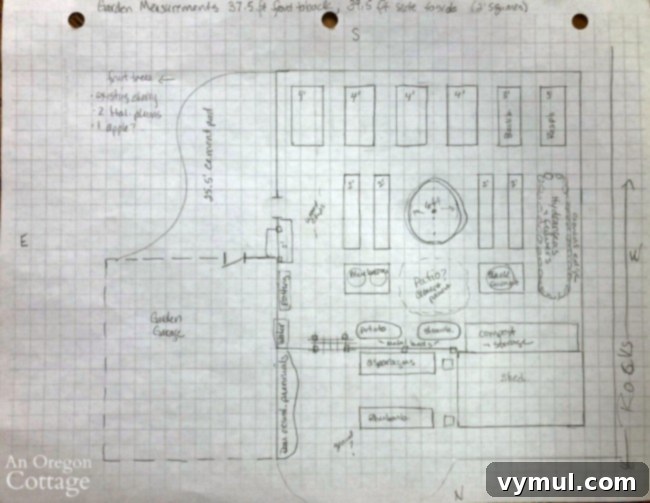
A crucial element of our design is the robust 6-foot deer fence enclosing the main raised bed garden. After discovering last year that deer have an appetite for almost everything we tried to grow, this barrier became a non-negotiable necessity. Understanding that the diagram might be difficult to read, here’s a breakdown of the key areas and their planned usage:
- Top Row of Beds: This section features four substantial beds, each measuring 4′ x 8′. These will be dedicated to many of our primary annual crops, with a strict rotation schedule to keep diseases at bay – a fundamental principle of organic gardening. Flanking these on the right will be two slightly smaller beds, 3′ x 8′, reserved for permanent plantings of delectable Triple Crown Thornless Blackberries and everbearing raspberries, ensuring a steady supply of fresh berries year after year.
- Middle Row Long Beds: Inspired by a visit to my aunt’s beautiful garden last year, we’ve incorporated four long and narrow beds, each 2′ x 12′. These dimensions are perfect for vining plants like tomatoes and pole beans, providing ample space for their growth. I’m even planning to experiment with a couple of rows of corn in one of these beds, utilizing the vertical space efficiently.
- Middle Row Circle: This unique central bed will be constructed using natural rocks gathered from our property, forming a wall approximately one foot high and spanning about 6′ x 6′. The focal point of this circular bed will be a tall vining flower, artfully trained up an old bird feeder discovered on the property. The edges will be a vibrant tapestry of bug-repelling flowers, aromatic herbs, and select vegetables, creating a beautiful and functional central feature.
- Area Below the Beds (“Bottom Area”): This section represents a significant addition to last year’s plan. During the initial layout, a previously unaccounted-for 6-foot expanse mysteriously “appeared” between the middle row and the deer fence – a testament to my ongoing struggle with precise measurements! This newfound space will now house two 4′ x 6′ beds, earmarked for permanent plantings of blueberries and black currants. In between these berry beds, we’re creating a charming round patio area using “urbanite” – recycled, broken concrete pieces salvaged from old cracked patios and walkways on the property. This sustainable patio will feature a couple of chairs, offering a perfect spot to relax and savor both the garden’s beauty and the scenic views.
- Lower Fence Area: Along the lower fence, two metal planters will be strategically placed to grow potatoes and strawberries. Adjacent to our garden shed, we will establish our compost area, making it convenient for recycling kitchen and garden waste.
- Outside the Deer Fence: Recognizing that certain crops are less appealing to deer, I plan to establish permanent beds of asparagus and rhubarb outside the main fenced area. While rhubarb leaves are poisonous to deer (and humans), the tender spring shoots of asparagus are a risk. However, it’s a trial, and I can always relocate them inside the fence if deer prove to be an issue.
And I almost overlooked my hydrangea bed! To ensure we have enough blooms for indoor arrangements and drying, these beautiful shrubs must be grown within the protection of the deer fence. I’ve allocated space for an oval bed on the right, also crafted from urbanite, specifically for hydrangeas and any other deer-prone flowers I wish to cultivate. I’m contemplating adding a couple of roses here as well, enhancing both beauty and yield.
Garden in Progress: From Vision to Reality
Here are a few in-progress shots that illustrate how far we’ve come and how we’re resourcefully using available materials to bring our vision to life:
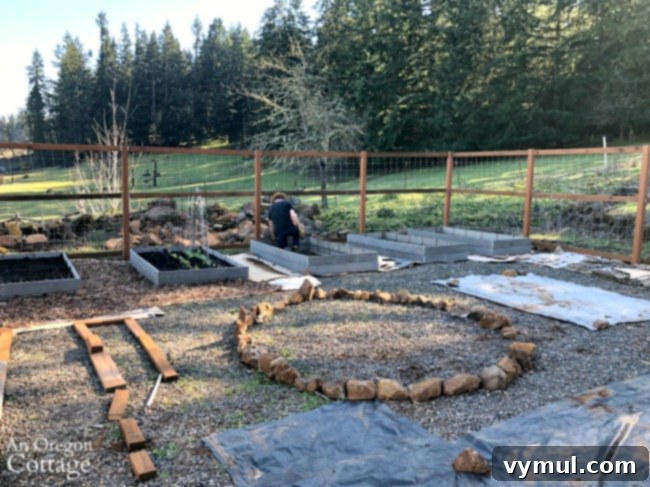
The central rock circle is taking shape, with its first layer of rocks already in place. I envision it will ultimately comprise about three layers. Constructing rock walls is new to me; I’m largely improvising, using soil on one side to stabilize the rocks. For this particular circle, however, I might opt for an adhesive to ensure long-term stability. I’m still exploring options, so any tips or expertise in rock wall construction would be greatly appreciated!
In the background, you can spot Brian diligently securing the raised beds to the ground. For those interested in replicating these durable, long-lasting beds, we’ve created a detailed tutorial here. The long beds, currently outlined with leftover wood pieces from the fence construction, will be built using the same robust method.
And notice how covering the stubborn, weedy gravel base with layers of cardboard and wood chips immediately transforms the area, making it look incredibly neat and tidy. This method effectively suppresses weeds and creates attractive, functional pathways – I absolutely love the transformation!
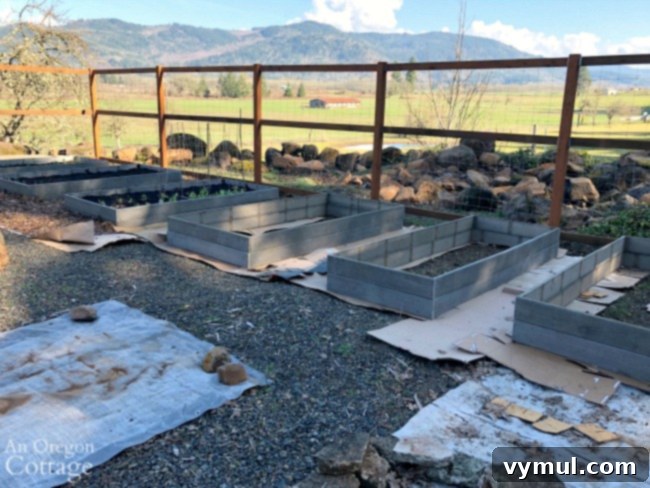
Here’s another glimpse of the beds as they progress. If you’re curious about how we manage to fill these foot-tall beds without incurring the exorbitant cost of a massive amount of soil, I’ve provided all the comprehensive details in that same tutorial. We utilize various organic materials to create a rich, layered foundation that nurtures plants while saving significantly on soil expenses.
We’re making excellent headway, but a few crucial tasks remain before the garden is fully operational:
- Installing the gates for the robust deer fence.
- Constructing and filling six additional long-lasting raised beds.
- Building and filling the two unique beds crafted from rocks and broken concrete.
- Laying out the charming small patio area.
- Assembling and planting the metal beds designed for specific crops.
This provides the essential background and highlights the significant progress we’ve achieved so far. Now, let’s dive into the specifics of our vegetable planting plan for this year, detailing the varieties we’re cultivating and the quantities designed for our medium-sized yet highly productive garden.
Detailed Vegetable Garden Plan & Planting Guide for Zone 8
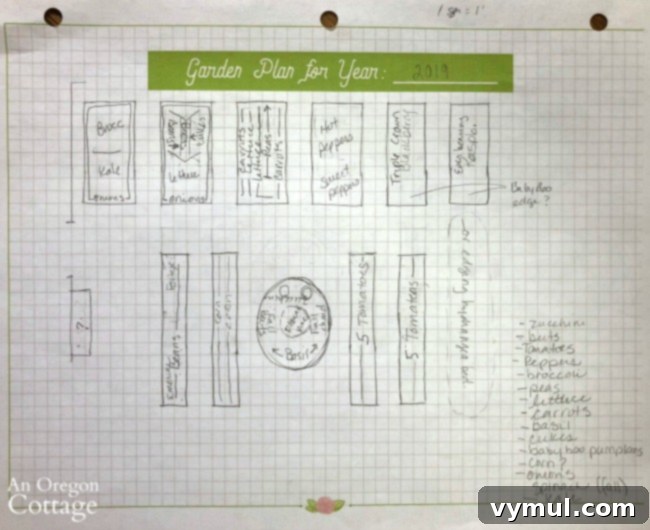
The image above showcases the invaluable guide I used to meticulously plan out what to plant and precisely where. This detailed planning sheet, along with numerous other helpful garden planning resources, is available in our exclusive Garden Success Planning Notebook. You can gain access to this VIP library by subscribing to our weekly newsletter, a fantastic resource for any dedicated gardener.
Here is my specific planting guide for this year, outlining the exact varieties and amounts we are planting. Please note that many of the linked products are from Pinetree Garden Seeds, one of my favorite garden catalogs. If you choose to order from them, be sure to use this special link to sign up for their newsletter and receive a $5 off $25 coupon via email for your first order!
Also, a crucial reminder: the planting times detailed below are specifically tailored for my Zone 8 garden. Gardeners in different climate zones will need to adjust their planting schedules accordingly to match local frost dates and growing conditions.
Planted Late March: Early Spring Essentials
Our initial round of planting in late March focuses on hardy, cool-season crops that thrive in the cooler temperatures of early spring:
- Snow Peas: We planted a generous amount of ‘Oregon Sugar Pod 2’. (Note: This specific variety is currently unavailable; a fantastic alternative to consider is this ‘Super Sugar Snap Pea’ variety, known for its sweet, crisp pods.)
- Lettuce: A 10-foot row of ‘Bistro Salad Mix’ seedlings was transplanted (a 6-pack carefully divided into 12 individual starts). Additionally, we sowed two rows of seeded lettuce: ‘Winter Density Romaine’ (ideal for compact growth and cold tolerance) and classic ‘Buttercrunch’ (a tender, buttery favorite).
- Broccoli: Six ‘Artwork’ broccoli starts were planted in a 4′ x 4′ section of a raised bed. This new variety (find it here) is highly anticipated for its season-long production of delicious side shoots, extending the harvest considerably.
- Kale: Six ‘Green Starbor’ kale starts (a robust F1 hybrid) share the other 4′ x 4′ area of the same raised bed, providing a continuous supply of nutrient-rich greens.
- Onions: We lined one bed with ‘Walla Walla’ onion seedlings (known for their sweetness) and another bed with ‘Red Onion’ sets (a vibrant, pungent choice), totaling 24 feet of onions around the perimeter of each bed. Gardening Tip: Plant seedlings and sets closer together (about 2-3 inches apart). As they grow, harvest the smaller onions as green onions, effectively thinning the bed while getting an early bonus harvest from a smaller footprint.
- Carrots: Three 8-foot rows were sown: one of ‘Purple Sun’ (pelleted seeds for effortless planting and minimal thinning!), one of ‘Red Core Chantenay’ (a classic, reliable variety), and another of ‘Tendersweet’ (exceptionally tender and flavorful).
- Beets: Given that I’m the primary beet enthusiast in our family, I planted a more modest amount: one 4-foot row of ‘Chioggia’ (a beautiful heirloom with concentric rings) and one 4-foot row of ‘Cylindra’ (long, cylindrical roots for easy slicing). What I do harvest, I typically roast and freeze for quick additions to lunch salads throughout the year.
Late April-May: Warm Season Crops Begin
As the weather warms, our focus shifts to crops that thrive in more moderate temperatures, setting the stage for summer abundance:
- Pole Beans: We dedicated 10 feet to my absolute favorite pole bean, ‘Emerite’ (renowned for its prolific yield and tender pods), and 4 feet to ‘Fortex’ (my reliable complementary variety to Emerite, also offering excellent production).
- Tomatoes: Our selection includes a diverse mix for fresh eating and preservation. We planted two ‘Brandywine’ heirloom plants (celebrated for their rich, complex flavor), two ‘Cherokee Purple’ heirloom plants (another dark, intensely flavored favorite), two reliable ‘Early Girl’ hybrid plants, one ‘Black Cherry’ heirloom (unquestionably the best cherry tomato flavor!), and three ‘Roma/Paste’ plants (essential for sauces and canning). These 10 plants, housed within two 12-foot beds, are expected to produce an abundance for fresh consumption, as well as enough for canning salsa, making addictive chutney, crafting homemade pizza sauce, and creating delicious dried tomatoes stored in olive oil.
- Basil: Four ‘Italian Large Leaf’ plants provide the aromatic herbs needed for our culinary endeavors. (Note: This variety is currently unavailable; we recommend this ‘Italiano Classico Basil’ as an excellent, fragrant substitute.)
Mid May: Full Summer Production
By mid-May, with warmer soil and minimal frost risk, it’s time to plant the heat-loving stars of the summer garden:
- Corn: We’re planting a total of two 12-foot rows, combining ‘Natural Sweet’ organic F1 hybrid corn (a wonderfully sweet variety) and ‘Incredible’ F1 hybrid corn (known for its large, flavorful ears).
- Hot Peppers: For those who enjoy a little heat, we’re growing six ‘Jalapeno’ heirloom plants (early-producing and reliable) and three ‘Anaheim’ heirloom plants (mildly spicy and versatile).
- Sweet Peppers: A total of six sweet pepper plants are planned: three ‘Early Red Bell’ F1 hybrid (for early, vibrant red bells) and three ‘Mini Bells’ blend (perfect for snacking and salads).
- Pumpkins: We’ll tuck in a few ‘Baby Boo’ (adorable mini white pumpkins) and ‘Jarrahdale’ (a beautiful, squash-like blue pumpkin) into the hydrangea bed and any other available spots. These are grown primarily for autumnal decor rather than consumption.
- Cucumbers: A 6-foot section is dedicated to pickling cucumbers. While ‘Alibi’ is no longer available, excellent alternatives include ‘Calypso’ (a high-yielding hybrid) or ‘Boston Pickling Cuke’ (a classic heirloom). These will be grown vertically up a sturdy trellis, maximizing space and keeping fruits clean.
This carefully curated selection and quantity of crops are designed to provide a continuous supply of fresh produce for our 3-4 person household (depending on whether our daughter is home) throughout the growing season. Furthermore, it ensures a substantial surplus for freezing, canning, and drying, allowing us to enjoy the bounty of our garden long after the harvest season concludes. While it’s not quite the expansive production of my former, larger cottage garden, this plan is perfectly manageable and highly efficient for our current needs, balancing productivity with ease of care.
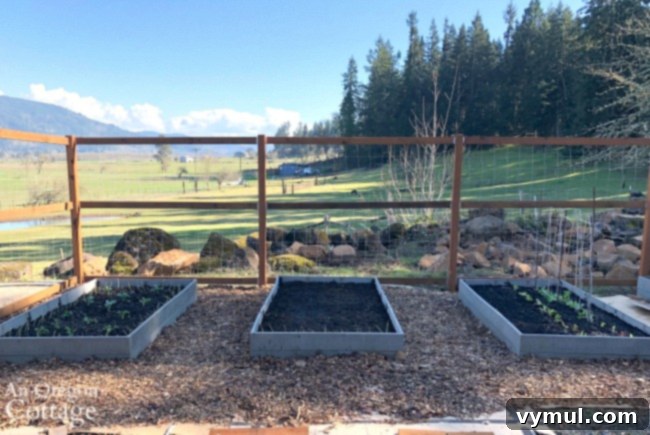
Above, you can see the three raised beds that were diligently planted in late March. On the left, kale and broccoli seedlings are thriving, bordered by a neat line of onion seedlings. The middle bed features freshly sown rows of lettuce and beet seeds, also framed by onion sets. To the right, snap peas are beginning their climb, alongside additional lettuce starts and seeds, and precise rows of carrot seeds, all promising future harvests.

What are Your Favorite Varieties? Share Your Garden Plans!
So, this outlines the detailed plan for our new farmhouse vegetable garden this year. We’re excited about the journey and the bountiful harvests to come! What about your garden? We’d love to hear your plans. What cherished varieties are you growing this season that have become your personal favorites?