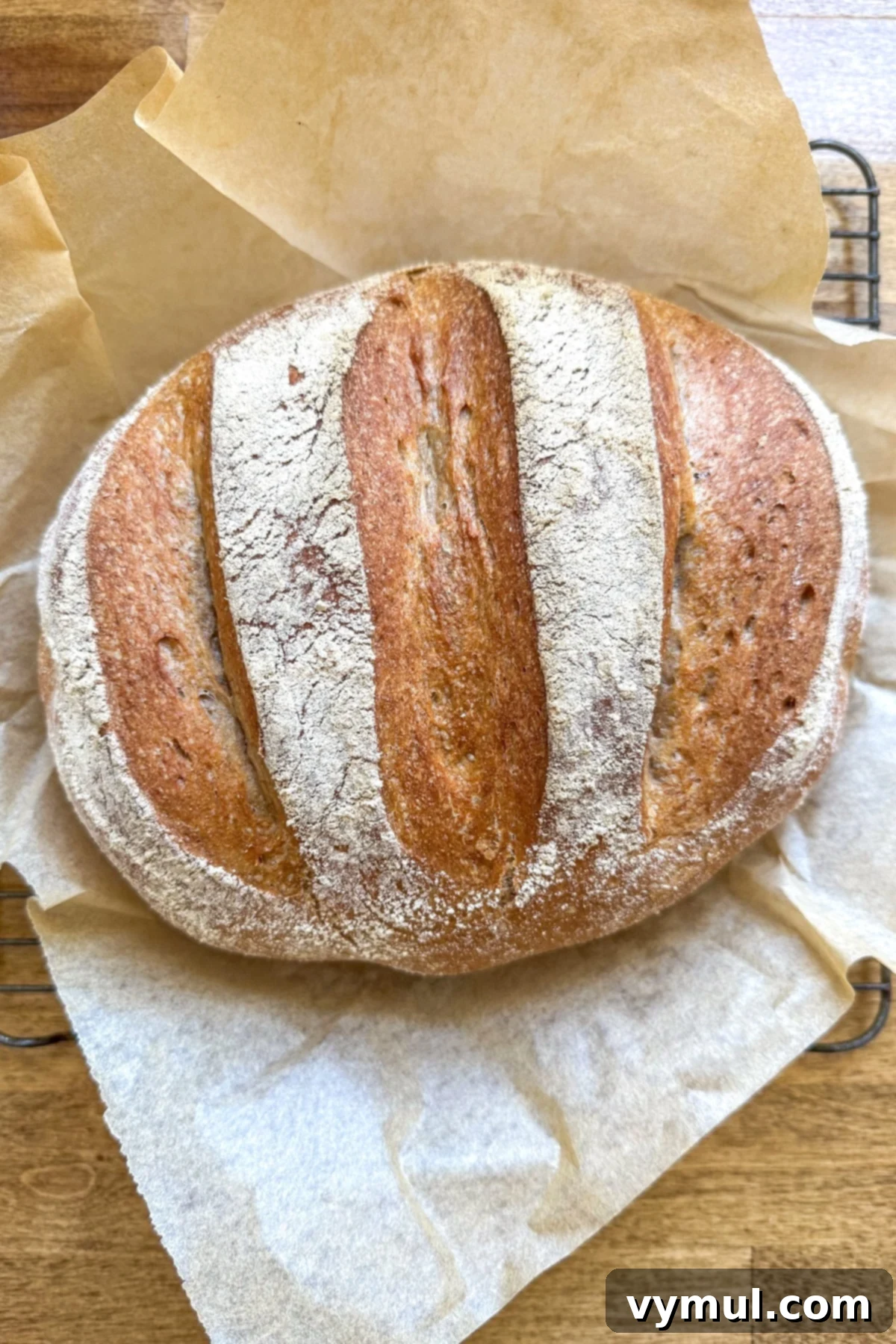
Effortless Artisan Bread: Your Guide to a Perfect Crispy Crust & Tender Crumb at Home
Discover the joy of baking incredible homemade artisan bread with minimal effort! This remarkably easy recipe consistently delivers a coveted crisp crust and a soft, airy tender crumb. Utilizing yeast and a blend of all-purpose and whole wheat flour, it requires just a few minutes of hands-on time before yielding a beautiful loaf. Whether you bake it immediately or refrigerate the dough for fresh bread throughout the week, this method simplifies artisanal baking. Not only does it produce a loaf comparable to those from a gourmet bakery, but it also costs mere pennies to make, revolutionizing your perspective on homemade bread.
✩ What our bakers are saying…
“This is truly the best and easiest bread recipe I’ve ever found! My family consumes a lot of toast, and this recipe consistently yields a wonderfully chewy loaf with almost no fuss. After trying countless bread recipes, this one is the perfect ‘Goldilocks’ loaf – just right!” -Hannah
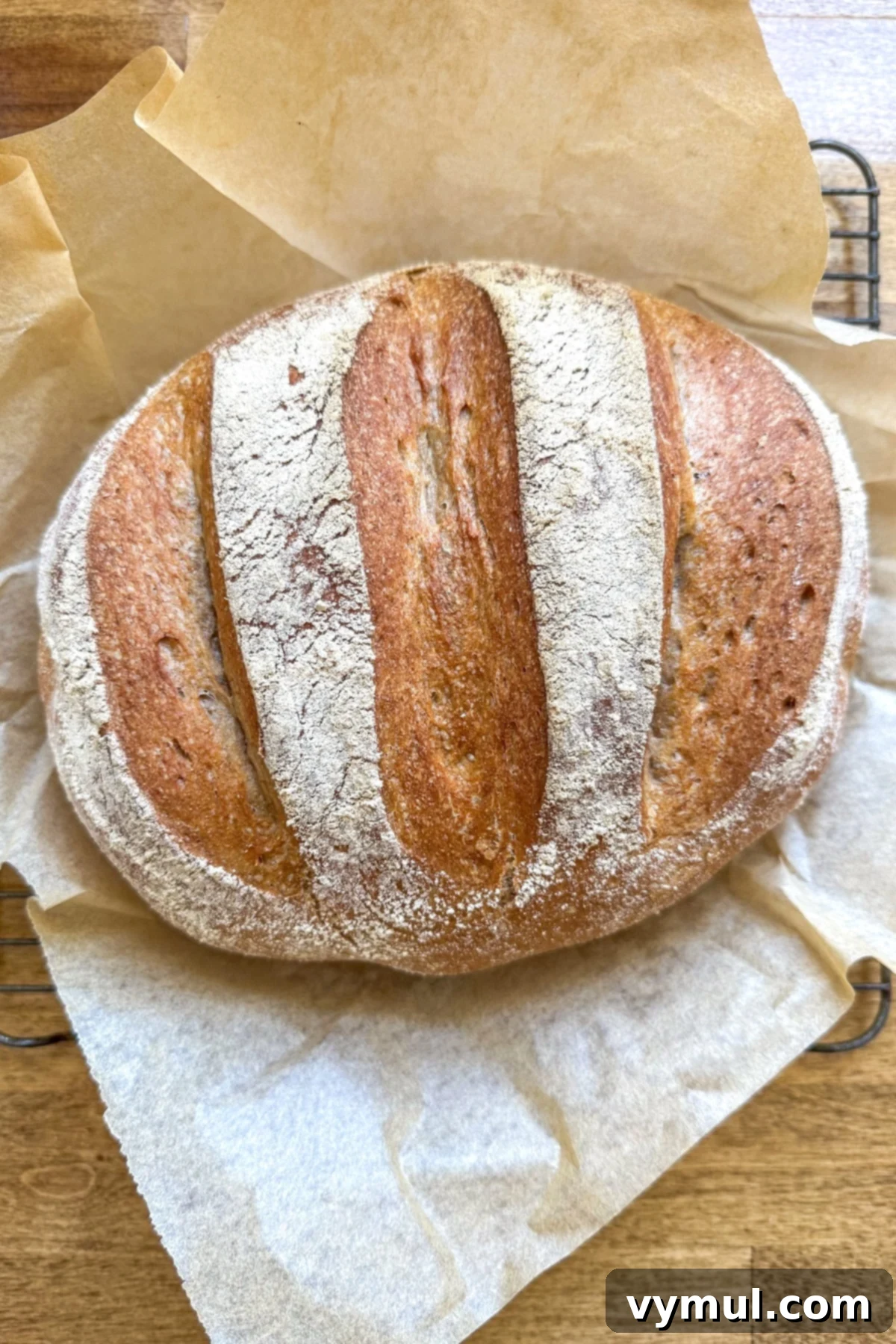
Some links in this article are affiliate links and if you click on them I will receive a small commission at no cost to you.
This easy artisan bread recipe was among the very first published when An Oregon Cottage launched in 2009, and it quickly became a beloved classic. Its incredible simplicity means you can enjoy homemade artisan bread anytime, costing significantly less than store-bought artisanal loaves that typically range from $4-$6. This recipe empowers you to create bakery-quality bread right in your kitchen.
I often turn to this yeast-based artisan bread when my sourdough starter isn’t ready for baking. Before I embraced sourdough artisan bread, this was our weekly go-to! The recipe is genuinely addictive, taking mere minutes to mix and consistently producing bread that rivals a professional bakery. Friends and family have consistently raved about its quality, making it one of my most tried-and-true favorites.
If you’ve ever doubted your ability to bake impressive, crusty bread at home, this recipe is designed to change your mind. It’s the kind of homemade loaf that feels truly special and impressive, yet it’s straightforward enough to whip up on any day of the week, transforming ordinary meals into extraordinary ones. The satisfaction of pulling a warm, golden-brown loaf from your oven is unparalleled.
Beyond its incredible taste and ease, the economic advantage of this recipe is significant. Looking at it from a frugal perspective, the total cost for 2 to 4 loaves is approximately $0.85 to $1.30 in 2025. This calculation assumes flour costs between $0.80 and $1 per pound, with an additional $0.10 for bulk yeast and salt. Imagine enjoying fresh, gourmet-style bread for such a low price!
SMART TIP: Always prioritize buying your yeast in bulk. I’ve personally used both active dry yeast and instant yeast purchased in larger packages, and both work perfectly in this recipe. Bulk yeast is significantly more cost-effective than those small individual packets – and trust me, once you try this recipe, you’ll be baking a lot of bread!
Essential Ingredients for Your Easy Artisan Bread
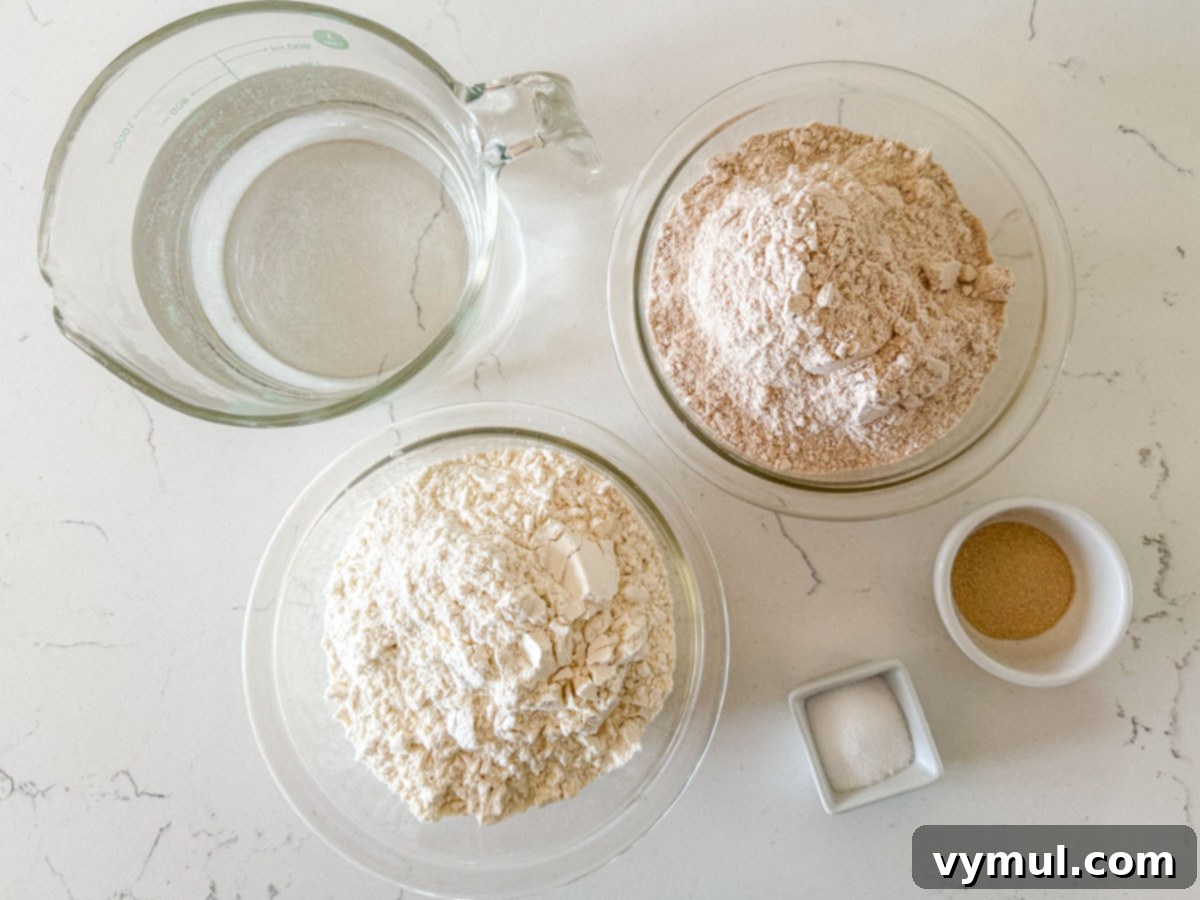
One of the primary reasons homemade bread is so economical, allowing you to save significantly by making your own artisan loaves (as well as everyday staples like this easy soft 100% whole wheat sandwich bread), is the simplicity of its ingredients. They are typically basic pantry staples:
- Flour: While you can certainly make this bread with only all-purpose flour (unbleached is always my preference) or regular bread flour for a lighter crumb and larger holes, I aim for a bread with enhanced whole grain nutrients. My tested ratio is 3.5 cups of all-purpose (or bread flour) combined with 3 cups of regular whole wheat flour. Using exclusively whole wheat flour is possible but tends to yield a flatter, denser loaf. I’ve also experimented with whitewhole wheat flour (not pastry flour), which offers a better texture than regular whole wheat alone but still isn’t as light as incorporating some all-purpose flour. Feel free to adjust the ratios to best suit your family’s preference, just ensure the total flour amount remains at 6.5 cups. This flexibility allows for a customized bread experience.
- Water: Use lukewarm water, ideally around 115 degrees Fahrenheit. This is typically the warmest setting from your tap. It’s crucial to avoid water that is too hot, as excessive heat can unfortunately kill the yeast, preventing your dough from rising properly.
- Yeast: As previously mentioned, both active dry yeast and instant yeast are suitable for this recipe. Both varieties will activate and contribute to the beautiful rise and texture of your artisan loaf.
- Salt: This recipe is formulated using basic fine-grain sea salt. If you opt for a coarser grain salt, such as kosher salt, you will need to slightly increase the measurement to achieve the desired flavor balance. Salt is essential not only for taste but also for controlling yeast activity and strengthening the dough’s gluten structure.
Exciting Flavor Variations for Your Artisan Loaf
Elevate your artisan bread by incorporating your favorite mix-ins. For best results, add them at the end of Step 2, after beating the dough for 30 seconds to ensure even distribution. Here are some delectable ideas to get you started:
- Cranberry Walnut: For a sweet and nutty profile, fold in 1/2 cup of dried cranberries and 1/2 cup of coarsely chopped walnuts. This variation is wonderful with cheese or as a breakfast treat.
- Garlic Herb: Infuse your bread with savory notes using 2-3 tablespoons of minced fresh garlic and 1/4 cup of chopped fresh herbs (such as rosemary, thyme, or oregano) or 2 tablespoons of dried herbs. For an extra layer of flavor, consider adding 1/2 cup of grated Parmesan cheese.
- Cheesy Jalapeño: If you love a bit of heat, mix in 1/2 cup of shredded cheese (cheddar, Monterey Jack, or a Mexican blend works well) and 1 diced fresh jalapeño. Alternatively, you can use 1/4 cup of pre-prepared pickled jalapeños or even candied jalapeños for a unique sweet and spicy kick.
- Seeded: For a hearty, textured loaf, combine 1/4 cup of sunflower seeds, 1/4 cup of sesame seeds, and 1/4 cup of flax seeds. You can also customize this with other seeds of your choice, like poppy seeds or pumpkin seeds.
- “Everything Bagel” Style: To create a loaf reminiscent of an everything bagel, instead of dusting with plain flour in Step 6, generously sprinkle and press Everything But The Bagel Seasoning onto the shaped dough to help it adhere during baking.
The Secret to The Best Artisan Bread Crust: Your Dutch Oven
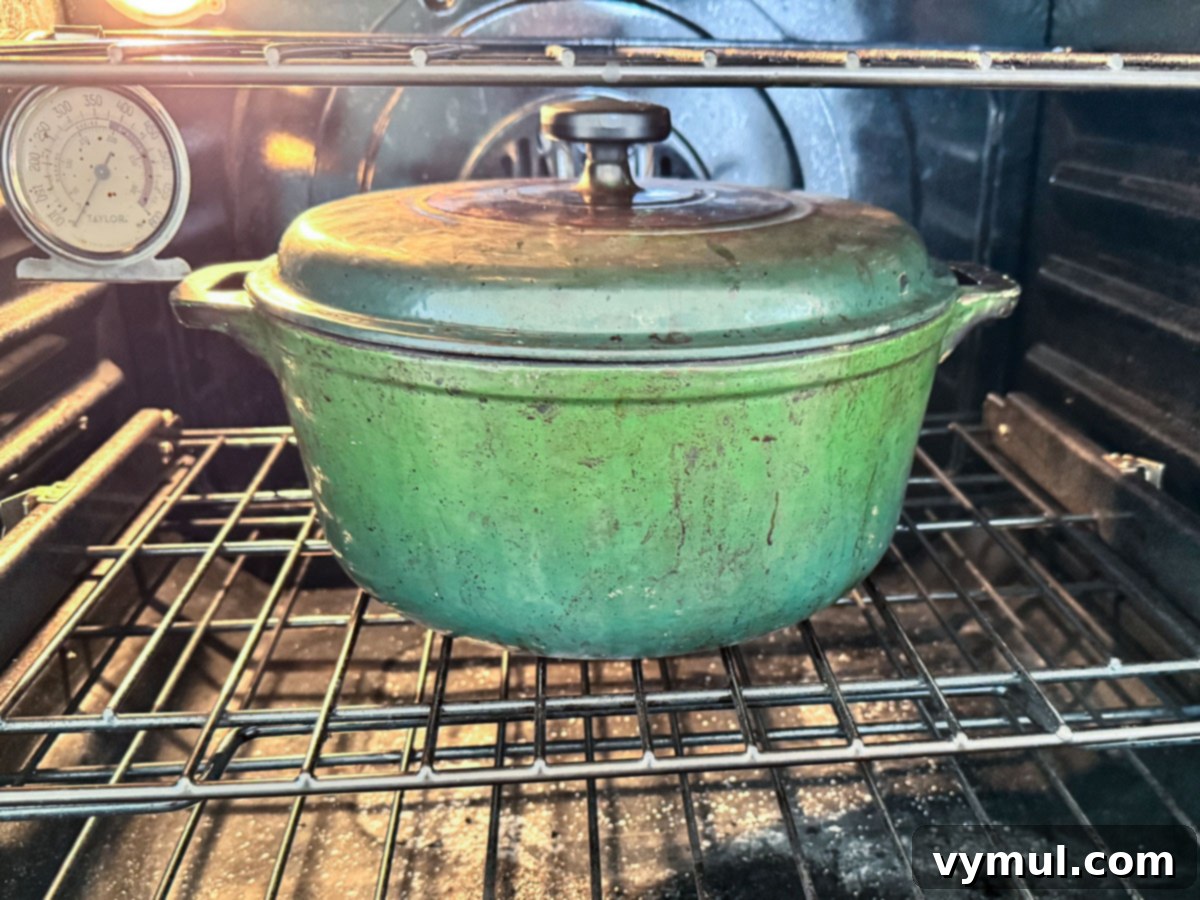
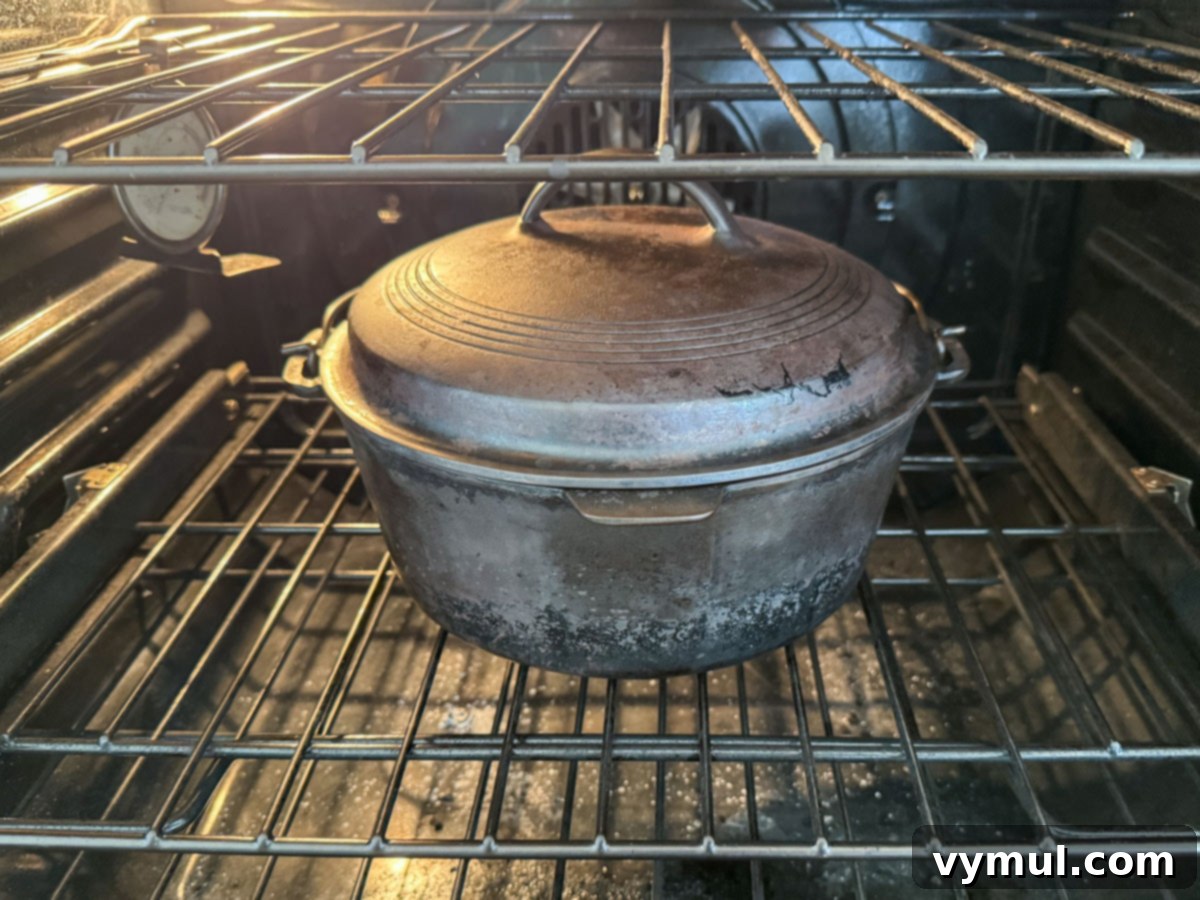
For truly exceptional results and the most amazing, crackly crust imaginable, baking your bread in a hot cast enameled iron Dutch oven (or a traditional cast iron Dutch oven, like the vintage one pictured above on the right) is key. The magic happens when the lid is kept on during the initial 15 minutes of baking.
When the dough is exposed to high heat in a sealed environment, the steam naturally escaping from the dough becomes trapped within the Dutch oven. This trapped steam creates a mini-steam oven effect, mimicking the conditions of professional bakery ovens. This humid environment prevents the crust from setting too quickly, allowing the bread to expand fully and creating a thin, crisp crust rather than a thick, chewy one. It’s the closest you can get to a professional bakery setup right in your home kitchen!
- This 6-quart enameled cast iron pot by Lodge is a highly popular choice and quite similar to what I use. My exact pot, visible in the images, is an older version of this 5.5-quart pot by Tramontina, which is often a bit more budget-friendly and comes highly recommended by Cook’s Illustrated.
- You can effectively use any size Dutch oven ranging from 4 quarts to 7 quarts. A slightly smaller pot might even help in producing a taller, more aesthetically pleasing loaf since it provides less room for the dough to spread horizontally. Consider options like this Lodge 5.5-quart pot or a 5-quart Crock-Pot brand pot for excellent results.
Investment Consideration: Enameled Dutch ovens can range in price from $60 to over $300 for high-end brands like Le Creuset. While I purchased mine at the lower end of this spectrum, it remains the most significant single investment I’ve made in cookware. However, its value has been immense: I’ve baked so many loaves of bread in it that it has paid for itself many times over. The convenience it offers is priceless, as it eliminates the need to spray the loaf with water, add ice to the oven, or employ any other elaborate methods to create steam.
Understanding Pot Temperature Limits for Dutch Ovens
I’ve heard concerns from some readers regarding the temperature limits specified by manufacturers for enameled pots. My personal perspective is that I bought my Dutch oven specifically for baking bread, so I am comfortable using it at the necessary high temperatures. My Tramontina pot has been in consistent use for over 10 years at these high temperatures, and it continues to perform wonderfully without any flaking of the enamel, despite the manufacturer stating a maximum temperature of 400 degrees. While you must always prioritize what you feel comfortable with, these temperatures were thoroughly tested in the Cook’s Illustrated kitchens with multiple enameled pots, including the more affordable model I own, which gives me confidence in their recommendations.
Can I still make this amazing bread without a Dutch oven?
Absolutely, you can still bake this fantastic bread even if you don’t own a Dutch oven! While a Dutch oven provides optimal conditions, you can achieve a good crust by creating steam in your oven using alternative methods. Simply use a baking sheet or a baking stone for your loaf, and then implement one of these steaming techniques:
- Water in a Broiler Pan: Place a broiler pan filled with water on the bottom rack of your oven while it preheats. The evaporating water will create steam. Be cautious if using a baking stone simultaneously, as the steam has been known to crack some stones in my past experience.
- Mist the Bread: Lightly mist the surface of your shaped bread dough with water just before you quickly transfer it into the hot oven. This brief burst of moisture helps the crust develop.
- Roasting Pan Cover: Bake the loaf on a baking stone (or baking sheet) and cover it with the lid of a roasting pan for the initial 15 minutes of baking. This traps steam around the bread. Remove the cover after 15 minutes and continue baking uncovered.
- Slow Cooker Insert: One clever reader suggested using the inside of a slow cooker with the top tightly covered with foil. While I haven’t personally tested this method, it’s an interesting concept for trapping steam.
Experiment with these different methods to discover which one works best for your setup and preferences. Each can help you achieve a delicious, crusty loaf without specialized equipment.
Let’s Get Baking: Making This Easy Artisan Bread Recipe
Note: While this bread can be mixed by hand, I’ve always preferred using a stand mixer for convenience and consistent results. This is the mixer I use. It truly makes the process even more effortless.
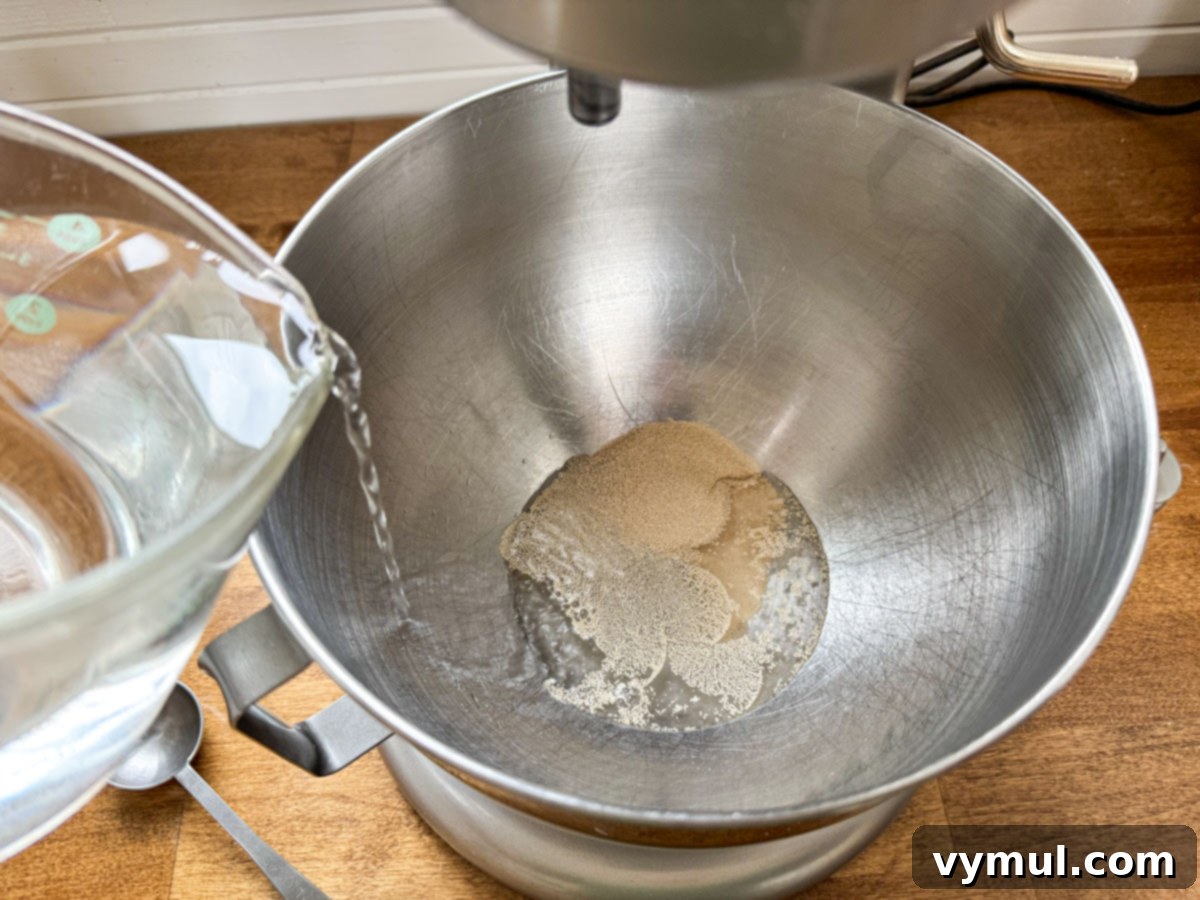
Step 1: Hydrate and Combine. Begin by adding your yeast, salt, and lukewarm water to a large mixing bowl. Give them a quick stir to ensure the yeast starts to dissolve and activate, preparing the foundation for your delicious dough.
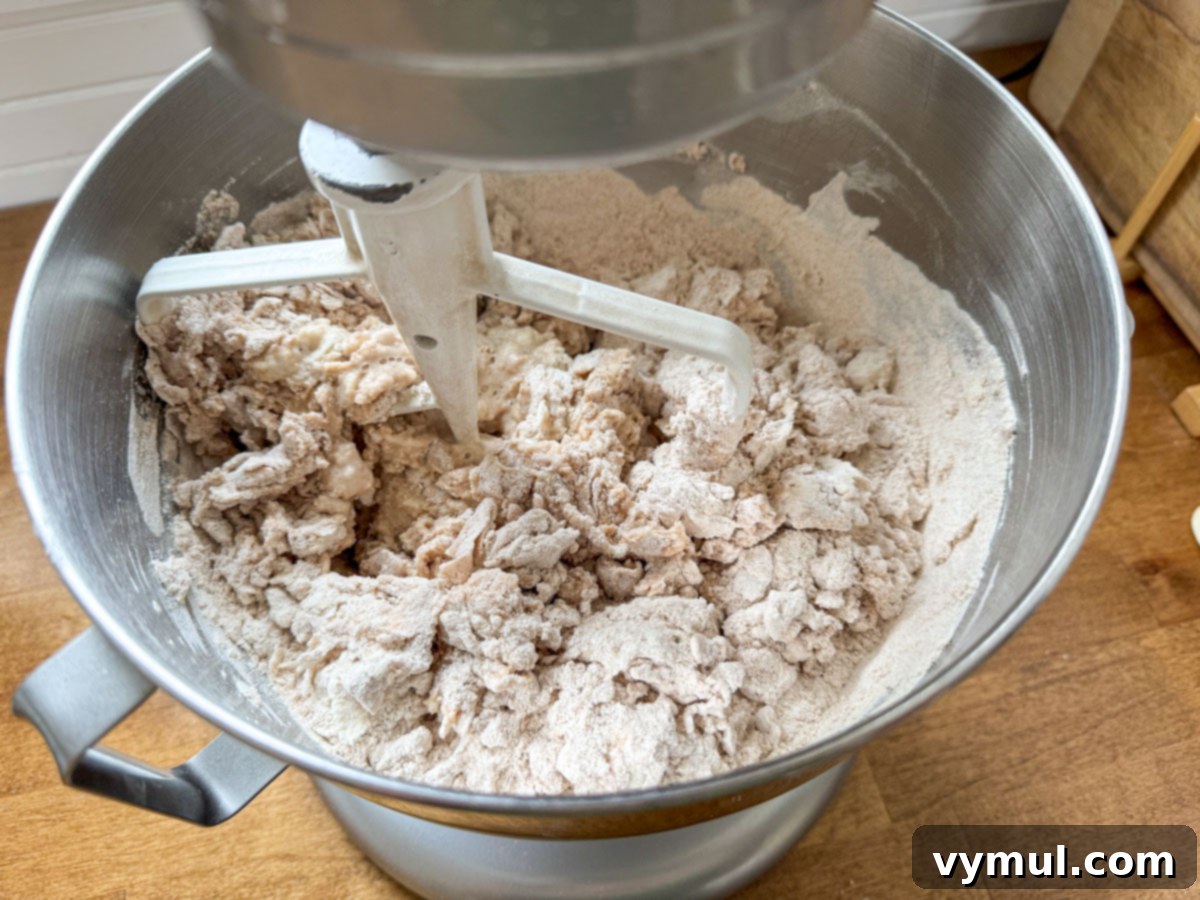
Step 2: Incorporate Flour & Light Knead. Add all of your measured flour to the bowl. Begin mixing on low speed until the flour is just incorporated into the wet ingredients. Then, increase the speed to level 2-3 and continue mixing for about 30 seconds to a minute, until most of the dough begins to clean the sides of the bowl. This brief, higher-speed mixing acts as a “quick knead,” which I’ve found significantly improves the bread’s texture and crumb structure without requiring extensive traditional kneading.
HAND MIXING OPTION: If you’re mixing by hand, simply follow the steps above using a sturdy wooden spoon. Mix vigorously for at least one minute to replicate the machine’s light “kneading” action. Alternatively, you can introduce a series of “stretch and fold” techniques during the dough’s rising period to further develop the gluten.
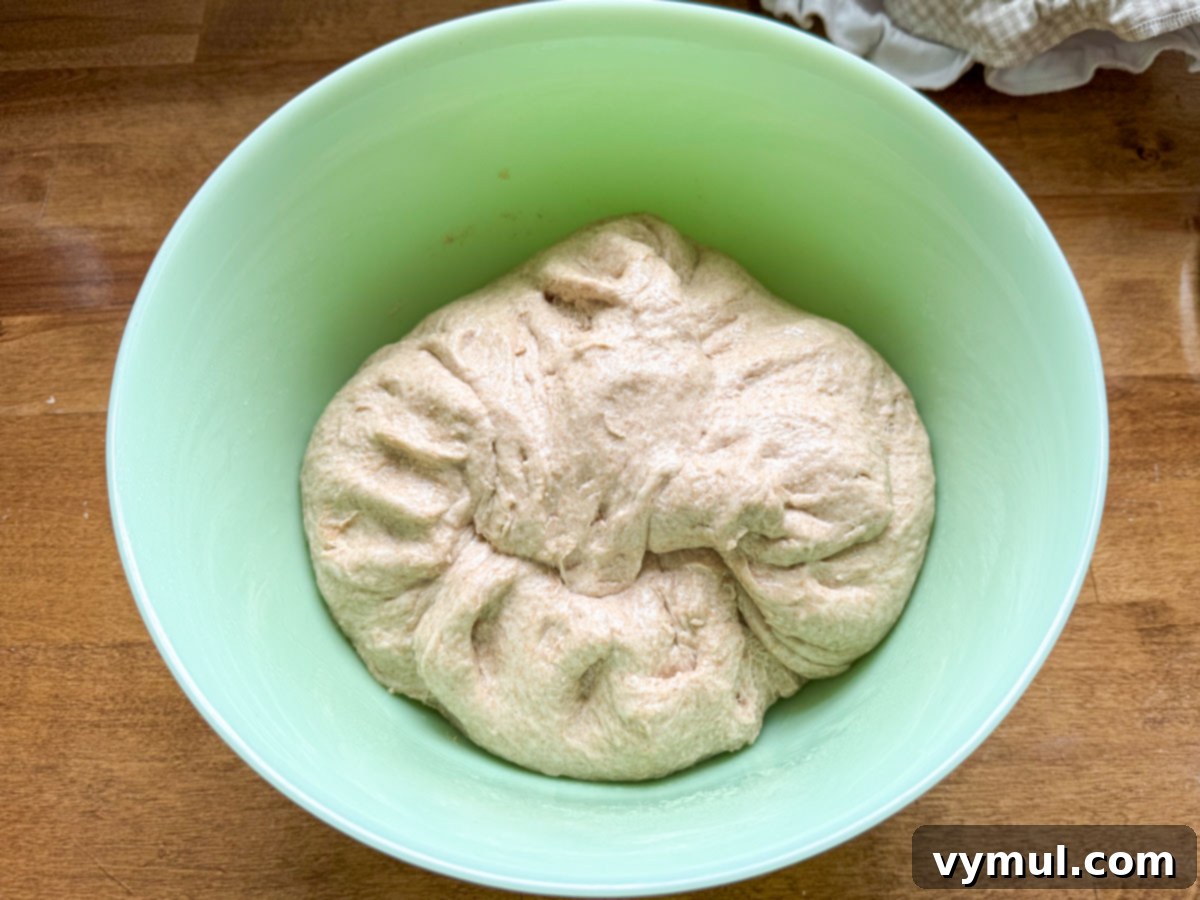
Step 3: First Rise. Transfer the mixed dough to a very large, lightly oiled bowl (or simply leave it in the same bowl if you mixed by hand). Cover the bowl, but ensure it’s not airtight – a loose cover allows for proper air exchange. Let the dough sit at room temperature for 1-1/2 to 2 hours, or until it has noticeably risen and reached the top of the bowl, indicating a successful first proof.
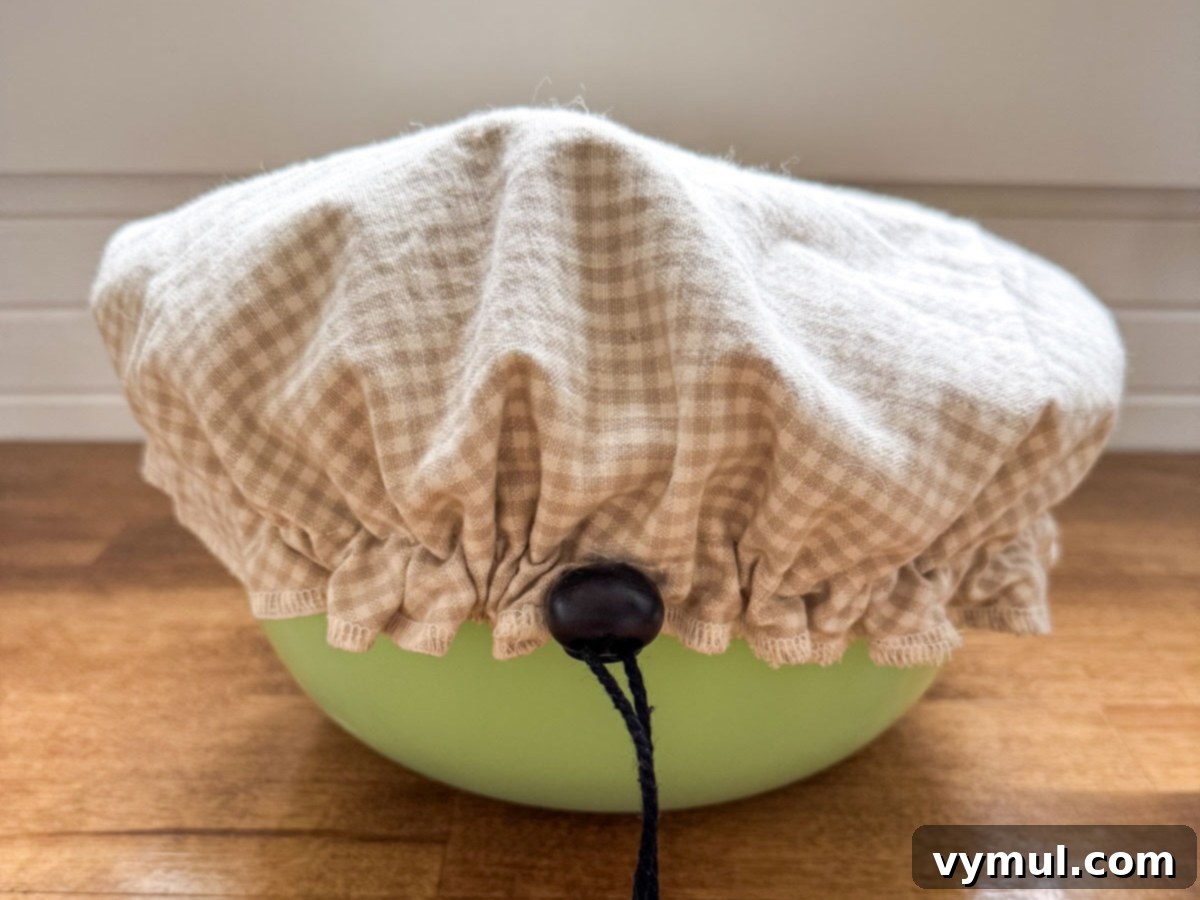
Step 3 PRO TIPS: When covering the bowl, you can use a fabric cover like the one shown (I crafted mine based on these examples), but it’s essential that the cover has some form of moisture barrier. This prevents the surface of your dough from drying out and forming a hard skin. A cover with a PLU lining, beeswax bowl covers, or even plastic wrap will work effectively. Additionally, a simple trick to manage your baking schedule is to write down the current time on a small piece of paper and stick it to the bowl – this serves as a handy reminder for when the rising time is complete!
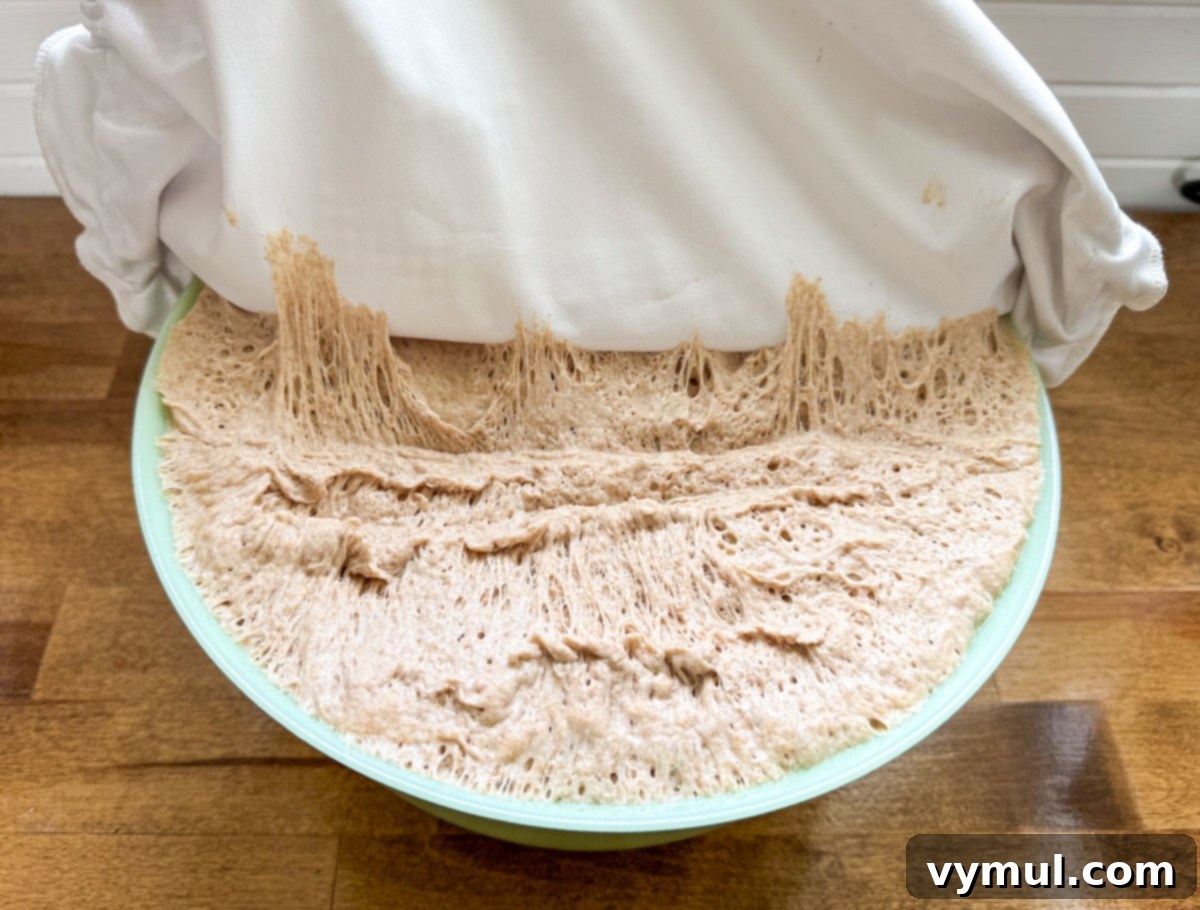
Step 4: Refrigerate or Bake. By now, your dough should have risen impressively to the top of your large bowl! At this stage, you have two flexible options: 1) Place the covered bowl directly into the refrigerator, where the dough can be stored for 7 to 10 days, allowing you to bake fresh bread on demand. OR 2) If you’re eager to bake right away, simply cut off the portion you wish to use and immediately place the remaining dough back into the fridge for later use.
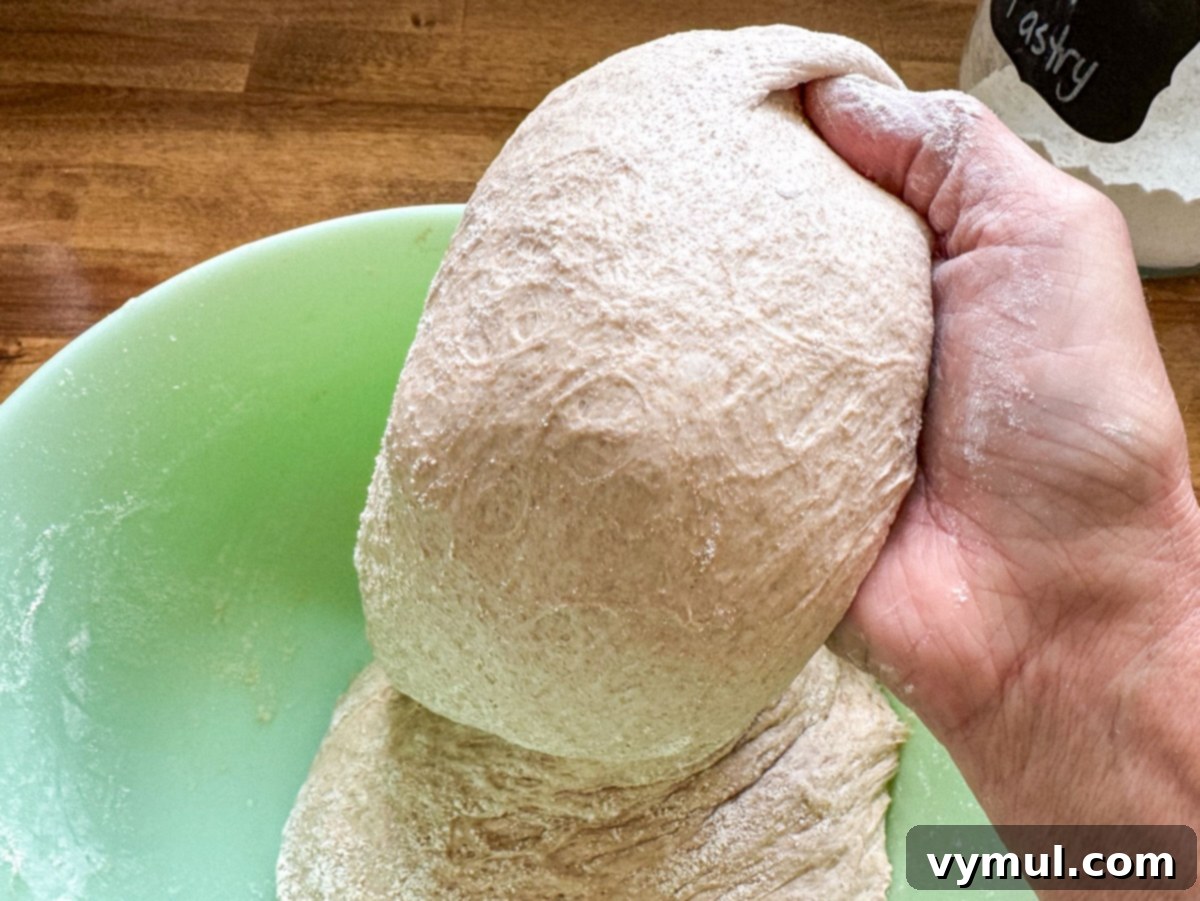
Step 5: Prepare for Baking. Approximately 1-1/2 hours before you plan to serve your bread (this accounts for shaping, a short rise, baking, and cooling time), retrieve the dough from the refrigerator if needed. Remove the cover, generously dust the top of the dough with flour (it will be quite sticky!), and then use a serrated knife to cut off about half of the dough. Simultaneously, begin preheating your Dutch oven inside a 450-degree Fahrenheit oven. If you’re not using a Dutch oven, prepare one of the alternative steaming methods mentioned earlier.
REFRIGERATION PRO TIP: The original recipe from which this was adapted suggested refrigerating the dough for up to 14 days. However, through personal experience, I’ve found that about a week is the sweet spot for storing the dough. As it ages beyond that, the dough develops a more pronounced sour flavor, similar to sourdough. I once baked a loaf on day 9, and for our taste, it was simply too sour. Therefore, I highly recommend using the dough within a week. If you don’t anticipate needing bread, bake it anyway and freeze the cooled loaf – it freezes and thaws perfectly!
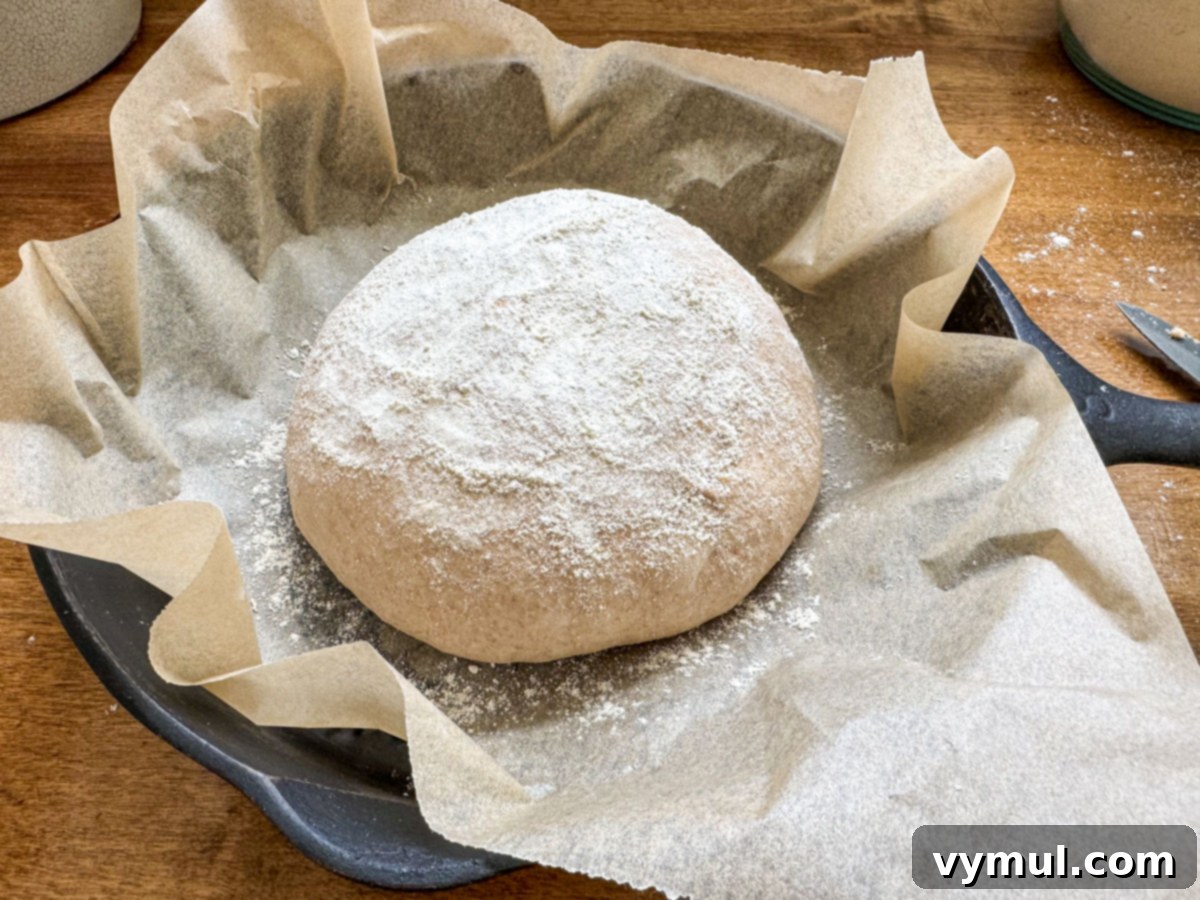
Step 6: Shape the Loaf. With well-floured hands, gently round the dough into a smooth ball. Achieve this by pulling and gathering the dough on the bottom to create surface tension, which helps the loaf hold its shape. Be careful not to overhandle the dough, as you want to preserve as much of the air trapped inside as possible. Place the shaped dough ball onto a cookie sheet that has been lined with a piece of parchment paper, then dust the top generously with more flour. Allow it to rest while your Dutch oven finishes preheating.
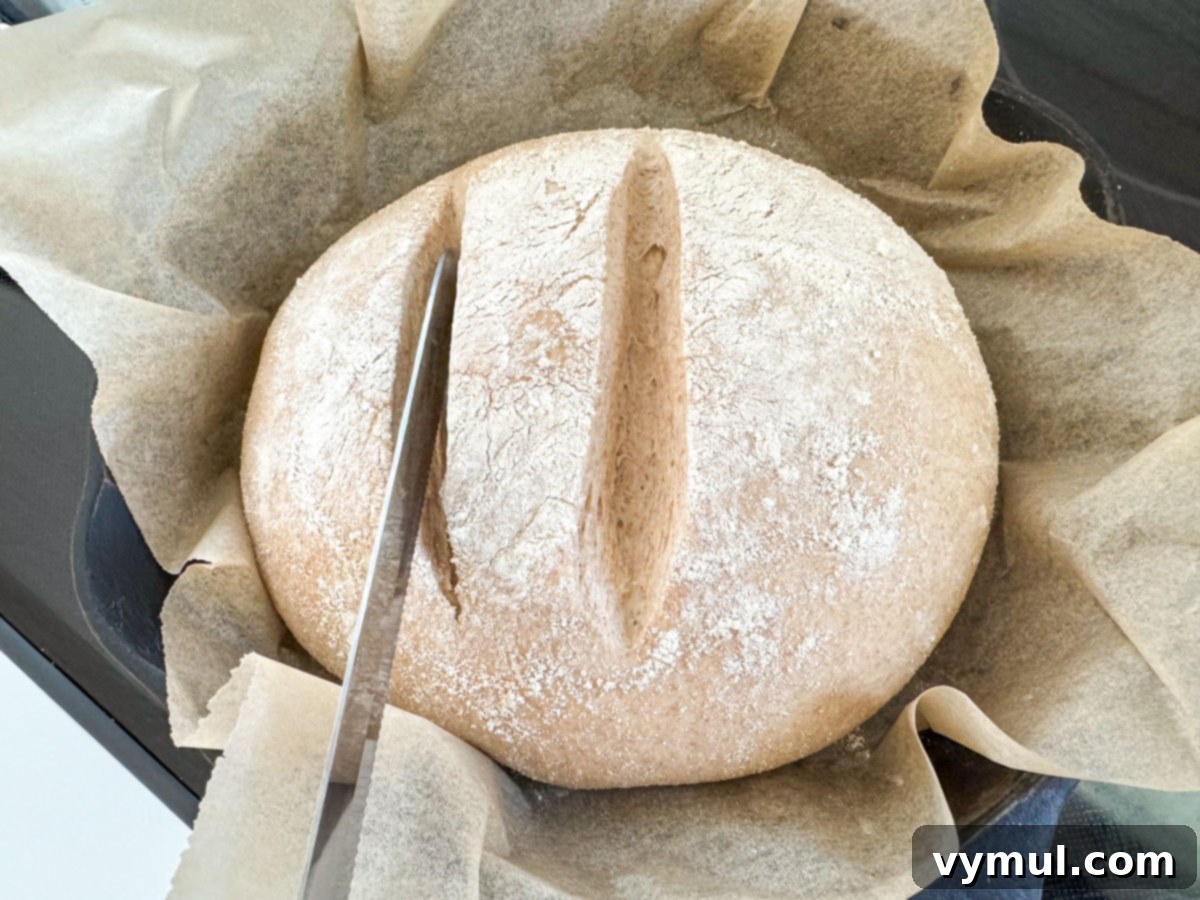
Step 7: Score the Dough. Once the thirty-minute resting period (or one hour if refrigerated) is complete, grab a sharp, serrated knife or a bread lame. Carefully slash the top of the dough in any pattern you desire. The key is to make these slashes deep enough—about 1/2 inch to 3/4 inch deep. In my earlier attempts, I used to cut too shallowly, which caused the dough to “explode” out the bottom during baking, resulting in an uneven and misshapen loaf. Proper scoring allows the bread to expand predictably and beautifully, creating those signature artisanal cracks.
PARCHMENT PAPER TIP: The parchment paper is absolutely essential for making this process smooth and easy. It allows you to effortlessly transfer the sticky dough into your preheated, scorching hot Dutch oven (or onto a baking stone). Furthermore, a single sheet of parchment paper can often be reused 2 to 3 times before it starts to degrade, making it both practical and economical!
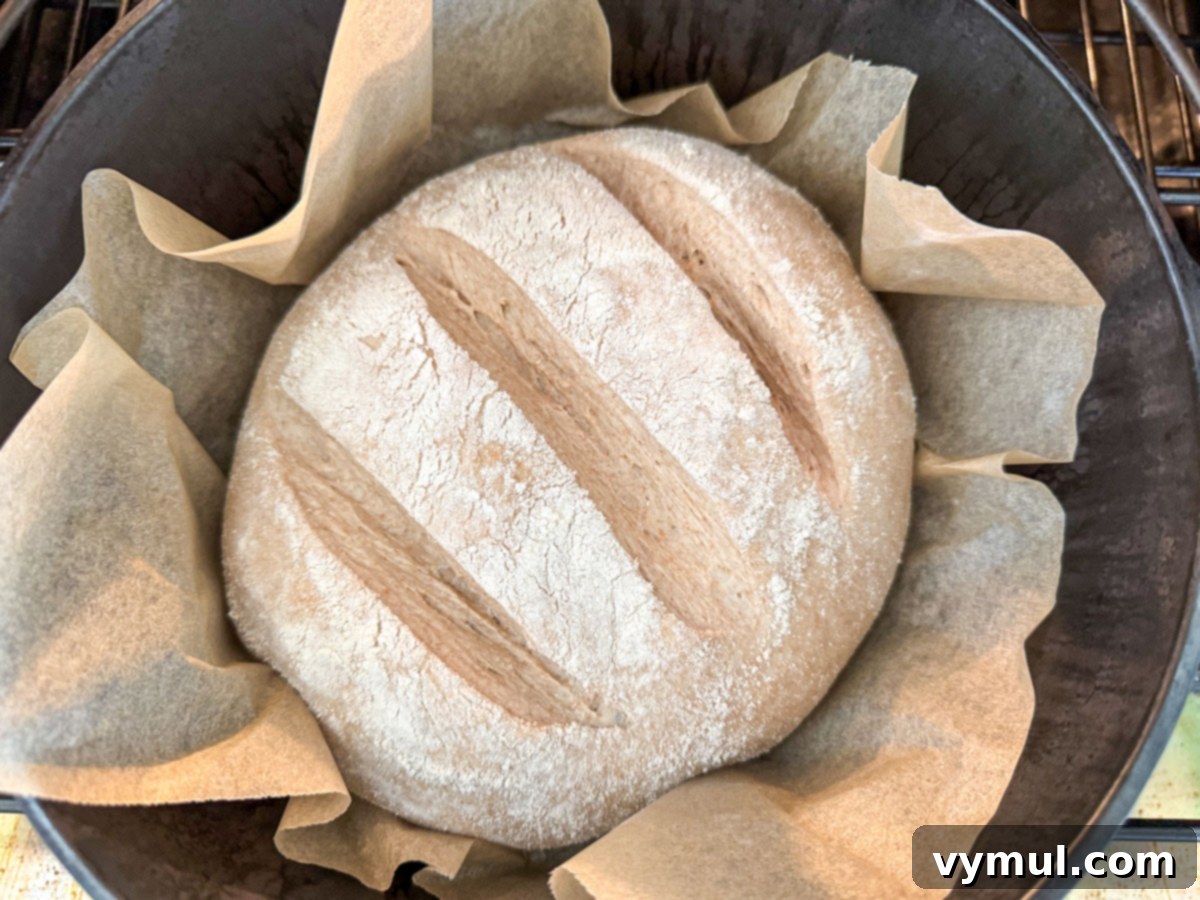
Step 8: First Bake (Covered). Carefully remove the (very hot!) lid from your preheated Dutch oven. Using two opposite corners of the parchment paper as handles, gently lower the dough into the hot pot. Don’t worry too much if the dough loses its perfect shape slightly during this transfer; it will regain its form and rise beautifully during baking. Replace the lid securely, close the oven door, and set your timer for 17 minutes. This initial covered bake is crucial for steam generation and crust development.
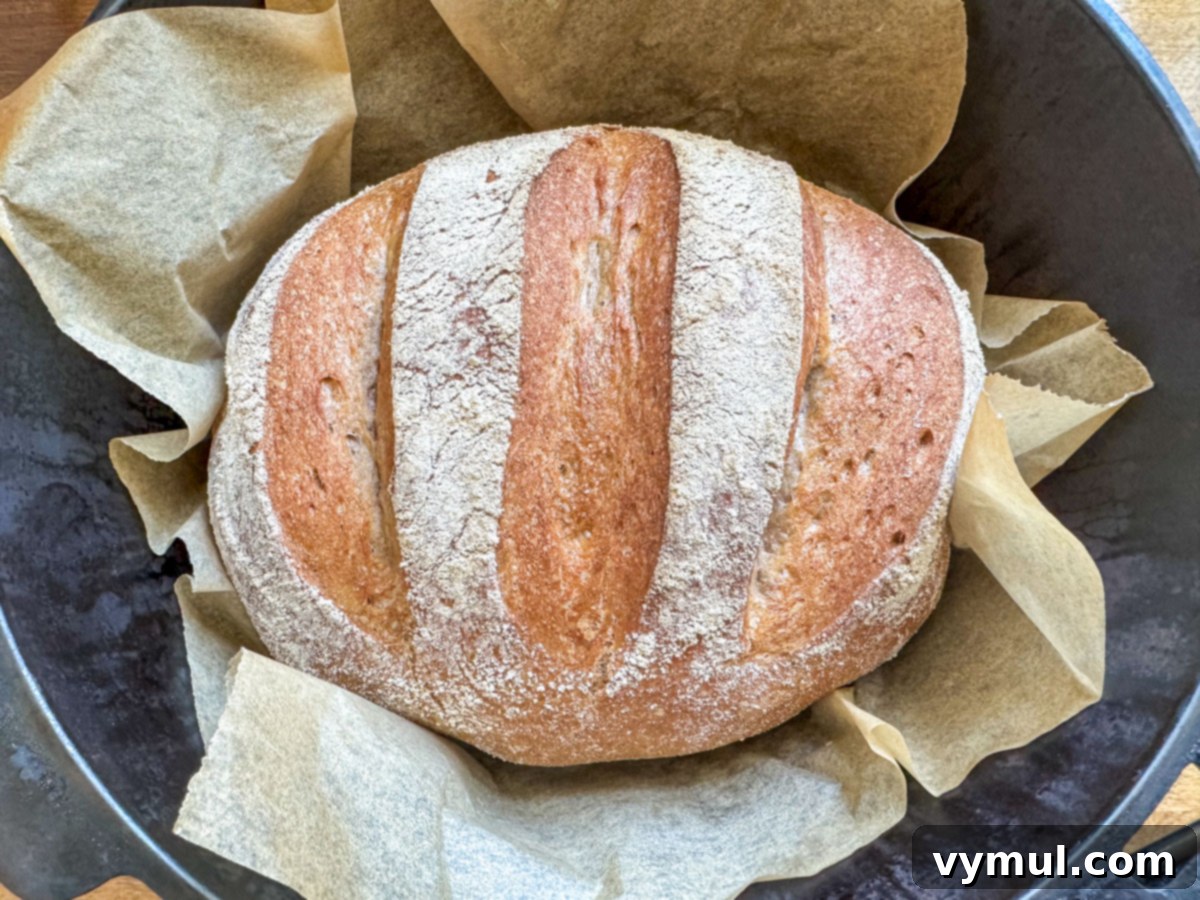
Step 9: Second Bake (Uncovered) & Cooling. Once the timer for the covered bake goes off, carefully remove the lid from the Dutch oven. Now, reset the timer for another 17 minutes. (If you’re using a baking stone or cookie sheet, simply set your timer for 30-35 minutes total, rotating the pan halfway through if your oven tends to brown unevenly). Continue baking until the loaf achieves a rich, golden-brown color – it’s perfectly fine to add another 5 minutes if it needs a deeper hue. Immediately after baking, use the parchment paper corners to lift the loaf out of the Dutch oven and transfer it to a wire rack to cool completely. This prevents the bottom from getting soggy.
CRUST BROWNING TIP: Are the bottoms of your loaves browning faster or becoming harder than you prefer? A simple solution is to place a regular cookie sheet on the oven rack directly below your Dutch oven. This acts as a shield, preventing excessive browning or burning of the bread’s underside.
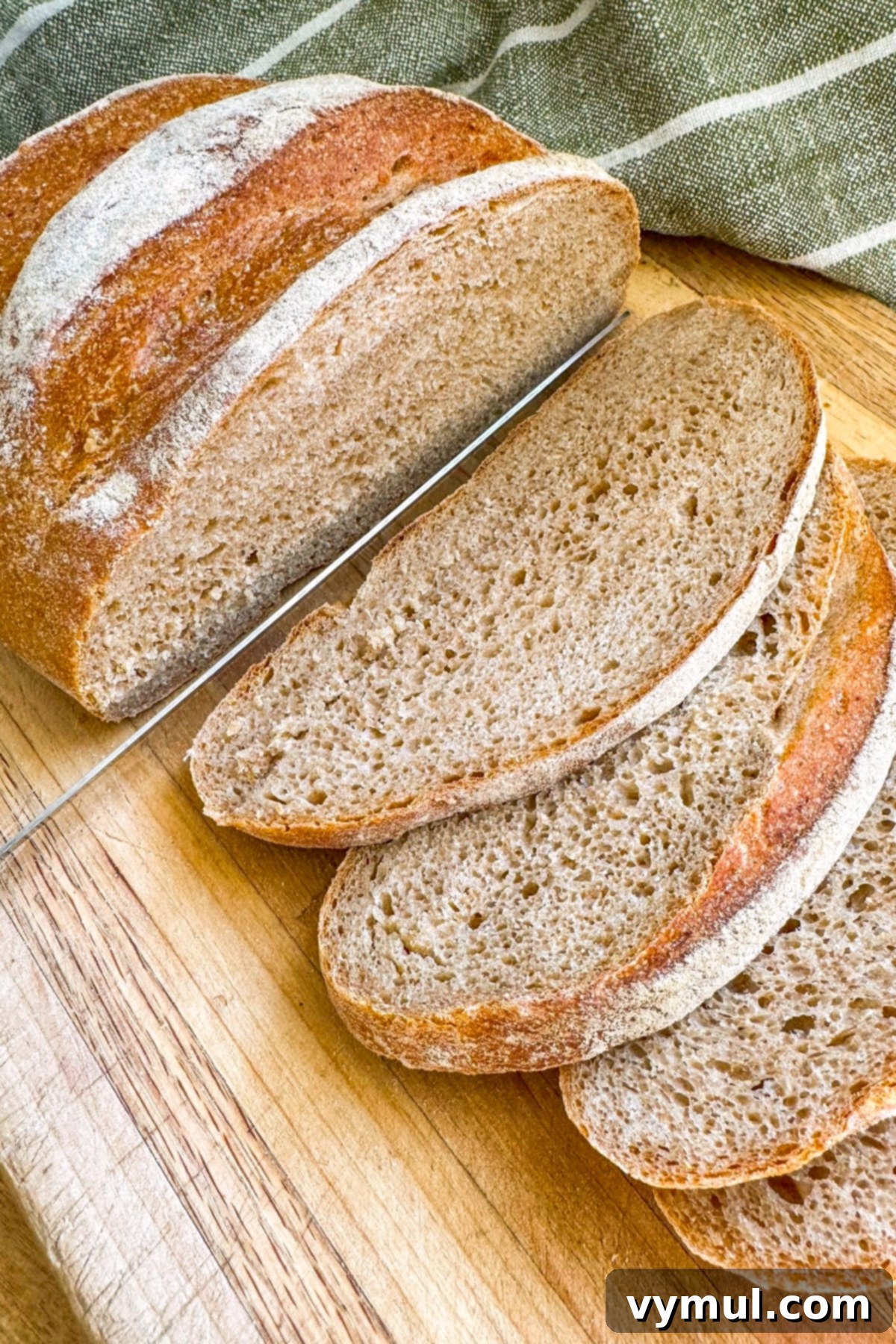
Patience is a virtue when it comes to slicing! You’ll want to wait at least a half hour before cutting into your freshly baked bread, and preferably a full hour. Slicing too soon can cause the knife to gum up the tender crumb, potentially tearing it. However, if you simply can’t resist (which is totally understandable!), here’s a clever trick to help keep your slices looking neat and even. I also highly recommend the serrated bread knife from Rada pictured above – it’s truly the best I’ve ever used for perfect slices every time!
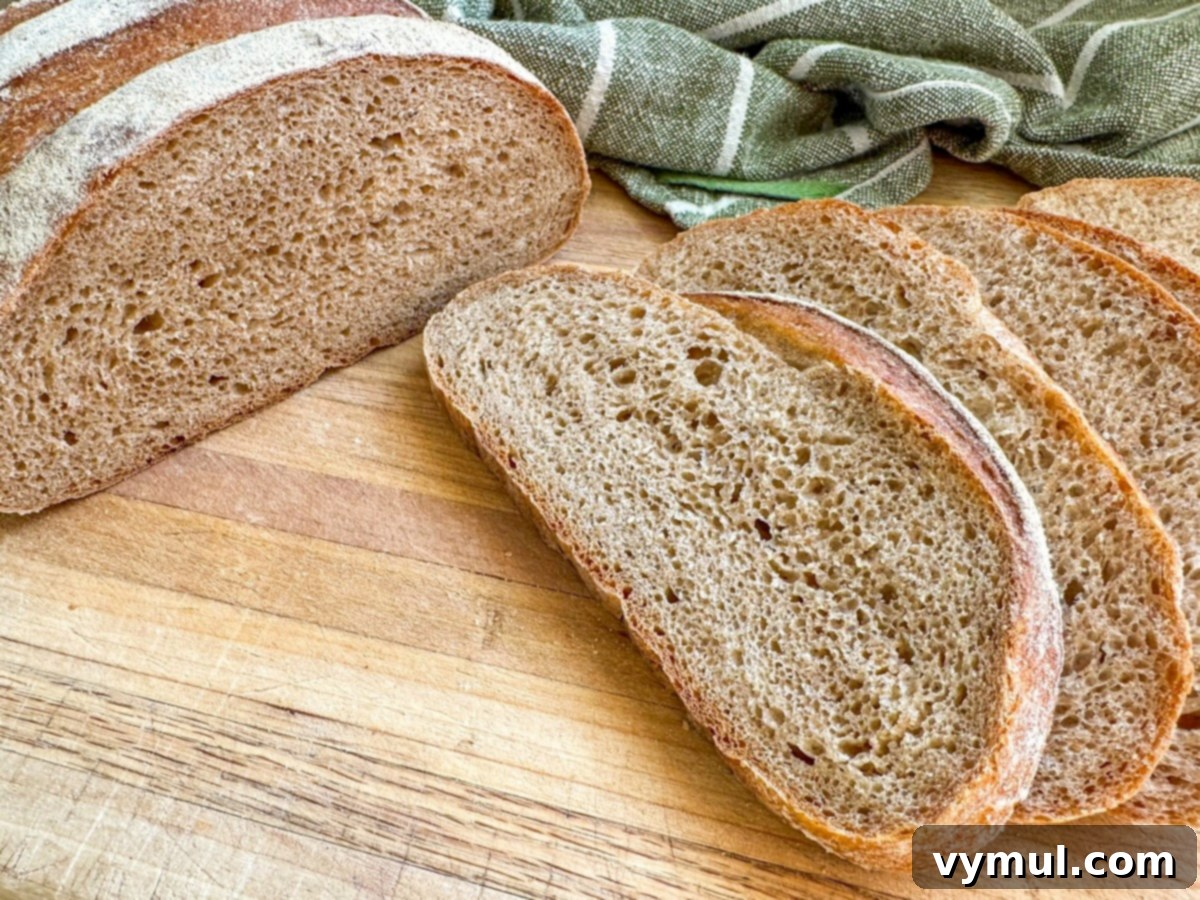
The loaf showcased in the image above was crafted using a blend of half unbleached all-purpose flour and half regular whole wheat flour. This combination results in a beautiful loaf with small, consistent air pockets and a wonderfully tender crumb. Personally, I prefer breads with smaller holes; large, irregular holes tend to let butter drip through and aren’t ideal for making sandwiches or even perfectly toasted slices. I’m happy to embrace the added nutrients from the whole grain, which naturally contributes to a slightly denser crumb with smaller, more uniform holes.
Optimal Storage for Your Homemade Artisan Bread
Proper storage ensures your delicious homemade bread stays fresh and enjoyable for longer. Here are the best methods:
- Room Temperature: Your bread, whether sliced or kept whole, will maintain its freshness for 2-3 days at room temperature without drying out excessively. I’ve become a big fan of beeswax-lined linen bread bags. These seem to preserve the bread much better than a plain linen bag, and as an added bonus, you can even freeze your bread directly in these beeswax-lined bags! For best results, allow the bread to cool completely before storing it to prevent condensation.
- Refrigerate: While refrigeration isn’t typically the most recommended method for storing bread, as it can accelerate the staling process, it can be useful for shorter periods. In my household, where bread consumption isn’t daily, we often store a few slices in the fridge for a day or two, especially in reusable silicone bags. If you choose this method, plan to toast or quickly reheat the slices to revive their texture.
- Freeze: This artisan bread freezes exceptionally well, making it perfect for meal prepping! For the most convenient use, I highly recommend slicing the bread first. Then, freeze the slices in portions you’ll typically need, using silicone baggies or the aforementioned beeswax-lined linen bags. You can also freeze entire loaves, simply wrapping them tightly in plastic wrap and then foil to prevent freezer burn. Thaw sliced bread at room temperature or toast directly from frozen; whole loaves can be thawed and then quickly reheated in the oven for a “freshly baked” experience.
Rave Reviews from Our Baking Community
“I started baking bread at the beginning of the year, constantly tweaking recipes and processes. Each time, it just wasn’t the ‘master’ bread I wanted to repeat week after week – UNTIL NOW! Thank you, Jami, for bringing me back to basics with your ‘easy artisan bread’ recipe. It’s a game-changer!” -Bob V.
“Making Artisan bread has been on my bucket list for ages, and until I tried your recipe, I had absolutely no success. Your recipe is SOOOO easy and incredibly delicious. I’m thrilled with the results!” -Nancy
“I have experimented with countless bread recipes over the years, and I always ended up disappointed. This one, however, delivered such a wonderful texture and tastes so incredibly good! I finally found my go-to recipe.” -April
“Your method is so remarkably simple and yields such consistently amazing results that I truly believe I can finally keep up with the bread demands of our family of eight. Thank you so much for this wonderful recipe!” -Erin
Do yourself a favor and try this incredibly easy artisan bread recipe as soon as you can – and prepare for all the compliments and praise! I’d love to hear about your baking experience, so please leave a rating and review to let me know how it goes!

Print Recipe
Pin Recipe
SaveSaved!
Easy Artisan Bread Recipe
Equipment
-
stand mixer (optional, but recommended for ease)
-
Dutch oven (or baking stone/sheet with steaming method)
-
Parchment Paper
-
Large Mixing Bowl
-
Serrated Knife or Bread Lame
-
Wire Cooling Rack
Ingredients
- 3 cups warm water (about 115°F)
- 1 tablespoon yeast (instant or active dry)
- 2½ teaspoons fine sea salt
- 3½ cups whole wheat flour* (white whole wheat flour also works well)
- 3 cups unbleached all-purpose flour*
Instructions
-
In a large mixing bowl, combine the yeast and salt, then add the warm water and stir until the yeast begins to dissolve.
-
Add all the flour to the bowl. Mix on low speed until the flour is just incorporated. Increase to medium speed (level 2-3 on a stand mixer) for 30 seconds to 1 minute, allowing the dough to start pulling away from the sides of the bowl. (If mixing by hand, stir vigorously with a wooden spoon for at least a minute, or incorporate stretches and folds during the rise.)
-
Transfer the dough to a very large, lightly oiled bowl and cover it loosely (not airtight) with plastic wrap or a beeswax-lined cover. Let it rise at room temperature for approximately 1½ to 2 hours, or until it has at least doubled in size and reached the top of the bowl.
-
After the first rise, you have two options: 1) Place the covered bowl in the refrigerator for up to 7-10 days for convenient baking throughout the week, OR 2) If baking immediately, simply cut off the desired portion of dough (usually half for one loaf), shape it, and let it rest while your Dutch oven preheats. Store any remaining dough in the refrigerator.
-
When ready to bake, place an enameled Dutch oven (with its lid) into a cold oven, then preheat the oven to 450 degrees Fahrenheit. Allow it to heat thoroughly, usually 30-45 minutes.
-
Lightly dust the dough’s surface with flour. Using a serrated knife, cut off about half of the dough (for one loaf). With well-floured hands, gently shape the dough into a round ball, pulling and tucking the edges underneath to create surface tension. Place the shaped dough onto a piece of parchment paper, which can be resting on a cookie sheet or in a small round skillet to help maintain its shape. Dust the top of the dough with more flour.
-
Allow the shaped dough to rest on the counter: 30 minutes if you’re baking on the same day the dough was mixed, or 1 hour if the dough was refrigerated. After resting, use a sharp serrated knife or a bread lame to slash the top of the loaf about 1/2 to 3/4 inch deep in your desired pattern.
-
Carefully remove the hot lid from the preheated Dutch oven. Using the edges of the parchment paper, gently transfer the loaf into the hot pot. Replace the lid, close the oven, and bake for 15 to 17 minutes.
-
After the covered baking time, remove the lid from the Dutch oven and continue to cook for another 15 to 17 minutes, or until the loaf is a beautiful golden brown and sounds hollow when tapped on the bottom. If needed, bake for an additional 5 minutes for deeper color.
-
Immediately remove the baked loaf from the Dutch oven using the parchment paper and transfer it to a wire cooling rack. Allow it to cool for at least 30 to 60 minutes before attempting to slice, to ensure the crumb sets properly.
Notes
Storage:
- Room Temperature: For maximum freshness, store whole or sliced bread in a beeswax-lined linen bread bag or a sealed container for 2-3 days. This helps maintain its tender crumb and crisp crust.
- Refrigerate: While not ideal for preserving texture long-term, storing a few slices in an airtight silicone bag in the refrigerator for 1-2 days can work for quick consumption. Best toasted or reheated to restore texture.
- Freeze: This bread freezes beautifully! For ease of use, slice the cooled bread first and freeze in convenient portions using silicone baggies or beeswax-lined bags. Whole loaves can be frozen wrapped tightly in plastic wrap and foil.
Mix-In Ideas (Add in Step 2, after flour is well-mixed):
- Cranberry Walnut: ½ cup dried cranberries and ½ cup chopped walnuts for a sweet-savory loaf.
- Garlic Herb: 2-3 tablespoons minced garlic and ¼ cup chopped fresh herbs (or 2 tablespoons dried herbs). Optional: add ½ cup grated parmesan cheese.
- Cheesy Jalapeño: ½ cup shredded cheese (cheddar, jack, or Mexican blend) and 1 diced fresh jalapeño (or ¼ cup pickled or candied jalapeños).
- Seeded: ¼ cup sunflower seeds, ¼ cup sesame seeds, and ¼ cup flax seeds (or a mix of your favorite seeds).
- Bagel-Style: For a unique twist, in Step 6, shape the loaf and press Everything But The Bagel Seasoning onto the dough instead of dusting with flour.
Nutrition
This recipe has been thoughtfully adapted from elements of Artisan Bread In Five Minutes A Dayby J. Hertzberg and Z. Francois, combined with insights from a no-knead bread feature in Cook’s Illustrated (link no longer available).
Your Questions Answered About Easy Artisan Bread
For heartier additions such as garlic, herbs, nuts, cheese, and seeds that can withstand a good mix, you can incorporate them along with the flour in Step 2. However, for more delicate ingredients like chopped jalapeños or dried fruit, it’s best to gently fold them in at the very end of Step 2, after the initial beating, to prevent them from breaking down too much.
Any size Dutch oven you have on hand, typically ranging from 3 to 7 quarts, will work effectively for this recipe. The smaller the oven, the less horizontal space your dough will have to spread, which can sometimes result in a taller, more aesthetically pleasing loaf. Don’t feel pressured to buy a specific size; use what you have!
This recipe is essentially a no-knead bread. I use the paddle mixer attachment because it provides a gentle, consistent mix without overworking the dough, which is precisely what’s needed for this “quick knead” method. While a dough hook is designed for traditional heavy kneading, the paddle attachment achieves a slightly better crumb texture by lightly developing the gluten without the intensive process a hook implies, so there’s no need to switch.
Yes, absolutely! You are welcome to make this bread with only all-purpose white flour (unbleached is always recommended) or regular bread flour. The recipe is quite adaptable, so feel free to use the flour variety that your family prefers most. The results will still be delicious, though with a slightly different texture.
My preferred method is the “scoop and level” technique. First, I briefly mix the flour in its container to aerate it. Then, I scoop the measuring cup into the flour until it’s slightly overfull. Finally, I use a straight-edged knife or the back of a spoon to level off the excess flour, ensuring an accurate and consistent measurement every time.
It can be. If your bread is rising adequately during the bulk fermentation (the first rise), then this is likely not an issue and your dough is fine. However, if you notice your dough isn’t rising as expected, you can try adding an extra tablespoon or two of flour during mixing. This slight adjustment might help it firm up enough to pull away from the bowl’s sides.
Whole wheat pastry flour will NOT work for this recipe. Pastry flour is derived from soft wheat and has a lower protein content, making it ideal for delicate baked goods like biscuits, cookies, and cakes that rely on leavening agents like baking soda or powder. Yeast breads and sourdough, however, require flours with higher protein levels (like regular all-purpose flour or bread flour, including their whole wheat versions) to develop the necessary gluten structure for a good bread texture and rise.
For Gluten-Free: I have not personally tested this recipe with gluten-free flour. However, many bakers report success using a 1:1 gluten-free flour blend designed for baking. Be aware that results may vary.
Using all whole wheat flour or other ancient grain flours will typically result in a denser loaf with fewer air pockets and a chewier, rather than crispier, crust. While you can certainly experiment with these for flavor, expect a different texture profile compared to the suggested blend.
More Easy & Delicious Bread Recipes to Try
If you’ve loved making this artisan bread, you’ll be excited to explore more fantastic homemade bread recipes that are equally simple and rewarding:
- Soft Homemade Whole Wheat Sandwich Bread: Perfect for everyday sandwiches, this recipe makes a wonderfully soft loaf that’s packed with whole grain goodness.
- Super Easy French Baguettes: Recreate the classic French baguette at home with this surprisingly straightforward recipe, delivering that signature crispy crust and open crumb.
- Easy Sourdough Artisan Bread: If you’re ready to venture into sourdough, this simplified recipe makes it accessible for beginners, providing all the delicious tang and texture without the fuss.
- Flaky 100% Whole Wheat Flaky Biscuits: Experience incredibly light and flaky biscuits made entirely with whole wheat flour – a perfect accompaniment to any meal.
- Soft & Easy 100% Whole Wheat Rolls: These tender dinner rolls are a crowd-pleaser, easy to make, and a delightful addition to holiday tables or weeknight dinners.
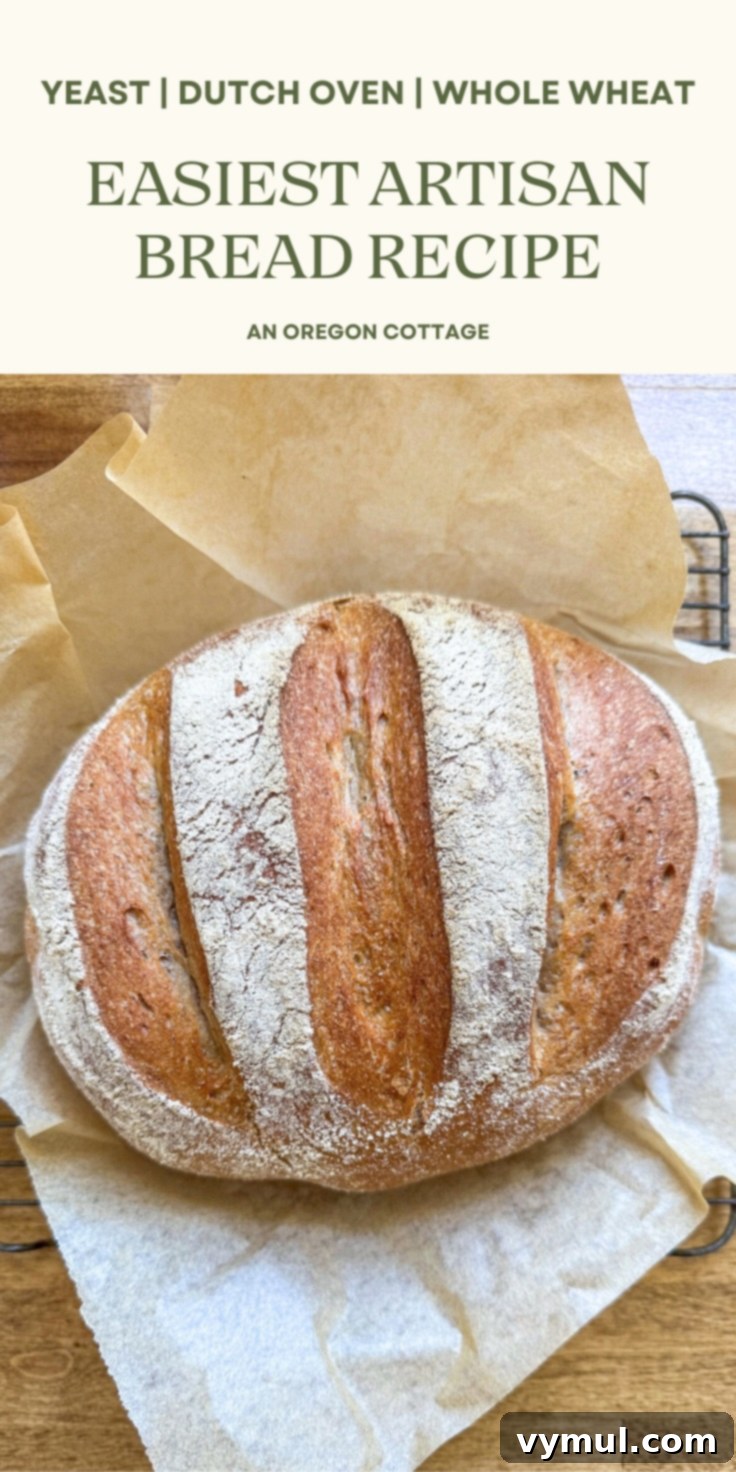
This recipe has been thoughtfully updated to provide the most current and helpful information. It was originally published in 2009, with updates in 2015 and again in 2025 to ensure it remains a timeless favorite.
Disclosure: Affiliate links in this article may earn a commission based on sales, but this does not affect your price. Click here to read my full disclaimer and advertising disclosure.