Extend Your Garden’s Beauty: 15+ Best Fall Flowers for Vibrant Autumn Blooms
Imagine your garden still bursting with color as autumn leaves begin to fall. Having plants that bloom through the cooler days of fall is a delightful way to extend your gardening season, bring cheer to your outdoor spaces, and even gather fresh clippings to decorate your home. This comprehensive guide features over 15 of the most reliable fall flowers to plant, including both vigorous perennials and vibrant annuals. Some are true workhorses, having bloomed tirelessly all summer long, only to continue their magnificent display right up until the first frost!
While many turn their attention to pumpkins, cozy sweaters, and indoor activities when autumn arrives, a true gardener knows the joy of a garden still thriving with vibrant September and October blooms. It’s a wonderful way to hold onto the magic of summer just a little bit longer before the colder, grayer days inevitably settle in, especially in regions like the Pacific Northwest.
For many, the transition to fall can be a slow one. It takes a couple of weeks into September to fully embrace the end of summer, delaying the appearance of traditional fall decor like pumpkins until mid-month. And as for October, it often feels like a period when most flowers have given up, leaving gardens looking lackluster as everything browns and prepares for dormancy, unless snow has already arrived.
However, while the glorious hues of changing leaves often steal the spotlight, it’s always a pleasant surprise to discover a wide array of annuals, perennials, and even shrubs that continue to bloom with remarkable resilience. Some are naturally late-season performers, while others get a second wind as the summer heat subsides and the autumn rains return. All of them contribute to a beautifully extended garden season, providing unexpected splashes of color.
The ultimate goal for any passionate gardener is to achieve continuous color in their flower beds from the first blush of spring through the richness of fall. After carefully selecting easy spring-blooming plants and robust varieties that thrive during the dog days of August, the next logical step is to consider plants that offer a spectacular autumn show. By integrating these reliable fall bloomers, you can effortlessly achieve this goal, ensuring your garden remains a source of beauty and enjoyment for months on end.
A quick note on the images provided: All the photographs showcasing these beautiful plants were captured in my personal PNW Zone 8 garden. This region experiences relatively mild winters and a growing season that typically spans from April until the first hard frosts in October, providing an ideal environment for these diverse fall-flowering beauties.
15+ Essential Fall Flowers to Plant for Lasting Color
Discovering plants that defy the typical end-of-season decline and continue to flourish well into autumn is a true delight for any gardener. This curated list highlights more than 15 varieties, ranging from annuals that offer continuous bursts of color to perennials and shrubs that return year after year, providing structural beauty and late-season interest.
Annuals That Bloom Through Fall: Your Seasonal Color Boosters
Annuals are plants that complete their entire life cycle within a single growing season, meaning they sprout, bloom, set seed, and then die, requiring replanting each year. Often referred to as “bedding plants,” they are readily available in vibrant abundance at garden centers, nurseries, and stores throughout the spring and early summer. While the need for annual replanting might seem like a drawback, the significant benefit of annuals lies in their incredible longevity. They typically offer a continuous, profuse display of blooms from the moment they are planted until the first heavy frost, providing consistent color in spring, summer, and, crucially, through the fall.
Although my garden primarily focuses on perennials for their returning nature and ease of maintenance, I always make sure to incorporate annuals. They are perfect for filling any gaps, adding immediate impact, and providing a dynamic splash of seasonal color that perennials sometimes can’t match. Here are a few of my favorite annual workhorses that tirelessly bloom right through the fall season:
Victoria Salvia (Salvia farinacea ‘Victoria Blue’)
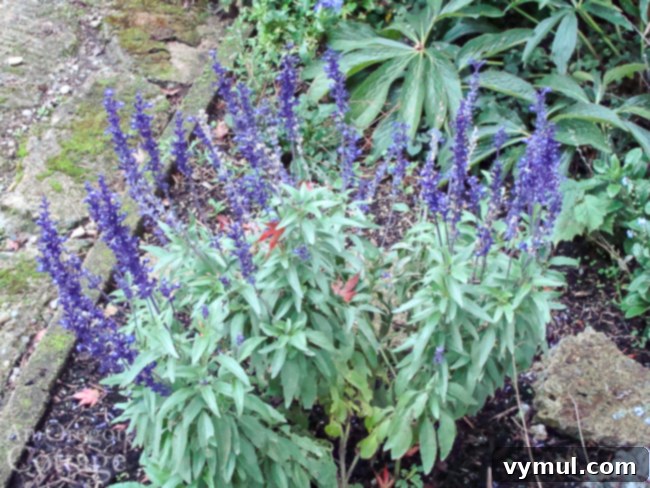
The striking image above, featuring the rich blue spikes of Victoria Salvia, was captured in October in our cottage garden. For any gardener, having a plant that not only blooms but thrives so prolifically late in the season is an absolute treasure. Victoria Salvia is celebrated for its deep indigo flowers and tidy, upright habit, making it an excellent choice for borders, containers, and mass plantings.
This resilient annual prefers locations with full sun to part shade; the specimen pictured above flourished beautifully in part shade. It thrives in well-amended soil, though it’s quite adaptable. In my experience, simple methods like the newspaper mulch method provide sufficient nourishment without the need for additional fertilizer. Regular watering is key to its continuous bloom, especially during dry spells. To ensure an unending cascade of its stunning blue flowers, consistent deadheading (the removal of spent blooms) is highly recommended. This simple act encourages the plant to produce more flowers rather than expending energy on seed production, keeping your garden vibrant well into autumn.
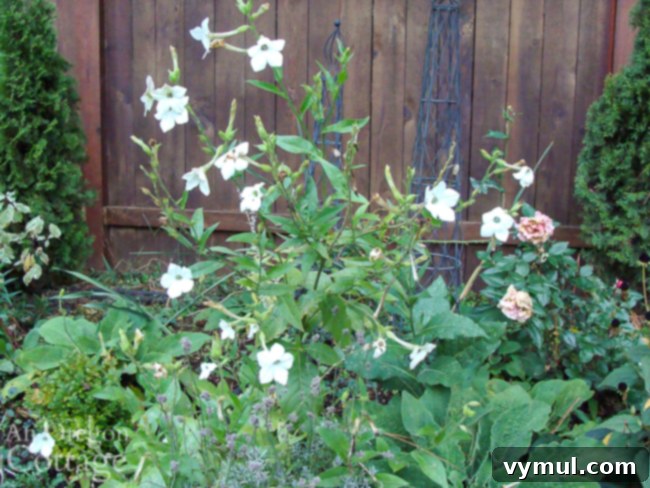
Nicotiana (Flowering Tobacco)
The elegant white Nicotiana shown in the photograph above was still blooming profusely in October, a testament to its late-season tenacity. It continued its dazzling performance until a heavy frost finally brought its season to an end. Nicotiana, also known as Flowering Tobacco, offers an impressive array of colors, including shades of pristine white, soft pink, vibrant red, rich purple, sunny yellow, and even a unique lime green. Varieties also range significantly in size, from compact plants as small as 10 inches, perfect for the front of a border or containers, to majestic specimens reaching up to 5 feet tall, ideal for adding height and drama to the back of a flower bed.
While the shorter varieties are often easier to find, it’s worth seeking out the taller types, like the 3-foot example pictured, for their ability to fill in larger spaces and provide substantial, long-lasting color. Many Nicotiana varieties are also delightfully fragrant, especially in the evening, adding another layer of sensory pleasure to your autumn garden. They prefer full sun to partial shade and consistently moist, well-drained soil. With minimal care, these charming annuals will reward you with an abundance of trumpet-shaped blooms that attract hummingbirds and moths, keeping your garden lively and colorful until winter truly sets in.
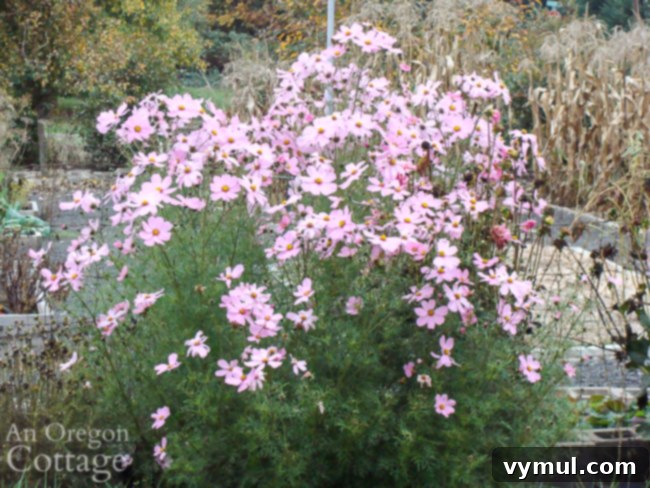
Cosmos (Cosmos bipinnatus)
While many of the popular dwarf cosmos varieties typically finish their blooming cycle by the end of summer, the statuesque tall cosmos, like the graceful plant pictured above, often continue to produce their cheerful, daisy-like flowers until the very first frost. I have a particular fondness for cosmos due to their ethereal, cottage-garden aesthetic and their exceptional suitability as cut flowers, bringing a touch of delicate charm indoors. And those lovely pastel colors – it’s clear I’m a big fan of their soft palette!
Cosmos thrive in full sun and appreciate regular watering, though they are quite forgiving once established. They are remarkably easy to grow from seed, making them a budget-friendly option for mass plantings or filling large areas. When selecting seeds, look for some of the taller, more robust varieties known for their extended bloom period. Excellent choices include the captivating bi-colored pink ‘Daydream’ or ‘Picotee,’ the pure white ‘Purity,’ or a tall mixed cosmos blend that can yield a spectrum of colors from crisp white to deep, enchanting pink. Planting cosmos not only ensures a late-season burst of color but also attracts pollinators like butterflies and bees, adding lively activity to your autumn garden.
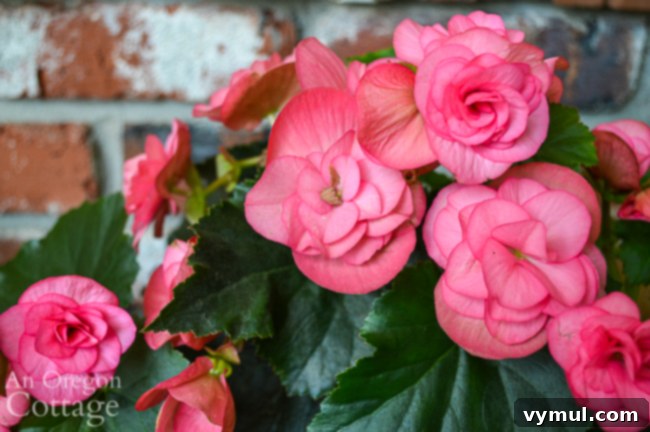
Tuberous Begonia (Begonia Tuberhybrida)
The magnificent pink begonia gracing the photo above was captured in mid-September, still flaunting its spectacular blossoms. It continued to put on a show until early October when it was eventually replaced with charming mini-white pumpkins for a change of seasonal decor by our front door. What’s truly remarkable is that this begonia bloomed so profusely, from April onward, even in complete shade – quite an impressive and long-lasting display, wouldn’t you agree?
In my experience, tuberous begonias tend to offer a longer-lasting bloom period compared to the more commonly found wax begonias (Begonia semperflorens). Beyond their endurance, it’s the sheer beauty and intricate structure of their blossoms that truly sets them apart, making them, in my opinion, far prettier. Tuberous begonias are ideal for adding a touch of elegance to shady spots in containers, hanging baskets, or sheltered garden beds. They appreciate rich, well-drained soil and consistent moisture, but be careful not to overwater, as their tubers can be susceptible to rot. While they are often treated as annuals in colder climates, their tubers can be dug up, stored over winter, and replanted the following spring, allowing you to enjoy their exquisite blooms year after year.
Perennials & Shrubs That Bloom in Fall: Long-Term Garden Investments
For those aiming to cultivate a beautiful, low-maintenance cottage garden, investing in perennials and a few well-chosen shrubs forms the foundational design. Unlike annuals, these plants return year after year, growing larger and filling in spaces to provide consistent beauty with significantly less effort after the initial purchase. They are truly long-term investments in your garden’s future.
One common characteristic of many perennials and some shrubs is their tendency to have a shorter, more defined bloom time. However, there are notable exceptions – varieties that either bloom for an extended period or save their grand finale for the autumn months. These are the plants to seek out if you’re looking for the biggest “bang for your buck,” as they provide incredible value by extending your garden’s visual appeal deep into the season. By carefully selecting plants that bloom, or continue to bloom, into the fall, you effectively prolong your garden’s vibrant life, ensuring you have fresh clippings for your home and keeping your outdoor spaces looking enchanting for a longer duration.
The following selections are all captured in my own garden during the months of September and October, illustrating the spectacular show they reliably put on until the arrival of frost. These are undoubtedly some of the finest fall flowers and shrubs to incorporate into your landscape, promising enduring beauty and late-season interest.
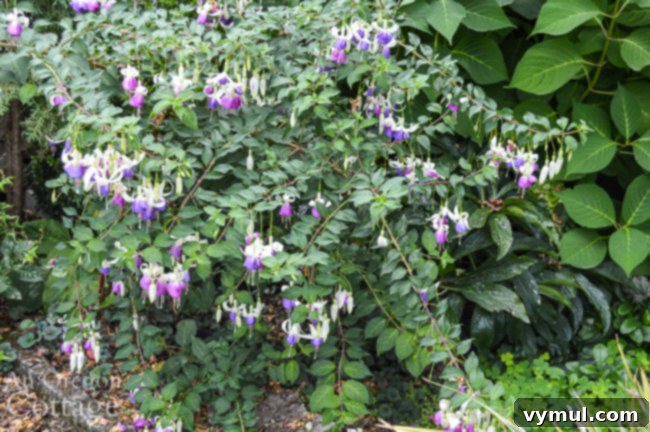
Fuchsia ‘Delta’s Sara’ (Hardy Fuchsia)
This particular fuchsia, ‘Delta’s Sara,’ was an absolute impulse buy from a grocery store, but it turned out to be one of the most rewarding gardening decisions I’ve ever made. Its exquisite white and purple blooms were simply irresistible. Initially, I assumed it was an annual due to its profuse flowering, even though it displayed an upright growth habit and lacked a tag to confirm its identity. Luckily, I have a habit of not pulling anything out of the garden until spring, and that’s when I joyfully discovered it was returning! In this photo, the plant is three years old and has consistently bloomed like this, from early spring right through to the first hard frost, making it an incredible performer.
While the typical specifications for this variety often suggest full sun to part shade, my ‘Delta’s Sara’ was planted in almost full shade within our north-facing porch garden, and it thrived beautifully in those conditions. It received regular watering and benefited from an annual layer of compost-type mulch. I would cut it back hard in early spring, after which it would rapidly take off, growing to an impressive size of approximately 3 feet tall by 3 feet wide, with gracefully arching branches. This hardy fuchsia provides a continuous, delicate display of color, attracting hummingbirds and adding a touch of exotic elegance to even the shadiest corners of the garden, proving that beauty and resilience can indeed go hand-in-hand.
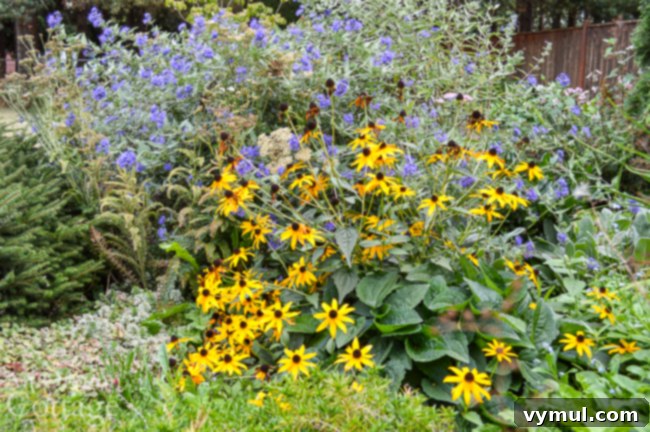
Rudbeckia (Black-eyed Susan) & Ceanothus (California Lilac)
What an absolutely magnificent combination these two plants create! Black-eyed Susan (Rudbeckia hirta) is a perennial favorite, renowned for its cheerful, long-lasting blooms that begin in late summer and continue well into fall. Its bright yellow petals with dark centers bring a sunny vibrancy to any garden. However, when paired with the softer, later-blooming Ceanothus, specifically the variety ‘Gloire de Versailles,’ which typically reaches 3 to 5 feet, the entire display is elevated to something truly special and captivating. The powder-blue flowers of the Ceanothus provide a stunning, delicate backdrop that beautifully complements the bold yellow of the Rudbeckia.
Ceanothus varieties generally prefer drier, well-drained soils, though they still benefit from soil that has been well-amended. The two Ceanothus shrubs in my garden performed exceptionally well with just an annual layer of mulch, which helped retain moisture and suppress weeds. Both of these plants flourish in full sun. Interestingly, while Rudbeckia is often touted as drought-tolerant, I’ve found that it actually benefits from regular watering to maintain its lush foliage and continuous bloom. Conversely, Ceanothus is known for its drought tolerance once established and generally prefers less frequent watering. Despite these slightly different water preferences, both plants in my garden thrived on a soaker hose system that ran approximately once a week, demonstrating their adaptability and resilience.
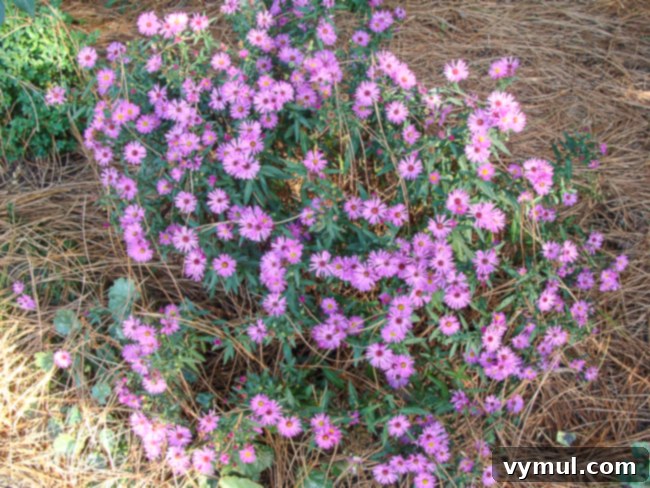
Aster (Michaelmas Daisies)
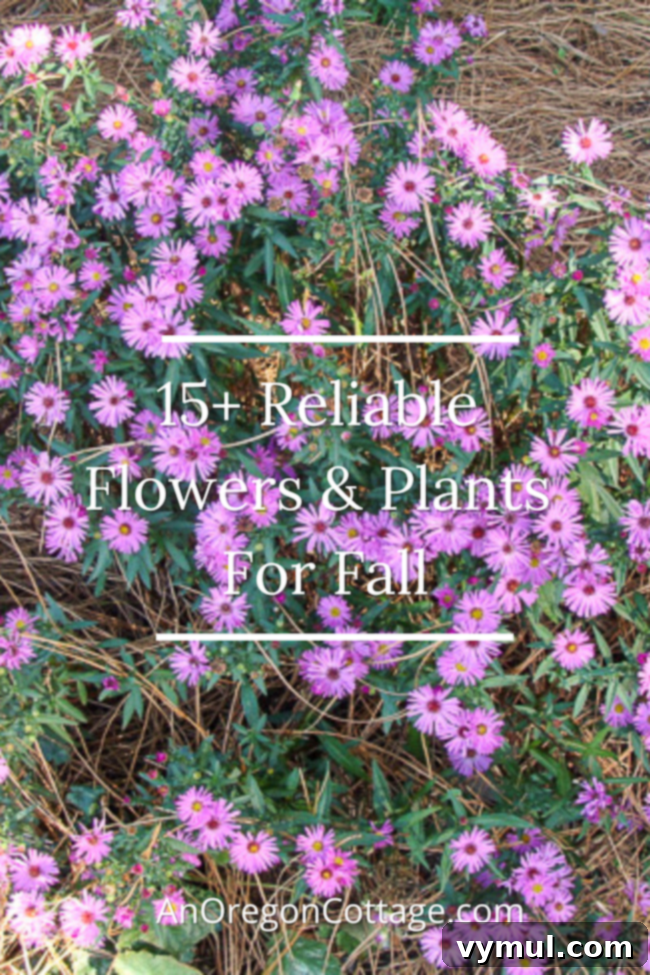
When one thinks of quintessential fall blooms, asters, often charmingly called Michaelmas Daisies, frequently come to mind. They are undeniably a significant contributor to the vibrant tapestry of my garden’s autumn color scheme. These hardy perennials typically begin their impressive floral display in August and continue without falter, producing a profusion of daisy-like flowers right through to the first hard frost, sometimes even enduring beyond it. Their resilience and abundant bloom make them an indispensable element for extending seasonal interest.
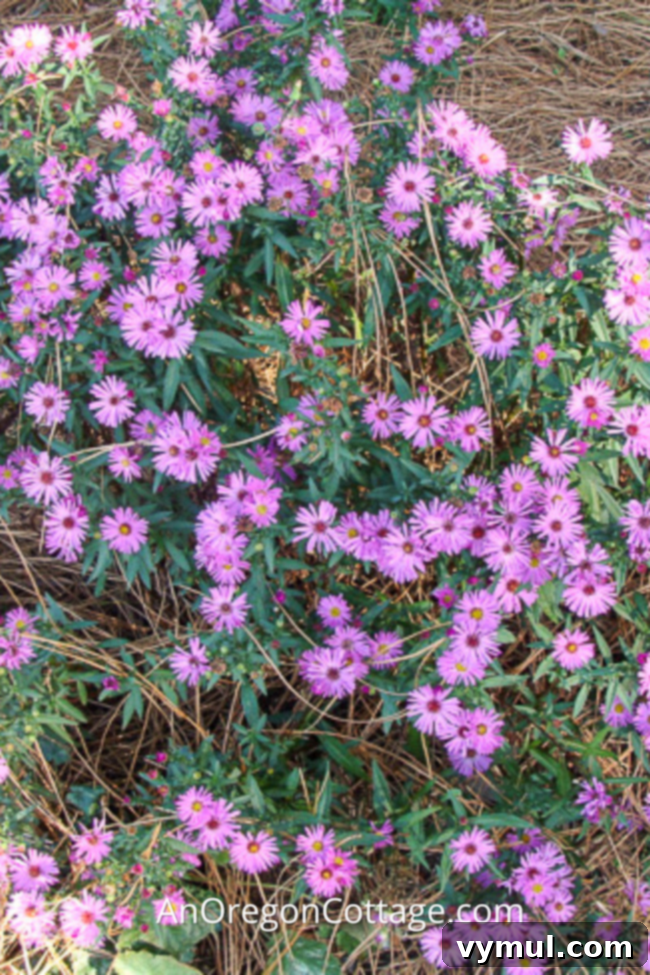
One of the most appealing qualities of asters, from a gardener’s perspective, is their generous spreading habit. They colonize new areas nicely, creating lovely drifts of color. Even better, they are incredibly easy to divide; you can simply dig up a section of a mature plant and transplant it to another part of the garden, effectively propagating new plants for free! After just a few years, I found myself with asters planted throughout the backyard, each cluster providing delightful pops of late summer and fall color that seemed to appear effortlessly. Asters are versatile, thriving in locations ranging from full sun to partial shade. They are available in a beautiful spectrum of colors, including pure white, various shades of blue, rich purple, and cheerful pink. To ensure their continued vigor and abundant blooms, asters appreciate regular watering, particularly during dry spells, and an annual application of a fresh layer of compost in the spring.
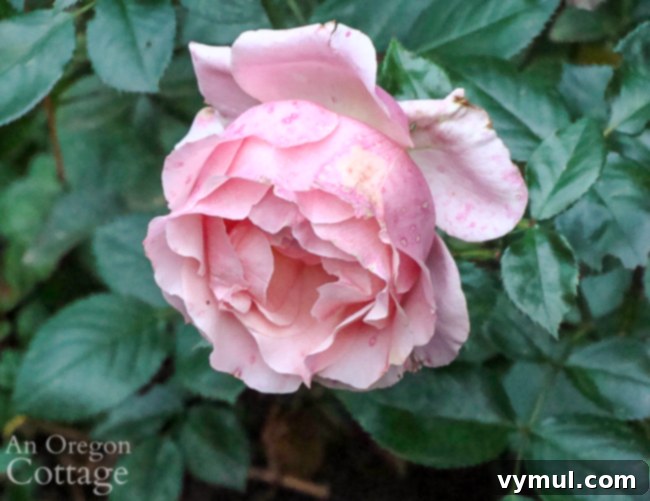
Roses: A Timeless Autumn Favorite
It’s often a delightful surprise to discover that in our Zone 8 garden, quite a few rose varieties continue their spectacular blooming performance well into October, defying the chill and holding their own until the arrival of the first significant frost. This extended bloom period allows for a prolonged enjoyment of their classic beauty and fragrant presence in the autumn landscape.
Among these resilient re-bloomers are cherished varieties like the old-fashioned English David Austin rose, ‘Mary Rose,’ shown above, with its romantic, cupped blooms and delicate fragrance. Another fantastic performer is the charming ‘Fairy Rose,’ pictured below, known for its clusters of small, delicate pink flowers and robust, shrub-like growth habit.
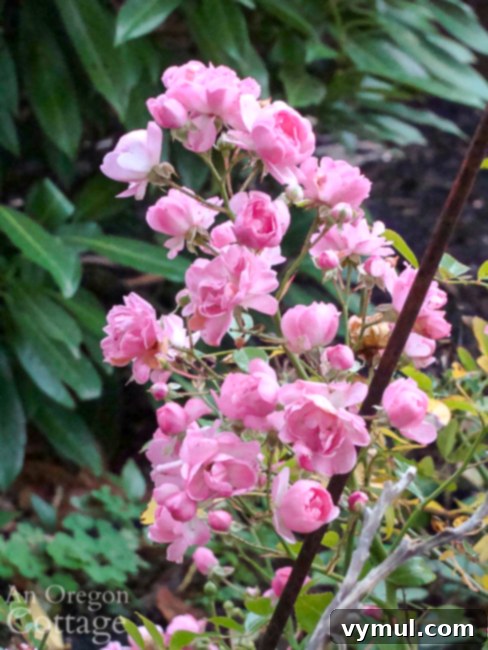
The ‘Fairy Rose’ often takes a brief pause from blooming during our drier late summer months but then bursts into a magnificent display of fresh flowers once the autumn rains return, bringing new life to the garden. It truly stands out as one of my all-time favorite roses for its combined beauty and incredibly easy-care nature. With the ‘Fairy Rose,’ you don’t even need to bother with deadheading if you prefer not to, making it an ideal choice for low-maintenance gardening – truly my kind of rose!
However, it’s worth noting a common challenge in the Pacific Northwest: blackspot. As seen with the yellowing leaves to the right of the ‘Fairy Rose,’ it is susceptible to this fungal disease. But in Oregon, it’s almost expected that everything will eventually contend with blackspot. Nevertheless, the prolonged beauty and minimal effort required from these fall-blooming roses make them well worth any minor imperfections, adding a touch of enduring elegance to the autumn garden.
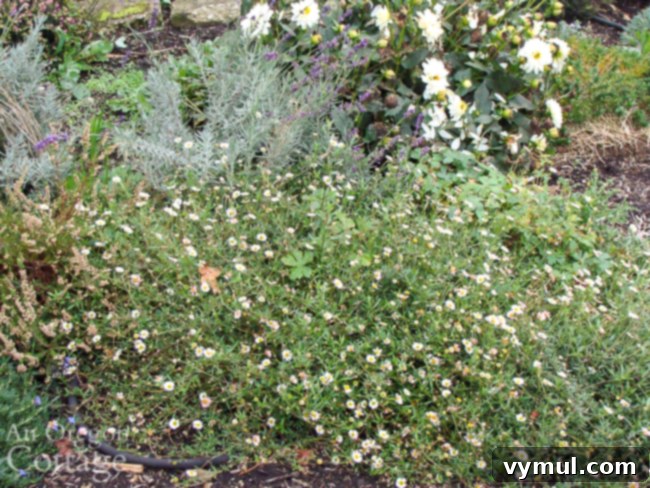
Erigeron (Fleabane)
While in some regions, native fleabane varieties are indeed considered invasive or can behave like weeds, in our particular area, Erigeron is much more well-behaved. It spreads gently and nicely, gracefully filling in empty areas along borders and creating a charming, naturalistic effect without becoming overly aggressive. Its sweet, delicate, daisy-like flowers are a true garden asset, blooming profusely in full sun through most of the season. Sometimes, it may take a brief hiatus during the hottest, driest periods of summer, but it reliably bursts back into abundant bloom after the refreshing autumn rains, continuing its display until the first frost.
Most general information about fleabane often refers to the annual plant, which can readily reseed itself. However, the variety I cultivated was a perennial hybrid of Daisy fleabane (Erigeron speciosus). This particular plant proved to be an absolute blessing in my garden. In just one season, it spread sufficiently to be easily divided, allowing me to transplant sections to other parts of the yard. It served as an excellent front-of-the-border filler, providing a continuous wave of soft color. As you can observe in the photograph, it creates a lovely visual complement to late-blooming lavender (which often offers a second flush of fall blooms) and an annual dahlia, enriching the overall tapestry of the autumn garden with its subtle beauty.
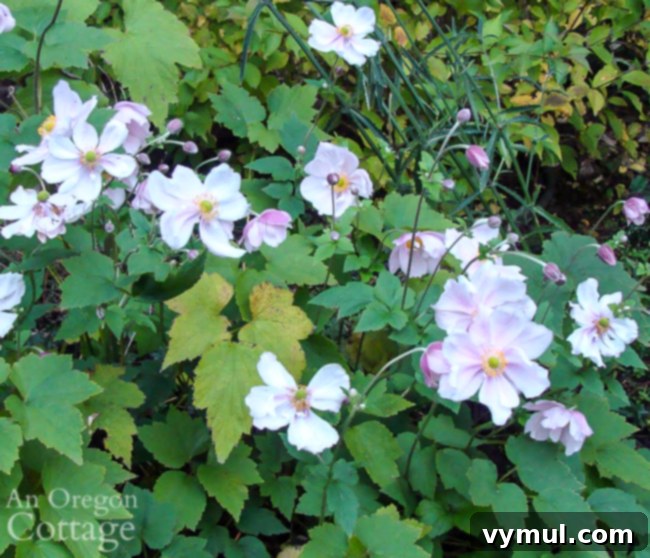
Japanese Anemone (Anemone x hybrida)
My relationship with Japanese Anemone is, admittedly, a bit of a love-hate affair. On the one hand, I absolutely adore its delicate, airy blooms, which often appear in the most enchanting pastel colors. Its late-summer to frost blooming period is a truly rare and cherished quality in the gardening world, offering beauty when many other plants are fading. I also appreciate its lush growth and remarkable hardiness, which contribute to its resilience in the garden.
However, my main point of contention lies in its vigorous spreading habit. Initially, this can be quite advantageous – you simply dig up the parts that have outgrown their designated area and relocate them to a new spot, effectively creating more beautiful fall blossoms for free. But as the years pass, you eventually run out of new areas to fill, and then you’re left with multiple plants that require diligent digging out and reining in every single year. It can become quite a task! In my clay soil, even in full sun to partial sun areas, it only spread outwards from the central clump. However, in my mom’s mostly shady and consistently moist garden, her Japanese Anemone would sprout new growth an astonishing 12 feet away from the original plant! At that point, it officially crosses the line into being considered a weed.
Therefore, if you plan to introduce this stunning plant to your garden, be strategic about its placement. Plant it in areas with less loose soil, where its spread might be naturally contained, or consider growing it in large containers to manage its vigorous nature. Alternatively, be prepared for regular digging and division to keep its exuberant growth in check, ensuring you enjoy its beauty without its invasiveness.
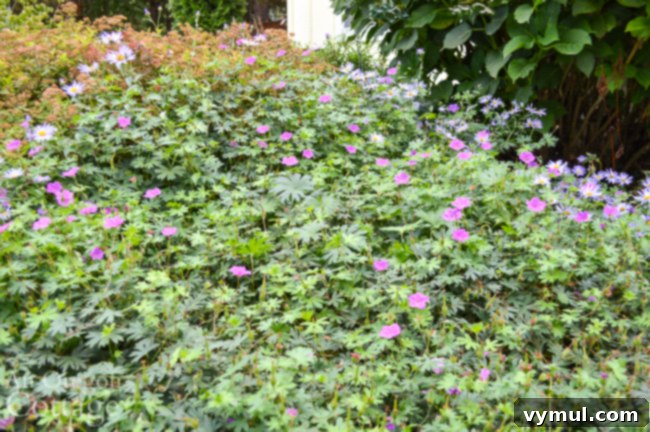
Hardy Geranium (Cranesbill)
The hardy geranium featured in the image is a variety aptly named ‘Rozanne’ – a true “monster” in terms of its impressive size and spread, though not quite the specific name ‘Monster’. This particular specimen is known for its incredible vigor and continuous blooming. Believe it or not, I had cut this plant back quite hard in June, right after it completed its glorious first flush of blooms. Since then, it has been blooming on and off almost continuously, and growing larger all the while! This remarkable resilience and extended flowering period make hardy geraniums invaluable for seasonal interest.
Hardy geraniums encompass a wide range of different varieties, many of which are not as sprawling as ‘Rozanne’ but share the wonderful characteristic of blooming until the first hard frost, despite being dependable perennials. They are also incredibly easy to divide, making them a gardener’s delight for filling in spaces and propagating new plants throughout the garden. These versatile plants thrive in full sun and appreciate regular watering, along with a simple layer of compost applied in the spring to nourish the soil. Their mounding or spreading habits, coupled with their long bloom time and ease of care, make them excellent choices for ground cover, border fronts, or weaving through other perennials. (In the background of the image, you can also spot another perennial purple daisy-like aster, whose specific name currently escapes my memory, adding another layer of late-season charm).
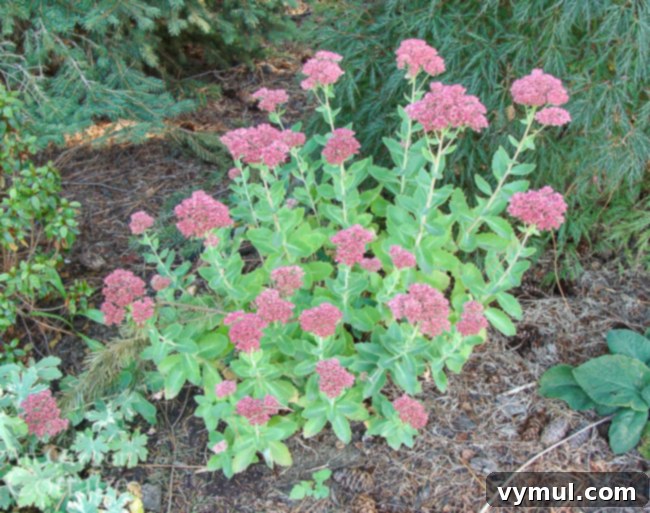
Sedum ‘Autumn Joy’ (Hylotelephium spectabile ‘Autumn Joy’)
I cultivated two distinct varieties of fall-blooming sedums in my garden: the classic ‘Autumn Joy’ and the equally stunning ‘Indian Summer’. Both proved to be absolute perfection, offering unparalleled beauty and structure to the autumn garden. Sedums are renowned for their distinctive fleshy leaves and sturdy, upright stems, which provide architectural interest even before their flowers fully open.
The flower heads of these sedums begin to form as early as July, starting as tight, greenish-white clusters atop their succulent foliage. As the summer progresses and the days shorten, these clusters slowly transform, gradually deepening in color to a rich palette of pinks, reds, and mauves. This evolving color display continues throughout the rest of the summer and well into the fall, peaking in vibrant intensity just before the frost arrives. They are a wonderful source of late-season nectar for pollinators like butterflies and bees. Sedums spread nicely to fill in areas, forming attractive clumps, and their sturdy blooms also make them excellent cut flowers, adding unique texture to autumn arrangements. They integrate beautifully with other flowers and are remarkably versatile, growing equally well in both full sun and partial shade. While they are often praised for their drought tolerance, I found that providing mine with regular water and the yearly application of compost resulted in truly exceptional growth and bloom, making them a low-maintenance yet high-impact addition to any fall garden.
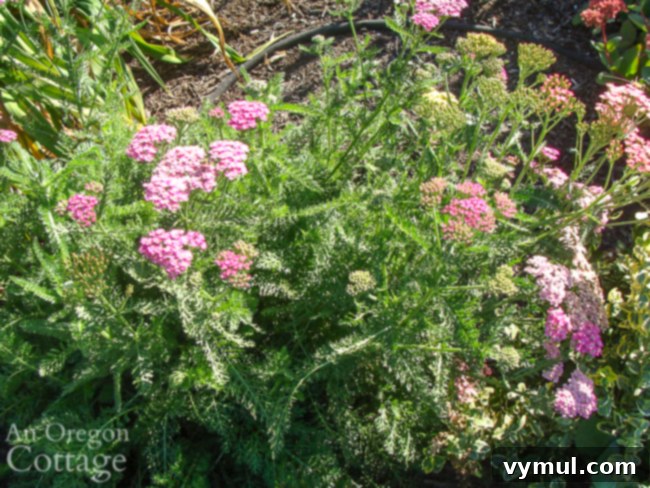
Achillea (Yarrow)
For some gardeners, certain varieties of yarrow can indeed exhibit an invasive tendency, spreading aggressively. However, in my garden, yarrow always remained remarkably well-behaved; in fact, I occasionally lost it during a particularly harsh winter, which speaks to its more tempered nature here. I absolutely adore the distinctive, flattened cluster shape of its blooms, its remarkably easy growth habit, and its finely textured, fern-like leaves that add a lovely softness to the garden. I am especially fond of the pastel yarrow varieties, with their enchanting shades of soft pinks, creams, and yellows, which blend beautifully into a naturalistic planting scheme.
Yarrow makes an excellent cut flower, adding unique texture and a cottage-garden charm to indoor arrangements, and it also dries beautifully for everlasting displays. Beyond its aesthetic appeal, yarrow is a powerhouse for ecological benefits. Butterflies and bees are incredibly drawn to its nectar-rich flowers, making it an essential plant for supporting pollinators in your garden. If you have the space and appropriate conditions, I wholeheartedly encourage you to plant it! Yarrow is notably drought-resistant once established and rarely bothered by pests or diseases, contributing to its low-maintenance appeal. It typically grows to a height of between 1 and 3 feet, making it suitable for various garden positions. Furthermore, yarrow has a long history as a medicinal herb, traditionally used to help alleviate fevers and reduce inflammation, adding an extra layer of historical interest to this versatile plant.
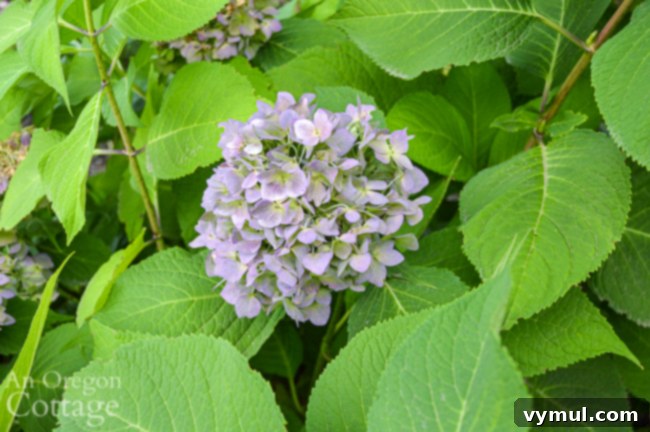
Hydrangea
Of course, hydrangeas are an absolute must-have for any garden seeking extended seasonal interest! One of the primary reasons to cultivate these magnificent shrubs is their exceptionally long blooming period, which typically commences in late spring or early summer and continues unabated right up until the first hard frost. Their ability to maintain such a prolonged display of lush, often massive, blooms makes them invaluable in the landscape.
Beyond their extended flowering, many hydrangea varieties offer an added bonus: their blossoms gracefully transform into a spectrum of lovely colors as they age. The captivating bloom pictured above, for instance, began its life as a vibrant, clear blue. By late September, it had matured into this exquisite, mellow purple hue, adding depth and richness to the autumn garden. It’s precisely at this stage, when the colors have deepened and the petals have taken on a papery texture, that you can cut the blooms and bring them indoors to dry. This process is incredibly simple: just place them in a vase with no water, and they will air-dry beautifully, preserving their autumnal charm for long-lasting indoor decoration. While hydrangeas were traditionally known as quintessential shade plants, plant breeders have introduced many new varieties in recent years, including some that perform remarkably well in sunnier locations. However, regardless of the variety, all hydrangeas share a common requirement for regular watering and rich, well-draining soil to achieve their most spectacular blooms and maintain overall vigor throughout the season.
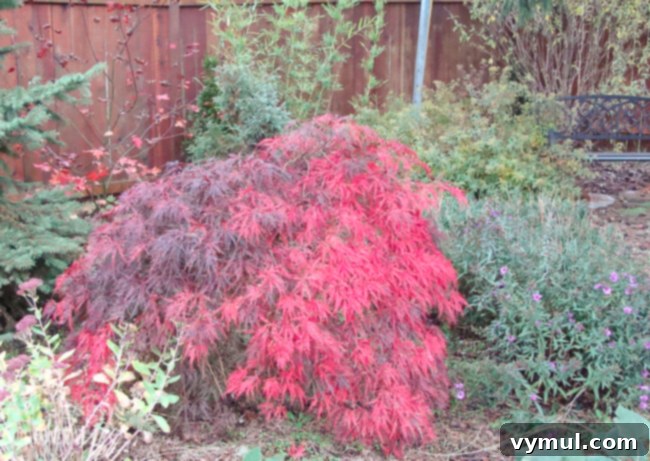
Japanese Maple (Acer palmatum)
While technically not a flowering plant, I simply could not complete this list of essential fall garden elements without including the Japanese Maple. Its utterly arresting fall foliage color makes it a true showstopper in the autumn garden, and it never fails to draw admiring comments from any visitor. The transformation of its leaves from summer green to brilliant reds, oranges, and golds is nothing short of spectacular, providing a dramatic focal point that competes with, and often surpasses, the beauty of any late-season bloom.
There is an astonishing diversity of Japanese Maple varieties available, meaning you can almost certainly find one perfectly suited to your specific climate, space constraints, and aesthetic preferences. The particular specimen shown above was already established when we moved into the house, so its exact variety remains unknown to me; however, it has never grown beyond four feet in height, making it a perfect accent tree for smaller gardens. It’s crucial to do your homework when selecting a Japanese Maple, as some varieties are dwarf and stay compact, while others can mature into majestic trees reaching up to 30 feet tall. Regardless of the size or specific cultivar, all Japanese Maples offer absolutely exquisite, vibrant fall color and boast the relatively easy care associated with small shrubs and ornamental trees, making them an indispensable component for year-round garden interest, culminating in an unforgettable autumn display.
I genuinely hope this comprehensive guide has helped you discover some truly wonderful fall flowers and shrubs to plant, inspiring you to extend the beauty of your garden well into the autumn season! If you’re eager to learn about more garden activities and preparations for the cooler months, I encourage you to explore these helpful articles:
- Fall and Winter Garden & Yard Prep + Printable Checklist!
- 15+ Fall Gardening Tips & Inspiration
- September Garden Chores & Tasks
- October Garden Chores & Tasks
- October Garden Tour & Lessons