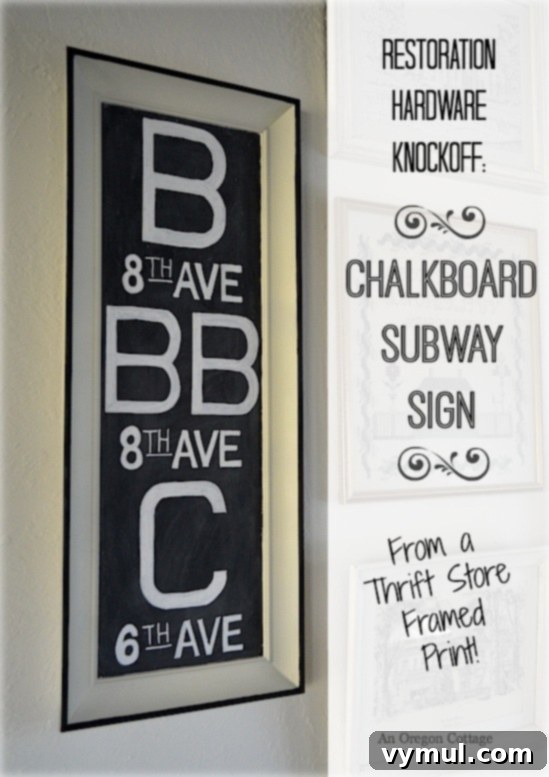
DIY Restoration Hardware Inspired Chalkboard Subway Sign: A Budget-Friendly Home Decor Project
Create an easy, Restoration Hardware knockoff DIY chalkboard subway sign from an old framed thrift store print, paint, and chalk for a fraction of the price! This comprehensive guide will walk you through transforming a forgotten find into a chic, customizable decor piece that adds character and style to any room.

Some links in this article are affiliate links, and if you click on them, I will receive a small commission at no cost to you. Please read my full disclosure for more information.
There’s something uniquely satisfying about taking a humble, overlooked item and transforming it into a stylish statement piece that rivals high-end designer decor. This Restoration Hardware catalog-inspired DIY chalkboard subway sign is precisely one of those projects. It stands out as one of my absolute favorite thrift store transformations to date, right up there with my Ballard Burlap Bulletin Board, which now serves beautifully as a jewelry holder. The appeal of a good DIY project isn’t just in the creative process; it’s in the immense savings and the personal touch it adds to your home.
For quite some time, I’ve been captivated by all of Restoration Hardware’s iconic subway signs. The aesthetic is timeless – industrial yet elegant, rustic yet refined. However, the price tags associated with these pieces can be quite daunting, often reaching hundreds of dollars for a single sign. This is why the thrill of finding an affordable alternative sparked such excitement. When I stumbled upon a framed press-board print at a thrift store, its shape immediately brought those expensive RH signs to mind. Despite being smaller than the high-end versions, I instantly envisioned its potential. I knew exactly how I would transform it, giving it a new life and a place of honor in my home without breaking the bank.
In fact, I grew to prefer the smaller size for my space. While original RH signs aren’t chalkboards, I decided that making mine a chalkboard would add an extra layer of fun and functionality. This ingenious modification allows me to change the message whenever inspiration strikes, adapting the decor to different seasons, holidays, or even just my mood. This flexibility makes it an incredibly versatile piece of home decor, unlike a static print. The ability to refresh the message ensures it remains a dynamic and engaging element in any room, offering endless possibilities for personalization and expression.
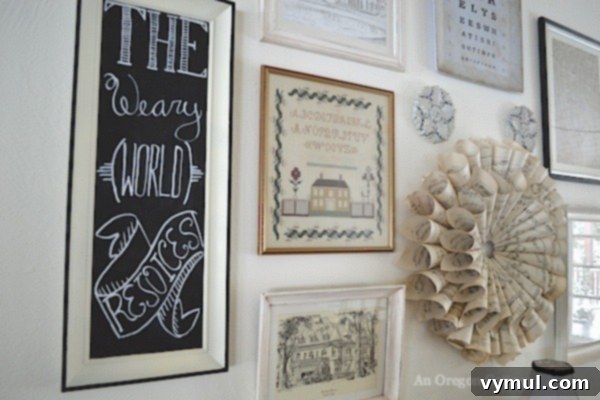
This sign has already proven its versatility. It made a festive appearance during the holidays as a key part of our Christmas Gallery Wall, featuring a delightful seasonal saying hand-drawn by my daughter in charming fonts. The ability to adapt it to different occasions truly highlights the benefits of a DIY chalkboard. However, when it came to achieving that classic subway sign look with its distinct typography, my freehand artistic skills weren’t quite up to the task, admittedly! Thankfully, the simple and effective chalk transfer method I’ve successfully used before came to the rescue, allowing me to achieve the crisp, clean lines and stylized fonts I desired, even without a professional artist’s touch.
How To Turn An Old Print Into a Chalkboard Subway Sign: A Step-by-Step Guide
Transforming a dated thrift store print into a stylish, customizable chalkboard subway sign is a rewarding project that’s much simpler than it looks. By following these detailed steps, you can create a high-impact decor piece that reflects your personal style and saves you a significant amount of money compared to store-bought alternatives. The key is in careful preparation and execution, making each step count towards a beautiful final product.
Essential Supplies for Your DIY Project
Gathering the right materials before you begin is crucial for a smooth and successful DIY experience. Most of these items are readily available at craft stores, hardware stores, or even around your home. Investing a little time in selecting quality supplies will yield a more durable and aesthetically pleasing result.
- Framed Thrift Store Print: This is your canvas! When searching, look for prints where the image is typically muted and directly printed onto a type of pressboard. Crucially, the frame and the print should appear almost as one seamless piece, with no visible gap between them. This integrated design makes them ideal for painting, as you won’t have to worry about taping off delicate edges. Alternatively, an old cupboard door with a similar flat, framed shape can also serve as an excellent base. Consider the overall dimensions; a larger print will create a more dramatic statement, while a smaller one offers subtle charm.
- White Enamel Interior Paint or Craft Paint: This will be your base coat. Enamel paint offers a durable, smooth finish, while craft paint is a good option for smaller projects and offers a wide range of color choices. Choose a high-quality paint to ensure good coverage and adhesion, especially over the original print surface.
- Flat Black Paint or Chalkboard Paint: While dedicated chalkboard paint is designed for this purpose, flat black interior paint works just as effectively for creating a functional chalkboard surface. If you already have flat black paint on hand, there’s no need to purchase specialized chalkboard paint, saving you money.
- 1-inch Paint Brushes and Small Artist Brush: You’ll need a wider brush for covering larger areas like the frame and the main chalkboard surface. A small artist’s brush will be essential for intricate details and touch-ups, particularly when defining the black edge of the chalkboard.
- Painter’s Tape: A non-negotiable for achieving clean, crisp lines, especially for the border of your chalkboard area. Good quality painter’s tape prevents paint bleed and ensures professional-looking results.
- White Chalk and a Rag: Regular white chalk is needed for conditioning your new chalkboard surface. A clean rag will be used for wiping the chalk off, leaving a perfectly “seasoned” surface.
- Printer (to print out letters): Unless you’re confident in your freehand lettering, a printer is essential for creating your desired fonts and messages. This allows for precise replication of the subway sign aesthetic.
- Pencil and Ruler: These are indispensable tools for transferring your letter outlines accurately and ensuring straight lines for your design. A ruler will help with spacing and alignment.
- White Chalk Marker: While regular chalk can be used, a white chalk marker provides a much crisper, bolder, and more permanent look for your lettering, making it stand out against the black background. It’s also easier to work with for detailed designs.
Directions: Your Step-by-Step Guide to a Stunning Subway Sign
Creating this Restoration Hardware-inspired chalkboard subway sign is a project that combines simple techniques with a keen eye for detail. Each step is designed to build upon the last, ensuring a professional and beautiful finish. Take your time, enjoy the process, and soon you’ll have a unique piece of art for your home.
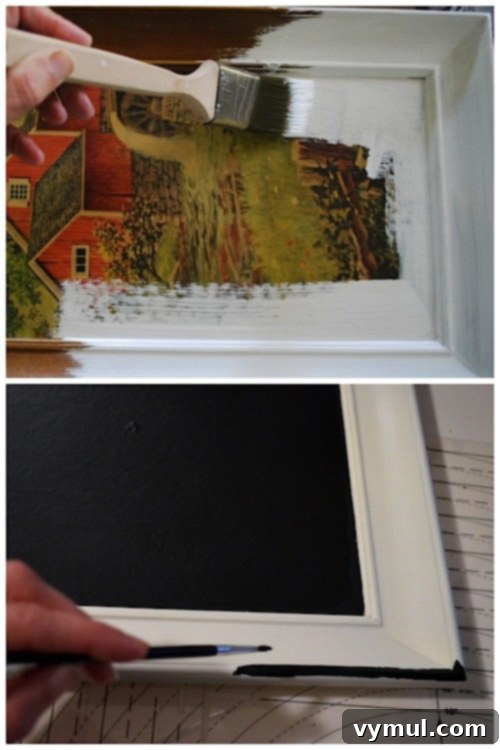
1. Paint the Base Coat. Begin by thoroughly cleaning your thrift store print and frame. Once dry, apply an even coat of white enamel interior paint (or craft paint) to all surfaces – both the original print area and the frame itself. This white base serves as an excellent primer, covering the existing artwork and providing a uniform, bright foundation for subsequent layers. Ensure full coverage, especially if the original print was dark or busy. Allow ample drying time according to the paint manufacturer’s instructions, usually a few hours, before proceeding to the next step. A second coat might be necessary for complete opacity.
2. Apply the Chalkboard Surface. Once the white base coat is completely dry, carefully paint the inside area of the frame (what will become your chalkboard surface) with flat black paint. Remember, if you have flat black interior paint on hand, there’s no need to buy specialized chalkboard paint; it performs just as well for this purpose. Apply a smooth, even coat. Depending on your paint’s opacity, you might need two coats to achieve a deep, consistent black finish. Allow each coat to dry thoroughly between applications. This step truly begins to define the classic chalkboard look.
3. Create a Crisp Black Edge with Painter’s Tape. Initially, I attempted to freehand the black edge around the inner chalkboard area with a small artist’s brush. While admirable in theory, the result was too uneven and imperfect even for my relaxed standards! For a truly clean and professional finish, the best method is to use painter’s tape. Carefully apply painter’s tape along the entire edge of the frame, precisely where you don’t want the black edge to be. This creates a masked-off area that will protect the white frame while allowing you to paint a sharp, defined black border. Once the tape is securely in place, use your small artist’s brush to carefully paint the desired black edge. The trick here is to remove the painter’s tape while the paint is still slightly wet. This helps prevent the paint from peeling along with the tape, ensuring a super crisp line. If there are any minor imperfections, a small touch-up with your artist’s brush can fix them easily.
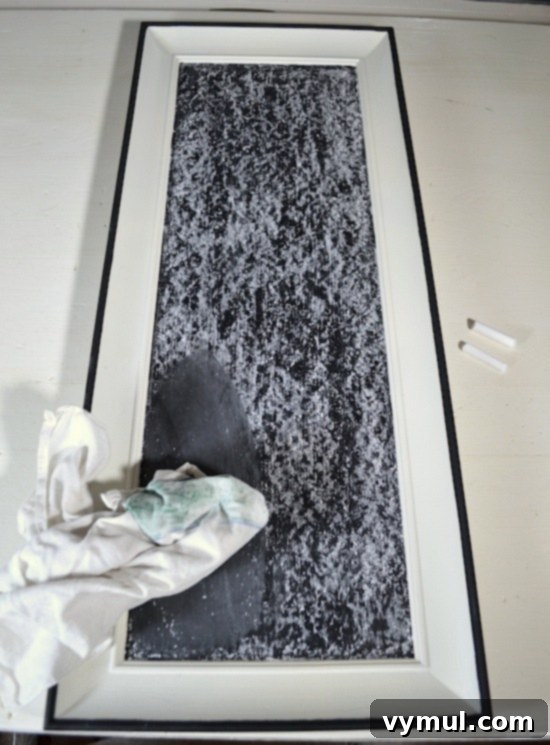
4. Condition Your New Chalkboard Surface. This often-overlooked step is crucial for ensuring your chalkboard functions optimally for writing and erasing. After the black paint is fully dry and cured – ideally waiting a day or two to ensure maximum hardness – it’s time to condition the surface. Take the side of a piece of regular white chalk and gently rub it all over the entire black painted area. The goal is to cover the surface completely with a light layer of chalk dust. Once covered, use a clean, dry rag to wipe off the excess chalk. This process leaves behind a thin film of chalk, effectively “priming” the surface. Conditioning prevents ghosting (where previous writing leaves faint marks) and allows chalk to glide smoothly and erase cleanly, giving it that authentic, well-loved chalkboard appearance.
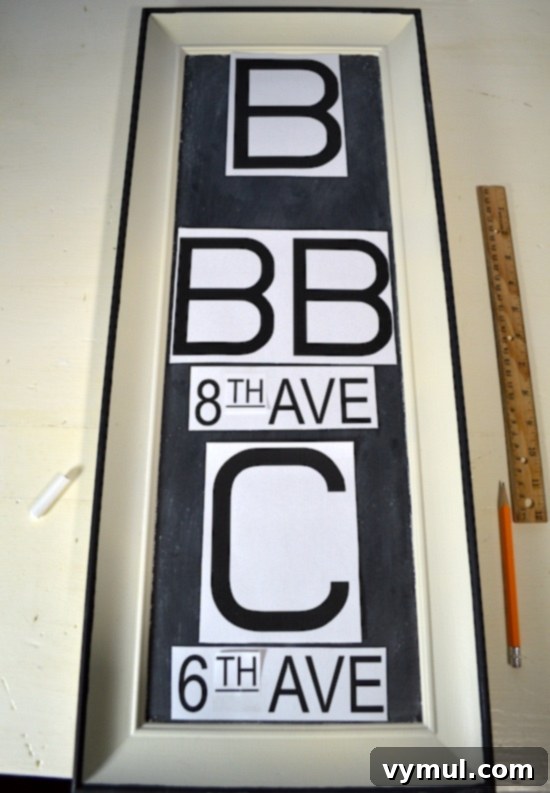
5. Design and Print Your Letters. Now for the creative part! Decide on the message you want to display on your subway sign. Restoration Hardware’s signs often feature large, bold initial letters combined with smaller street names or phrases. For inspiration, consider browsing vintage subway sign images online. Select fonts that effectively replicate this classic, somewhat industrial look. For my main large letters, I found a fantastic free font called Lastwaerk, which I scaled to size 550 for single letters and 450 for double sets. For the “street names” or secondary phrases, the basic Arial Narrow font in size 150 worked perfectly. These sizes were suitable for my sign, which measured 11 inches wide overall, with a chalkboard area of 7 inches. Remember, you’ll need to adjust your font sizes to fit the specific dimensions of the framed print you found. Print your letters clearly on regular paper, ensuring they are spaced appropriately for your sign.
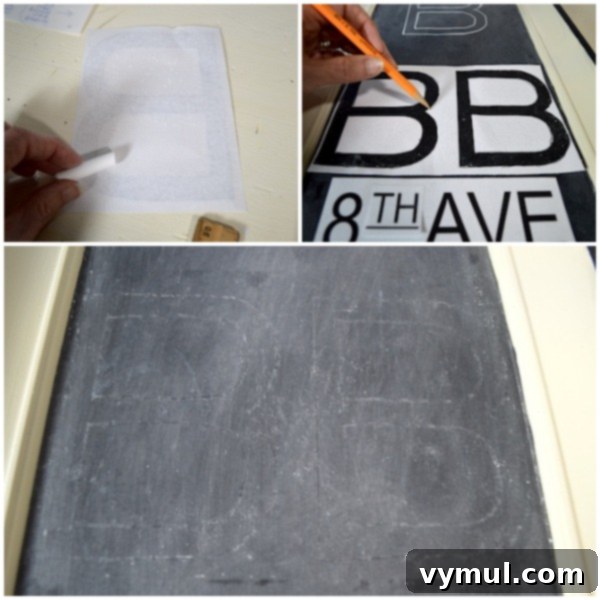
6. Transfer Letters to the Chalkboard. This chalk transfer method is a fantastic way to get precise lettering without exceptional freehand drawing skills. Begin by rubbing the back of your printed letters entirely with a piece of regular chalk. Make sure to get good coverage, as this is how the transfer happens. Next, carefully position your chalk-backed printed letters evenly onto your conditioned chalkboard surface. Use a ruler to ensure perfect alignment and spacing. Once positioned, firmly trace the outlines of each letter using a pencil. The pressure from the pencil will transfer the chalk from the back of the paper onto your chalkboard, creating a faint but visible outline. Sometimes, especially when working on a painted surface that isn’t a commercial chalkboard, the transfer might be very faint. Don’t worry; as long as the outlines are visible enough for you to trace, you’re in good shape! (Of course, if you possess exceptional artistic talent, feel free to skip this step and freehand your letters – I truly admire your skill!).
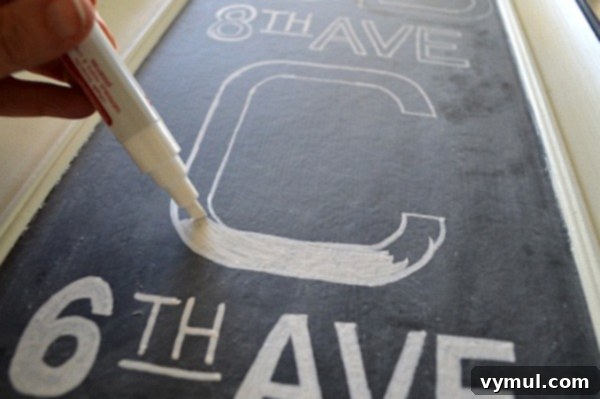
7. Fill in the Outlines with Chalk or a Chalk Marker. With your chalk outlines transferred, it’s time to bring your letters to life. You can use regular white chalk, but for a high-contrast, professional-looking finish that truly mimics the sharp lines of Restoration Hardware signs, a chalk marker is highly recommended. Chalk markers deliver opaque, vibrant white lines that stand out beautifully against the flat black background. They also work exceptionally well on various surfaces, even slightly textured or bumpy ones, like the surface of my painted-over pressboard print. Carefully fill in the traced outlines, taking your time to ensure smooth, consistent coverage. The precision of a chalk marker will help elevate the overall aesthetic of your sign, making it look polished and intentional. Once you’re finished, admire your handiwork!
Customizing and Styling Your Unique Subway Sign
One of the greatest advantages of a chalkboard subway sign is its incredible versatility. Don’t feel limited to a single message or theme. Once you’ve mastered the basic technique, you can easily change the display to suit any occasion or decor style. For example, during autumn, you could feature a favorite fall quote or list local pumpkin patch names. For summer, perhaps beach-themed words or a family vacation mantra. The ability to erase and re-draw means your sign can evolve with your home, keeping your decor fresh and engaging throughout the year. Consider experimenting with different chalk marker colors, although white often provides the most classic subway sign look. You could also add small hand-drawn embellishments or borders if you’re feeling artistic.
When it comes to styling, your new sign can be a focal point in almost any room. In a living room, it can anchor a gallery wall or stand alone as a sophisticated accent piece. In a kitchen, it could display a menu, grocery list, or a favorite recipe. Entryways benefit from a welcoming message or an inspirational quote. Even a bedroom can be enhanced with a personalized message or a list of meaningful places. Its classic black and white aesthetic allows it to blend seamlessly with various interior design styles, from modern farmhouse and industrial chic to transitional and even minimalist. Hang it proudly and let it speak volumes about your style and creativity.
The Joy of Imperfection (and Incredible Savings!)
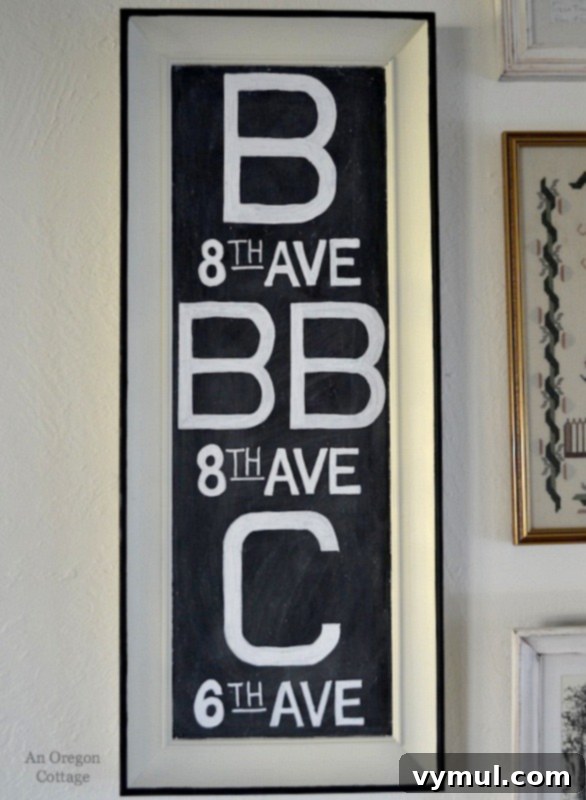
I absolutely adore how this subway sign turned out! It’s incredible to have a piece that captures the essence of something I’ve long admired – a Restoration Hardware subway sign, which can easily be priced at $412 (or more, *cough, cough*) – created from a $1.99 thrifted print, some paint, a marker, and a bit of my time. The satisfaction of transforming an inexpensive find into something so chic and functional is truly immense.
Now, it’s important to acknowledge that handmade items often come with a charming touch of imperfection, and I am perfectly okay with that. For instance, you might notice that my ‘8’s aren’t perfectly identical. But if you’ve been following my projects for a while, you know that I embrace these small quirks. I actually find that these slight variations add character, making the sign look genuinely hand-drawn and unique, rather than mass-produced. It imbues the piece with a warmth and personality that factory-made items often lack. And honestly, it feels all the sweeter knowing I still have over $400 sitting in my pocket! Ha!
So, I hope I’ve inspired you to embark on your own treasure hunt at a local thrift store. Who knows what hidden gems you might uncover, ready to be transformed into your next favorite home decor piece?
Print
Pin
SaveSaved!
DIY Chalkboard Subway Sign – a Restoration Hardware Knockoff
Tools
-
Pencil
-
Ruler
-
1-inch paint brushes and small artist brush
-
Painters Tape
-
White chalk marker
-
Printer to print out letters (if you can hand draw them, go for it)
Materials
- 1 Framed thrift store print Look for one where the image is usually very muted and it’s printed directly on a type of pressboard which seems almost one piece with the frame – there is no space visible between the frame and the print. This lack of space between frame and backing/print makes them ideal for painting (an old cupboard door in a similar shape would be good, too).
- White enamel interior paint or craft paint
- Flat black paint or chalkboard paint (I’ve found flat works just as well)
Instructions
-
Paint the base. Coat all the surfaces – print and frame – with white enamel interior paint (craft paint would work too).
-
Paint the inside of the frame (the print area) with flat black paint (remember, there’s no need for chalkboard paint, unless you have it on hand).
-
Paint a black edge. At first I thought I could free-hand this with a small brush as shown. Um, no. You can see how rough it is which was too much imperfection even for me, believe it or not. This was better: use painter’s tape and tape the whole frame edge, except where you want the black edge. Just make sure to remove the tape while the paint’s still wet, and touch up in places if you need to.
-
Condition. After the paint is fully dry and cured (a day or two), condition the painted surface to write and erase better with chalk. It also gives it that chalkboard look. Use the edge of a piece of regular chalk and rub it all over the surface, then wipe it off with a rag which leaves a film of chalk.
-
Print out the letters you want in a font that replicates the look you’re going for.
RH signs have C’s, D’s, E’s and F’s, but our last name starts with a B so I used that for the main letter. I used a free font called Lastwaerk in size 550 for the single letters and 450 for the double set. For the streets, the font is the basic Arial Narrow in 150.
These sizes worked for my sign that was 11″ wide total, with a chalkboard size of only 7″ – you will need to adjust the sizes to fit the framed print you find.
-
Transfer letters to chalkboard by rubbing the back of the printed-out letters with chalk, placing them evenly on the chalkboard and then using a pencil to trace the outlines.
Sometimes when you’re making a chalkboard out of something else, regular chalk doesn’t work as well on it (one of the reasons why I used chalk marker for the coloring), and the transfer came out very faint.
But it was visible enough to trace around it, and that’s all I needed (it goes without saying, probably, that if you are an artist you can skip all this and free-hand the letters – and I bow to you!).
-
Fill in the outlines with chalk or a chalk marker. Since the signs that inspired mine were high contrast, I wanted the same look which I knew I’d get with chalk markers. Plus, they work on almost any surface, even the slightly bumpy surface of my painted-over print.
Disclosure: affiliate links in this article will earn commission based on sales, but it doesn’t change your price. Click here to read my full disclaimer and advertising disclosure.