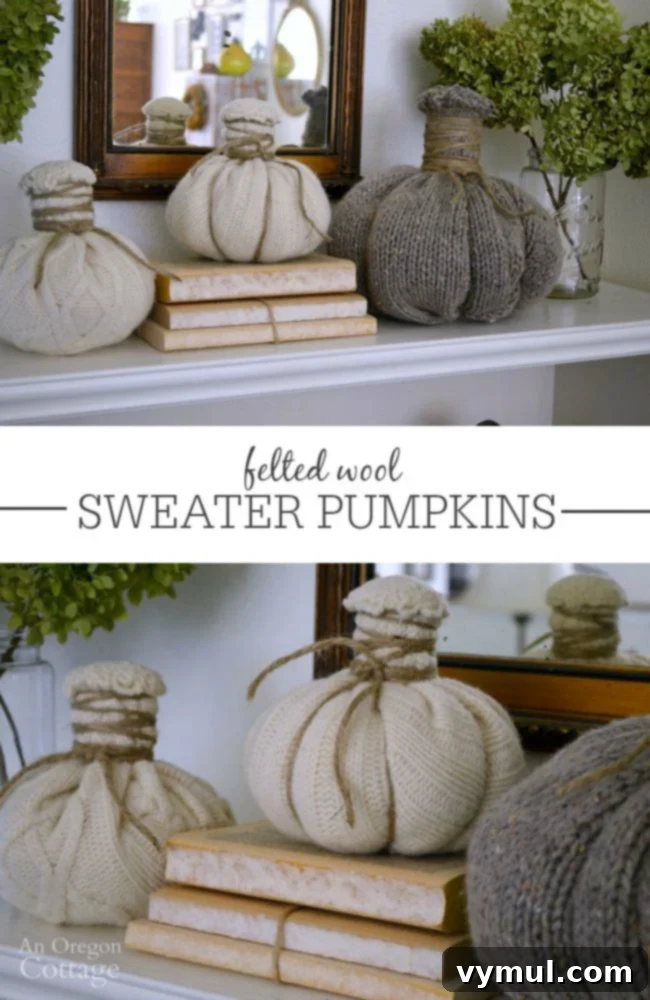
DIY Felted Wool Sweater Pumpkins: Easy Upcycled Fall Decor for a Cozy Home
Transform old sweaters into charming, rustic fall decor with this easy-to-follow tutorial for DIY felted wool sweater pumpkins. It’s a low-cost, eco-friendly way to add warmth and seasonal cheer to your home, perfect for creating a cozy farmhouse aesthetic.
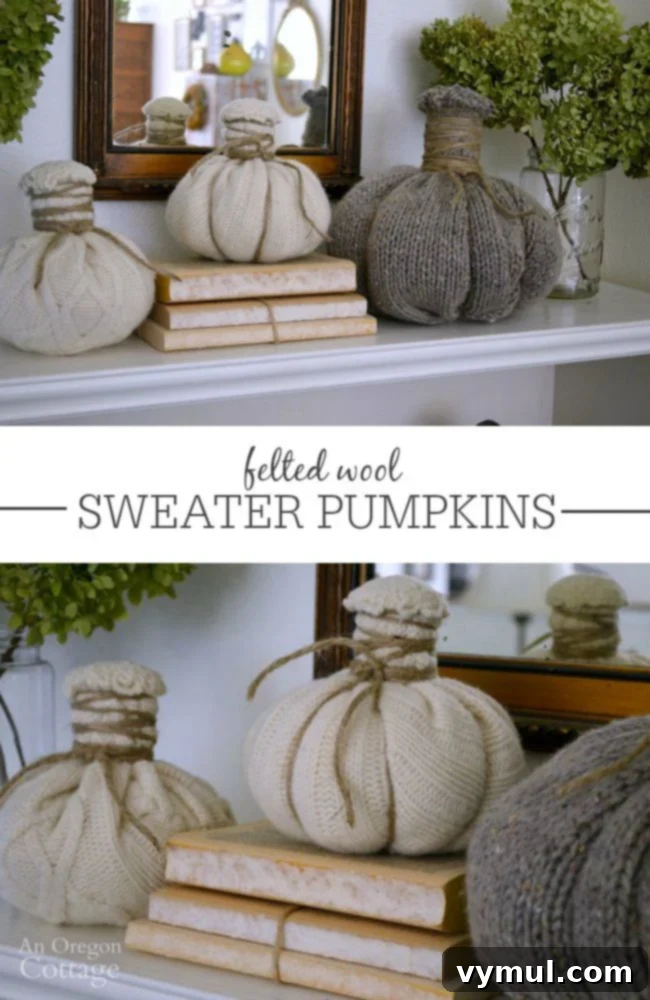
The allure of handmade fall decor is undeniable, and for years, I’ve admired the charming sweater pumpkins popping up across the internet. The idea of repurposing old sweaters, breathing new life into forgotten textiles, always struck me as both clever and sustainable. While I appreciated their quaint appeal, it wasn’t until I encountered a particular version at a craft store that I truly felt compelled to roll up my sleeves and create my own.
What truly captivated me was the ingenious method used for the ‘stem’ – a simple yet incredibly effective technique of wrapping the sweater fabric with jute twine. This clever detail added a rustic, authentic touch that elevated the craft from merely cute to genuinely inspiring. Unfortunately, I don’t have a direct link to show you the exact item that sparked my creativity, as it seemed to be an in-store exclusive, and I regrettably didn’t capture a picture. Nevertheless, that single design element became the foundation for this tutorial, guiding my approach to crafting these delightful, upcycled sweater pumpkins.
These DIY felted wool sweater pumpkins aren’t just beautiful additions to your autumn decor; they embody the spirit of mindful crafting and sustainability. By transforming thrifted or forgotten garments, you’re not only saving money but also reducing waste and creating something unique that reflects your personal style. Imagine the joy of displaying these handcrafted pieces, knowing each one tells a story of transformation from an old sweater into a beloved fall accent.
Felted Wool Sweater Pumpkin Tutorial: Crafting Your Own Cozy Autumn Accents
Crafting these adorable sweater pumpkins is a wonderfully rewarding project that yields charming results perfect for any fall display. The process is straightforward, making it an ideal craft for beginners and experienced DIYers alike. The key to their unique texture and shape lies in using felted wool, which provides a sturdy yet soft material that holds its form beautifully. Let’s gather our materials and dive into the steps to create your very own collection of cozy autumn accents.
Supplies Needed for Your Upcycled Sweater Pumpkins
The beauty of this project lies in its accessibility and cost-effectiveness. The primary material, old wool sweaters, can often be found for next to nothing, making this a truly budget-friendly craft. To begin your journey into making these charming felted wool pumpkins, you’ll need to embark on a treasure hunt at your local thrift stores, browse tag sales, or even rummage through your own closets. Look for sweaters in colors and textures that appeal to you and complement your existing fall decor scheme. Think warm neutrals, earthy tones, or even a pop of autumnal color!
As a passionate enthusiast of transforming thrift store finds, this project was perfectly aligned with my creative inclinations. For my own pumpkins, I utilized two different wool sweaters. One was a fantastic find from a local thrift store, offering a unique texture and hue. The other was an old sweater belonging to my son, which he no longer wore, providing a sentimental touch to the upcycling process. This approach not only saves money but also gives these garments a new purpose, preventing them from ending up in a landfill.
The size of your original sweater will directly influence the size and quantity of pumpkins you can create. For instance, the smaller, elegant cream-colored pumpkins I made were fashioned from the front and back panels of a shrunken women’s size sweater. In contrast, the larger, more substantial brown version originated from what was likely an XL men’s sweater, offering ample fabric for a generously sized pumpkin. Don’t worry too much about the sweater’s original condition, as felting will transform it.
In addition to your chosen sweaters, you’ll also need a few basic crafting tools:
- Scissors: A good pair of fabric scissors will make cutting your felted sweater much easier and cleaner.
- Rubber Bands: These are crucial for initially shaping your pumpkin and holding the stuffing securely in place before you wrap the twine.
- Jute Twine: Essential for creating the rustic stem and the optional segmented look of your pumpkins. Look for natural, sturdy jute twine for the best effect. You might also consider other natural fiber ropes for a different aesthetic.
- Stuffing Material: While I prefer to use parts of the sweater itself for stuffing, you can also use traditional poly-fil, old fabric scraps, or even dried beans/rice for a weighted pumpkin.
Directions: Step-by-Step Guide to Crafting Your Sweater Pumpkins
Once you’ve gathered all your sweaters and supplies, you’re ready to embark on the creative journey of making your own charming sweater pumpkins. Each step is designed to be straightforward, ensuring a successful and enjoyable crafting experience.
1. Felt the Sweaters for Durability and Texture
The very first and arguably most crucial step is to felt your wool sweaters. While you technically can use unflamed wool, I highly recommend felting for a superior finished product. Felting transforms the loose fibers of wool into a dense, tightly woven fabric that won’t fray when cut. This tighter weave not only gives your pumpkins a much nicer, more refined finish but also makes them more durable and easier to work with.
To felt your sweaters, simply wash them in a washing machine using hot water and a small amount of detergent. Then, dry them in a dryer on a high heat setting. The combination of hot water and agitation, followed by high heat, causes the wool fibers to shrink and lock together, creating felt. You might need to repeat this wash-and-dry cycle a couple of times, especially for very loosely knit sweaters, until the fabric feels dense and no longer looks like a traditional sweater knit. You’ll know it’s felted when the stitches are no longer visible and the fabric looks cohesive and slightly stiff.
2. Cut the Felted Sweater Apart
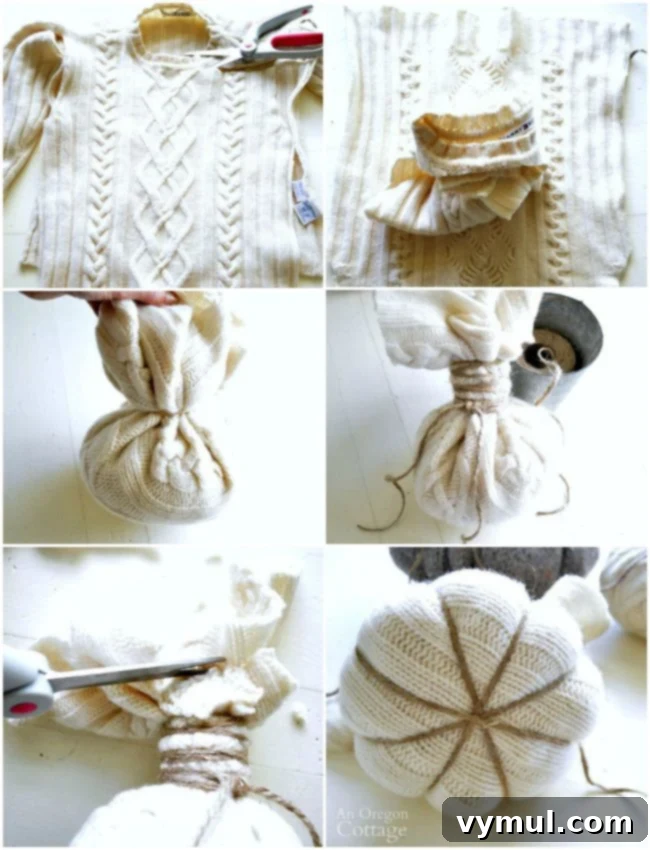
With your sweaters beautifully felted, it’s time to cut them into usable pieces. Your approach here will depend on the size of the pumpkin you wish to create. For a larger, more substantial pumpkin, you can use the entire front or back panel of the sweater as one piece. If you’re aiming for smaller pumpkins, you can cut both the front and back separately, effectively yielding two pieces from one sweater body. Don’t worry about cutting perfect squares or circles at this stage, as we will be trimming and shaping the fabric later. Focus on getting a general size that will comfortably wrap around your desired amount of stuffing.
3. Place Stuffing on the Center of One of the Sweater Pieces, Right Side Down
Now it’s time to bring your pumpkin to life with stuffing! Lay one of your cut sweater pieces flat, with the “right” side (the side you want to be visible on your pumpkin) facing down. Place your chosen stuffing material directly in the center of the fabric. While you can certainly use traditional poly-fil or other stuffing material you have on hand, I love the idea of maximizing the upcycling aspect by using the sweater itself. For larger pumpkins, I cut apart both sleeves and rolled them tightly to form the core stuffing. For smaller pumpkins, one sleeve, perhaps with the neckline thrown in, worked perfectly. This method ensures that virtually no part of the original sweater goes to waste, reinforcing the eco-friendly nature of this craft.
4. Shape Pumpkin and Hold with a Rubber Band
This step is where your pumpkin truly begins to take shape. Carefully pull the sides of the felted sweater fabric up and around your stuffing. As you do this, gently shape and form the stuffing into a round, pleasing pumpkin-like ball. Work slowly, ensuring the fabric is distributed evenly around the stuffing. Once you’re happy with the overall form and it looks like a plump little pumpkin, use a sturdy rubber band to gather and hold the excess fabric securely at the top, forming the base of what will become your stem. Make sure the rubber band is tight enough to prevent the stuffing from shifting.
5. Wrap with Jute Twine to Create a Rustic Stem
The jute twine stem is what gives these pumpkins their signature rustic charm. Begin by tying the twine tightly around the base of the gathered fabric, just over the rubber band. Make a secure knot to start. Then, tightly wrap the twine upwards, covering the rubber band completely and continuing for about 1-2 inches up the ‘stem’. Keep the wraps solid and close together at the bottom for a neat finish, gradually loosening them slightly as you move upwards to mimic a natural stem. Once you’ve reached your desired height, make your way back down with just a couple of angled, looser wraps, creating a bit of texture and dimension. Secure the twine again with a knot at your starting point, ensuring it’s firm and won’t unravel.
6. Trim the Stem Top for a Clean Finish
With your twine stem firmly in place, use your scissors to trim the excess fabric at the very top of the ‘stem’. Cut closely to the twine wrapping, neatening the top to create a tidy, realistic-looking pumpkin stem. Be careful not to cut the twine itself.
7. Make Optional Twine Sections for Added Dimension
For those who love the classic segmented look of real pumpkins, this optional step allows you to add beautiful divisions to your sweater pumpkins. To create these sections, take a new length of jute twine. Starting from the existing knot at the base of your stem, wrap the twine tightly around opposite sides of the pumpkin, pulling the twine taut as you go. The key to creating defined sections is to pull very tightly; this tension will create the indented shaping. Wrap the twine around the stem as needed to anchor it, and then bring it back down to the existing knot at the base of the stem. Tie it off securely. Repeat this process, creating 2-3 (or more, depending on your pumpkin size) evenly spaced sections around your pumpkin. After each section is tied, gently pull and manipulate the sweater fabric a bit through the sections to enhance the shaping and make the divisions more prominent.
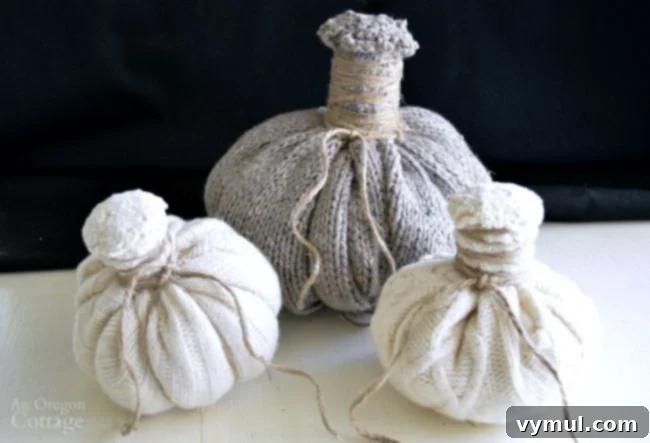
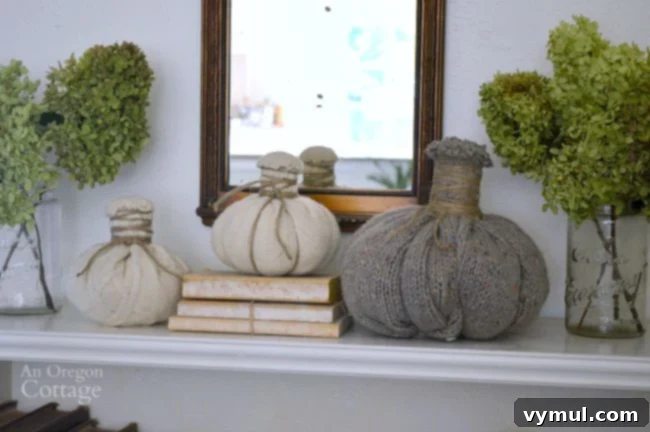
I utilized the optional twine shaping technique on two of the pumpkins I crafted, and I was thrilled with the results. The small pumpkin on the right in the image above doesn’t have the twine sections, and I find both styles equally appealing. This truly highlights that the choice is entirely up to your personal aesthetic preference – whether you prefer a smooth, plump pumpkin or one with distinct, charming segments, both versions look fantastic.
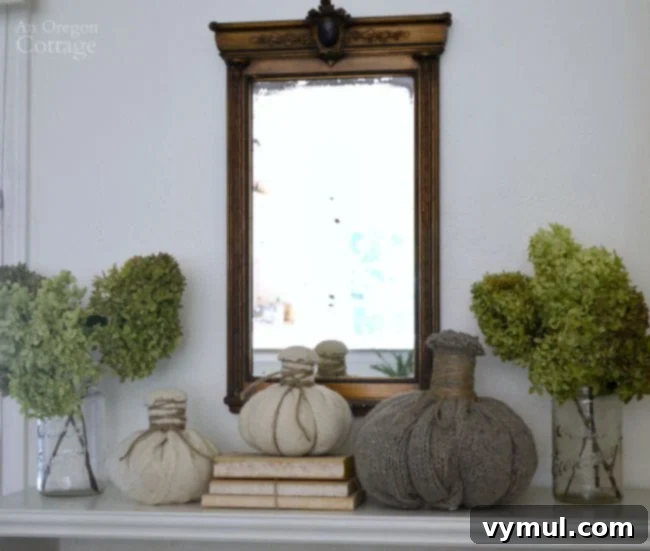
To add a final flourish, you can choose to trim the ends of your twine, leaving some longer strands to resemble delicate vine tendrils that gracefully curl around the pumpkin. Alternatively, consider adding decorative leaves. These can be cut from various materials such as felt for a soft texture, coordinating fabric scraps for an extra pop of color, or even old book pages for a vintage, literary touch. While I’m contemplating adding some cream felt leaves that I have on hand, I’m a bit undecided. It’s funny, but I just realized that real pumpkins rarely have their leaves still attached when harvested, yet almost all faux pumpkins are adorned with them! It’s a charming convention, but sometimes stepping back allows for fresh perspective.
Styling Your DIY Sweater Pumpkins for Fall
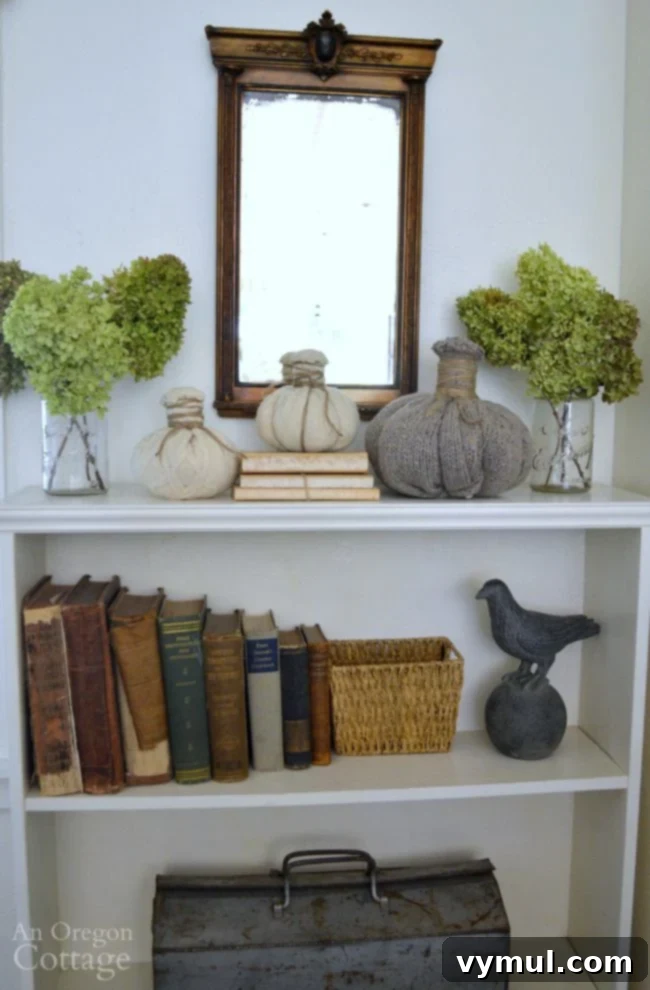
I’m absolutely delighted with how these upcycled sweater pumpkins turned out. Their cozy texture and warm hues coordinate wonderfully with the natural white and gray-green pumpkins I grow in my garden, creating a cohesive and inviting fall display. The best part, as you know, is the immense satisfaction of crafting something so beautiful and impactful from materials we already had around the house or sourced inexpensively. This project truly embodies the spirit of creative reuse and sustainable home decor.
These felted wool pumpkins are incredibly versatile and can enhance almost any fall decorating scheme. Arrange them on a mantelpiece alongside flickering candles and fallen leaves for a warm, autumnal glow. Create a charming centerpiece for your dining table by clustering them with pinecones, mini gourds, and sprigs of greenery. They also make inviting accents on bookshelves, entryway tables, or nestled in a decorative bowl on a coffee table. Their soft texture adds a layer of comfort and coziness, perfectly complementing rustic, farmhouse, or even modern decor styles. Experiment with different sizes and colors to create dynamic arrangements that truly celebrate the season.
Have you ever tried making your own sweater pumpkins? It’s a craft that quickly becomes addictive, as each finished pumpkin has its own unique character and charm. Share your creations and experiences!
Discover More Fall Decor Ideas and Seasonal Inspiration
Looking for more ways to infuse your home with autumn charm? Explore additional creative fall ideas and seasonal inspiration from our extensive seasonal decorating gallery. You’ll find a treasure trove of DIY projects, styling tips, and heartwarming crafts to make your home beautiful and cozy throughout the fall season and beyond.