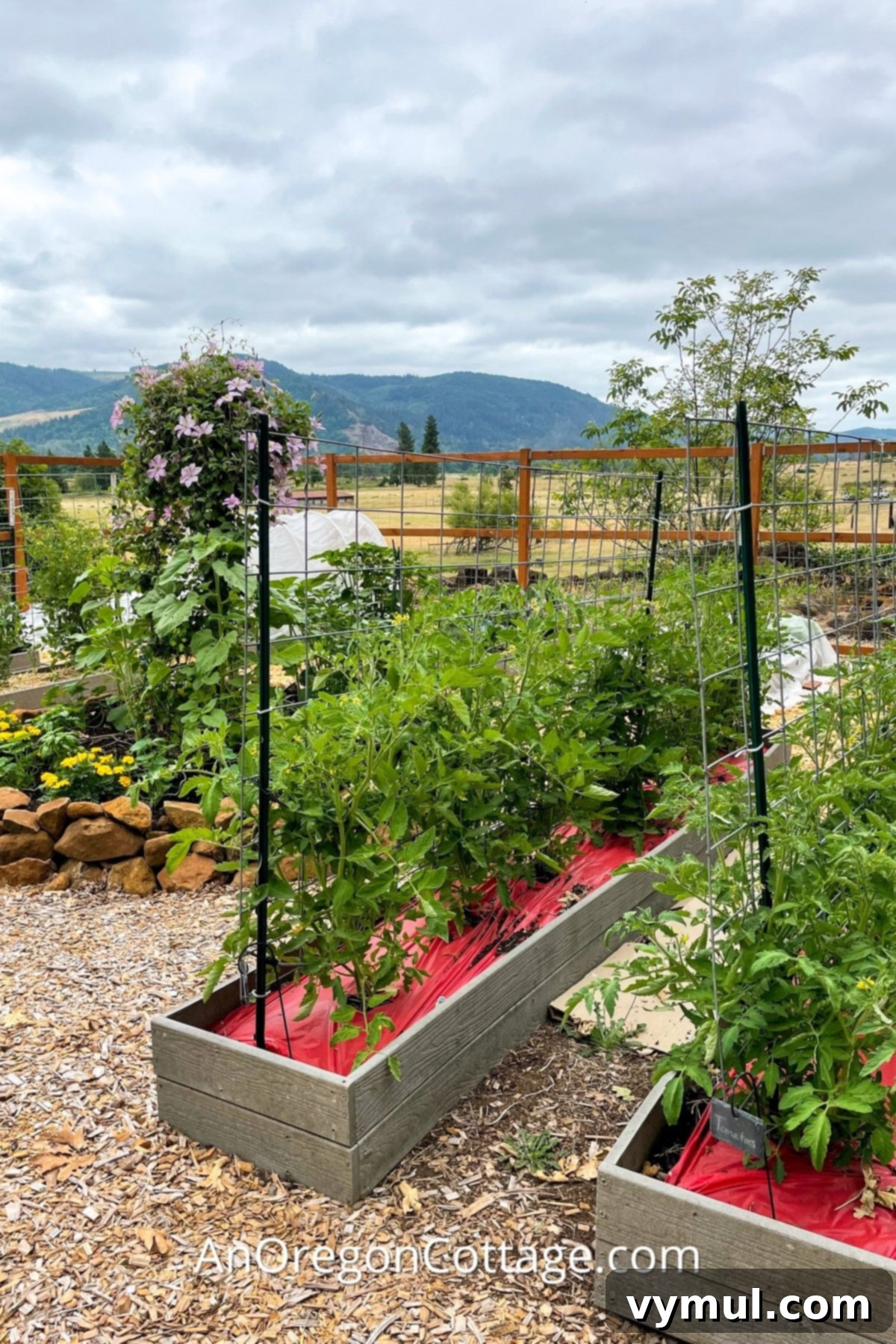
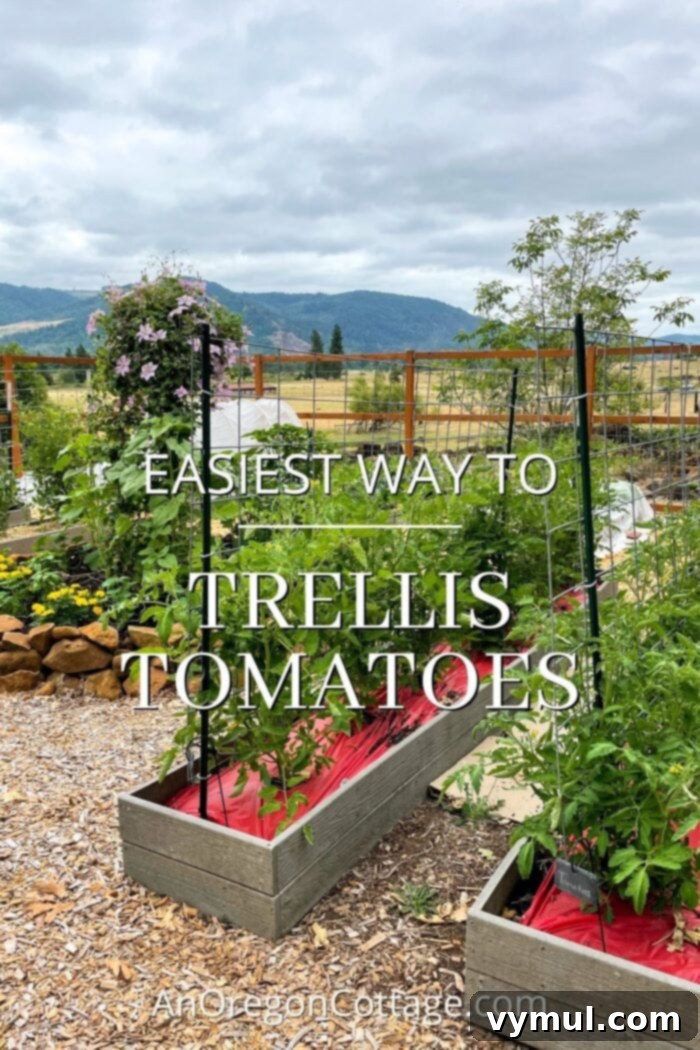
The Easiest & Most Effective Way to Trellis Tomatoes: A Definitive Guide to Cattle Panels and Bungee Cords
Tired of wrestling with flimsy tomato cages that buckle under the weight of a bountiful harvest? Do you find yourself constantly pruning and tying, or struggling with complicated DIY systems that consume precious gardening time? If you’re seeking a simpler, more robust, and incredibly efficient method to support your tomato plants, your search ends here. Discover the easiest way ever to train and trellis your tomatoes, ensuring healthier plants and an abundant, easy-to-harvest crop!
Some links in this comprehensive guide are affiliate links. Should you click on them and make a purchase, I may receive a small commission at no additional cost to you.
Over my many seasons dedicated to growing tomatoes, I’ve experimented with a myriad of systems designed to train and support these vigorous plants as they mature. The quest for the perfect tomato trellising solution has been a long one, marked by various attempts and lessons learned.
My gardening journey has included:
- Square Wooden Cages: While seemingly sturdy, these required significant time and effort to construct initially. Furthermore, the sections buried in the soil often disintegrated within just a few years, making them a temporary and labor-intensive solution.
- Circles of Fencing with Bottom Stakes: Creating these involved the arduous task of cutting through robust fencing wire and bending sections to form ground stakes. Despite the effort, these cages often remained wobbly and unstable. Harvesting and pruning through the rigid fence openings proved to be a challenging and sometimes painful experience, limiting access to the developing fruit.
- Tying to a String or Individual Stake: This method demanded a tremendous amount of ongoing maintenance, particularly extensive pruning throughout the growing season. As the season progressed and other garden produce required attention, finding the time for this meticulous upkeep became increasingly difficult, leading to neglected plants and reduced yields.
- “Basket Weaving” Tomatoes: This technique involves weaving tomato vines horizontally through a series of strings strung between two stakes. Honestly, I never even attempted this system. The perceived complexity of its initial setup and the continuous pruning it required were deterrents, convincing me that it would be too time-consuming for my busy schedule.
- Round Thin Metal Cages: These ubiquitous cages, readily available at almost every garden store in the spring, became my default choice for many years due to their low initial time commitment. However, their flimsiness was a constant frustration. They consistently failed to support full-sized plants laden with fruit, often tipping over. This necessitated additional stakes and strings to secure them, transforming a supposedly “easy” solution into another maintenance headache.
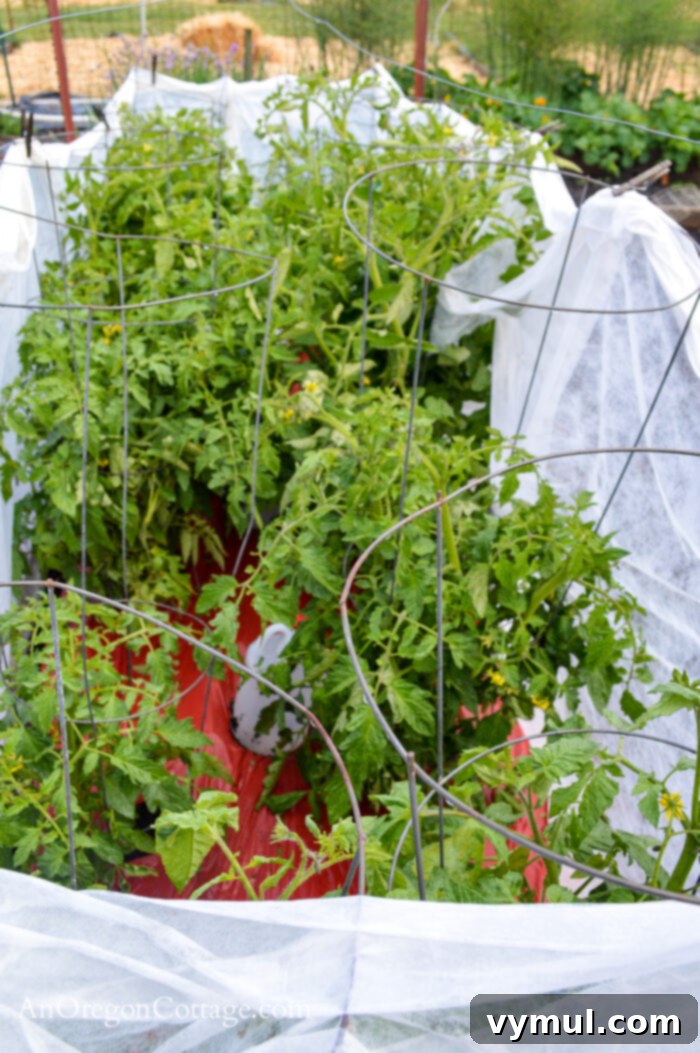
The image above illustrates my previous system: flimsy cages reinforced with stakes placed at the corners of the raised bed, further secured with additional wire. While this improved stability and prevented the cages from toppling under the weight of mature, fruit-laden plants, it presented new challenges. Harvesting became an awkward chore, requiring contorted movements to reach the fruit. More critically, the restricted airflow around the dense foliage contributed to an increased battle against late blight, a common and devastating tomato disease, necessitating constant lower branch pruning.
My perspective on tomato trellising dramatically shifted after a visit to my aunt, a seasoned master gardener. She introduced me to a robust, efficient system using heavy-duty metal fencing, which she referred to as “cattle panels.” This was a game-changer, unlike anything I had effectively used before.
This remarkably sturdy metal fencing goes by several names, depending on your region and supplier. You might find it listed as: cattle panels, hog panels, livestock panels, stockade panels, or, as a helpful employee at Tractor Supply once informed my husband, “handy panels.” Regardless of the name, these panels are distinct from standard, lighter-gauge garden fencing due to their substantial thickness and strength.
These panels are available in various widths and heights, making them adaptable to different garden layouts. Their installation is surprisingly straightforward, and while they represent an initial investment, their durability means they literally last forever. This makes them a wise, one-time purchase that pays dividends for decades of gardening seasons.
However, the true brilliance of this trellising system, and what makes it truly revolutionary, lies in the quick and incredibly easy method used to train the plants up the panels. The secret? Bungee cords! Yes, you read that correctly – simple, readily available bungee cords.
Below, you’ll find all the essential information to implement this life-changing method, including a detailed video explaining the critical reasons for trellising, step-by-step instructions on how to install the panels (with crucial tips on selecting the right kind of posts), and the remarkably simple technique for attaching them using basic zip ties and bungee cords. This system has genuinely transformed my tomato-growing experience in countless positive ways, from plant health to harvest ease. I wholeheartedly encourage you to give it a try!
Easiest Way To Trellis Tomatoes Video
Why Trellis Tomatoes: The Unquestionable Benefits
Elevating your tomato plants off the ground as they grow offers a multitude of compelling advantages that significantly impact plant health, fruit quality, and overall harvest success. Trellising is not merely a convenience; it’s a fundamental practice for optimal tomato cultivation.
- Inhibiting Disease Proliferation: This is arguably the most critical reason to trellis. When tomato foliage sprawls across the soil, it creates a damp, humid microclimate that is an ideal breeding ground for various fungal diseases, most notably early and late blights. Trellising dramatically improves air circulation around the plants, allowing leaves to dry much faster after rainfall or irrigation. This drier environment is far less hospitable to pathogens, significantly reducing the incidence and spread of diseases that can otherwise quickly decimate a healthy tomato crop.
- Protecting Fruit Quality: Tomatoes that come into direct contact with the ground are highly susceptible to damage. They often become misshapen, bruised, and develop soft spots, making them more prone to rot and attack by ground-dwelling pests like slugs and sowbugs. Trellising keeps fruit clean, healthy, and off the damp soil, ensuring a higher percentage of blemish-free, marketable tomatoes.
- Simplifying and Enhancing Harvest: Imagine bending over constantly, navigating a dense, tangled jungle of vines to locate ripe fruit. Not only is this physically taxing, but it also makes it easy to miss hidden tomatoes. Trellised plants present their fruit openly, making harvesting a much quicker, more efficient, and back-friendly task. You can easily spot ripe tomatoes, ensuring a more complete and timely harvest.
What Happens If You Don’t Stake or Trellis Tomatoes?
Neglecting to stake or trellis your tomato plants can lead to a cascade of problems that compromise both plant health and your eventual harvest. Unstaked tomato plants, left to sprawl unchecked, will inevitably create a dense, humid canopy close to the ground. This environment, while providing shelter, is a perfect incubator for a variety of garden woes.
Beyond the diseases mentioned above, sprawling vines create an inviting habitat for numerous pests. Slugs thrive in damp, shaded conditions, happily munching on leaves and ripening fruit. Tomato hornworms, notorious for their voracious appetites, become incredibly difficult to spot and remove amidst a tangled mass of foliage. Other ground-dwelling insects and even rodents can easily access and damage fruit resting on the soil.
Furthermore, the sheer difficulty of navigating and inspecting unstaked plants means that pests and diseases often go unnoticed until they’ve caused significant damage. What might start as a minor infestation or a few diseased leaves can rapidly escalate, leaving you overwhelmed and potentially leading to the loss of a substantial portion of your hard-earned harvest. For the vitality of your plants and the practical ease of gathering your bounty, trellising is an indispensable practice.
The Easiest Way To Stake And Train Tomatoes: Cattle Panels & Bungee Cords
Indeed, after years of experimenting with those flimsy, store-bought tomato trellises, enduring constant pruning, and grappling with cumbersome tying methods, I can confidently declare that utilizing heavy-duty metal fencing panels, often known as cattle panels, represents the simplest and most effective trellising solution I’ve ever encountered! This robust system provides unparalleled support and streamlines the entire process of growing healthy, productive tomato plants.
When you visit your local farm or hardware store, you’ll be looking for panels made of thick, galvanized metal. These are significantly sturdier than typical garden fencing; if you were to cut them, you’d require a hacksaw or a specialized blade. These durable panels are commonly available in lengths ranging from 8 to 16 feet, offering flexibility for various garden sizes and layouts.
And now, for the truly E.A.S.Y. component of this system – the ingenious method for securing your growing tomato plants to these sturdy panels:
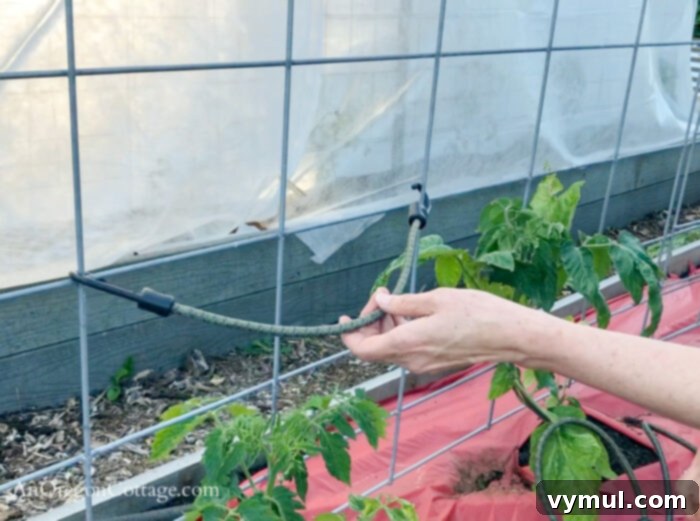
Bungee cords are the unsung heroes of this trellising technique! While traditional twine or garden ties could certainly be used by threading them through the panel openings, bungee cords offer a superior, hassle-free alternative. Their inherent stretch and flexibility make them incredibly simple and quick to attach, allowing you to secure an entire 12-foot section of tomato plants in mere minutes. Unlike rigid ties, bungees gently support the plant without cutting into stems, accommodating growth without requiring constant readjustment.
The durability of bungee cords is another significant advantage. Depending on whether you bring them in for winter storage (a habit I confess I sometimes neglect!), they can last for 3 to 5 years, or even longer. Even when replacements are needed, they are remarkably inexpensive to purchase, adding to the overall cost-effectiveness of this system.
While the use of cattle panels for trellising has gained popularity among many astute gardeners, I firmly believe the true “nugget of gold” in this method, the one that makes it uniquely simple and effective, is the integration of bungee cords. This ingenious tip, passed down from my master gardener aunt, eliminates the fiddly, time-consuming process of repeatedly tying knots and adjusting traditional ties. It truly simplifies tomato plant management like no other system.
How To Set Up and Use Metal Panel Fencing For Tomatoes
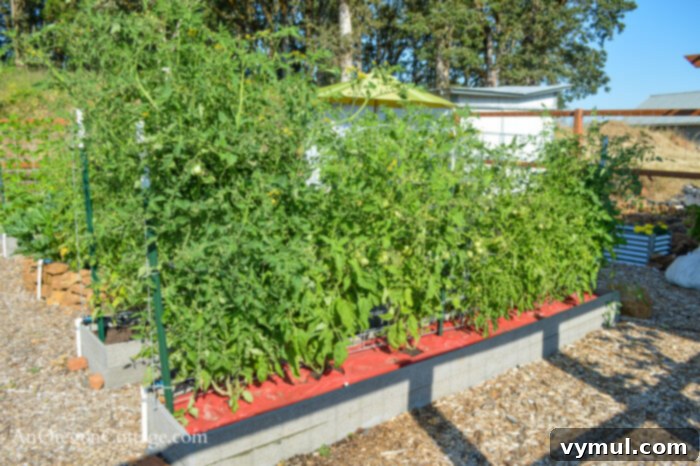
Setting up your cattle panel trellis system is a straightforward process that, once completed, provides years of maintenance-free support. Gather your materials, and you’ll be ready to enjoy effortless tomato trellising.
Essential Materials
- Cattle Panel / Handy Panel: Select a length that best suits the dimensions of your garden beds. These panels provide the robust backbone of your trellis system.
- Heavy-Duty T-Posts: Opt for 6 to 7-foot tall T-posts. In our experience, lighter-duty “U” posts have a tendency to bend under the combined weight of mature tomato plants and strong winds. Therefore, it is crucial to acquire the heaviest duty T-posts available in your area for maximum stability and longevity. PRO TIP: You can distinguish T-posts from U-posts by looking at their cross-section from the top – T-posts will have a “T” shape, while U-posts will be “U” shaped.
- Black Nylon Zip Ties: These will be used to securely fasten the panels to the T-posts. Black nylon zip ties are recommended as they offer superior UV resistance and last significantly longer when exposed to sunlight compared to clear or white varieties. (I’ve often found them cheaper here for bulk purchases.)
A Note on Panel Lengths: Our raised garden beds are 12 feet long, which isn’t a standard panel length. To accommodate this, we purchased two 8-foot panels and overlapped them by approximately 4 feet, securely fastening the overlapping sections together with zip ties. This adaptability makes the system suitable for various bed sizes.
Bungee Cords (Various Sizes) or Thick Twine: While twine is an option, bungee cords are the true game-changer for ease and efficiency. Here are the types of bungees we frequently use and demonstrate in our video:
- Small, Thin Bungee Cords: Perfect for gently securing young tomato plants to the panel as they begin their growth. These are very cost-effective.
- Bungee Variety Pack: A convenient option that provides a range of sizes to accommodate plants as they mature and expand.
- OR, my personal preference for a more discreet look: Camouflage Bungee Pack from Harbor Freight: These blend seamlessly with the plant’s greenery, maintaining a tidy aesthetic in the garden.
Step-by-Step Instructions for Installation and Use
- Install Your T-Posts: Drive your T-posts into the ground, ensuring they are approximately 6 feet apart. While you can space them closer together depending on your bed length and panel size, avoid exceeding 6 feet to maintain optimal panel stability. A post driver can make this task much easier. Ensure they are driven deep enough to be very secure.
- Attach the Metal Panels: With the help of a second person (which makes this step considerably easier), position the metal panels against the installed T-posts. Use the black nylon zip ties to firmly lash the panels to the posts in at least 3-4 places along each post. This creates a secure, immovable trellis structure.
SEASONED GARDENER’S PRO TIP: When attaching the panels, bring them all the way to the very top of your T-posts. This might create an open area of up to a foot at the bottom of the trellis. While it’s easy to secure small tomato seedlings using short stakes or bungees at planting time, your indeterminate tomatoes will reach impressive heights. Maximizing the trellis height from the outset provides the crucial vertical support needed for their extensive growth throughout the season.
- Plant Your Tomatoes and Initial Trellising: Once your panels are securely in place, proceed with planting your tomato seedlings. (Here are my detailed tomato planting tips to ensure they thrive all season long.) Immediately after planting, use the small, thin bungee cords to gently wrap around the young plant stems, anchoring them to the nearest opening in the panel. This initial support guides the plant’s upward growth.
- Ongoing Training with Bungees: As your tomato plants grow taller and expand, gradually transition to using the larger bungee cord sizes. The goal is not to cinch the cords tightly around the plant, but rather to provide gentle yet firm support, keeping the vines upright and nestled against the panel. The flexibility of the bungees allows for natural plant movement and expansion without causing damage or constriction.
Effortless Maintenance for a Bountiful Harvest
Maintaining your tomato plants with this cattle panel and bungee cord system is remarkably simple, reducing typical trellising chores to mere minutes each week.
As your tomato plants rapidly ascend the trellis, simply observe their growth. When a new vine or section of the plant extends beyond its current bungee support, attach another bungee cord at a higher point, gently securing the new growth to the panel. As the plant’s girth increases, use progressively larger bungee cords to provide adequate, non-constricting support.
Should a branch grow in an awkward direction or slip out of a bungeed area, adjustment is effortless. Just pull the bungee cord away, reposition the branch back onto the panel, and re-secure the bungee. This flexibility ensures your plants are always perfectly supported without the need for constant re-tying or complex maneuvering.
This truly is the easiest and most hands-off way I’ve ever found to keep tomatoes perfectly trellised. Gone are the days of worrying about meticulous pruning, constantly driving in new stakes, or fretting over collapsing cages. The stability of the cattle panels combined with the adaptive nature of bungee cords creates a stress-free environment for both the gardener and the plant.
So, the “secret” to effortless and effective tomato trellising is indeed this powerful duo: robust cattle panels and versatile bungee cords!
(Interested in constructing durable raised garden beds like ours? Explore our comprehensive tutorial for building and efficiently filling raised beds suitable for both vegetables and flowers.)
Optimizing Your Layout: The Big Pro Tip for Raised Beds

While cattle panels revolutionize tomato trellising, I’ve discovered an additional enhancement that makes the system even more efficient: designing long, narrow raised garden beds instead of wider ones. This seemingly minor adjustment has a profound impact on garden productivity and plant health.
In our earlier garden iterations, we constructed 4’x8′ or 4’x10′ beds, typically planting two rows of tomatoes per bed (as shown in the image above). While functional, this configuration presented significant challenges. Harvesting became an exercise in contortion, as reaching the center of the dense tomato rows was difficult. More importantly, air circulation was severely compromised, creating less-than-ideal conditions for combating tomato blights and other diseases that thrive in stagnant, humid environments.

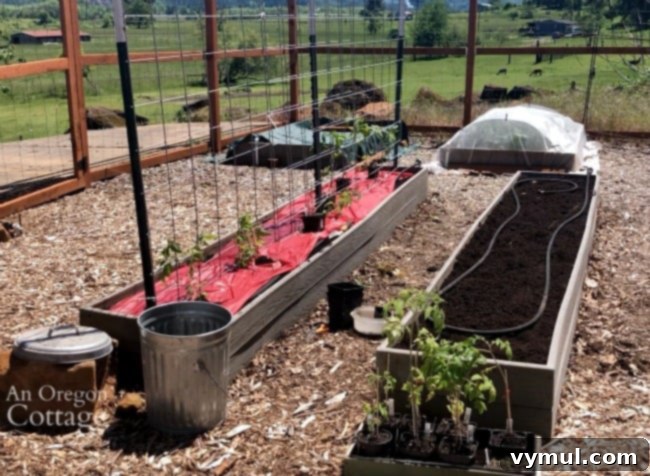
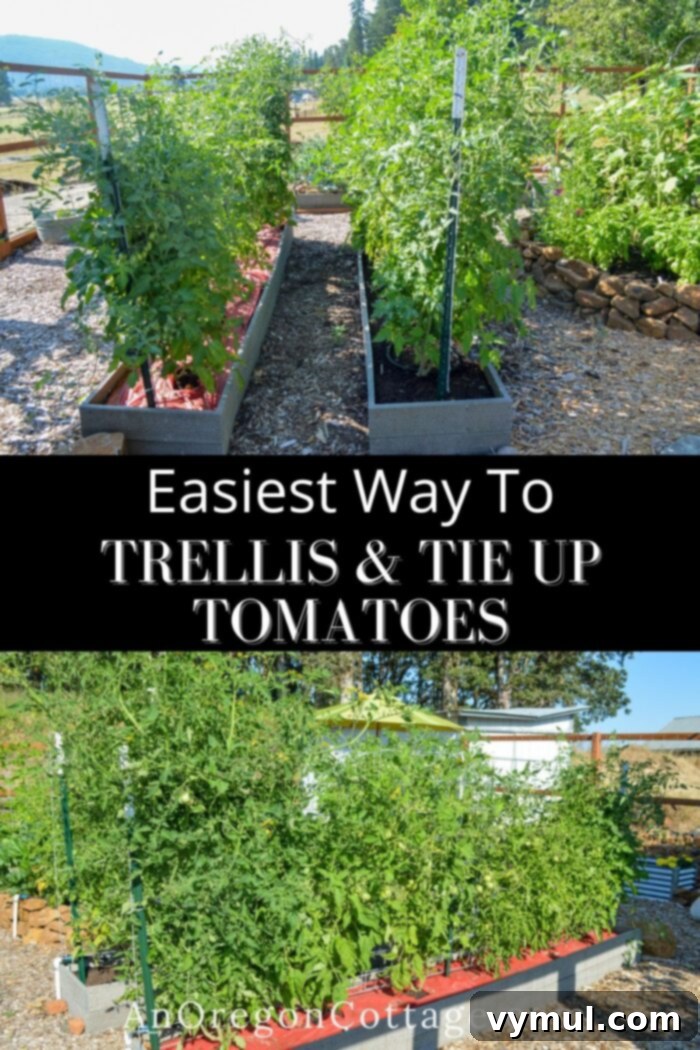
Our current, much more efficient setup features four long, narrow raised beds, each measuring 12 feet long by 2 feet wide. Each of these beds comfortably accommodates a single set of cattle panels, providing robust support for a single, accessible row of tomatoes (or pole beans, cucumbers, or other vining plants). The narrow width ensures that you can effortlessly reach every plant and every piece of fruit from either side of the bed, eliminating strain and speeding up harvesting time.
The strategic reason for having four such beds is to facilitate effective crop rotation. This practice is vital for breaking disease cycles and maintaining soil health, preventing soil-borne pathogens from building up year after year. While an ideal rotation might be on a 3-4 year basis, our current layout allows us to rotate tomatoes (and other heavy feeders) effectively within the space we have, which is a significant improvement. For instance, in the year prior, the beds now dedicated to tomatoes (as seen above) successfully grew pole beans, peas, and cucumbers, further enriching the soil and diversifying our harvest.
If your garden space allows, I wholeheartedly recommend adopting this long, narrow bed design in conjunction with the unparalleled support of metal panels and the simplicity of bungee cords. This combination will truly elevate your tomato-growing success.
Trellising Tomatoes FAQs: Your Questions Answered
Both staking and caging methods for tomatoes come with their own set of advantages and disadvantages. Staking typically involves training a single or a few main stems, requiring constant tying of the plant to the stake and diligent pruning of suckers, especially for vigorous indeterminate varieties. While staking can allow for more plants to be grown in a smaller area, potentially maximizing yield in limited space, it demands continuous labor.Caging, on the other hand, is generally less labor-intensive in terms of tying and pruning, as the plant grows within the cage’s confines. However, the cage must be exceptionally sturdy to withstand the significant weight of mature plants heavily laden with fruit in the late season; flimsy cages will inevitably bend or collapse. Harvesting fruit from within traditional cages can also sometimes be challenging due to restricted access.For me, the optimal solution that combines the best aspects of both while mitigating their drawbacks is the use of metal fence panels. This system offers the unparalleled strength of a cage with the ease of access and versatility that surpasses traditional staking, truly providing the best of both worlds!
Yes, in almost all cases, all tomato plants benefit significantly from being caged or staked. Tomatoes are typically categorized into two main types: determinate and indeterminate. Determinate varieties grow to a more defined, smaller size and tend to set the majority of their fruit at one time, often referred to as “bush” tomatoes. Indeterminate varieties, however, continue to grow and produce fruit throughout the entire season, creating very large, vining plants that can easily reach 6 to 10 feet (or more) in height.While you might be tempted to think that the smaller determinate varieties wouldn’t require support, the sheer weight of the fruit, even on these bushier types, can cause the plant to topple over or split branches at the height of its growth cycle. This leads to fruit touching the ground, increasing vulnerability to rot and pests. Therefore, incorporating some form of caging or staking should be a fundamental part of any successful tomato patch, regardless of the variety you’re growing.
Initially, the flimsy, round metal cages found at garden centers are often the cheapest option in terms of upfront cost. However, their short lifespan – rarely lasting more than a couple of seasons before bending and breaking – means they become a recurring expense, making them less economical in the long run. Similarly, wooden stakes or cages, while a viable DIY option, will eventually rot or degrade, requiring rebuilding or replacement over time.Conversely, while the metal fencing panel method (using cattle or hog panels) might represent a higher initial investment, it proves to be incredibly cost-effective in the long term. These durable metal panels and heavy-duty fence posts are built to last for decades, often outliving the gardener! This means you will likely never have to purchase them again, making them a one-time, enduring investment that eliminates recurring costs and offers unparalleled stability and support for countless growing seasons.

Need Some Delicious Recipes For All Those Tomatoes You Will Harvest?
With your new, highly efficient trellising system, you’re bound to have an abundant harvest of beautiful, healthy tomatoes! Don’t let a single one go to waste. Here are some of my favorite recipes to help you preserve and enjoy your bounty all year long.
Click For Recipe
Click For Recipe
For more inspiring gardening tips, delicious recipes, and homesteading wisdom from An Oregon Cottage, make sure to follow us on Instagram @AnOregonCottage, Facebook, and Pinterest. Don’t forget to subscribe to our newsletter to get our latest content delivered straight to your inbox!
(NOTE: This topic was first discussed in our former podcast. If you’d prefer to read the transcript from that show, you can CLICK HERE to open it in a new window and read along.)
Disclosure: Please note that affiliate links within this post may generate a commission based on sales, but this will not alter your purchase price. Click here to read my full disclaimer and advertising disclosure policy for more information.