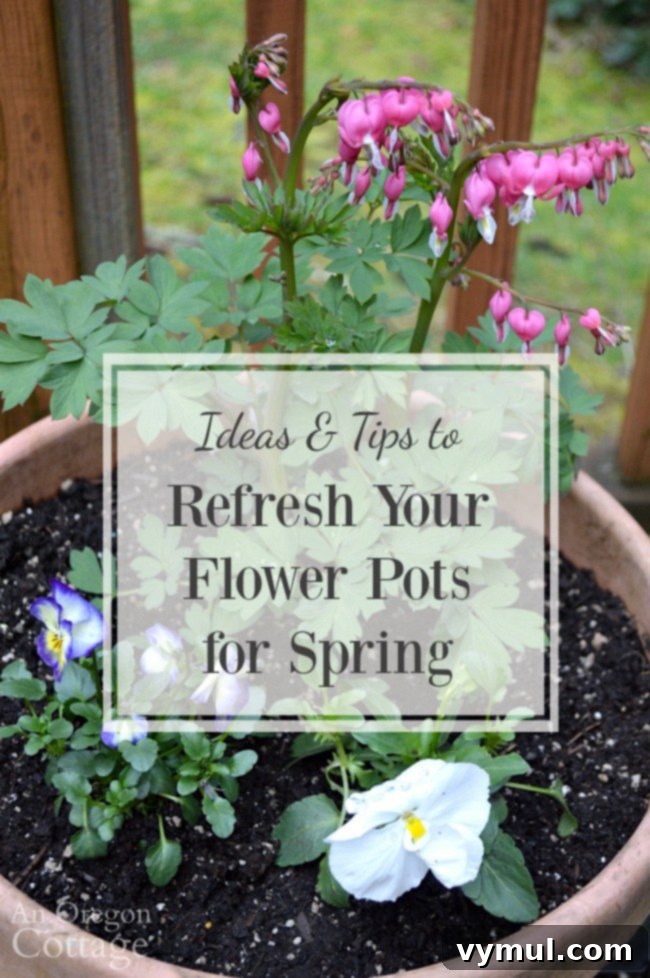
Vibrant Spring Flower Pots: Easy Ideas & Planting Guide to Refresh Your Outdoor Space
Revitalize your outdoor living areas for spring with these expert tips and a selection of readily available, cheerful spring flowers like bleeding hearts, primroses, violas, pansies, and ranunculus. Transform dreary winter pots into bursts of vibrant color!
Some links in this article are affiliate links. If you click on them and make a purchase, I may receive a small commission at no extra cost to you.
The arrival of spring fills us with an undeniable sense of joy and renewal. After the long, often grey days of winter, the longing for vibrant colors and fresh greenery becomes almost palpable. While starting seeds indoors is a beloved ritual for many gardeners to connect with the soil, it’s not always an option. Sometimes, circumstances, like the hunt for a new home, can prevent us from engaging in those early gardening tasks. But don’t let that stop you from embracing the season!
Fortunately, there’s an incredibly accessible and rewarding way to usher in spring’s beauty: refreshing your flower pots! Container gardening allows you to instantly transform any outdoor space, no matter how small, into a cheerful haven. For this particular project, I had the pleasure of borrowing a collection of pots from my mom, giving her deck a much-needed springtime makeover and demonstrating the power of fresh blooms.
Before & After: Witnessing Winter’s Retreat
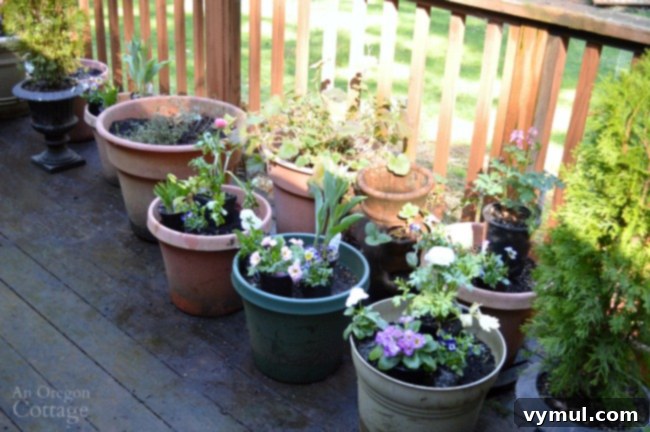
Let’s take a moment to appreciate the “before” state. Winter can be harsh on outdoor areas, leaving behind a scene that’s a little worse for wear. My mom’s deck and its collection of pots had endured a particularly cold and wet winter, complete with snow, ice, and strong winds. The once-vibrant containers looked tired, filled with remnants of past seasons, and the deck itself needed a good cleaning. The overall impression was one of dormancy, a stark contrast to the lively season we were anticipating.
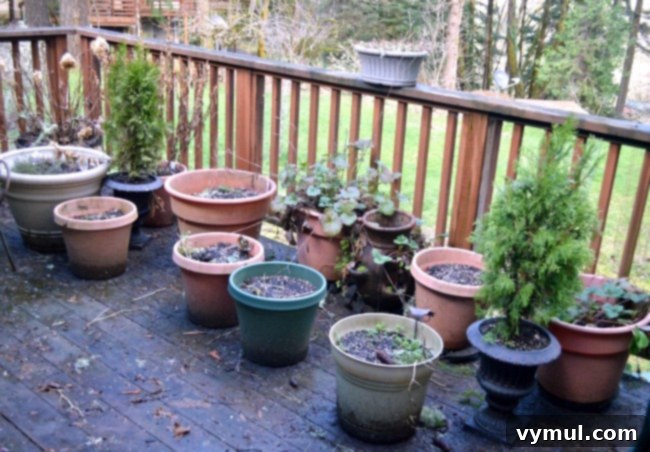
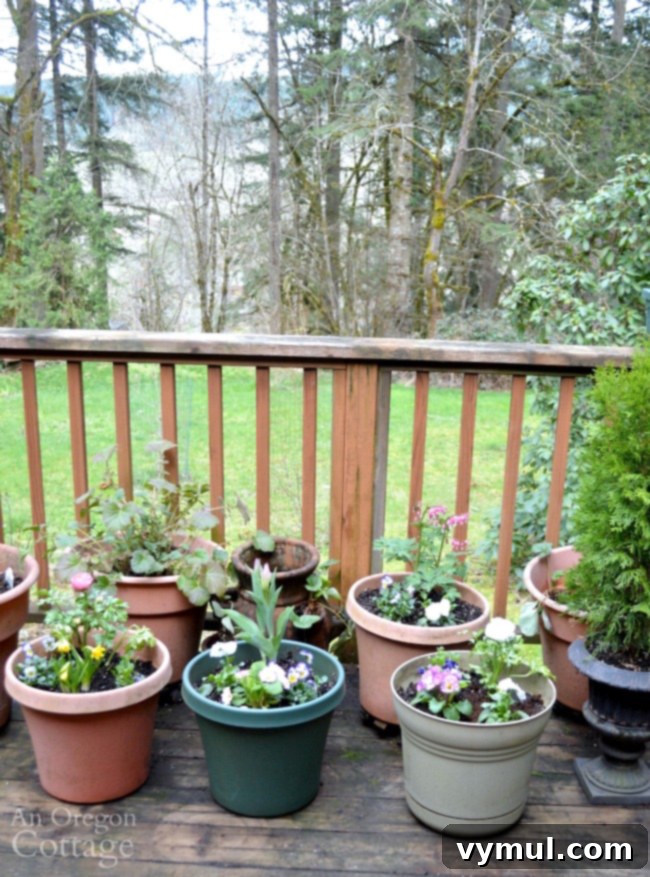
Given that this deck offers the primary view from the dining room where we often work, it was high time for a thorough clean-up and a glorious refresh of the flower pots for spring. The transformation was not just about aesthetics; it was about creating a more inspiring and uplifting environment that reflects the changing season. The visual impact of seeing colorful blooms from indoors can significantly boost mood and productivity.
Remarkably, this dramatic makeover took only about an hour and a half once the flowers and fertilizer were purchased. A bit of sweeping, combined with brightly colored blooms, instantly rejuvenated the entire area. The difference it made to a space we see daily was profound. This experience solidified my desire to share some early spring container ideas with you, demonstrating how easily you can achieve similar results using readily available, inexpensive flowers and a few straightforward steps.
In this comprehensive guide, you’ll discover lists of essential garden center flowers for early spring, creative “recipes” for flower combinations, a quick video showcasing the planting process, practical maintenance tips (including how long you can expect these early spring beauties to bloom), and inspiring before-and-after photos that truly highlight the incredible impact you can make.
Planting Flower Pots for Spring: A Visual Guide
How To Refresh Your Flower Pots for Spring: Step-by-Step Guide
Step 1: Select Your Spring Blooms & Gather Supplies
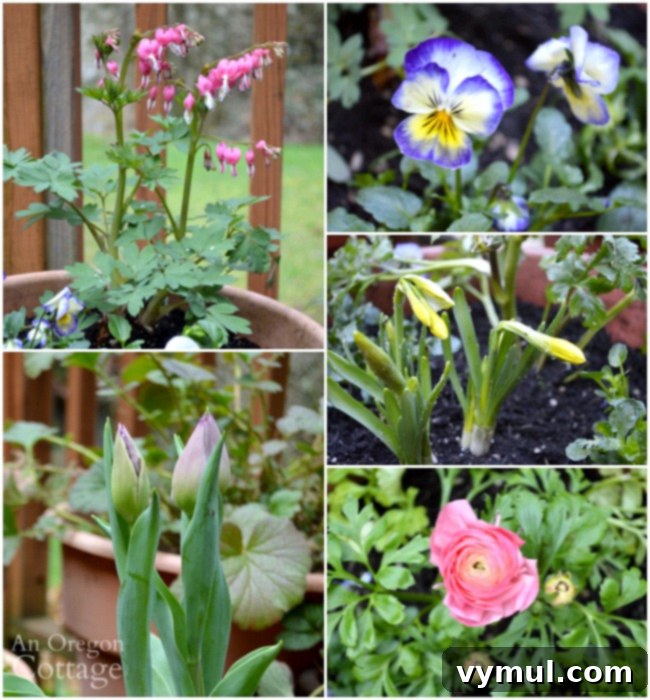
The foundation of beautiful spring containers lies in choosing the right flowers. Garden centers are typically brimming with hardy and colorful options in early spring. Here are some of the best varieties, often featured in vibrant displays (shown clockwise from top left in the image above), perfect for container gardening:
- Bleeding Heart (Dicentra spectabilis) (Perennial): A truly dramatic and captivating addition to any planter, especially in shadier spots. Its unique heart-shaped flowers, often in shades of pink, red, or white, dangle gracefully from arching stems. Bleeding Hearts thrive in cooler spring climates and can bloom for several months, offering a spectacular show. They are excellent for adding height and a touch of romance to your arrangements.
- Pansies (Viola × wittrockiana) & Violas (Viola cornuta) (Annuals): These cheerful, cool-season favorites are essential for early spring containers. While often grouped, pansies typically feature larger, more flamboyant blooms, giving them a “face-like” appearance. Violas, on the other hand, produce smaller, more numerous flowers and tend to bloom more profusely and for a longer duration, often tolerating colder temperatures better. Both offer an incredible array of colors and patterns, perfect for creating a lush, vibrant base and adding a pop of cheerful color.
- Daffodils (Narcissus) (Bulb): Nothing quite heralds spring like the sunny trumpet-shaped blooms of daffodils. The ‘Tête-à-tête’ variety, pictured, is a miniature charmer, ideal for pots, but many other sizes and forms are available. All daffodils bring an undeniable sense of optimism and bloom for several weeks. Once their leaves begin to brown after flowering, you can gently plant the bulbs into your garden, where they’ll happily return year after year, multiplying over time.
- Ranunculus (Ranunculus asiaticus) (Bulb): Often referred to as the ‘rose of the spring’ due to their densely petaled, exquisite blooms, ranunculus are incredibly popular. They come in a breathtaking spectrum of colors, including various pinks, yellows, reds, oranges, and whites. These beauties can bloom for about six weeks, adding a touch of sophisticated elegance and rich texture to your containers. While they may or may not return in your garden after being planted out, their spring display is truly worth the effort.
- Tulips (Tulipa) (Bulb): Could it truly be spring without the classic, elegant form of a tulip? Whether indoors as cut flowers or gracing your outdoor pots, tulips are an iconic symbol of the season, offering a diverse range of shapes, sizes, and colors. Like daffodils, they offer a few weeks of brilliant color. After their bloom cycle, allow the foliage to mature and yellow before planting the bulbs into your garden beds for future spring displays.
- Not pictured: Primroses (Primula vulgaris) (Perennial): Another quintessential early spring flower, primroses are beloved for their vibrant, jewel-toned blooms and compact growth habit. They are often found at very affordable prices, making their 4-6 weeks of intense color an exceptional value. Primroses are perfect for filling in gaps and adding a pop of cheerful color, especially in cooler, slightly shaded areas.
Understanding these terms will help you plan your containers effectively:
- Perennial: A plant that lives for more than two years, typically returning year after year from its rootstock. They often have shorter, but reliable, bloom times, and can be transplanted to your garden after their container display.
- Annual: A plant that completes its entire life cycle from seed to flower to seed within a single growing season. They are known for their continuous and prolific blooming throughout the season until the first hard frost.
- Bulb: A storage organ that contains a plant’s entire life cycle. Bulbs offer a spectacular, but shorter, burst of blooms in spring. They can often be planted in the garden after flowering to return in subsequent years, providing a lovely surprise.
Beyond the flowers, gather these essential supplies to make your planting process smooth and efficient:
- Organic Fertilizer for flowers and bulbs: Essential for providing your new plants with the immediate nutrients they need to establish quickly and produce abundant, healthy blooms. Organic options also enrich the soil naturally over time, improving its structure and microbial life.
- Potting Soil: Fresh, high-quality potting mix provides the ideal environment for container plants. It offers excellent drainage to prevent soggy roots while retaining enough moisture and essential nutrients to support vigorous growth. Avoid using garden soil, as it can compact in pots and harbor pests.
- Garden Gloves: Protect your hands from soil, thorns, and irritants, and keep them clean. My favorite pair makes gardening a much more comfortable and enjoyable experience.
- Planter Trowel: A sturdy trowel is indispensable for digging holes, mixing soil, and gently positioning plants within the container. Its compact size is perfect for tight spaces in pots.
- Watering Can: A watering can with a gentle spout allows for precise and delicate watering, especially important for newly planted flowers to avoid washing away soil or disturbing tender roots. (This fun green metal can is both practical and stylish, adding a touch of charm to your gardening tools!)
Step 2: Thoughtful Arrangement for Visual Impact
Before you commit to planting, take some time to arrange your chosen flowers within their empty pots, still in their nursery containers. This “dry run” allows you to visualize the final look and make adjustments without the mess of replanting. Aim for a balanced and appealing composition, typically using three, four, or five plants per pot, depending on the pot’s size and the plants’ mature dimensions. Think about how the plants will grow and fill the space.
Consider these key design principles to create stunning spring containers:
- Height Variation (Thriller, Filler, Spiller): Incorporate plants of different heights to create visual interest and dynamic movement. A “thriller” plant (tallest, focal point, typically in the center or back) draws the eye upward. “Fillers” (medium height, bushy, surrounding the thriller) add volume and body. “Spillers” (trailing over the edge) soften the pot’s rim and add elegance.
- Texture & Form: Mix plants with different leaf shapes and flower forms to add depth. For instance, the delicate, layered petals of a Ranunculus can contrast beautifully with the more substantial, heart-shaped foliage of a Bleeding Heart or the intricate patterns of a pansy.
- Color Coordination: Play with color to create specific moods. You can choose a monochromatic scheme (different shades of the same color for sophistication), analogous colors (colors next to each other on the color wheel for a harmonious and calming look), or complementary colors (opposite on the color wheel for a vibrant, energetic contrast). Don’t be afraid to experiment with bold combinations!
Pro Tip: If you’re refreshing multiple pots for an area like a deck or patio, arrange all your plant combinations on the ground in their intended final spots first. Then, step back and view them from a distance (e.g., from inside the house or across the yard). This allows you to see how the individual pots interact and if the overall arrangement creates a cohesive and pleasing display. There’s no single “right” way; trust your eye and create what brings you joy and enhances your specific outdoor space!
Step 3: Planting Your Spring Containers
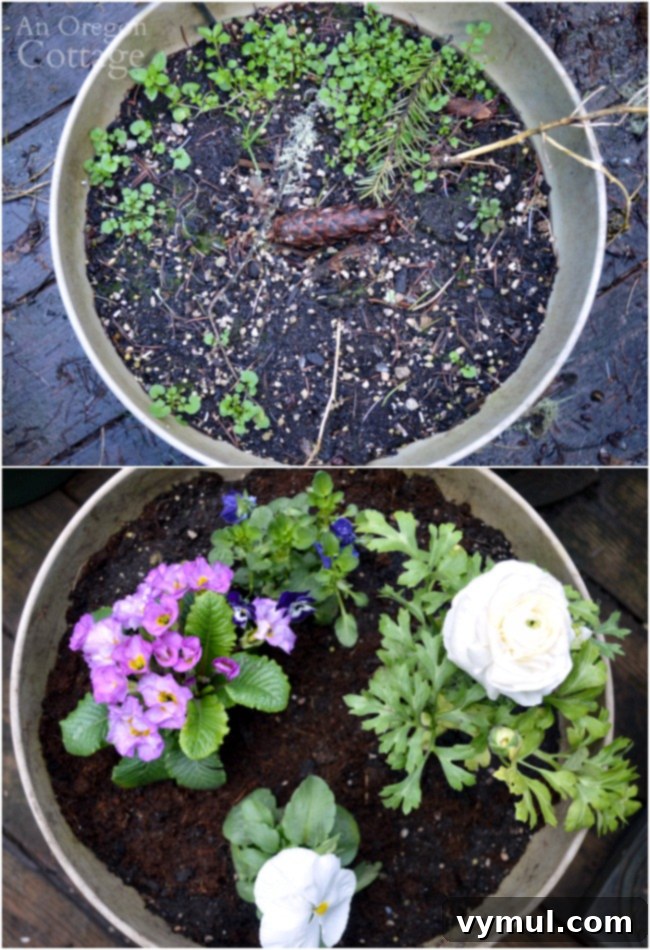
Now that you’ve carefully planned your arrangement, it’s time to get your hands dirty and bring your spring vision to life! This process is straightforward and incredibly rewarding.
- Prepare for Planting: Based on your arrangement from Step 2, carefully remove the potted plants from one pot at a time, keeping their intended placement in mind. This helps streamline the process and ensures you don’t forget your beautifully designed layout.
- Assess & Refresh Soil: If you’re reusing pots, examine the existing soil. If it looks depleted, compacted, or has been in the pot for a long time (more than a year), it’s best to refresh it. I usually mix in a good amount of fresh, high-quality potting soil to the top 4-6 inches of existing soil, or completely replace it if the old soil seems entirely spent. If you’re starting with empty pots, add fresh potting soil to within 2-3 inches of the pot’s lip, leaving adequate space for the plants and for watering without overflow.
- Incorporate Fertilizer: Sprinkle the recommended amount of organic fertilizer for flowers and bulbs into the soil. Use your trowel or hands to thoroughly mix it into the top few inches of potting mix. This provides a slow-release nutrient boost, helping your new plants establish quickly and produce abundant, vibrant blooms throughout the season.
- Dig the First Hole: Begin with the largest or “thriller” plant in your arrangement. Use your trowel to dig a hole deep and wide enough to comfortably accommodate its root ball, ensuring there’s room for the roots to spread.
- Extract the Plant: Gently remove the plant from its nursery pot. Often, a gentle squeeze on the sides of the plastic pot and a slight tilt, while holding the base of the plant, will help it slide out easily. Always avoid pulling by the delicate stem, which can cause damage.
- Loosen Root Ball: This is a crucial step for long-term plant health! Use your hands to gently massage and tease the roots apart, especially if they are circling tightly at the bottom (indicating the plant is root-bound). If the roots are very dense, you can even tear them slightly on one or two sides. This encourages the roots to grow outwards into the new soil rather than continuing to circle within their old pattern, leading to a much healthier, more vigorous plant that can access more nutrients and water.
- Plant and Firm: Place the prepared plant into the hole, ensuring the top of its root ball is level with the surrounding soil. Backfill the hole with potting mix, gently firming it down around the base of the plant to remove any large air pockets. This ensures good root-to-soil contact.
- Repeat and Water: Continue this process with the rest of your plants, following your arrangement plan. Once all flowers are planted in the container, give them a thorough and gentle watering. Water slowly until you see moisture draining from the bottom of the pot, ensuring the entire root system is hydrated.
For a quick visual demonstration of these steps, check out this time-lapse video:
Inspiring Planter ‘Recipes’ for Early Spring Beauty
Here are some tested combinations that bring together different colors, textures, and forms for stunning early spring displays. Feel free to adapt these or use them as inspiration for your own unique arrangements, always considering your pot size and light conditions!
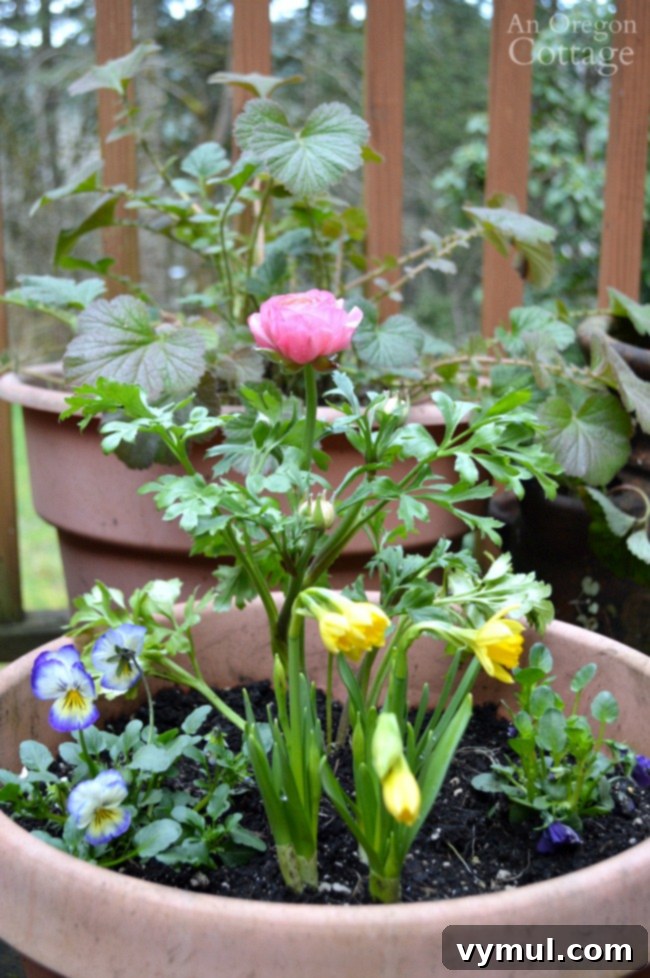
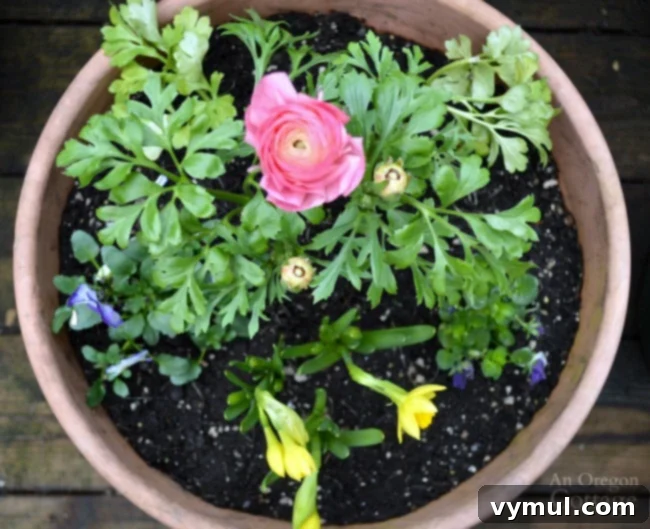
Recipe 1: Pink Ranunculus Radiance
This elegant combination creates a harmonious blend of pinks, yellows, and purples. It pairs the delicate, layered petals of a single Pink Ranunculus as the sophisticated focal point with the bright, cheerful yellow trumpets of ‘Tête-à-tête’ Daffodils. Two vibrant Purple Violas spill gracefully over the edges, adding a rich, deep hue and continuous blooms, ensuring lively color from top to bottom.
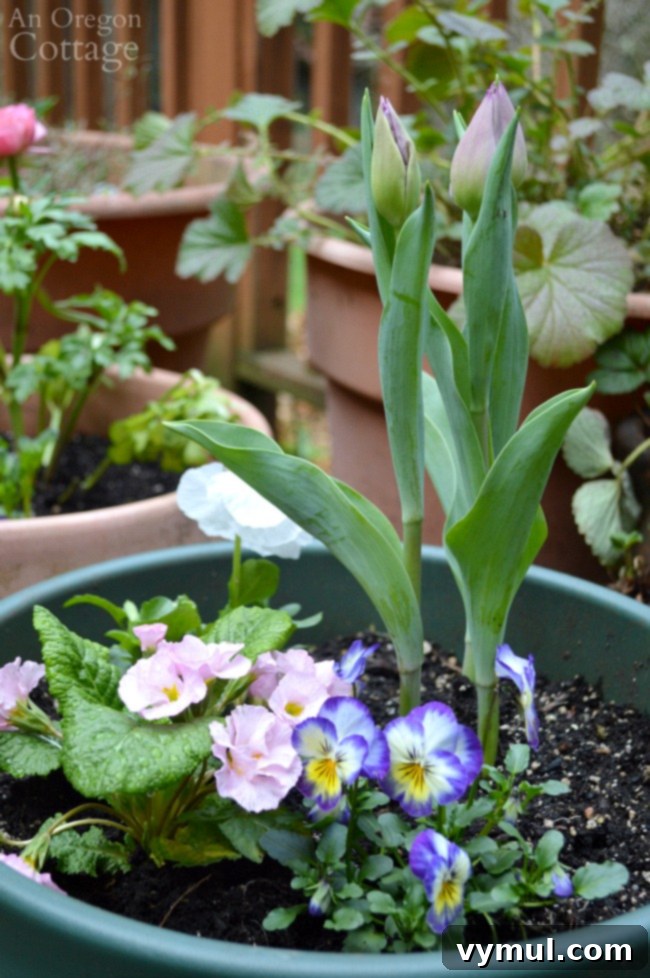
Recipe 2: Tulip & Primrose Medley
A classic spring tableau, this planter features three striking Purple-Pink Tulip bulbs emerging as graceful “thrillers,” providing vertical interest. A soft Pink Primrose adds a splash of consistent color and texture at a mid-height, beautifully complemented by a pristine White Pansy for brightness and contrast. A multi-toned Purple-White-Yellow Viola weaves through the arrangement, offering intricate detail and extended bloom, creating a rich tapestry of spring colors.
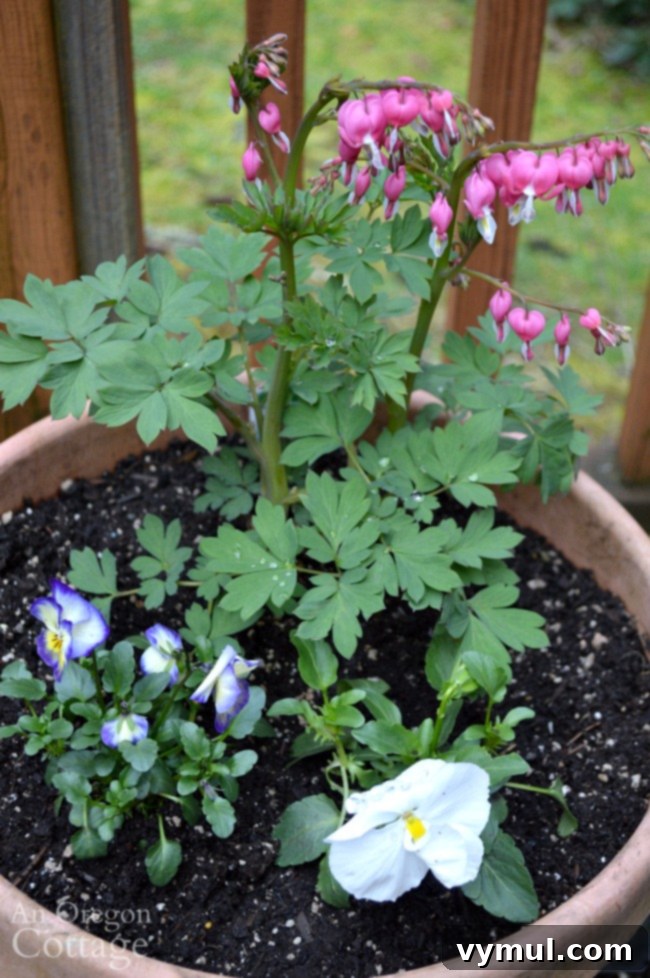
Recipe 3: Elegant Bleeding Heart Display
This combination highlights the unique beauty of a single Bleeding Heart plant as its majestic center, providing a stunning focal point with its distinctive heart-shaped blooms. A multi-hued Purple-White-Yellow Viola offers a lively contrast and constant bloom at the base, filling out the pot. A crisp White Pansy adds brightness and additional fullness to the arrangement, creating a sophisticated and graceful presentation with varied forms.
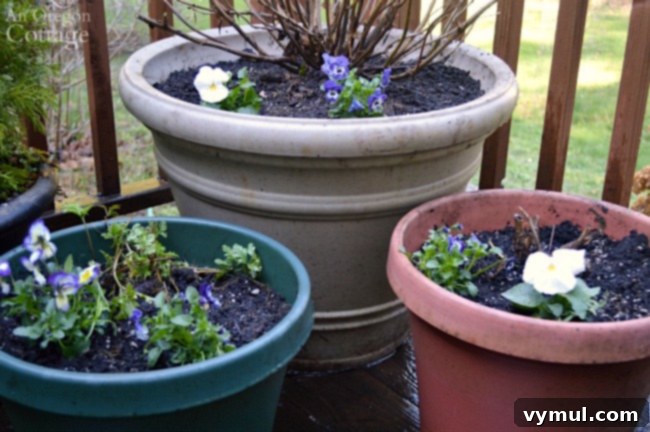
Recipe 4: Pansy & Viola Pot Fillers
For larger containers already housing established summer-blooming perennials or shrubs, pansies and violas are ideal as vibrant “filler” plants. Their profuse and diverse blooms provide instant color and interest during early spring, bridging the gap before the main plants fully awaken. This strategy ensures your pots look beautiful and dynamic year-round, adding cheer when other plants are still dormant.
Deck Transformation: Before & After Reveal
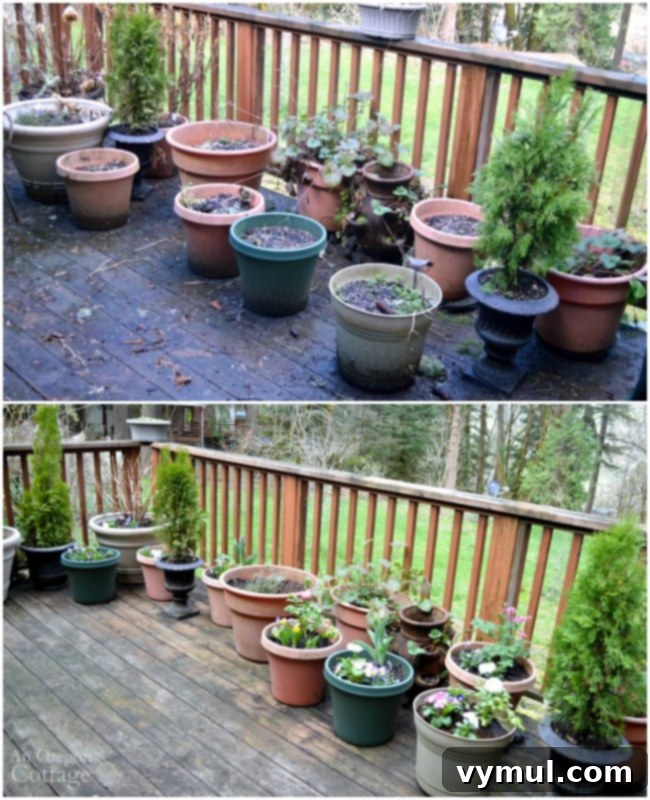
The visual impact of this simple refresh is truly remarkable, isn’t it? What was once a rather drab and utilitarian deck space, bearing the marks of a long winter, has been completely transformed. Now, it’s a vibrant, welcoming extension of the home, bursting with the promise and beauty of spring. It’s astonishing how a relatively small investment of time and effort can create such a significant and positive shift in our daily environment. The sheer prettiness and renewed life of the deck now bring immense joy and a constant reminder of the season’s renewal and the simple pleasures of gardening.
Essential Maintenance Tips for Lasting Spring Beauty
Once your spring containers are planted, a little ongoing care will help them flourish and extend their magnificent display. These basic maintenance tips will ensure your early spring blooms remain fresh and vibrant for as long as possible, maximizing your enjoyment of your refreshed outdoor space:
- Deadheading for More Blooms: Regularly clip off flowers that have faded or finished blooming. This practice, known as ‘deadheading,’ prevents the plant from expending precious energy on seed production and instead encourages it to produce more flowers. For pansies and violas especially, consistent deadheading can significantly extend their bloom time, keeping your pots looking lush and colorful.
- Mindful Watering: While early spring can still bring wet weather, container plants dry out faster than those in the ground due to increased air circulation around the pot. Check your pots daily by feeling the top inch of soil. If it’s dry to the touch, water thoroughly until water drains freely from the bottom of the pot. Ensure your pots have adequate drainage holes to prevent waterlogging and root rot, which can quickly lead to plant demise.
- Caring for Spring Bulbs: Once your daffodils and tulips finish blooming, resist the urge to immediately remove their foliage. The green leaves are vital for photosynthesis, collecting energy that the bulb stores to fuel next year’s blooms. Allow the greenery to naturally yellow and wither (this typically takes 4-6 weeks after flowering). Once the leaves have completely browned and are easily pulled away, you can gently dig up the bulbs and plant them into a suitable, well-draining spot in your garden. They will then have a chance to re-establish and delight you with their blossoms again next spring.
- Transitioning to Summer: As the weather truly warms and your early spring annuals like pansies and violas eventually start to fade (typically late spring to early summer), you have the perfect opportunity to transition your containers. Replace these spent blooms with longer-blooming summer annuals or even small perennials and shrubs as they become available at your local garden center. This ensures your pots remain a continuous source of beauty and interest throughout the changing seasons, providing vibrant color from spring well into fall.
You might be pondering whether it’s truly worth investing in these early spring flowers, given that many are annuals or bulbs with a somewhat shorter bloom period compared to summer annuals that last for months. Let’s consider the value:
Factoring in the cost of the flowers and a portion of the fertilizer (as only a quarter of the bag was used for this project), each of these refreshed pots cost approximately $5. Compare this to a store-bought bouquet of cut flowers, which might cost a similar amount but only lasts for about a week. Your container arrangement, on the other hand, will provide continuous enjoyment and a vibrant display for at least a couple of months, sometimes longer with proper care and deadheading. That’s significantly more visual pleasure and a greater connection to nature for your investment.
So, the answer is an enthusiastic yes! Absolutely, it’s worth it. These early spring container planting ideas offer incredible value, transforming your outdoor spaces and providing a constant source of cheer during a time when we all crave beauty and renewal. Plant a pot (or eight!) where you can see it from a window, a patio chair, or your dining room, and let its simple beauty fill your days with joy for the next several weeks. The psychological benefits of seeing vibrant life after winter are immeasurable.
And then, when the time comes, have even more fun planning how you’ll replace these beautiful early bloomers with stunning flowers for the summer season, keeping your containers vibrant and engaging all year long! Embrace the seasonal cycle and let your garden containers be a continuous celebration of nature’s beauty.
Disclosure: Affiliate links in this article will earn a commission based on sales, but this does not change your price. Click here to read our full disclaimer and advertising disclosure.