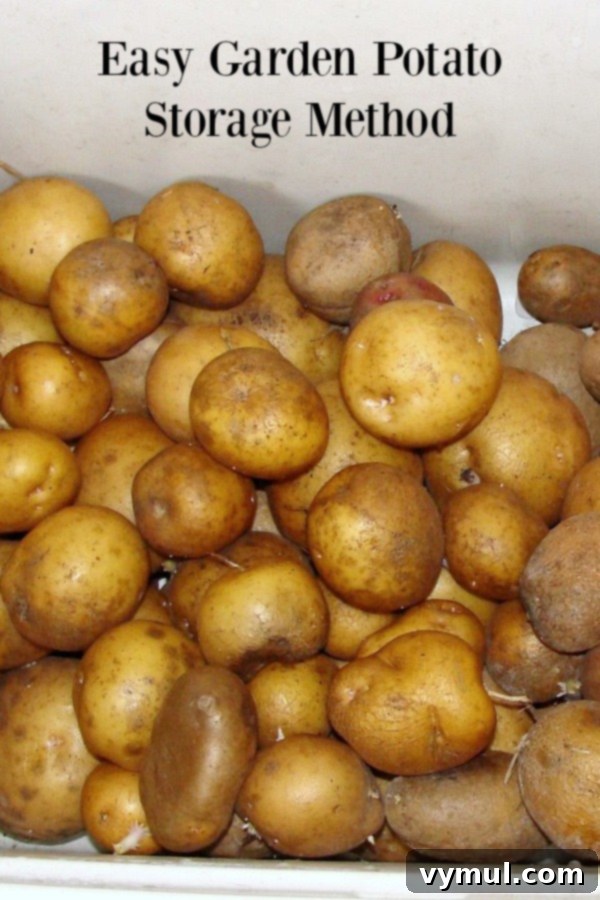
The Ultimate Guide to Storing Garden Potatoes Without a Basement or Root Cellar
Unlock the secret to preserving your garden potatoes all winter long, even without a basement, root cellar, or any fancy cold storage infrastructure. This simple and incredibly effective method will revolutionize the way you enjoy your homegrown harvest for months.
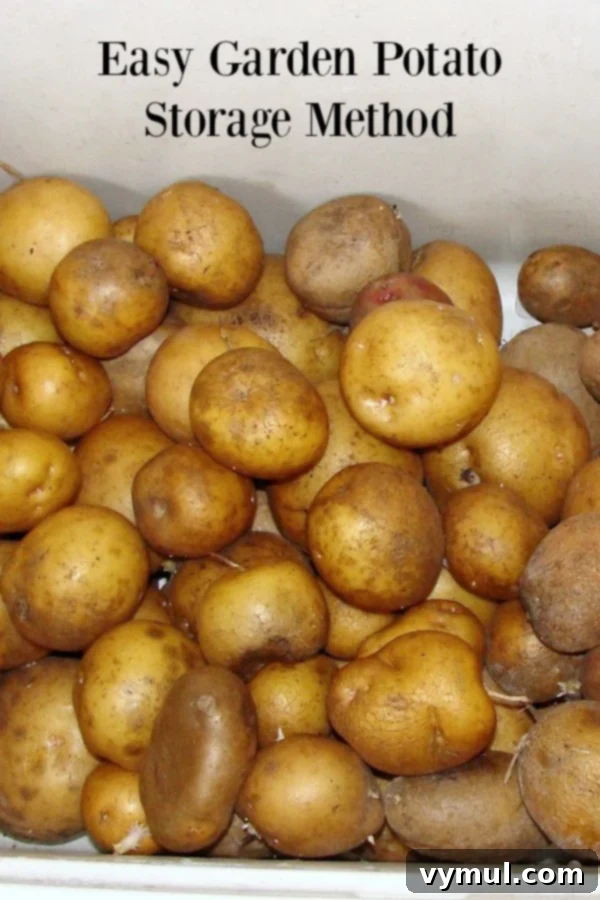
Potatoes are a staple in many households, and ours is no exception. With two growing teenagers, potatoes are a frequent feature on our dinner table – from fluffy mashed potatoes to crispy roasted wedges, they’re always a hit. Naturally, when I embarked on my journey to grow more of our own food, cultivating potatoes became a top priority. My early gardening efforts saw me tucking potato plants into any available patch as my vegetable garden expanded, slowly pushing out ornamental flowers. However, it wasn’t until we moved to our cottage, with its generous garden space, that I truly embraced potato cultivation, planting them in abundance.
The rewards of growing our own potatoes were immediate and delicious. We savored the tender “new potatoes” during the summer months, a delightful precursor to the main harvest. Come September, the true excitement began with the full harvest. And if you’re curious about my favorite, back-friendly harvesting method, I highly recommend checking out this technique: no digging required and a remarkably clean harvest – it’s genuinely fantastic and saves a lot of backache!
Our first significant harvest yielded an impressive quantity: four full 5-gallon buckets overflowing with beautiful, organic potatoes. In today’s market, that’s a considerable investment in healthy, homegrown food. Yet, this abundance presented a new and daunting challenge: how was I going to store them effectively through the long winter? My initial research involved poring over gardening books, scouring online forums, and consulting every resource I could find. The options for storing potatoes through the winter that consistently appeared were:
- Cool Basement: A traditional solution, but one that was entirely unavailable in our current home. Not every house is equipped with a basement, especially older cottages or homes built on slabs, making this a non-starter for many gardeners.
- Root Cellar: This concept felt like something out of a historical novel. Living on the West Coast, I quickly realized that purpose-built root cellars are exceedingly rare. They require specific construction, often into a hillside or underground, and finding someone who actually owns one felt like an impossible task.
- Bury a Plastic Trash Bin: The idea involved digging a hole four feet deep and burying a large plastic trash bin, leaving only the lid at ground level. The sheer effort of digging a four-foot-deep hole, especially in potentially rocky or clay-heavy soil, was enough to deter me immediately. This seemed like an arduous and labor-intensive project for simply storing vegetables.
- Above-Ground “Root Cellar” with Straw Bales and Plastic: This method suggested creating an insulated structure using straw bales and plastic sheeting. While it sounded like it might achieve the desired temperature stability, it also sounded incredibly complicated to construct correctly. Moreover, the thought of a large, makeshift structure made of straw bales and plastic in my yard was far from aesthetically pleasing; it sounded like a definite eyesore.
- Build a Cold Storage Room in Your Garage: At the time, we didn’t even have a garage, so this option was immediately off the table. Even if we had, dedicating an entire room or a significant portion of a garage just for a few buckets of potatoes seemed like an extreme measure, requiring considerable time, expense, and carpentry skills.
Frankly, after exploring these options, I was left feeling quite disheartened. None of the suggestions were easy, practical, or within my capabilities or available resources. I actually started to feel a sense of pressure, imagining all the potato-heavy recipes I would have to churn out in the coming weeks to prevent our precious harvest from spoiling. It was a disheartening thought, contrasting sharply with the joy of the harvest.
Then, serendipity struck. While browsing gardening forums online, I stumbled upon a brief mention of an unconventional method: storing potatoes in a food cooler – the kind typically used for camping or picnics. My initial reaction was skeptical, but the idea lodged itself in my mind. Even if they only lasted for an extra month, that would still be a vast improvement over spoilage. A cooler, after all, offered insulation and darkness, two key elements for proper potato storage. With nothing to lose and a significant harvest to save, I retrieved our old, somewhat dusty cooler from the shed.
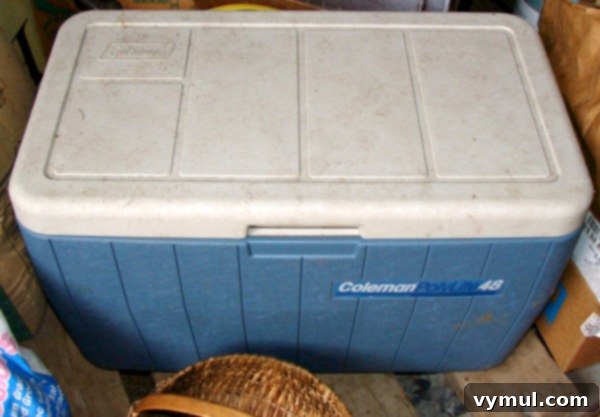
In September, with a mix of hope and curiosity, I loaded the cooler with our freshly harvested potatoes. That first year, it was about three-quarters full. I placed the cooler in our shed, a space that remains unheated but offers protection from direct sunlight and extreme weather fluctuations. The shed naturally maintains a cooler, more consistent temperature than the house, crucial for long-term storage.
Throughout the fall and early winter, the cooler in the shed became my personal potato “supermarket.” Whenever I needed potatoes for a meal, I’d simply head out to the shed and retrieve a few. To my absolute delight, they lasted until the middle of January! By that point, the last few potatoes were showing minor signs of sprouting, but they were still perfectly good and usable. This initial success was a revelation, proving that a simple camping cooler could be a game-changer for backyard gardeners like me.
Since that first experiment, I’ve refined my approach and learned a few valuable lessons that further extend the storage life of my harvest. For instance, I’ve discovered that certain potato varieties are inherently better suited for long-term storage than others. I now prioritize consuming varieties that don’t store as well first, while saving the more robust types for later in the winter. Generally, yellow-skinned potatoes like Yukon Golds tend to store significantly longer than red-skinned varieties, and even some brown-skinned russets. Understanding these varietal differences has helped me maximize our potato consumption throughout the colder months.
This year, as February rolled around, a time when most fresh garden produce is a distant memory, I ventured out to the shed to grab some potatoes for dinner. What I found inside the cooler was truly remarkable:
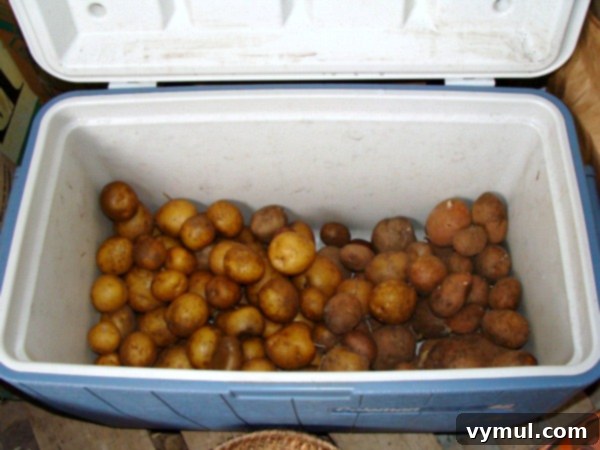
Looking at them, you’d be hard-pressed to guess they’d been stored for so many months, wouldn’t you? They were still firm, largely unblemished, and showed minimal sprouting. Notice in the image, the potatoes on the right, which are a russet-type, have started to sprout slightly before the Yukon Golds on the left. This visual confirmation reinforces my strategy of using up the less storage-friendly varieties first, ensuring that none of our precious harvest goes to waste.
Why the Cooler Method Works So Well
The success of the cooler method lies in its ability to mimic the ideal conditions of a root cellar or dedicated cold storage environment. Potatoes thrive in cool, dark, and moderately humid conditions. Here’s why an insulated cooler excels:
- Consistent Temperature: Coolers are designed to insulate. This means they protect the potatoes from extreme temperature fluctuations, keeping them consistently cool but above freezing. Stable temperatures prevent sprouting and spoilage, which are often triggered by erratic warmth.
- Darkness: Light exposure causes potatoes to turn green and produce solanine, a bitter and potentially toxic compound. The opaque walls and lid of a cooler provide complete darkness, preventing this greening and inhibiting sprouting.
- Humidity Control: While a cooler isn’t airtight, its insulated nature helps to retain some humidity from the potatoes themselves, preventing them from drying out and shriveling. Too much humidity can lead to rot, but the slight ventilation in most coolers, especially when opened occasionally, generally strikes the right balance.
Tips for Maximizing Your Potato Storage Success
To get the best results with this easy cooler method, consider these additional tips:
- Cure Your Potatoes: Before storing, “cure” your potatoes. After harvesting, gently brush off excess dirt (do not wash them!) and let them sit in a cool, dark, and moderately humid place (like a shed or garage) for 1-2 weeks. This process allows their skins to toughen and minor nicks to heal, greatly improving their storage life.
- Inspect Thoroughly: Only store healthy, undamaged potatoes. Any potato with cuts, bruises, or soft spots should be eaten immediately or composted. One bad potato can spoil the whole batch.
- Avoid Washing: Do not wash potatoes before storage. The moisture can encourage fungal growth and spoilage. Simply brush off any loose soil.
- Ensure Airflow (But Not Too Much): While completely airtight isn’t ideal, an insulated cooler usually provides sufficient air exchange. If you’re concerned about too little airflow, you can periodically open the cooler for a few minutes, especially if you live in a very humid environment. However, generally, the insulation alone is enough.
- Choose the Right Cooler: Any well-insulated cooler will do. The bigger your harvest, the larger the cooler you’ll need. Hard-sided coolers tend to offer better insulation than soft-sided ones.
- Optimal Location: Place your cooler in a location that stays consistently cool but above freezing throughout the winter. An unheated shed, garage, or even a cool pantry can work perfectly. Avoid direct sunlight or areas prone to significant temperature swings.
- Check Periodically: Even with the best methods, it’s wise to check on your potatoes every few weeks, especially if you have a large batch. Remove any potatoes that are showing signs of softening, rotting, or excessive sprouting to prevent them from affecting their neighbors.
So, if you’re a gardener dreaming of harvesting your own potatoes this year but are discouraged by the lack of a traditional root cellar or the prospect of digging four-foot-deep holes, do not despair. Start looking for old coolers – perhaps you have one tucked away in the garage or shed, or you can find an inexpensive one at a yard sale. This simple, accessible, and incredibly effective method has transformed our ability to enjoy fresh, homegrown potatoes well into the winter months. It’s turned out to be an absolutely brilliant storage option, proving that sometimes the best solutions are the simplest ones.
Oh, and if you do find yourself with a few potatoes that have started to sprout, don’t throw them away! Here are a few creative and practical things you can do with them, ensuring every part of your hard-earned harvest is utilized.