Unlock Your Time: My Real-Life Example of a Flexible Daily and Weekly Schedule for a Simple Homemade Life
Welcome to a deep dive into my personal approach to structuring days and weeks, complete with the daily and weekly routines and habits that are instrumental in carving out precious time for the things that truly matter. This isn’t just a schedule; it’s a blueprint designed to inspire you to cultivate the simple, homemade life you’ve always envisioned, tailored to your unique needs and aspirations.
For many years, readers have frequently inquired about my daily schedule and how I manage to seamlessly integrate activities like preparing food from scratch, gardening, and various other projects into what often feels like an overwhelmingly busy life. The honest truth is, I’ve often hesitated to share the intimate details of my schedule. Why? Because each of us is wonderfully unique, and our daily lives rarely mirror one another.
Furthermore, I hold a strong conviction that people operate at different paces and thrive under different conditions. Some, like myself, function optimally with a generous amount of downtime woven into their days, finding energy in stillness and reflection. Others, however, are perfectly capable—and even energized—by being on-the-go from the moment they wake until late into the evening. Recognizing and respecting these individual differences is absolutely crucial. It’s perfectly acceptable not to achieve as much as the next person if you are genuinely doing all that you can with the resources and capabilities you’ve been given.
Inspiration, Not Comparison: A Guiding Principle for Your Daily Schedule
If sharing my schedule merely leads to an unhealthy cycle of comparison—thoughts like, “She’s accomplishing all this, so I should be doing more,” or conversely, “She’s certainly wasting a lot of time”—then I wouldn’t want to put myself out there. That’s not the goal here. My intention is far from encouraging self-criticism or judgment.
However, if my detailed daily schedule and the routines I employ serve as a genuine source of inspiration, spurring someone towards a new organizational goal, or helping them envision fresh, effective ways to utilize their time wisely, then this endeavor is indeed a positive one. Personally, I have often felt both encouraged and positively challenged when fellow bloggers have candidly shared how they structure their days. It’s with that spirit of helpfulness and transparency that I’m stepping out to share my own daily and weekly schedule with you.
It is my sincere hope that you will be inspired to discover and create the necessary time to pursue those cherished activities and important goals that resonate deeply with you.
UPDATE: It’s truly remarkable to think that I initially shared my schedule here a decade ago! Naturally, life has evolved significantly since then—whose hasn’t? So, it was definitely time for a comprehensive schedule update. In this revised version, I’m not only providing my current daily schedule but also detailing the precise routines and habits that consistently contribute to smoother days and more productive weeks for our household. This updated perspective offers fresh insights into managing a dynamic life with purpose.
My Flexible Daily Schedule for Each Week
IMPORTANT NOTE: The schedule detailed below represents my ideal goal. In reality, life is unpredictable, and many days naturally deviate from these perfectly segmented time blocks. However, I’ve learned not to stress about these deviations. This “ideal” schedule serves simply as a flexible tool—a guiding framework to help me make the most of the time I do have available, rather than a rigid set of rules. It’s about intentionality, not perfection.
My daily and weekly schedule has undergone significant transformations throughout the various seasons of my life. The years spent raising young children, with their unpredictable demands and delightful chaos, looked vastly different from the periods when our children were in school, juggling academic pursuits with a myriad of extracurricular activities. There were distinct phases where I worked outside the home, bringing a different set of constraints and opportunities, and times when my focus was primarily on domestic life and personal projects.
Today, with our children grown (though one is currently living with us, adding its own dynamic), and my full-time work being based from home, my schedule enjoys a level of flexibility it has never known before. This adaptability is a key lesson from life’s journey. Understanding that there are many distinct seasons to life – and learning to adjust your schedule and expectations accordingly – is half the battle in ensuring that your precious time doesn’t simply “happen” to you, but rather is intentionally directed towards your priorities. It’s about proactive time management rather than reactive time consumption.
My Current Daily Schedule For Each Week:
6:30-9:00 AM Routine: This foundational block sets the tone for my entire day. It encompasses personal reflection, essential self-care, and initial planning to ensure a smooth start. (See detailed breakdown below for more insights).
9:00-1:30 PM Computer Work: This is my primary dedicated time for deep work and focused tasks related to my blog and other digital responsibilities. I usually incorporate a brief 20-minute break around 10:00 AM for a light breakfast, during which I quickly review more emails and plan for the immediate hours ahead. This helps me stay responsive without breaking deep work flow.
1:30 PM Break for Lunch: A well-deserved pause for nourishment, typically a fresh, simple salad. This block also serves as an opportunity for any quick meal prep, such as attending to dinner ingredients or checking on bread dough, if feasible. This mini-break helps reset my focus for the afternoon.
2:00-5:00 PM Computer Work or Project Time: The afternoon is flexibly divided between continued computer-based tasks and more hands-on projects. This might involve creating video content, dedicating time to garden maintenance and planning, meticulously testing new recipes for publication, or tackling other creative endeavors that require a different kind of focus. This variety keeps my work engaging and dynamic.
5:00-5:30 PM Open Time / Transition: This half-hour acts as a flexible buffer. During warmer months, I frequently take advantage of this window to enjoy a walk, often two to three times a week, anytime between 4:00 and 5:30 PM. It’s a crucial transition from work mode to personal time, allowing for a mental refresh before the evening activities begin.
5:30-6:30 PM Prepare Dinner: A dedicated hour for meal preparation. I find this time particularly enjoyable and productive when I’m listening to an audiobook, allowing me to multitask and enrich my mind while engaging in a routine task. This makes cooking a more meditative and enjoyable experience.
6:30-10:00 PM Dinner, Dishes, Family Time: This extended evening block is reserved for communal activities and relaxation. It includes enjoying dinner together, efficiently tackling dish duty, and cherishing quality family time. We often spend this time reading, watching a favorite show while I knit or crochet, or simply engaging in conversation. Once a week, this block incorporates our family cleaning night (detailed below), fostering a shared responsibility for household upkeep.
10:00-11:15 PM PM Routine*: This final segment of the day is dedicated to winding down, preparing for rest, and ensuring the house is settled. It’s a vital period for signaling to my body and mind that it’s time to transition to sleep, supporting overall well-being. (More details on this routine are provided below).
*A NOTE ON SLEEP HYGIENE: Optimizing Your Rest for Peak Productivity
I have always grappled with sleep challenges, a struggle I know many others share. Through diligent research and personal experimentation, I’ve come to understand the paramount importance of maintaining excellent “sleep hygiene.” This concept generally revolves around a few key principles: consistently adhering to the same wake-up and sleep schedule every single day (yes, even on weekends), actively minimizing exposure to blue light in the evenings, ensuring your sleeping environment is cool, dark, and quiet, and consciously cultivating a calm and serene atmosphere as bedtime approaches.
One profound discovery that has significantly enhanced my sleep efficiency is reframing the expectation of needing precisely 8 hours of sleep. Instead of fixating on a rigid duration, I focus on consistency and quality. I make a point to turn off my light every night around 11:15 PM and wake up consistently at 6:15 AM each morning, irrespective of whether it’s a weekday or the weekend. Of course, I’m not one of those people who can instantly spring out of bed, so my actual active schedule effectively begins at 6:30 AM, allowing for a gentle transition, which is much more realistic and sustainable for me.
Time Blocking Example: Structuring Your Day for Maximum Focus
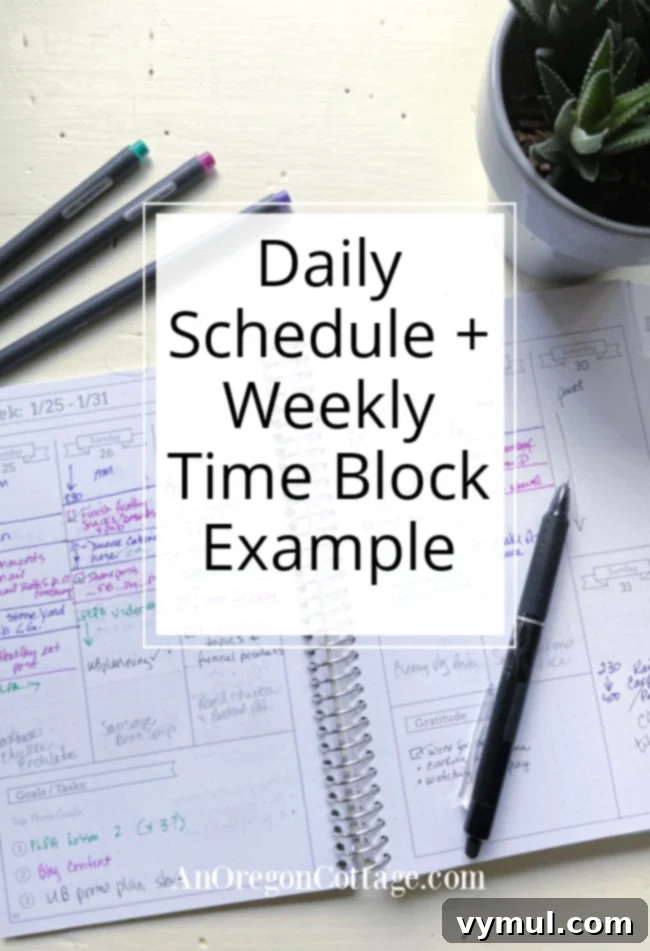
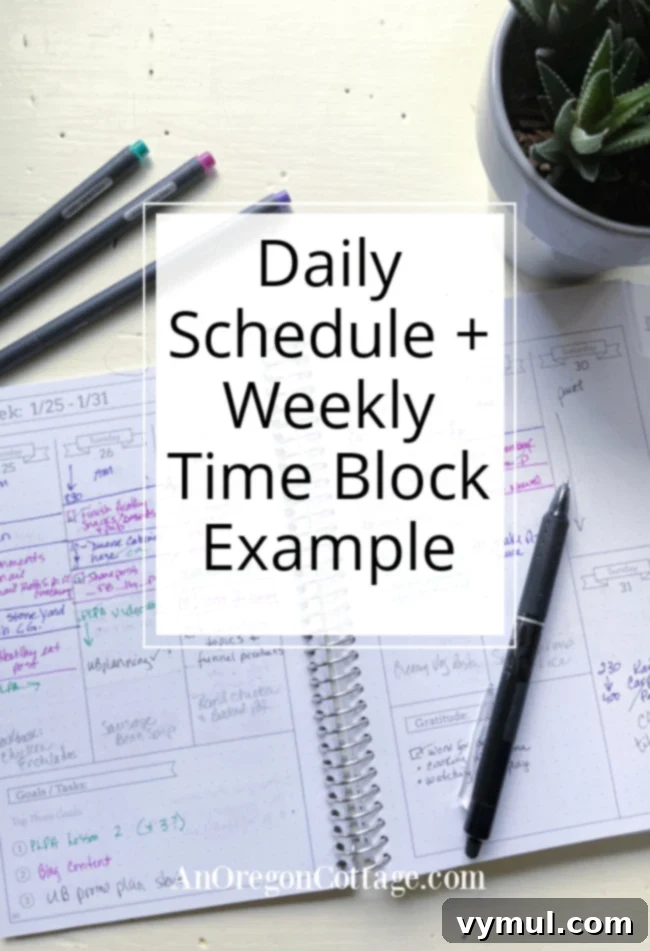
I am a strong advocate for time blocking, a strategy far more accommodating and effective than rigid hourly schedules. You can catch a glimpse of this approach in the photos of the weekly spread within my beloved Flexible Planner shown above. Time blocking allows for dedicated periods of focus on specific types of tasks, preventing context switching and enhancing productivity.
To illustrate this further, here’s an example of how my “ideal” daily schedule is visualized using time blocks within Google Calendar. Each block is filled with general categories of work or activity to be tackled during that dedicated timeframe, providing a clear roadmap for the day without getting bogged down in minute-by-minute details:

Essential Daily Habits and Routines: The Cornerstones of My Productivity
These are the fundamental habits I’ve meticulously woven into my morning and evening routines. They are the constants that rarely, if ever, vary, forming the backbone of my day’s structure and flow. When these routines are disrupted, I invariably notice a tangible dip in my overall productivity and well-being. They are my anchors in a busy world, ensuring consistency and setting me up for success.
AM Routine: Starting the Day with Purpose
- Coffee, Bible Reading, Personal Email/News: My day begins with a tranquil period of personal reflection and information gathering. I sip my first coffee while engaging in Bible reading, which offers spiritual grounding. This is also the sole dedicated time in my day for catching up on general news—a conscious choice to avoid feeling overwhelmed or constantly distracted. I subscribe to curated newsletters from reputable sources like The New York Times, Skimm, and Buzzfeed News, alongside our local newspaper. The New York Times’ “The Morning” newsletter has consistently proven to be the most balanced and insightful among my subscriptions, and I highly recommend it for a comprehensive yet concise daily briefing. You can find it on this page if you’re interested in subscribing as well.
- Exercise (MWF), Shower & Get Ready, Make Bed: On Mondays, Wednesdays, and Fridays, my morning routine includes a dedicated exercise session, which is vital for both physical and mental health. Following exercise (or simply as part of the routine on other days), I shower and thoroughly wipe down the shower stall with a squeegee and microfiber cloth to minimize cleaning later. Getting ready for the day is also when I immerse myself in Christian audiobooks—a method that contributes significantly to how I manage to “read” or listen to around 100 books annually. A non-negotiable habit is making my bed every single day before leaving the room; it instantly creates a sense of order and accomplishment.
- Glass of Water with Daily Vitamins: Hydration and nutrient intake are prioritized early. A large glass of water, accompanied by my daily vitamins, ensures I start my metabolic processes correctly and support my overall health.
- Brief Daily Planning with Coffee #2: As I enjoy my second cup of coffee, I dedicate a short but crucial period to daily planning. This includes checking our menu for the day to ensure any necessary ingredients are defrosted, and mixing up any sourdough starter or bread doughs I might be preparing. While this usually happens around this time, sometimes it shifts closer to 9:30 AM depending on other immediate needs. This proactive planning minimizes last-minute rushes and helps maintain a smooth flow through my culinary and household tasks.
PM Routine: Winding Down for Restful Sleep
- Living Room Tidy & Dishwasher Load: The evening wind-down begins with a quick reset of our main living space. I fluff the living room pillows and perform a general pick-up, ensuring everything is in its place. All dinner dishes go into the dishwasher, and any items drying from dinner are put away. This brief but consistent straightening across any areas that need it helps maintain a sense of order and cleanliness, preventing clutter from accumulating and ensuring a fresh start for the next morning.
- Prep for Bed: This involves personal hygiene routines and other small tasks that signal the body it’s time to prepare for sleep, such as setting out clothes for the next day or preparing a bedside glass of water.
- One Line in Gratitude Journal: A simple yet powerful practice, I take a moment to record one thing I am grateful for from the day. This cultivates a positive mindset and shifts focus towards appreciation before sleep.
- Read Blogs & Current Book: I spend some time catching up on blogs I follow via Feedly, which is a curated and calming way to consume content. Following this, I delve into my current book until approximately 11:00-11:15 PM. The key here is to choose reading material that is engaging but not overly exciting or stimulating, adhering strictly to my sleep hygiene principles to ensure a peaceful transition into sleep.
Weekly Schedule Notes: Flexibilities and Fixed Points
My weekly structure incorporates certain fixed points and flexible blocks to accommodate various tasks and personal commitments:
- Flexible Morning Blocks on Tuesdays & Thursdays: Since I don’t engage in structured exercise on these two days, my mornings on Tuesdays and Thursdays offer additional flexibility. This is when I strategically schedule appointments (medical, dental, etc.) or dedicate time to essential shopping trips. Alternatively, if no appointments are needed, these blocks become an extension of my computer work time, allowing for deeper focus on specific projects. I also keep a flexible block open on Friday for any overflow tasks or spontaneous appointments.
- Every Thursday is Family Cleaning Night: This is a non-negotiable staple in our weekly routine, fostering a shared responsibility for household upkeep. On Thursday evenings, we collectively tackle larger cleaning tasks such as vacuuming, dusting, laundering towels, and thoroughly cleaning bathrooms. While spot cleaning occurs as needed throughout the week, this dedicated “deep clean” ensures that our home remains tidy and organized without daily pressure on any single person. We believe in practical cleanliness, not perfection, allowing for a relaxed approach to daily tidying.
- Morning Planning Blocks & Menu Planning: My morning planning blocks are not just for daily tasks; they also encompass crucial weekly and personal planning. Every Monday, I conduct a thorough inventory of our freezer to identify items that need to be used up. Based on this and what’s available in our pantry, I plan the week’s menu. This systematic approach ensures efficient meal preparation and minimizes food waste. You can find more detailed insights into my menu planning strategy here. The other planning blocks throughout the week are then used for practical tasks directly related to the menu, such as defrosting ingredients, mixing up doughs or dressings, or preparing any other components needed for the day’s meals. While this often takes less than the full half-hour, some days require more dedicated attention depending on the complexity of the menu.
- Seasonal Adjustments for Garden Work: During the vibrant summer months, my morning and afternoon work blocks often switch to allow me to work in the garden during the cooler, more comfortable morning hours. This seasonal flexibility is crucial for maximizing efficiency and enjoyment, aligning my schedule with nature’s rhythm.
- Bi-Weekly Family Game Night: Every other Monday, our home becomes the hub for a lively family game night. To ensure dinner is ready on time for this cherished tradition, I typically begin meal preparation before 5:00 PM on these specific days, allowing for a relaxed transition into an evening of fun and connection.
- Bi-Weekly Date Night: Also occurring every other week, Brian and I prioritize a dedicated date night. Our usual routine involves going out for dinner and catching a movie, providing a wonderful opportunity to unwind and reconnect. Occasionally, we deviate from this plan to explore stores we particularly enjoy or visit local thrift shops, adding an element of spontaneity to our time together. The recent pandemic, however, has certainly impacted these outings; during summer, we adapted by going on hikes or picking up takeout to enjoy outdoors, but winter months have presented more challenges for creative date ideas.
Embracing the Freedom of Weekends: Unscheduled Time for Life and Projects
My approach to weekends is distinctly different from my weekdays. I intentionally do not schedule any dedicated work on my website during these two days. The only exception is if we embark on a project I intend to share on the blog, in which case I might take photos of the process. This strict boundary helps to ensure a genuine break from work, allowing for mental and physical rejuvenation.
Weekends are specifically designated for tackling larger household projects, pursuing extended time in the garden—whether it’s planting, tending, or harvesting, depending on the season—and engaging in activities that bring us joy and connection. We also frequently plan fun outings, day trips, or visits to family members during this time. The beauty of weekends lies in their unplanned nature; I purposefully avoid rigid scheduling to allow for spontaneity, relaxation, and a deeper immersion in personal interests and family life.
Reframing the Nightly Review: Finding What Works for Your Rhythm
Many productivity experts and organized individuals swear by a nightly review, dedicating 10-15 minutes before bed to reflect on the day’s accomplishments and challenges, and to meticulously plan for the following day. This practice is often touted as a cornerstone of effective time management and a way to ensure continuous progress.
I have genuinely attempted to incorporate this nightly review into my own PM routine on multiple occasions, eager to experience its purported benefits. However, I’ve consistently found that it simply doesn’t align with my personal rhythm and needs. For me, engaging in deep thinking and planning tasks at night, when my primary goal is to wind down and prepare for restful sleep, is counterproductive. I don’t find it calming; instead, it often stimulates my mind, making it harder to achieve the tranquility crucial for a good night’s sleep. Therefore, I’ve adapted my approach: all my planning and review processes are instead integrated into my morning routine.
This experience serves as a powerful reminder: the journey of personal effectiveness is one of continuous experimentation. We try different strategies, observe their impact, and then figure out what genuinely works best for us in the specific season of life we find ourselves in! There’s no one-size-fits-all solution, and flexibility is key to sustainable productivity.
How do you manage your time effectively? Do you maintain a consistent schedule, or do you prefer a more fluid approach? Share your insights and strategies in the comments below to inspire others and help us all utilize the precious time we’ve been given with greater wisdom and intention!